Starting to dance flamenco can bring on a mix of excitement, curiosity and nerves. You might be wondering whether you need to be able to dance already, what to wear, or whether you'll have to buy professional shoes from day one.
The good news is that a first flamenco class is designed precisely for beginning. You don't need to know the steps, own a special wardrobe or turn up with all the equipment from the start. What matters most is arriving keen to learn, in comfortable clothes and with an open mind.
In this guide we cover what to expect in your first flamenco class, how to dress and what's worth packing in your bag so you can enjoy the experience in comfort.
What you're signing up to
It's worth knowing before your first class: flamenco has been inscribed since 16 November 2010 on UNESCO's Representative List of the Intangible Cultural Heritage of Humanity. The nomination was approved at a session held in Nairobi, and that date has been marked in Andalusia as Flamenco Day ever since.
UNESCO defines flamenco as the fusion of three things: song, dance and guitar. You'll be working on one of the three, but classes will have you constantly listening to the other two, because dance doesn't exist separately from the compás. If the background interests you, the Instituto Andaluz del Flamenco publishes introductory material and the full dossier submitted to UNESCO.
Do you need experience to start dancing flamenco?
No. Beginners' classes are designed for people who have never danced flamenco or who have very little experience.
During the first few sessions you'll start getting familiar with the basics:
- Body posture.
- The placing of arms and hands.
- Rhythm and compás.
- The first footwork.
- Coordinating arms, body and zapateado.
It's completely normal not to coordinate everything at first. Flamenco combines rhythm, strength, expression and technique, so learning is gradual. Don't compare yourself with others in the class: everyone progresses at their own pace.
What to expect in your first flamenco class
Every school and every teacher structures classes differently, but a beginners' session usually starts with warm-up exercises and work on body placement.
After that, the teacher might work on simple arm movements, marcajes, palmas or basic footwork exercises. You may practise short sequences repeated several times so you can absorb the movement and the rhythm.
Don't expect to learn a whole choreography on the first day. The initial aim is to start understanding how the body moves within flamenco and to gradually lose the fear of getting it wrong.
You can also expect to sweat
Although some movements look gentle, a flamenco class can be physically demanding. You'll be working posture, legs, arms and coordination for a good part of the session.
That's why it's sensible to bring water, a small towel and clothes that let you move freely.
How to dress for your first flamenco class
For a first class you don't need a flamenca dress or a professional skirt. What matters most is that the teacher can see your posture and that you can move comfortably.
Comfortable, close-fitting clothes
A comfortable top and leggings or stretchy trousers are a good place to start. It's best to avoid very loose garments, since they can make it hard for the teacher to see the placement of your legs, hips and back.
You can browse some options among our flamenco t-shirts on Amazon and leggings for your dance classes.
Do you need a flamenco skirt?
It depends on the school and the type of class. In many beginners' classes a skirt isn't needed for the first few sessions.
When you start working on specific skirt movements, your teacher will be able to recommend the right length, fullness and fabric. Best not to buy one before checking with the academy.
Tie your hair back
A ponytail, a bun or a plait will help keep your hair out of your face. That's especially useful once you start working on turns, arm movements and more dynamic exercises.
What footwear to take to a first flamenco class
Before buying flamenco shoes, ask the school what footwear they recommend. Some academies are happy for you to do the first few classes in a closed, comfortable shoe with a stable heel.
Avoid trainers with a very soft sole if the class includes footwork, as they make it harder to feel the floor and push off it.
When you do decide to buy flamenco shoes, choose carefully. They should hold the foot properly, feel comfortable and suit the dancer's level. An unsuitable shoe can cause discomfort and get in the way of learning.
What to pack in your bag for a flamenco class
You don't need to carry much. A well-organised bag with a few basics is plenty for a first class.
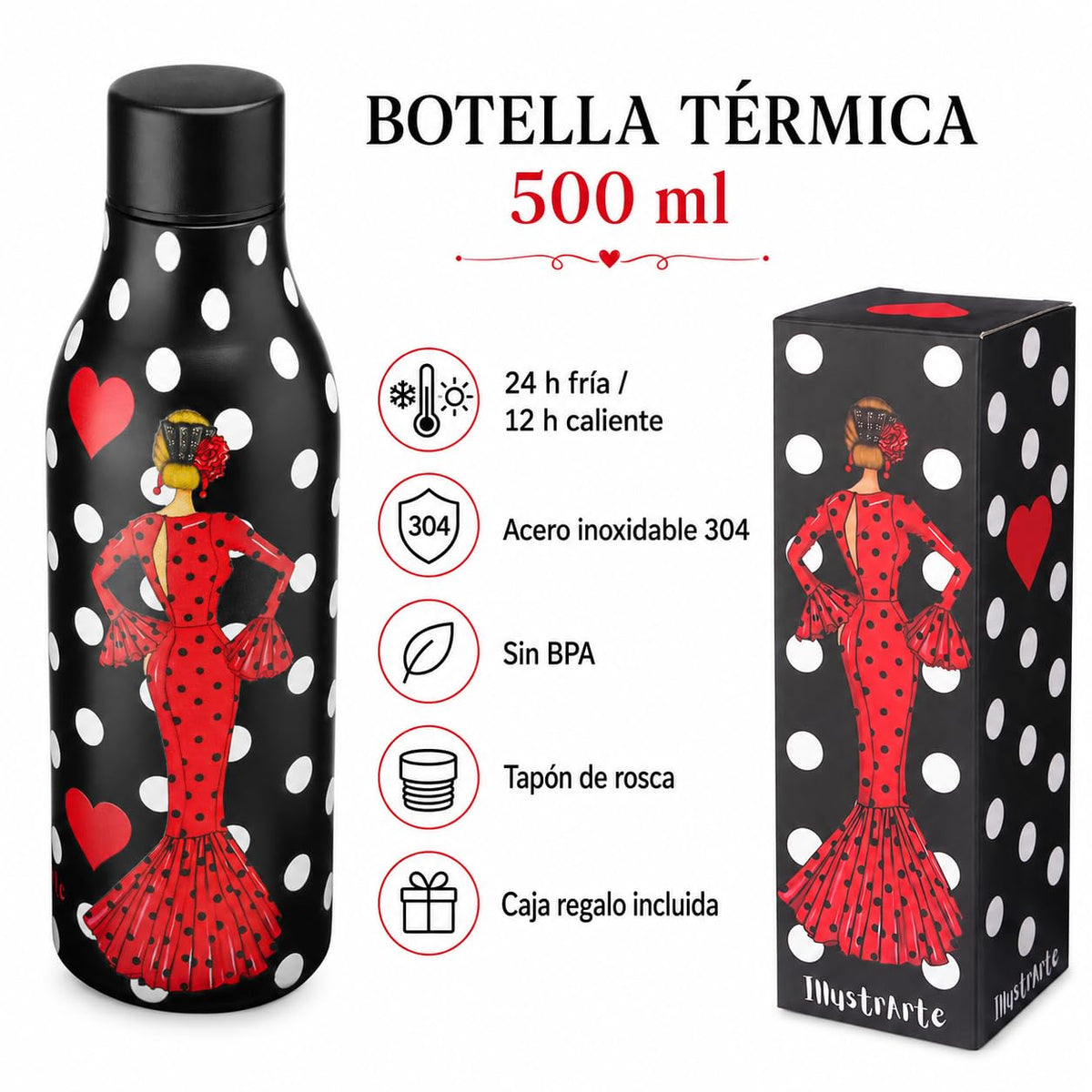
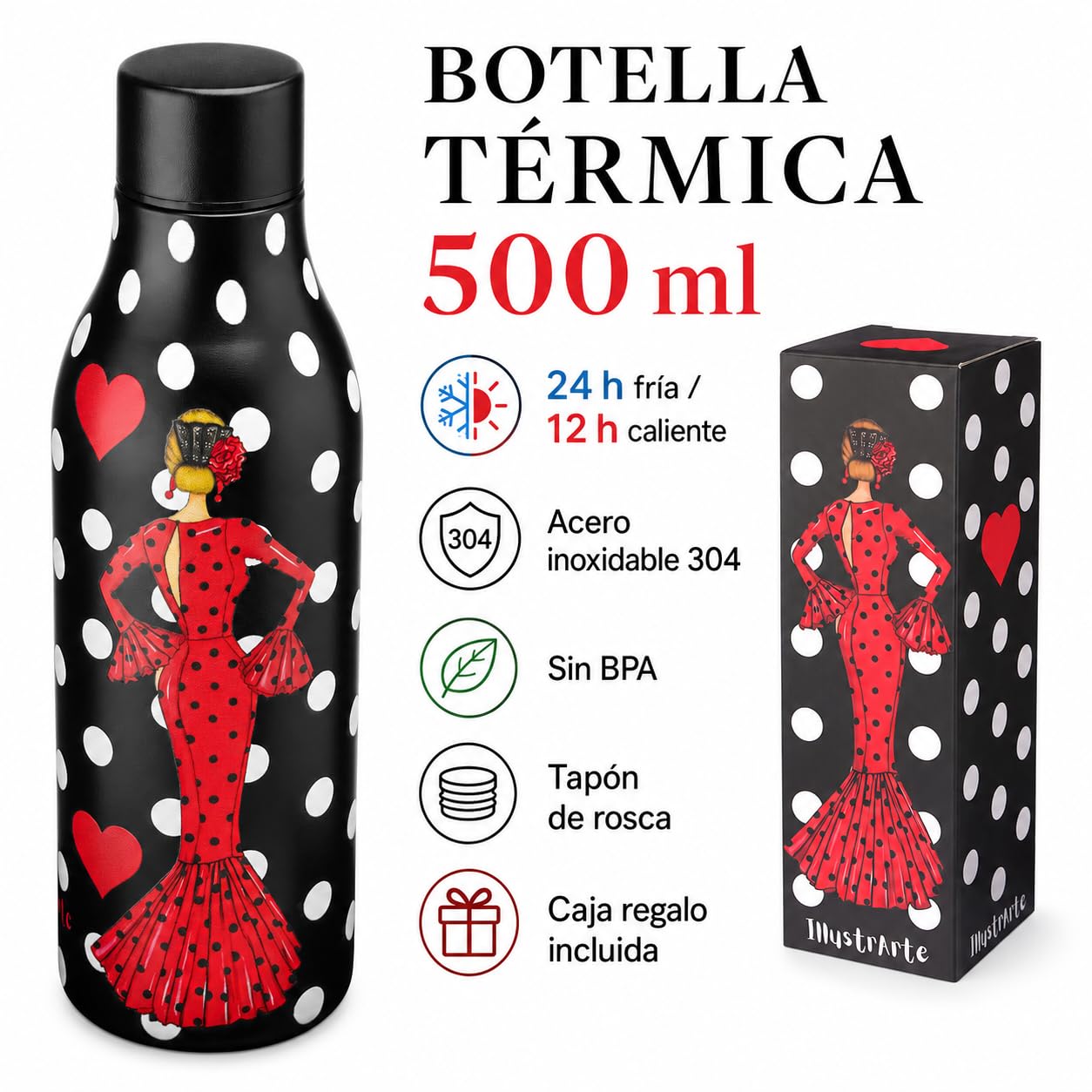
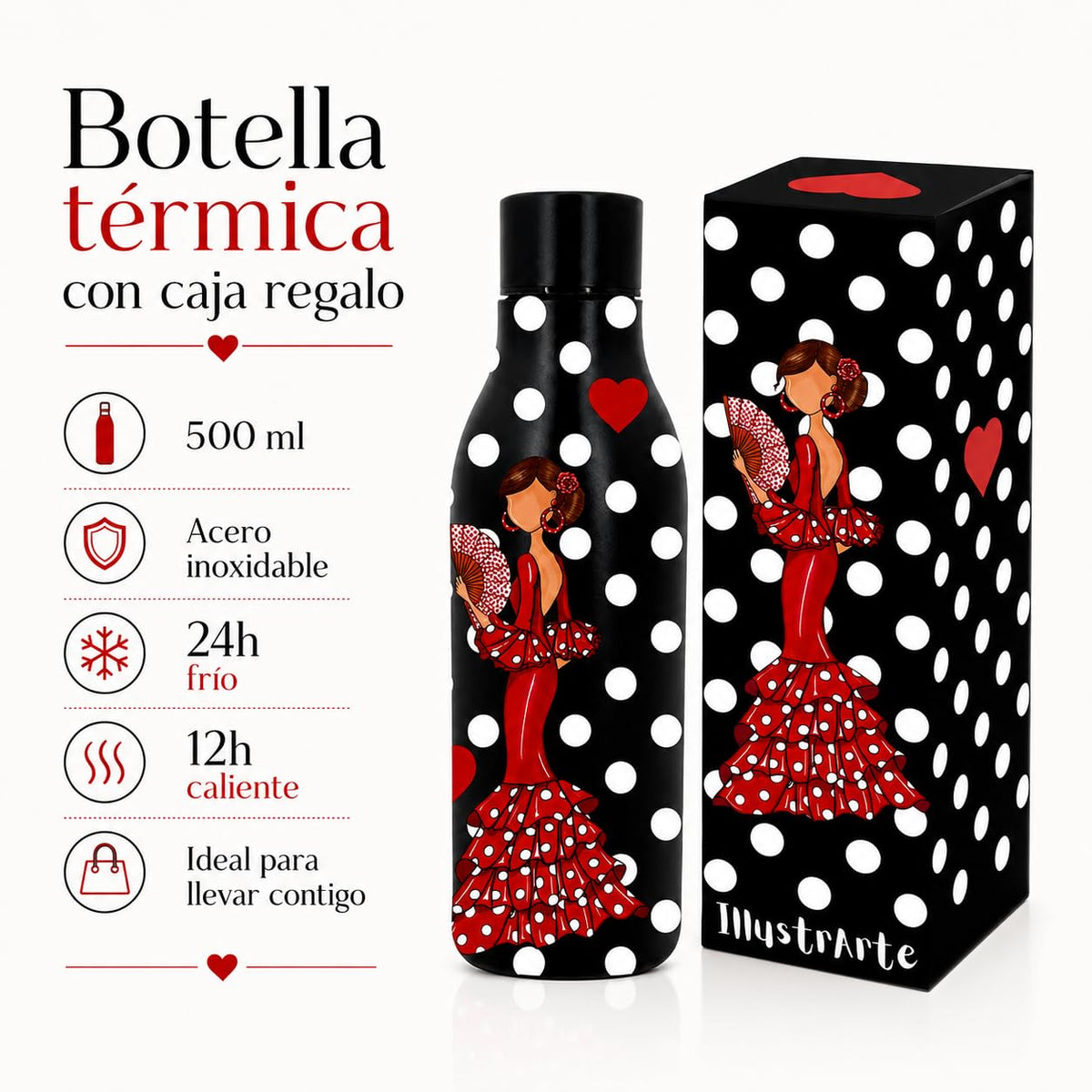
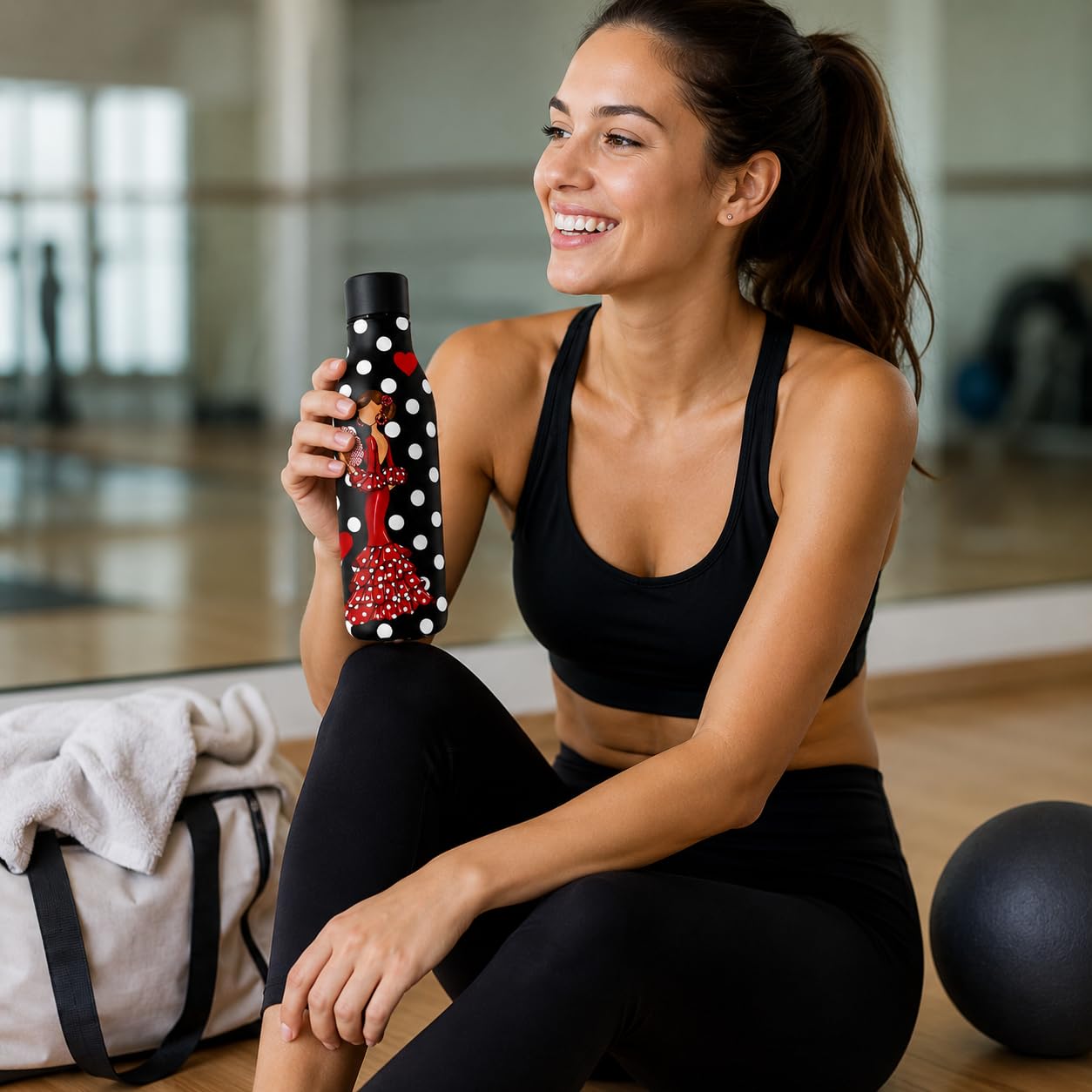
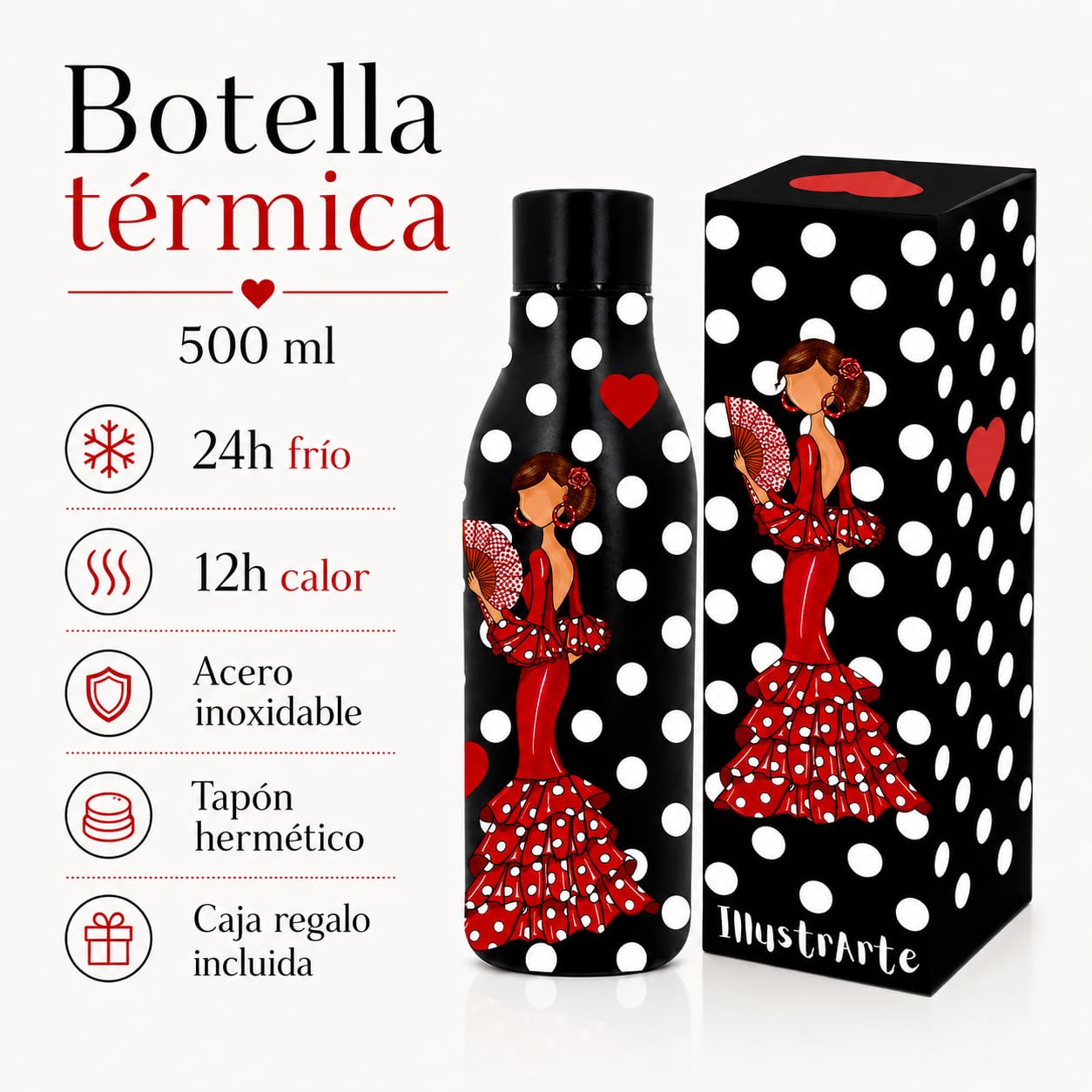
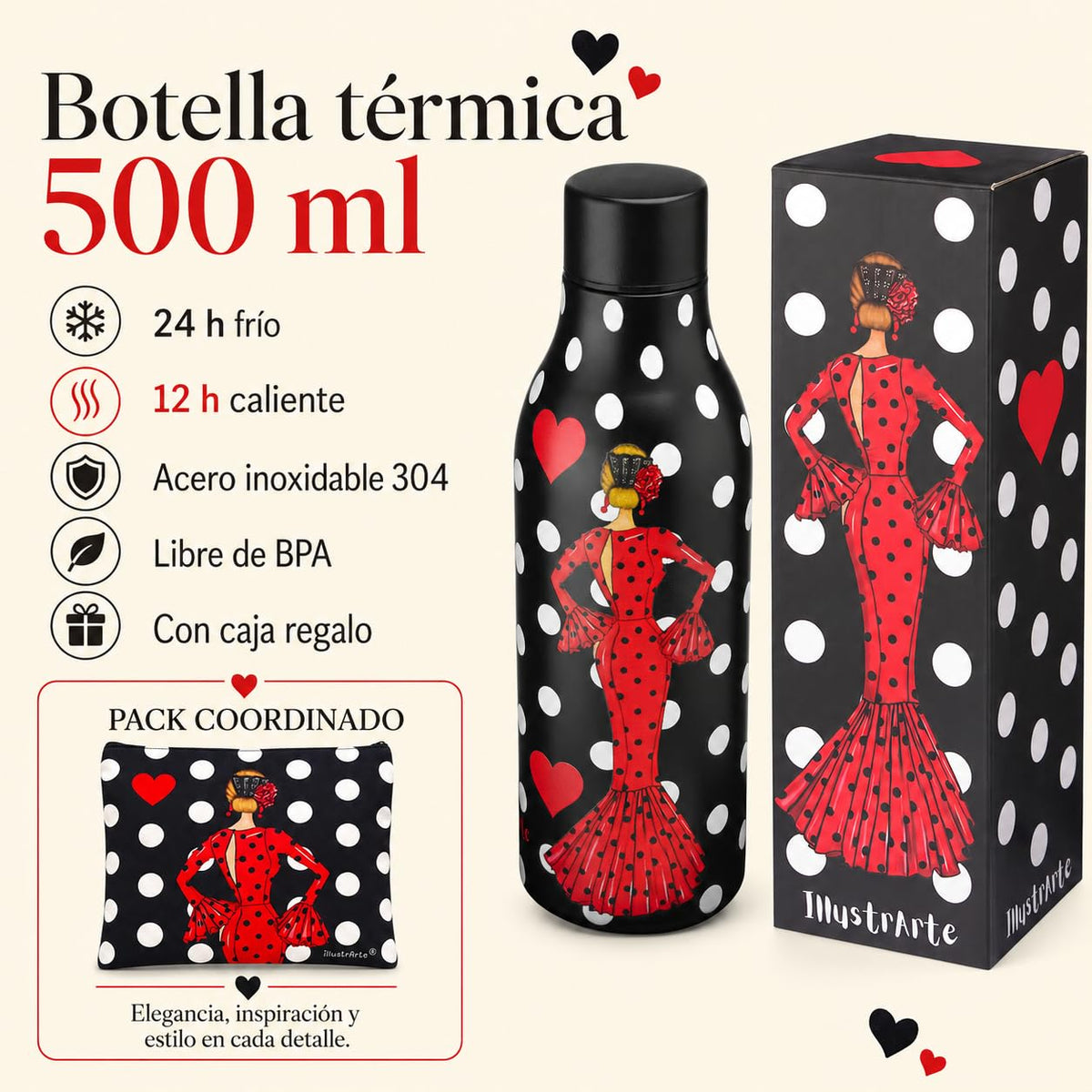
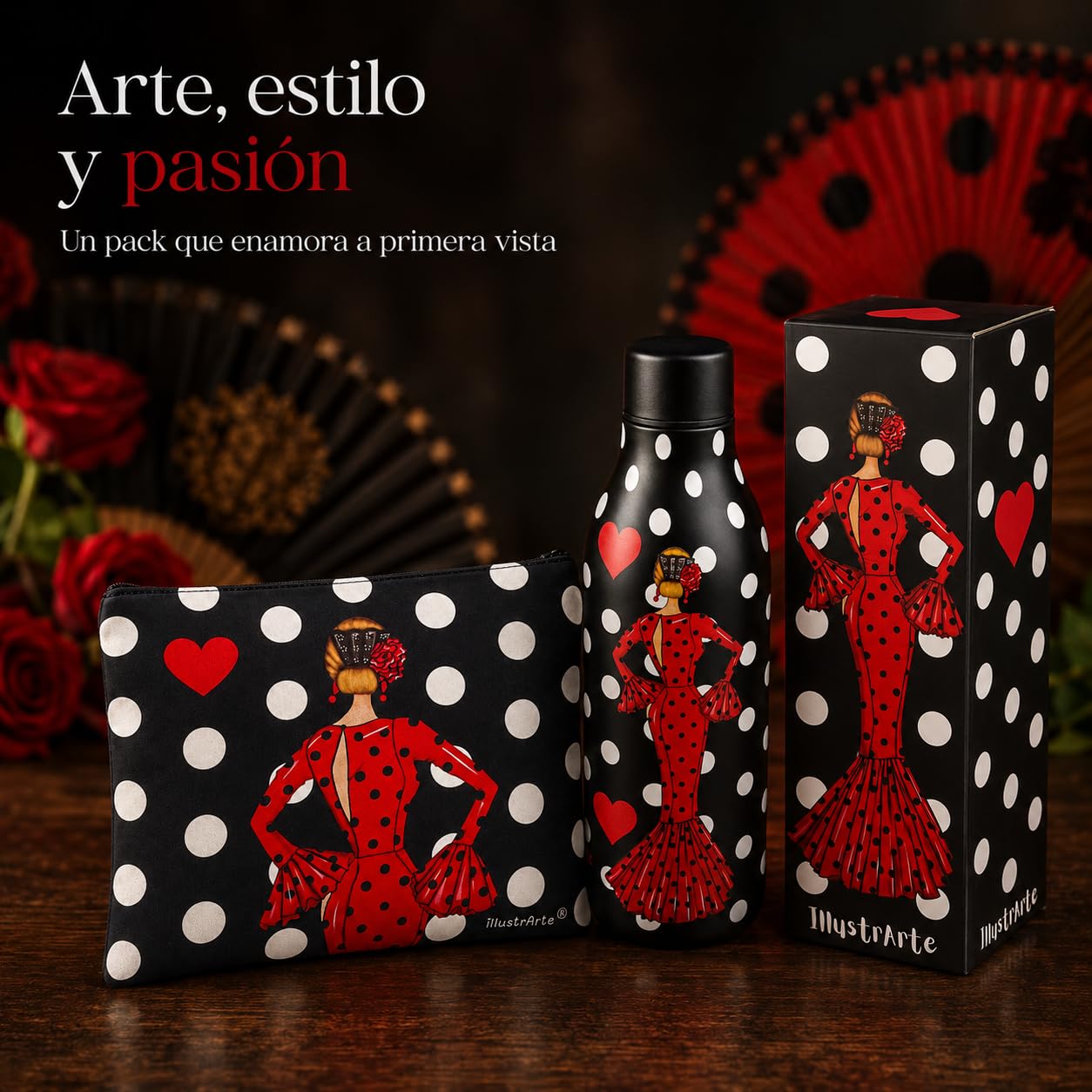
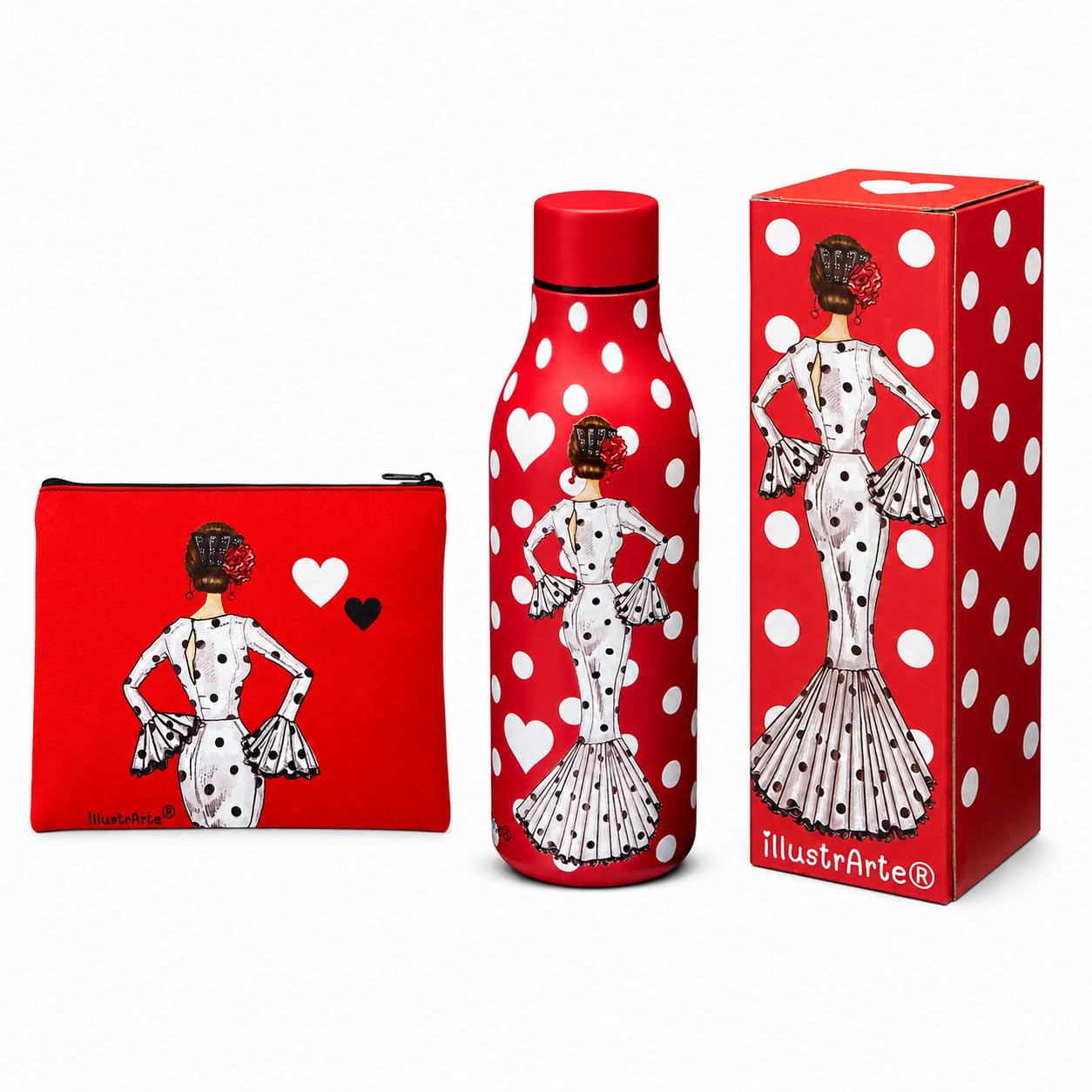
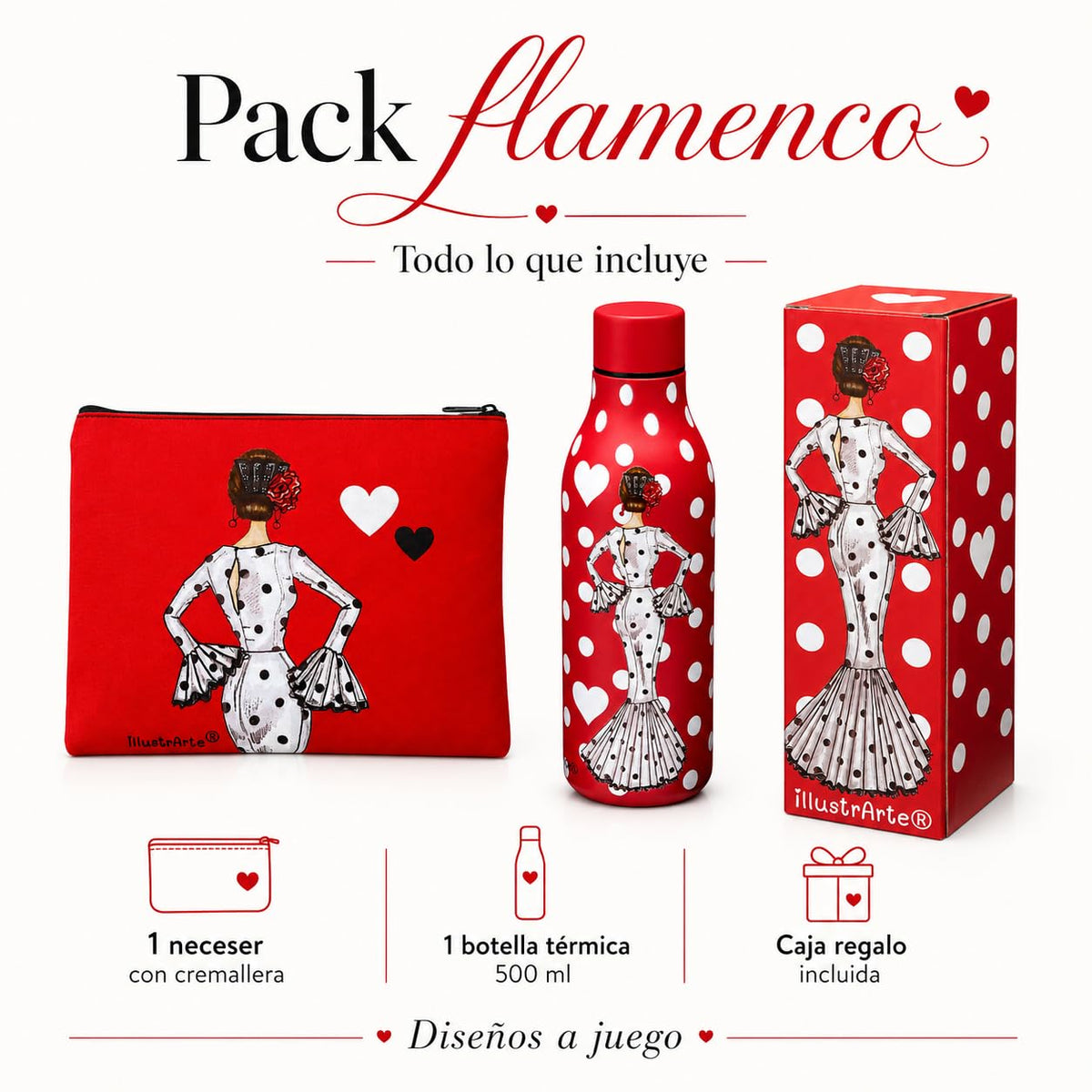
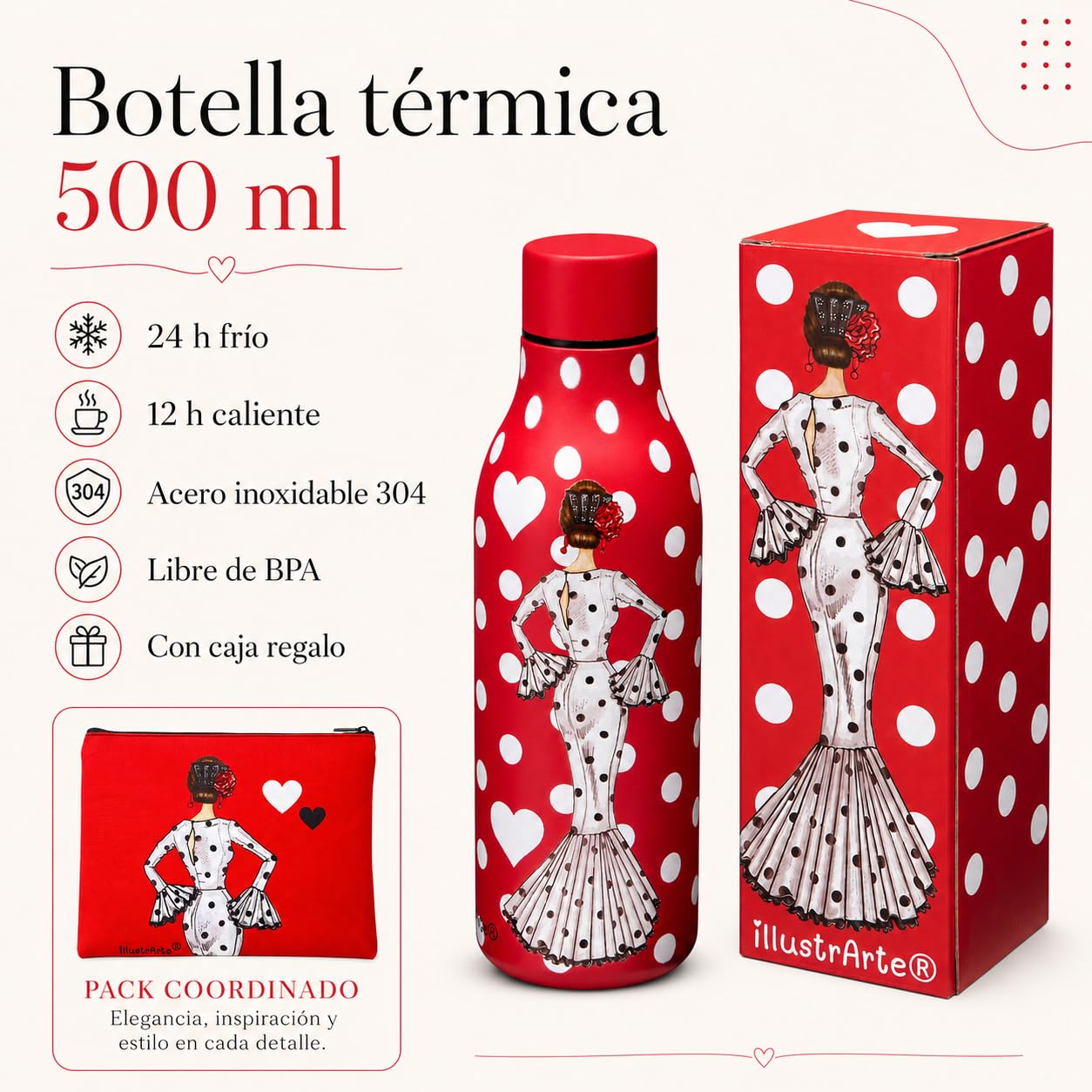
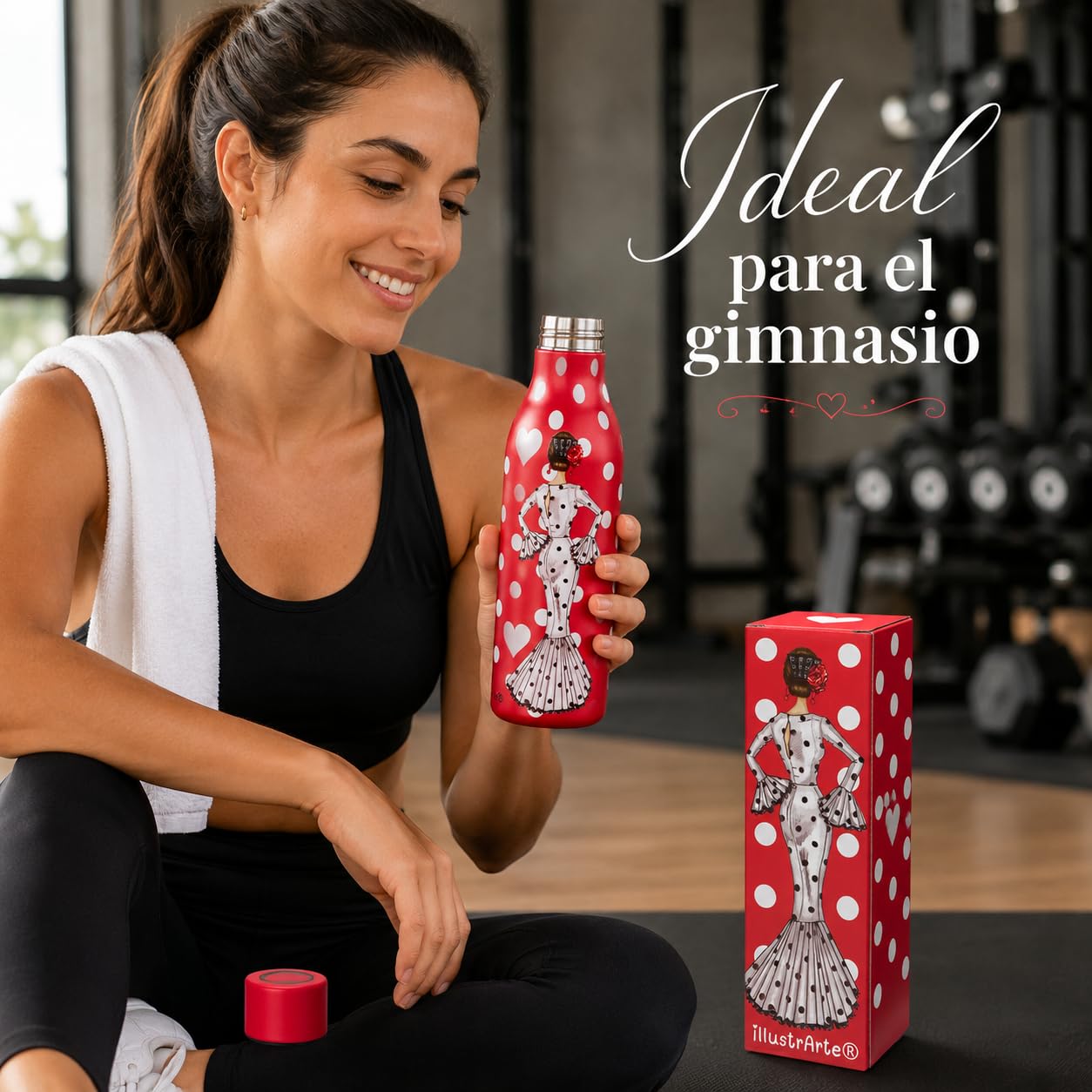
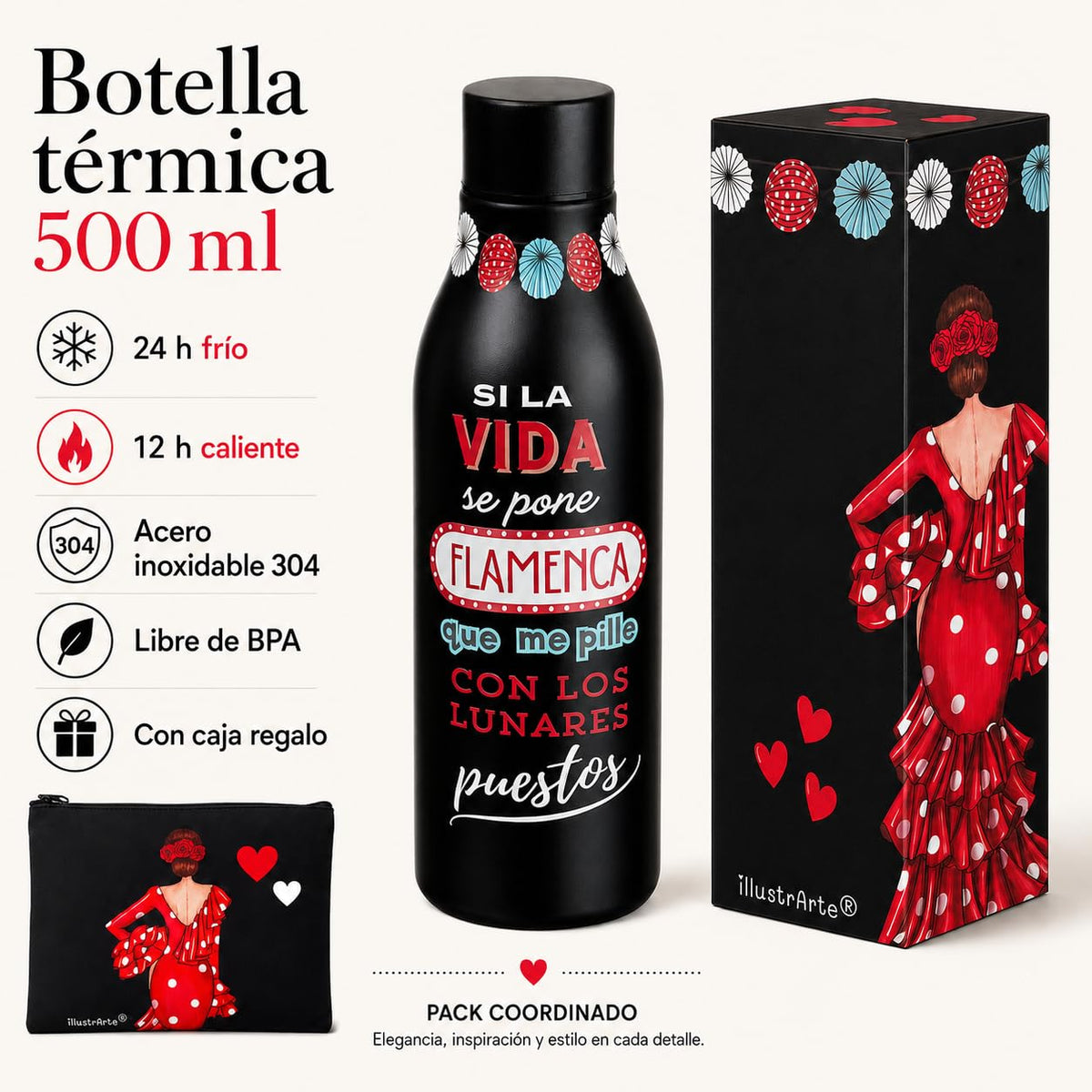
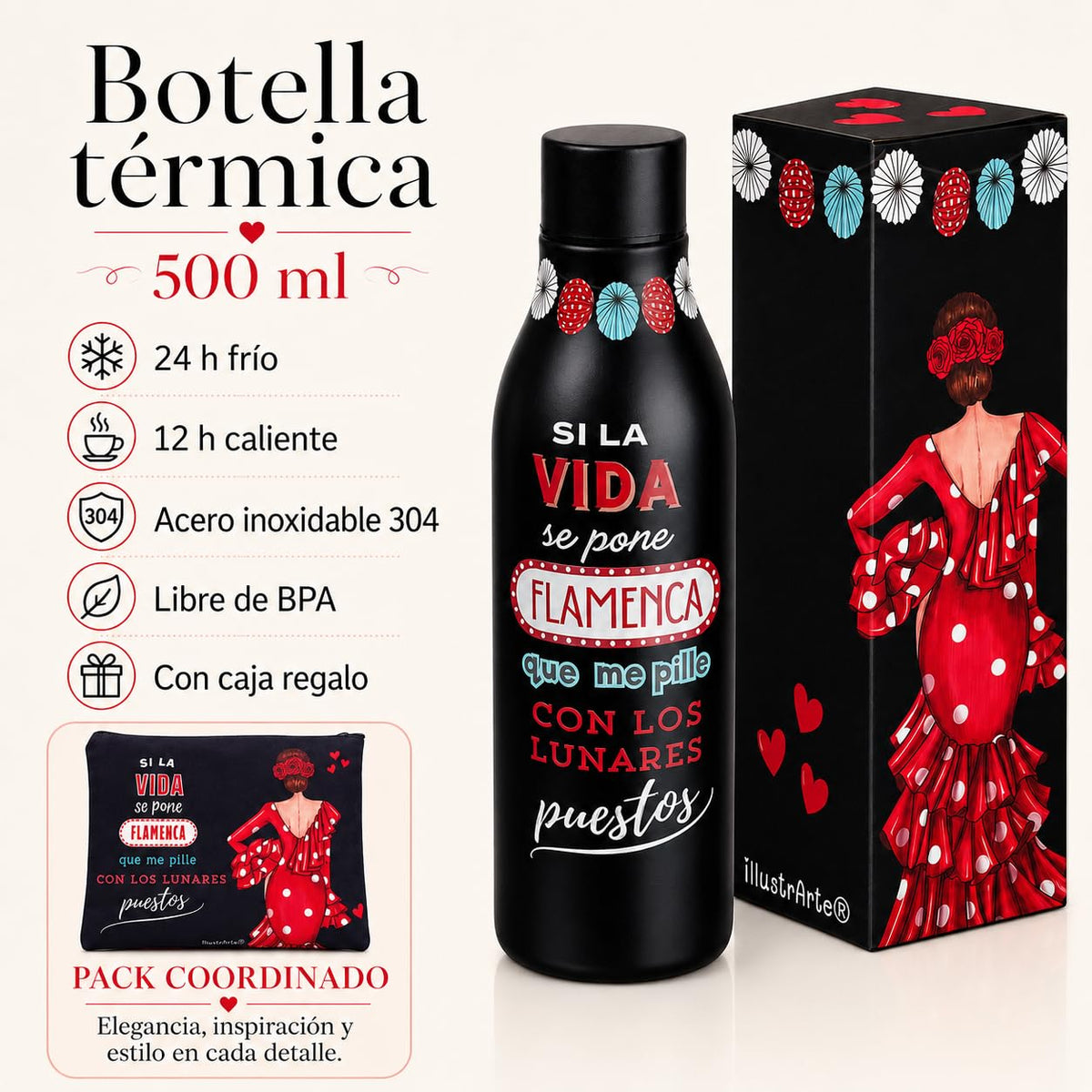
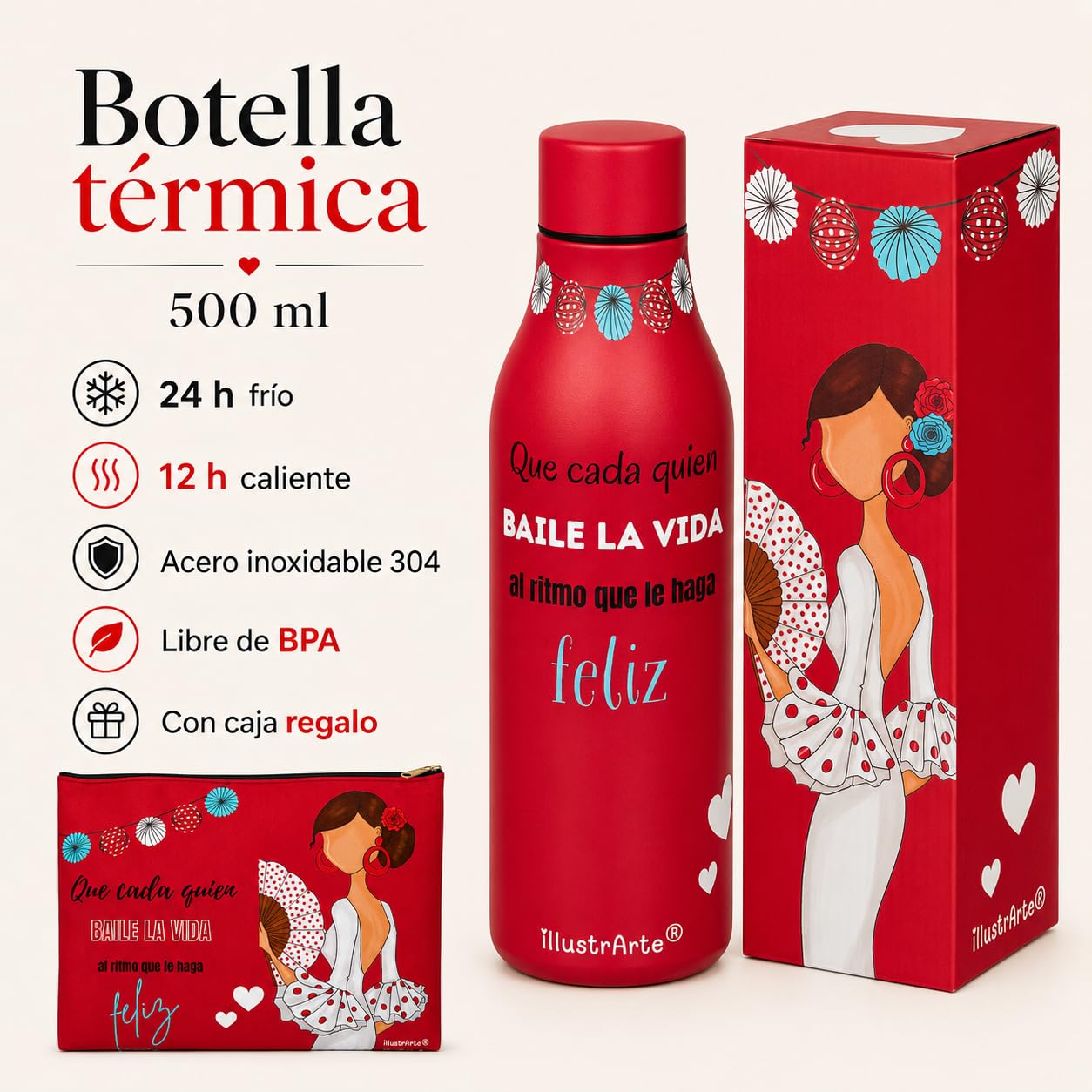
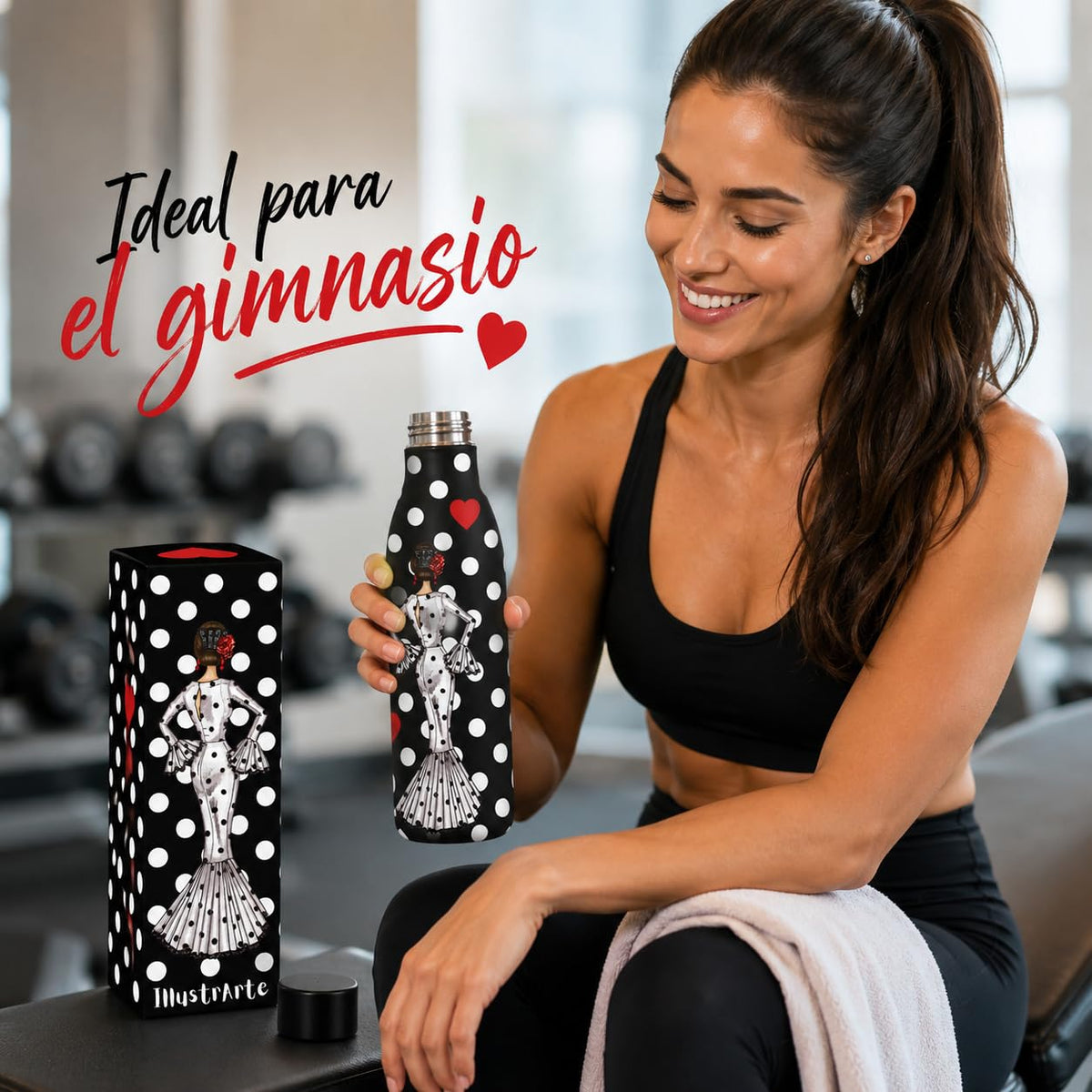
1. A water bottle
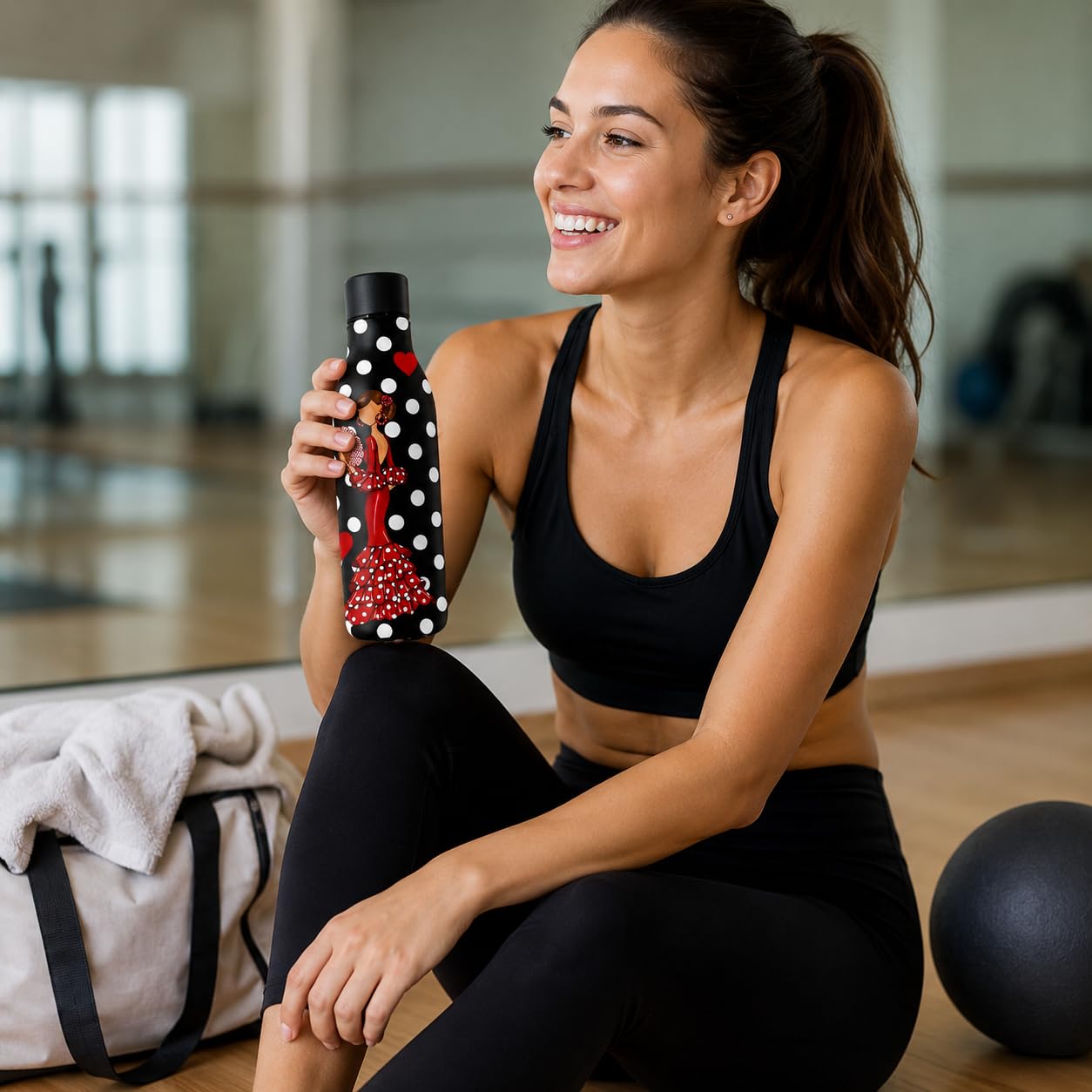
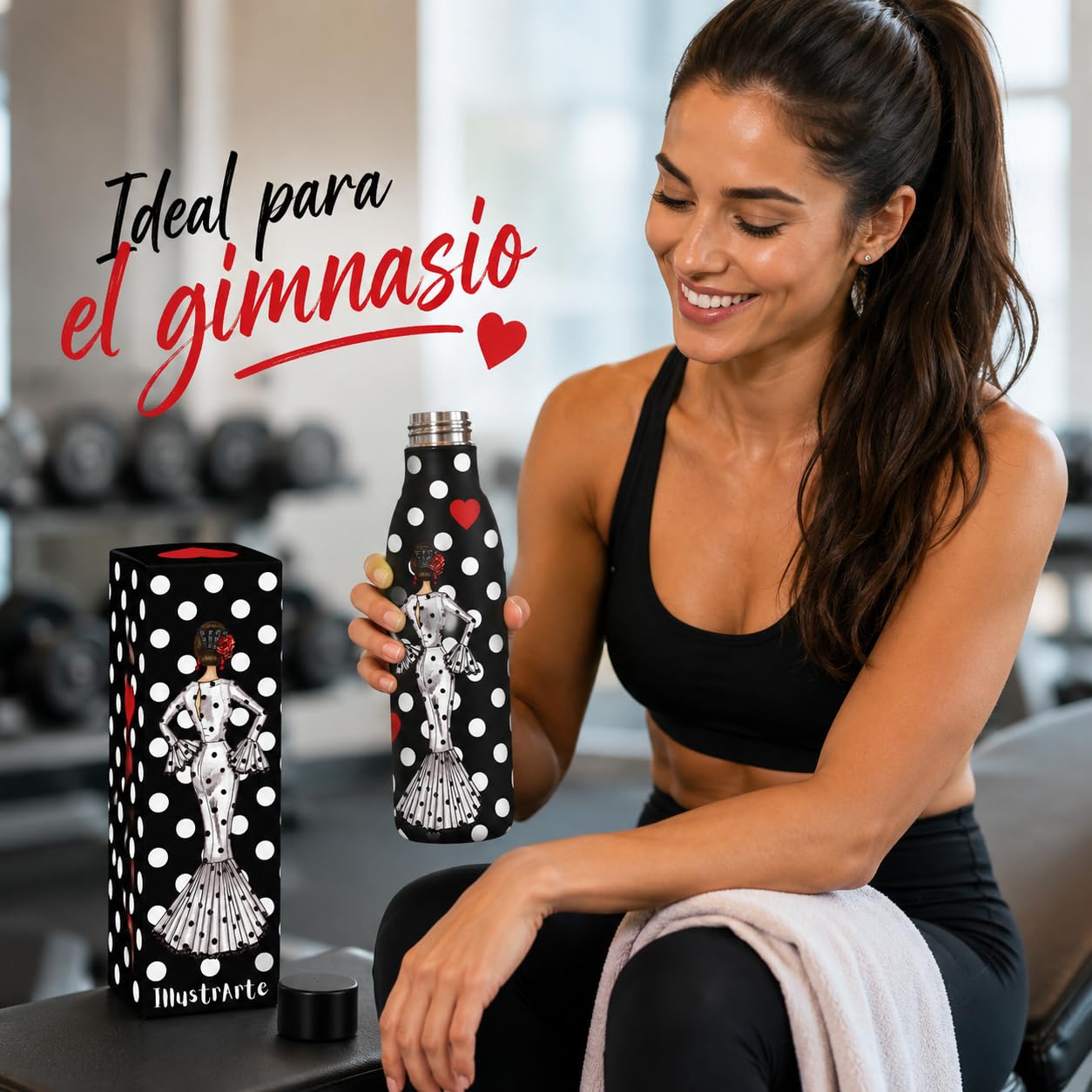
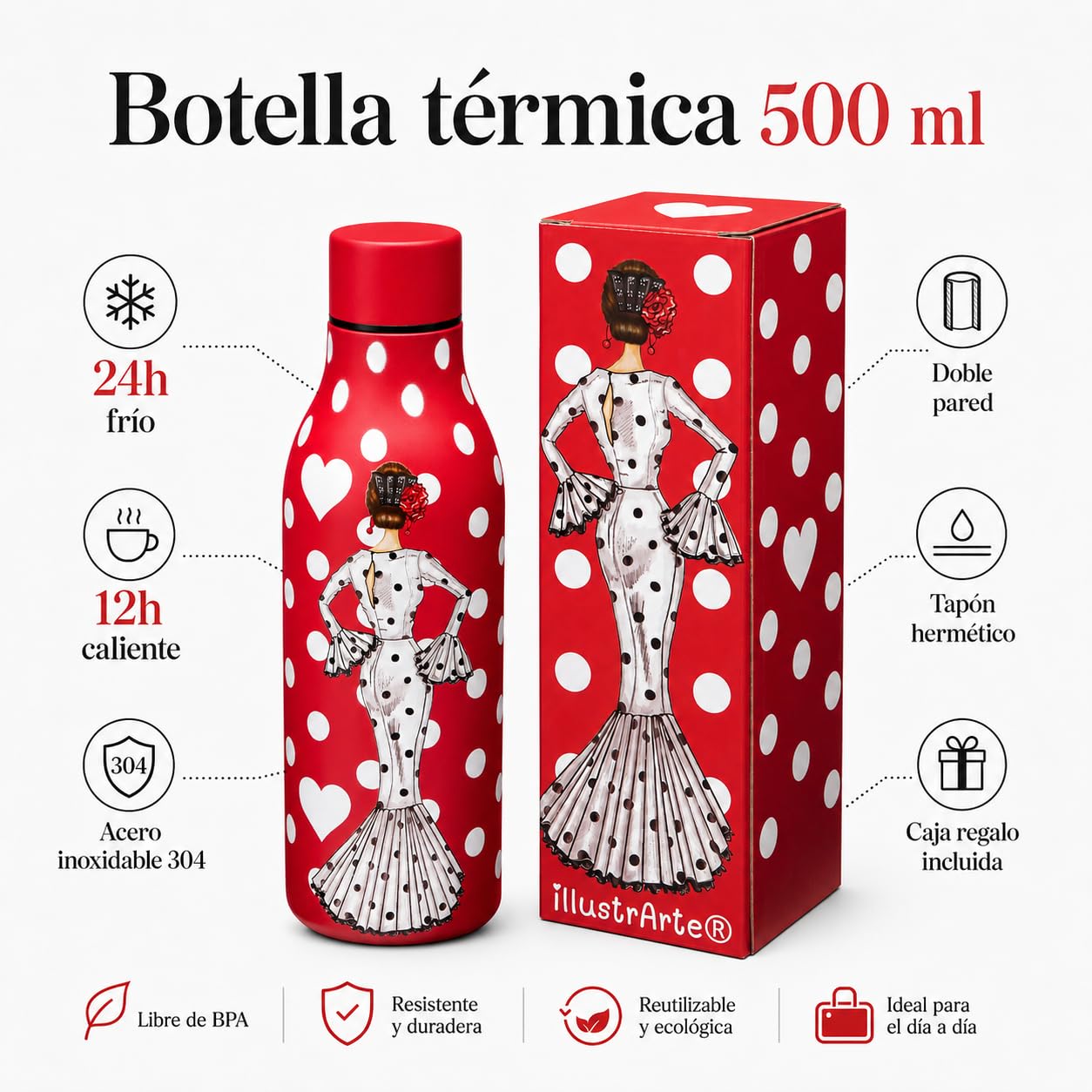
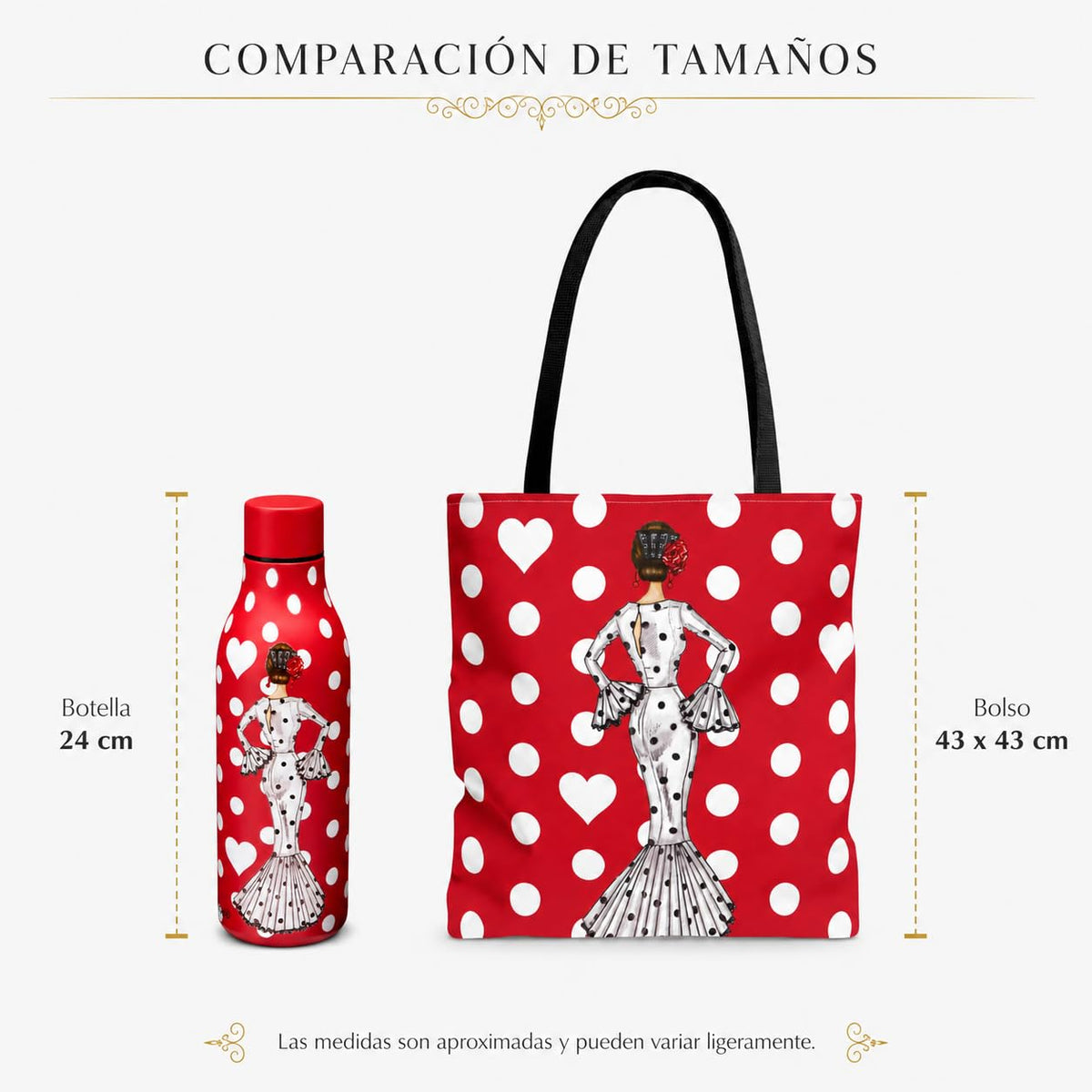
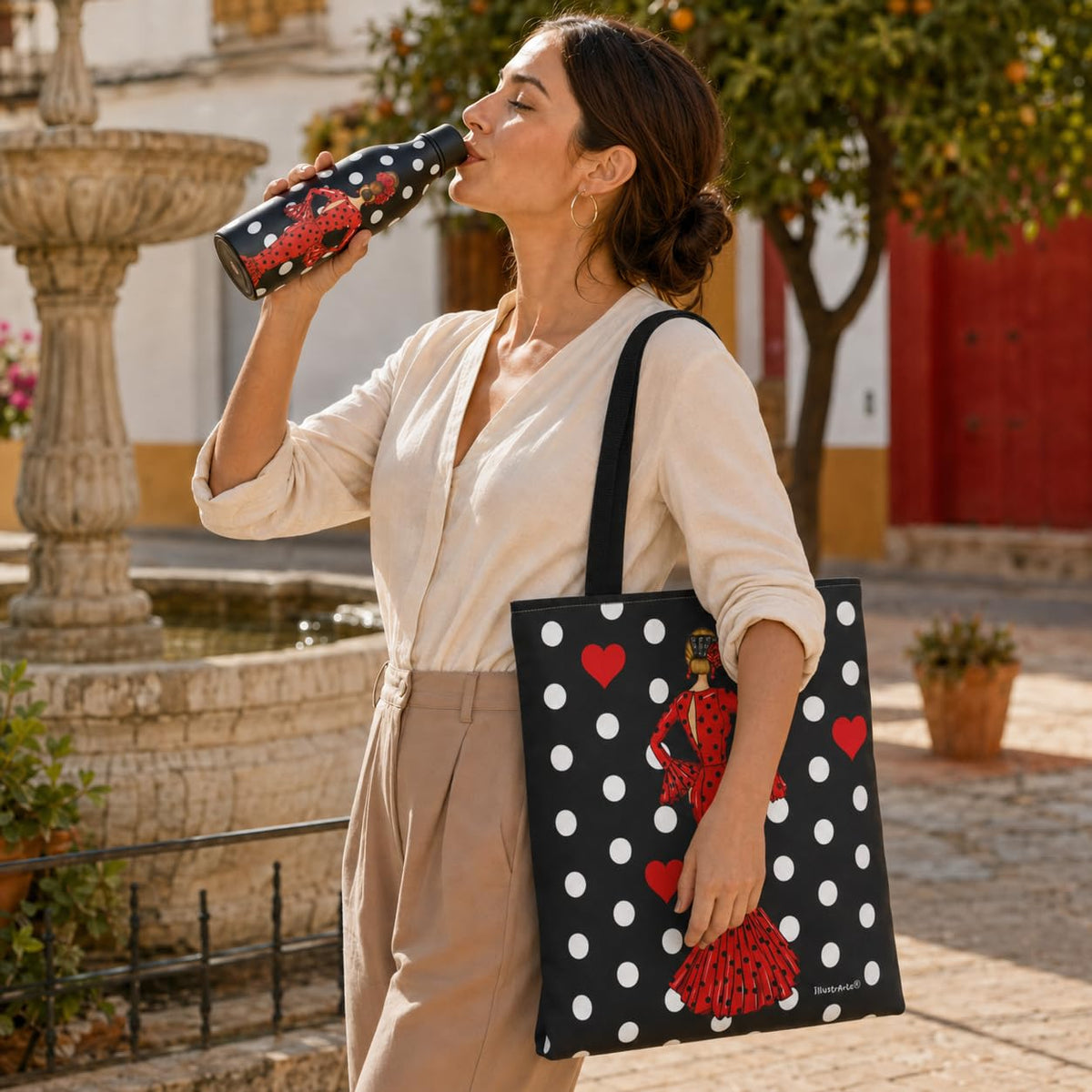
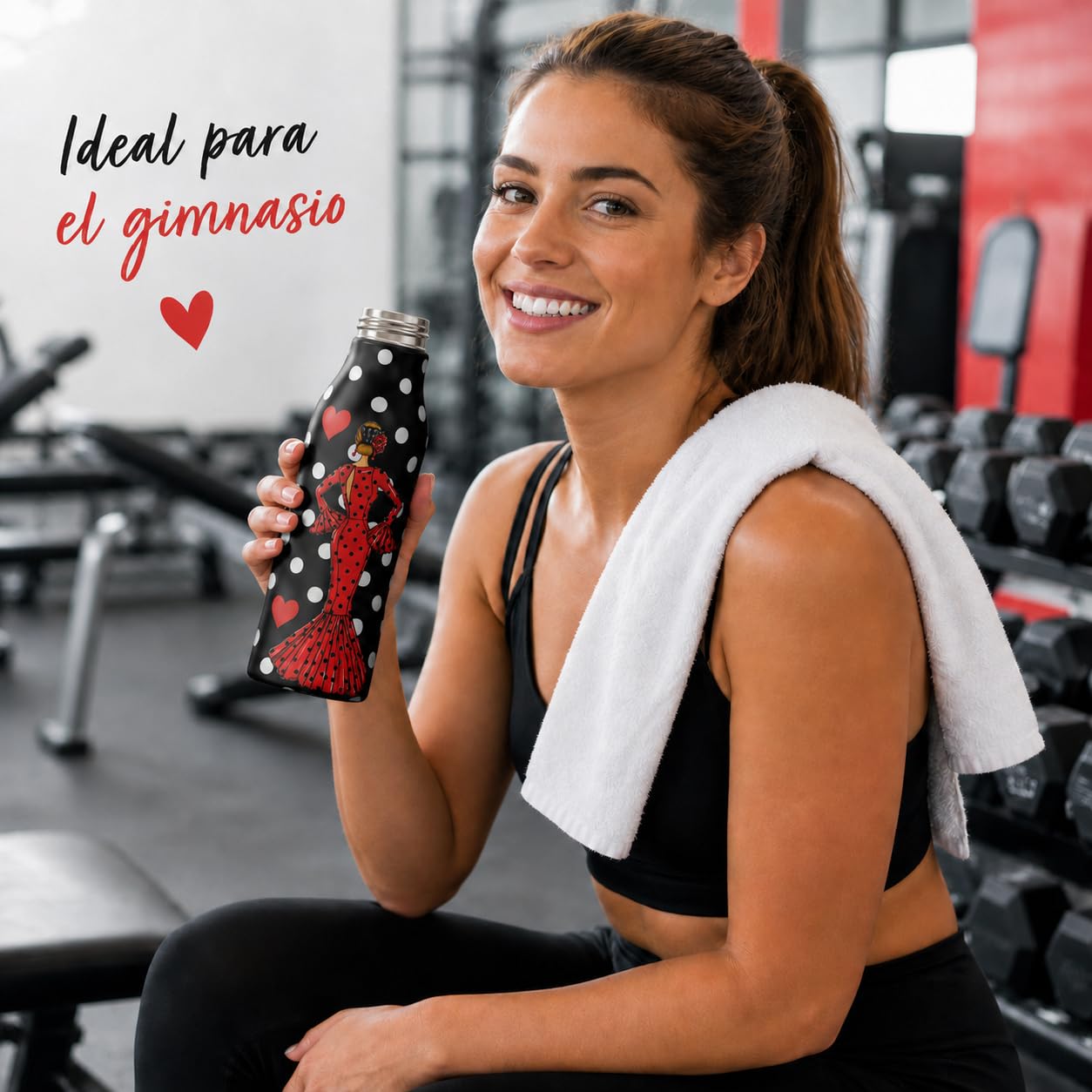
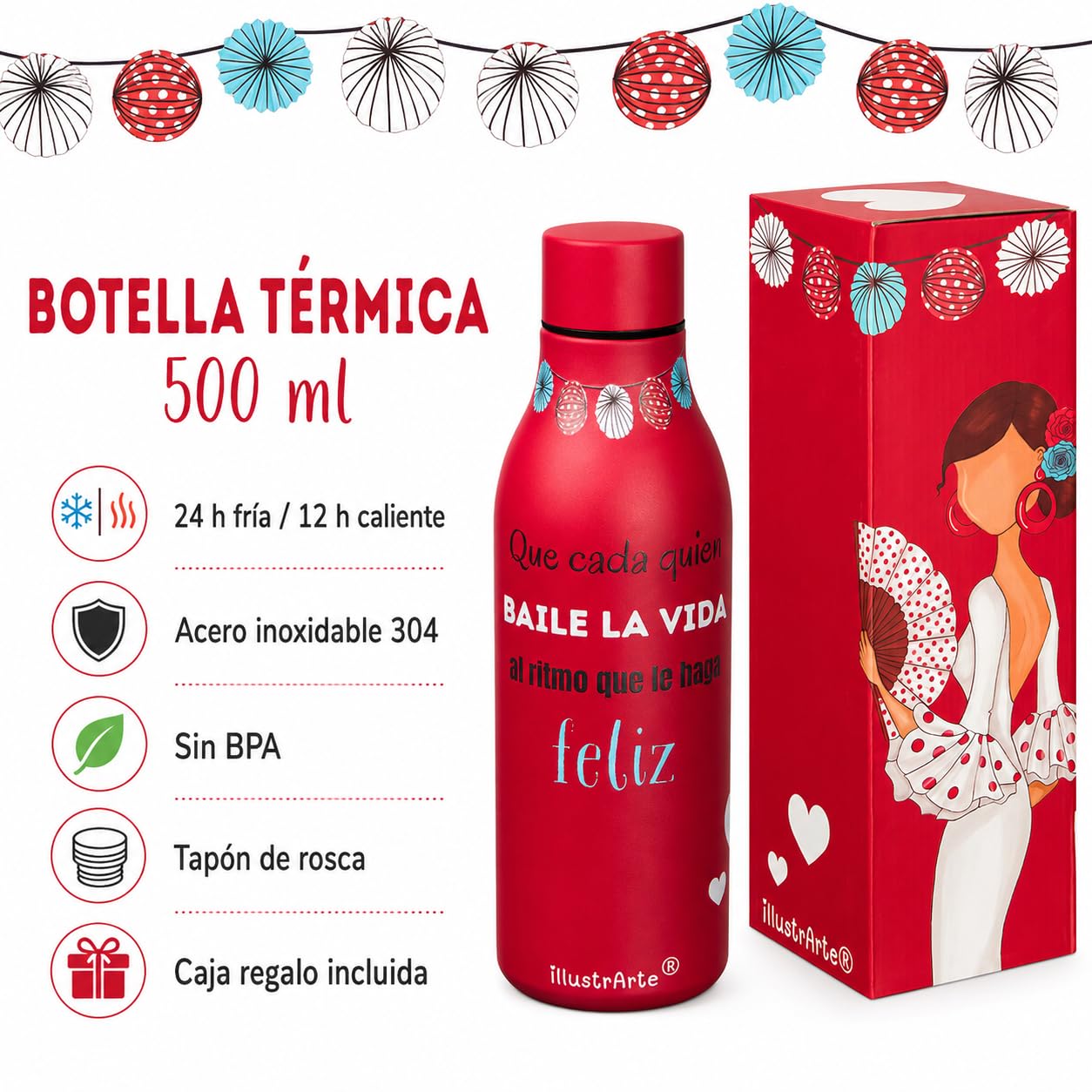
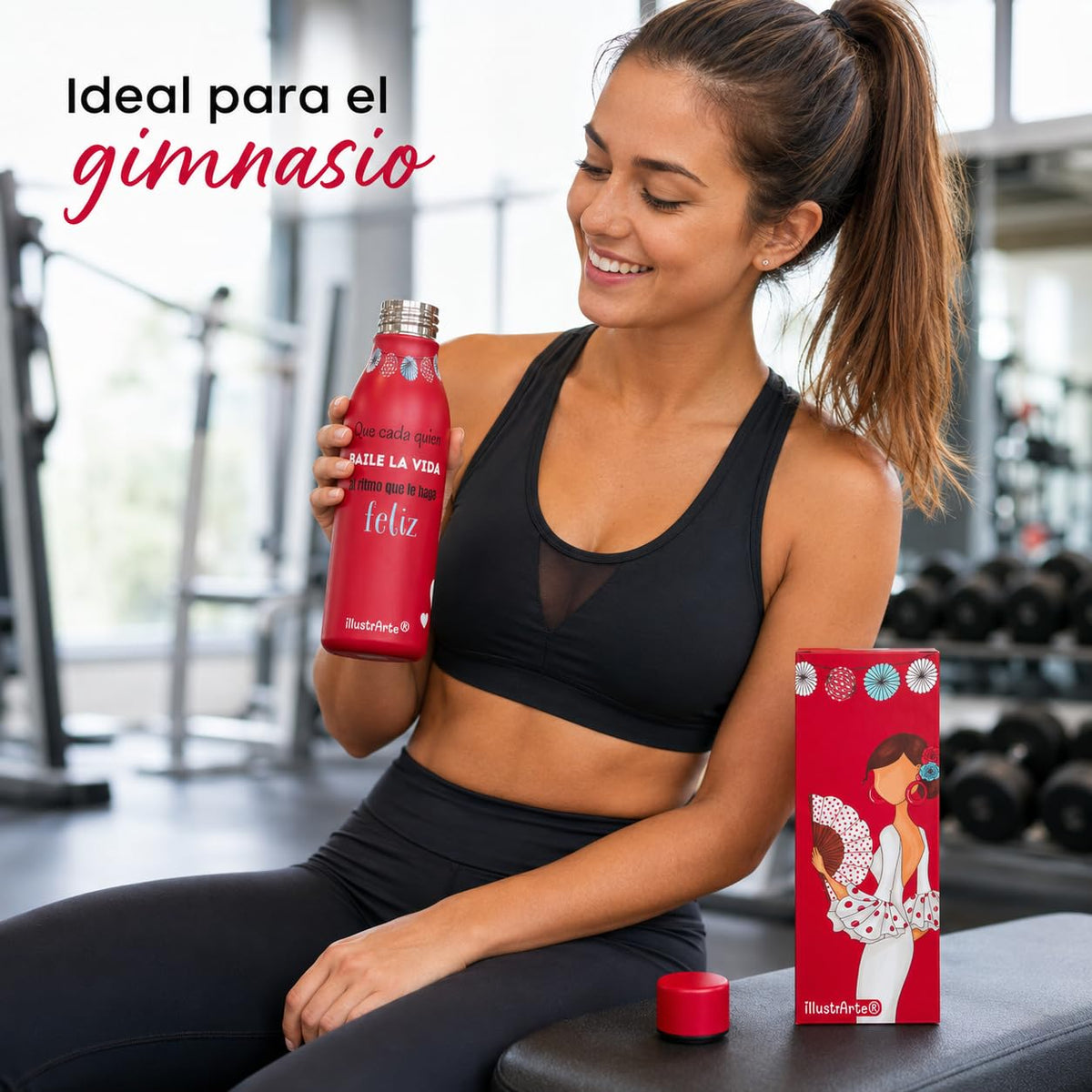
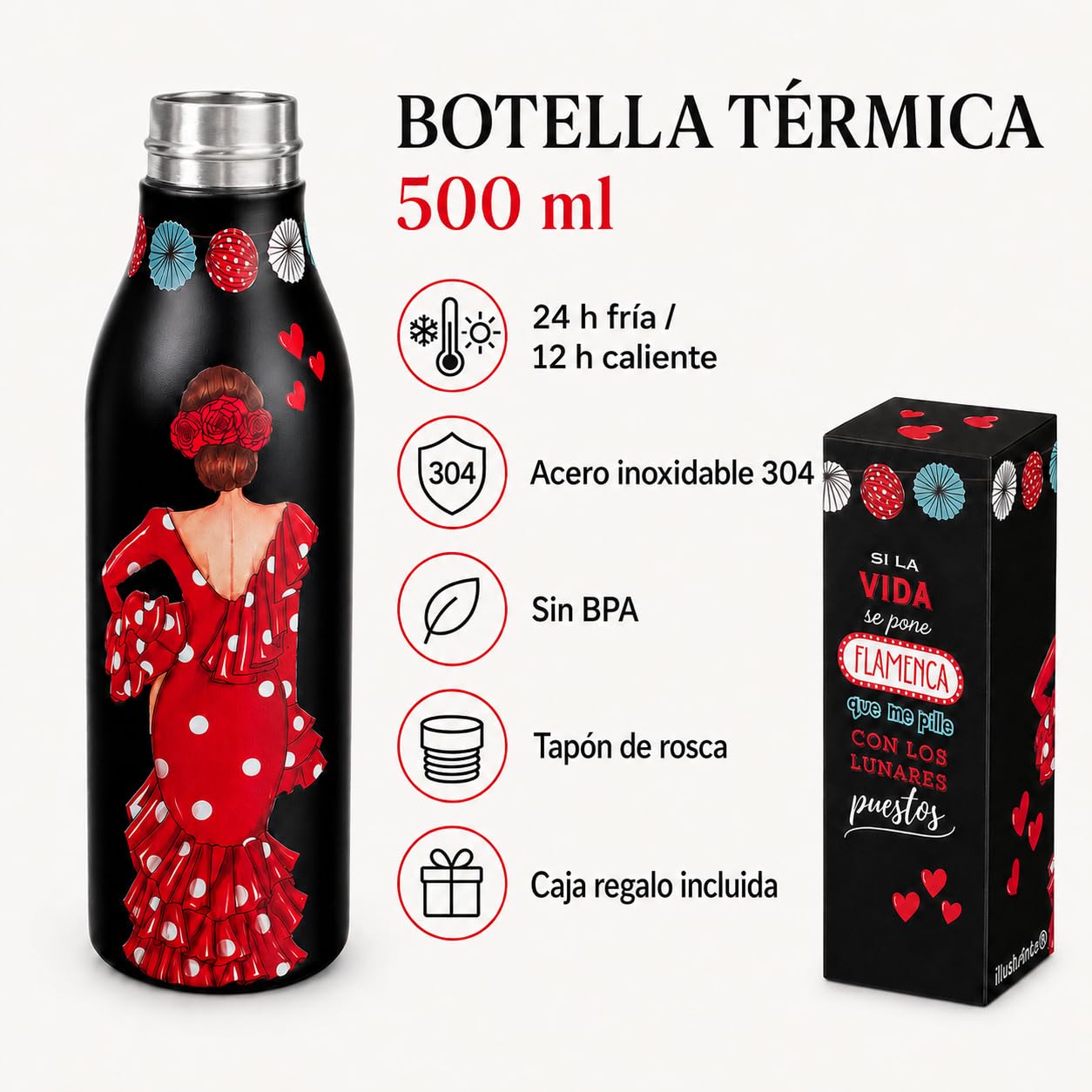
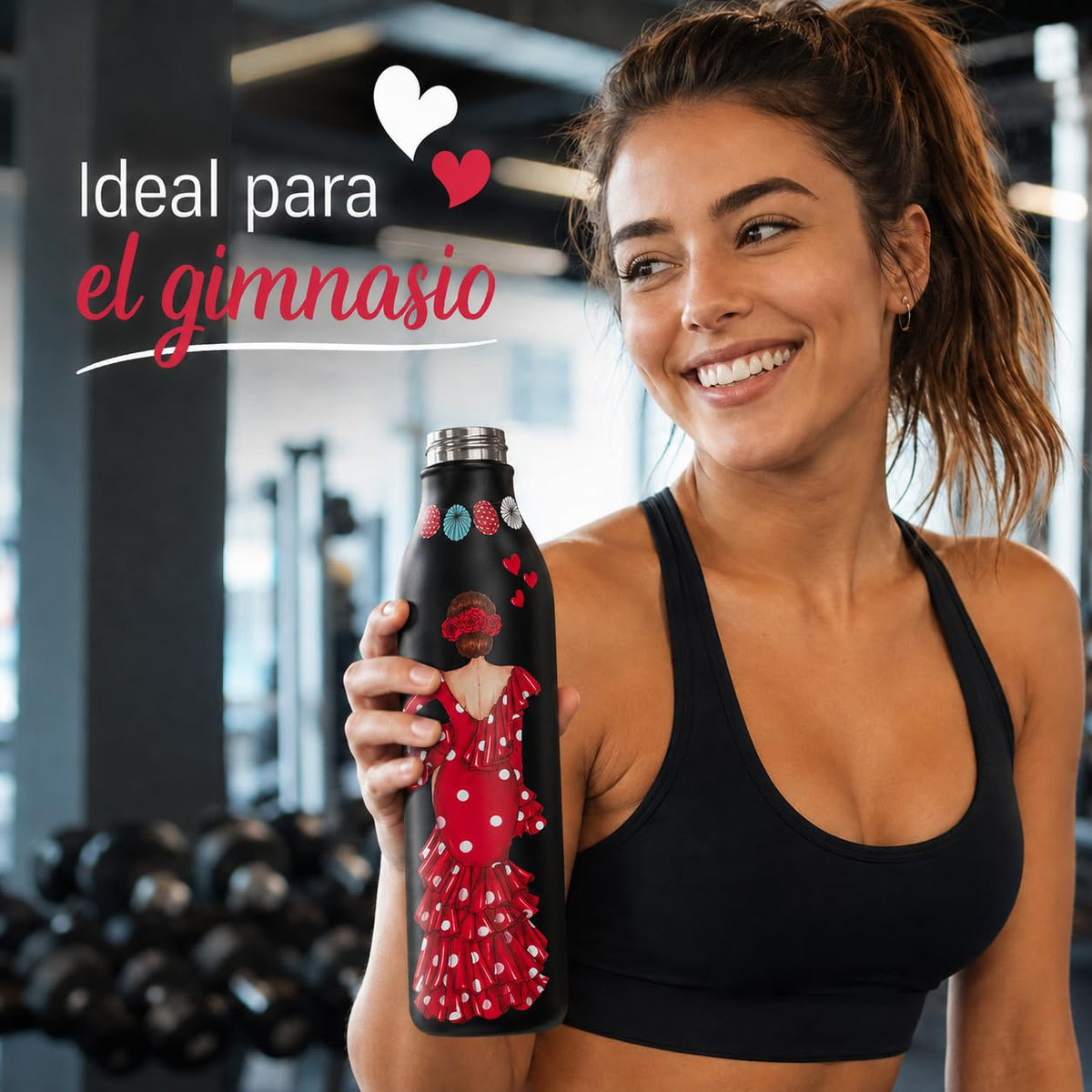
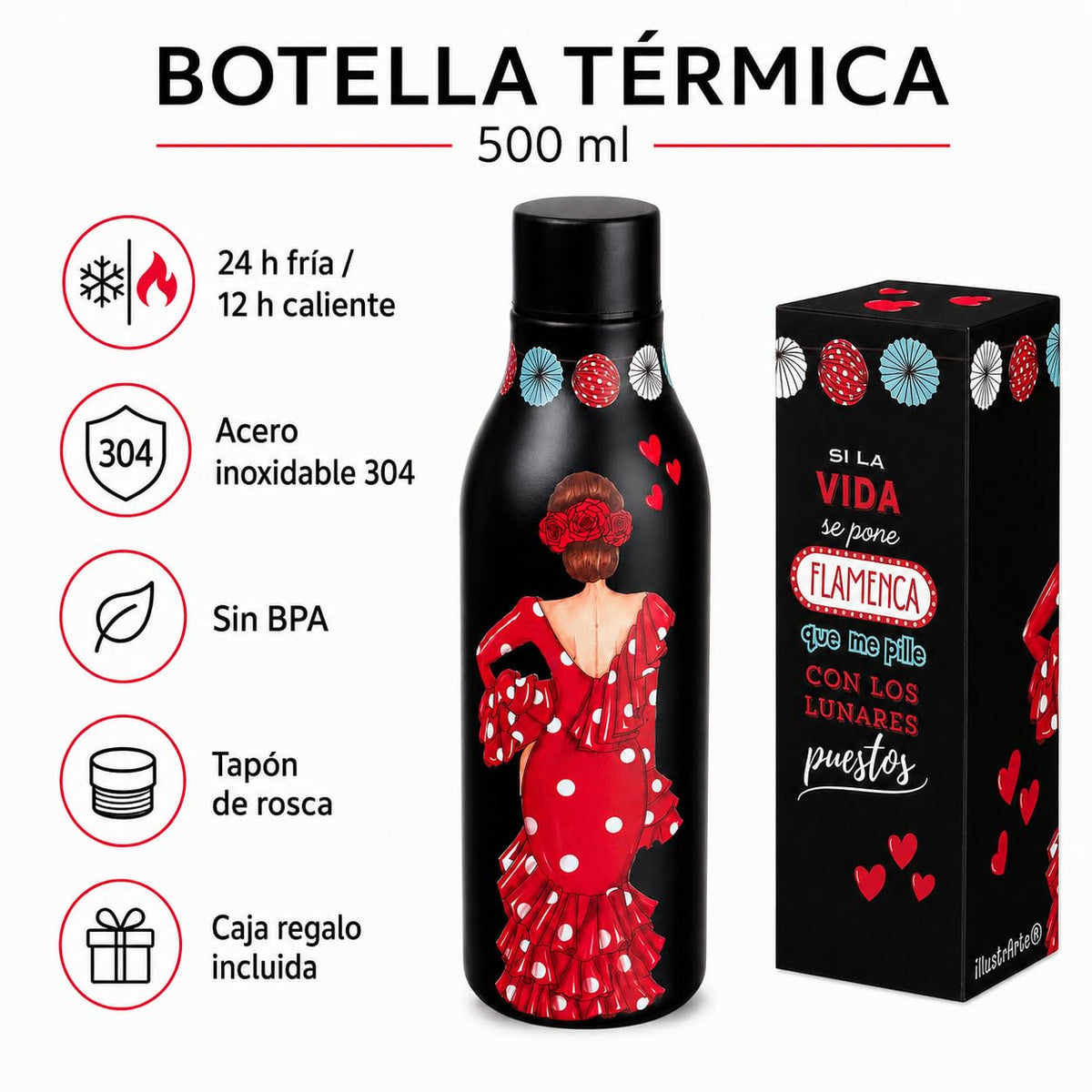
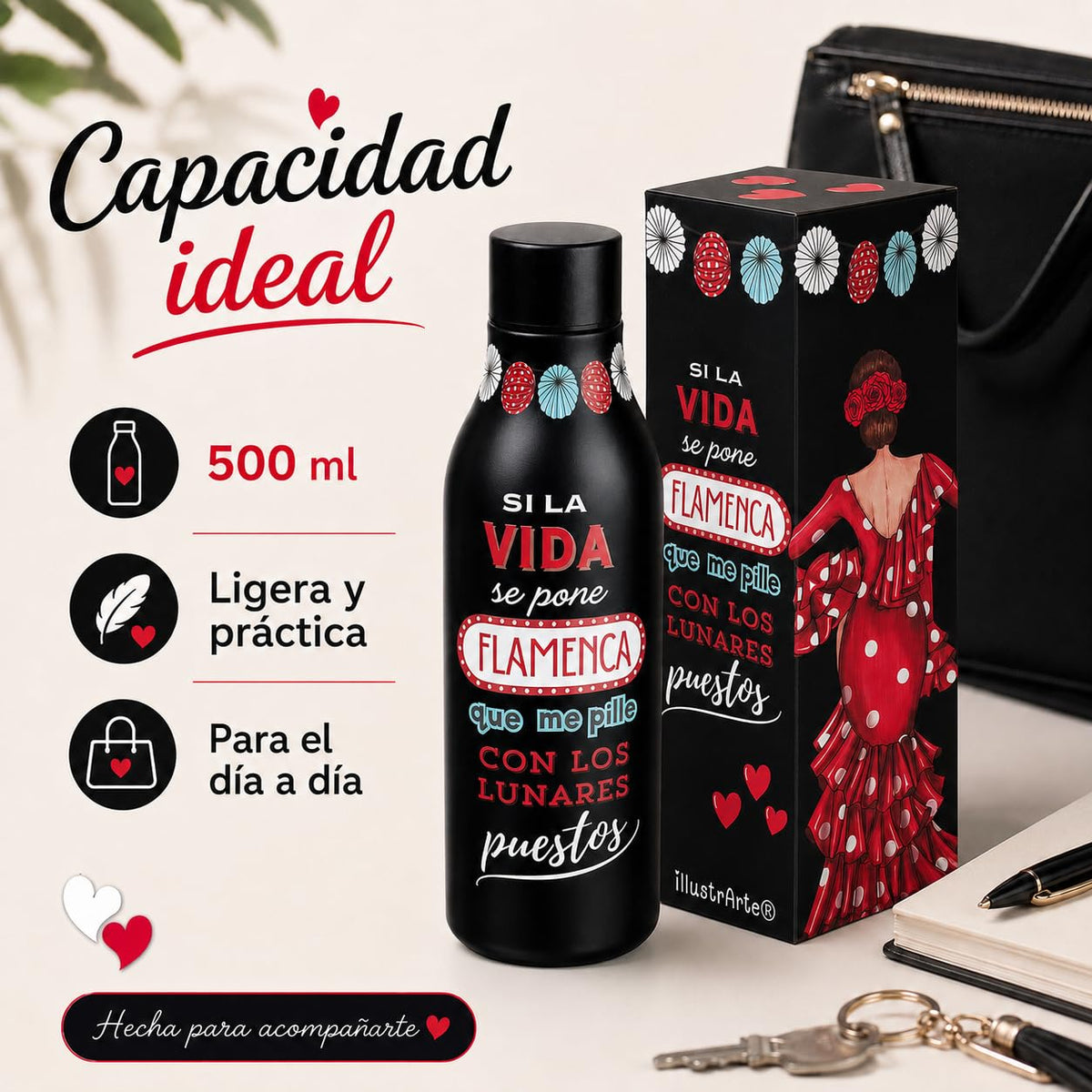
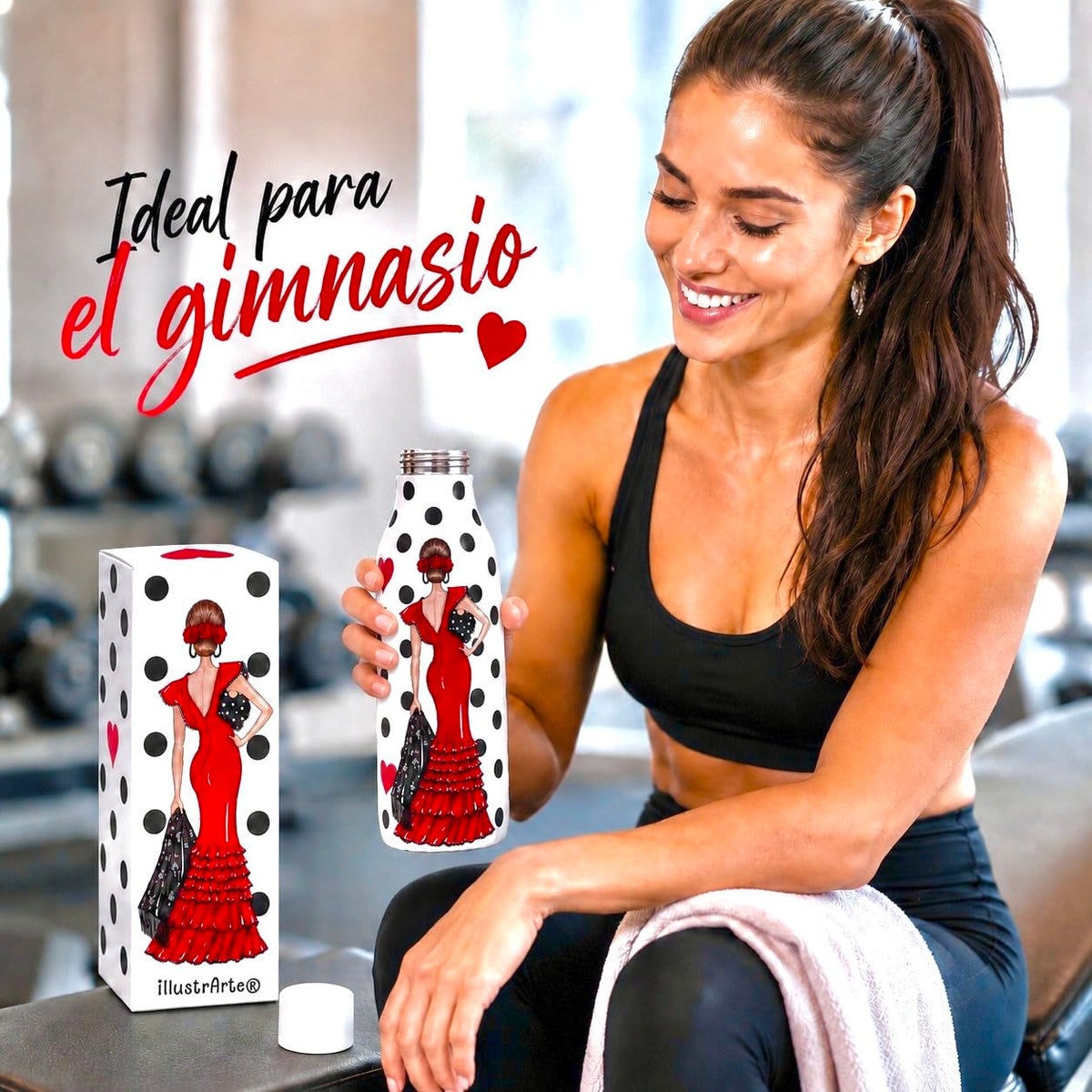
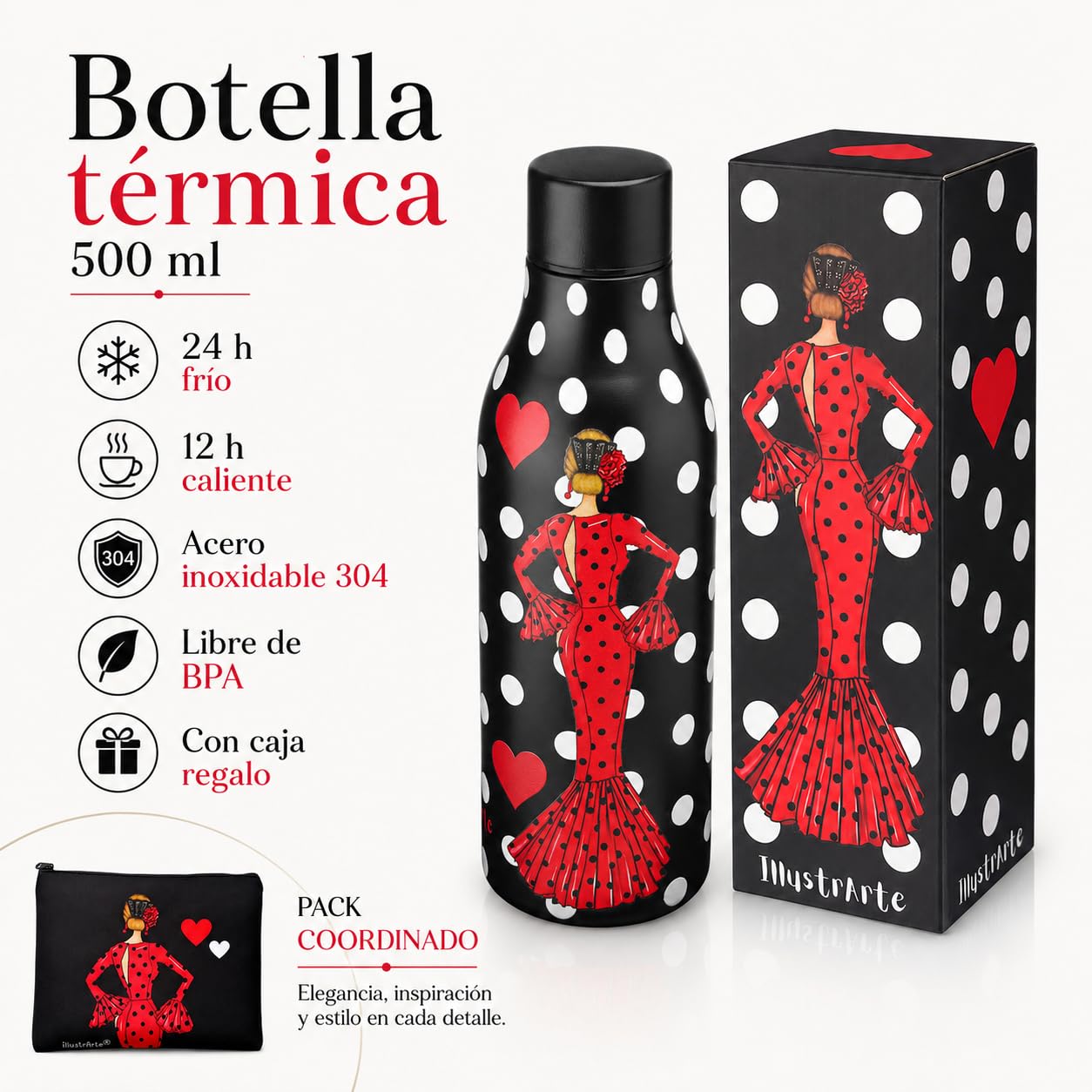
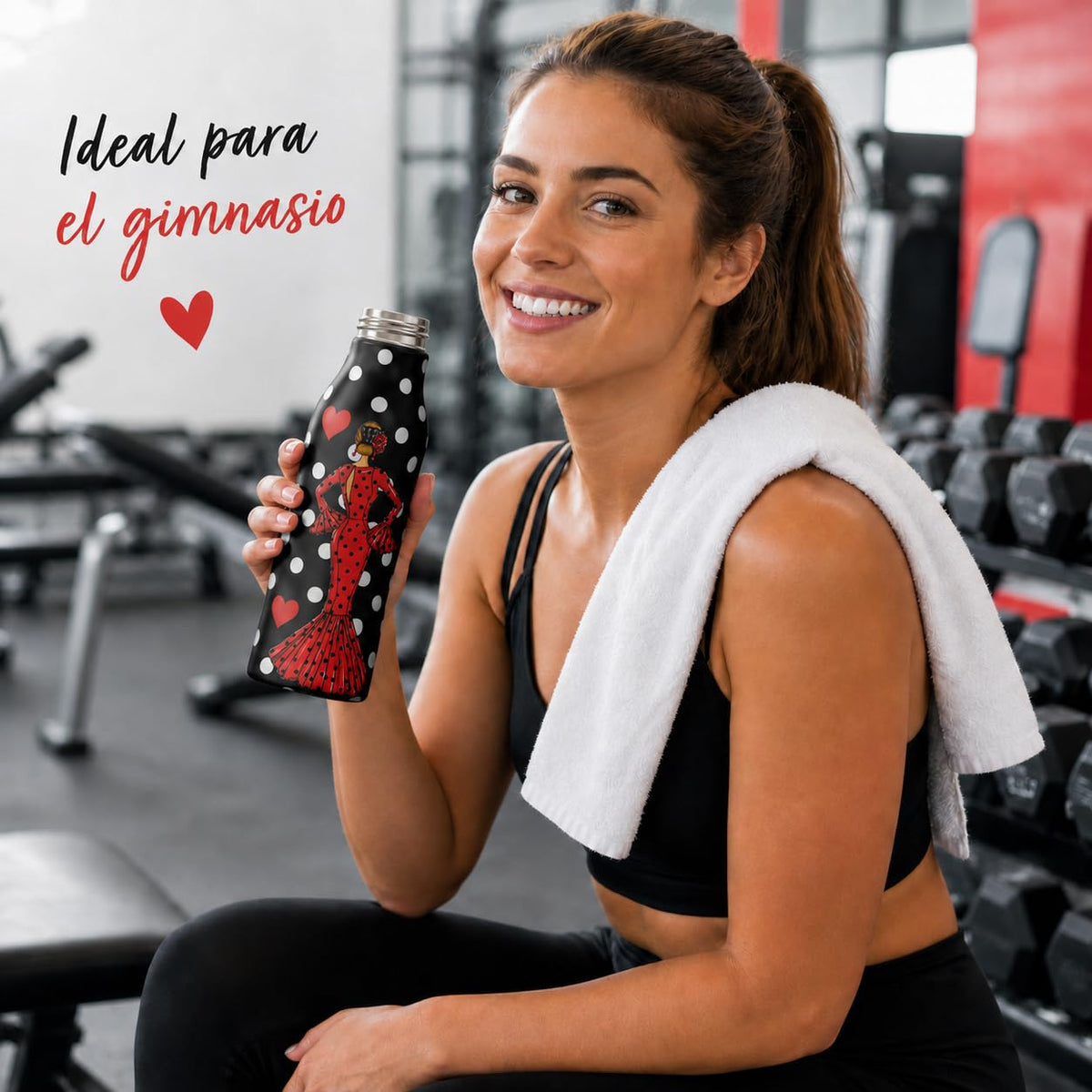
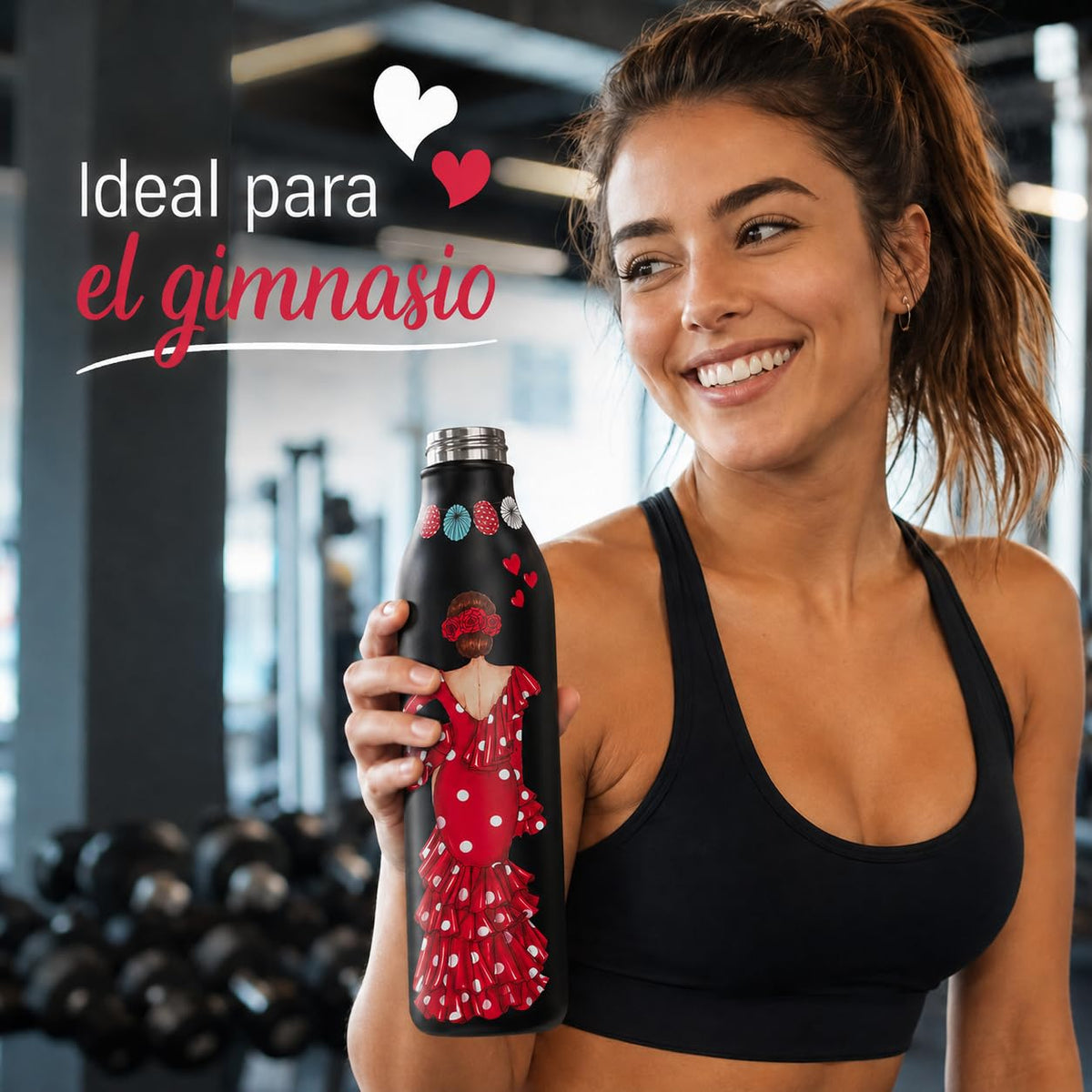
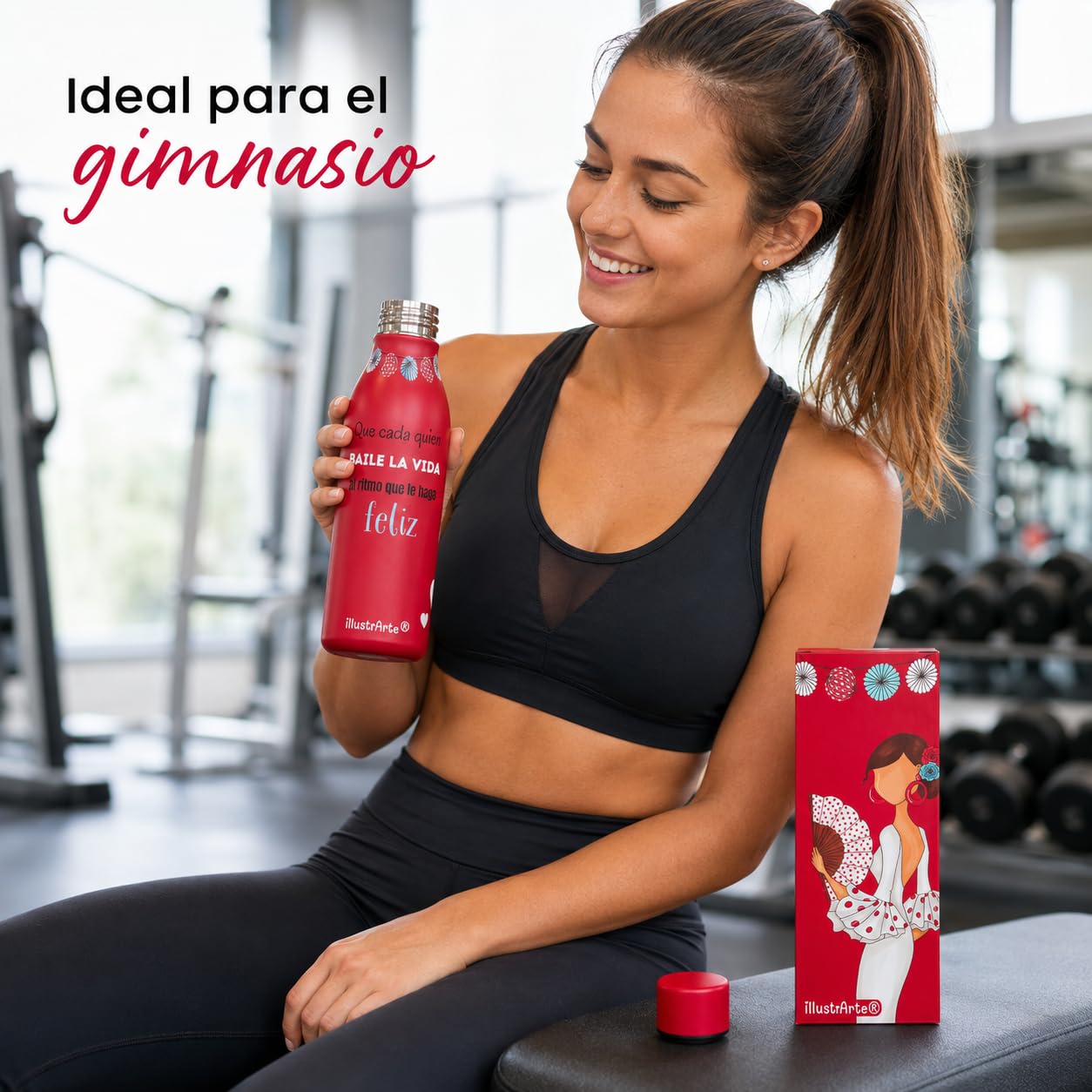
Staying hydrated matters in any physical activity. Take a bottle that closes properly and can sit in your bag without any fear of leaking.
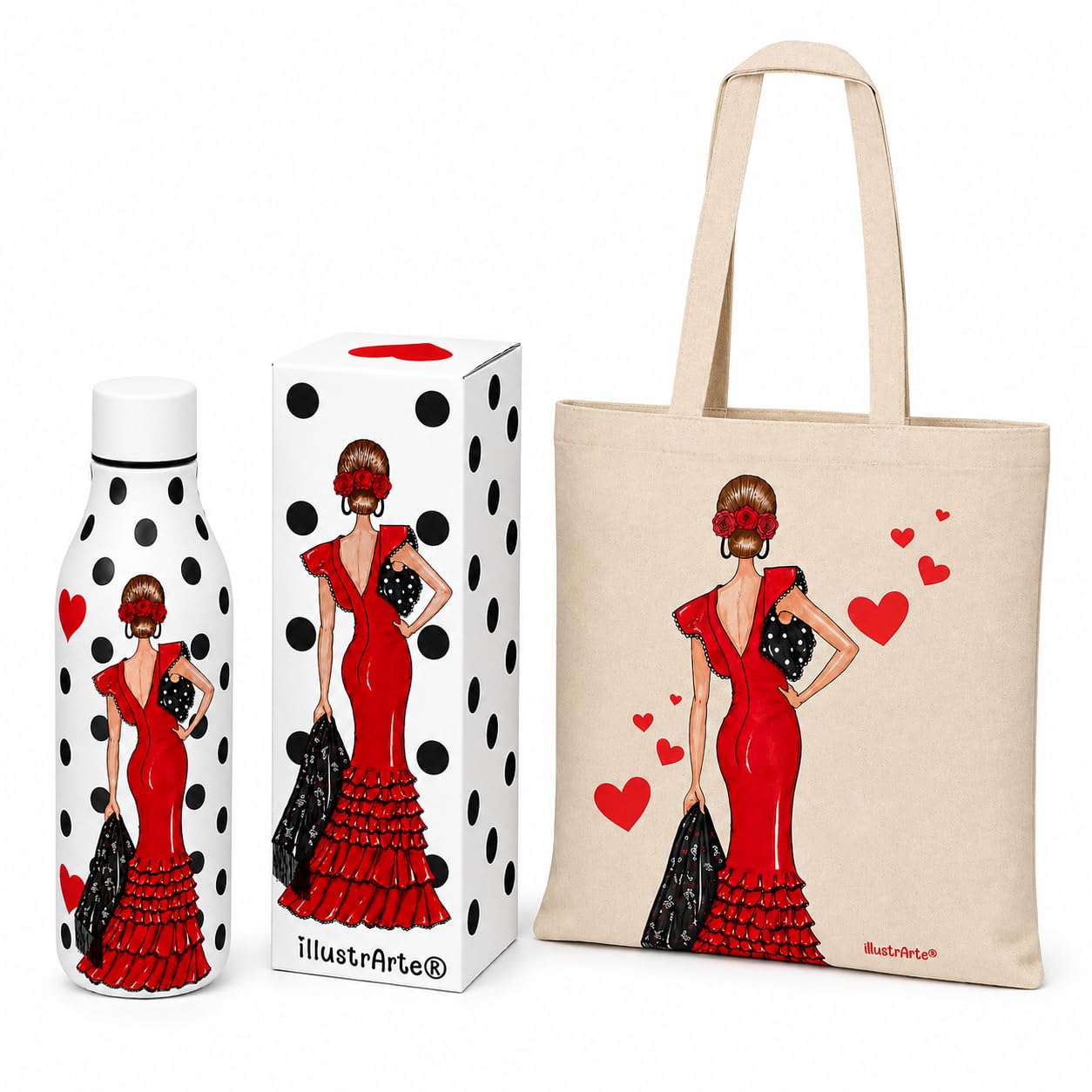
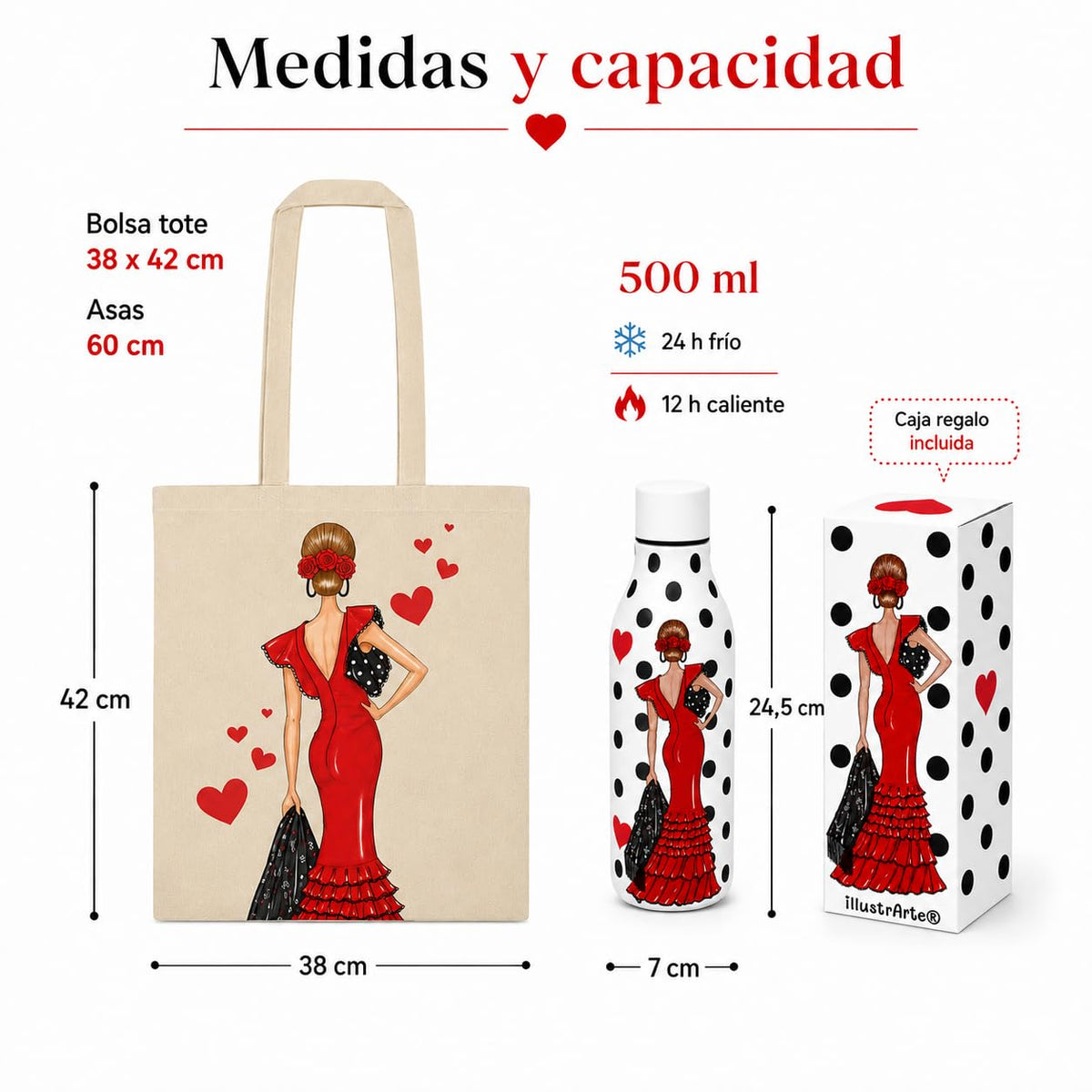
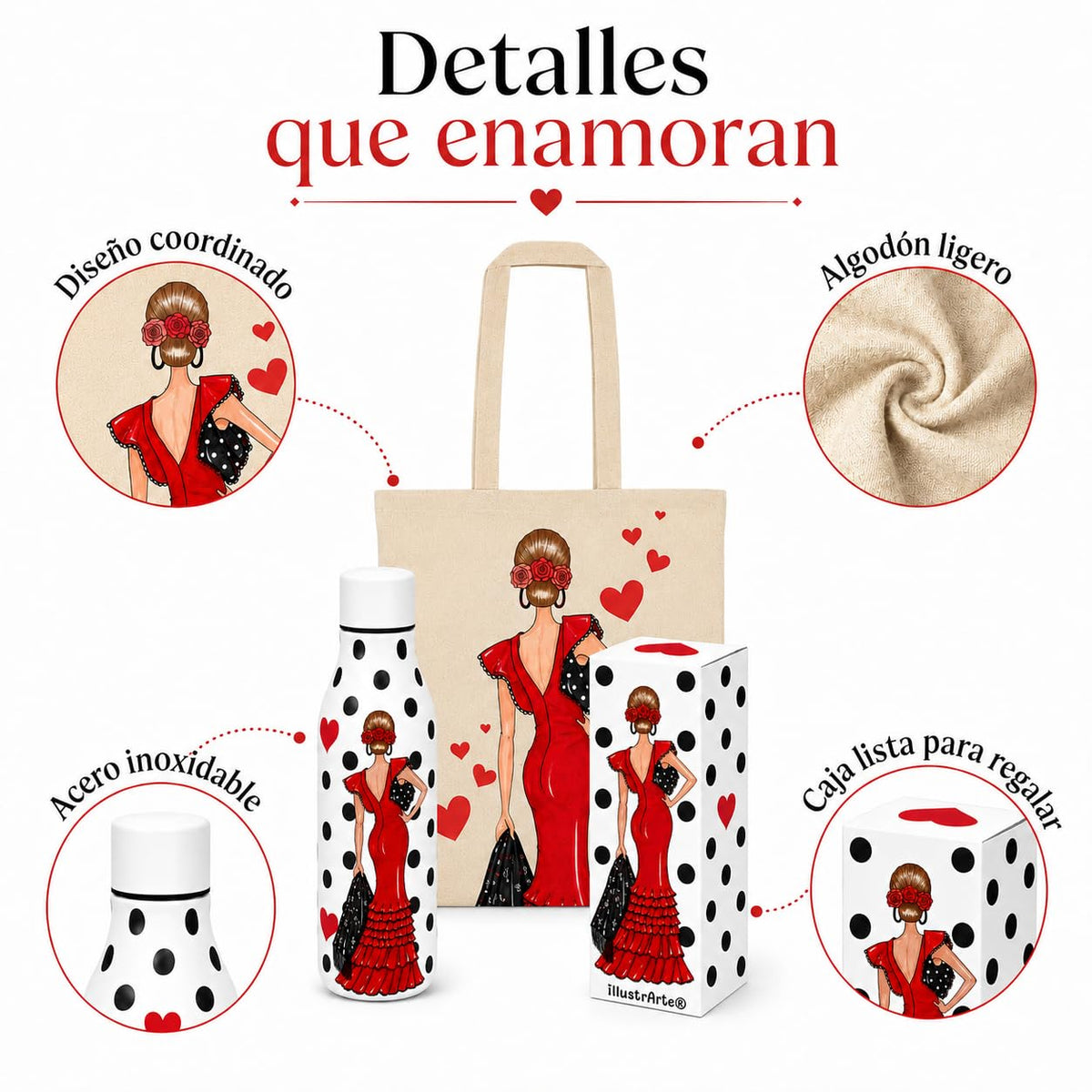
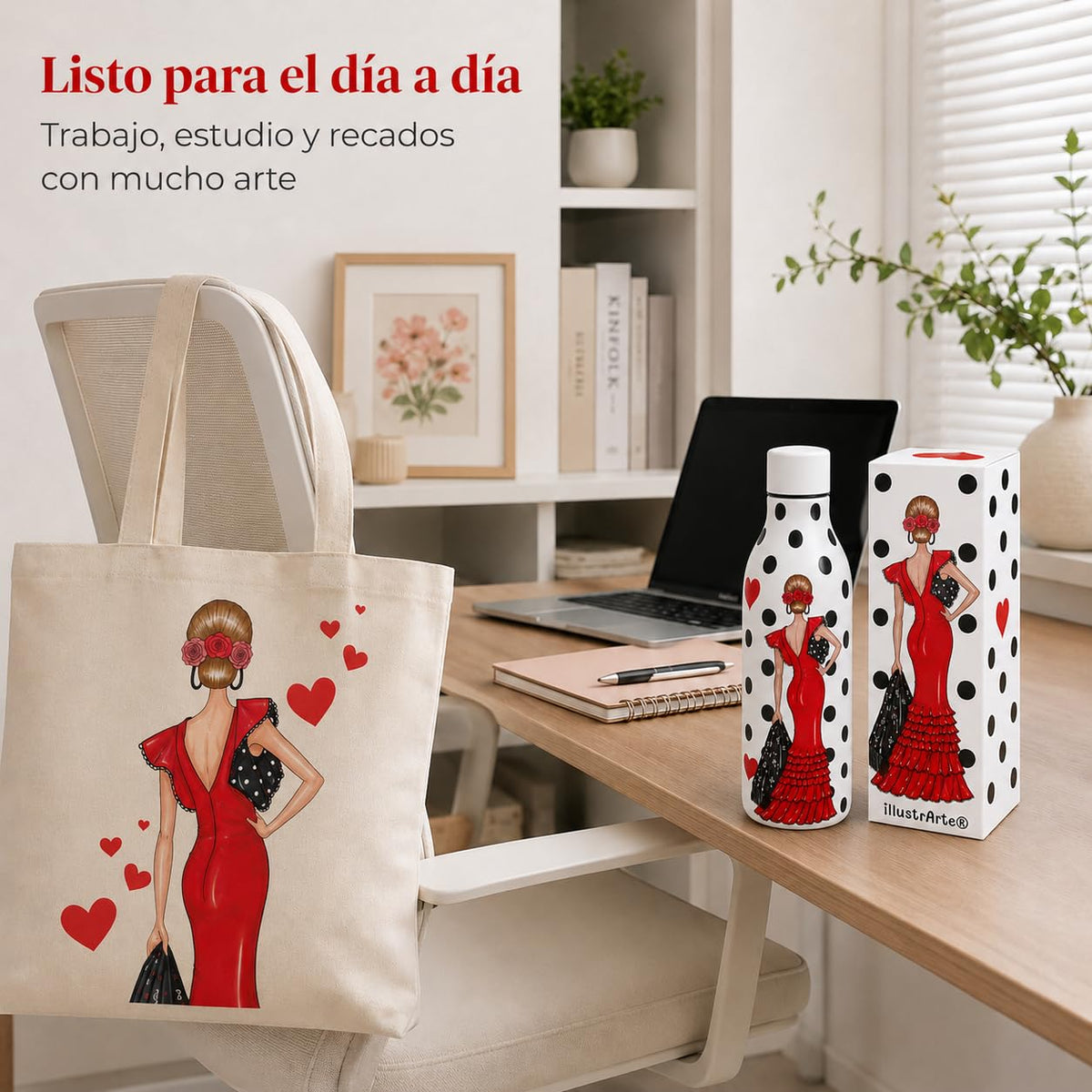
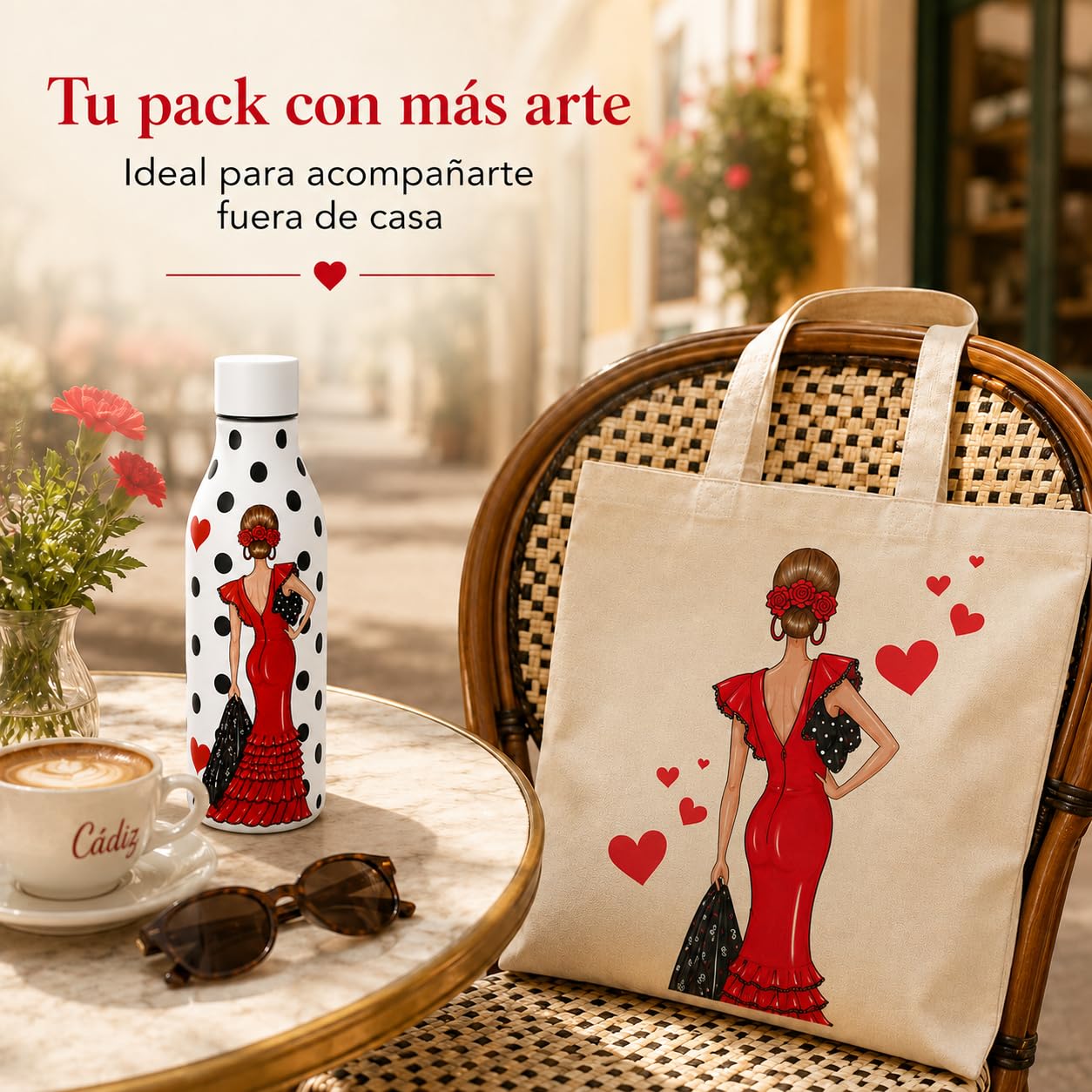
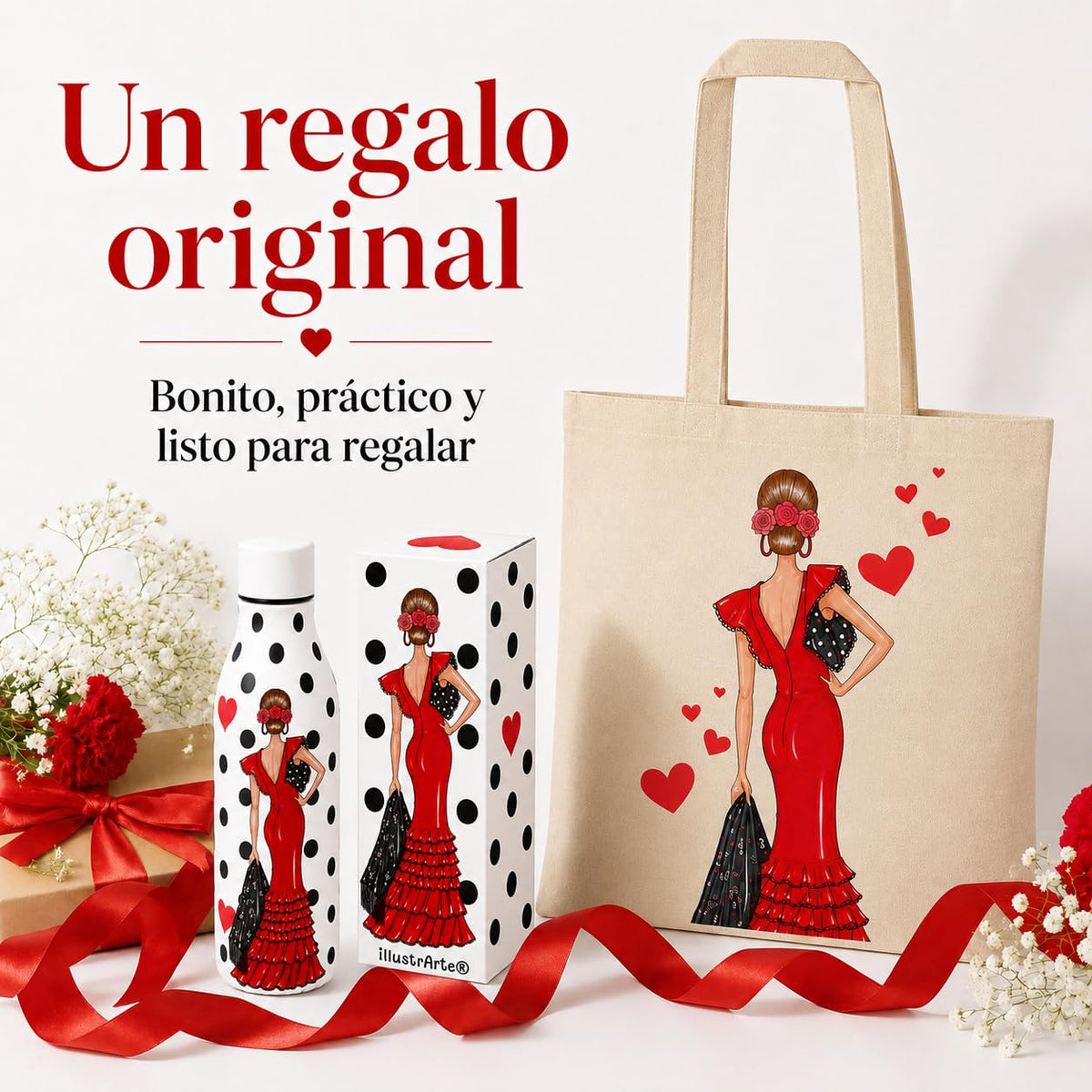
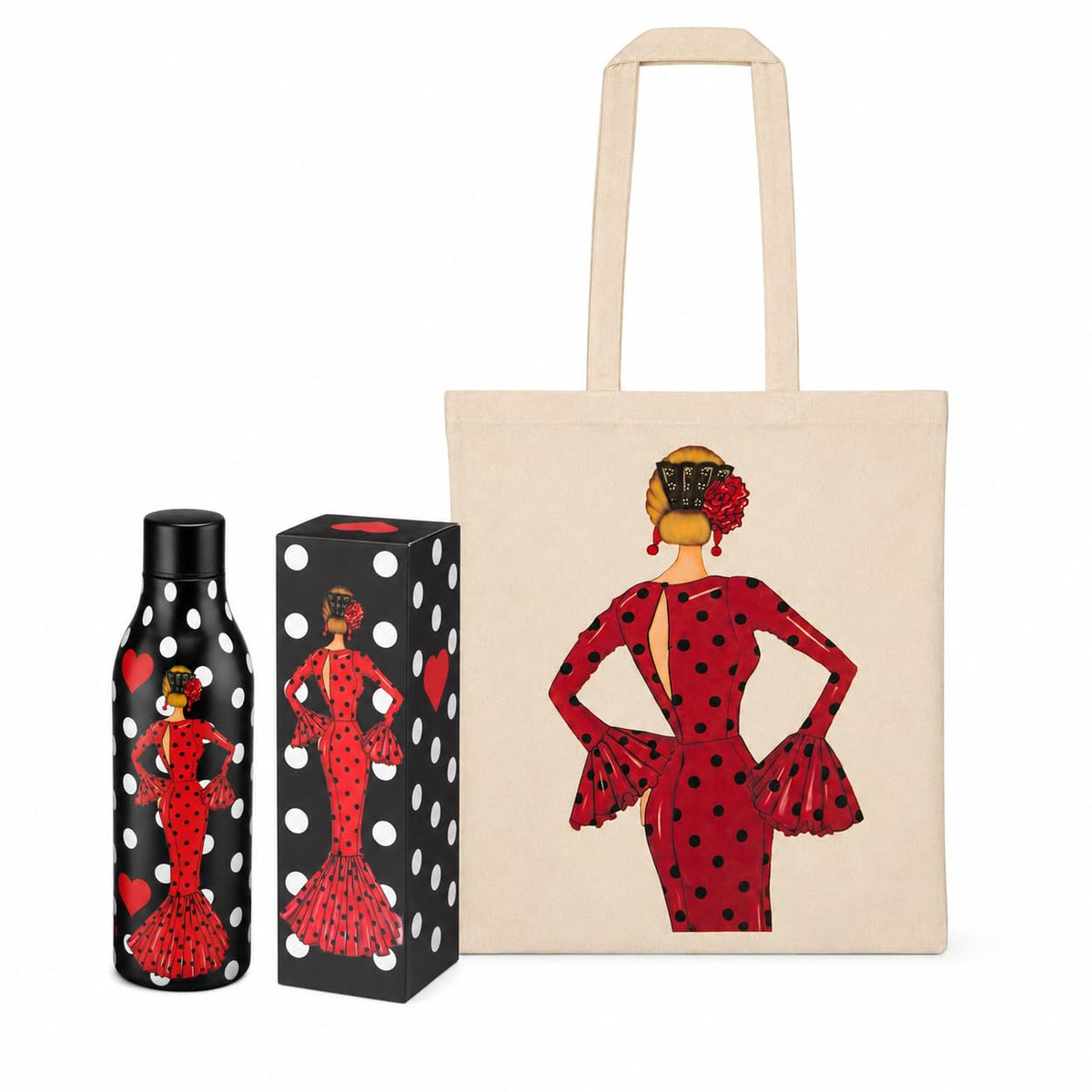
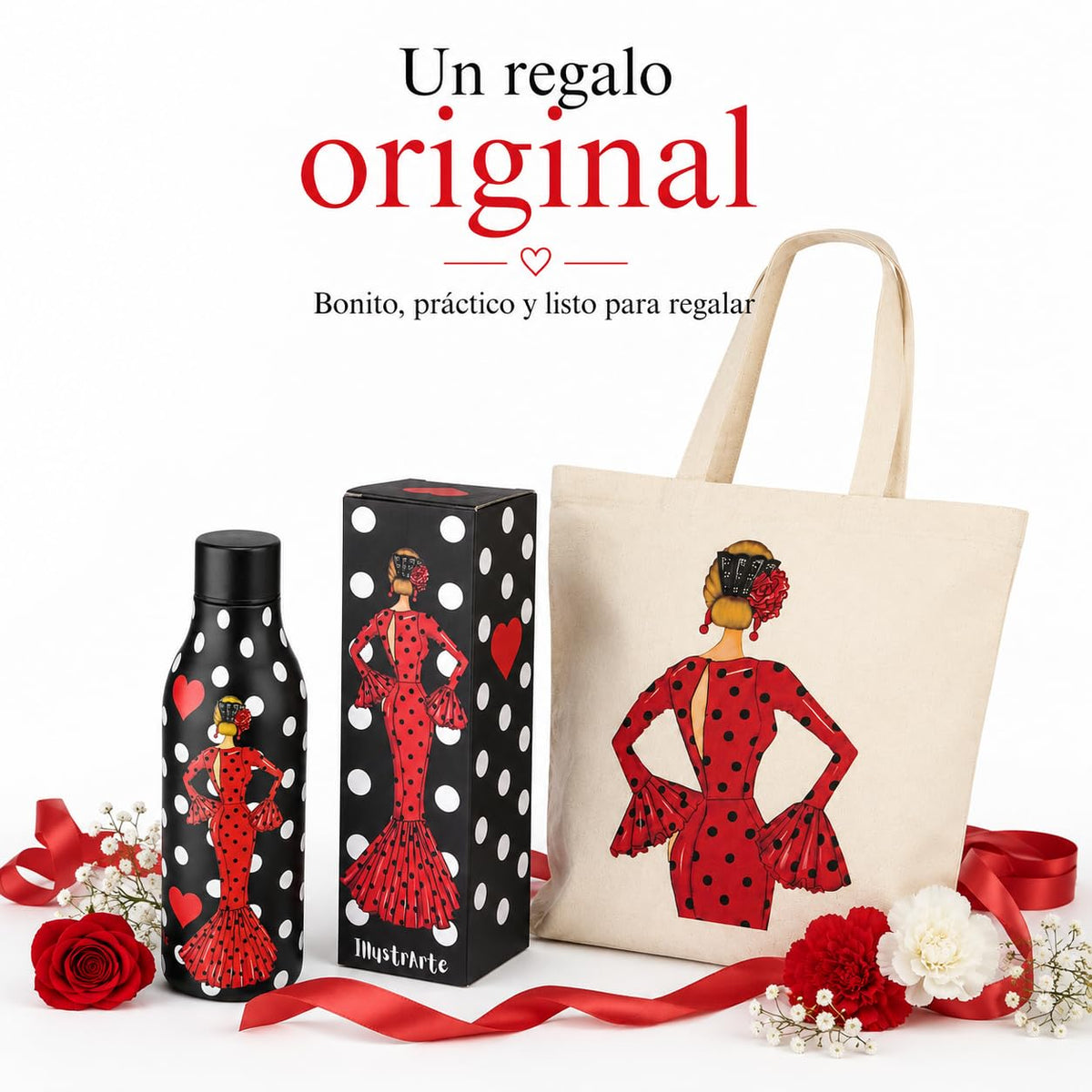
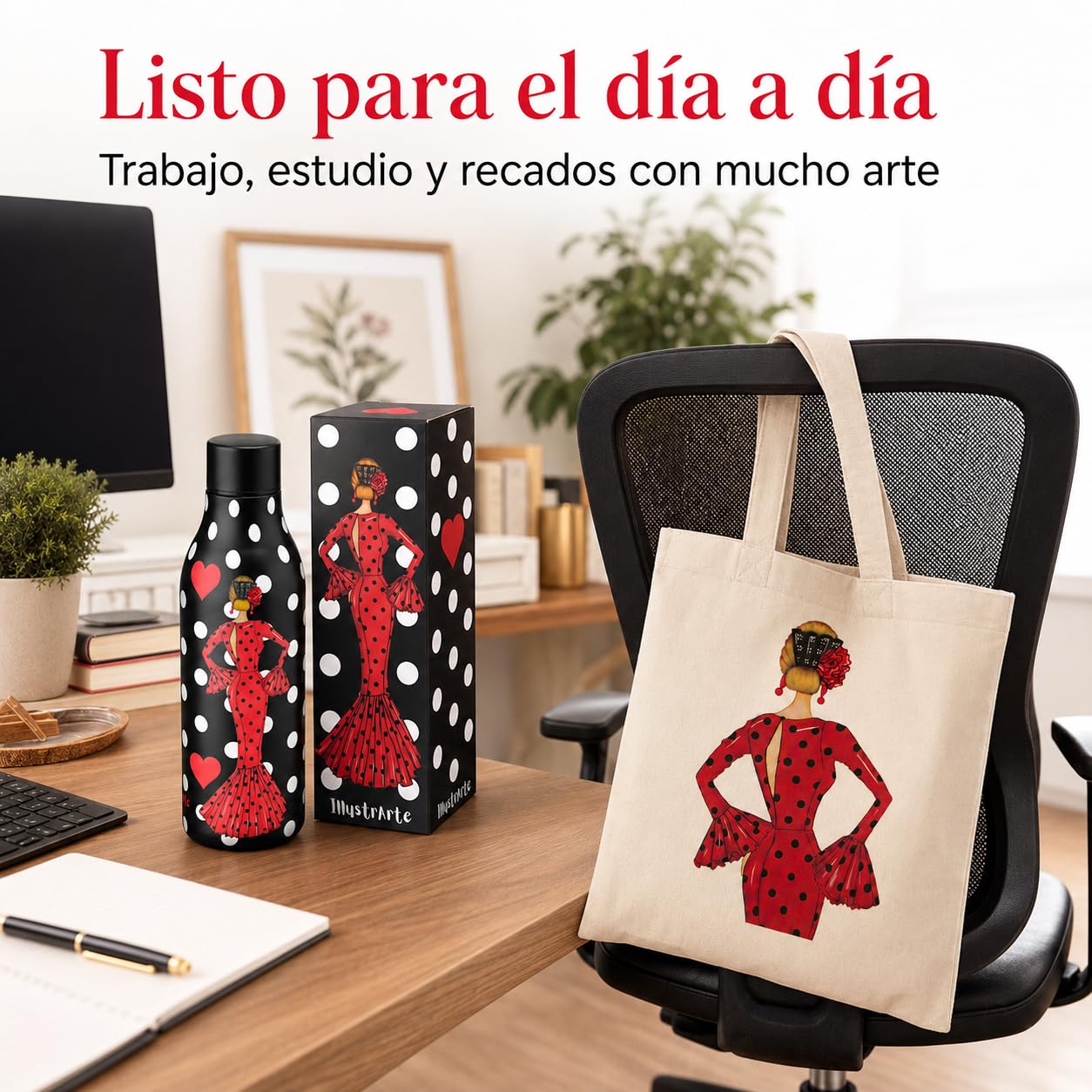
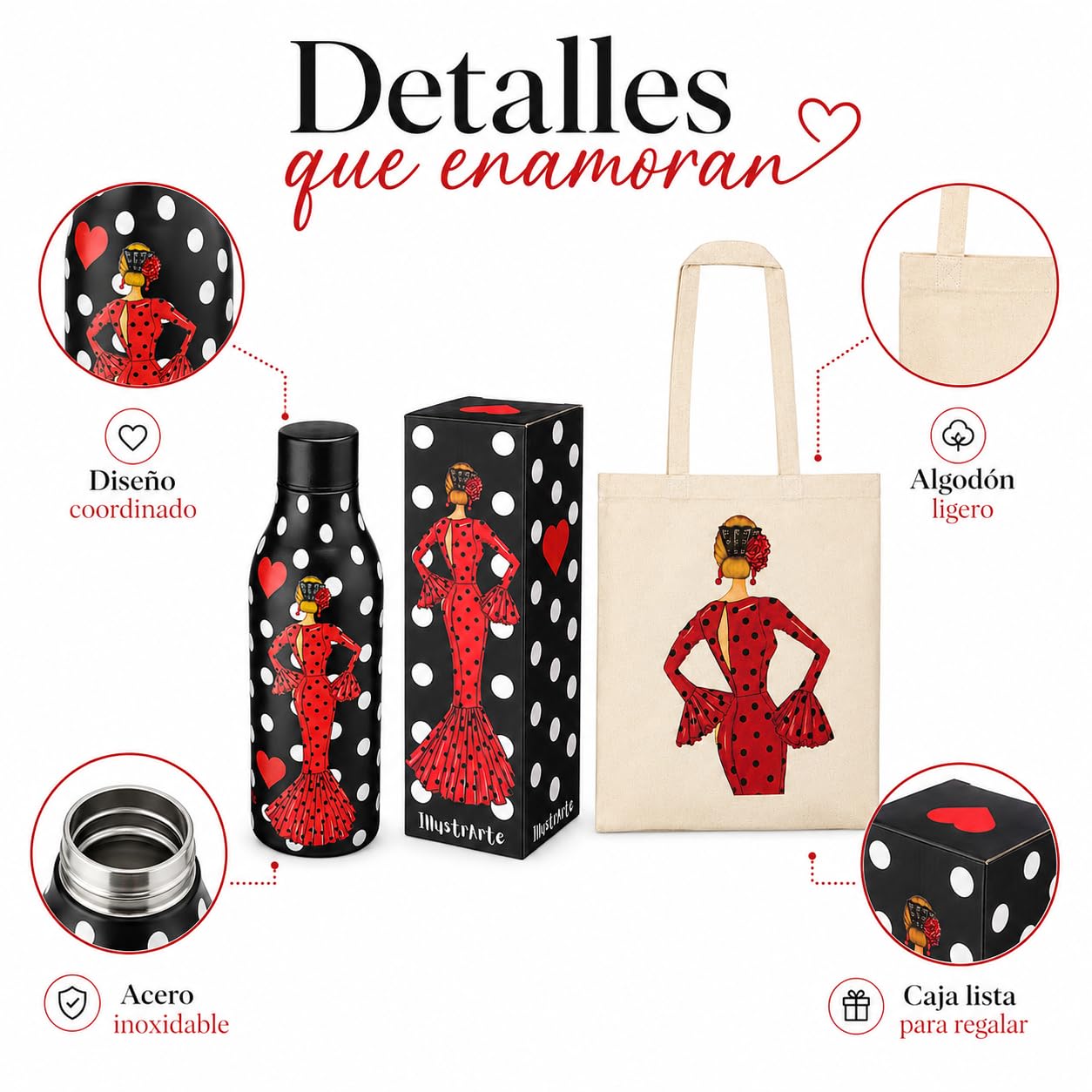
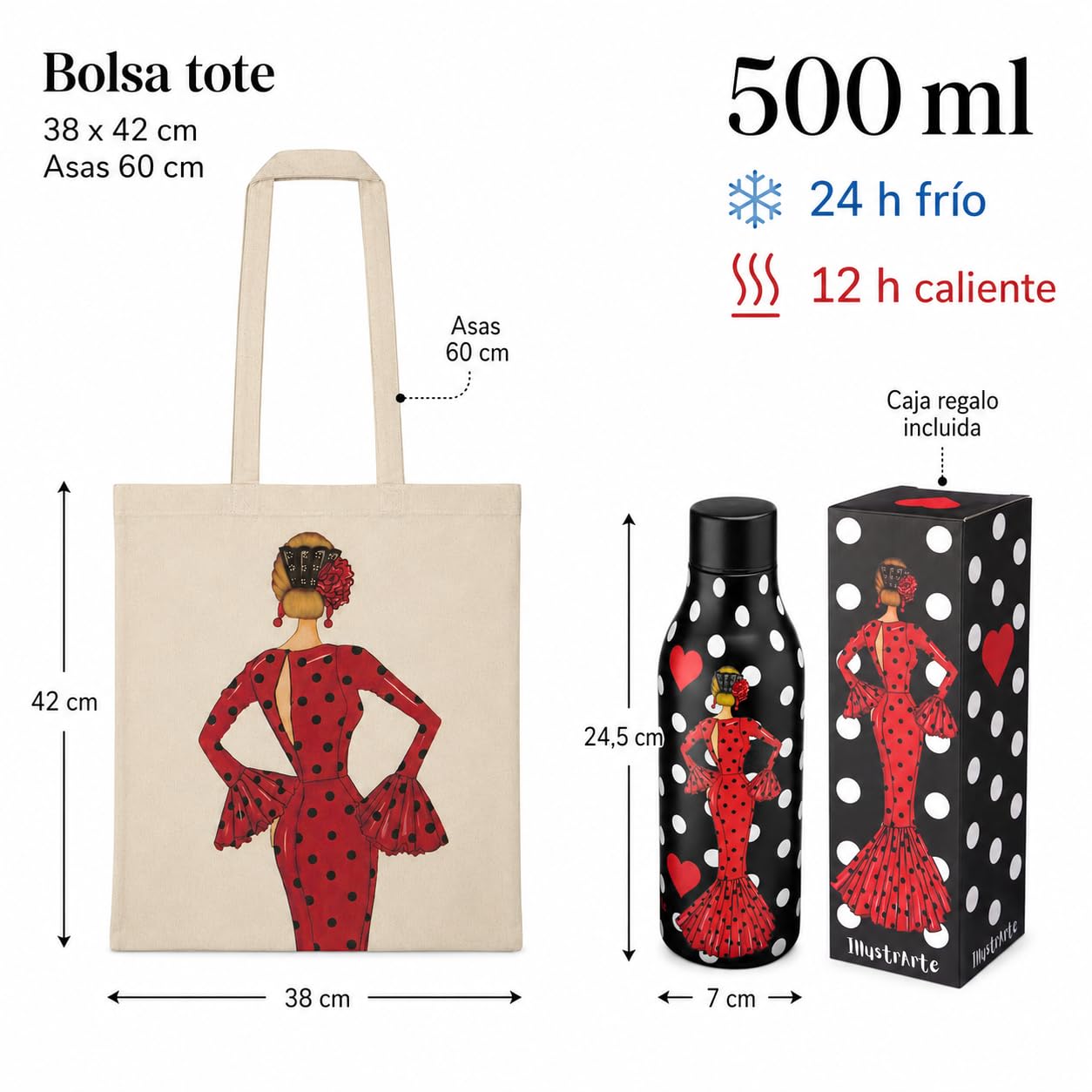
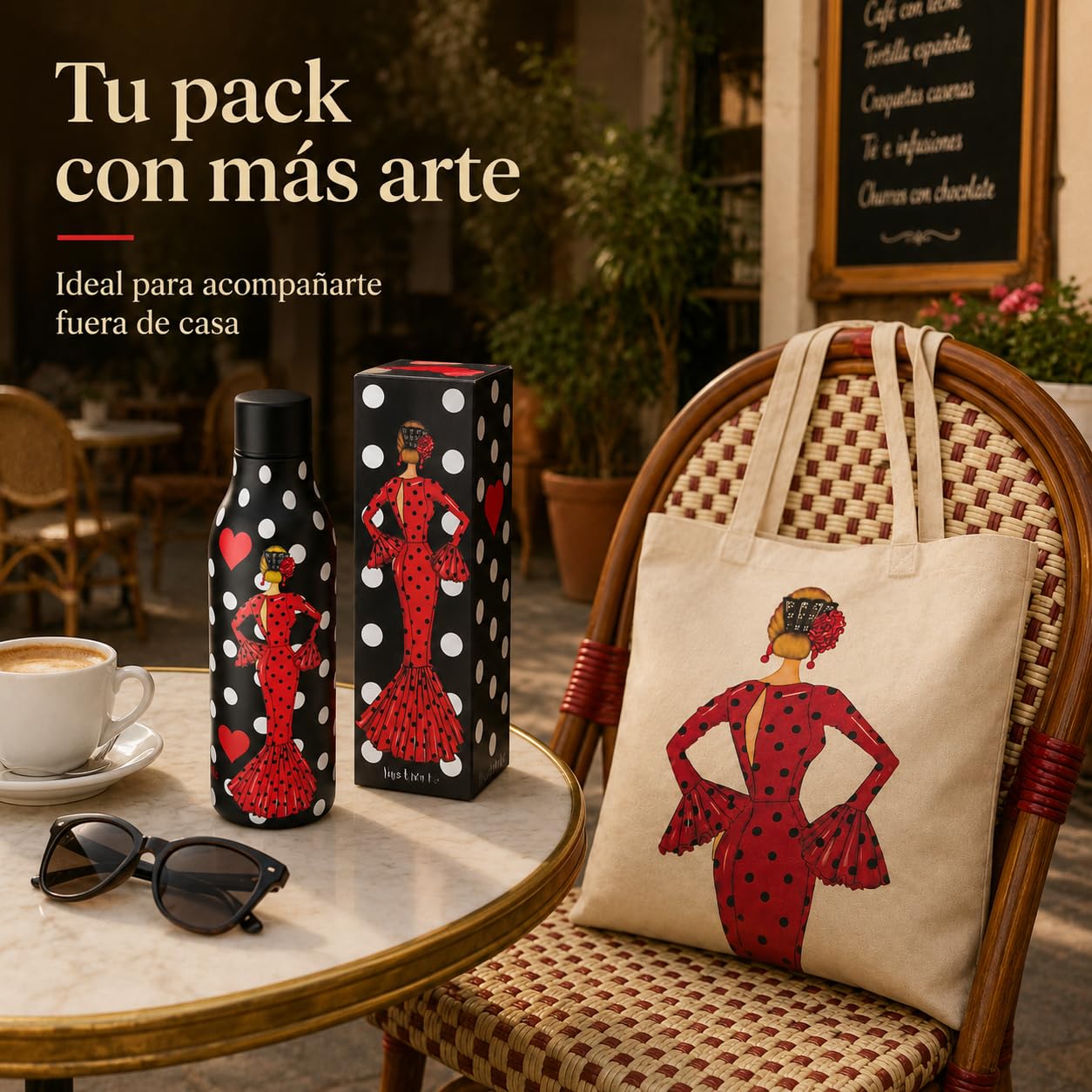
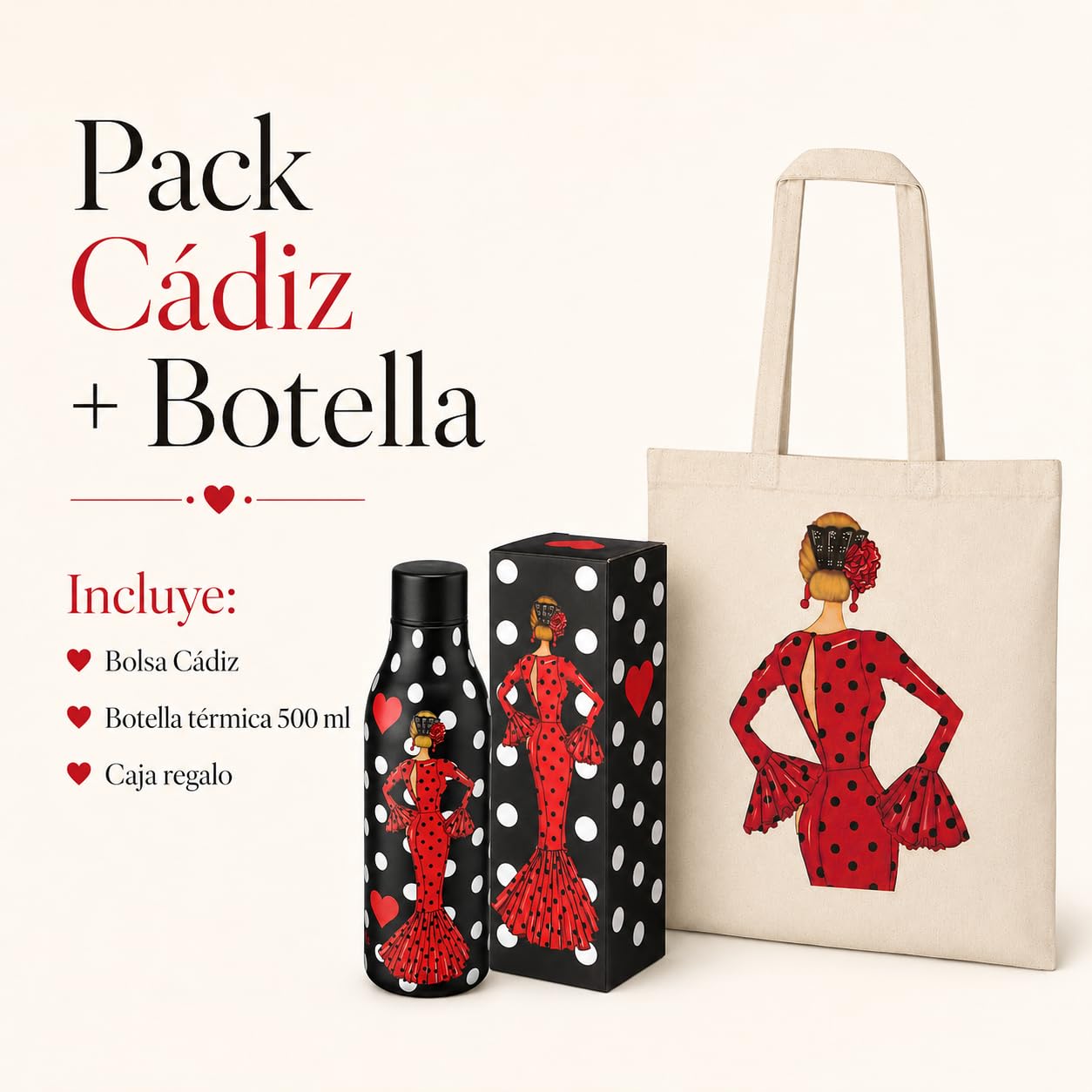
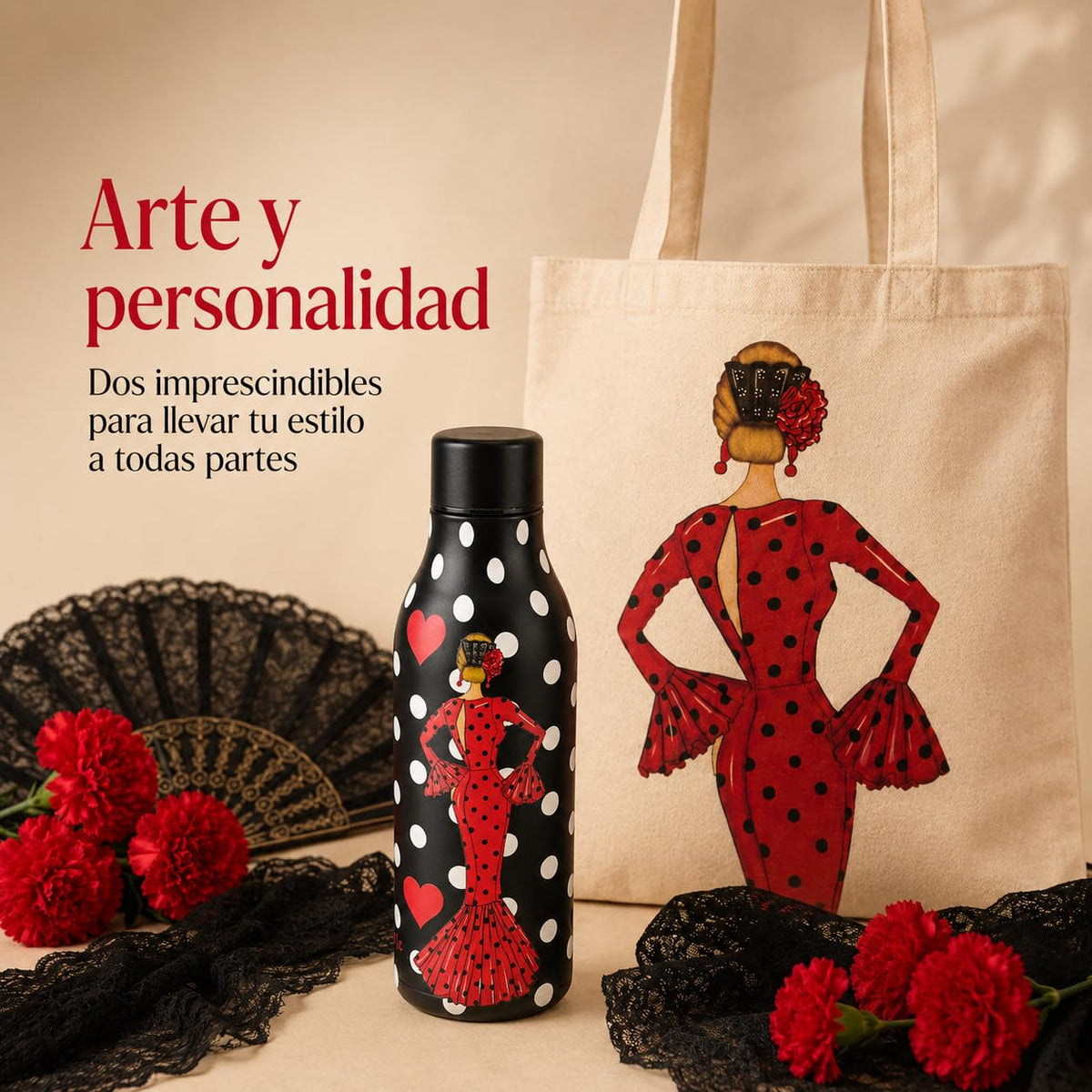
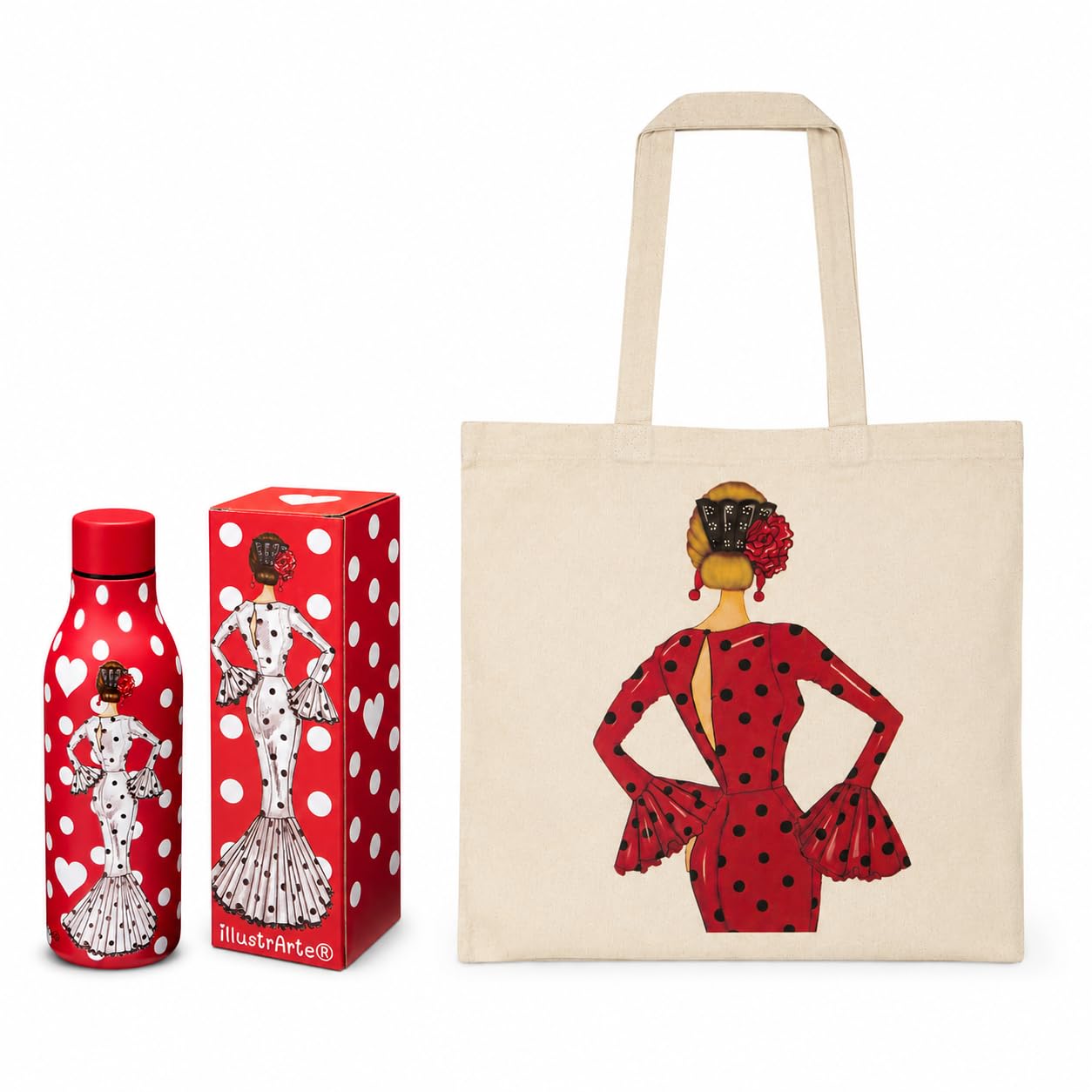
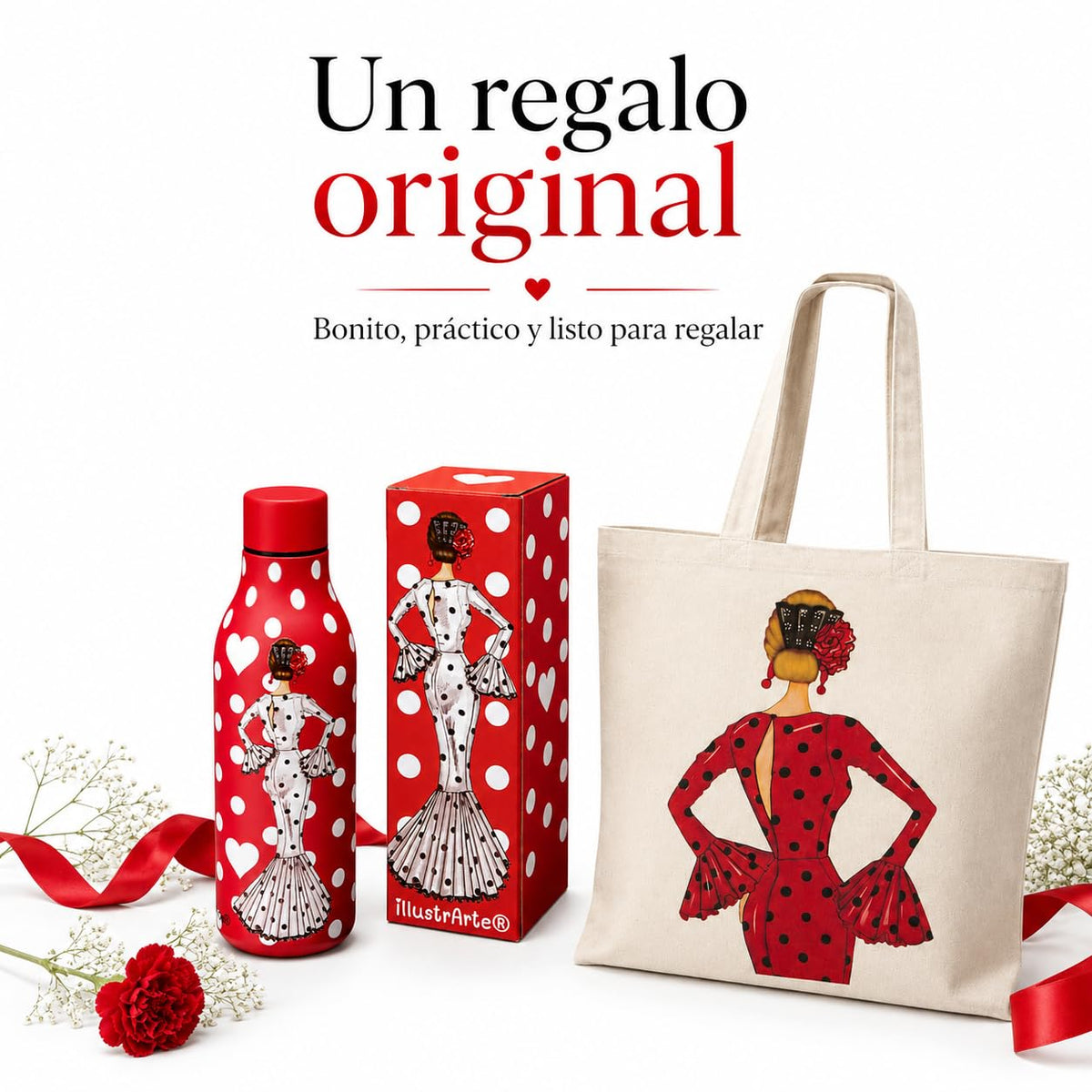
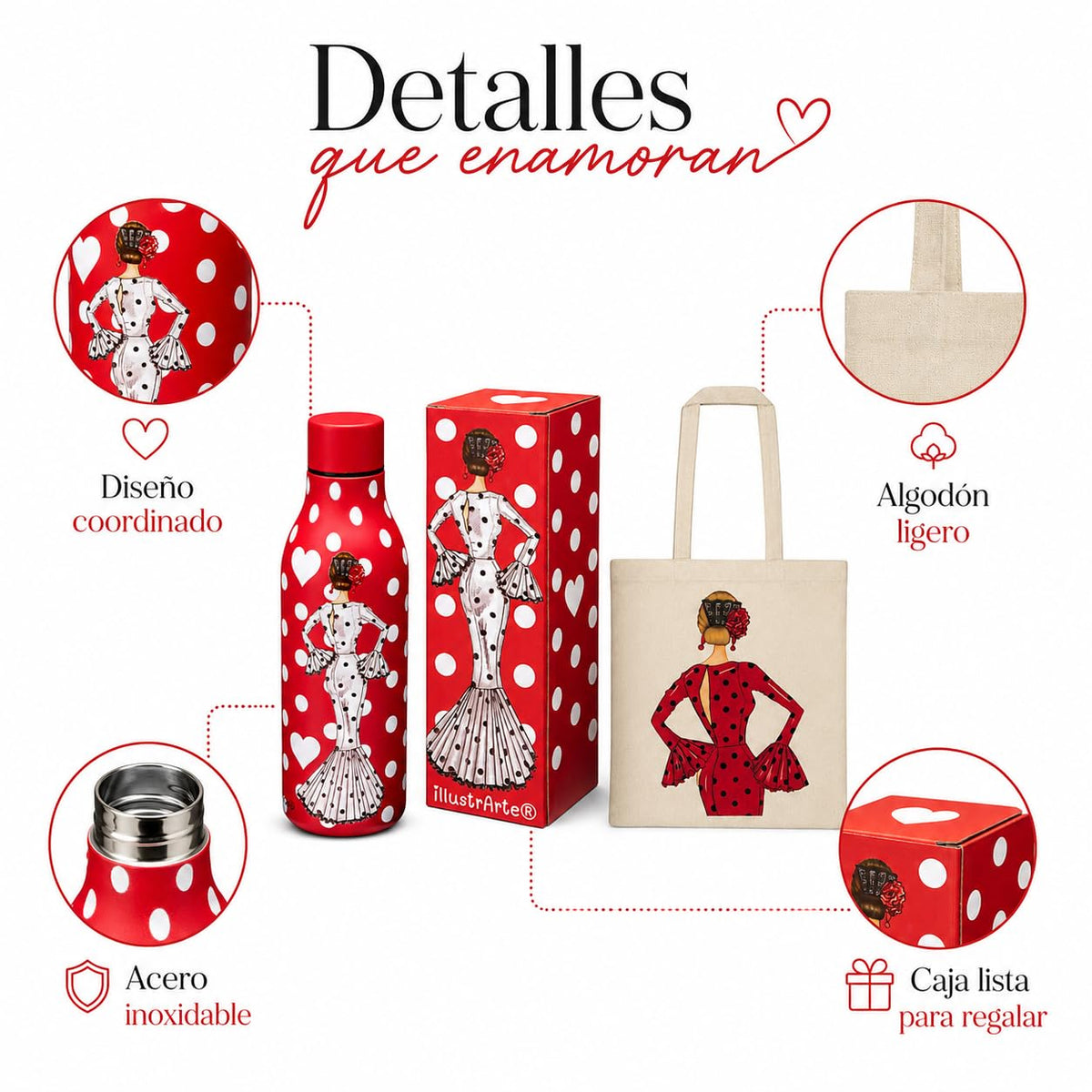
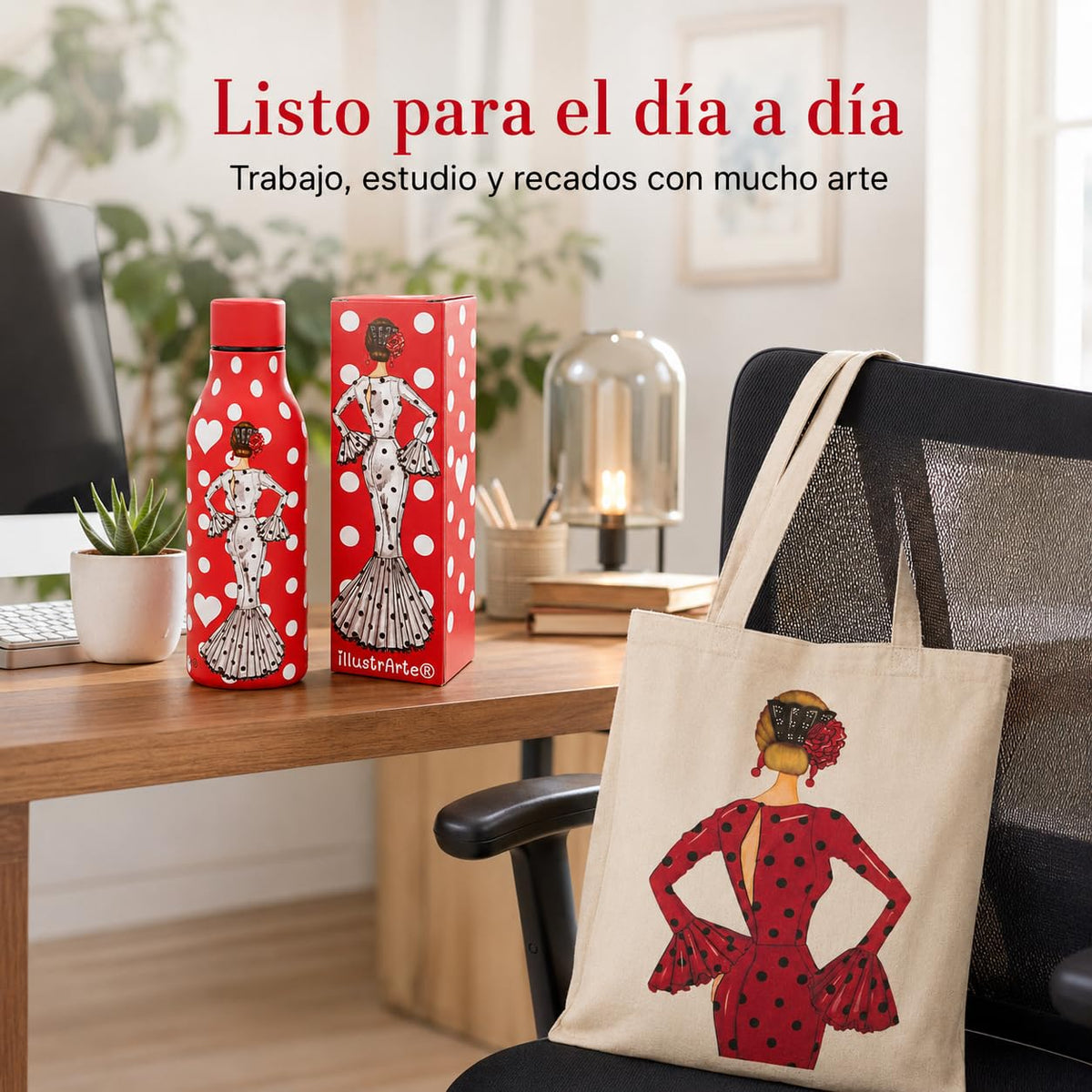
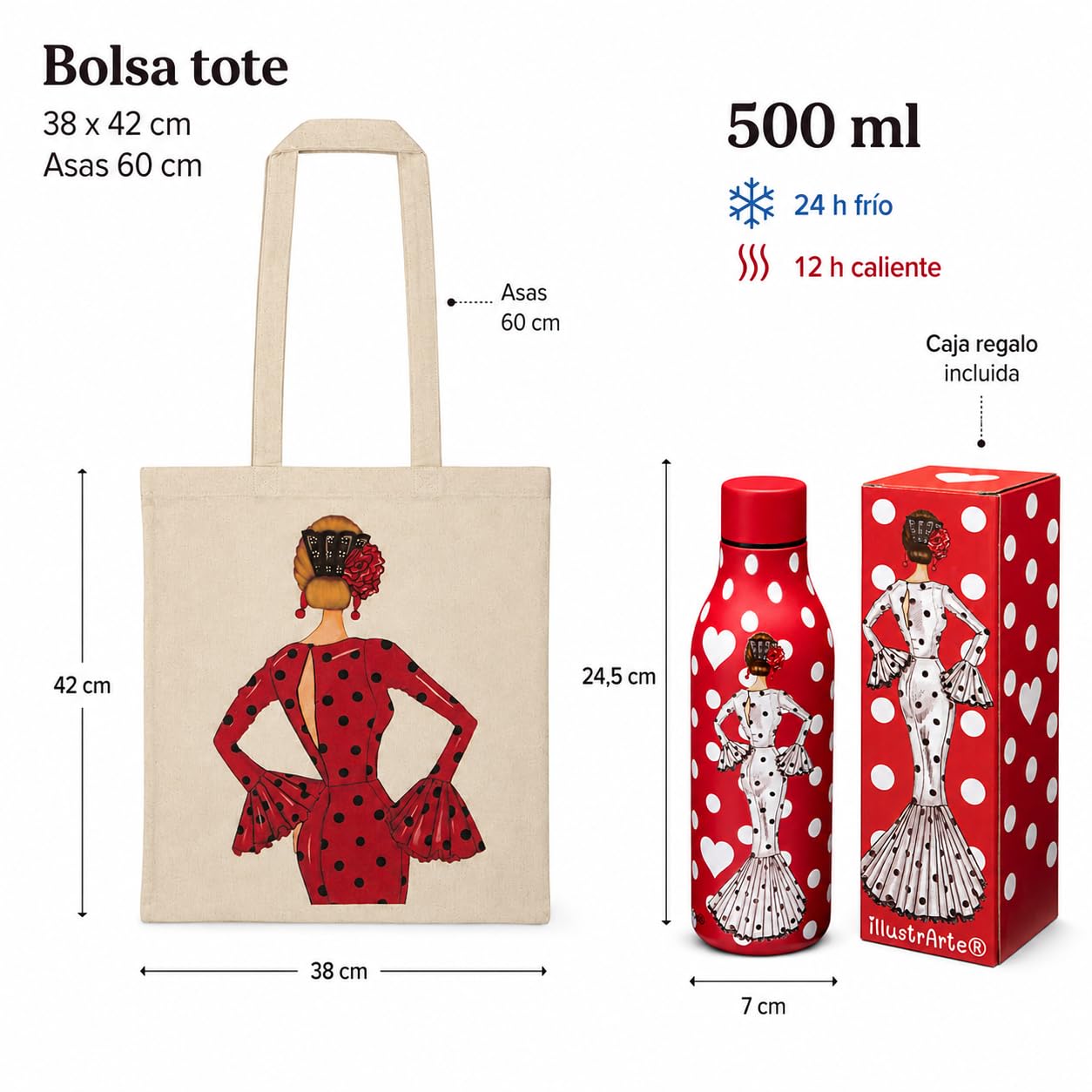
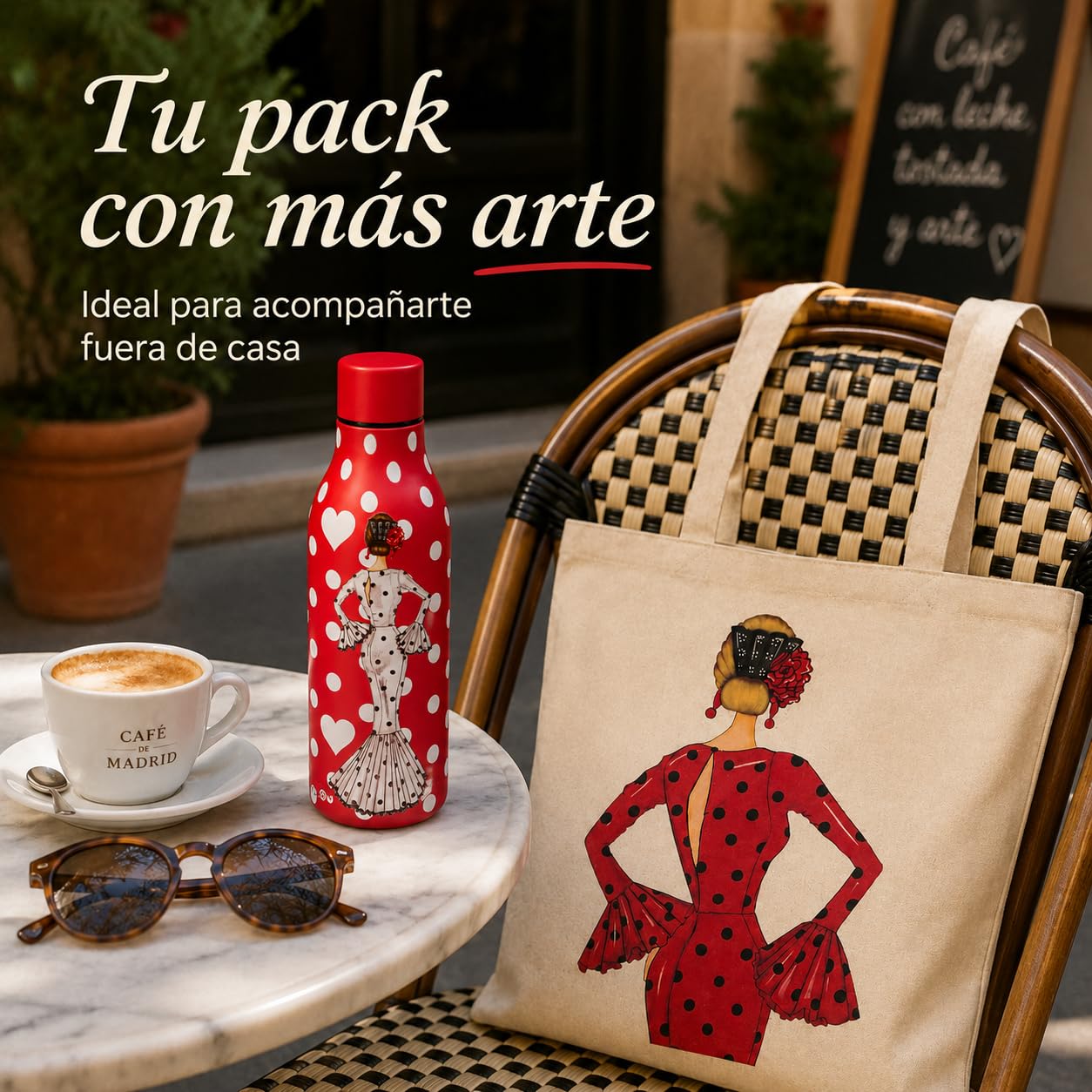
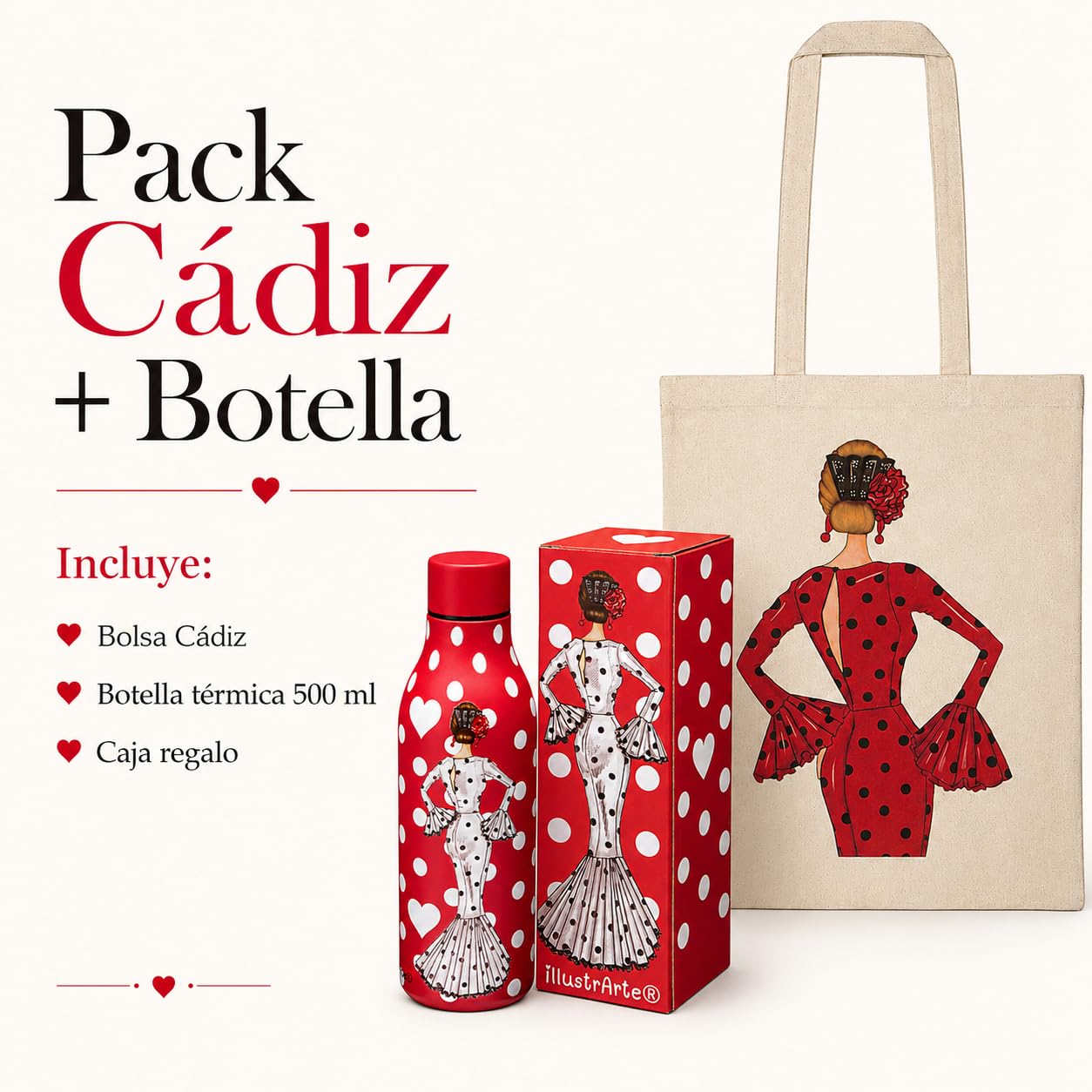
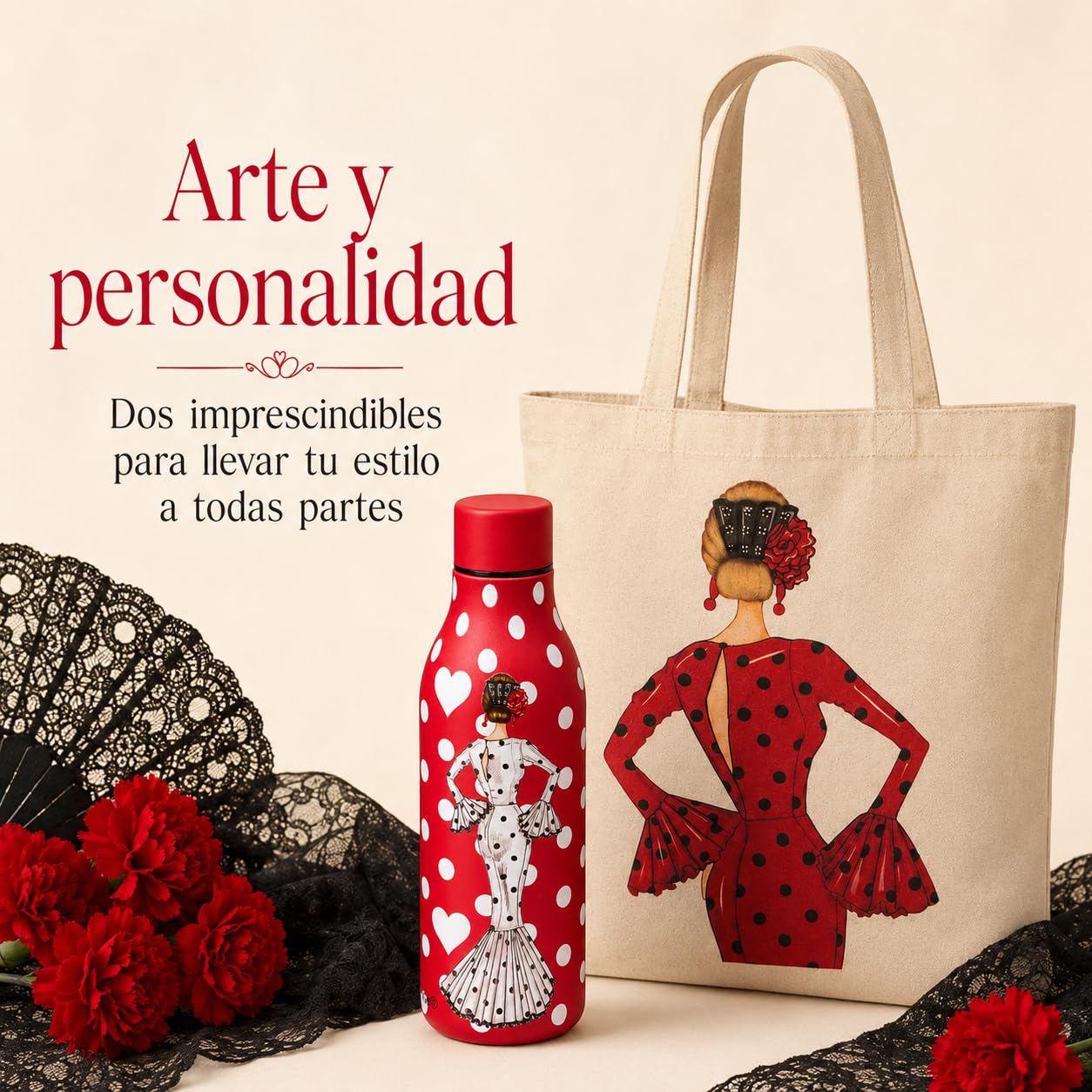
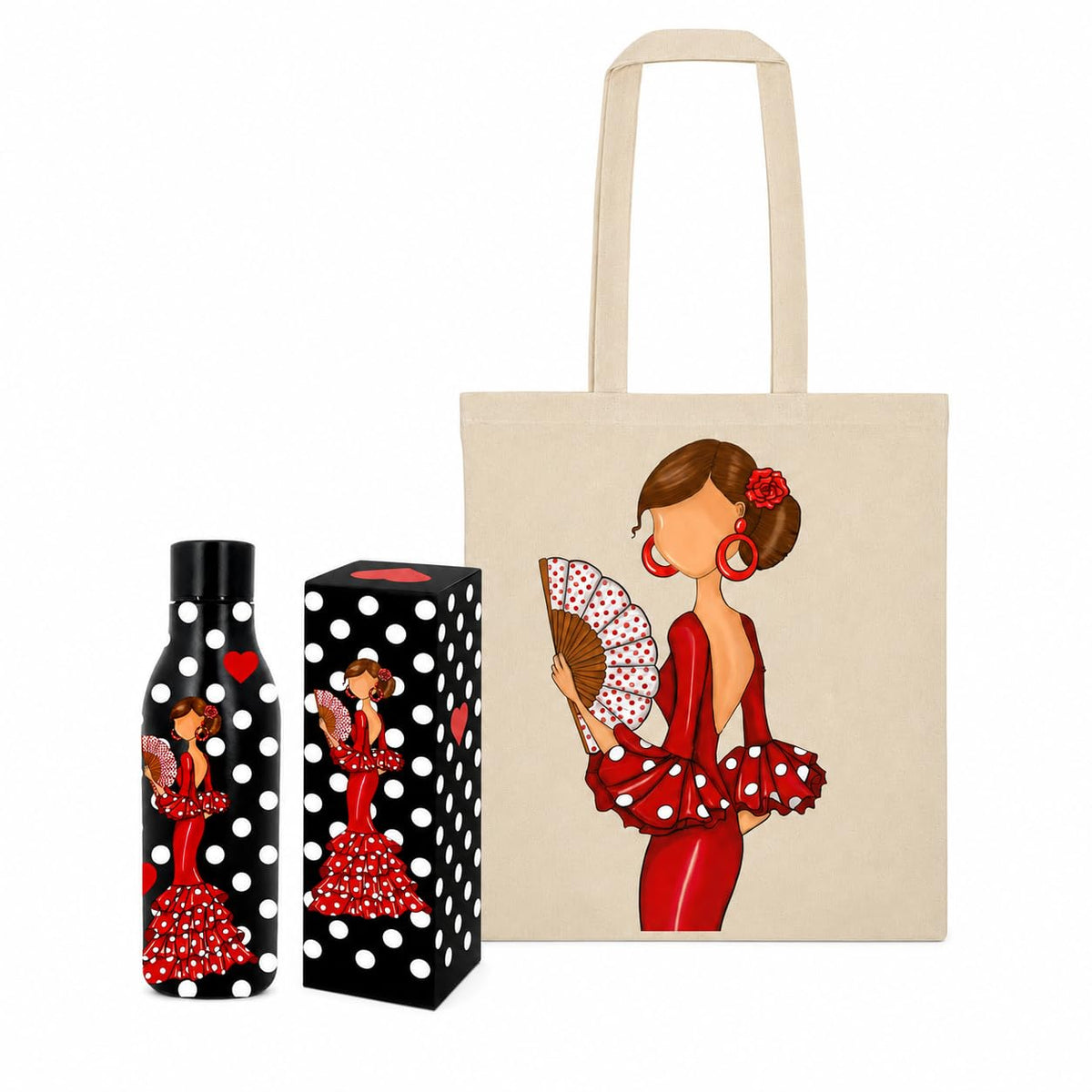
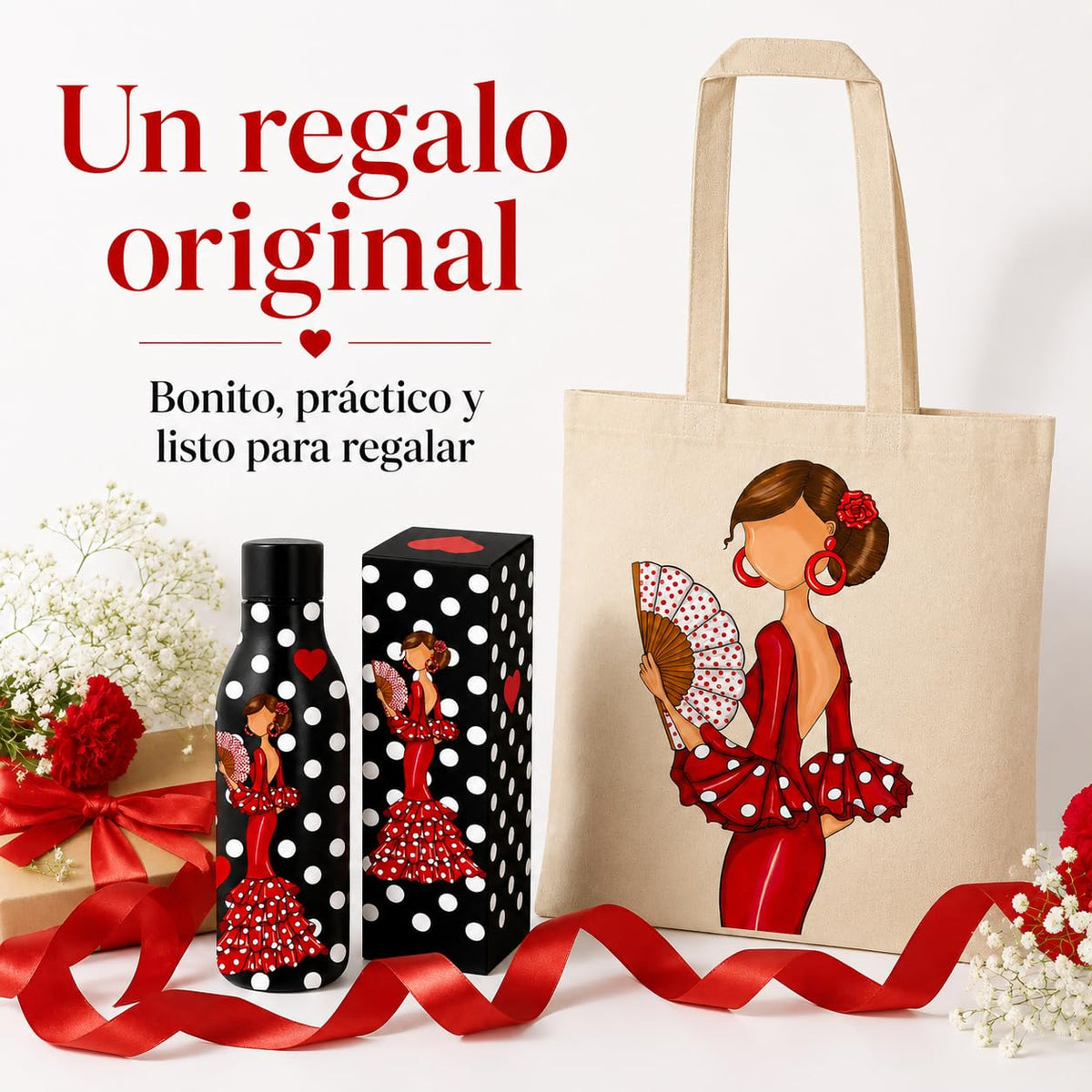
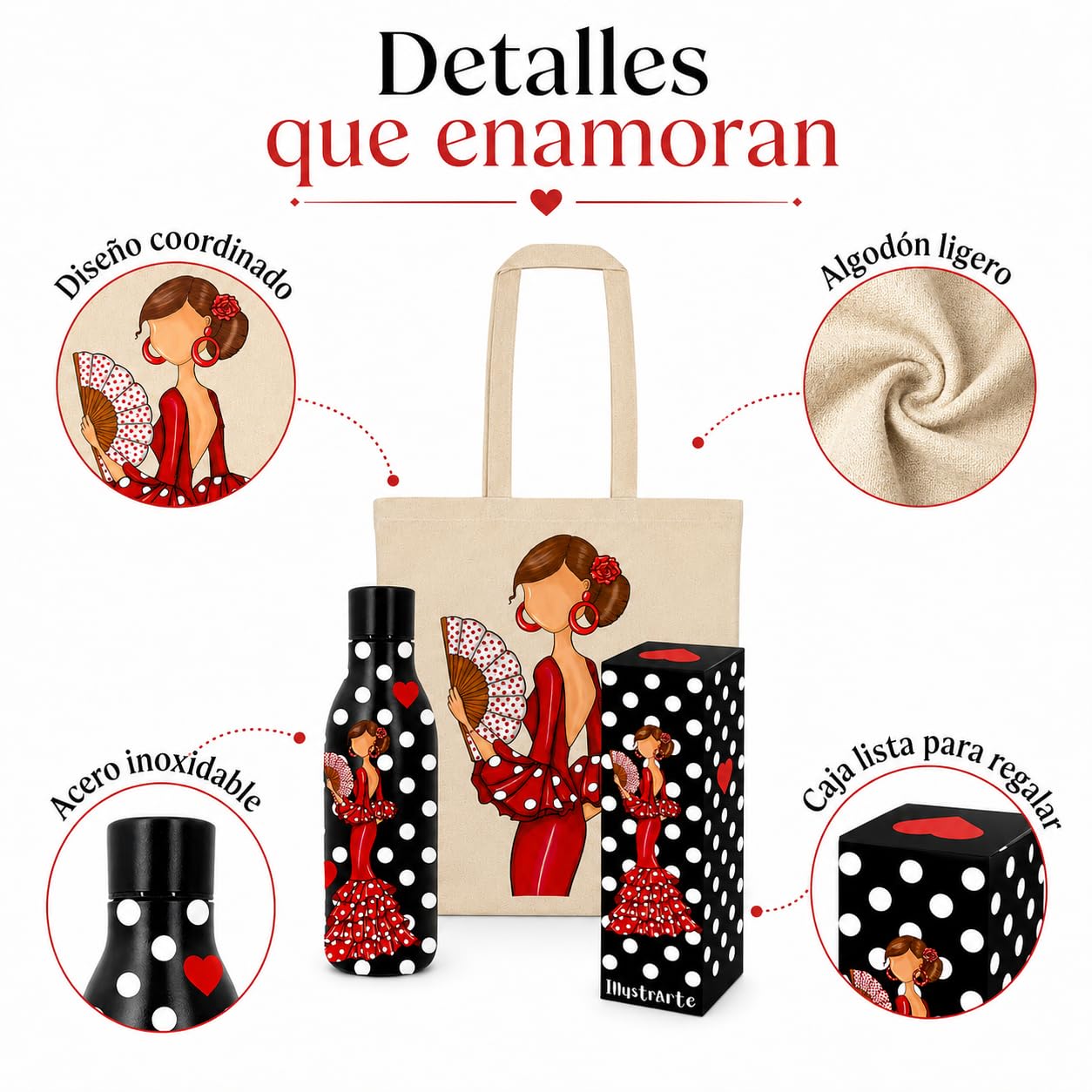
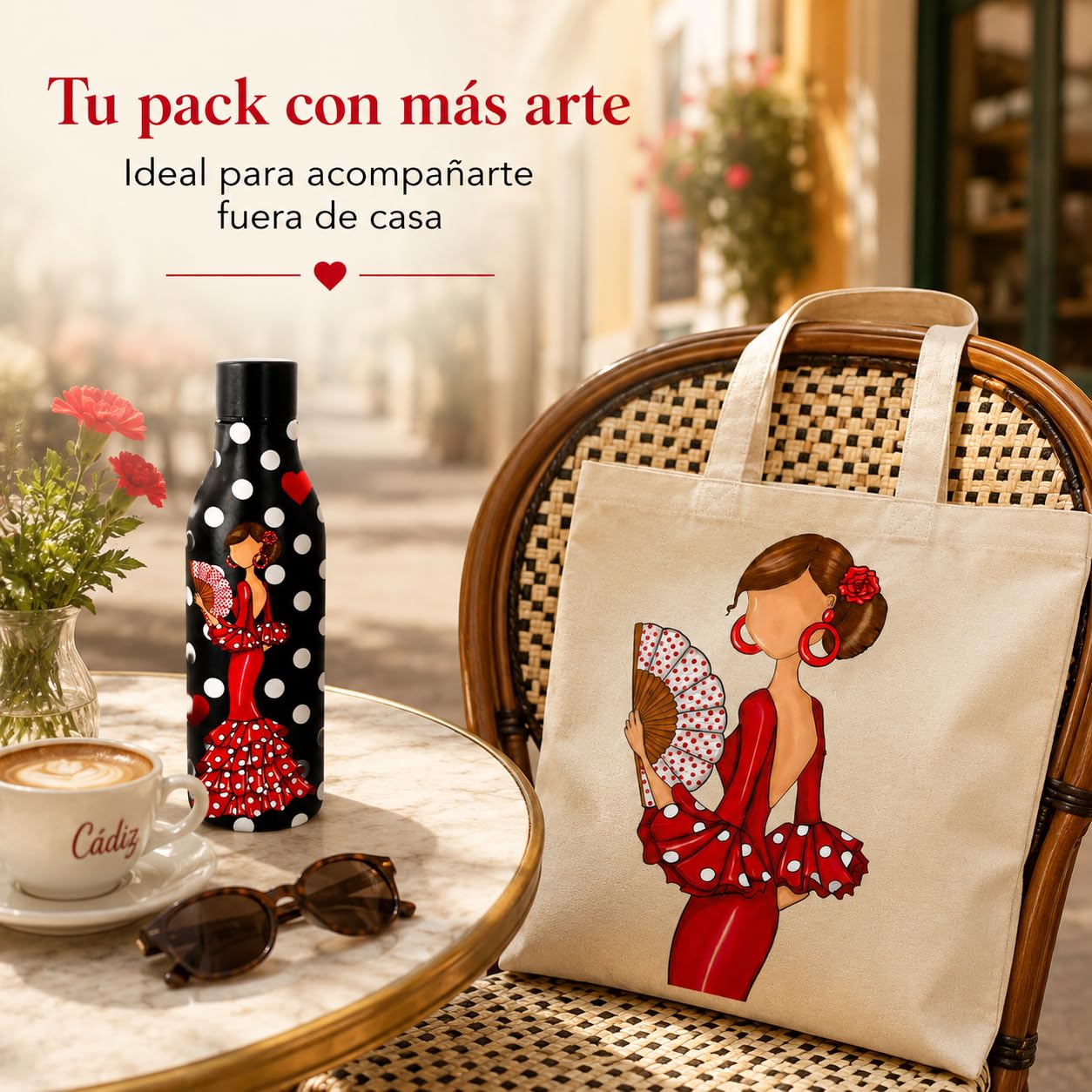
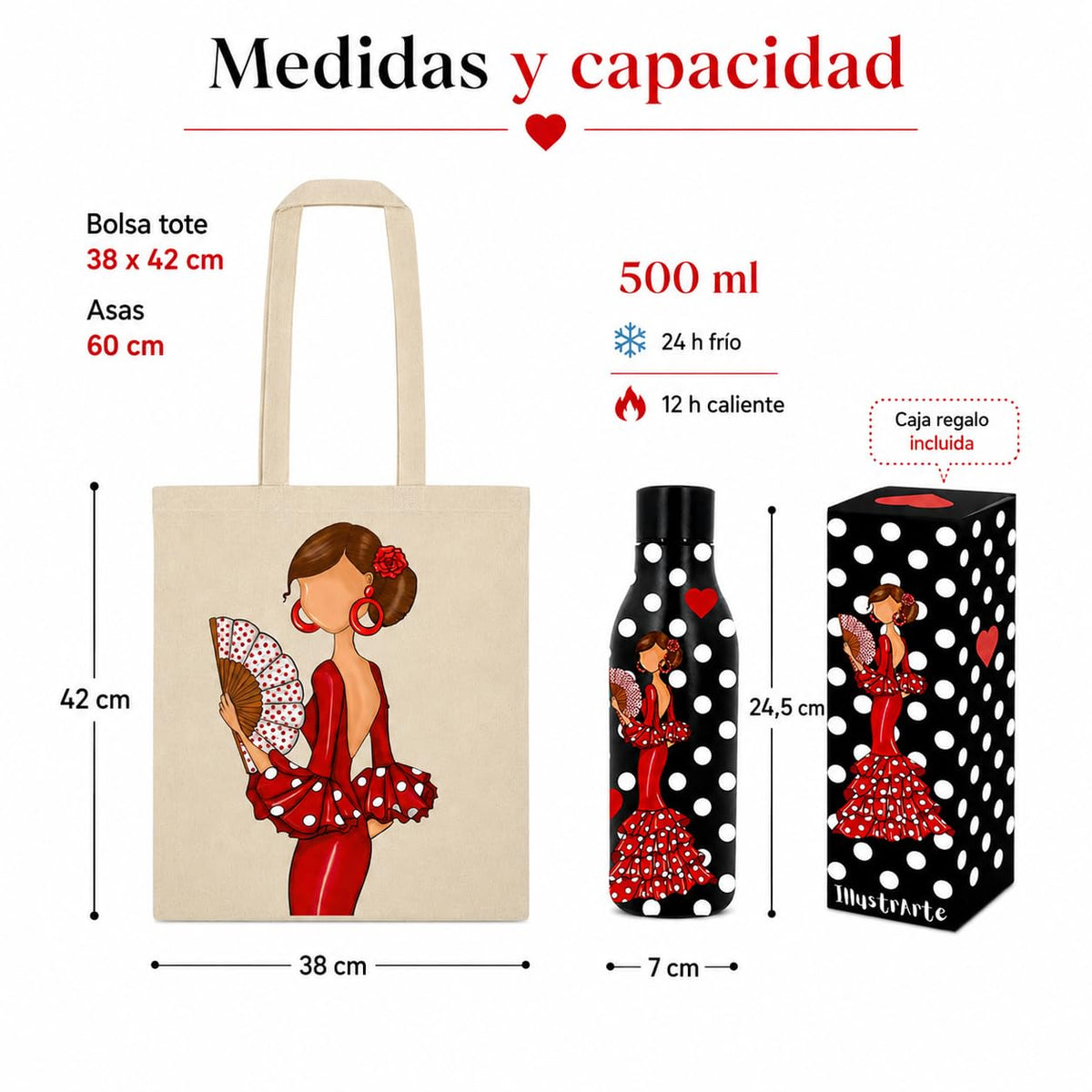
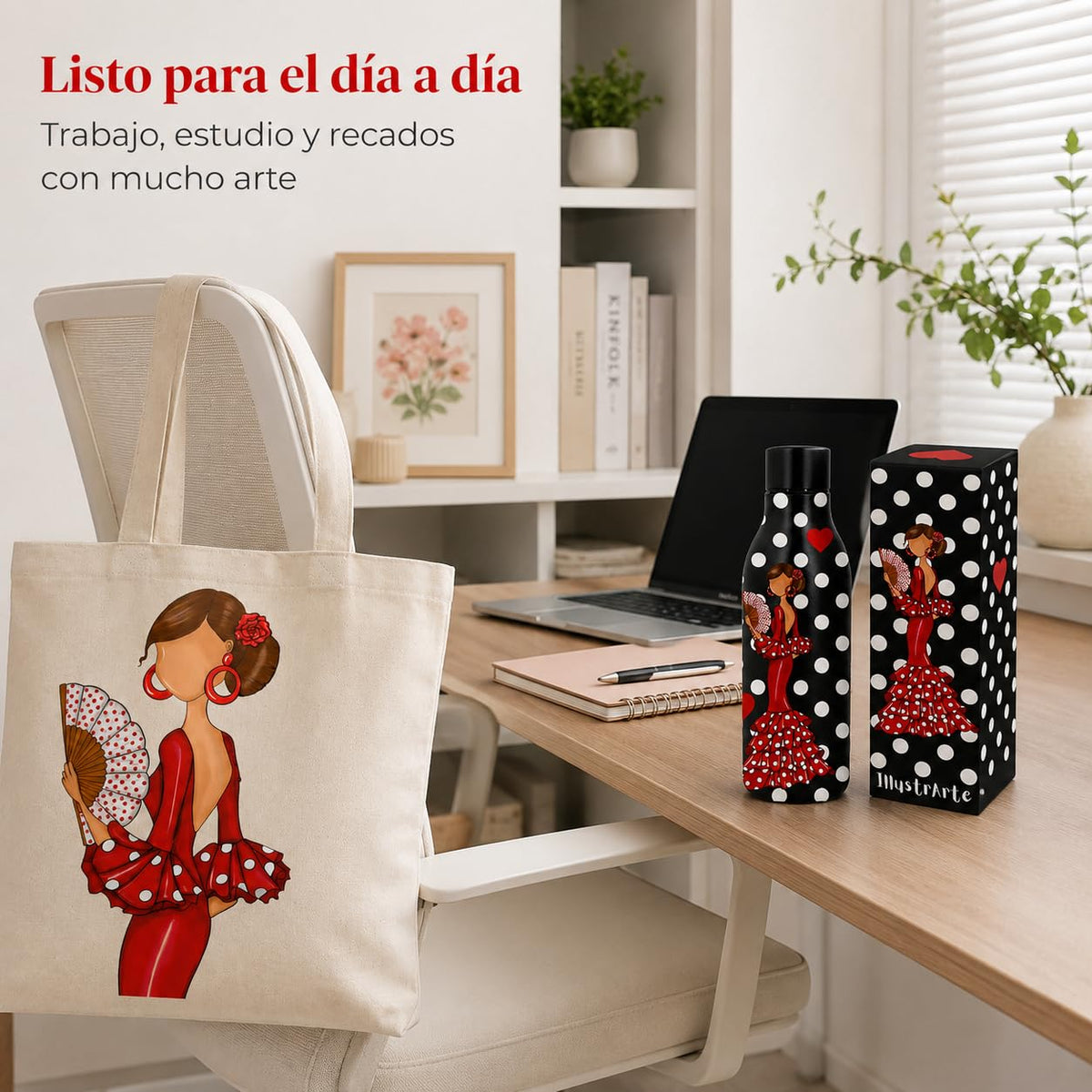
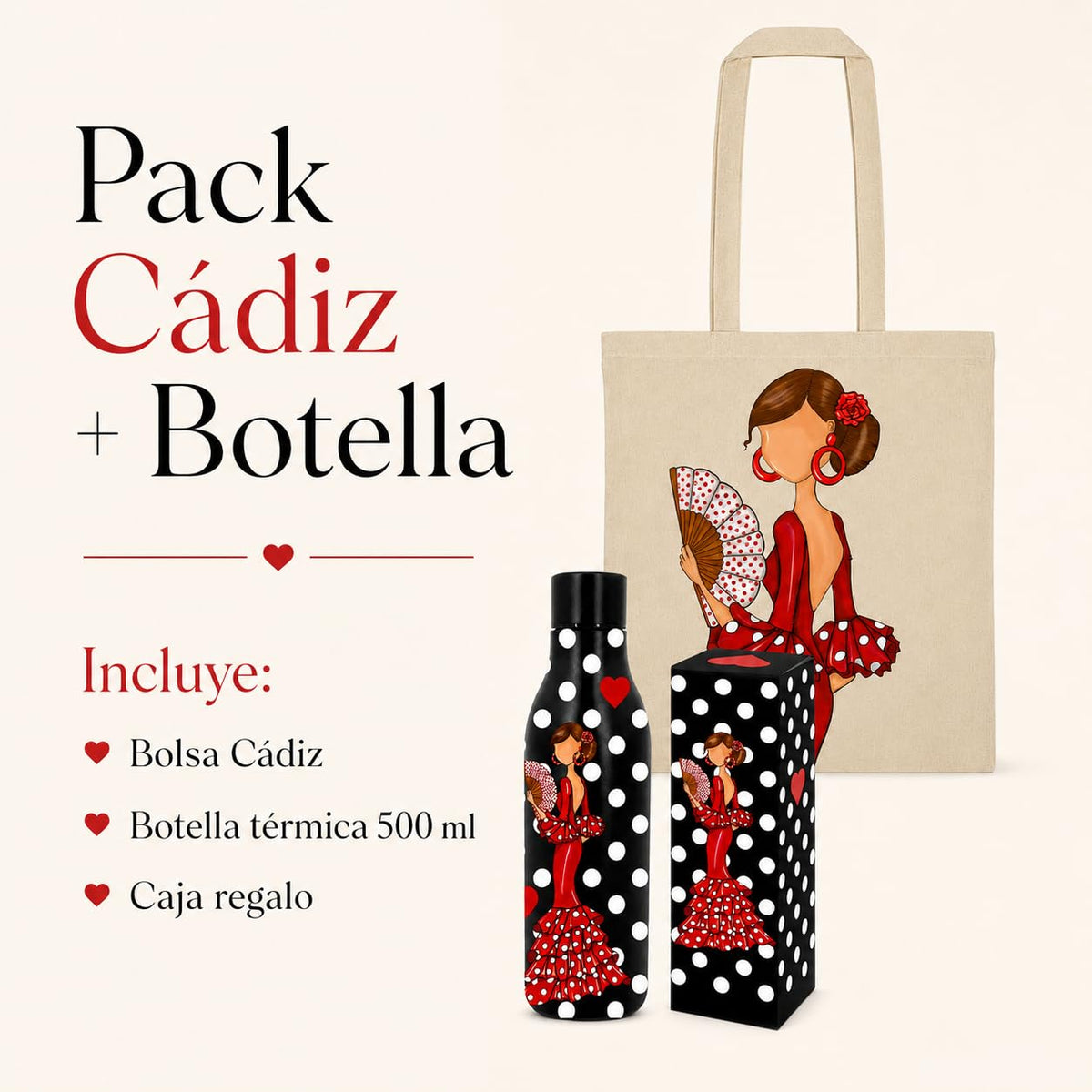
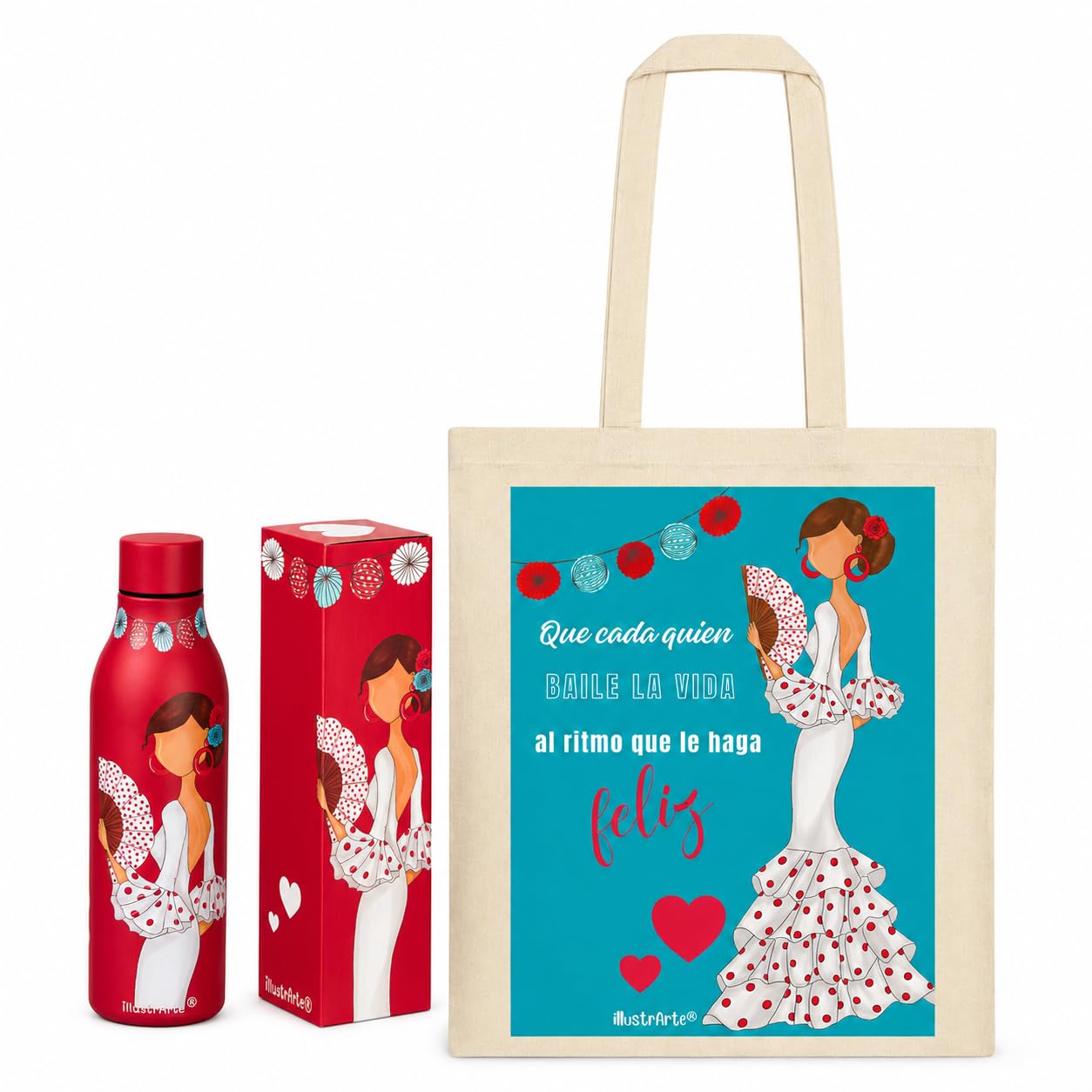
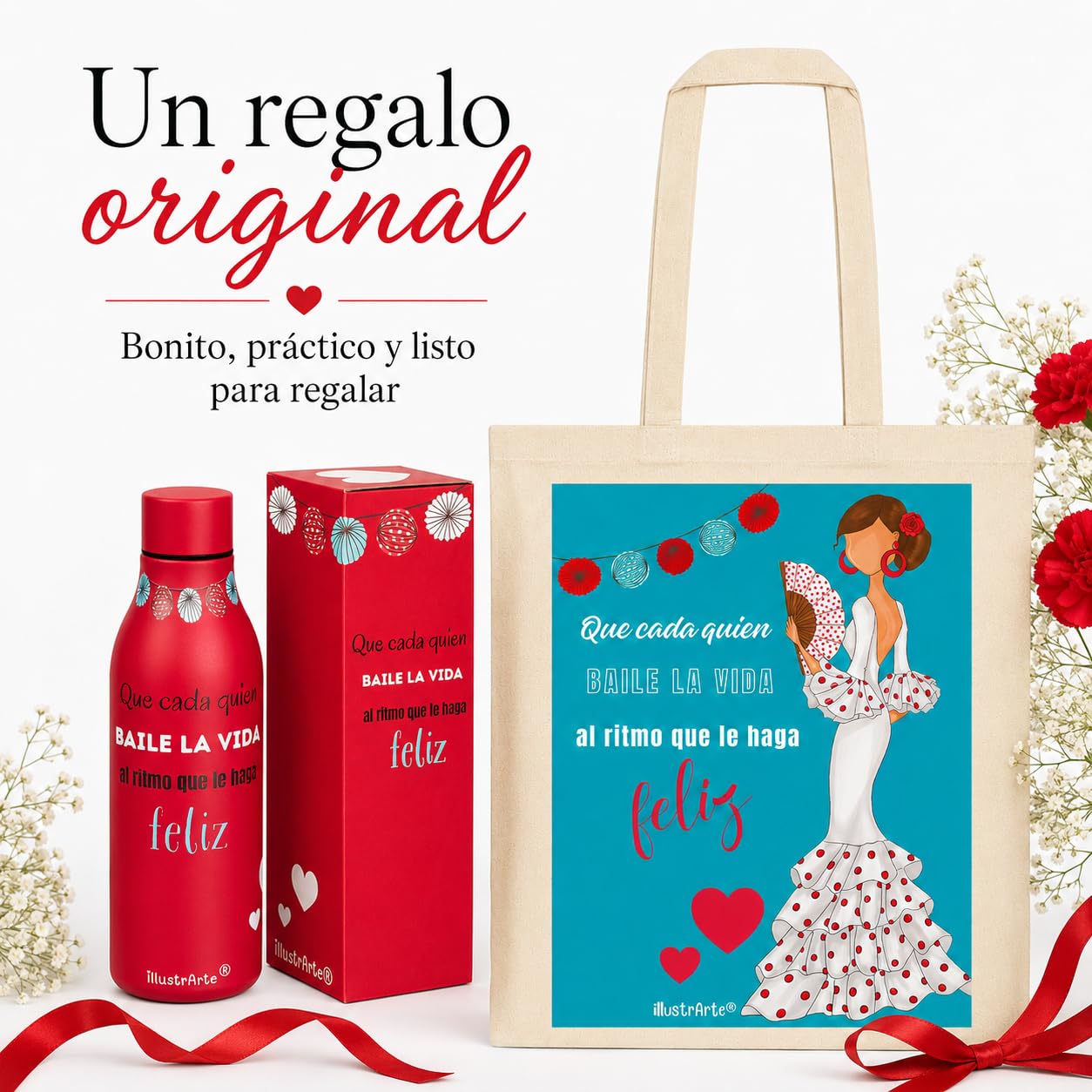
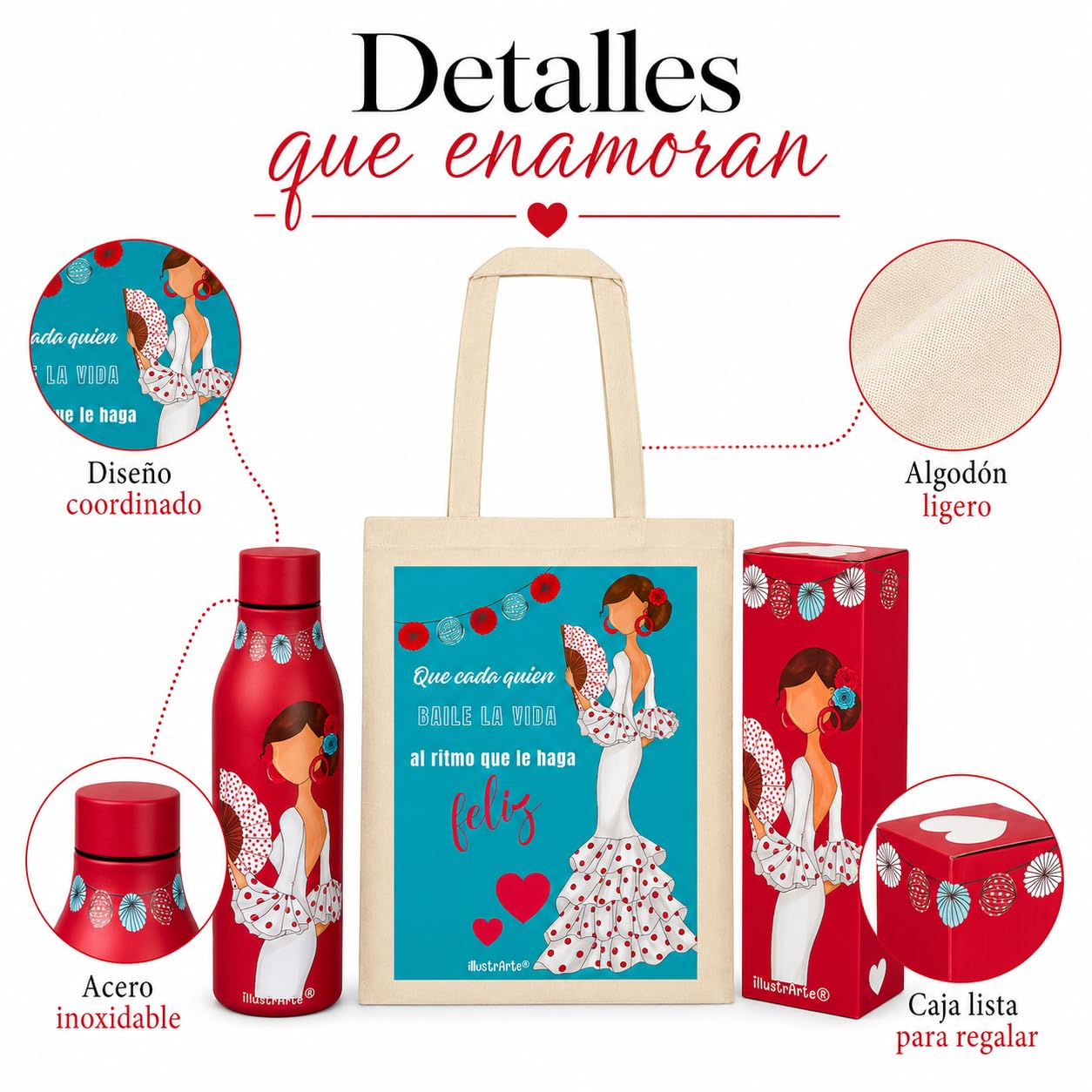
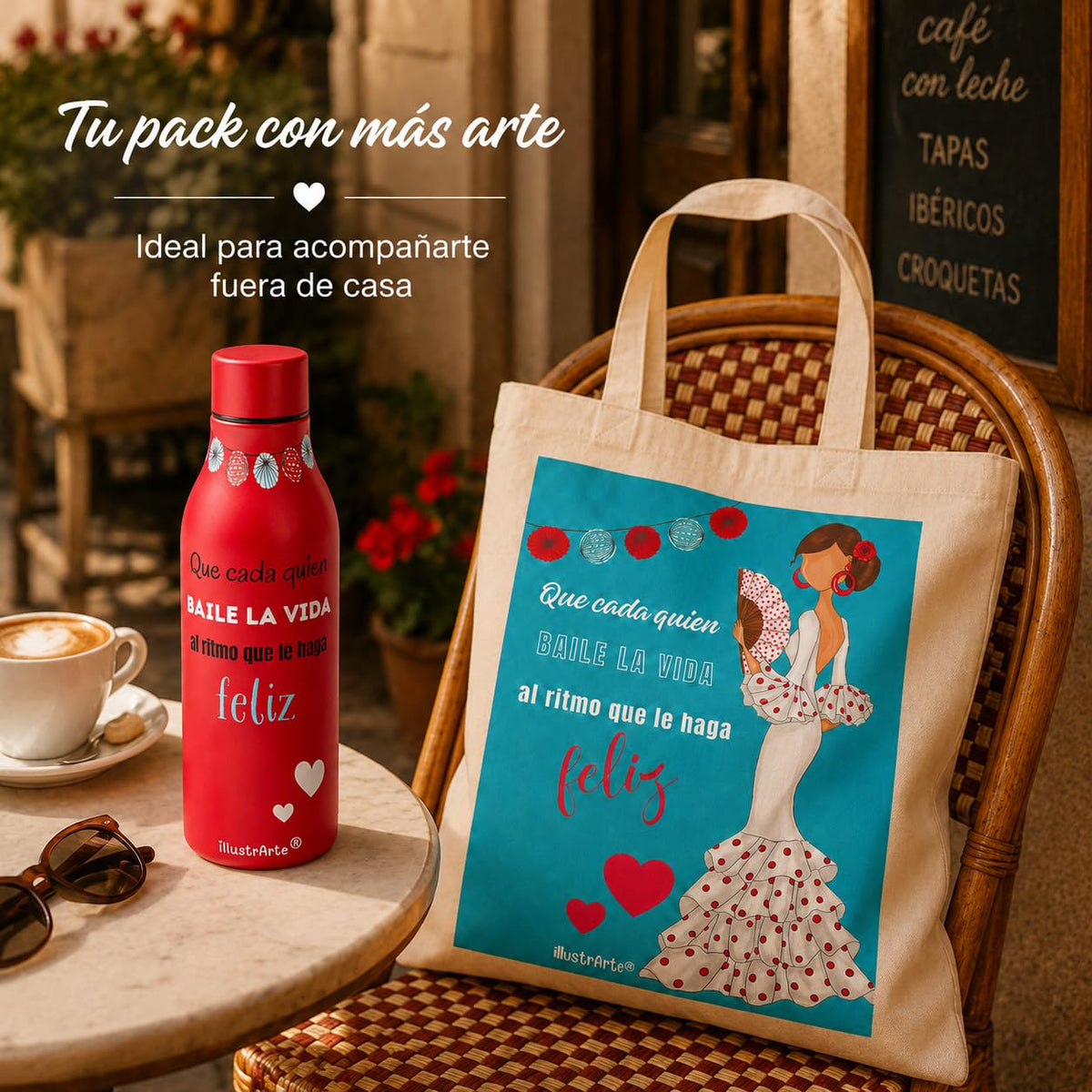
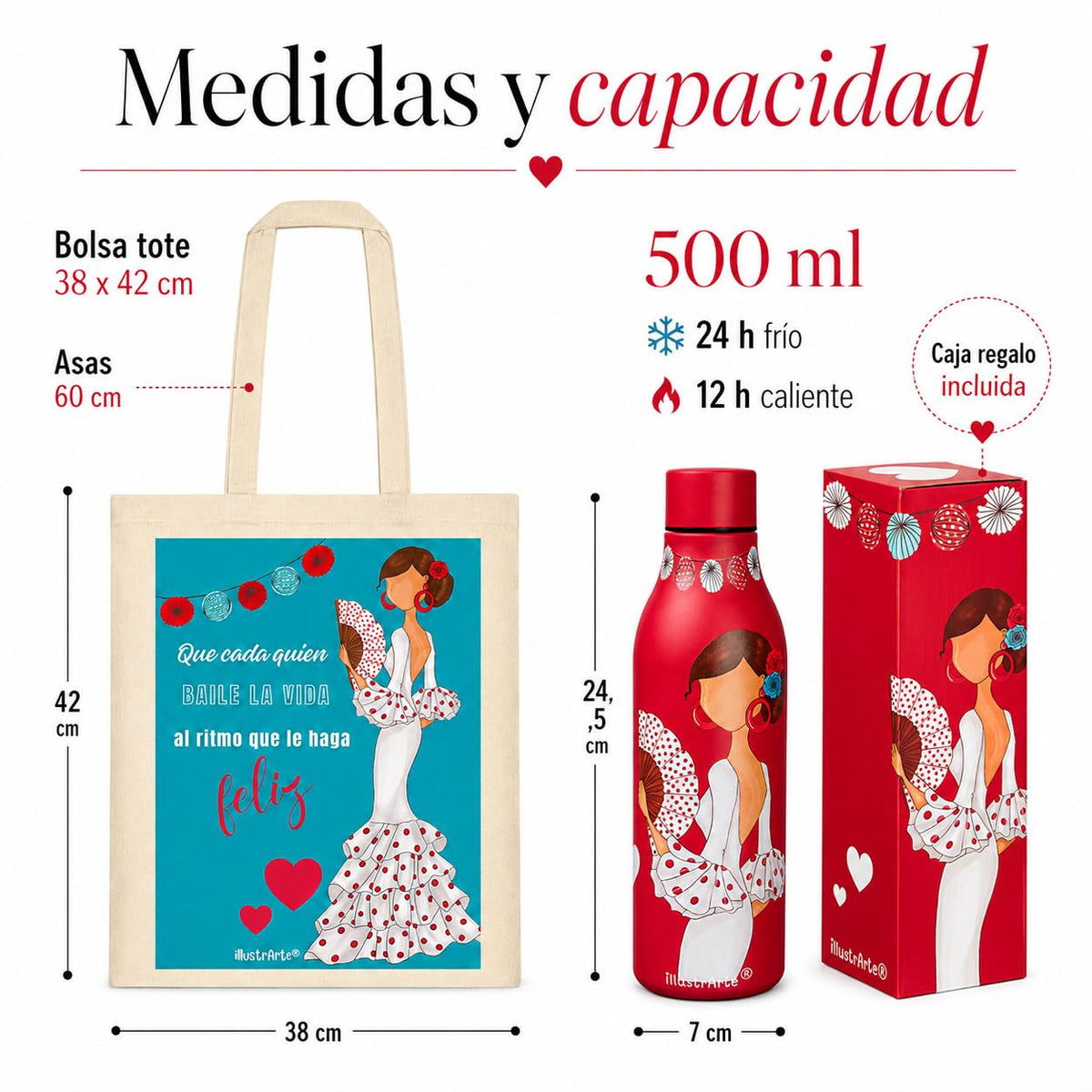
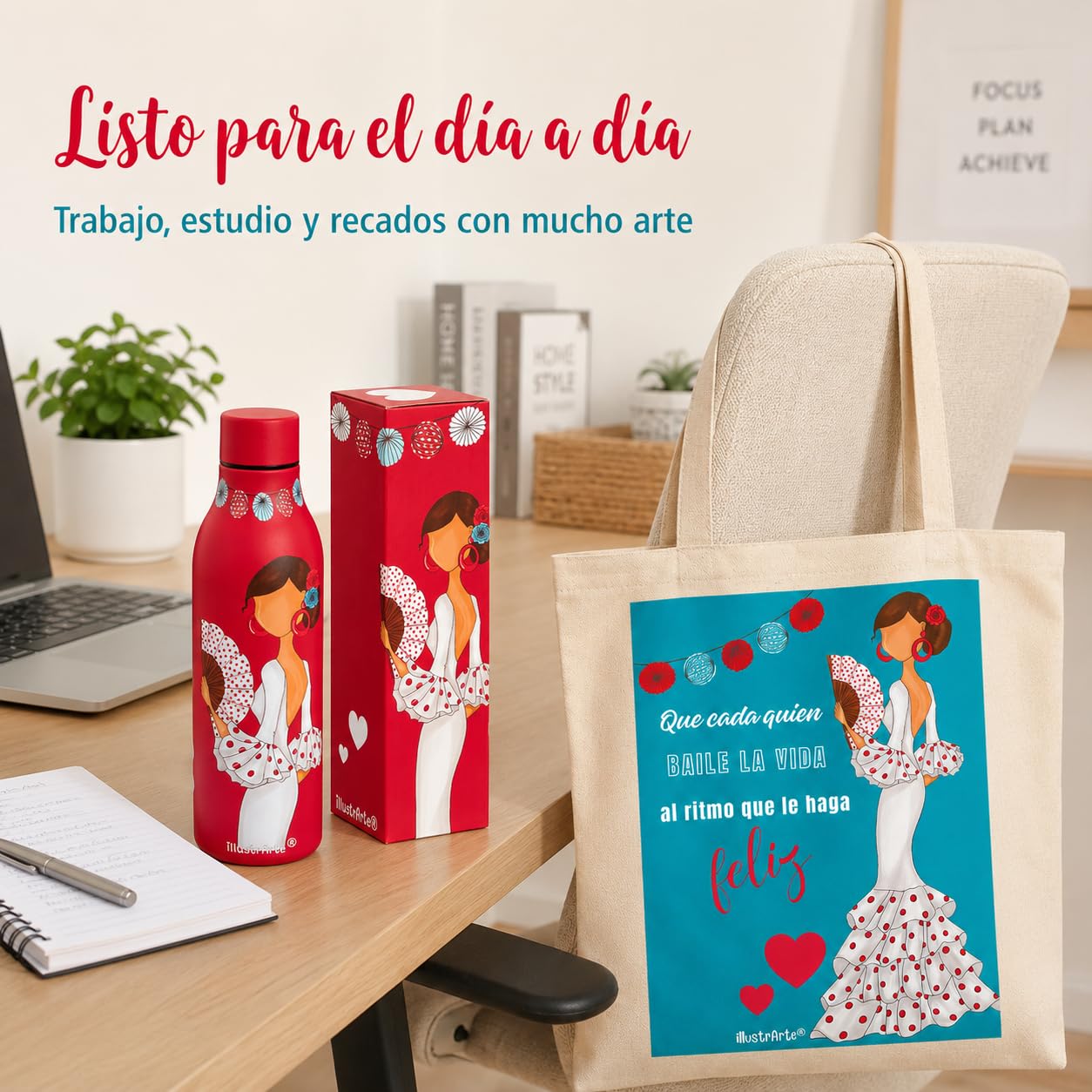
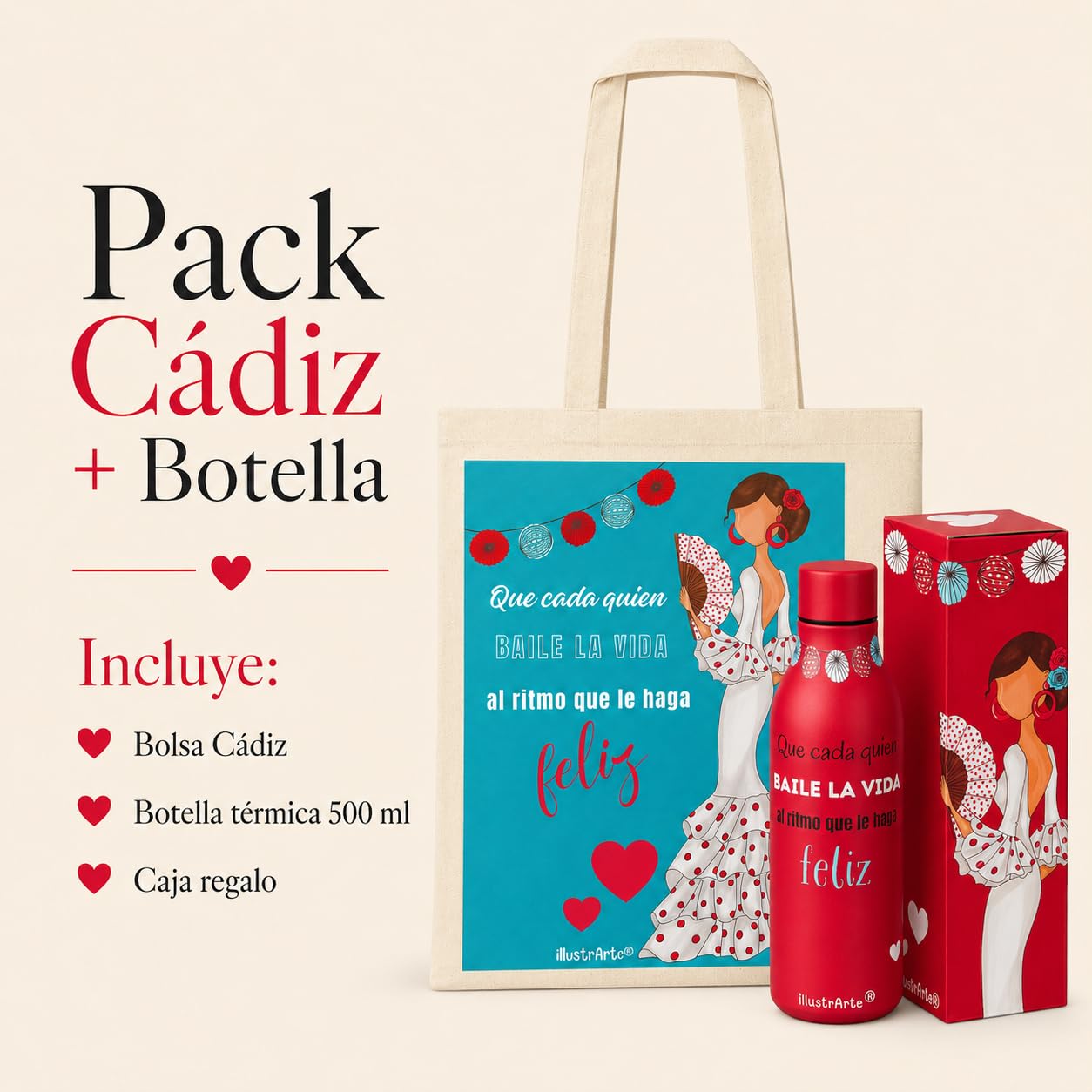
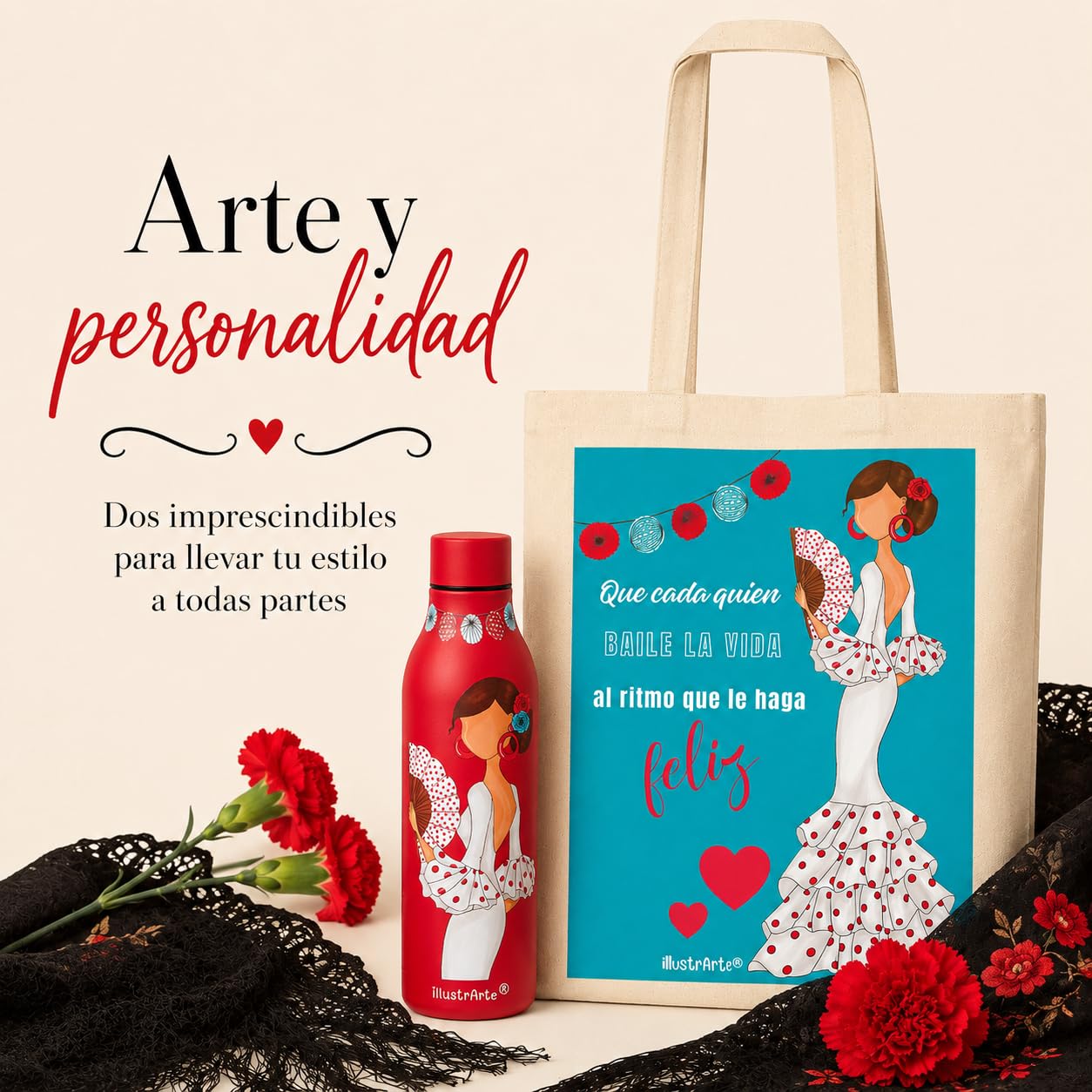
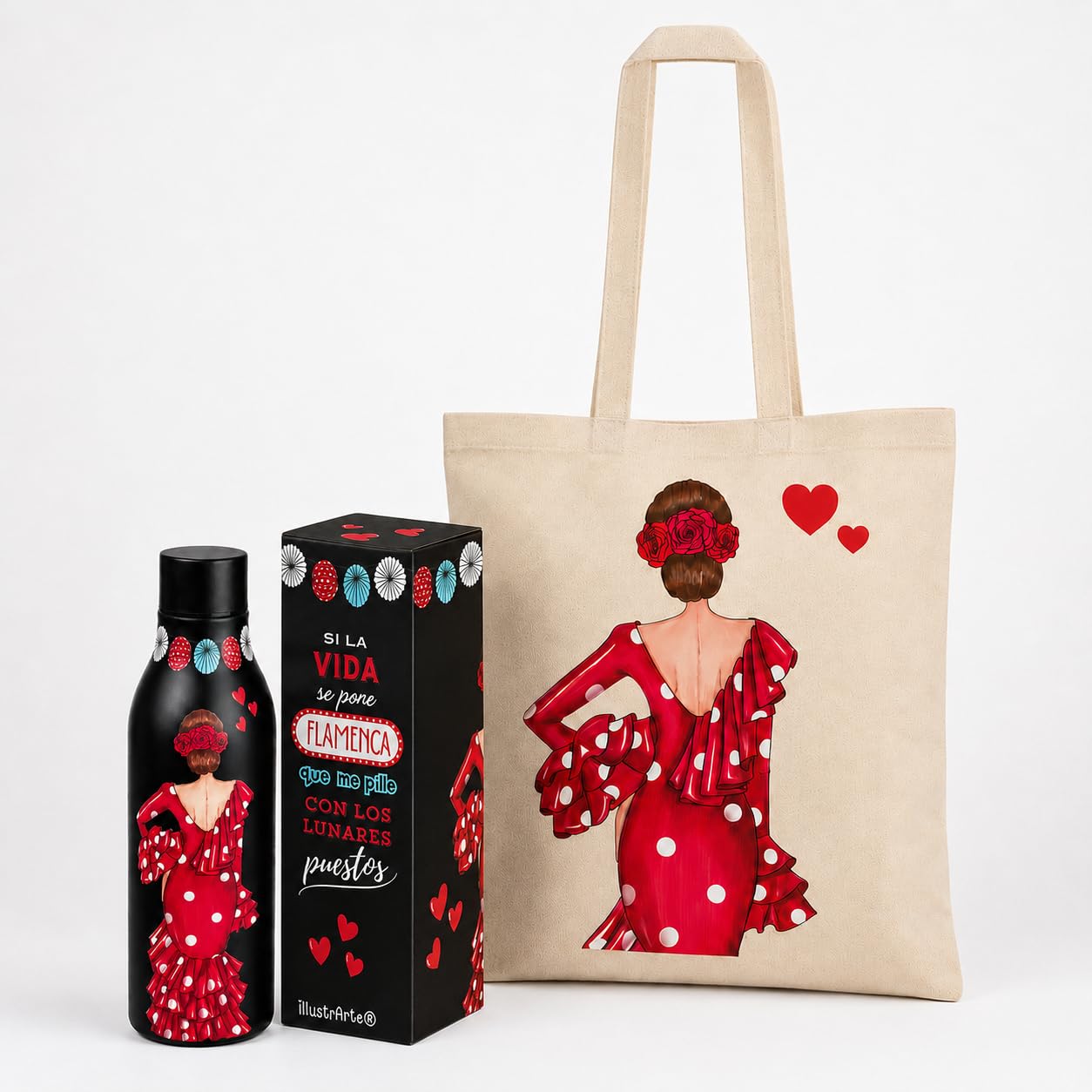
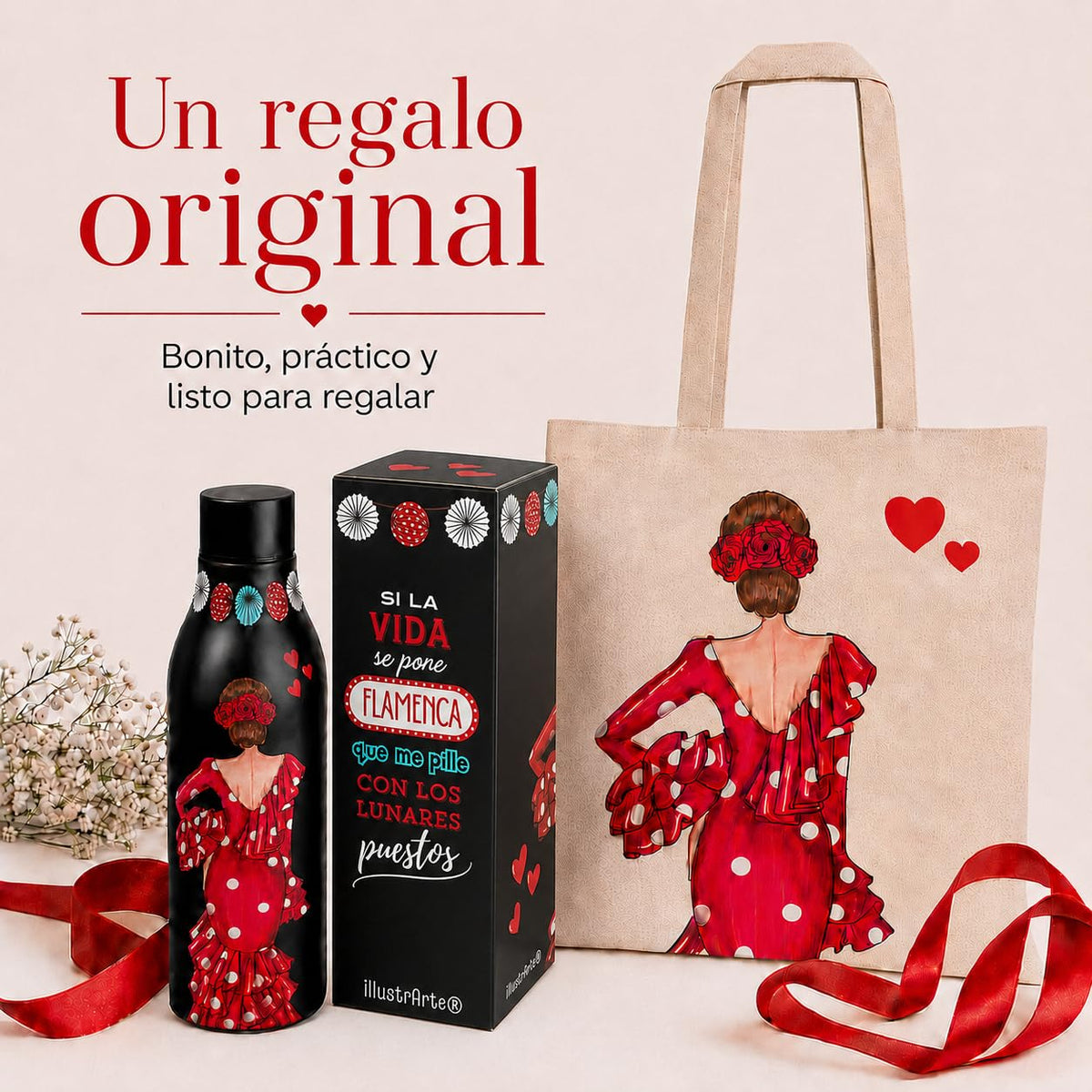
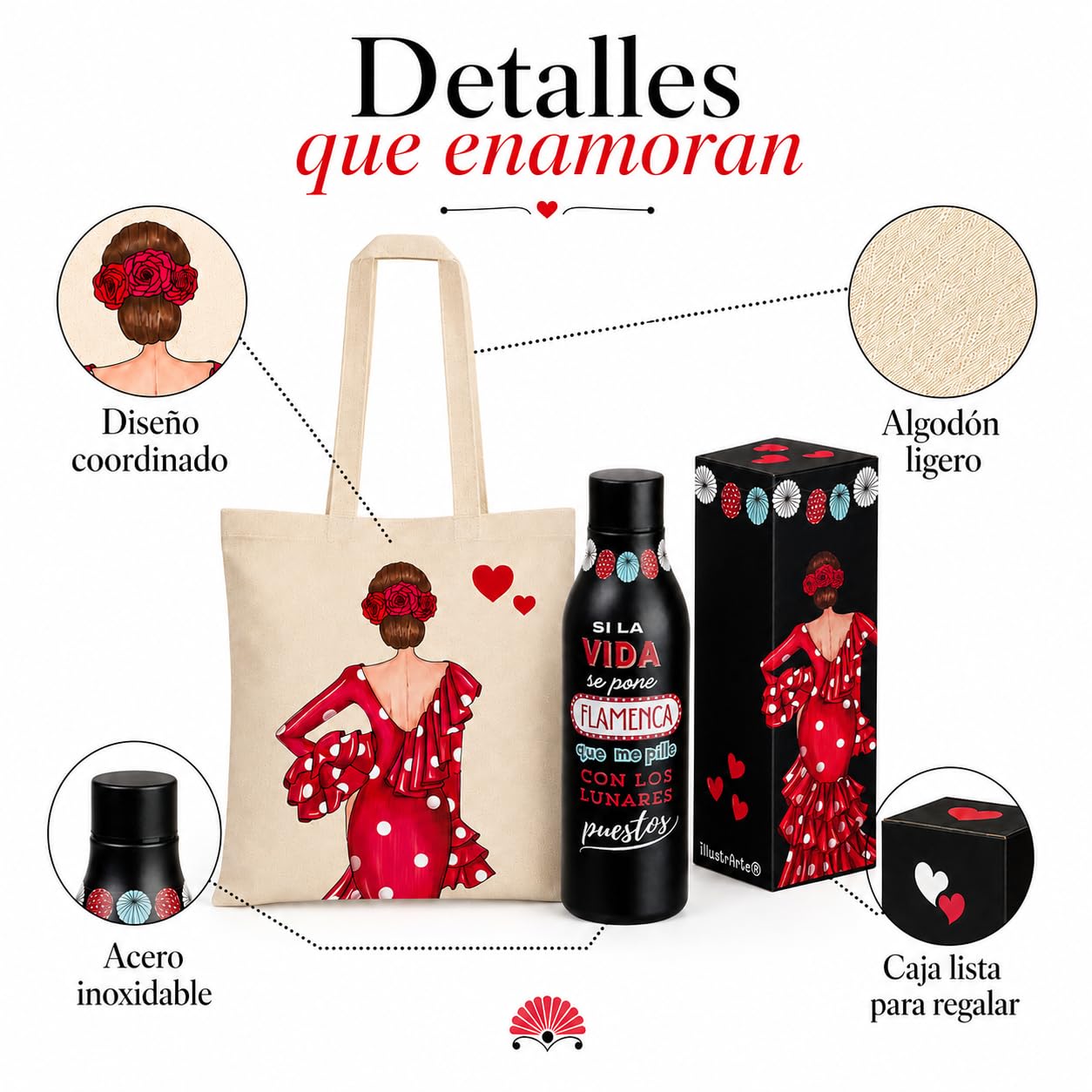
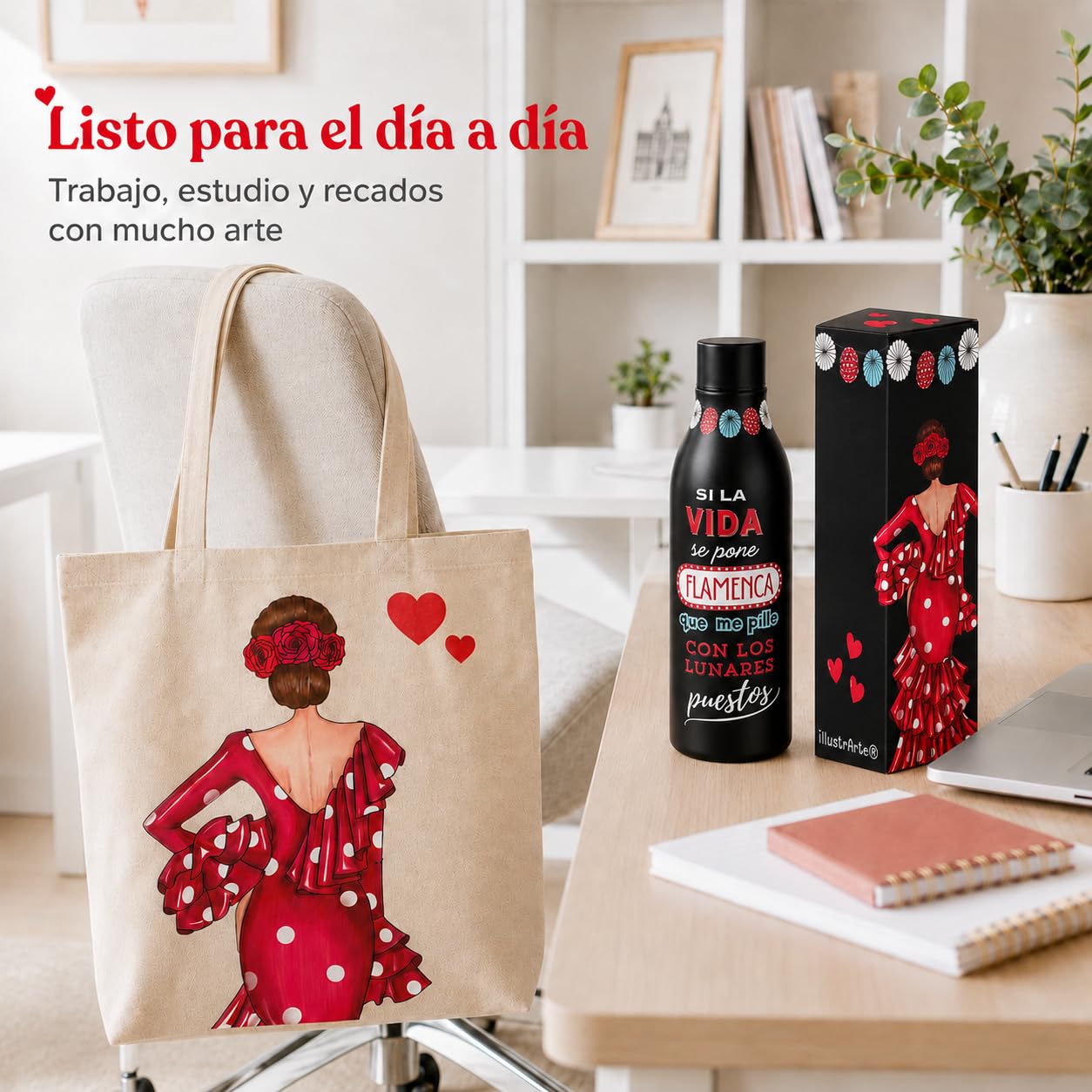
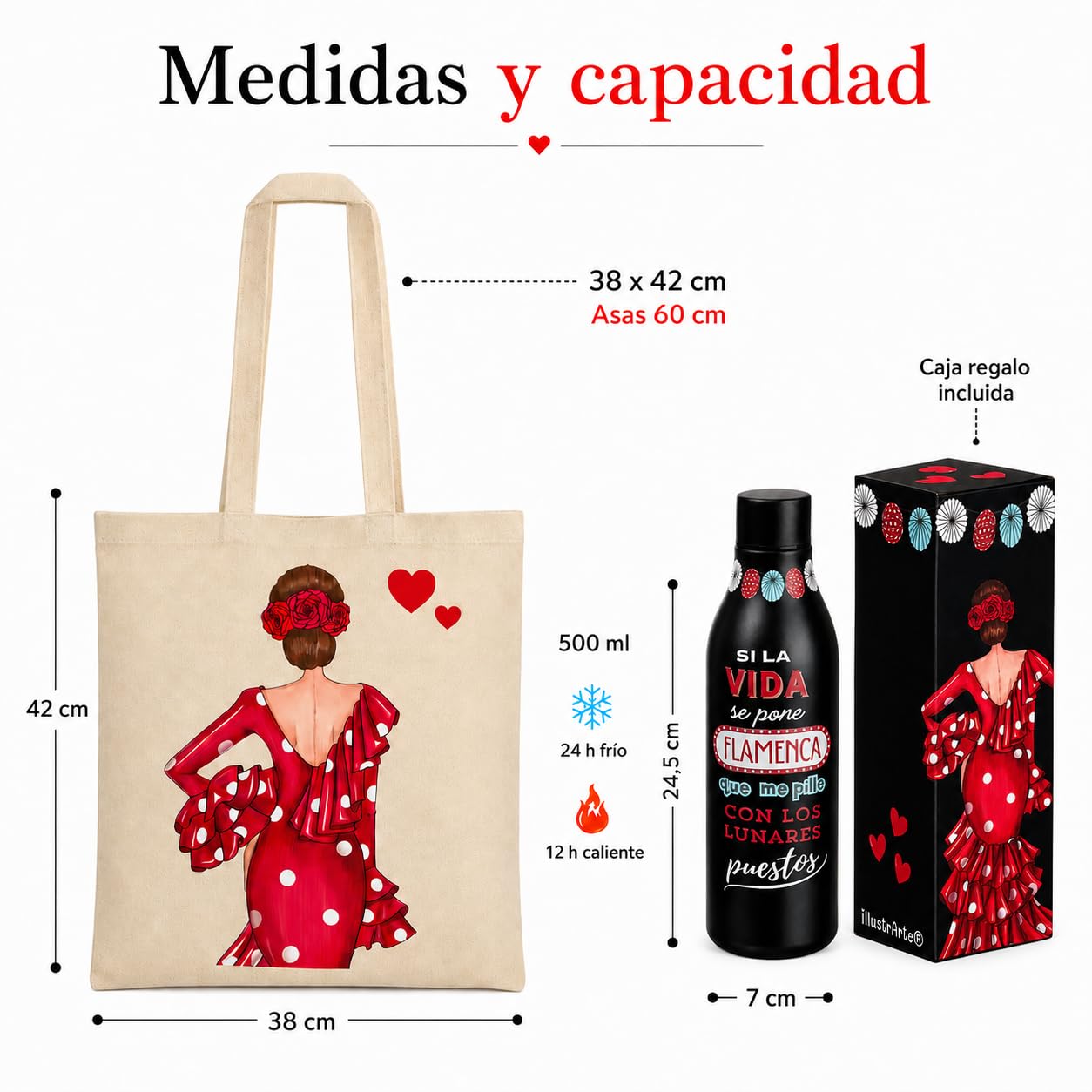
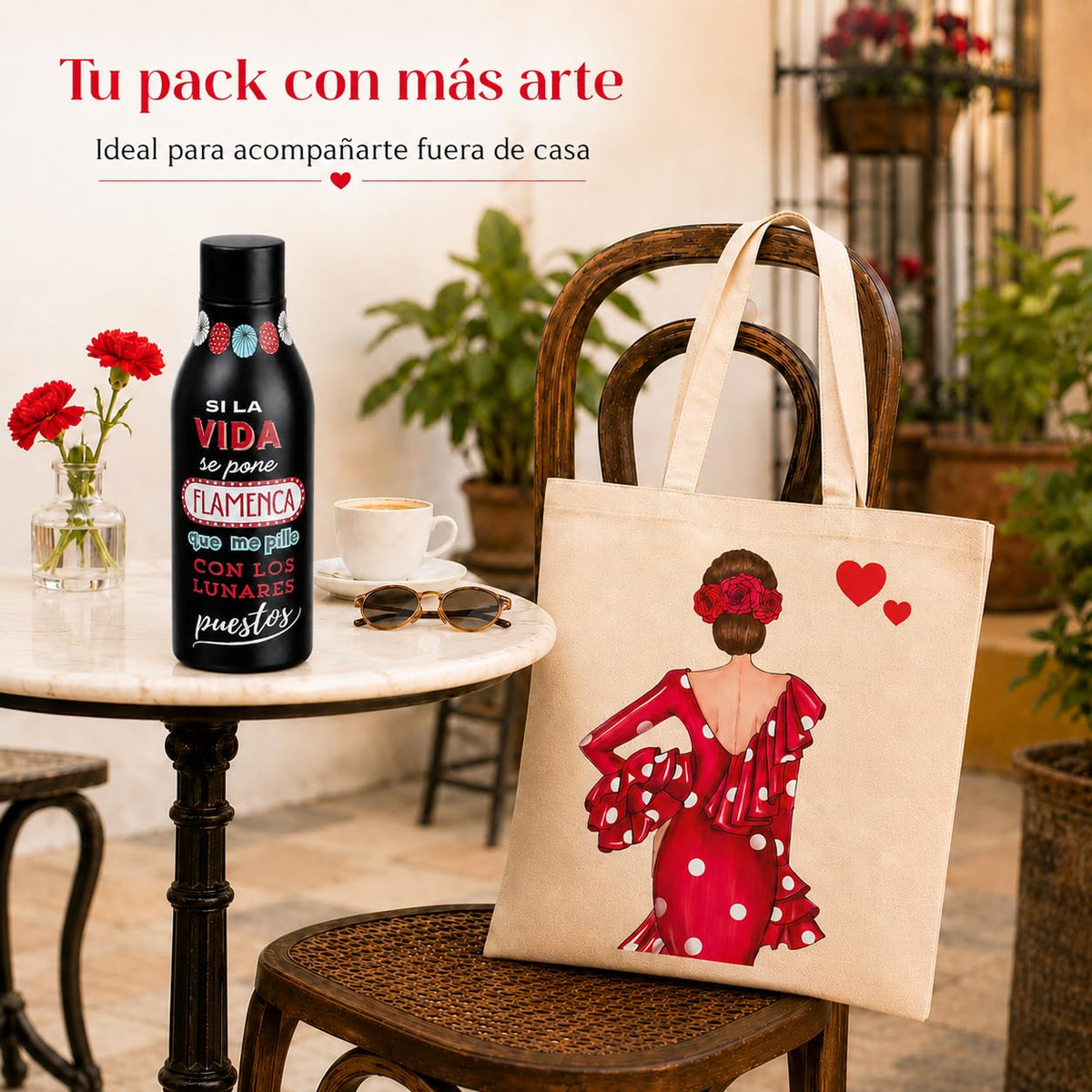
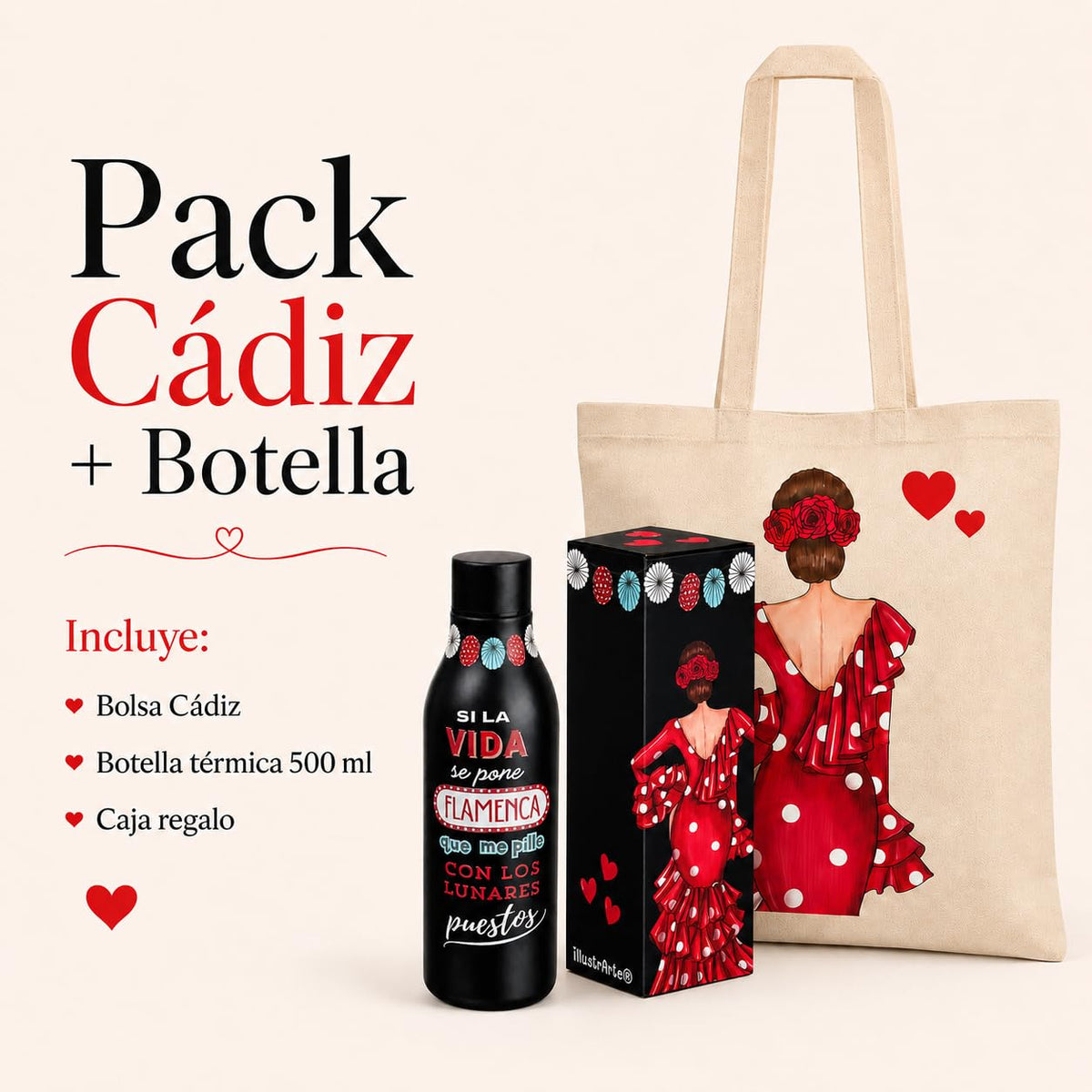
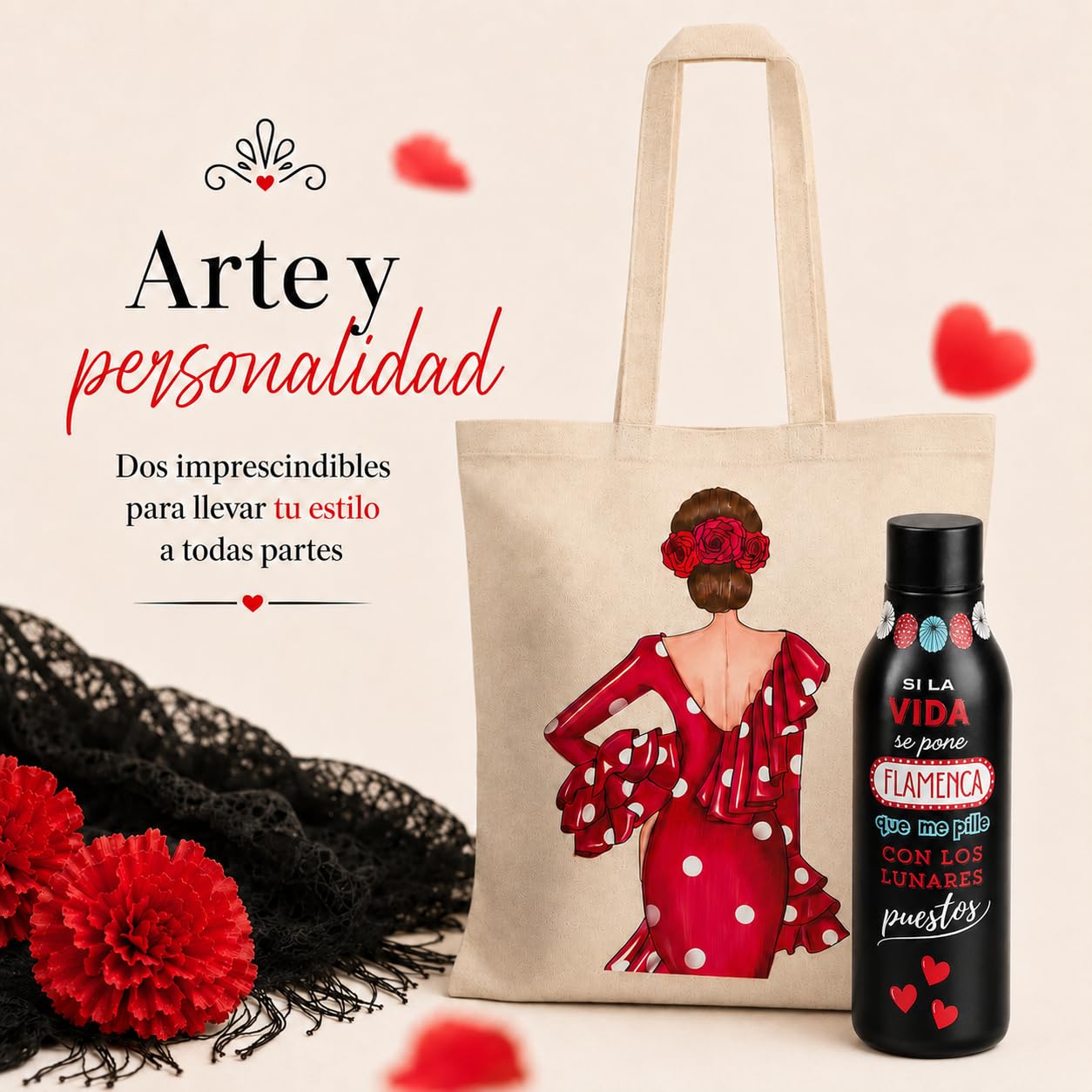
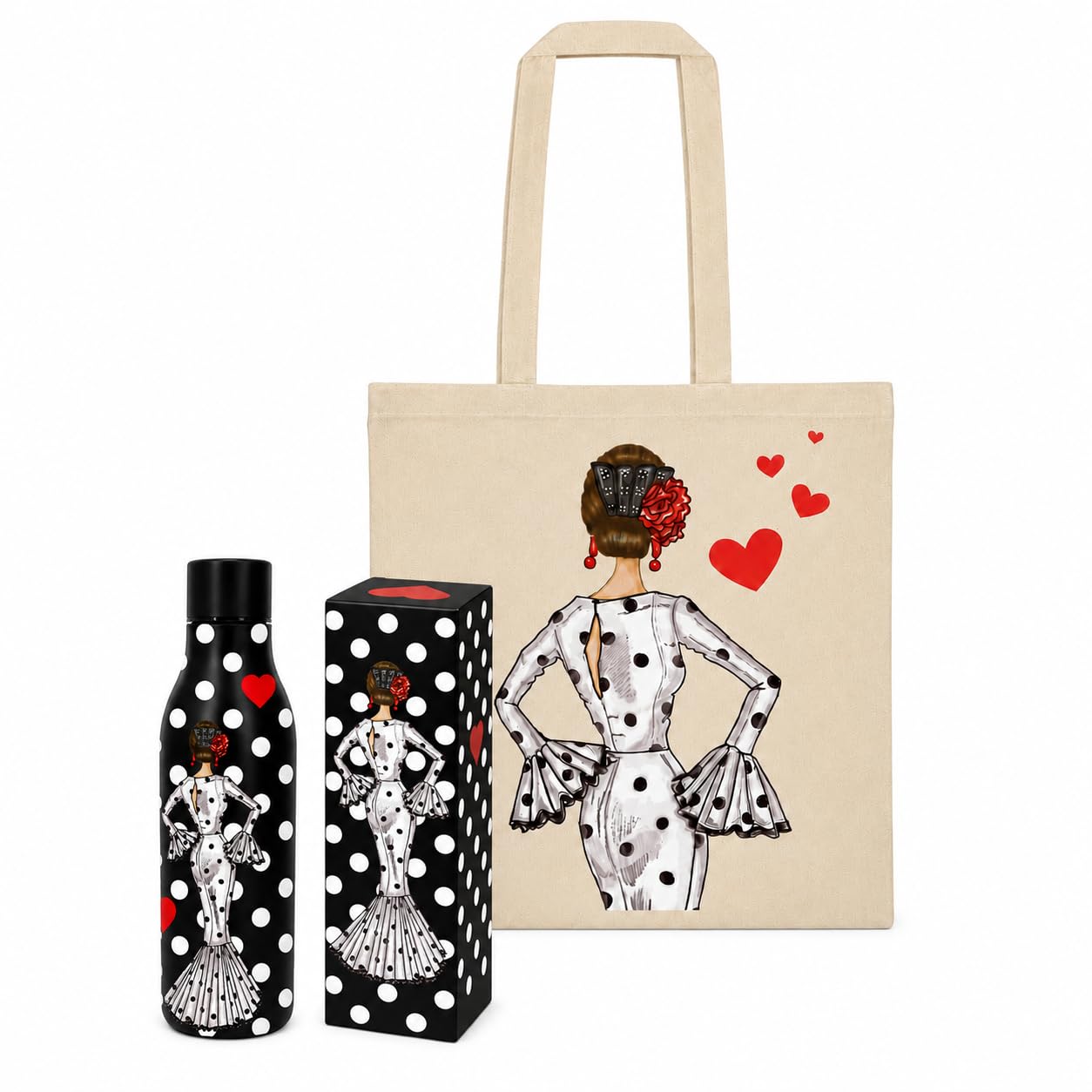
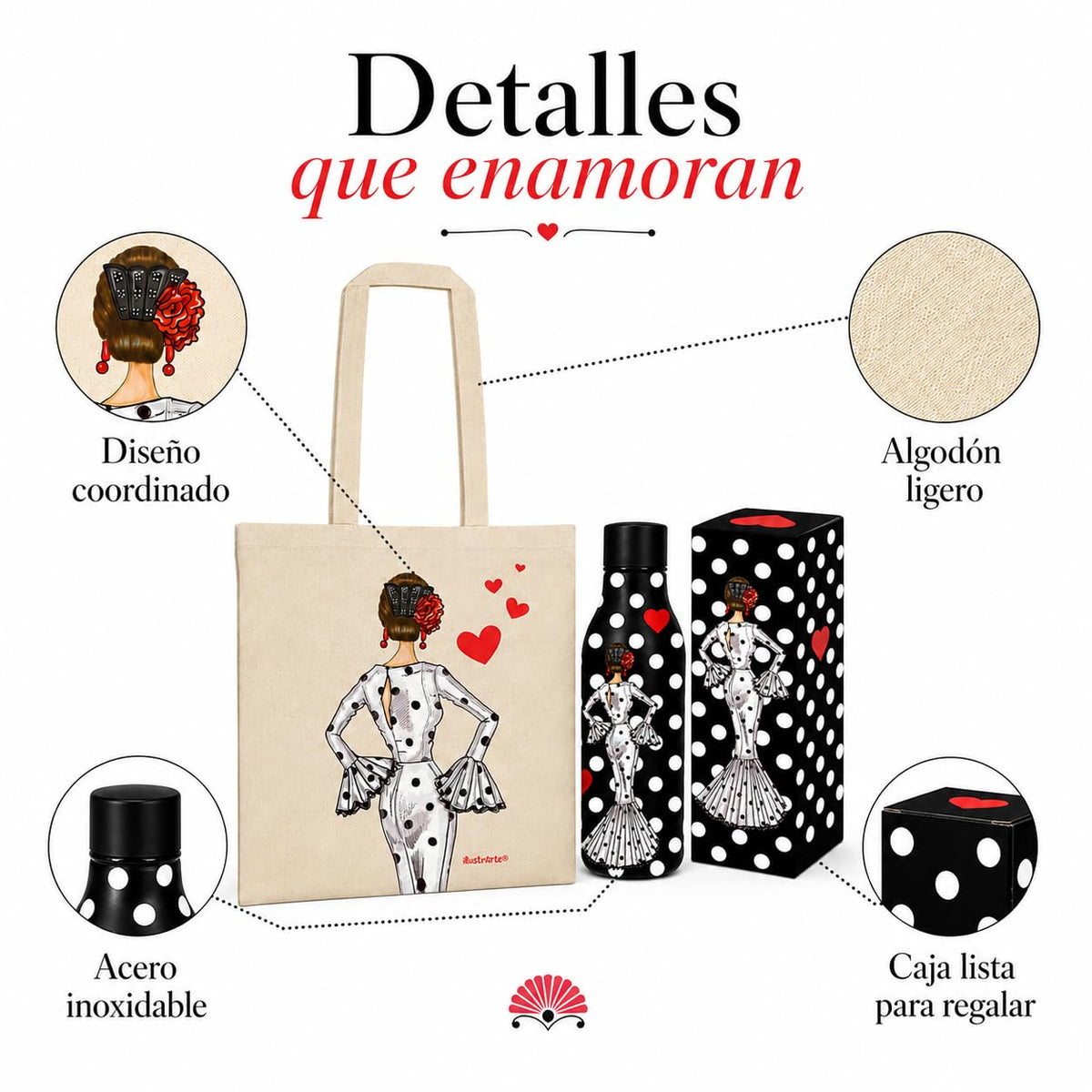
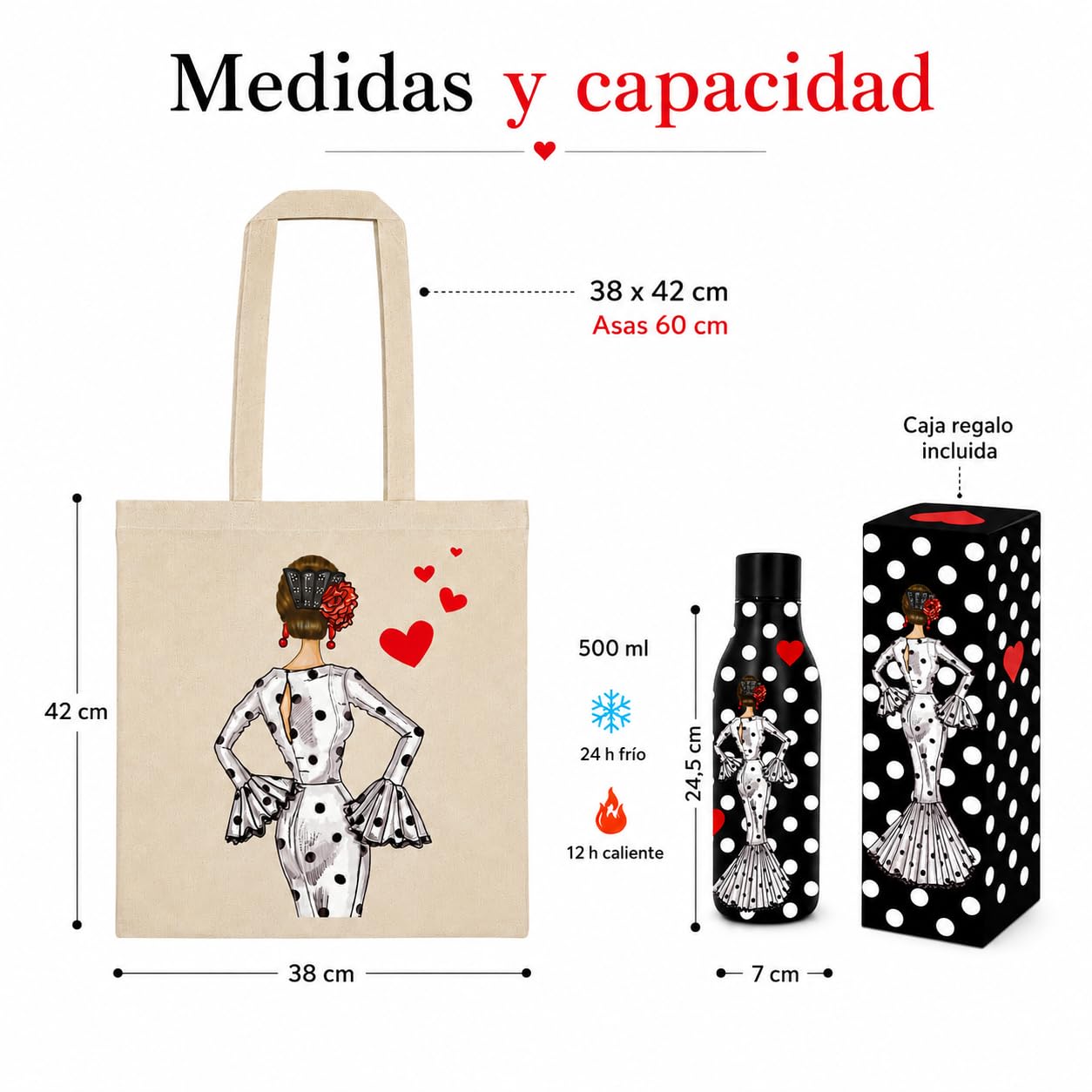
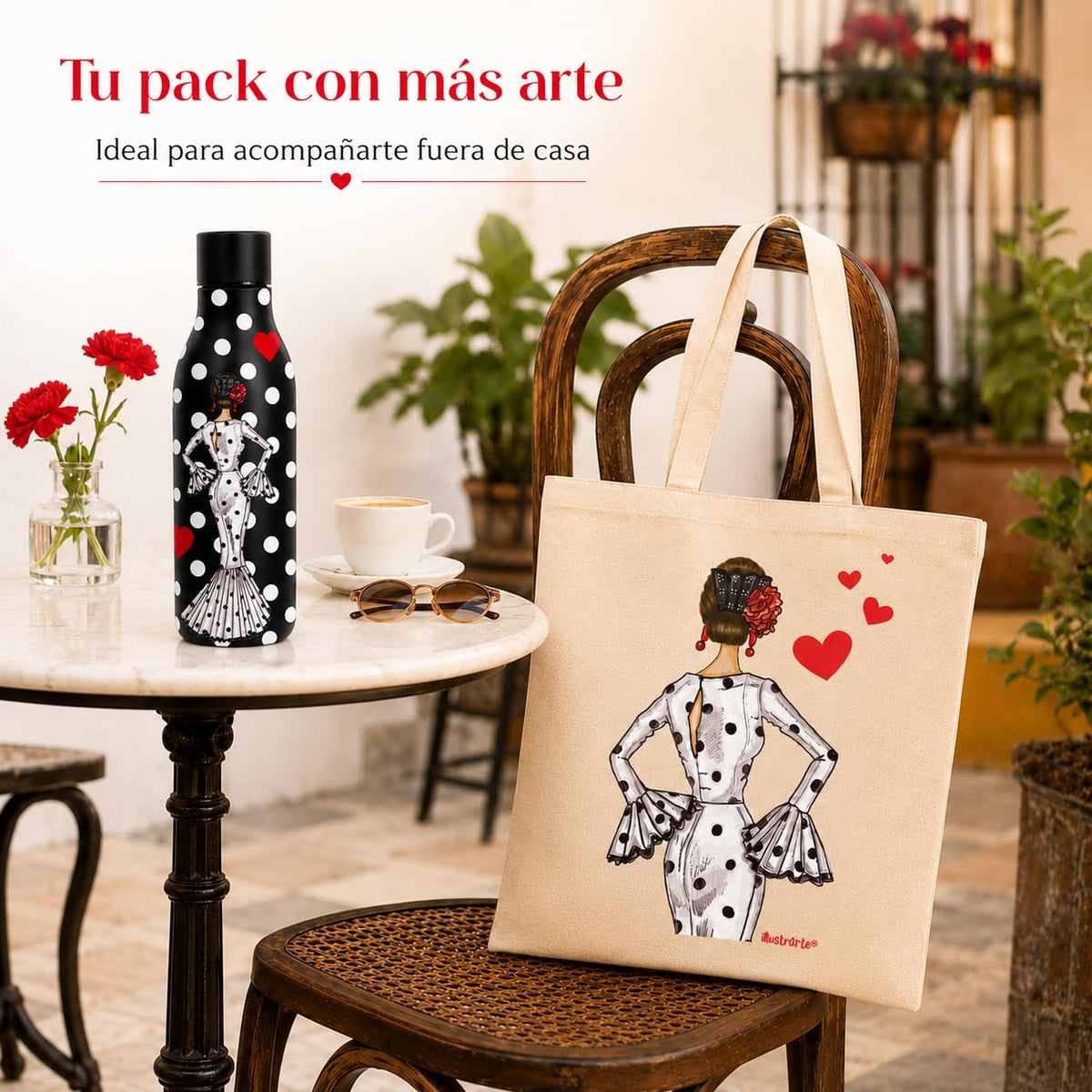
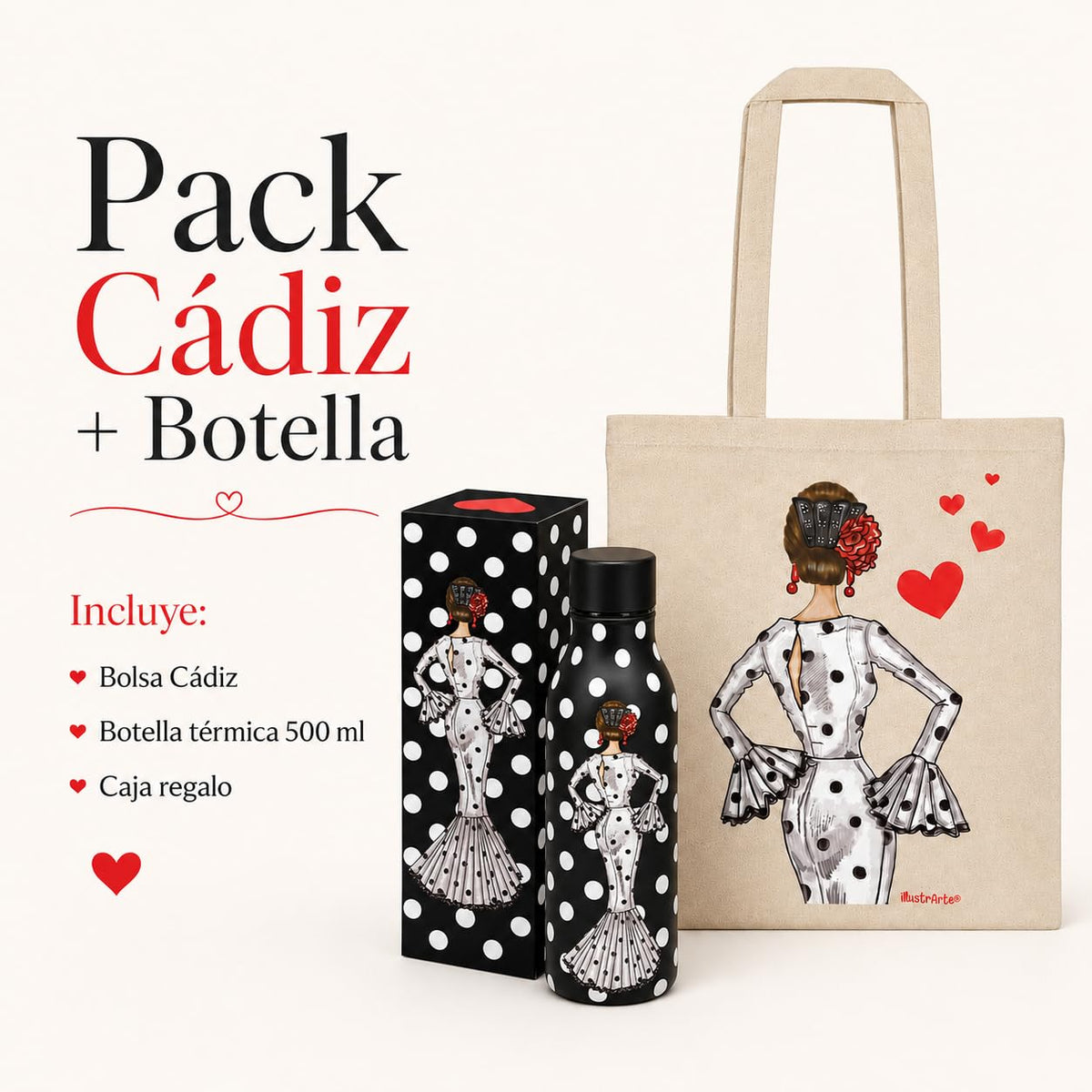
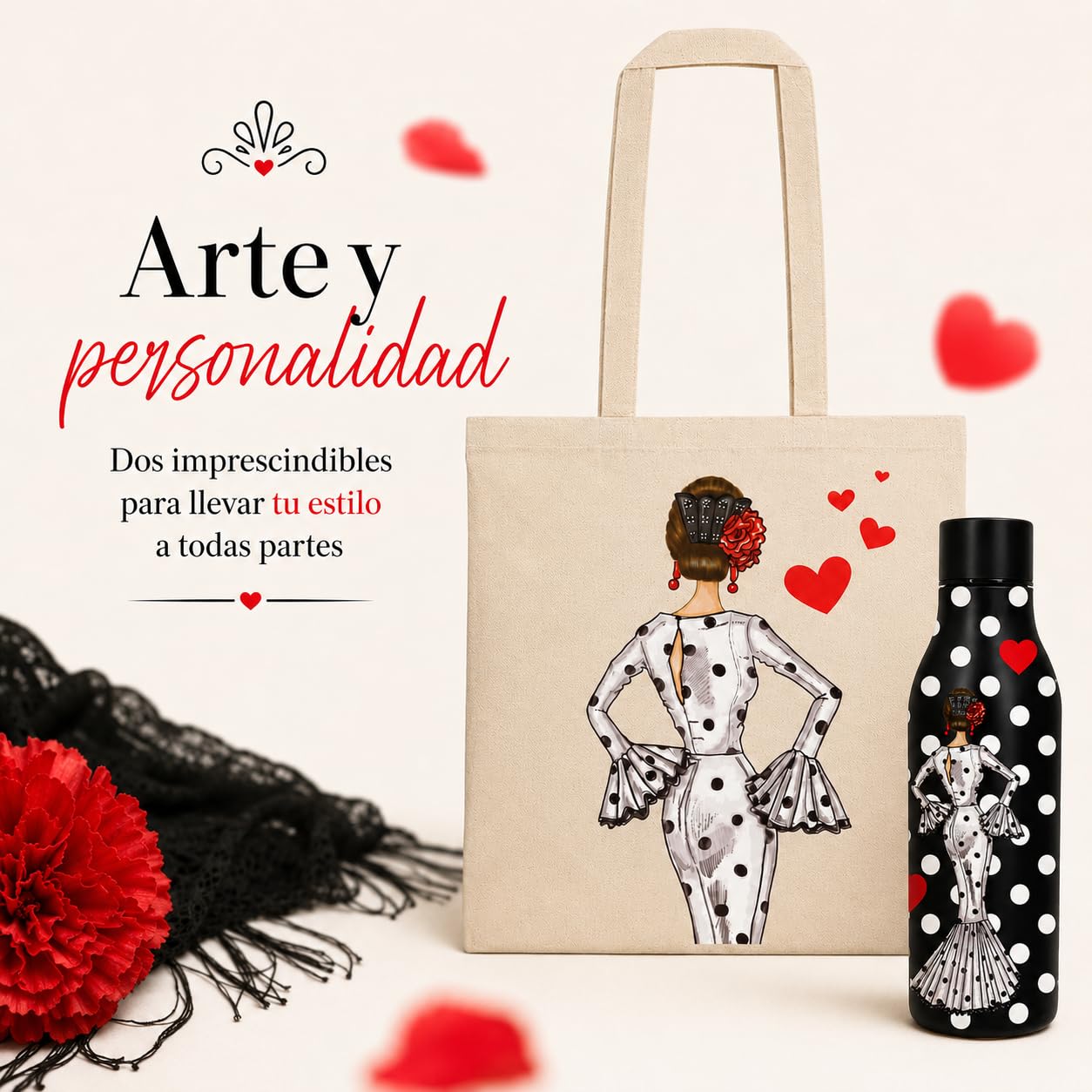
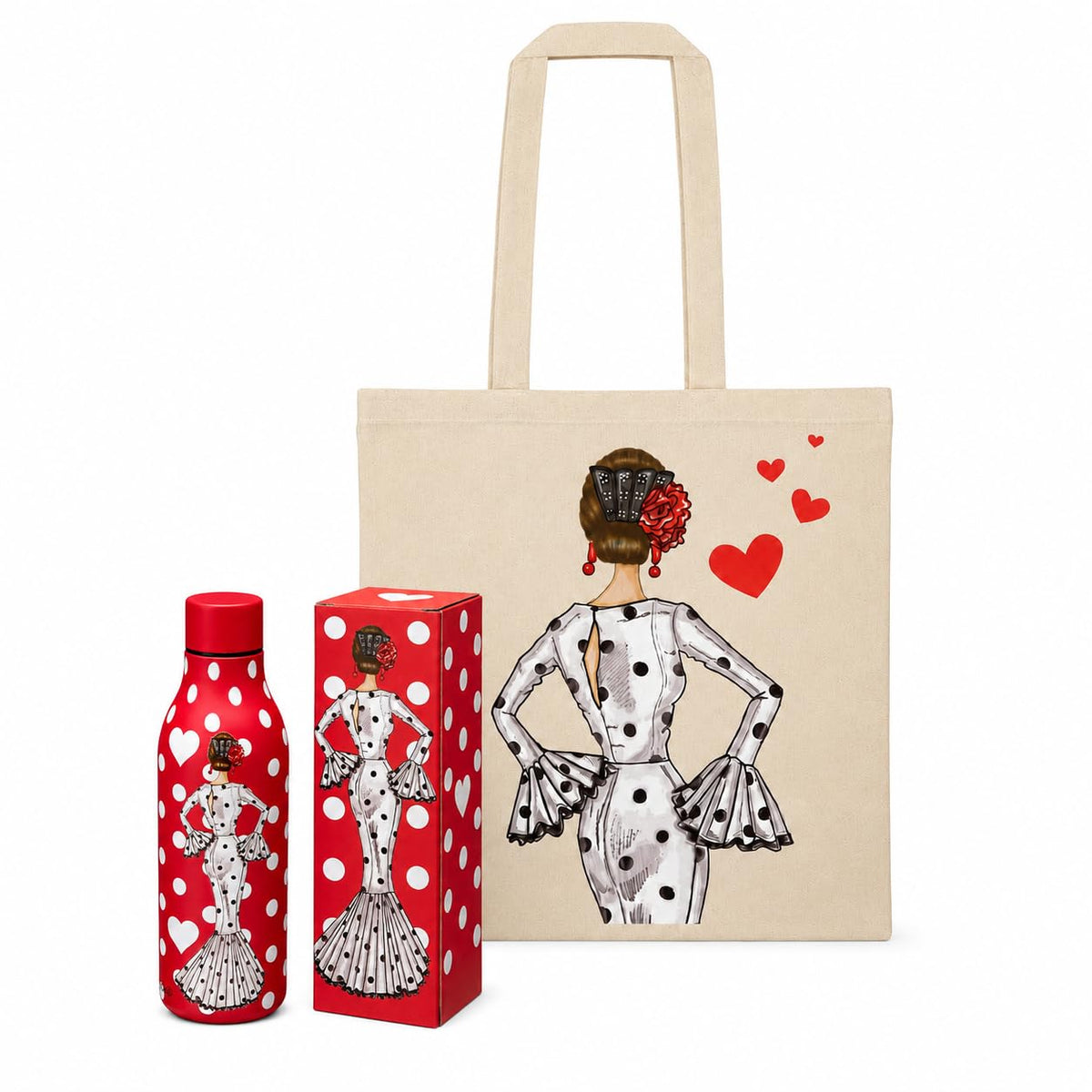
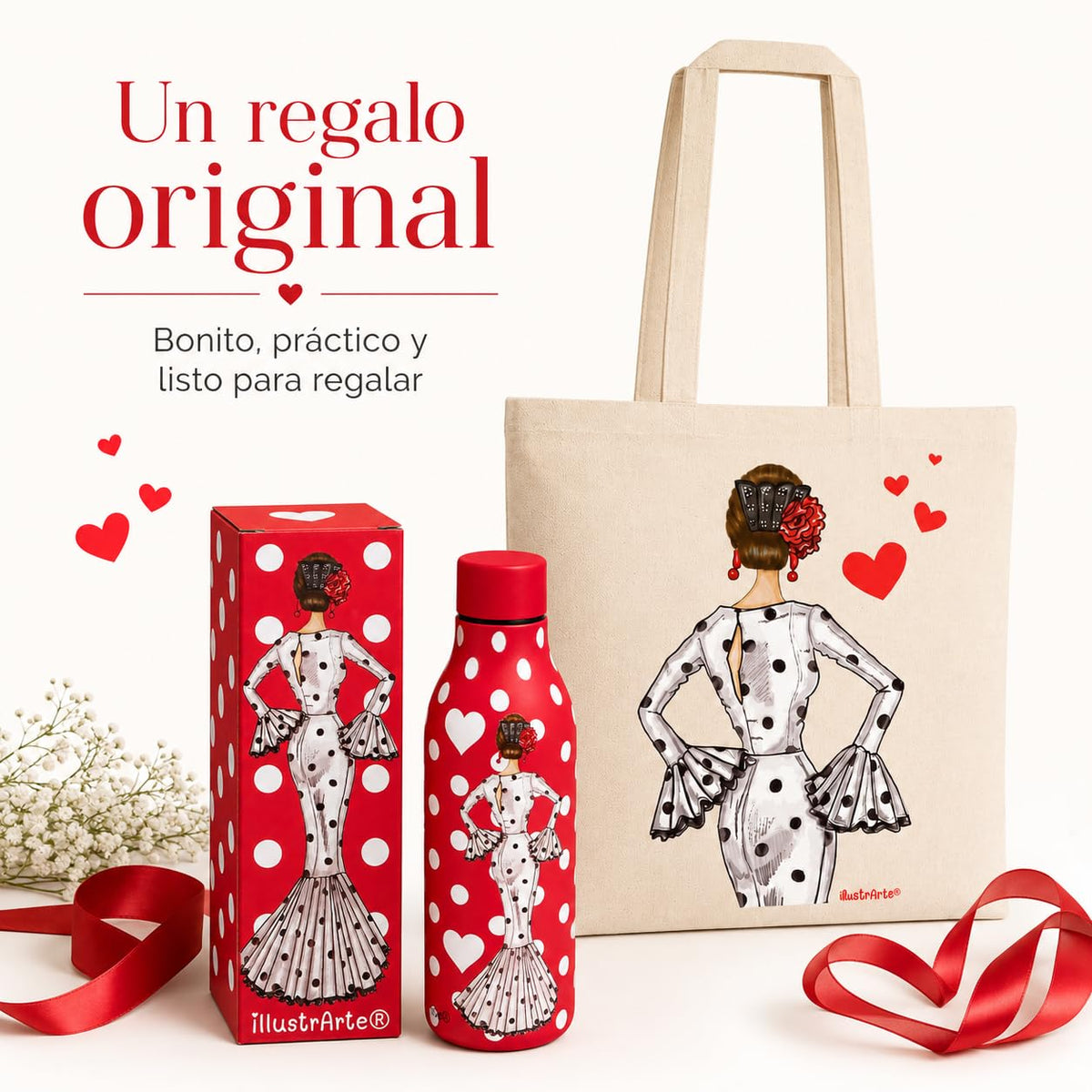
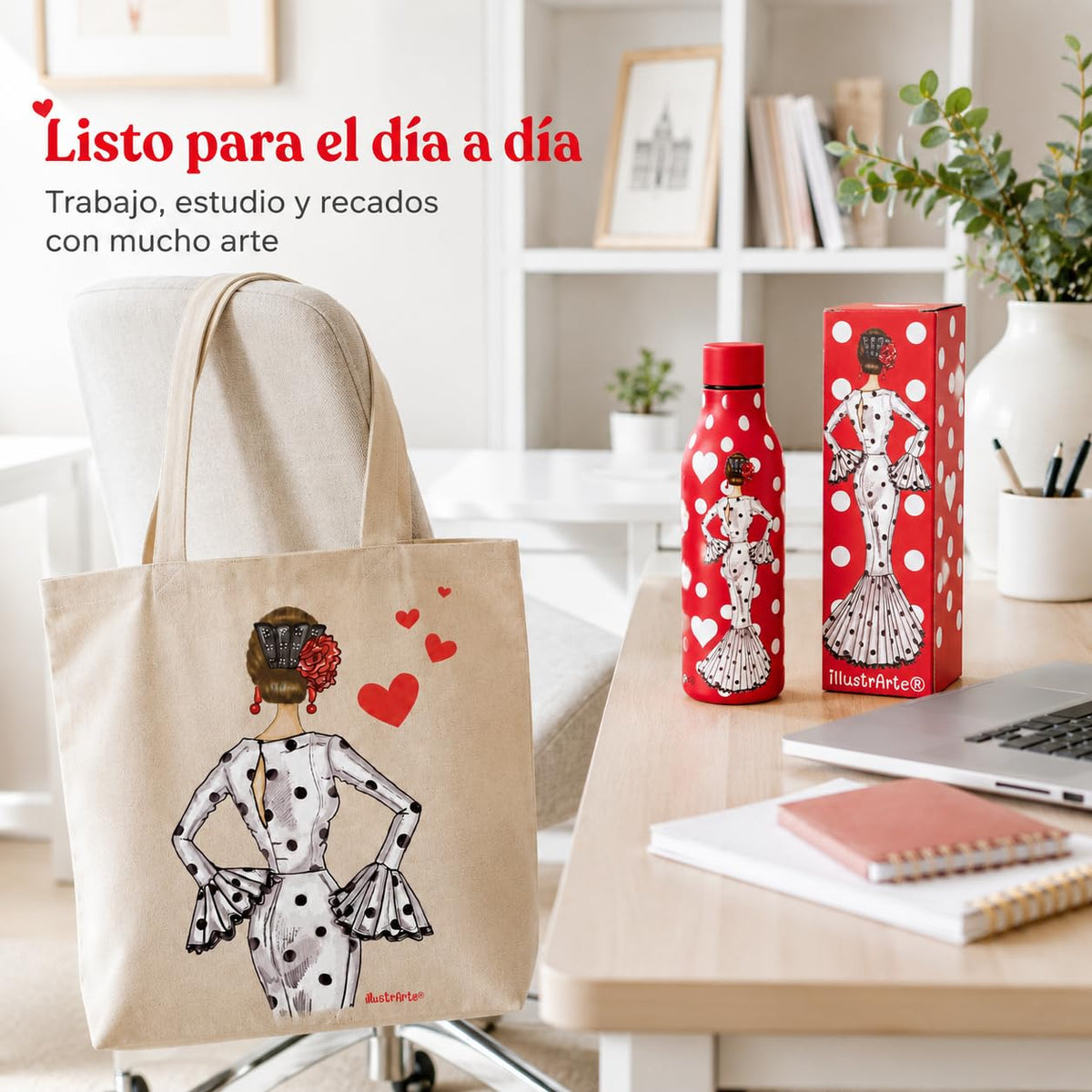
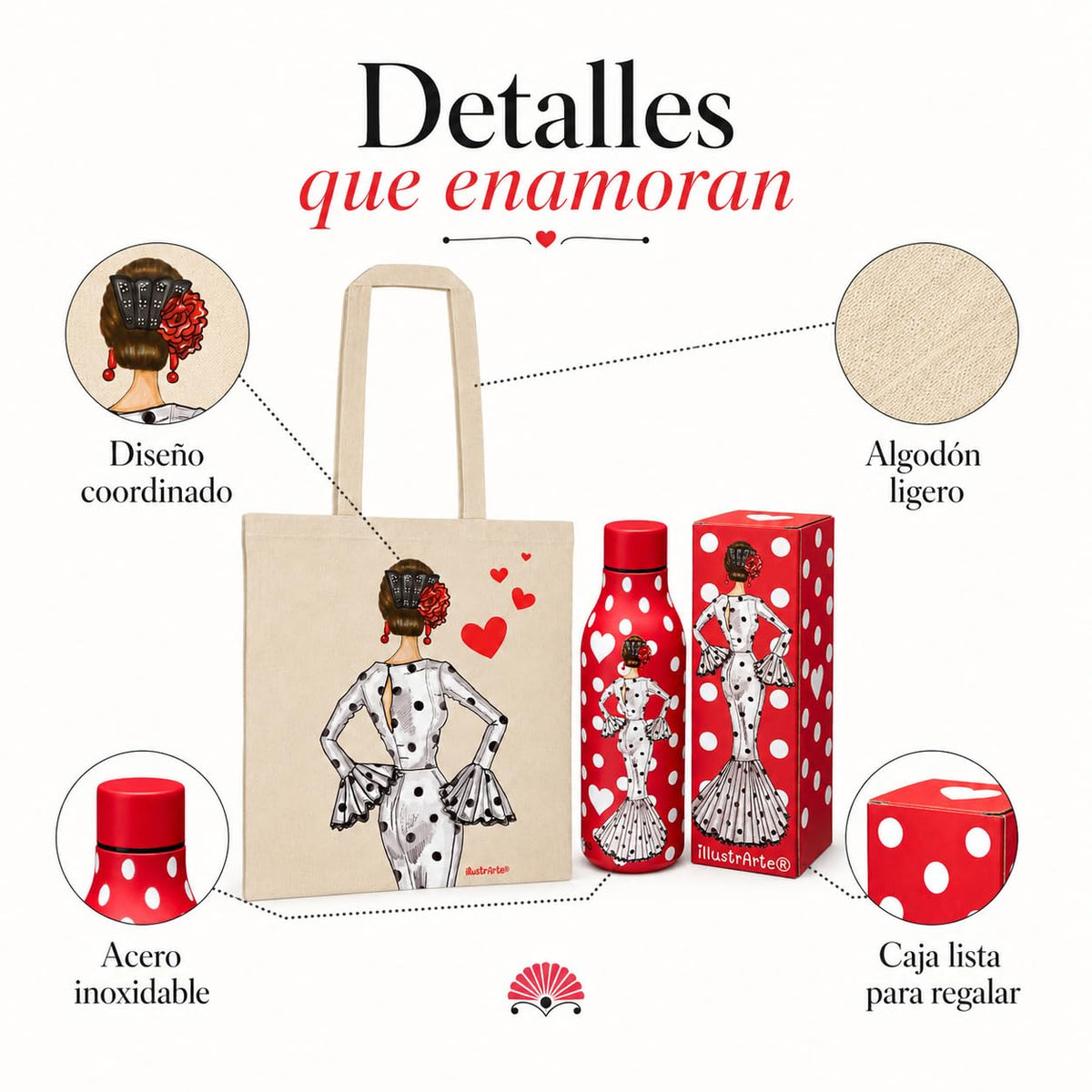
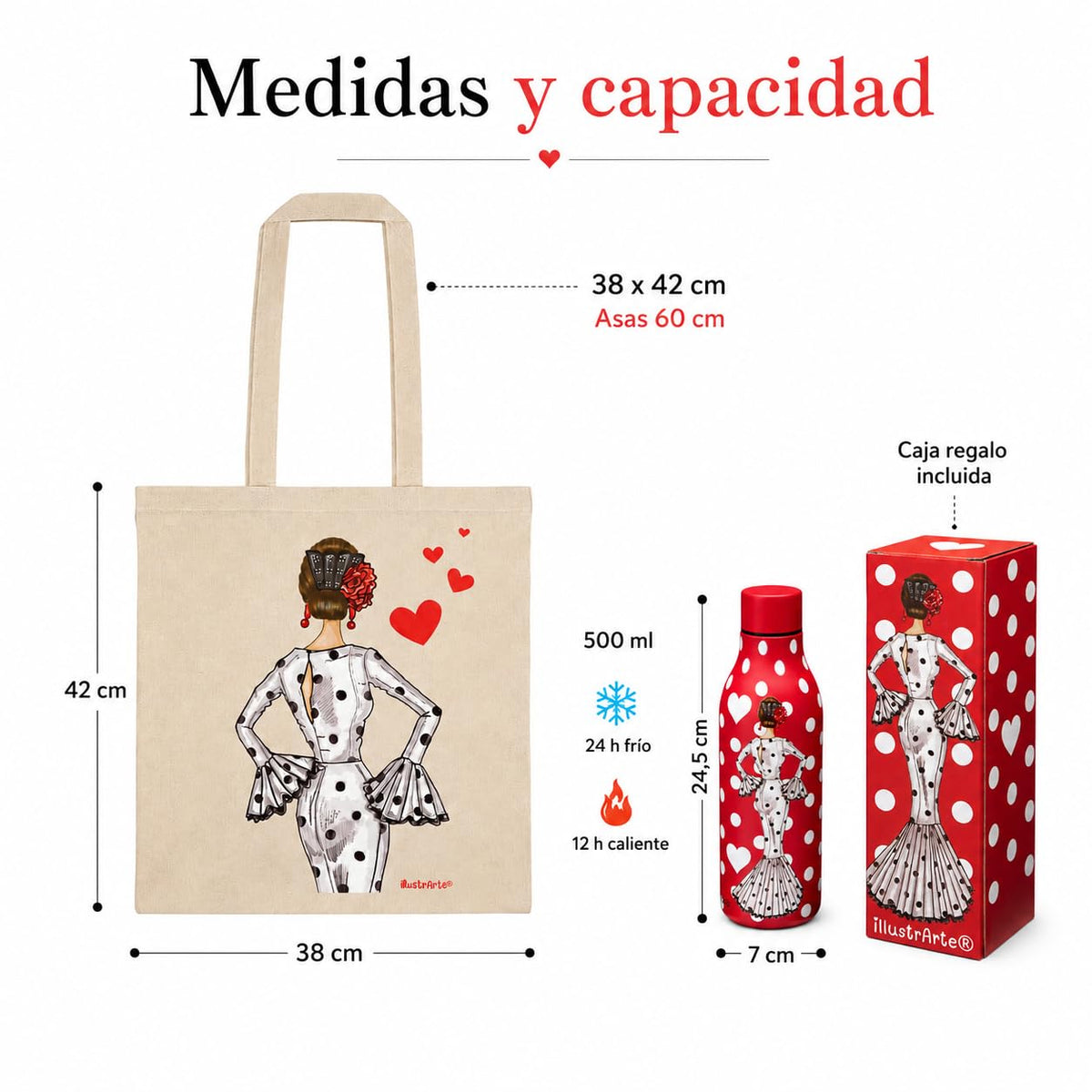
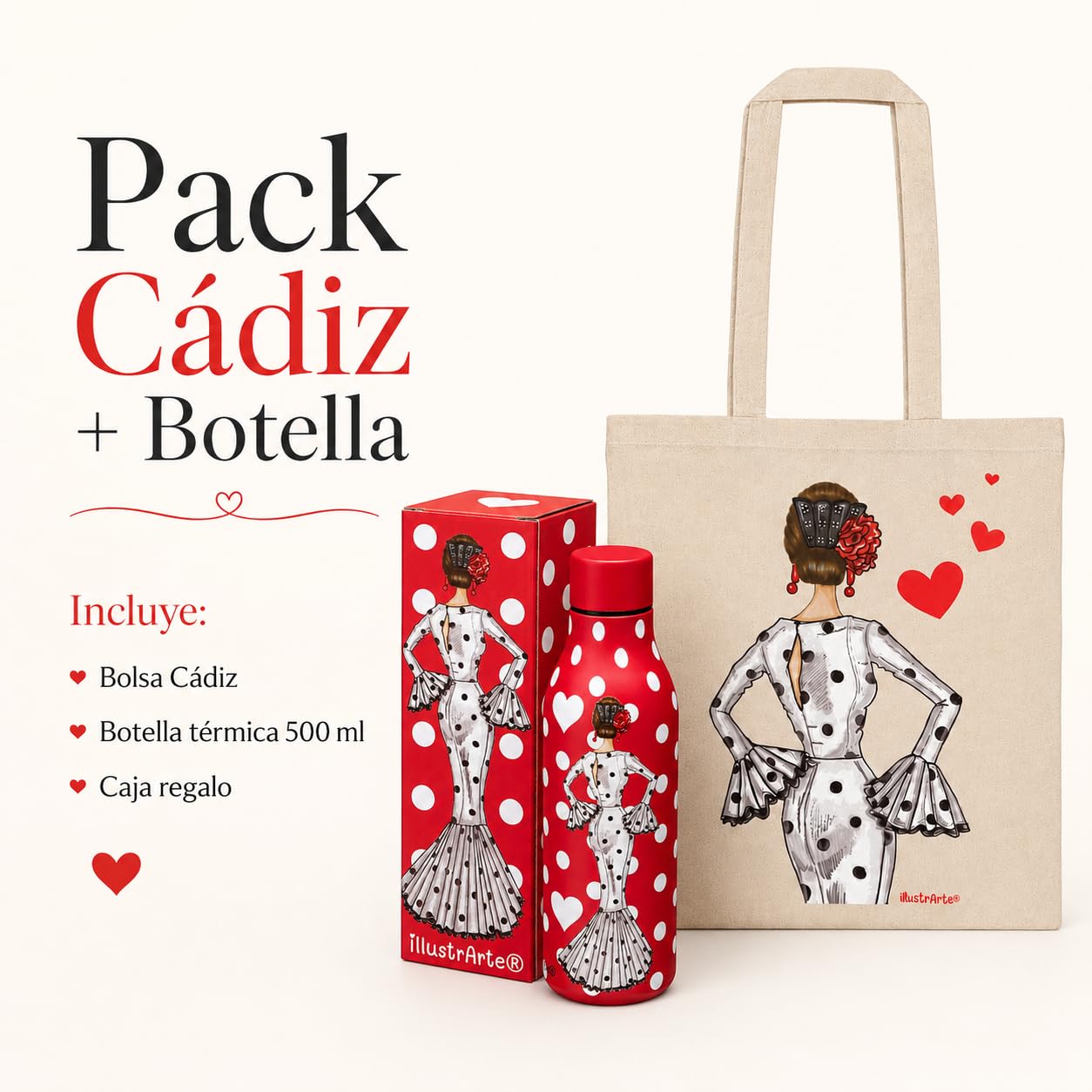
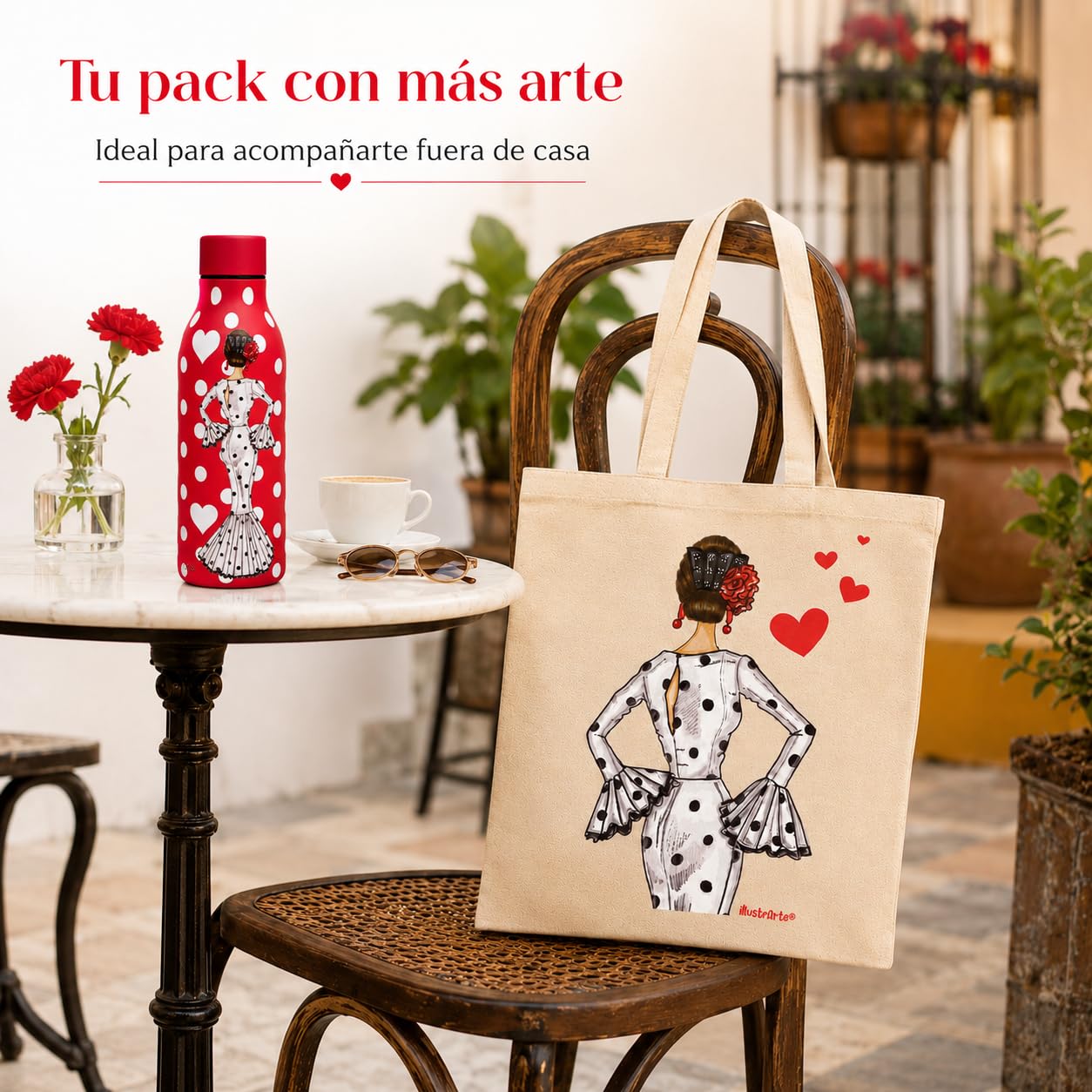
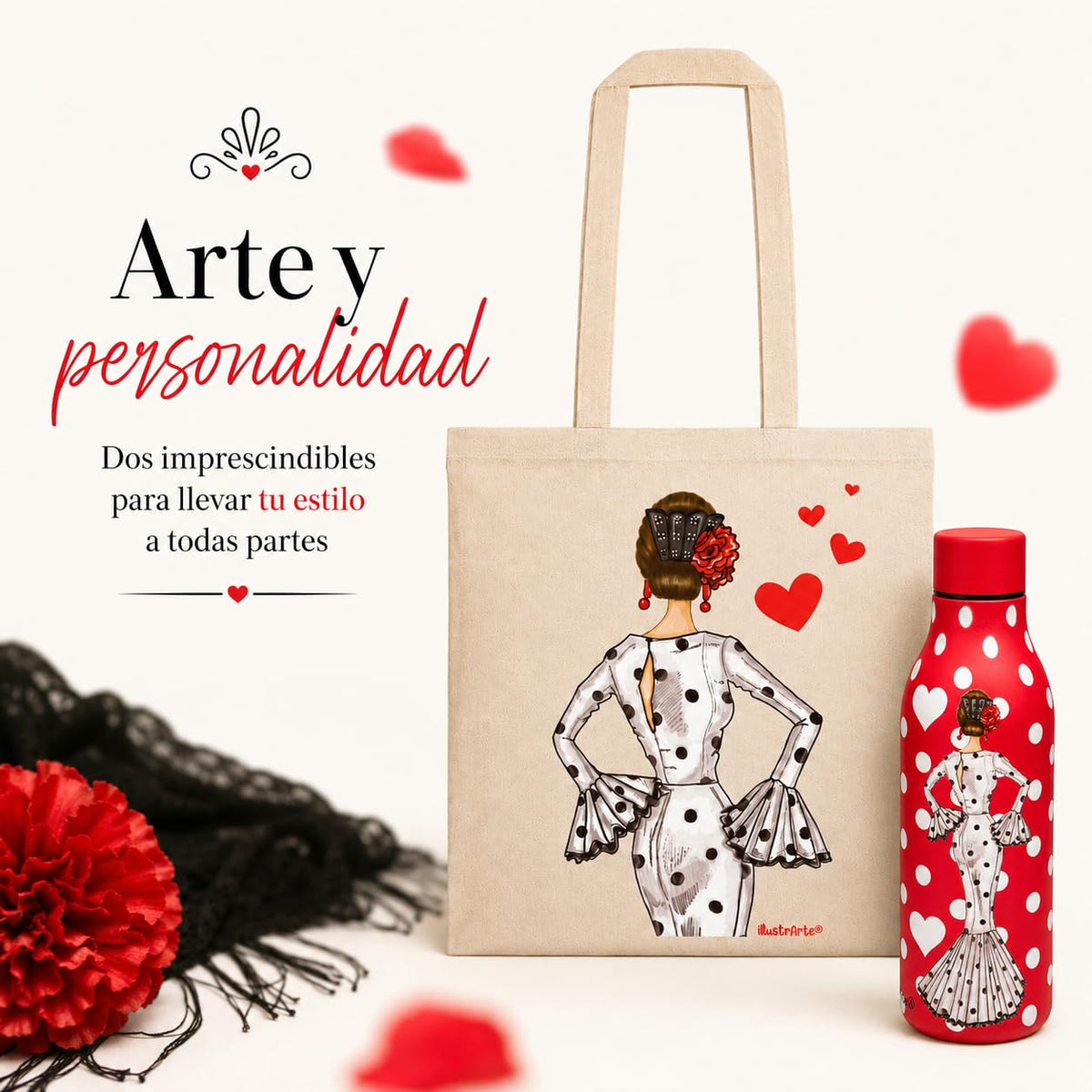
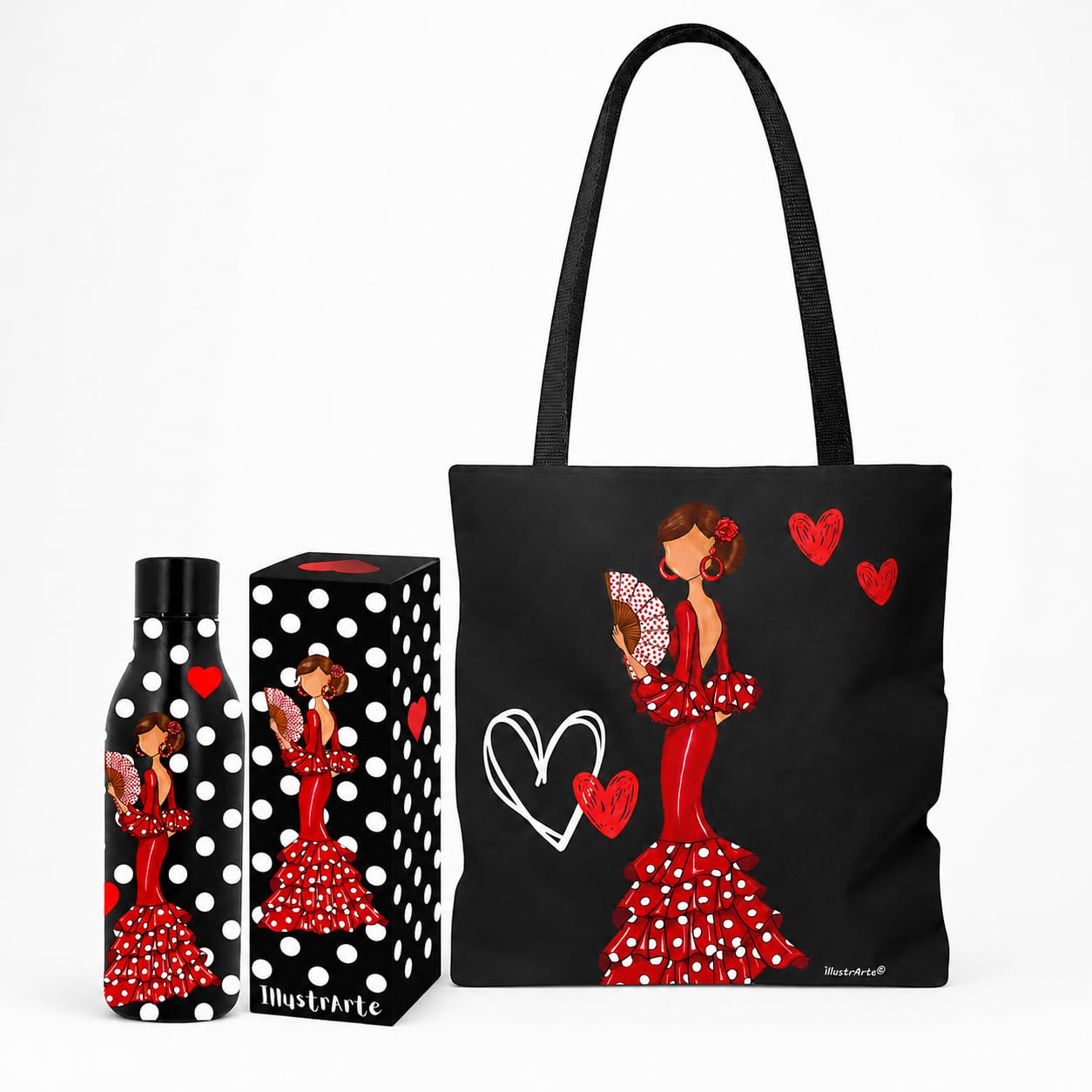
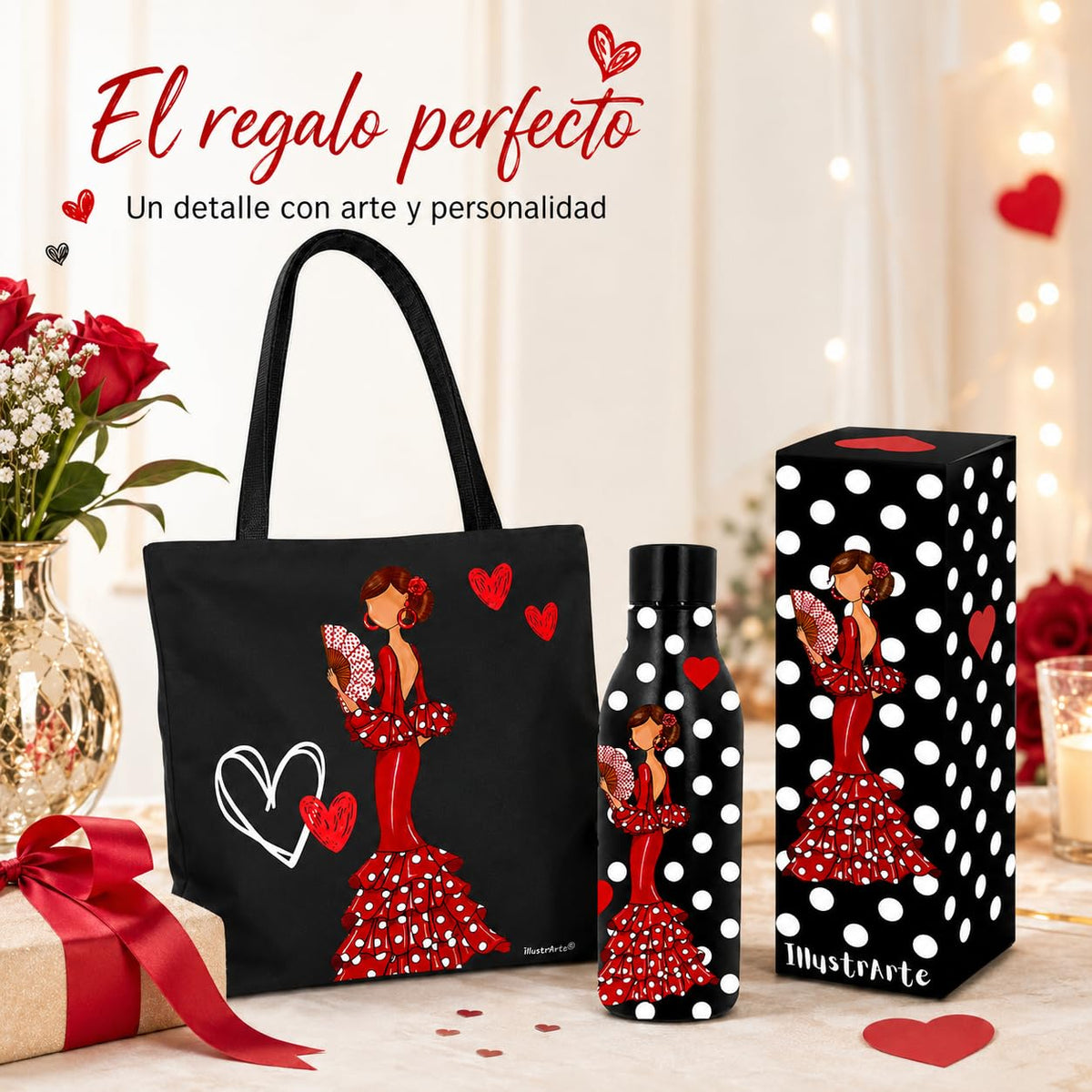
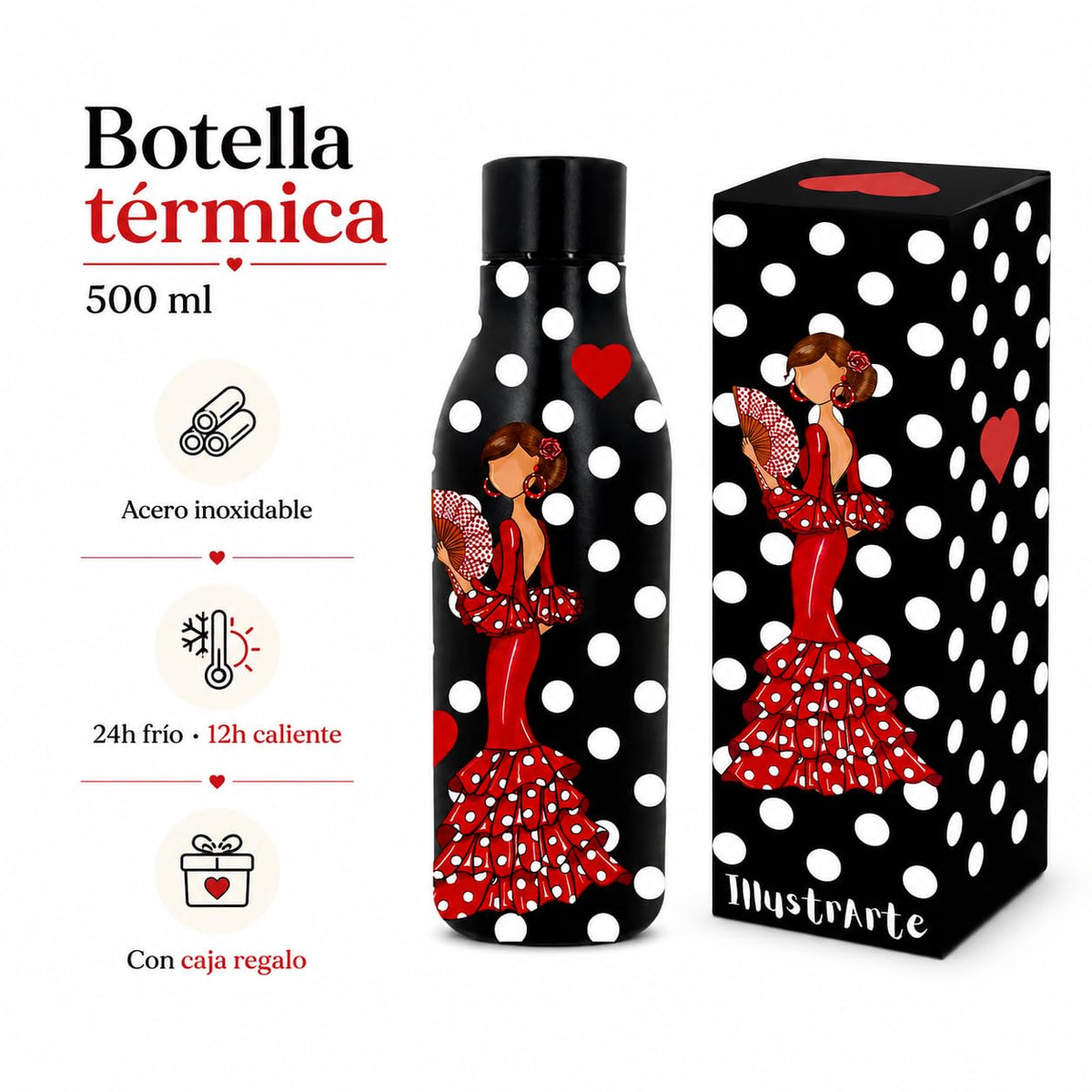
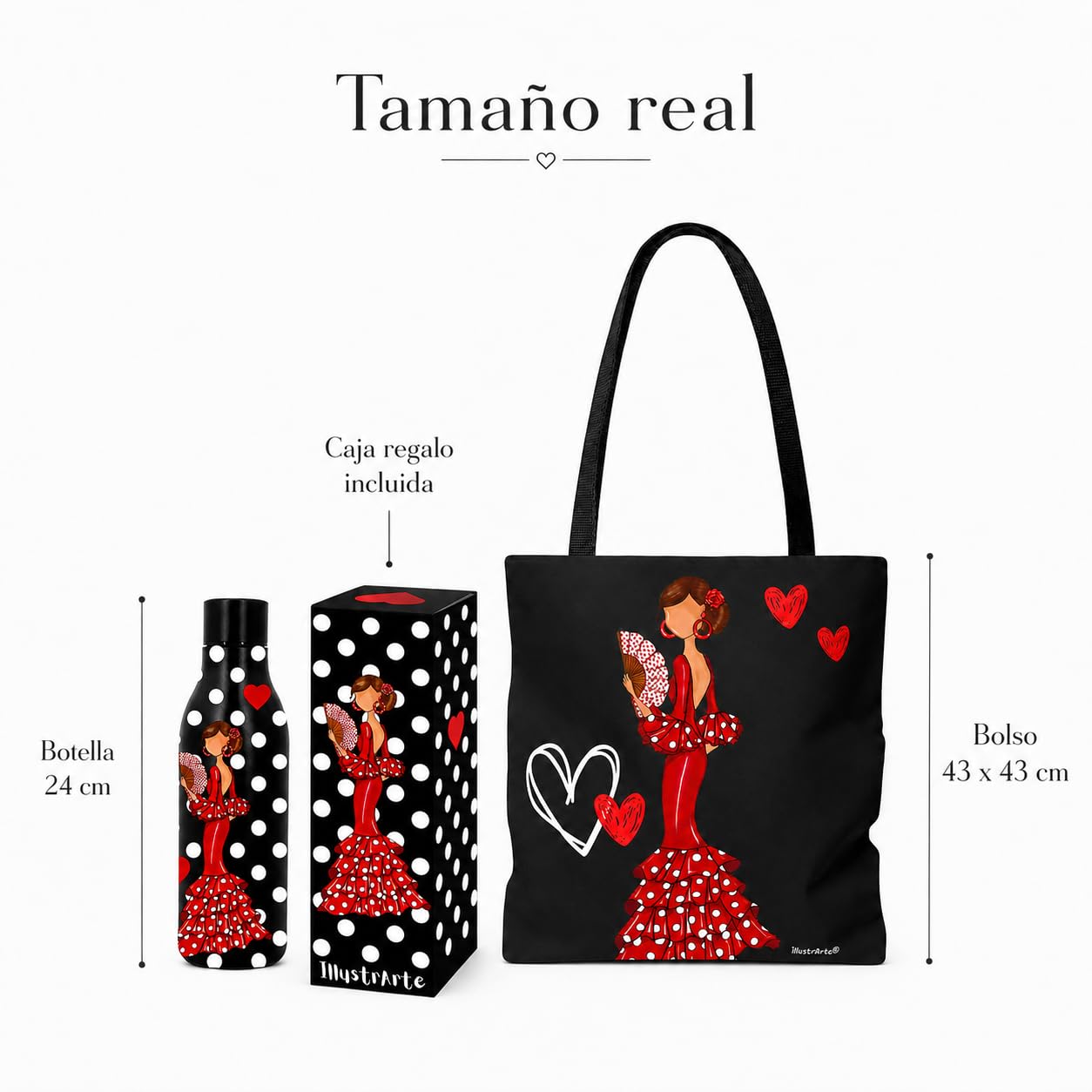
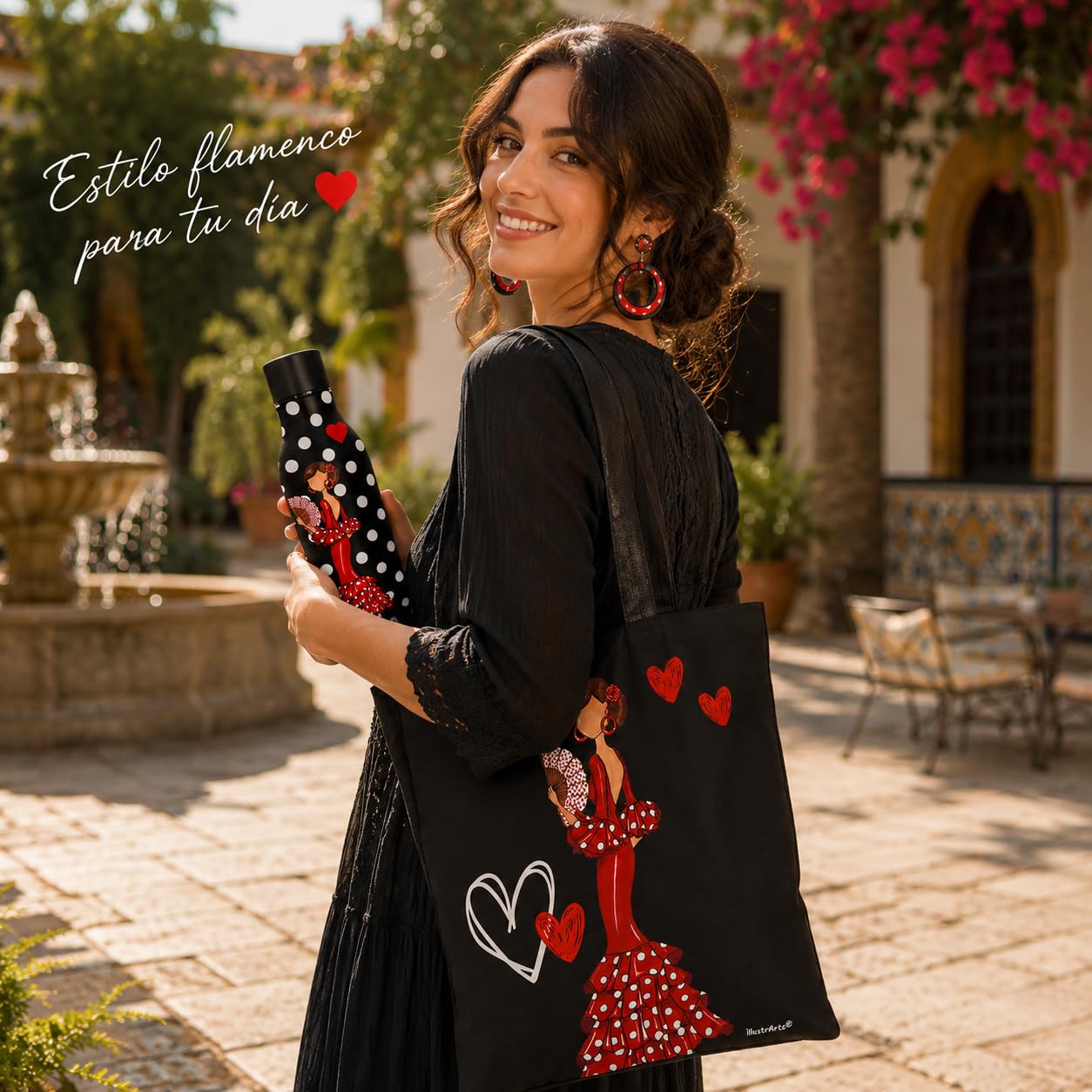
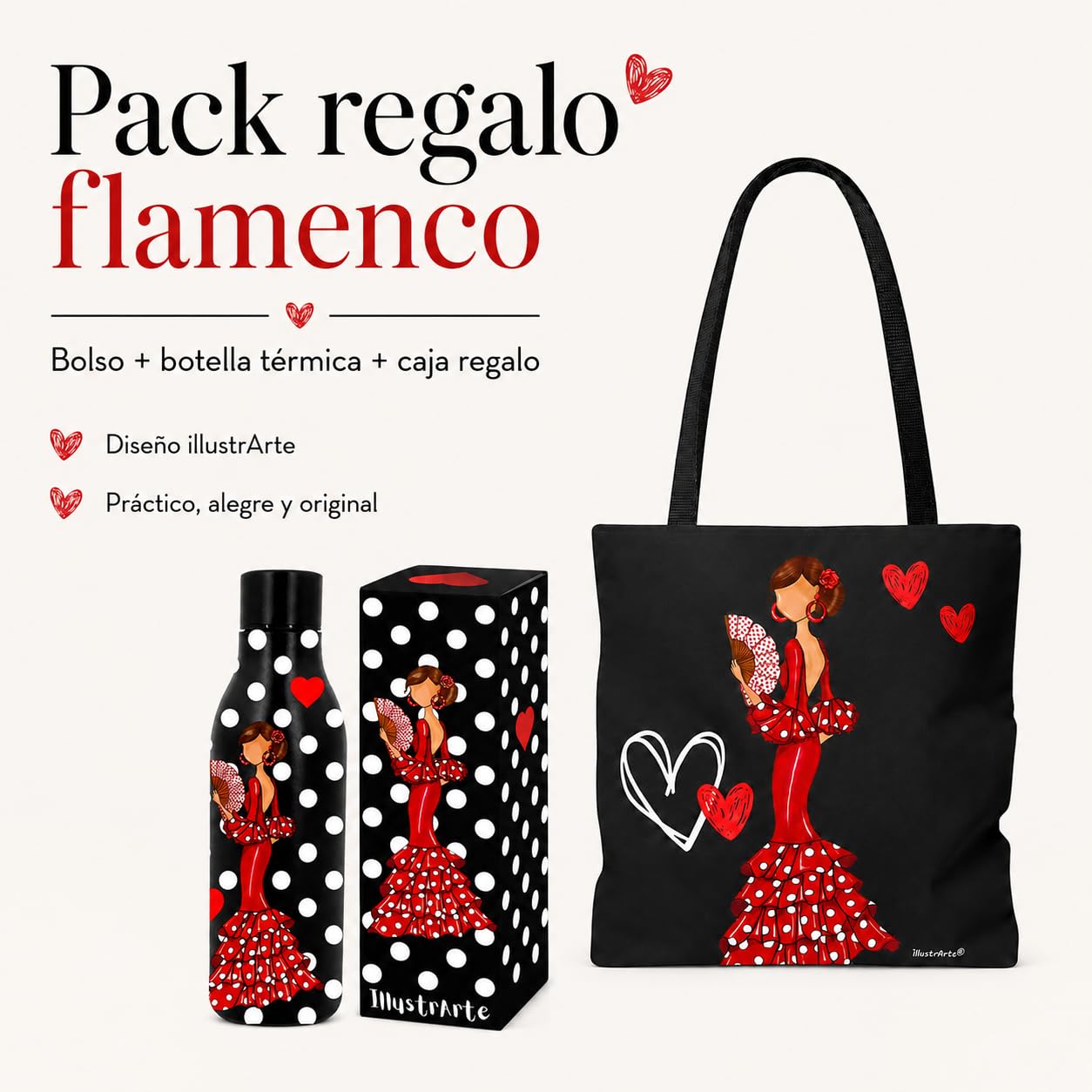
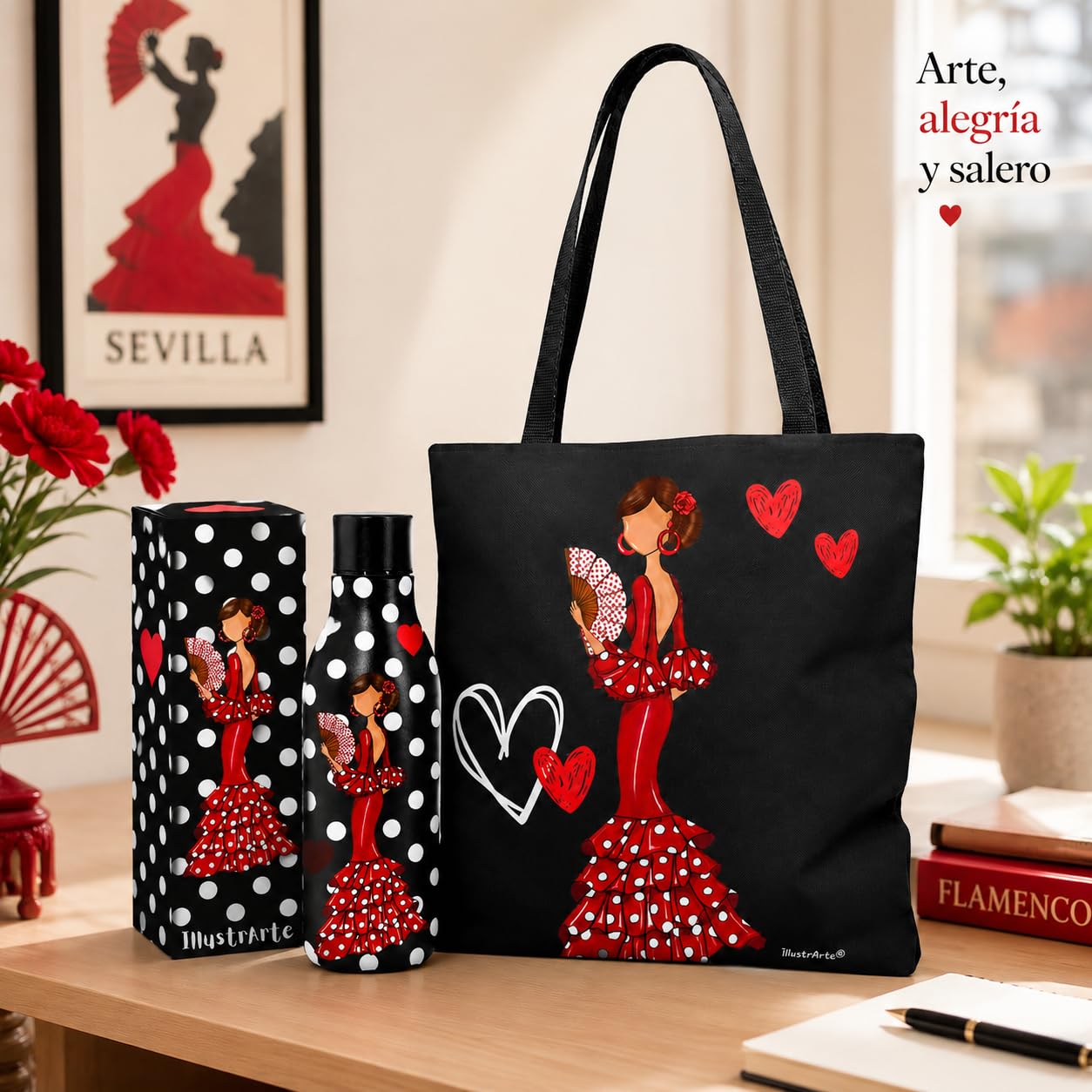
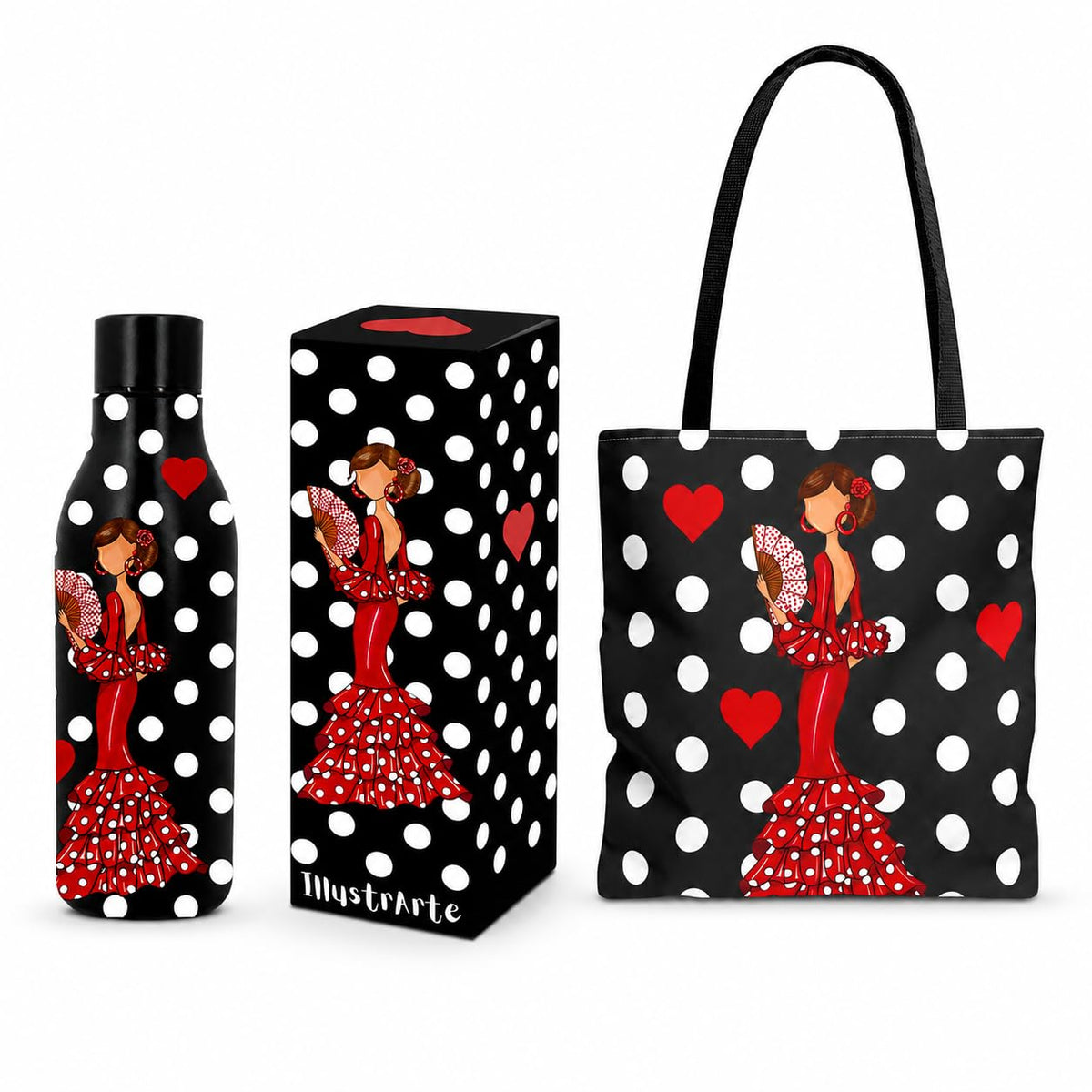
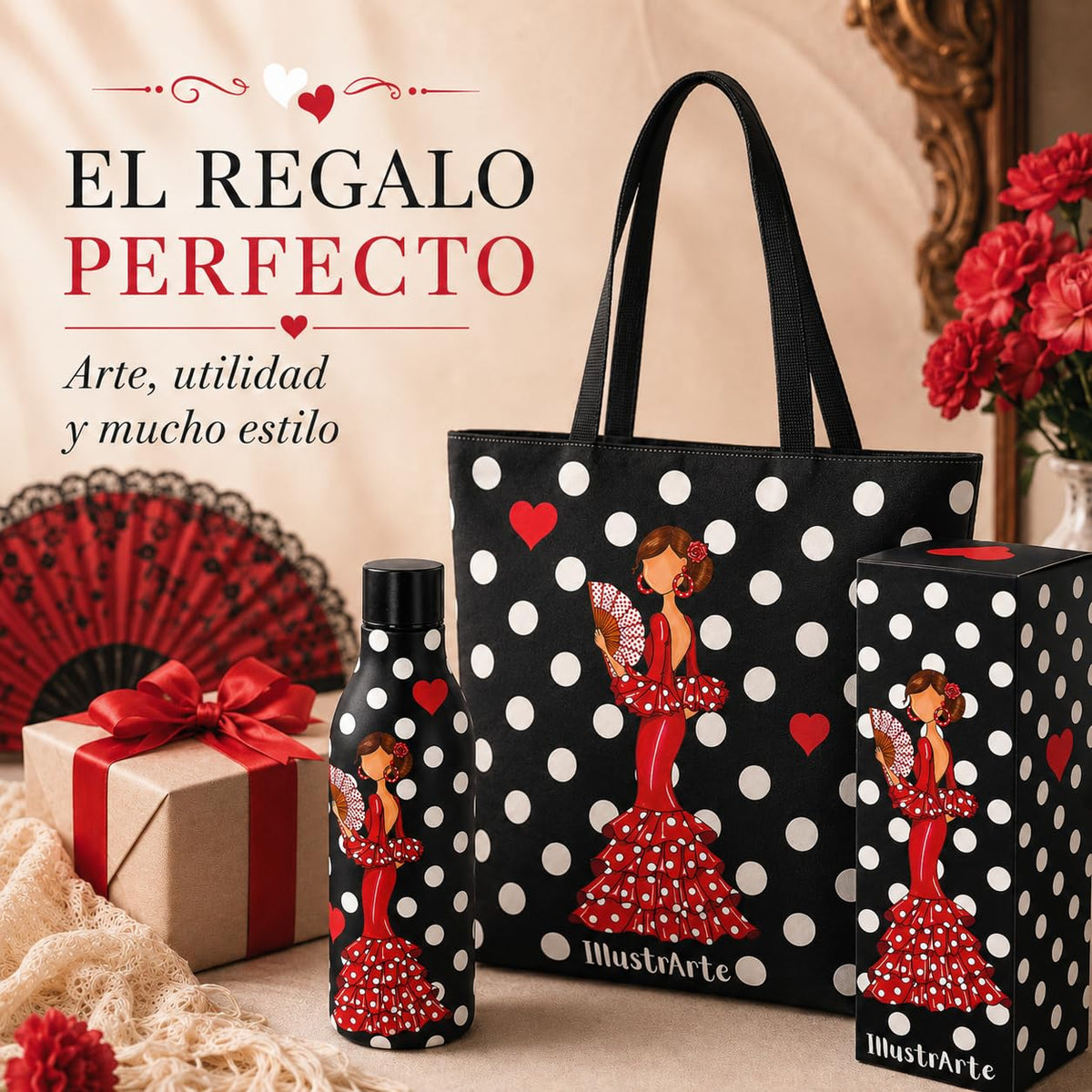
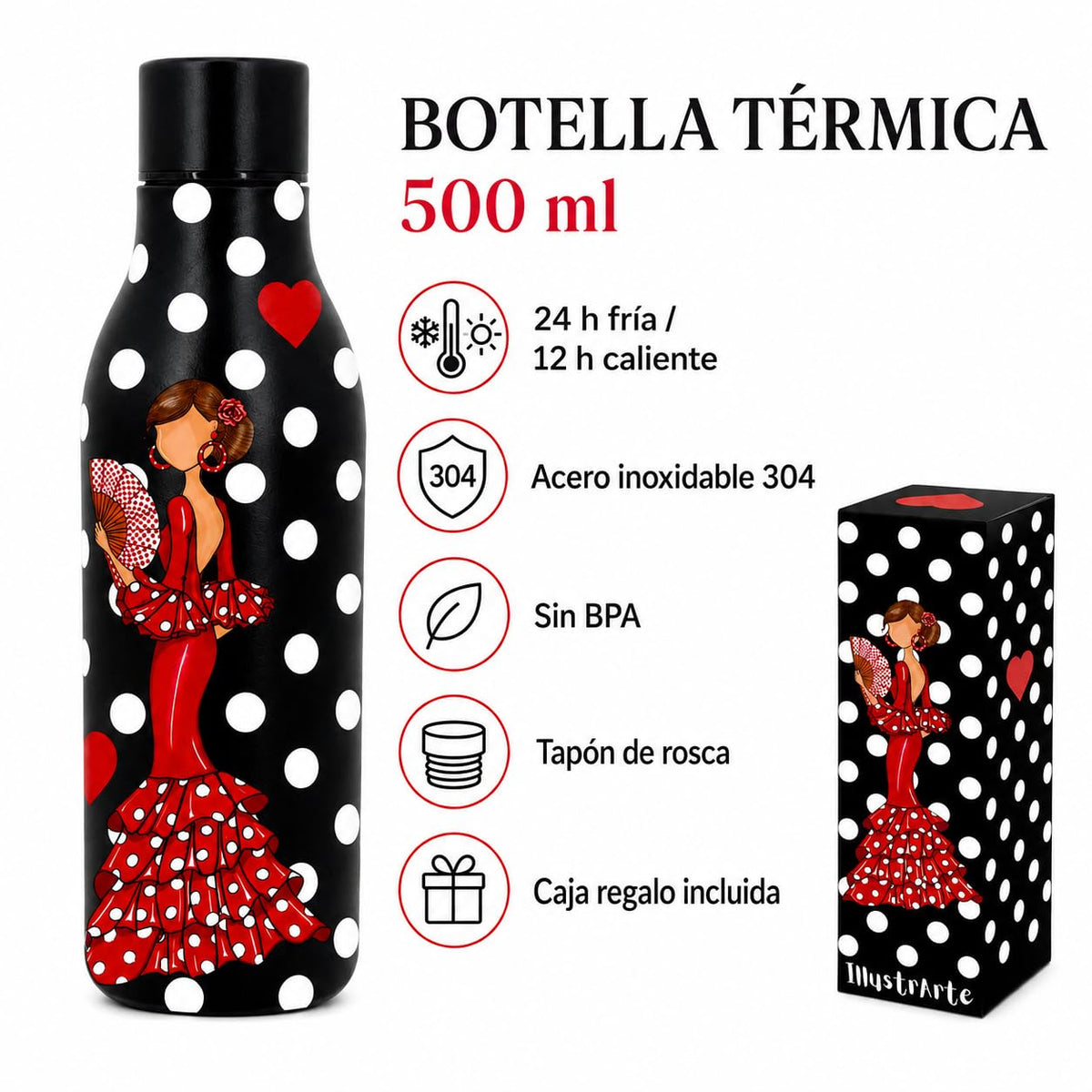
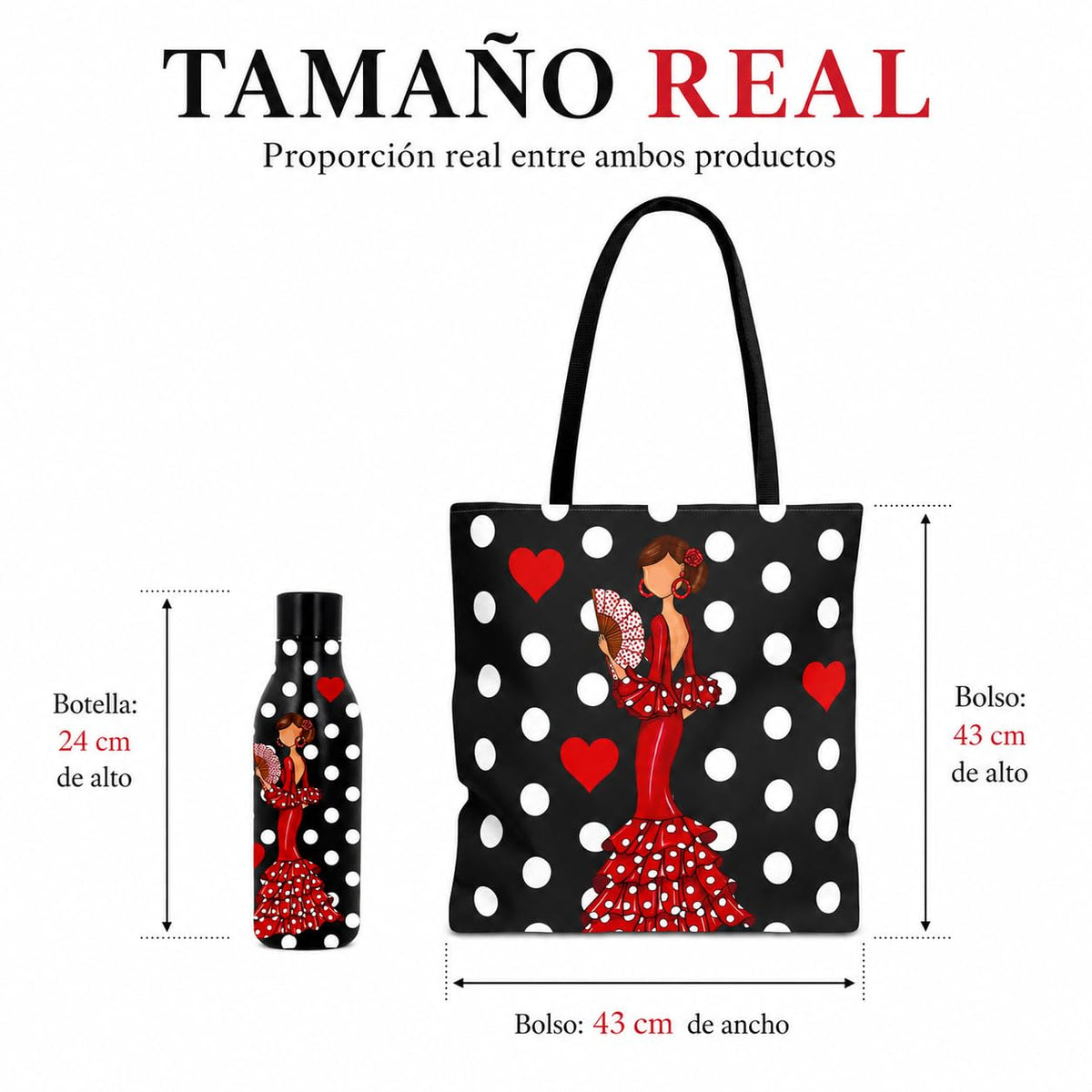
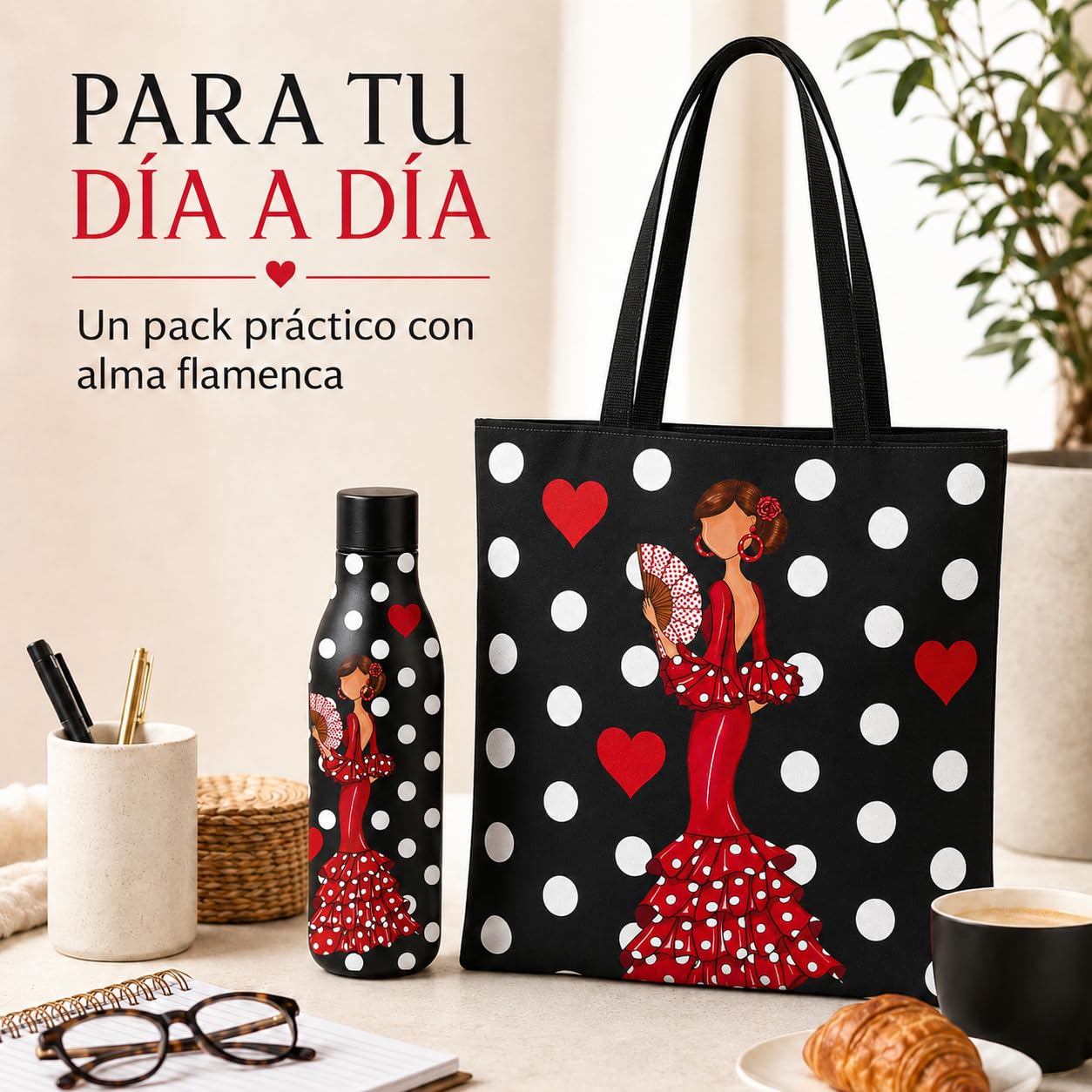
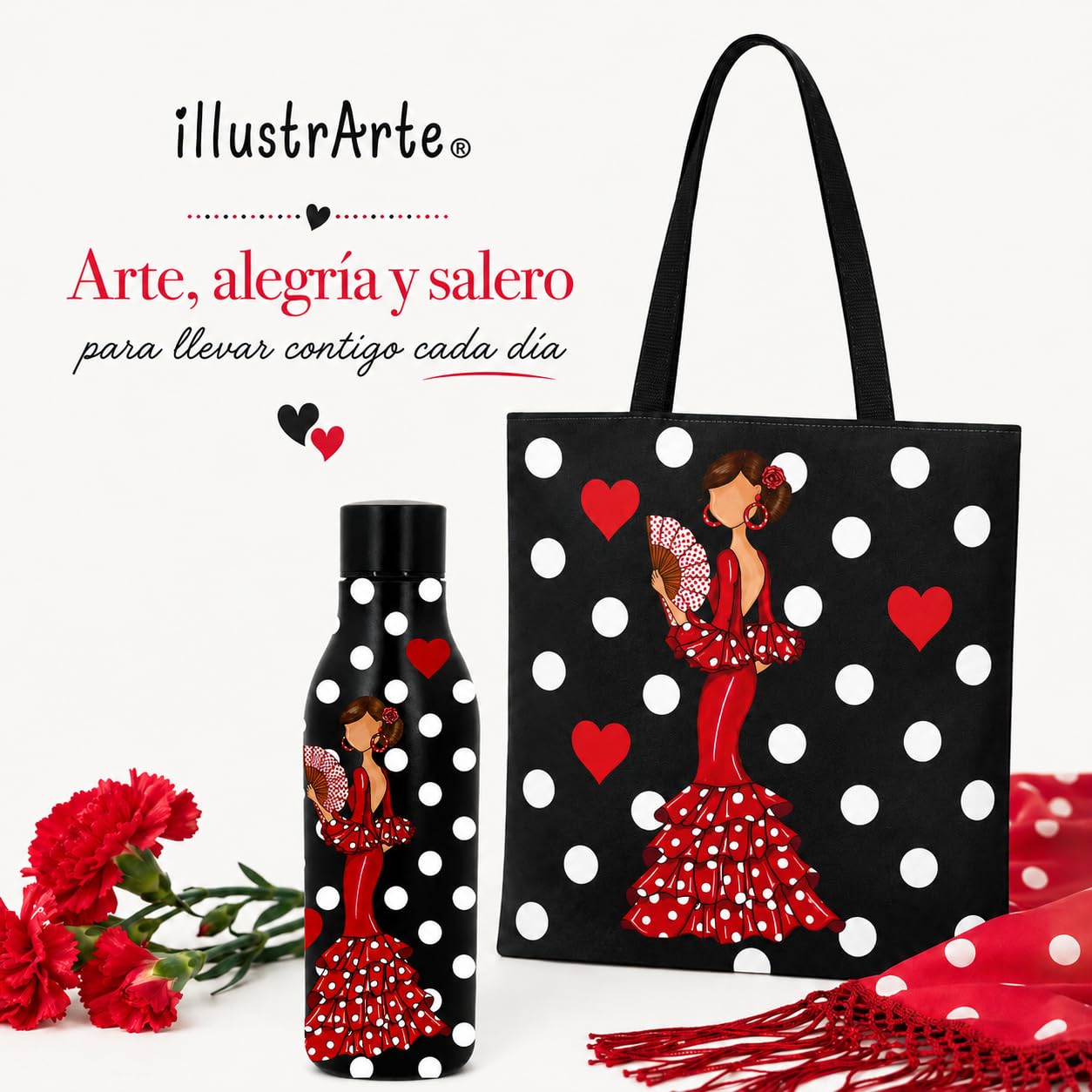
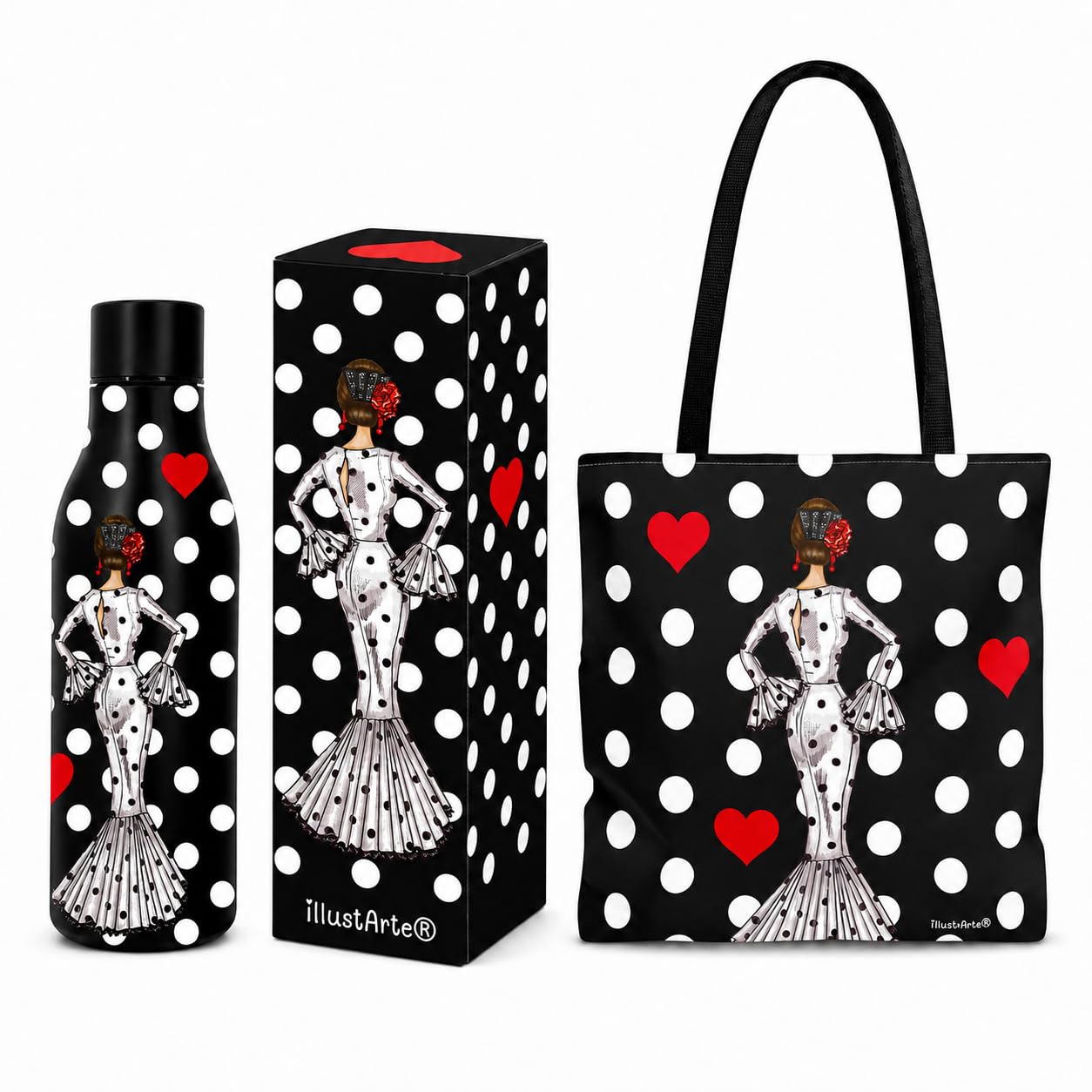
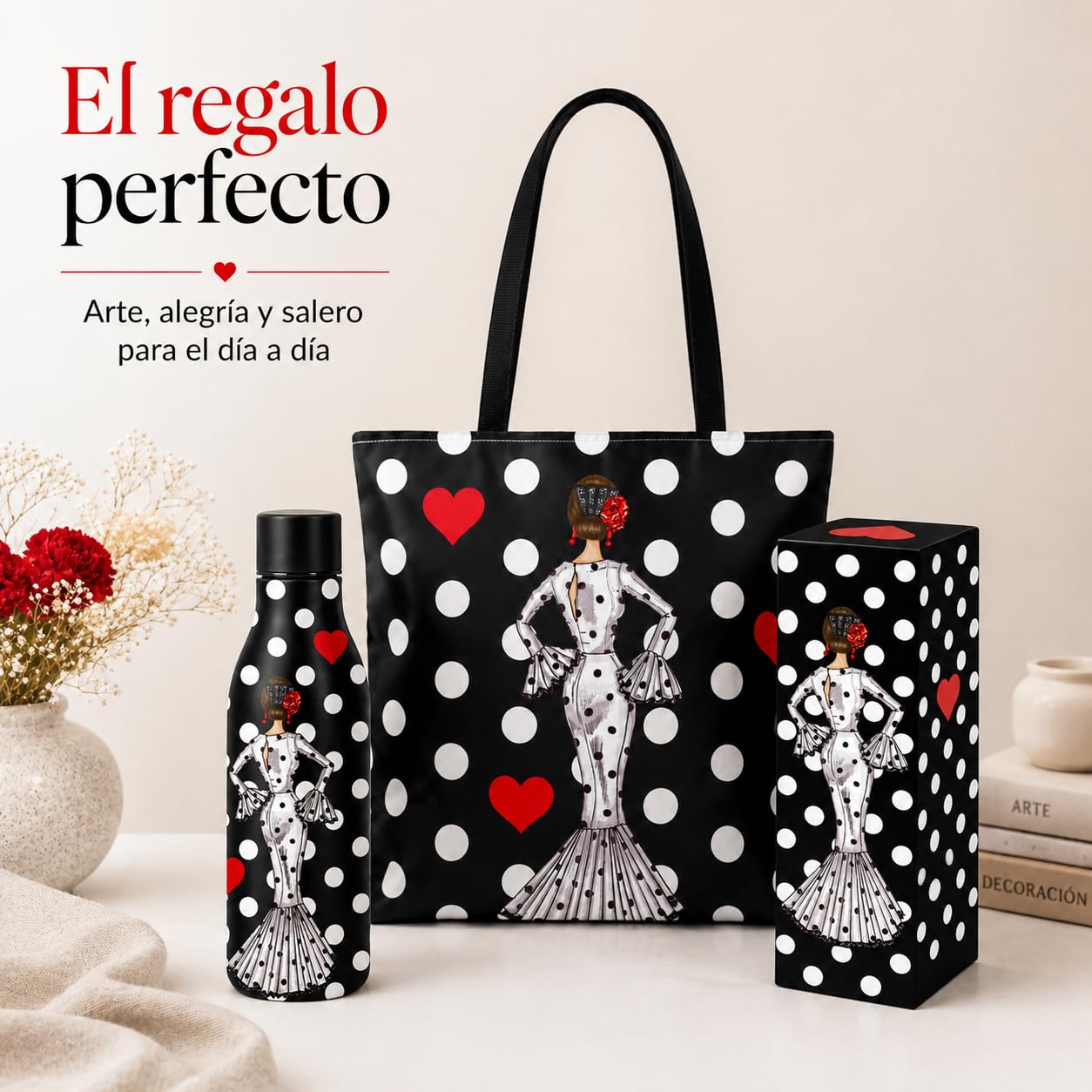
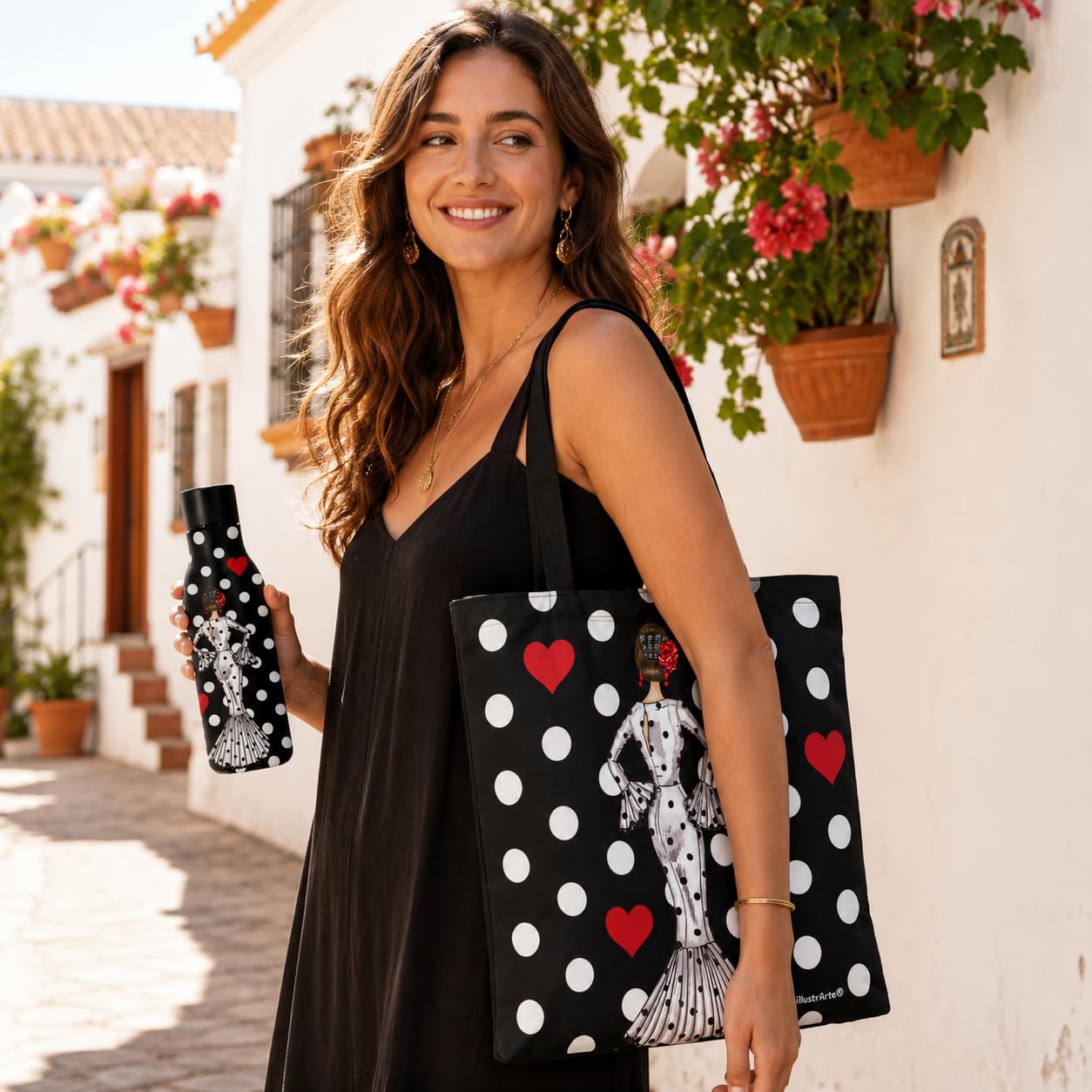
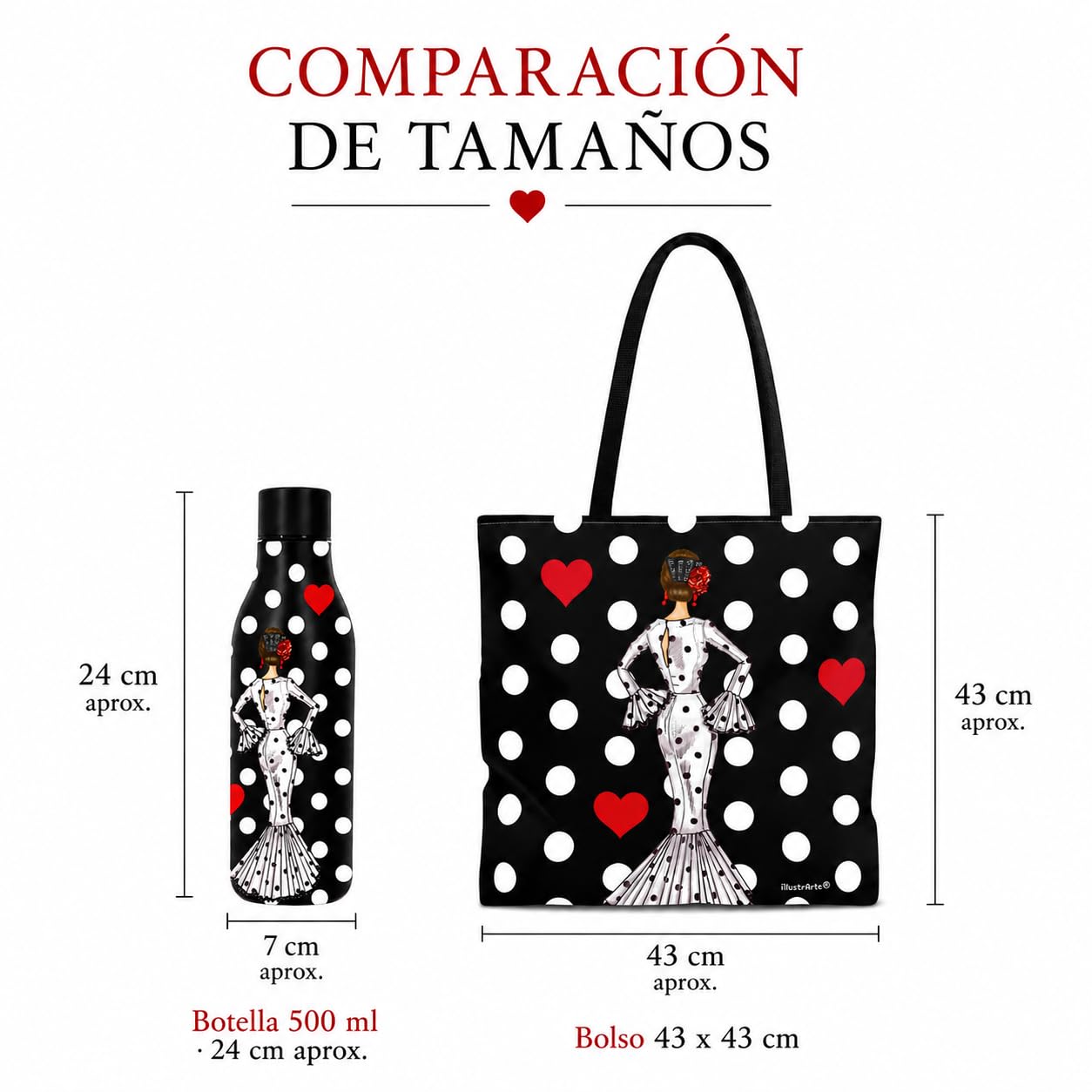
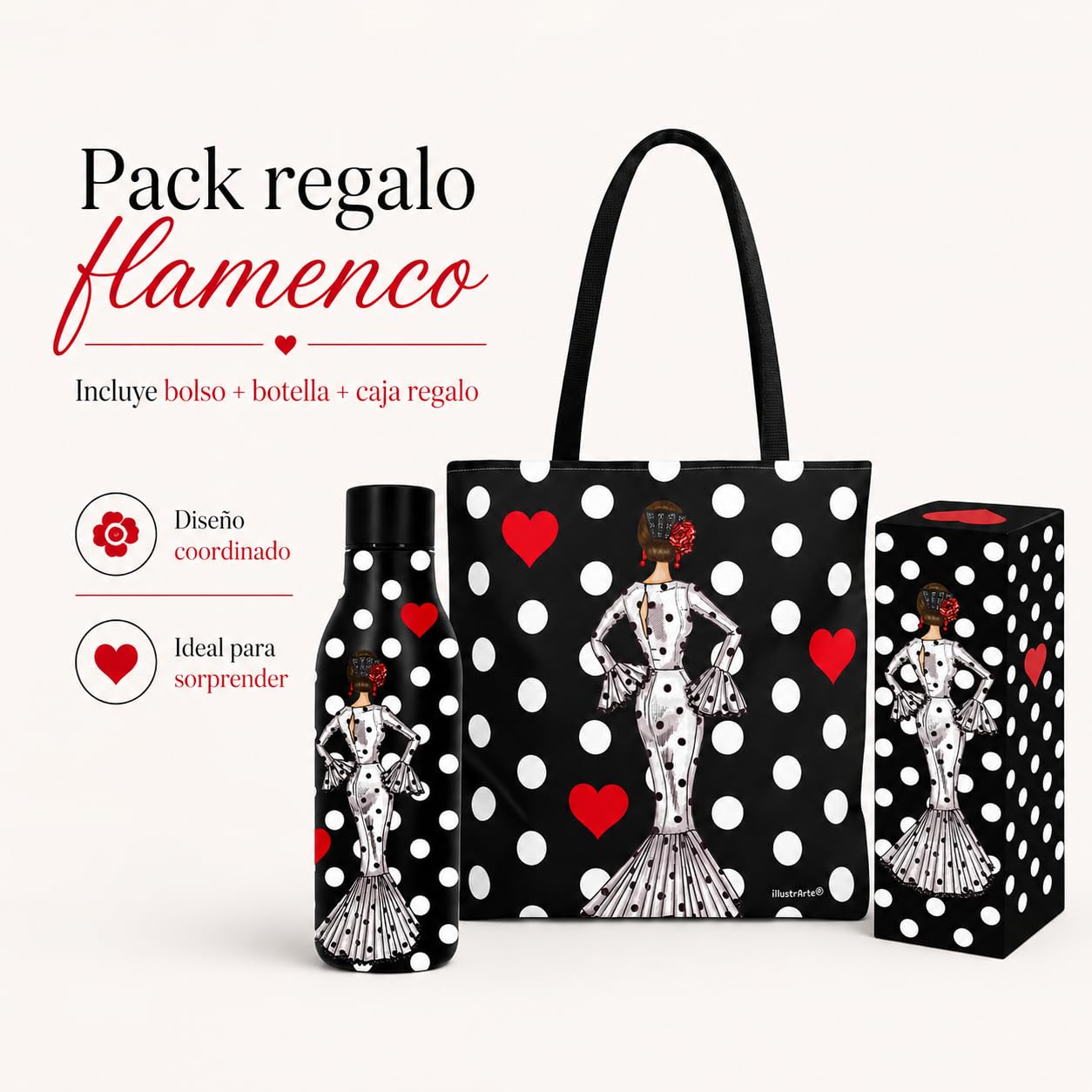
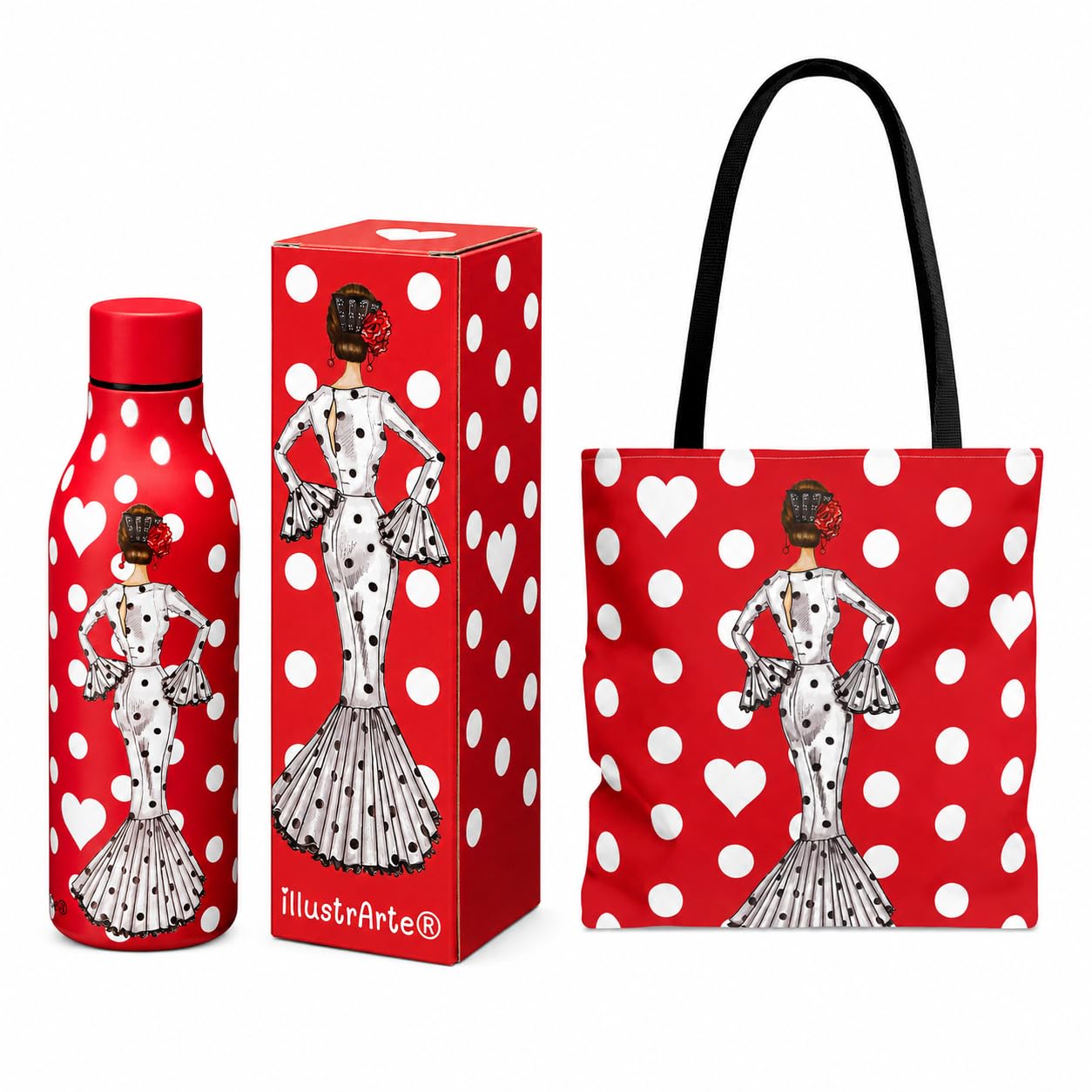
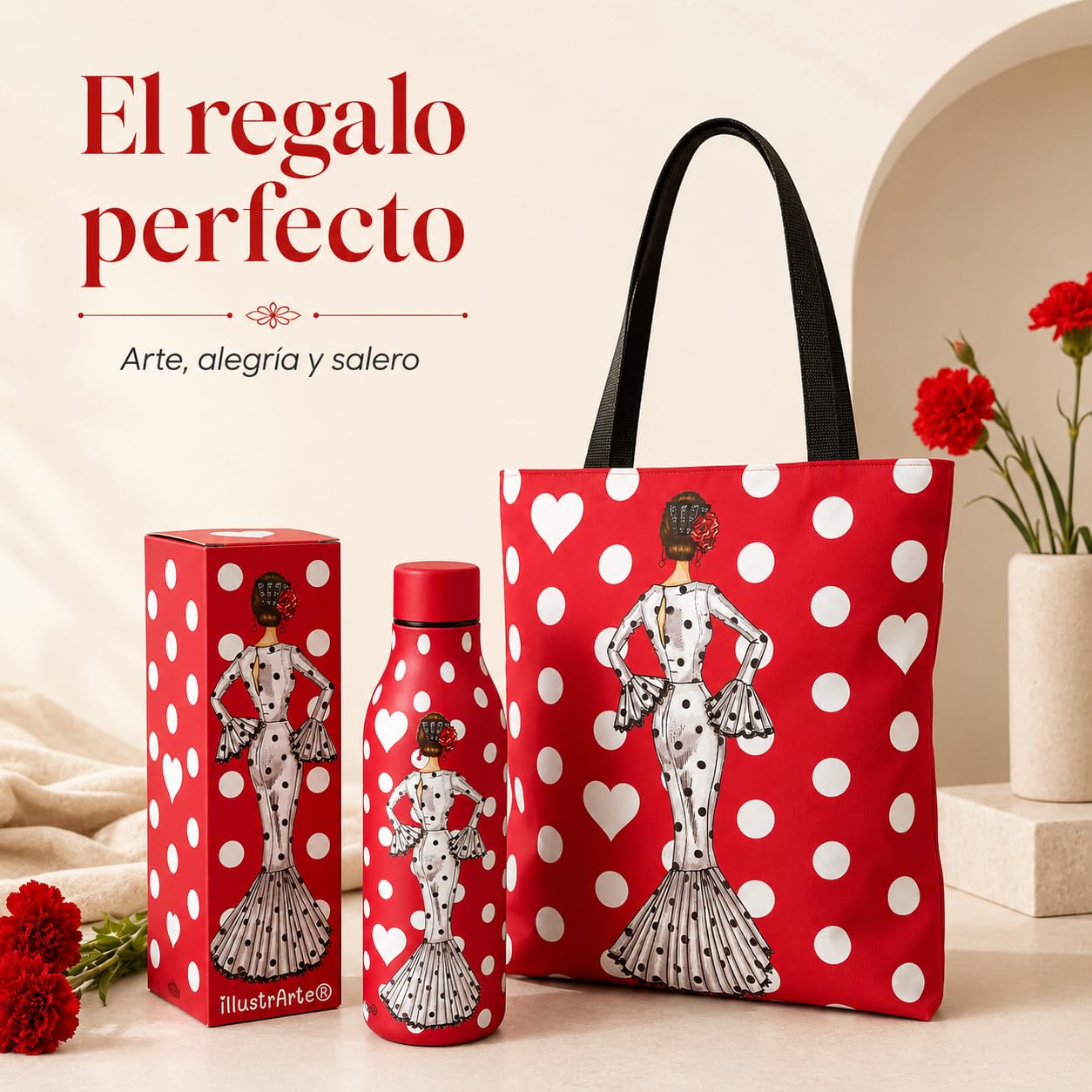
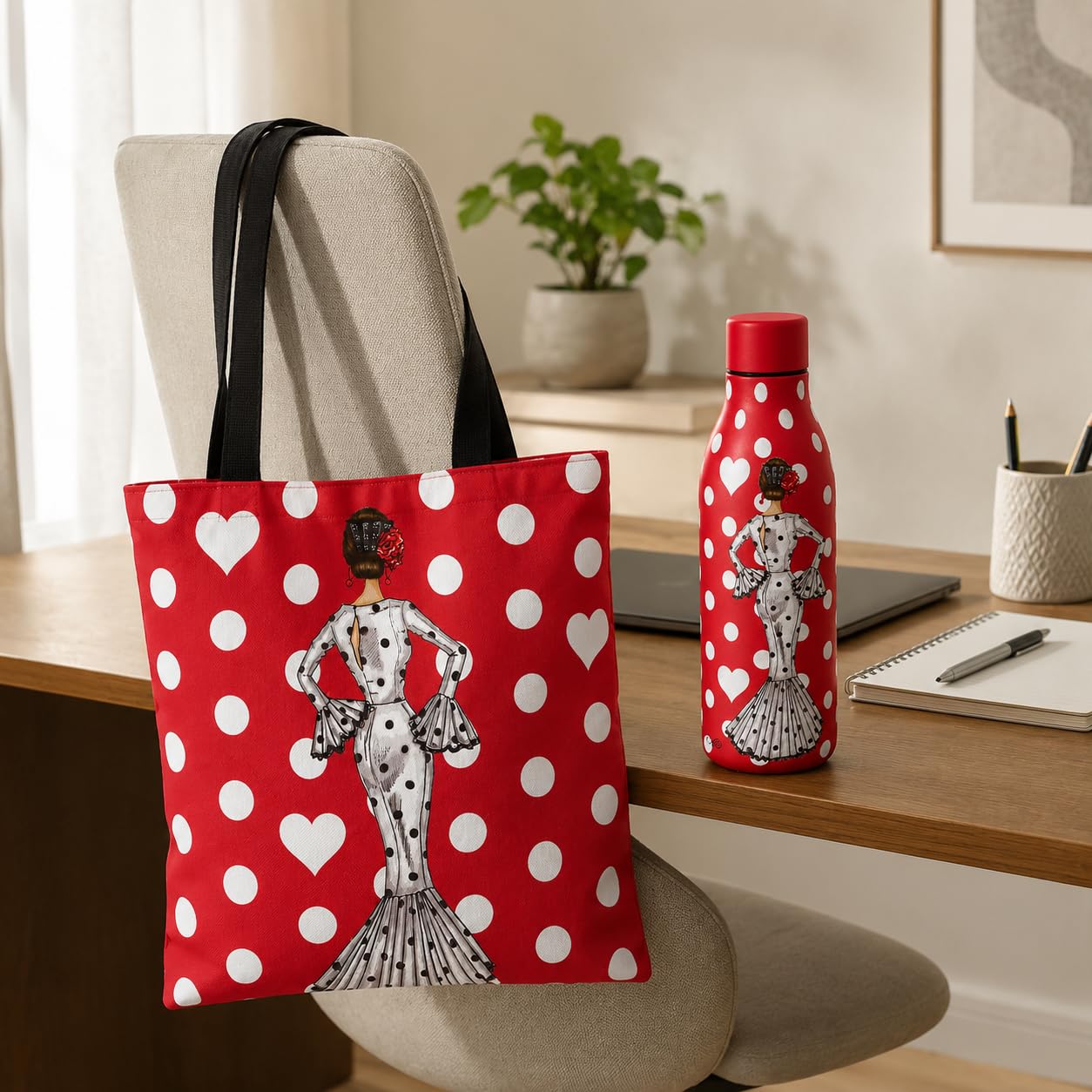
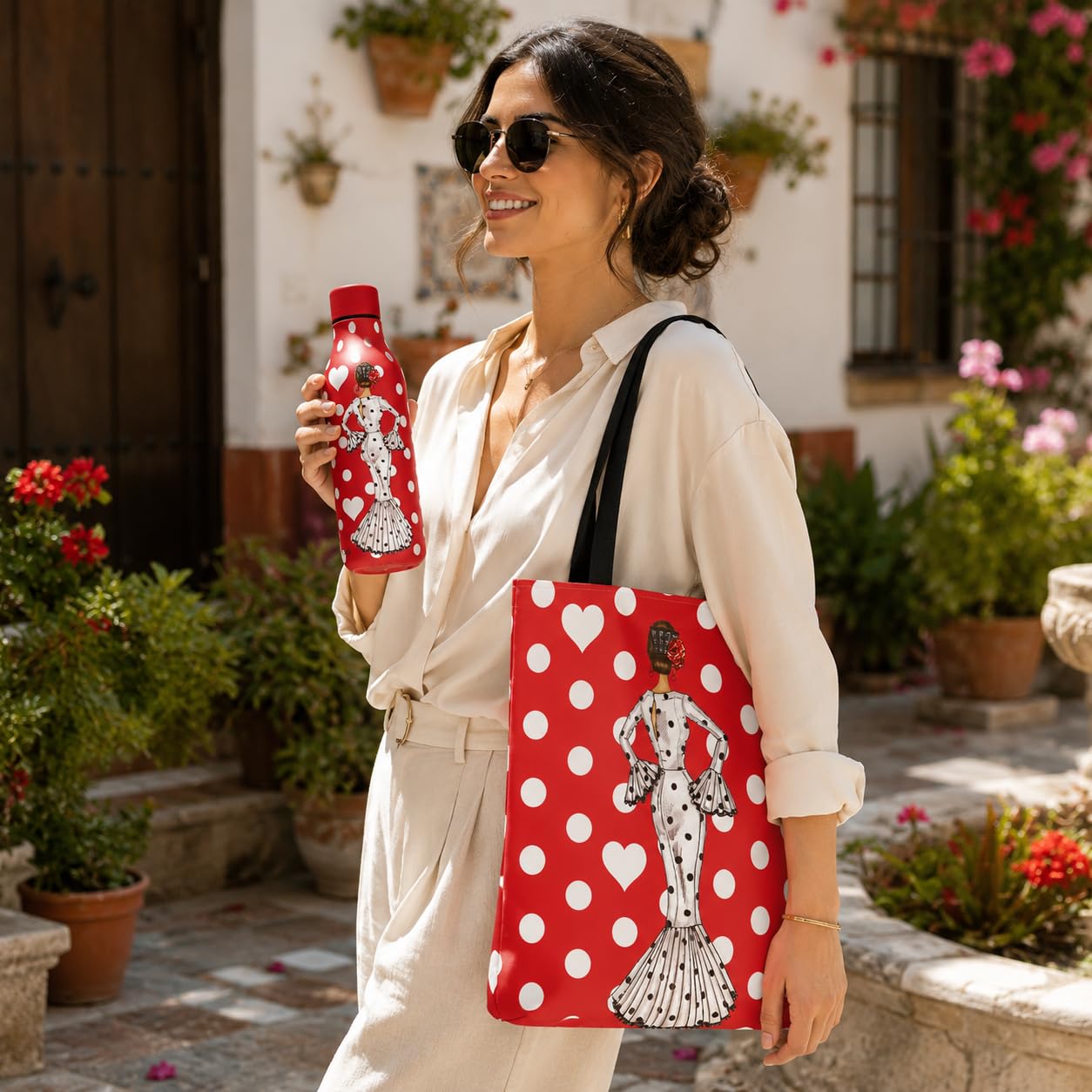
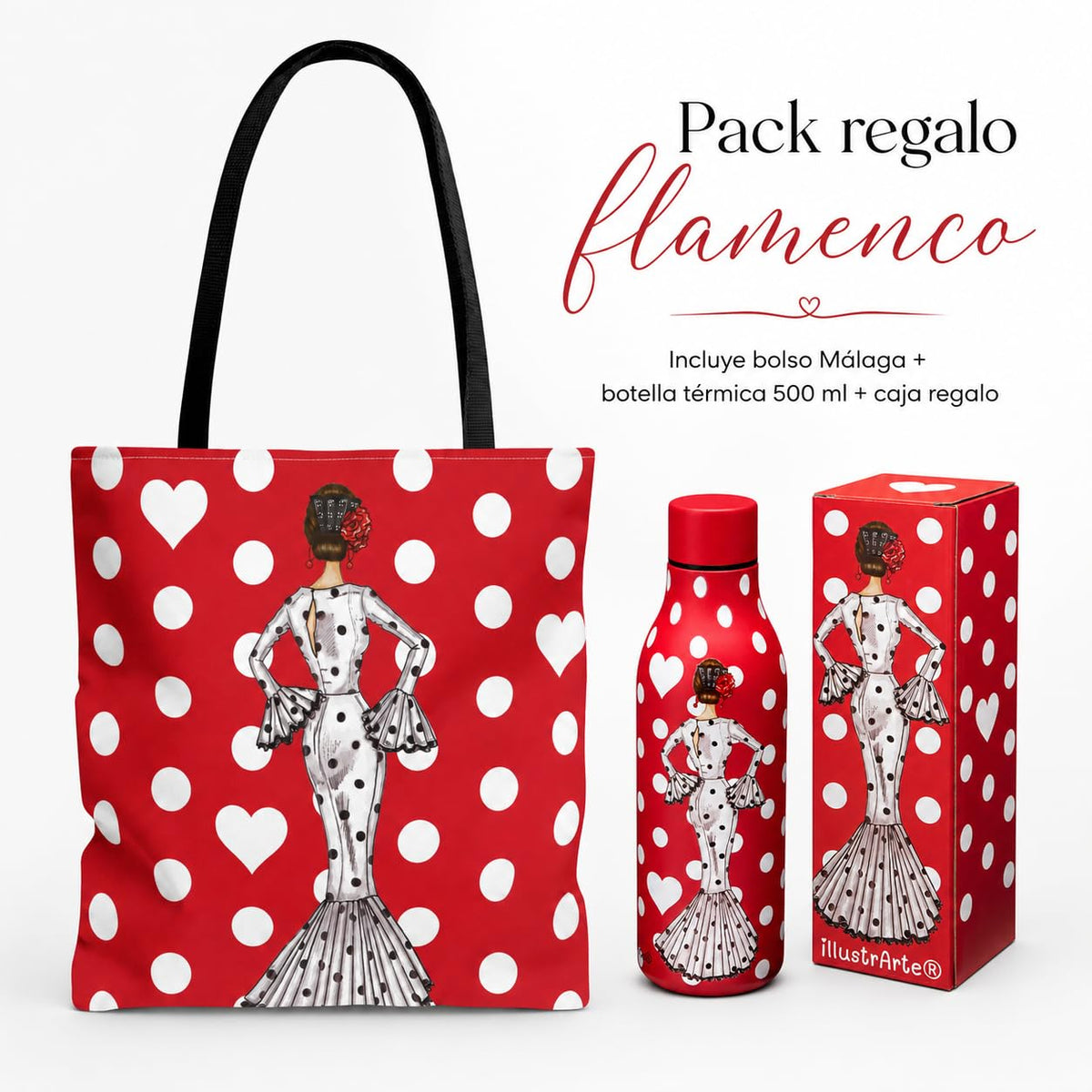
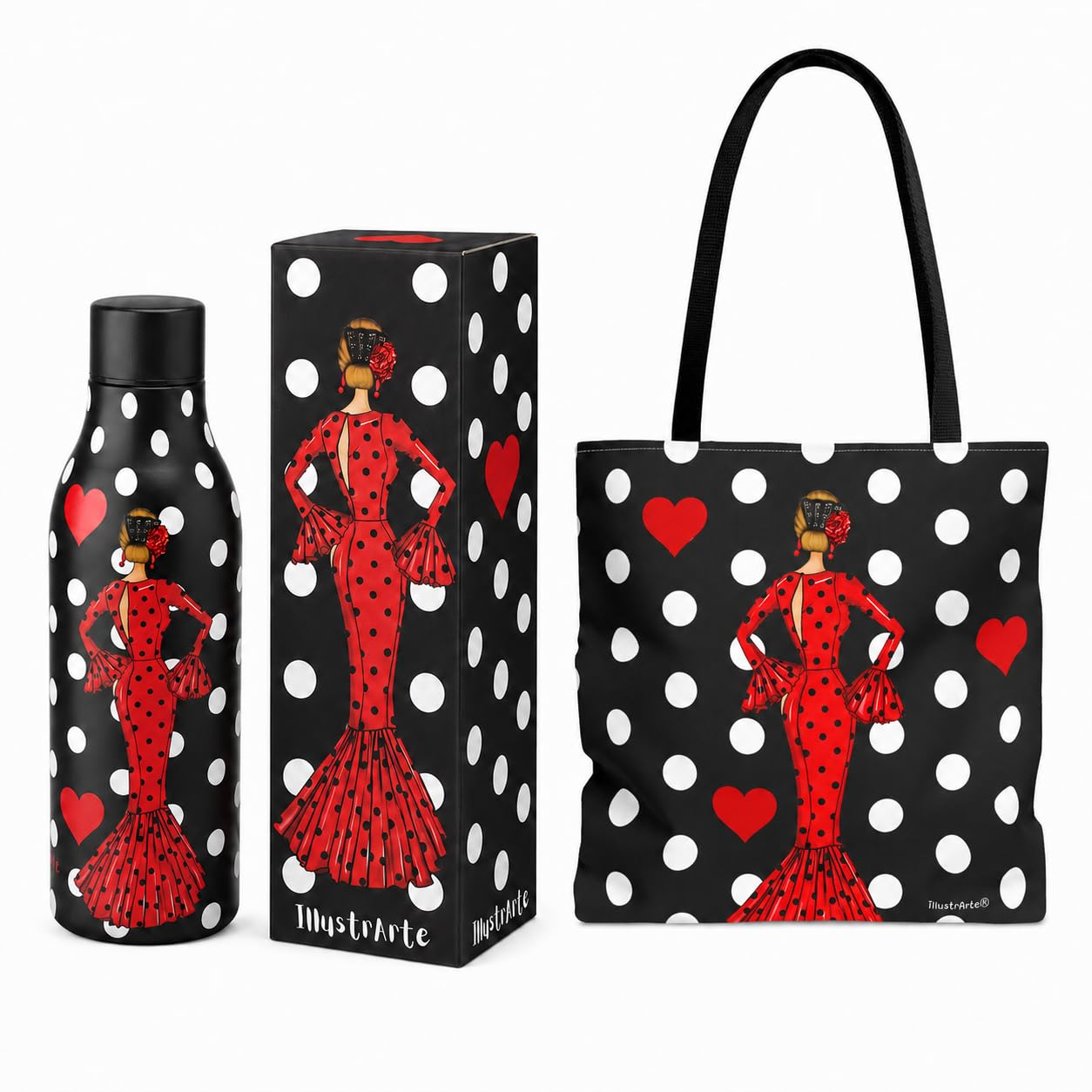
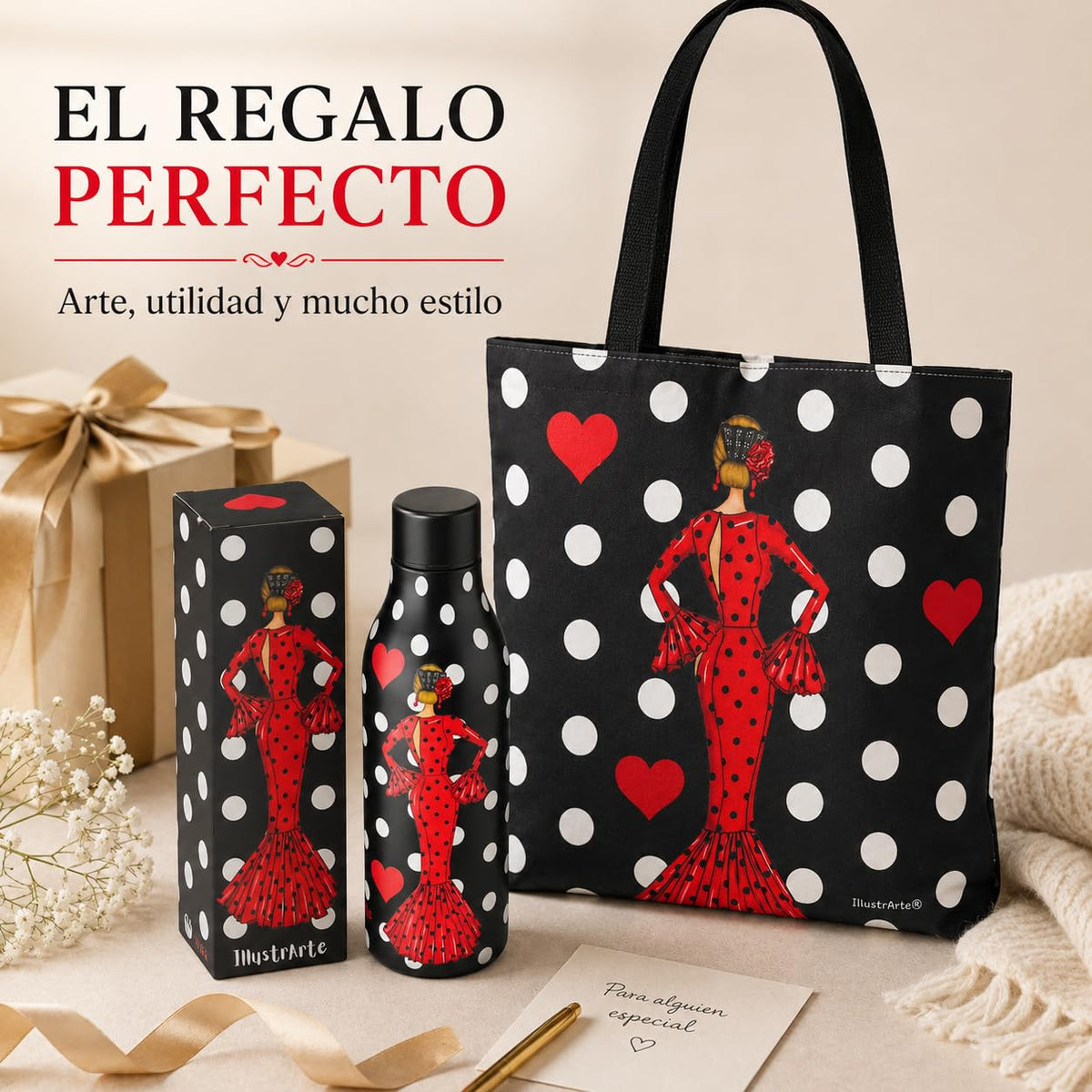
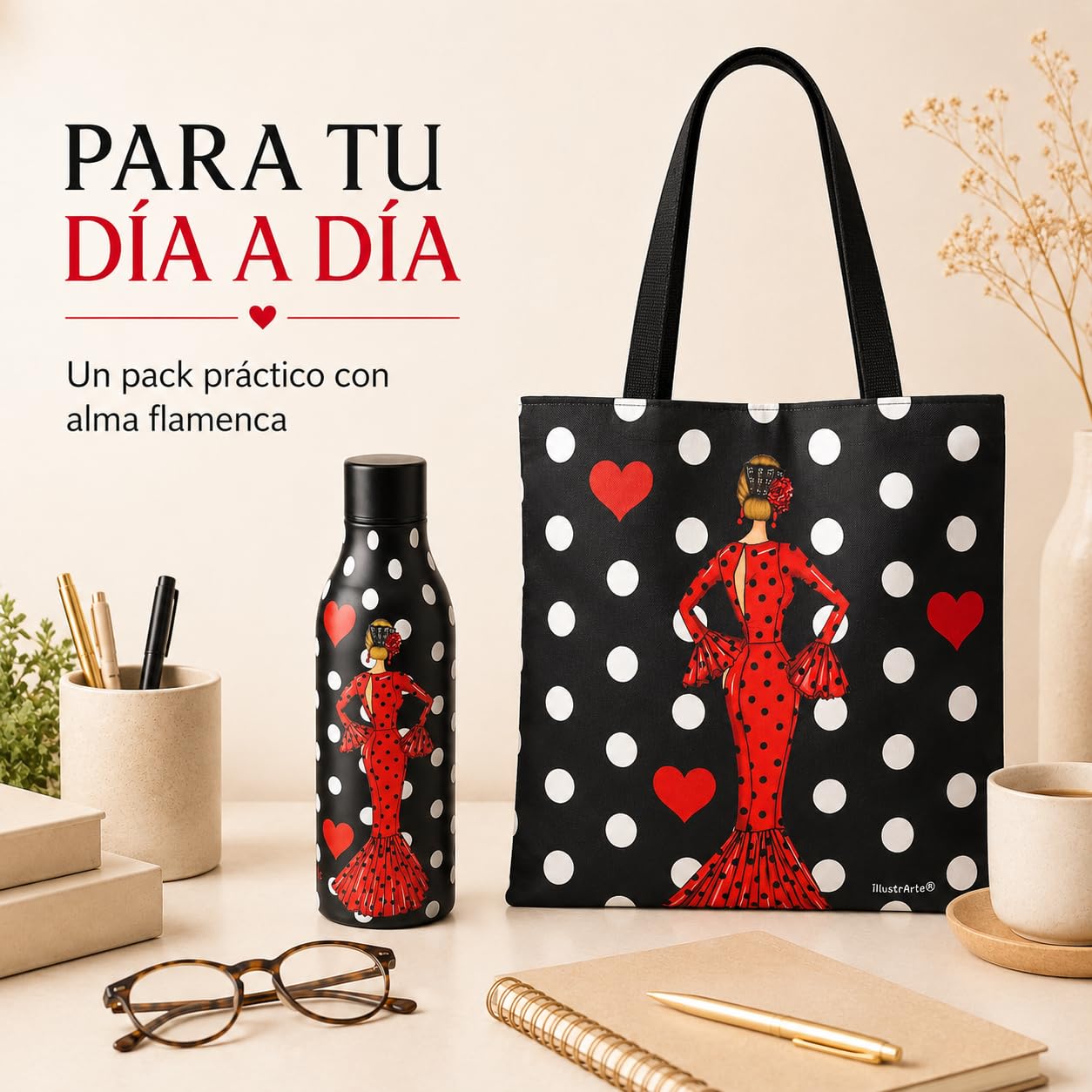
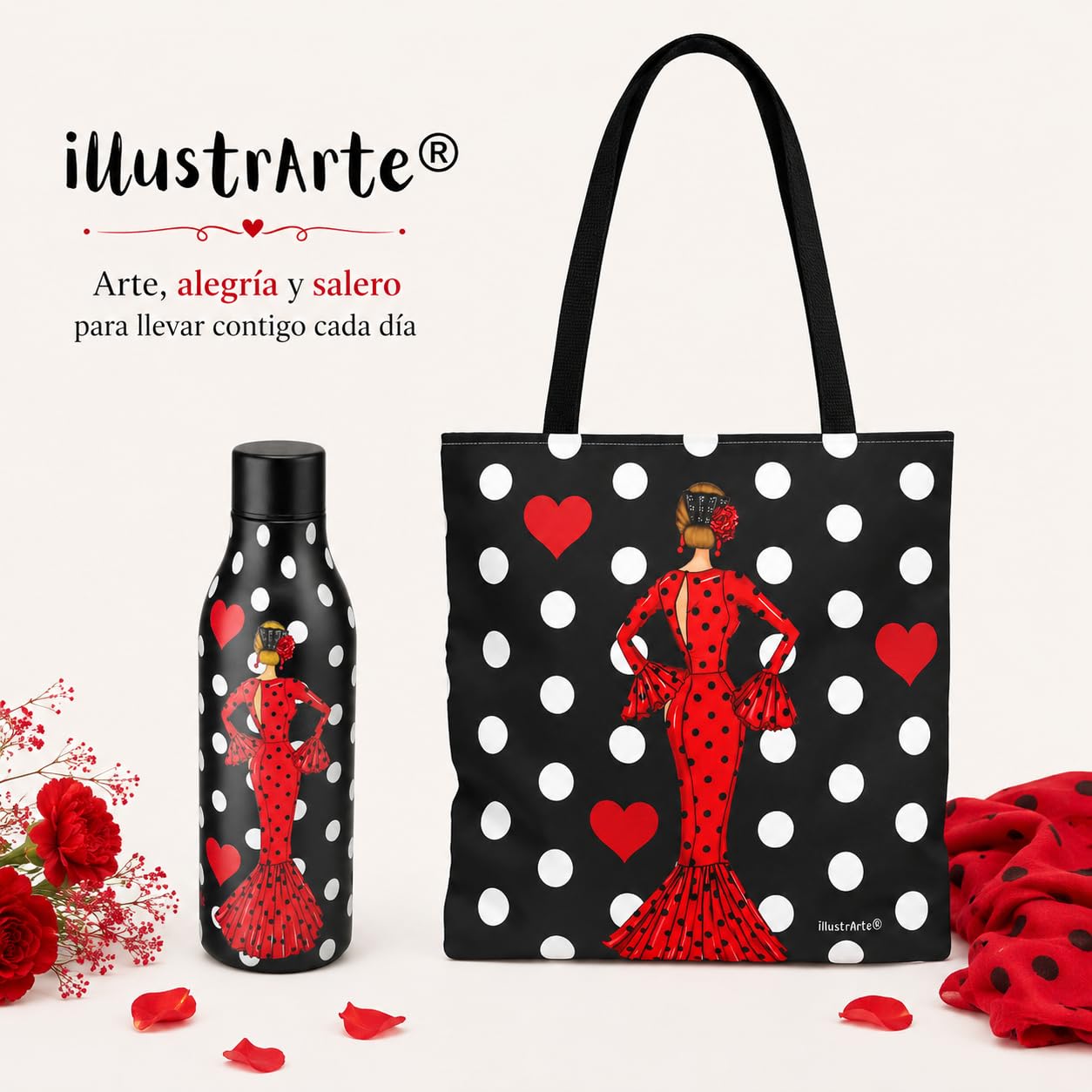
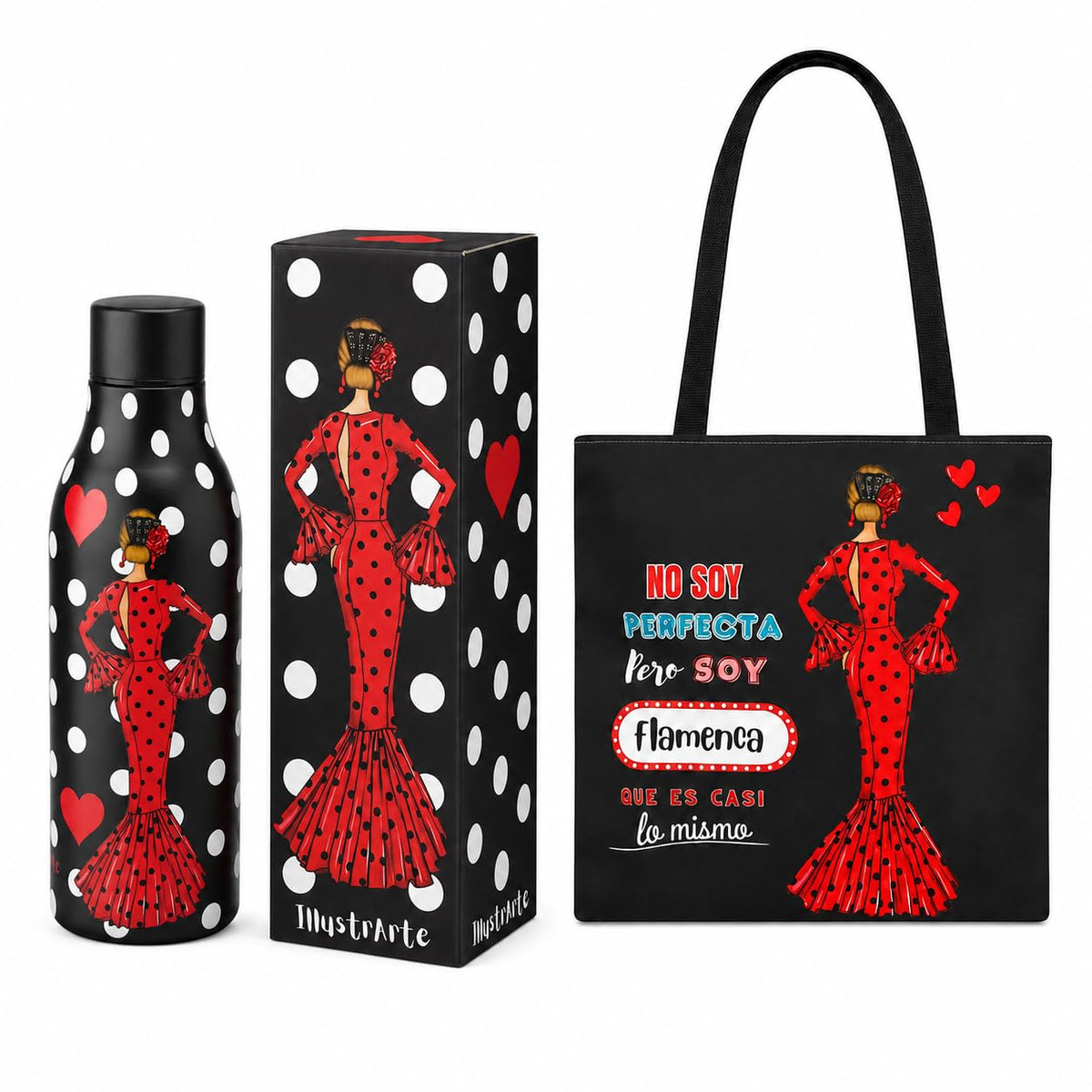
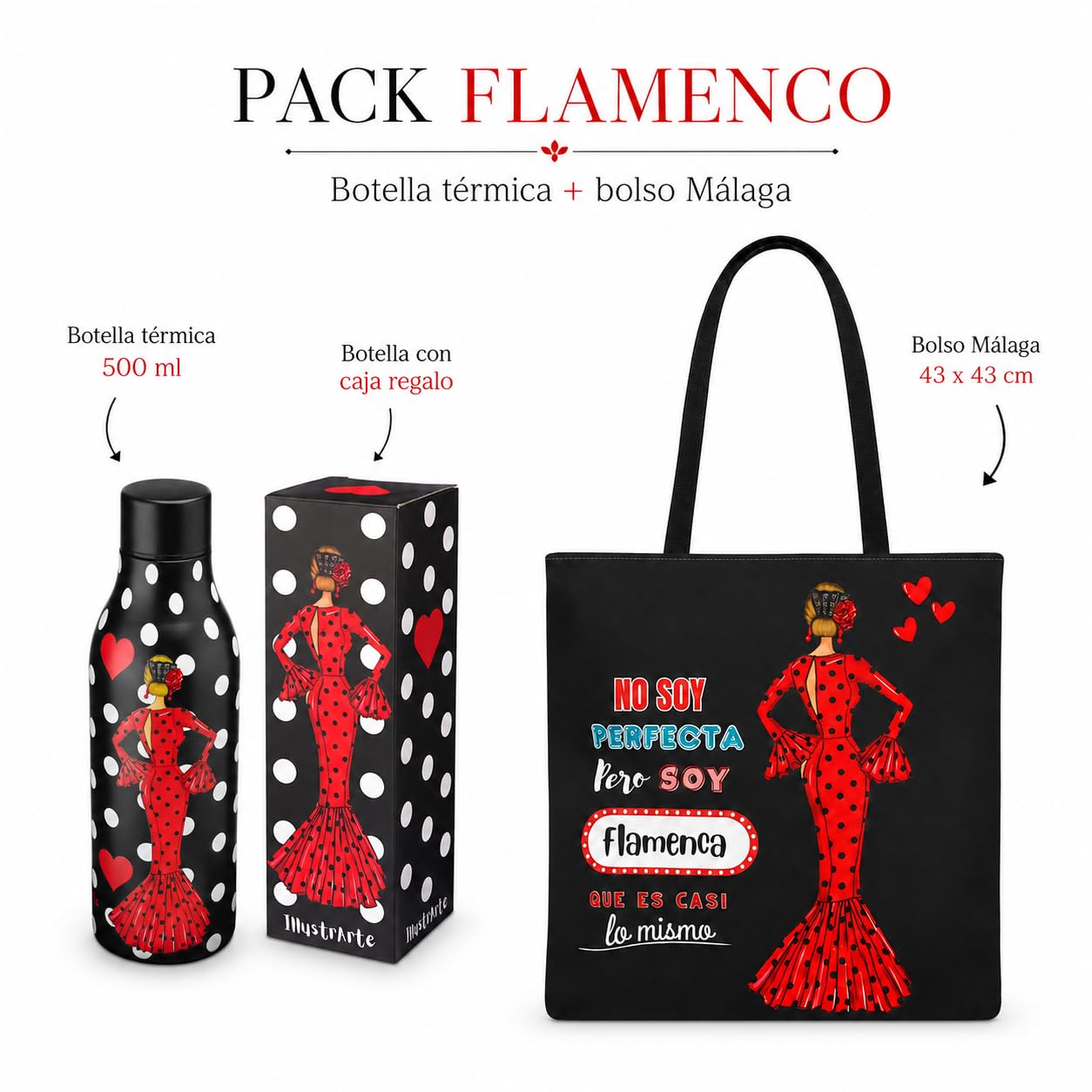
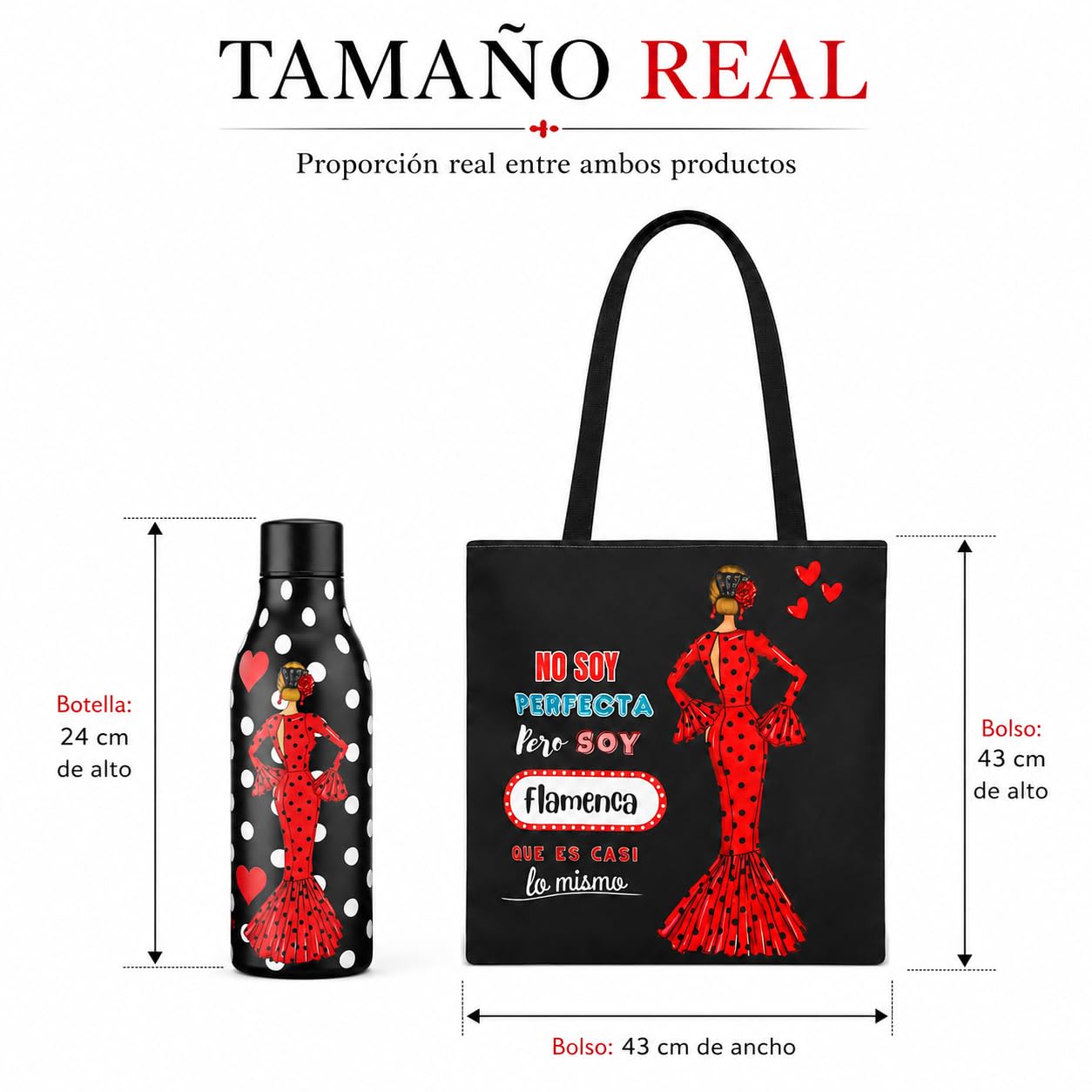
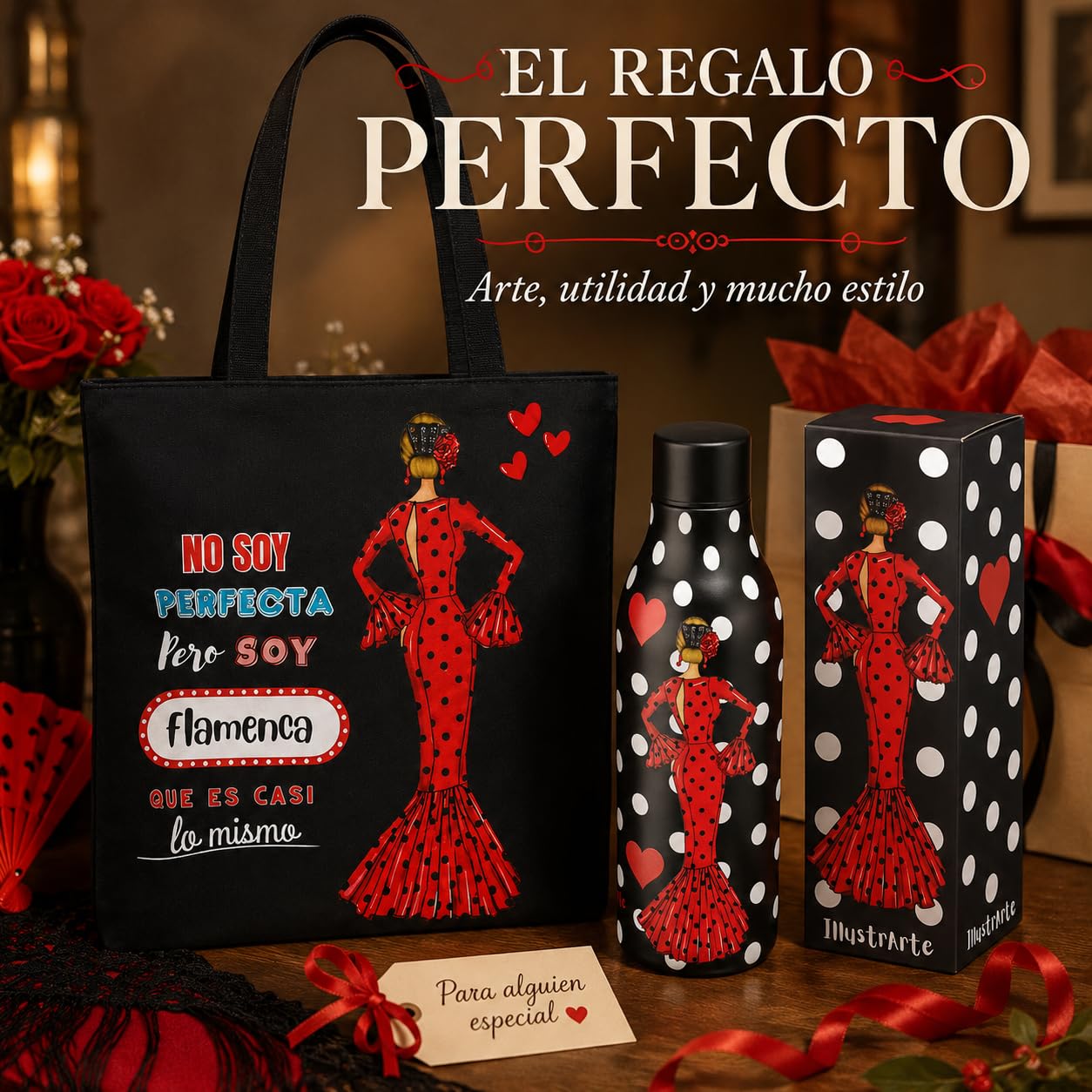
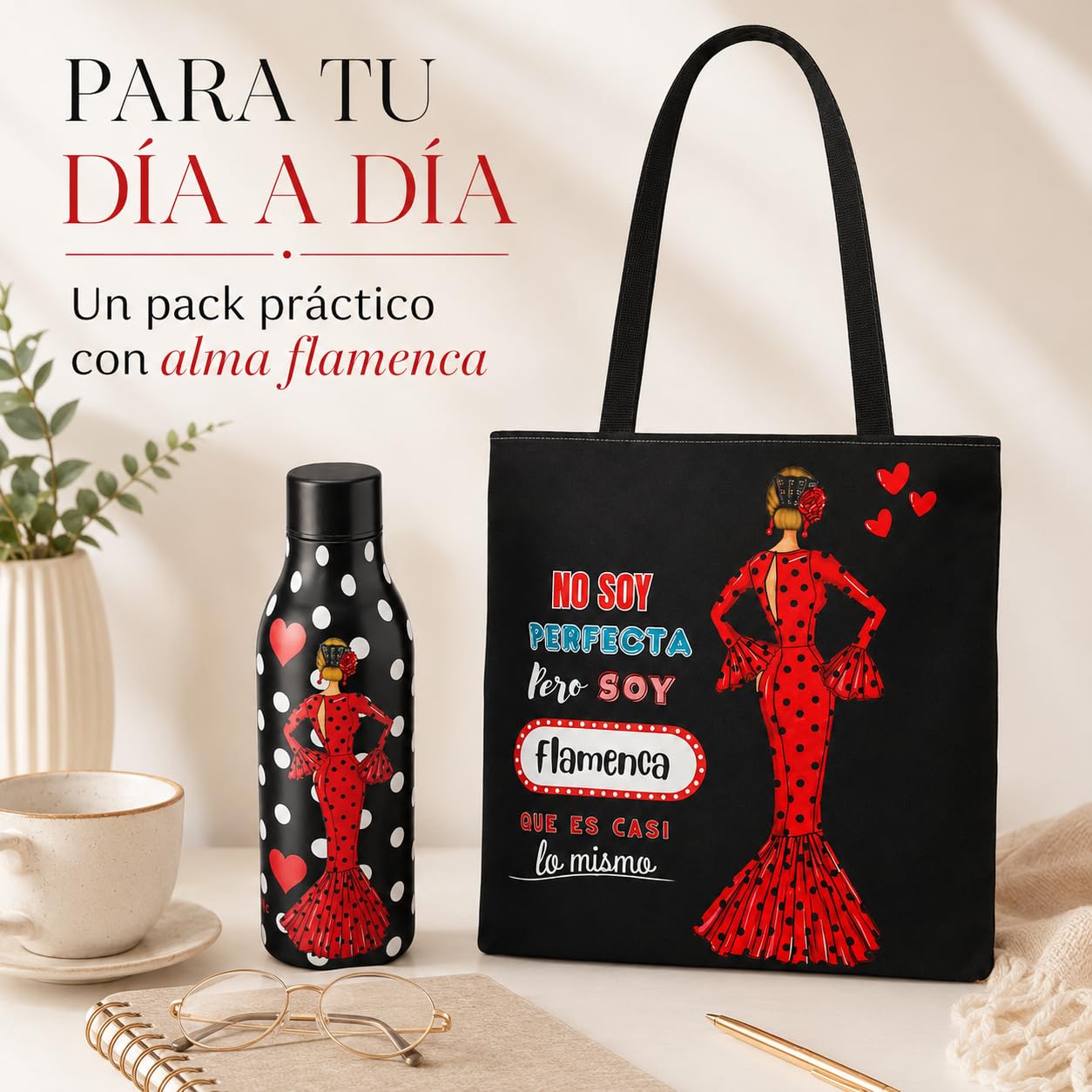
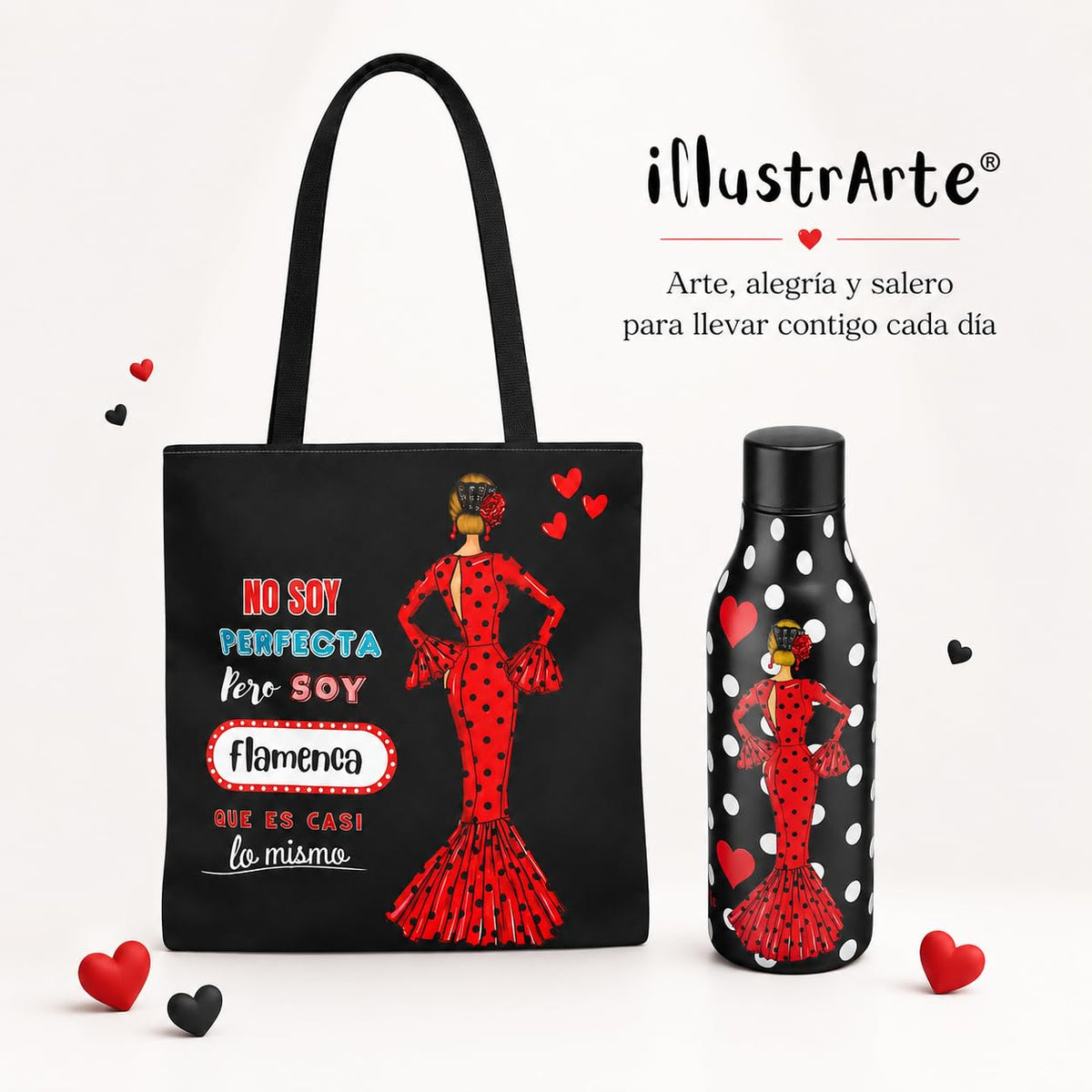
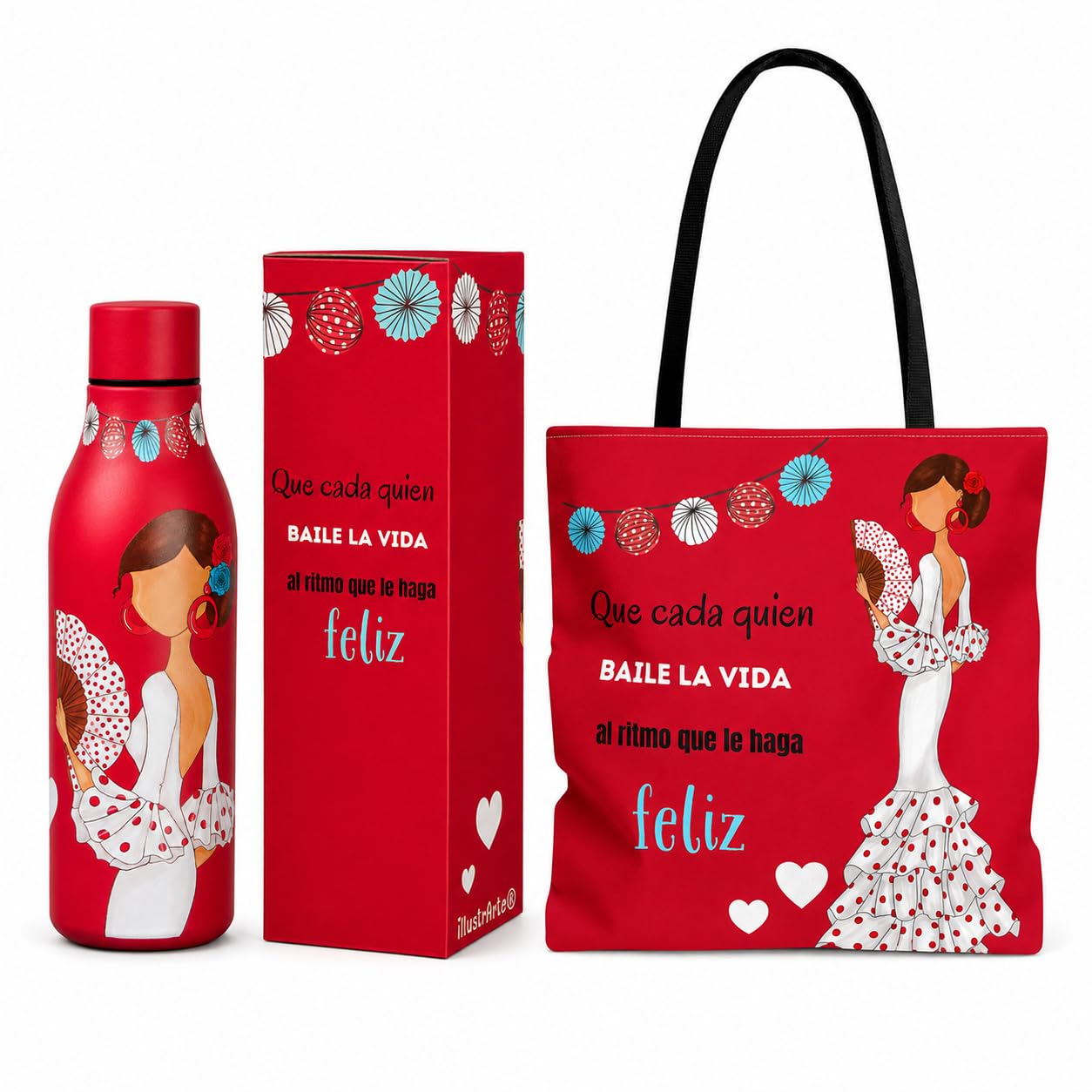
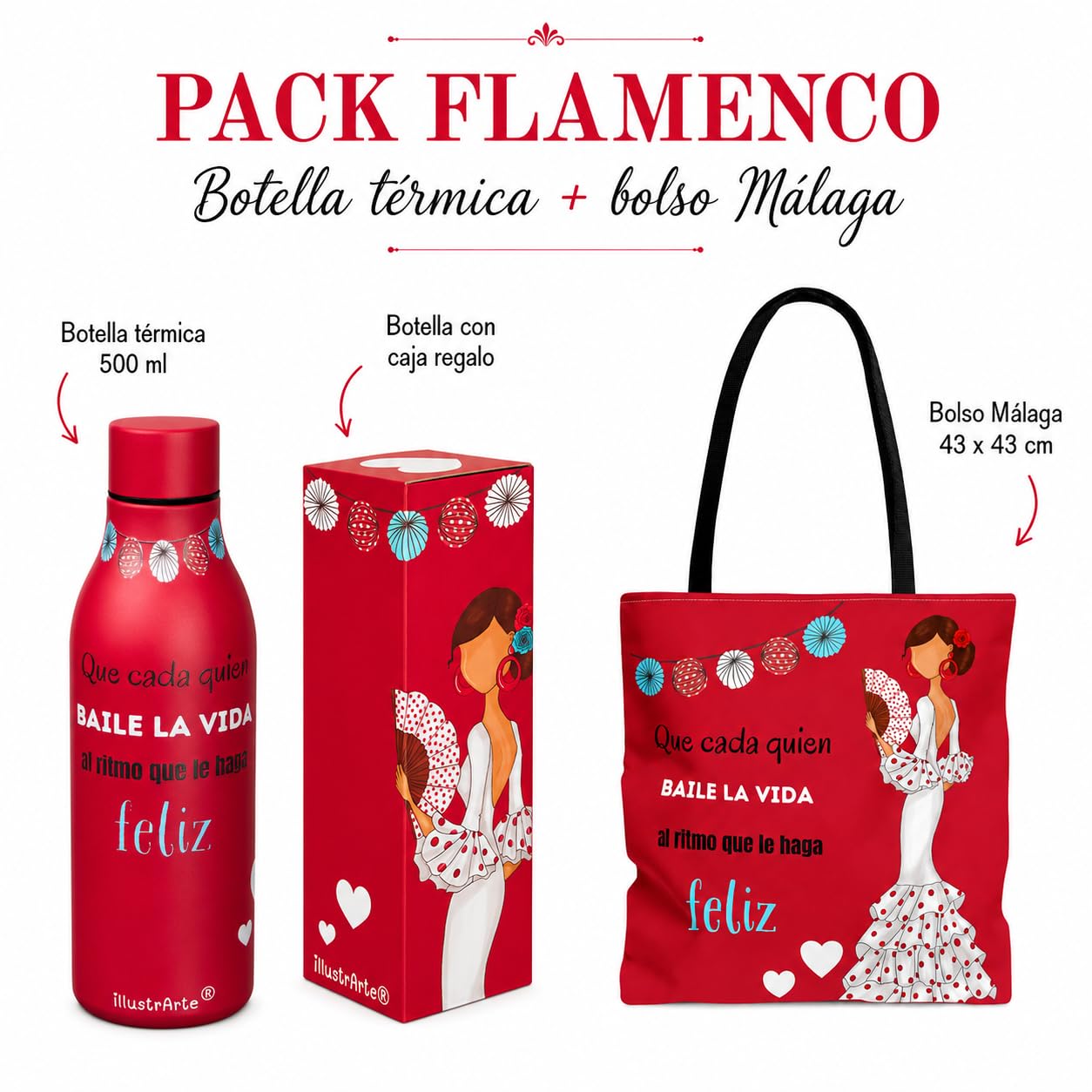
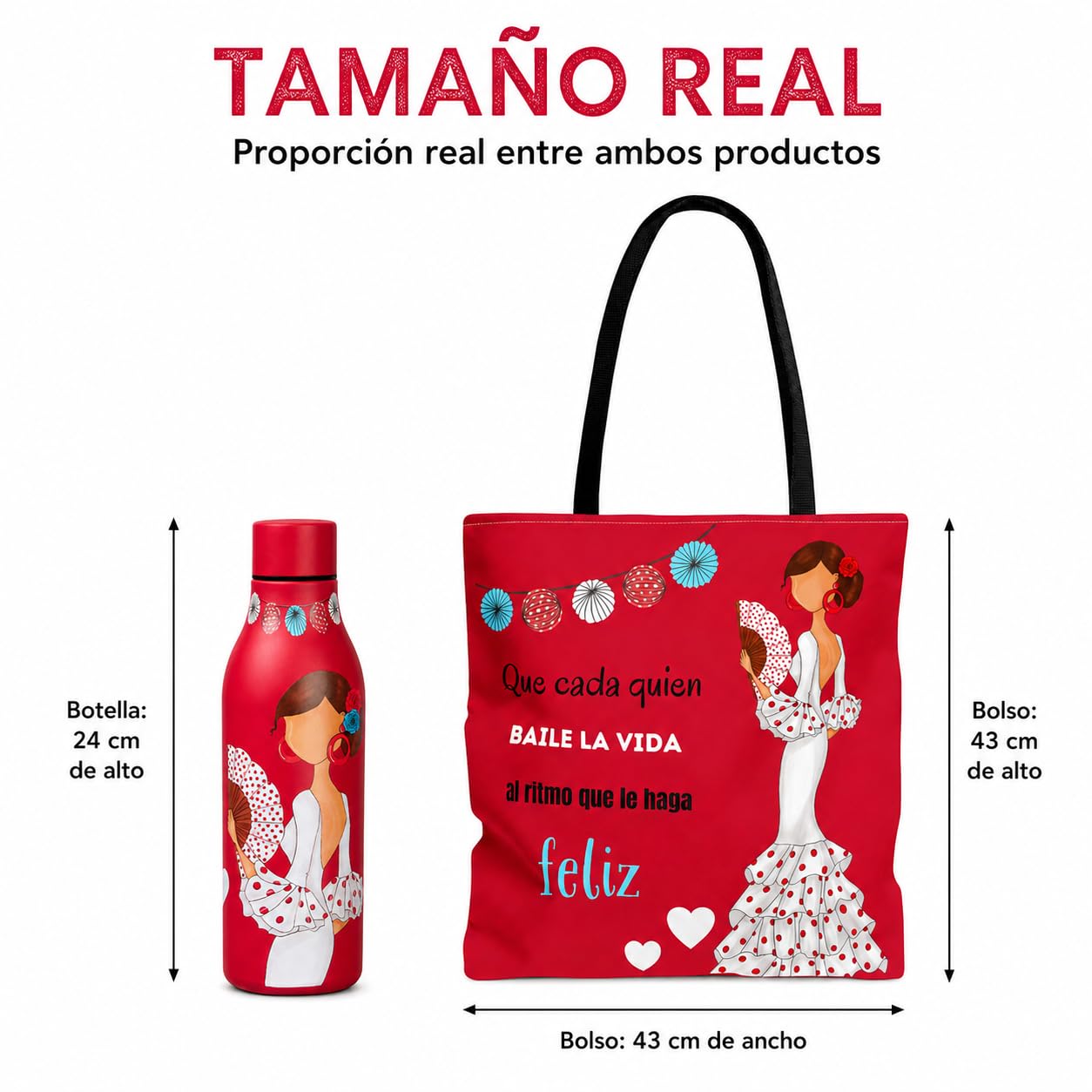
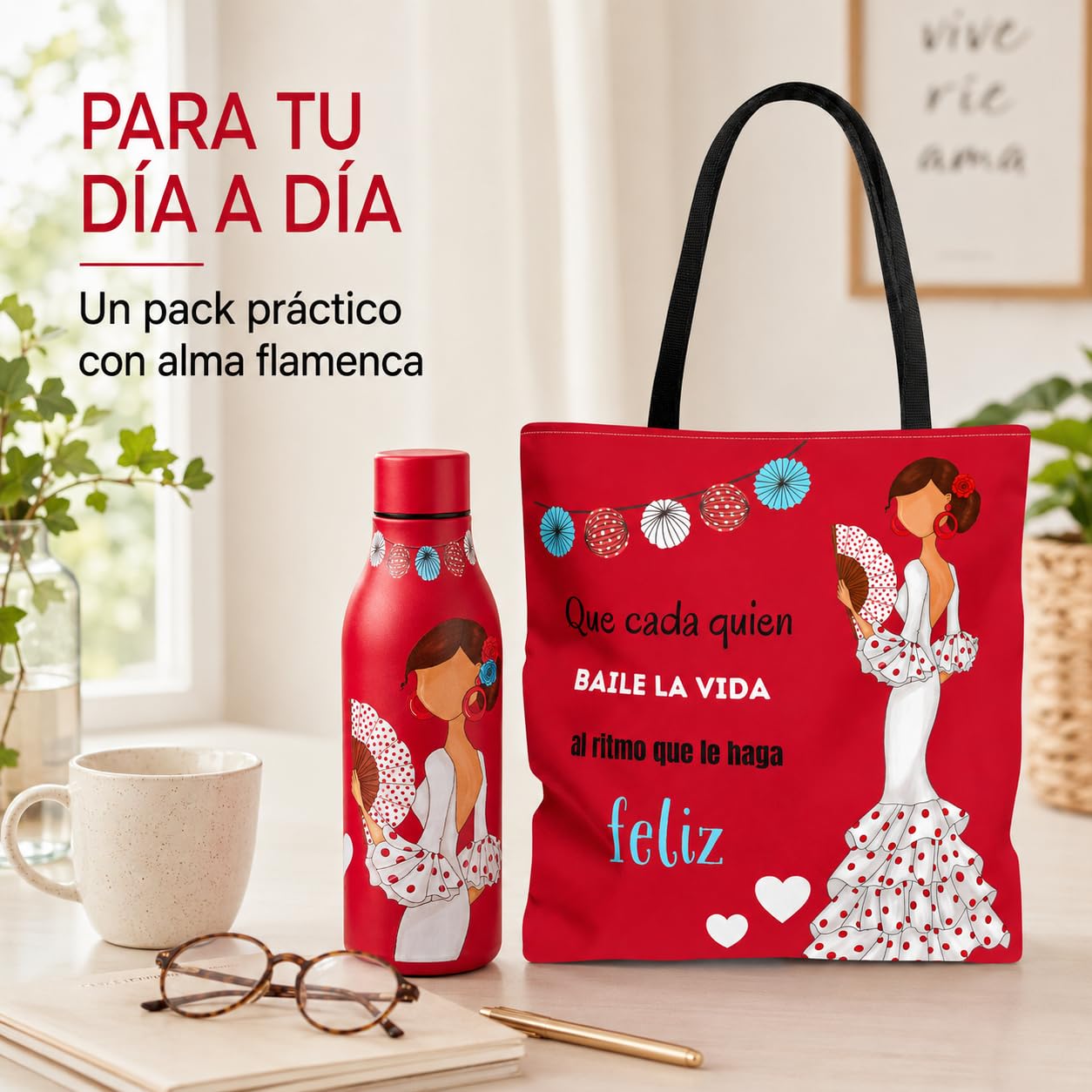
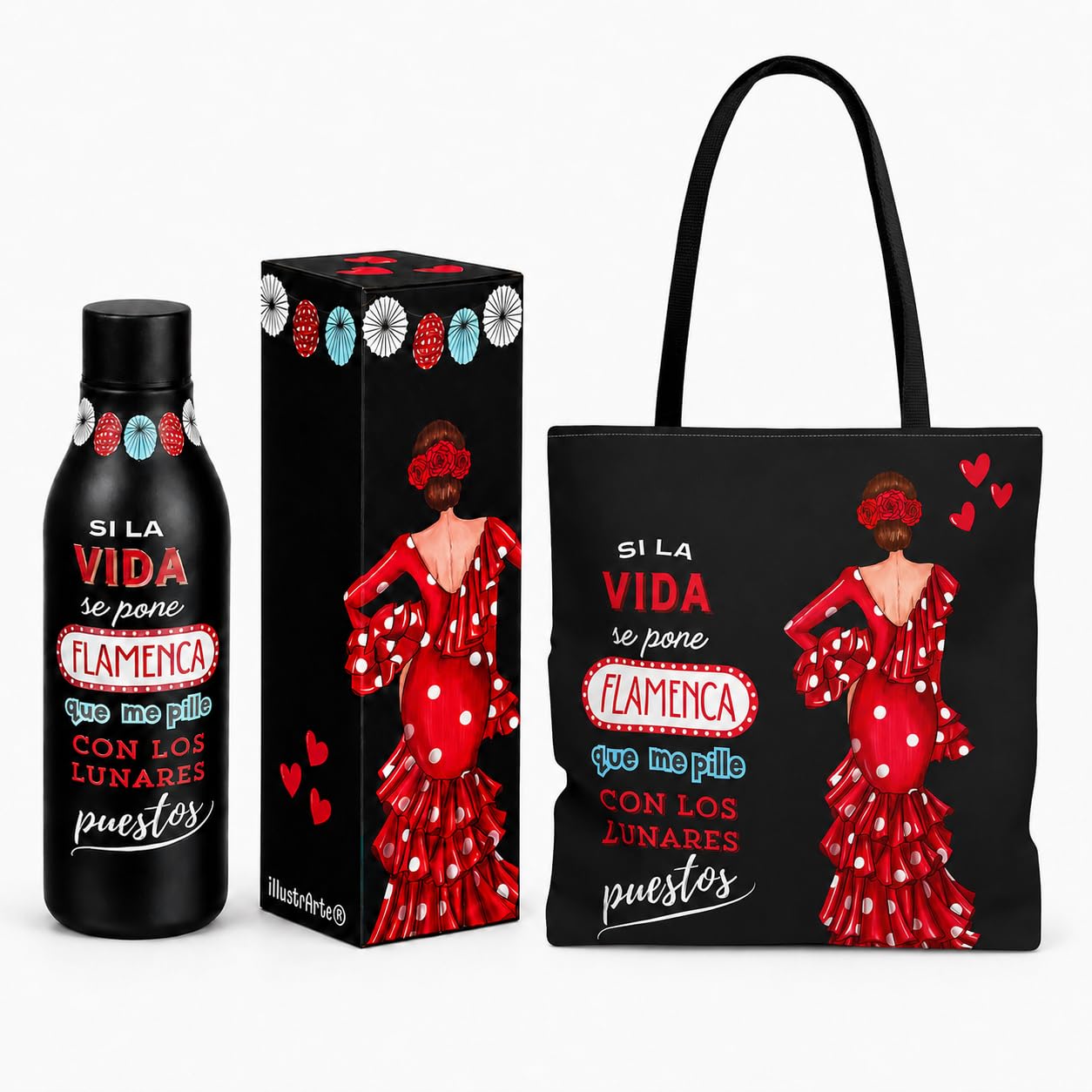
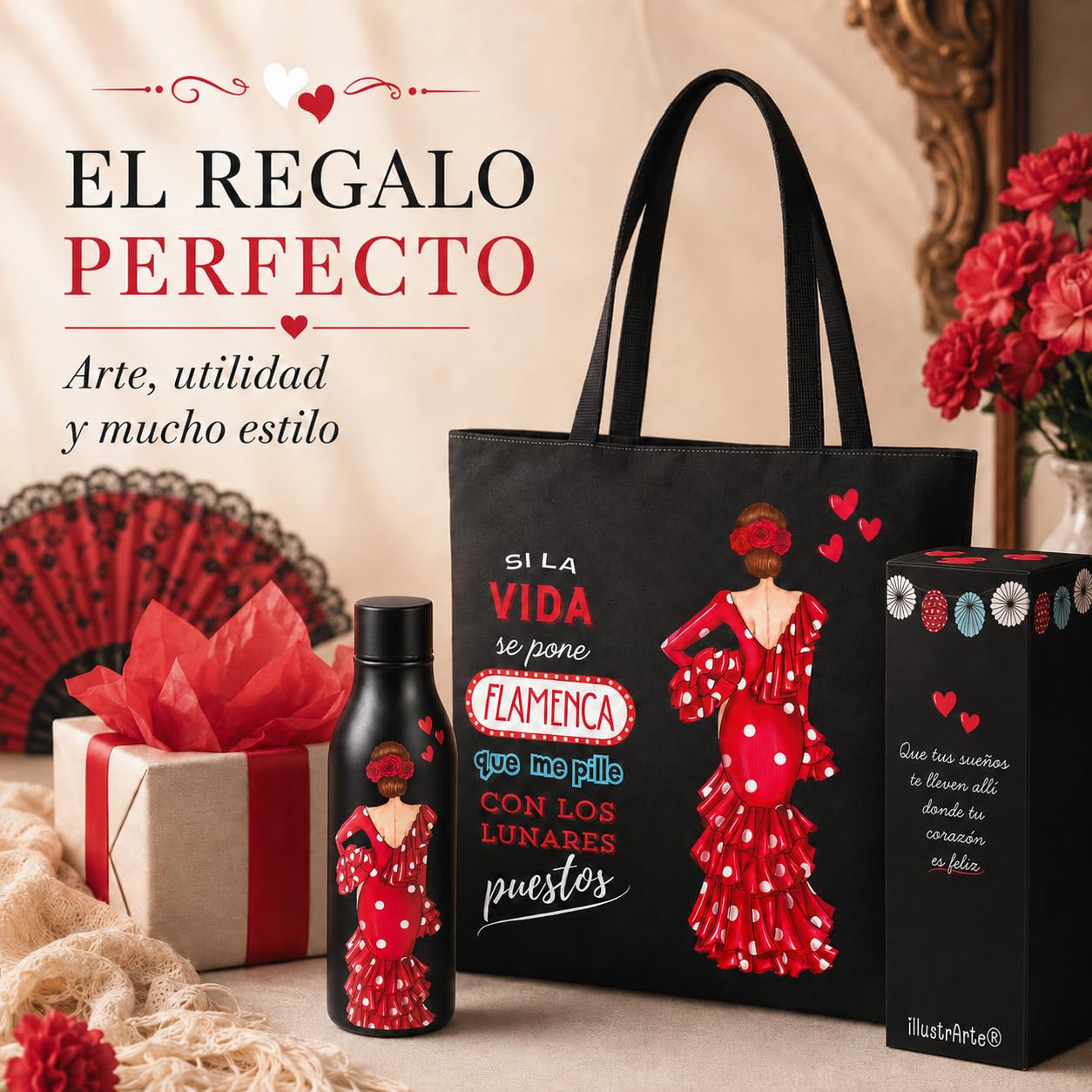
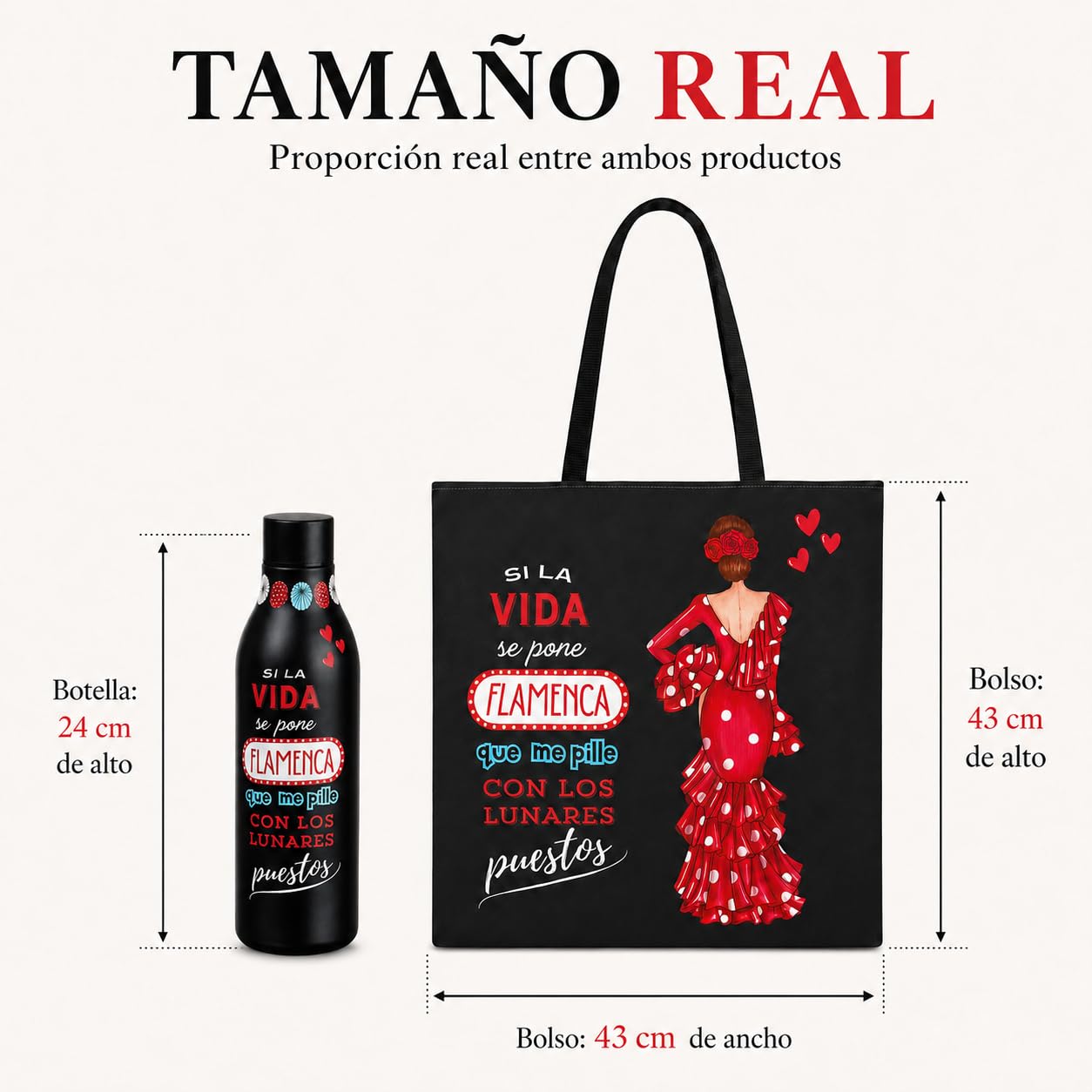
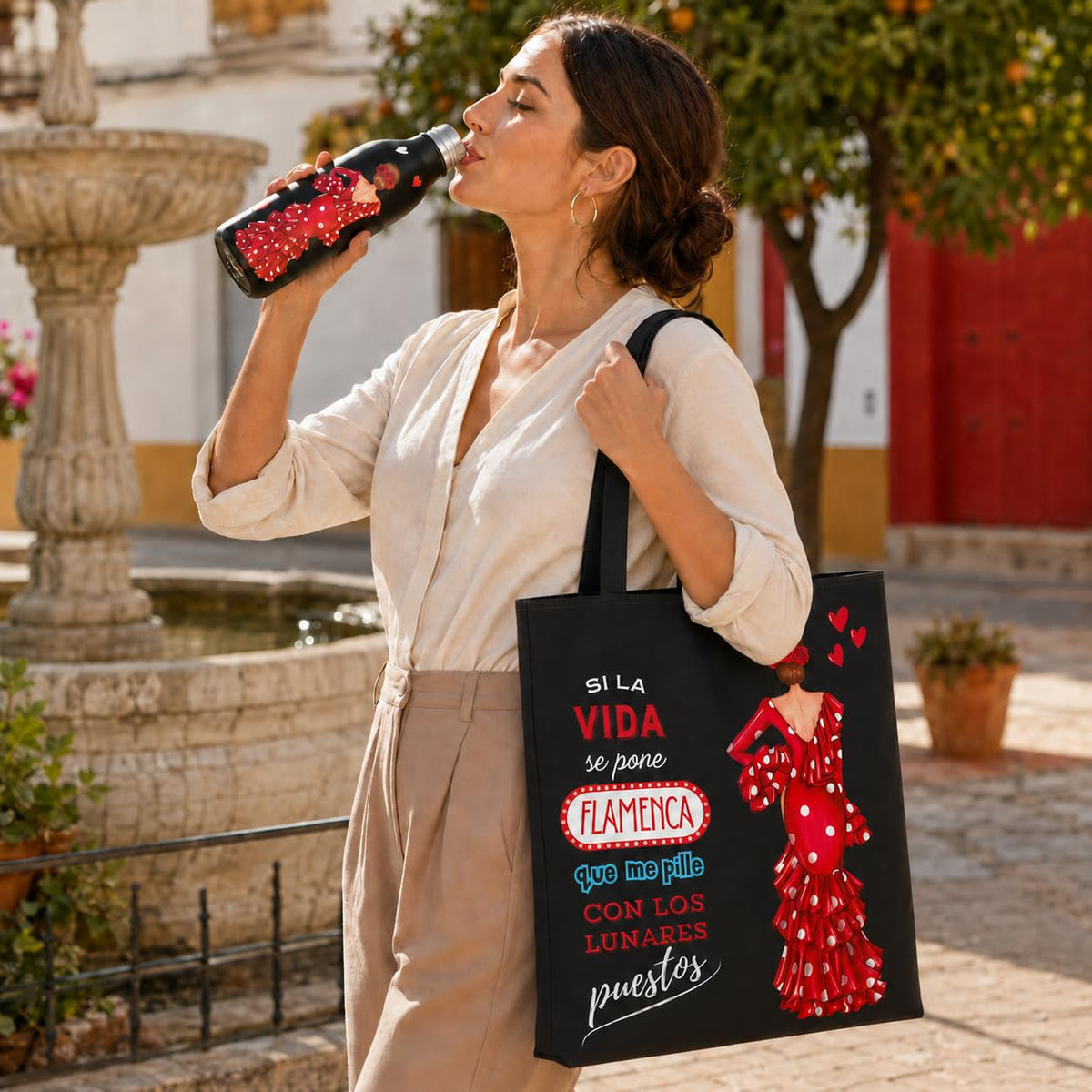
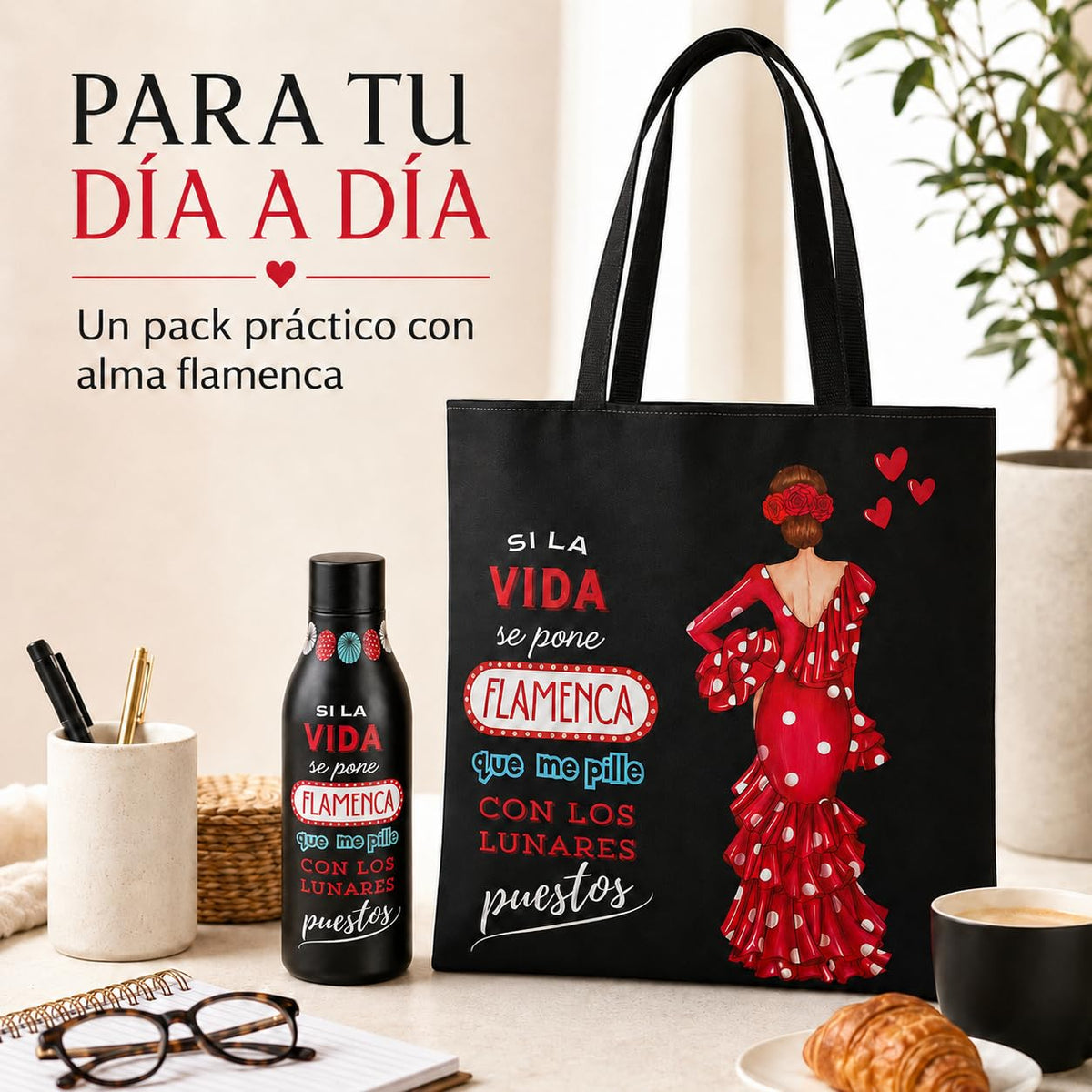
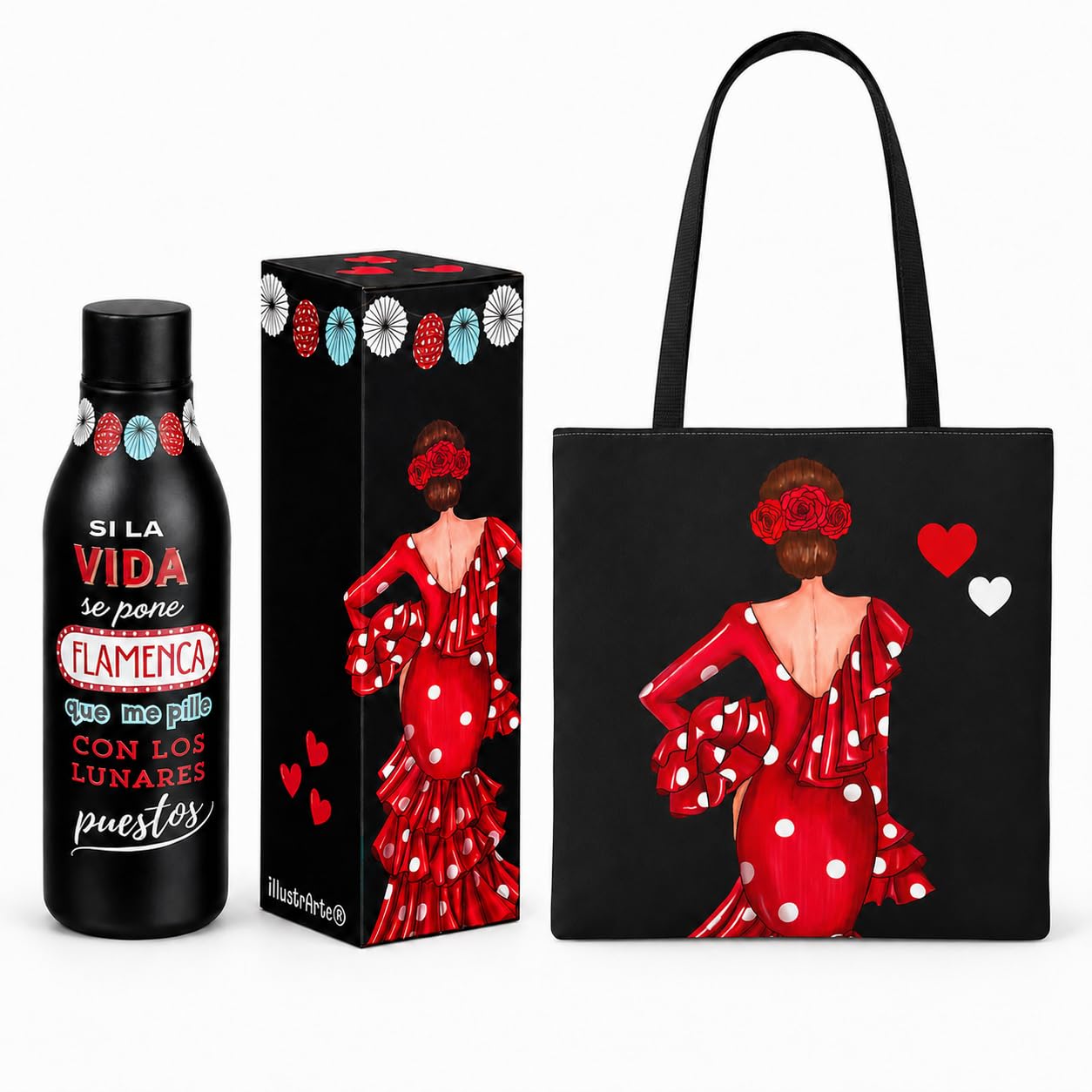
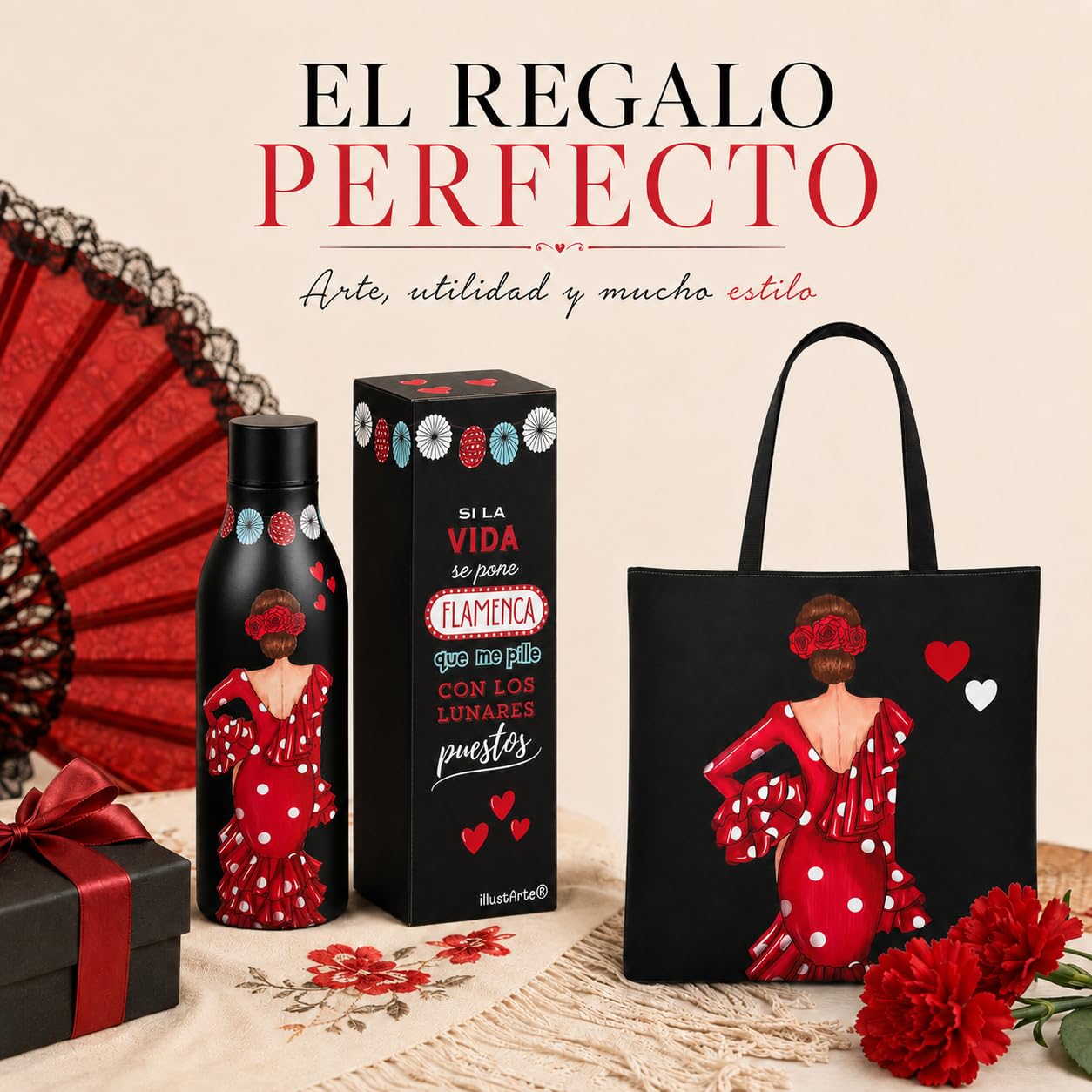
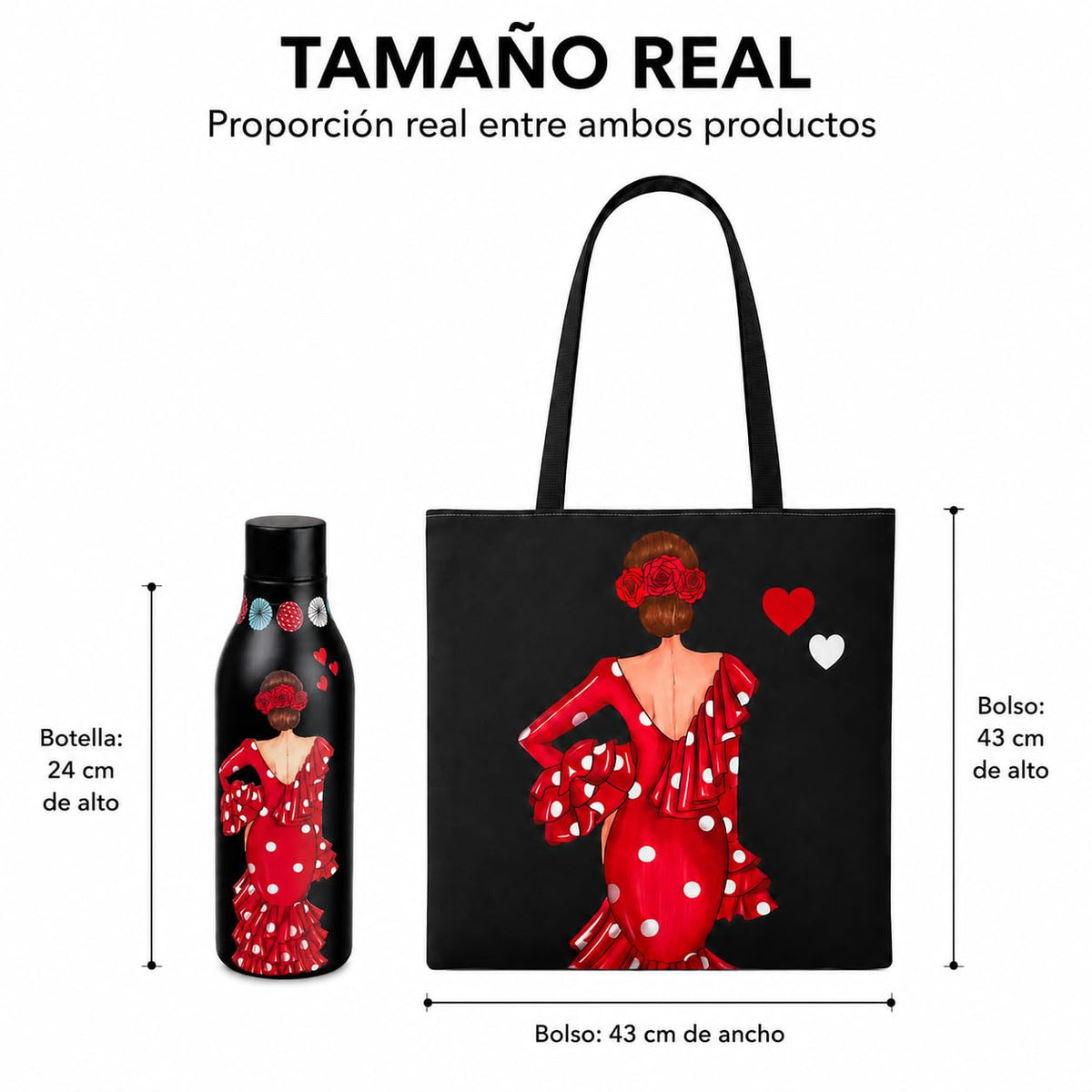
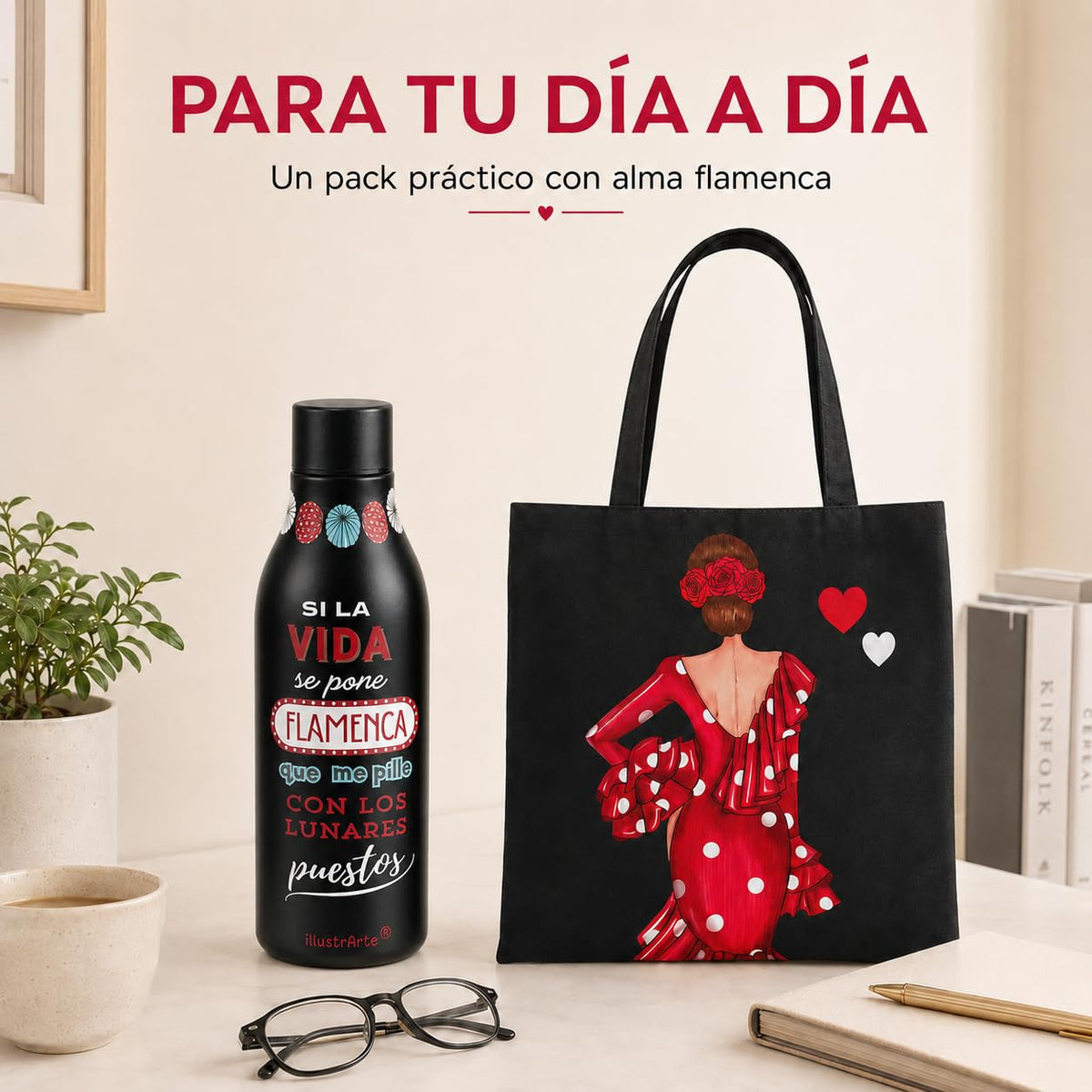
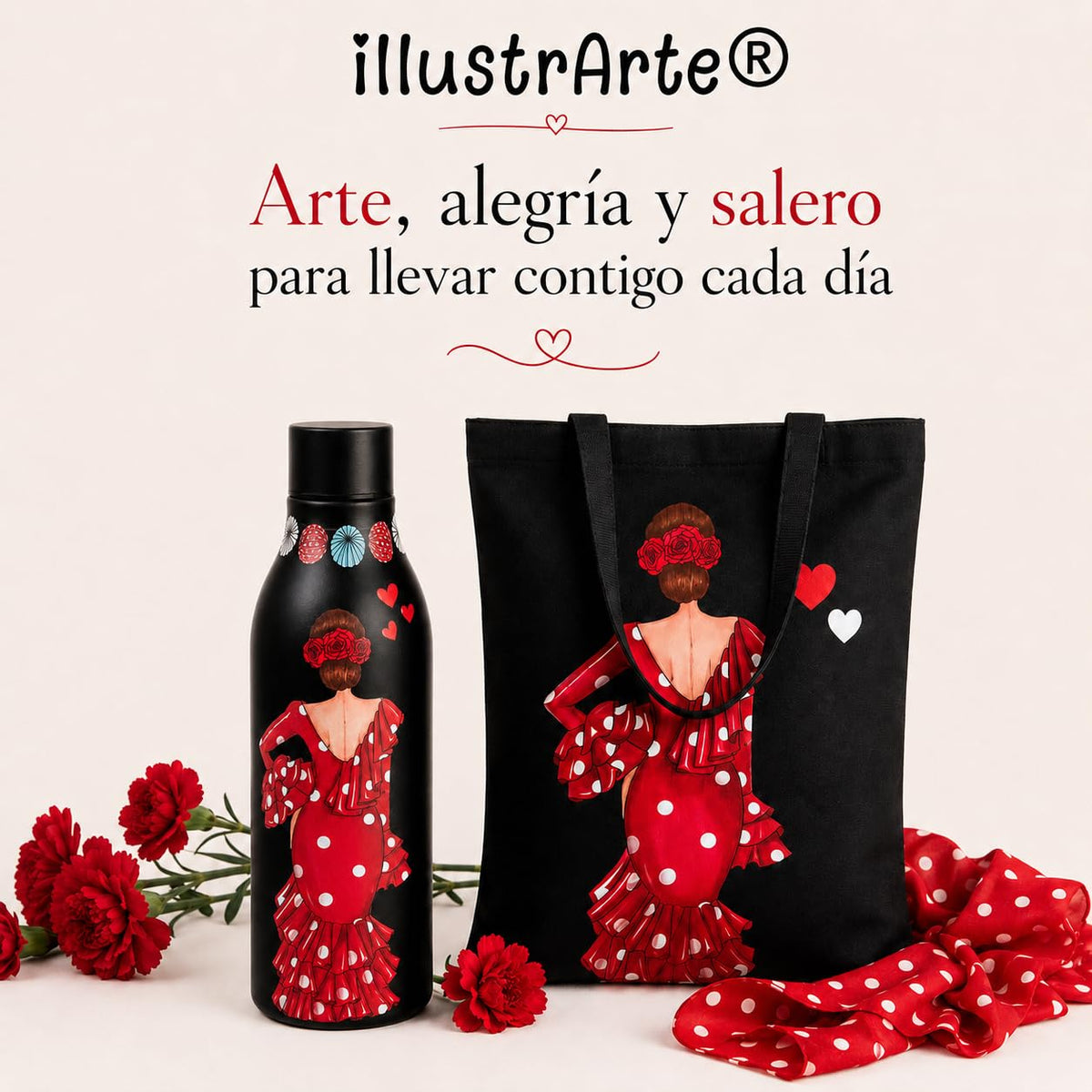
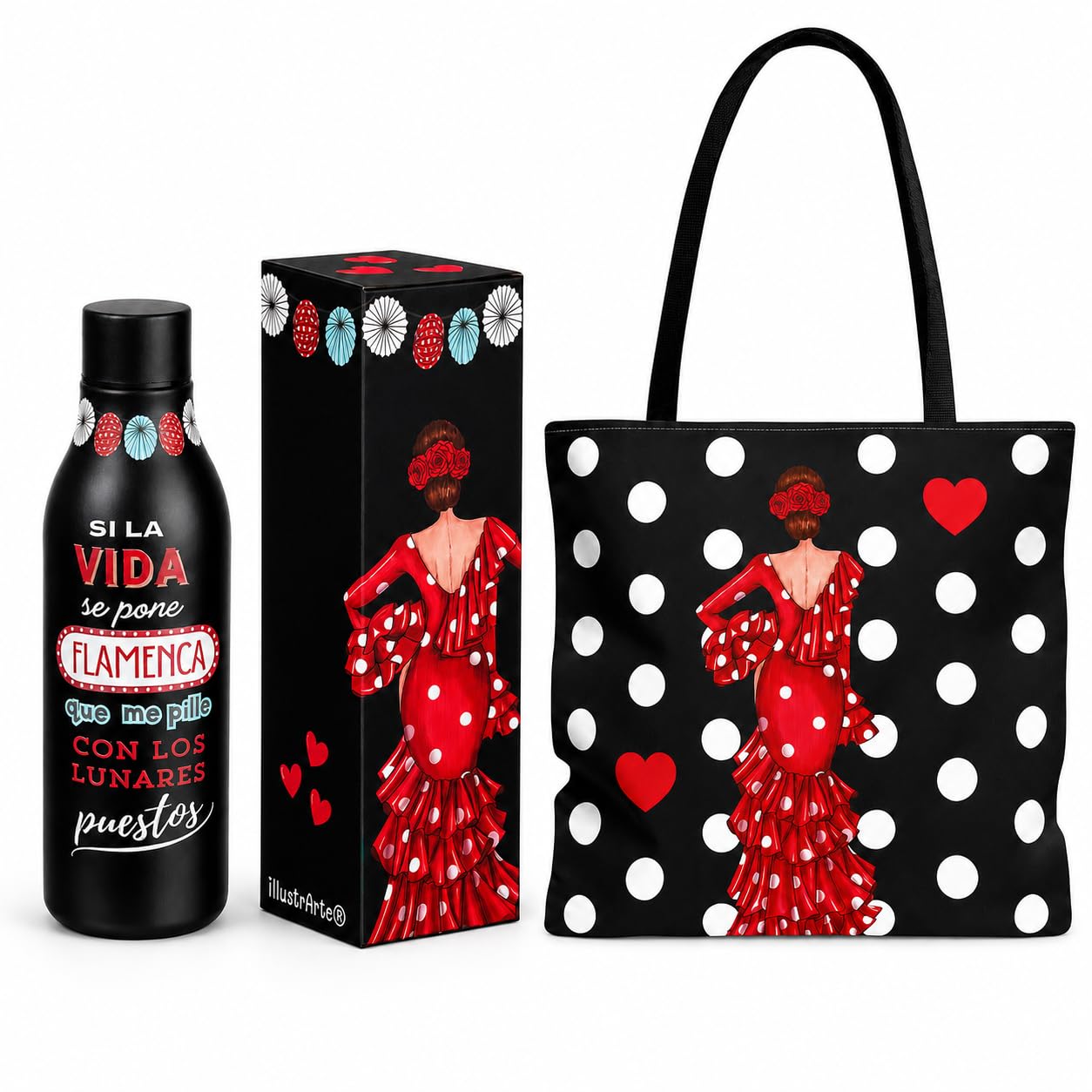
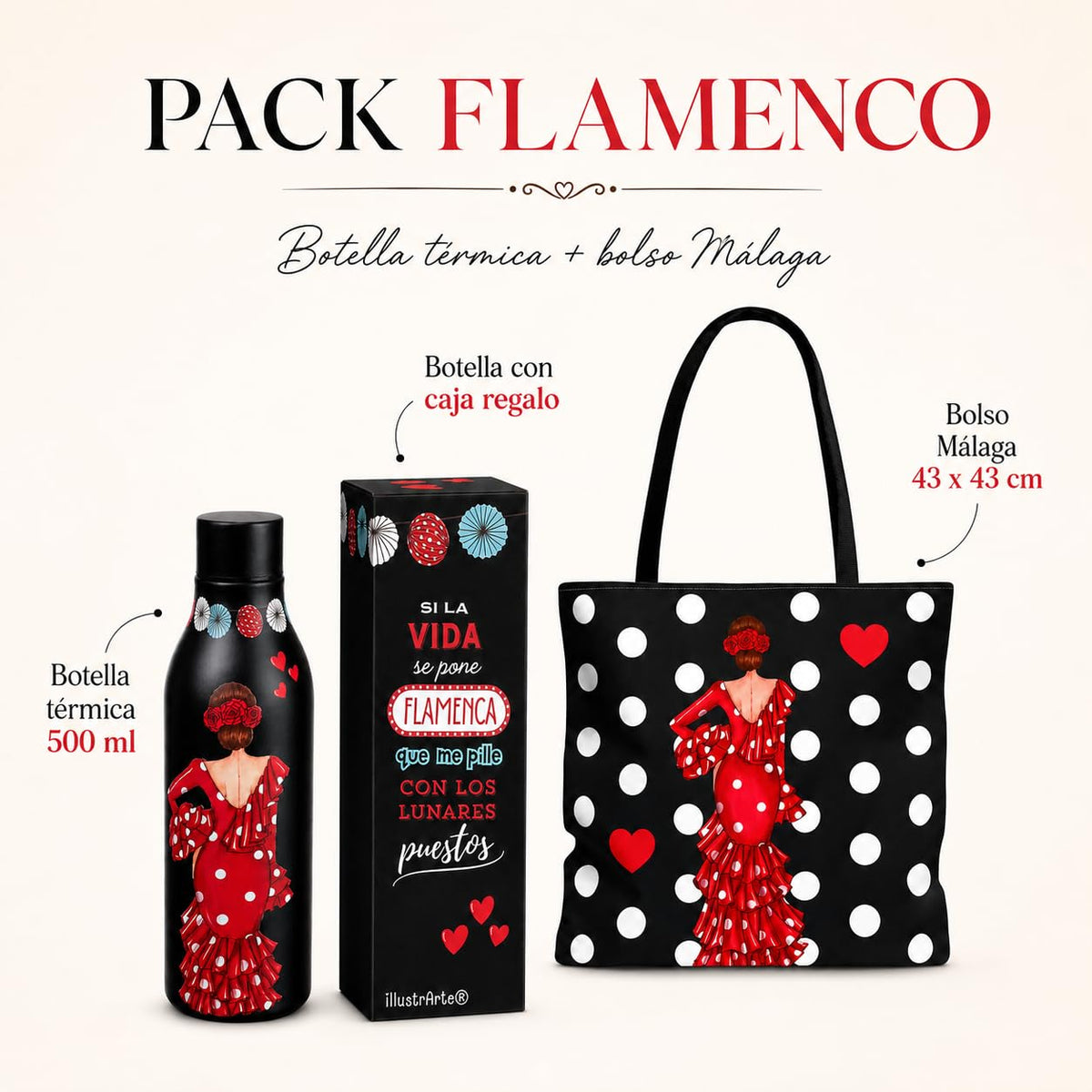
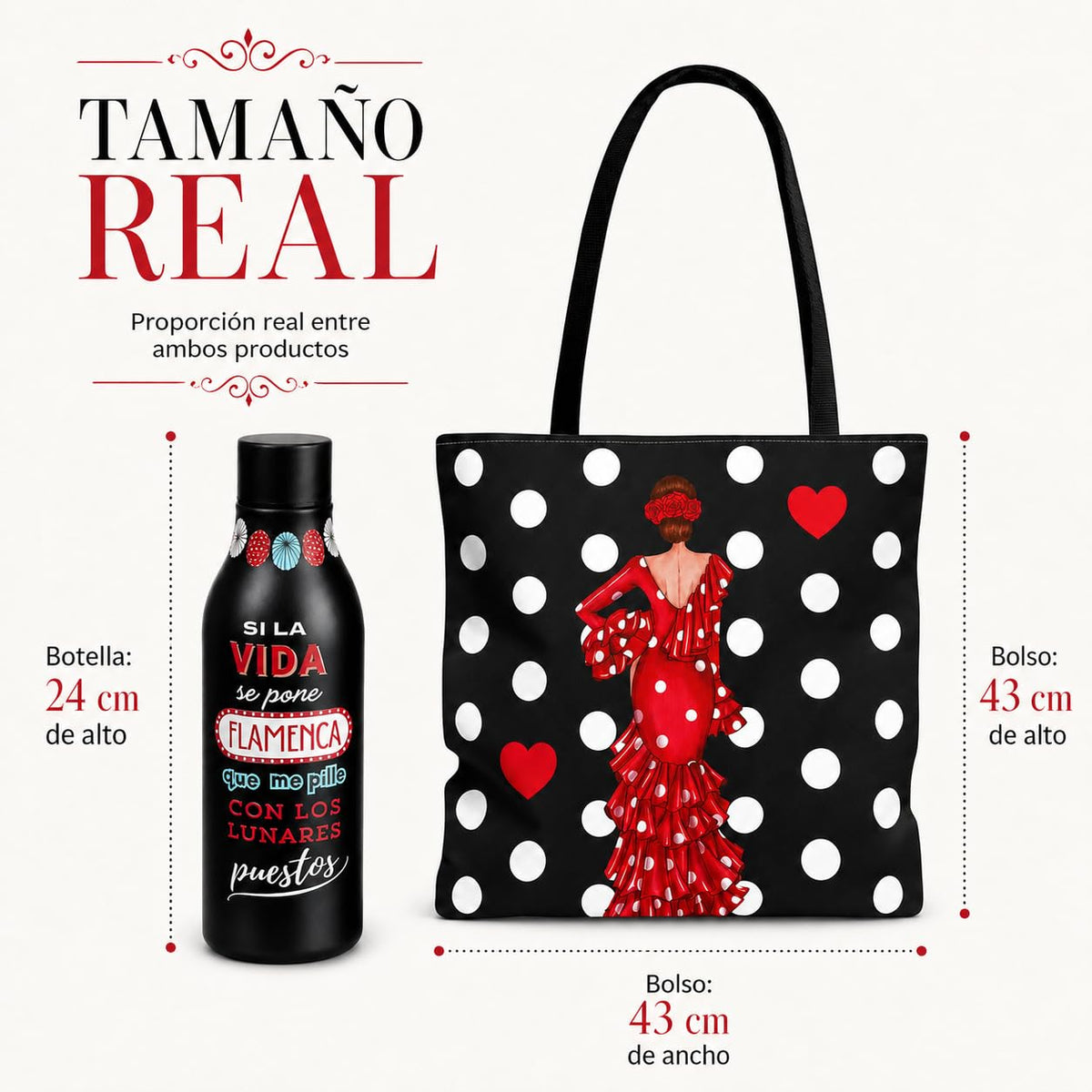
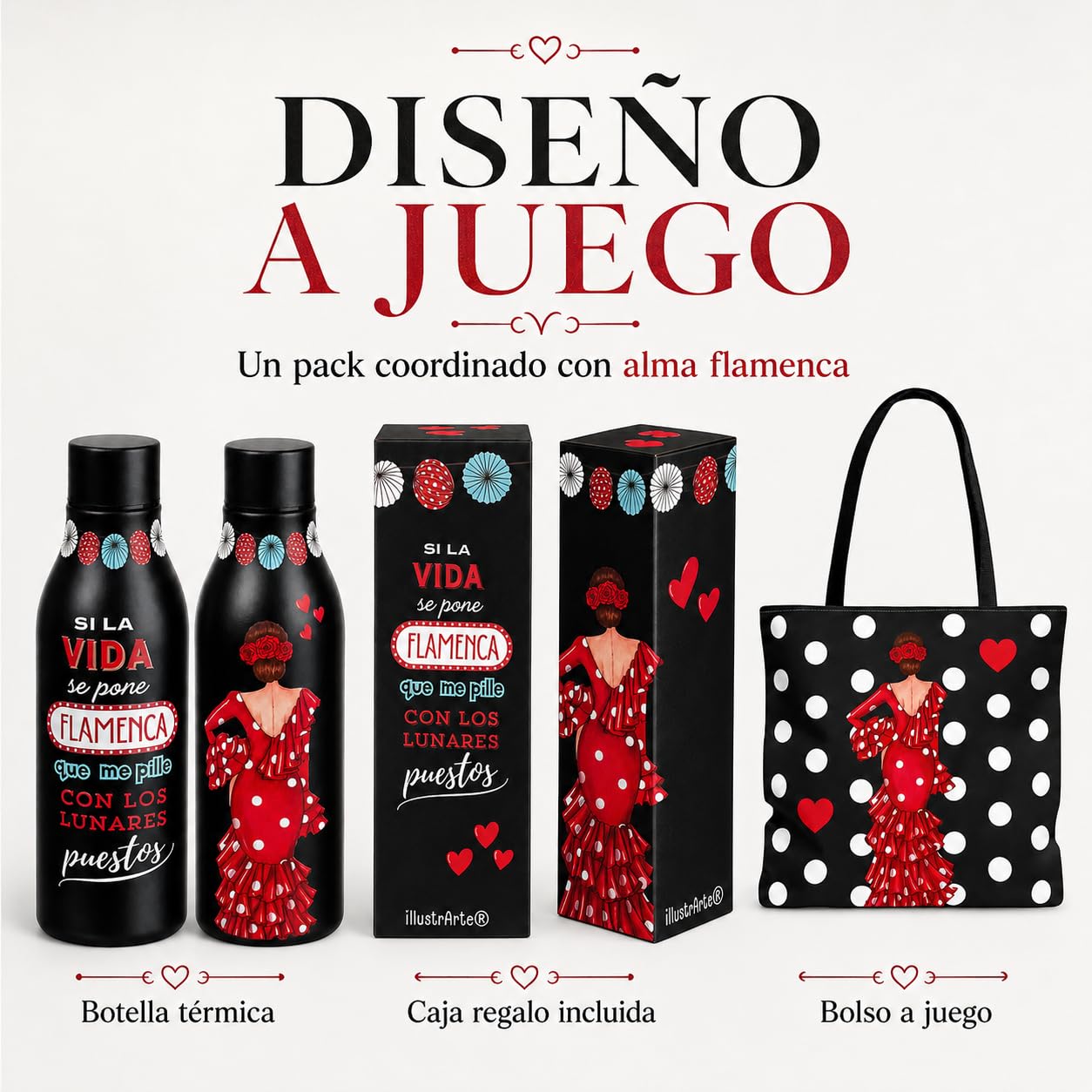
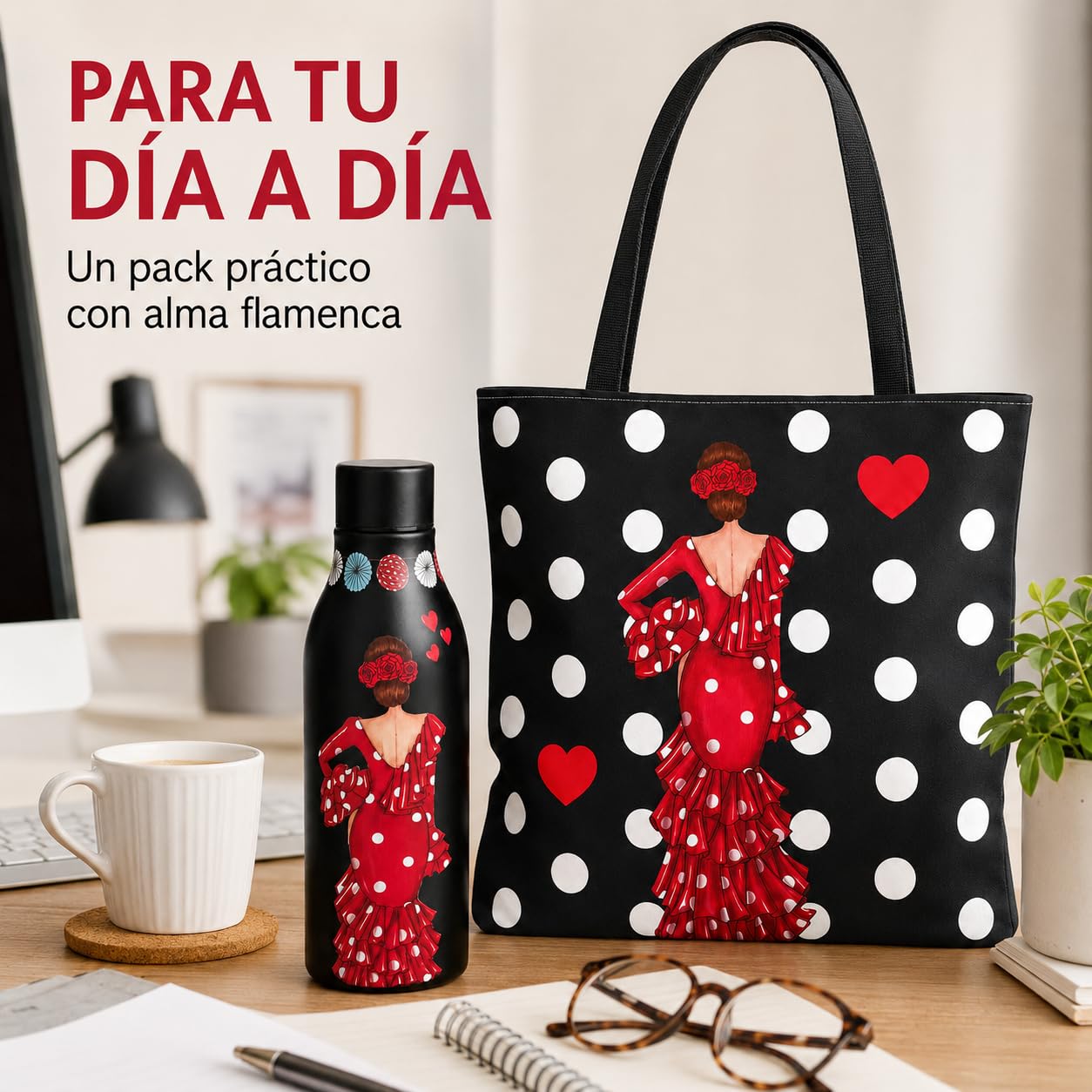
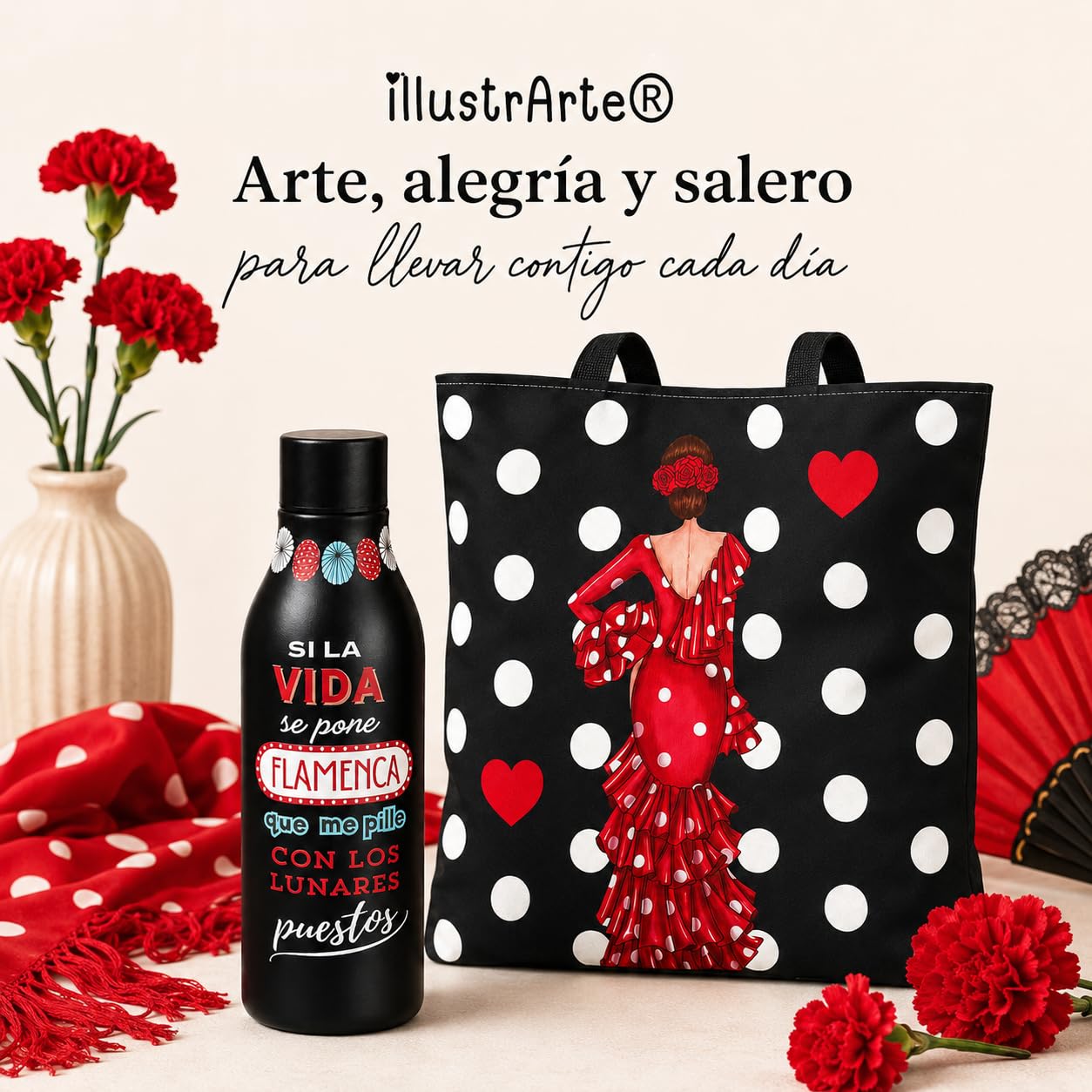
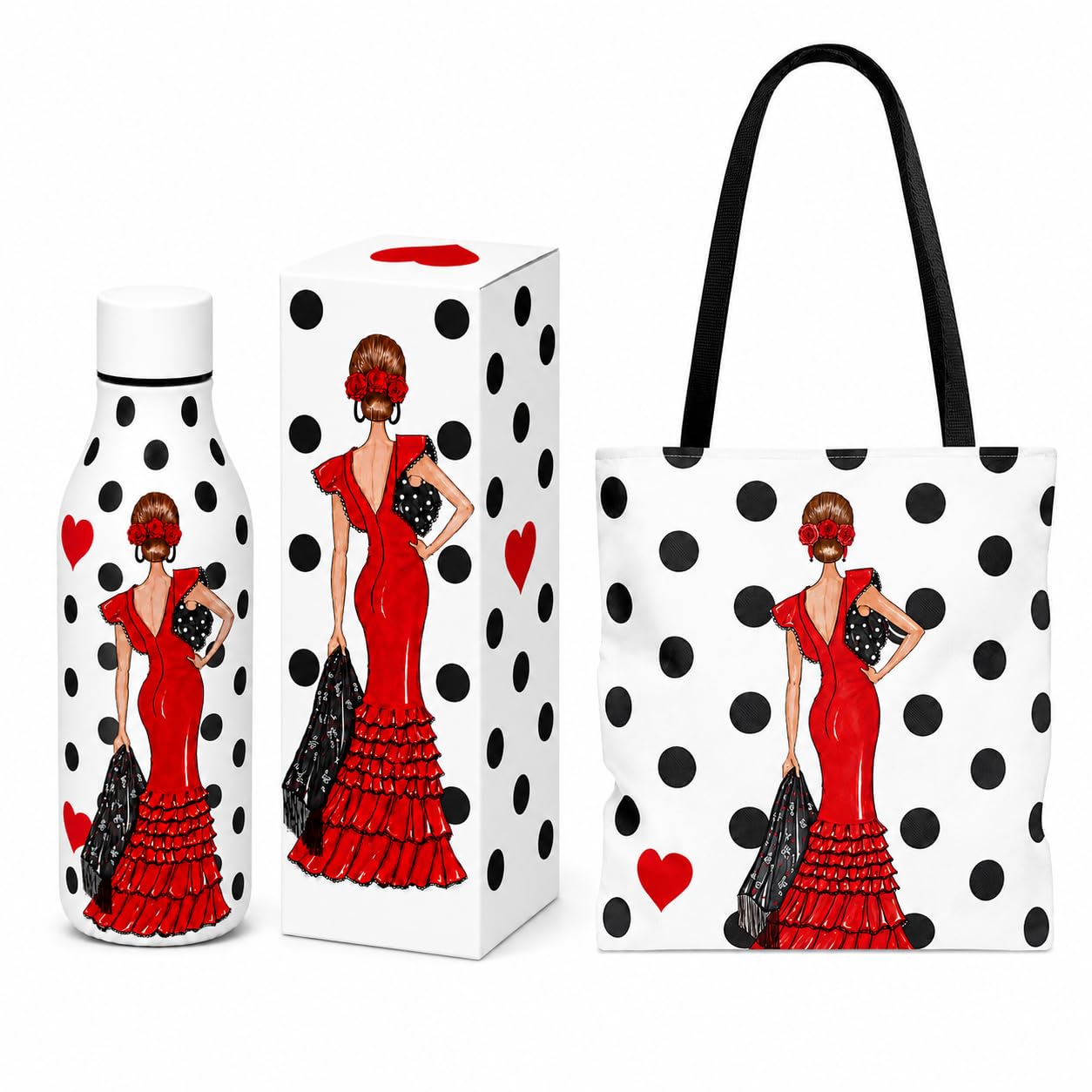
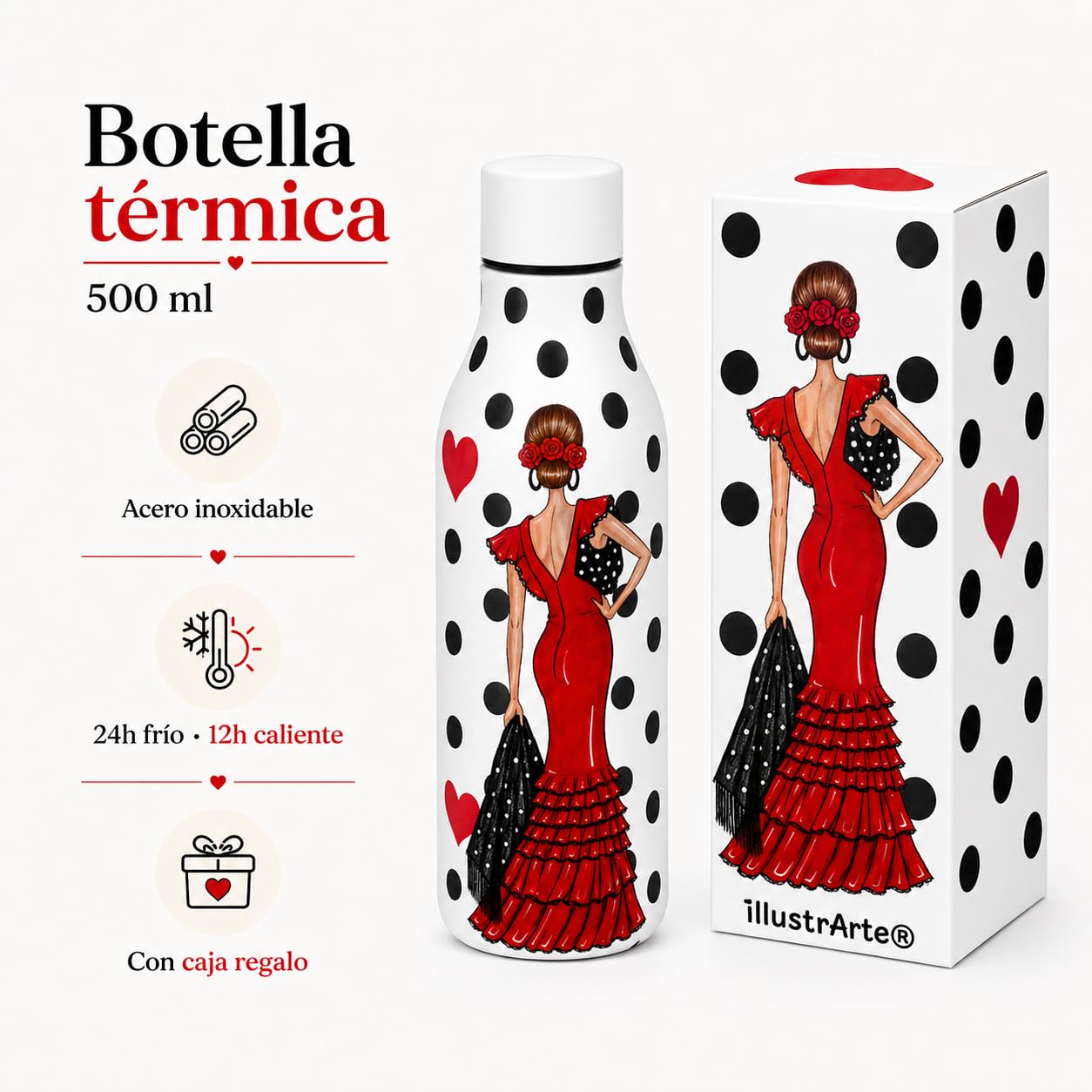
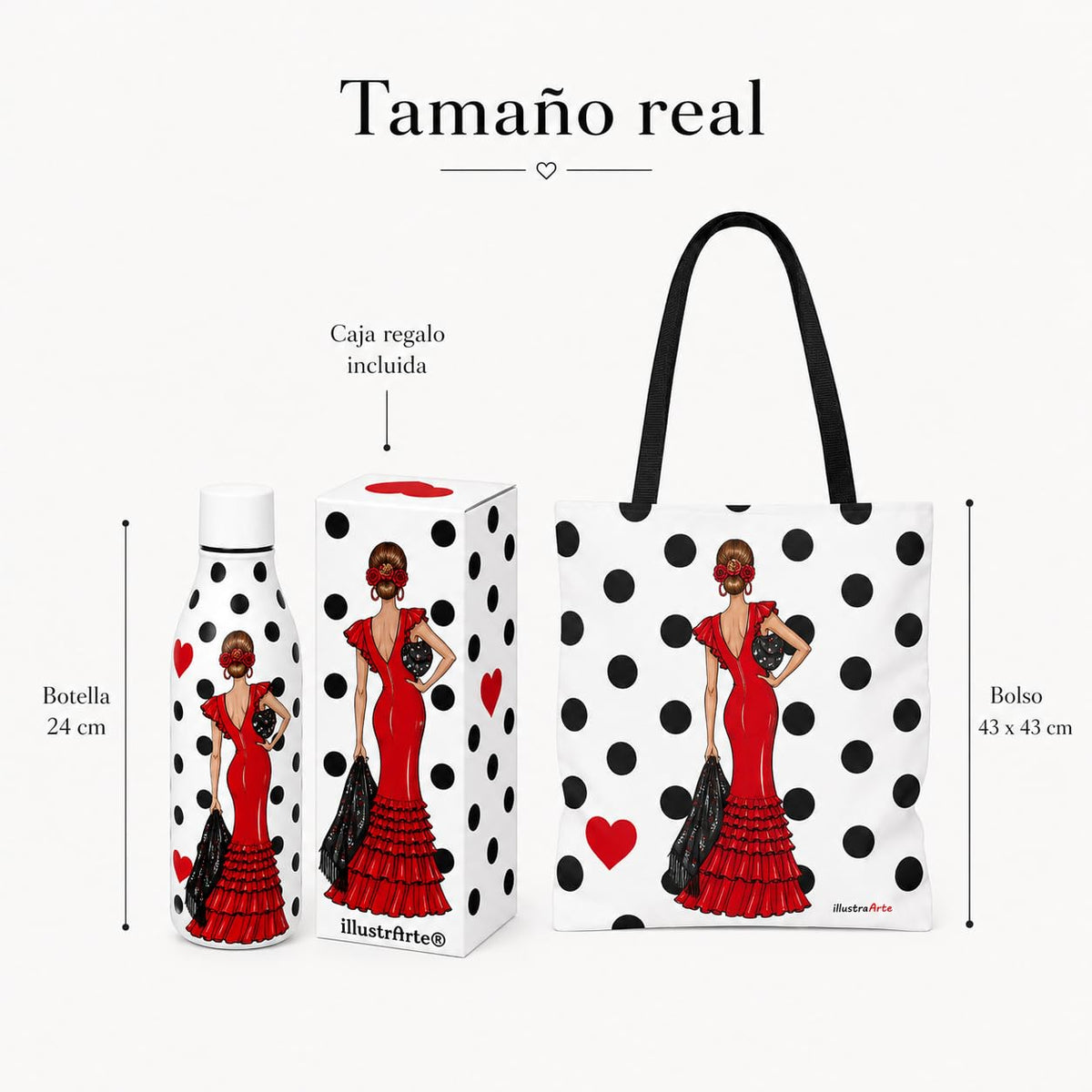
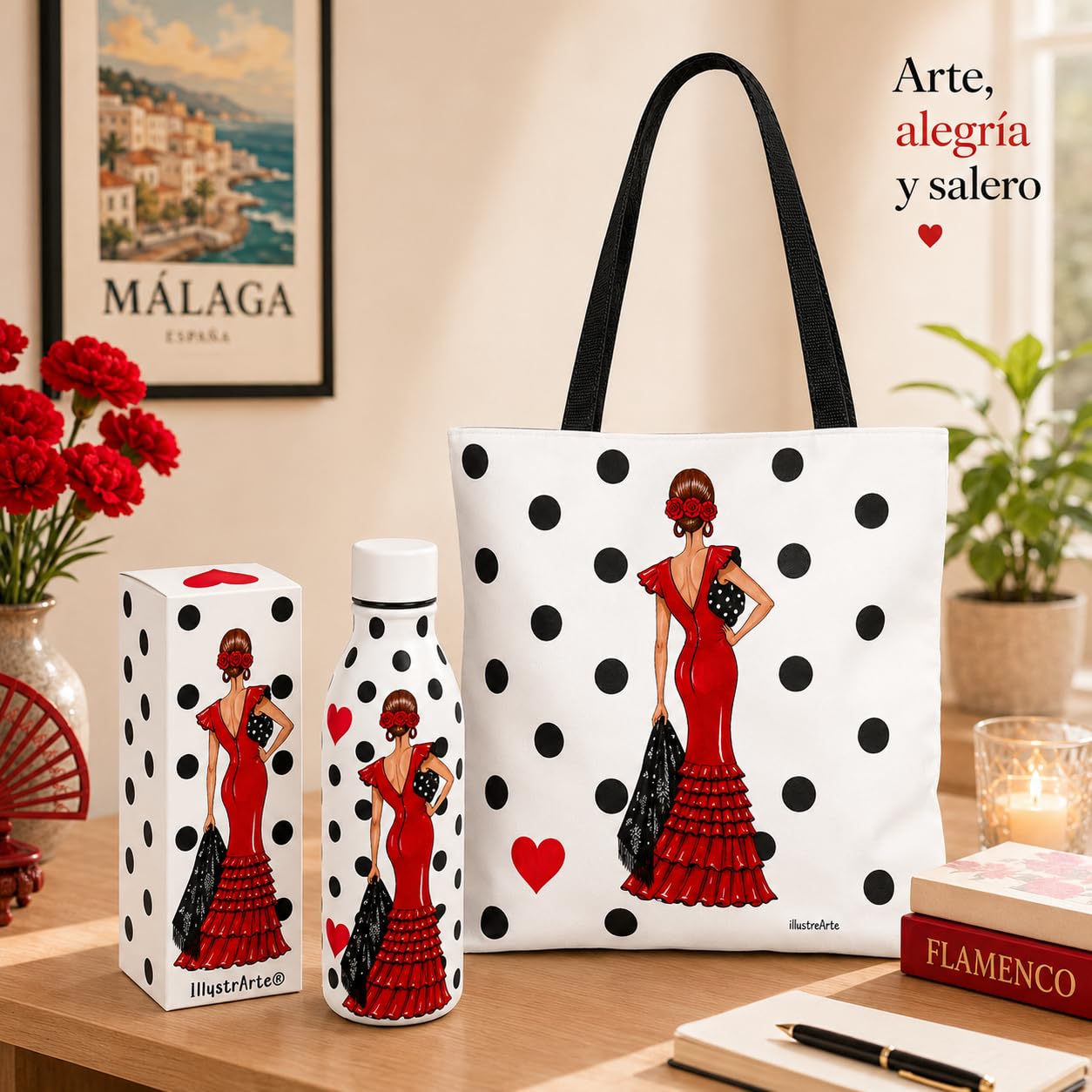
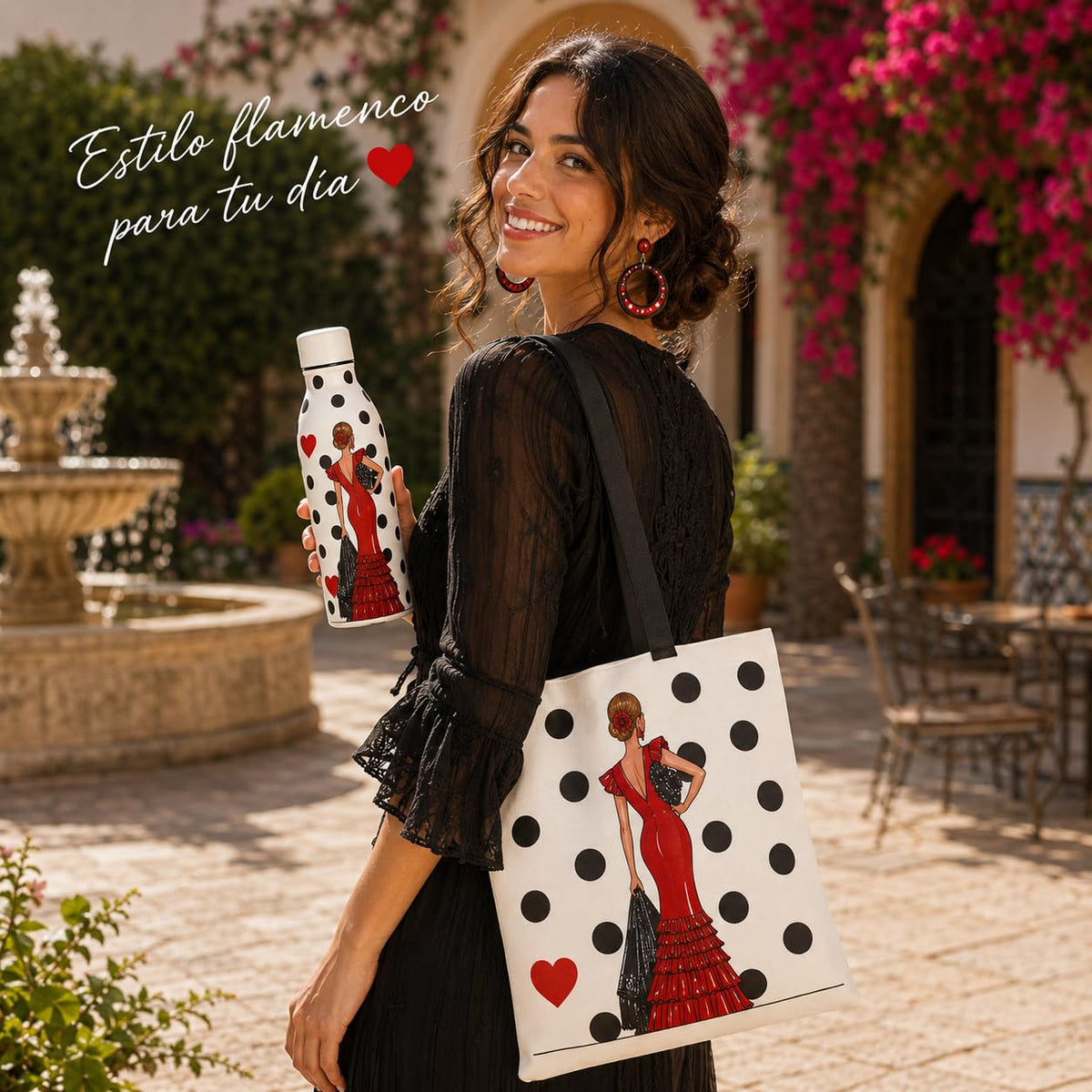
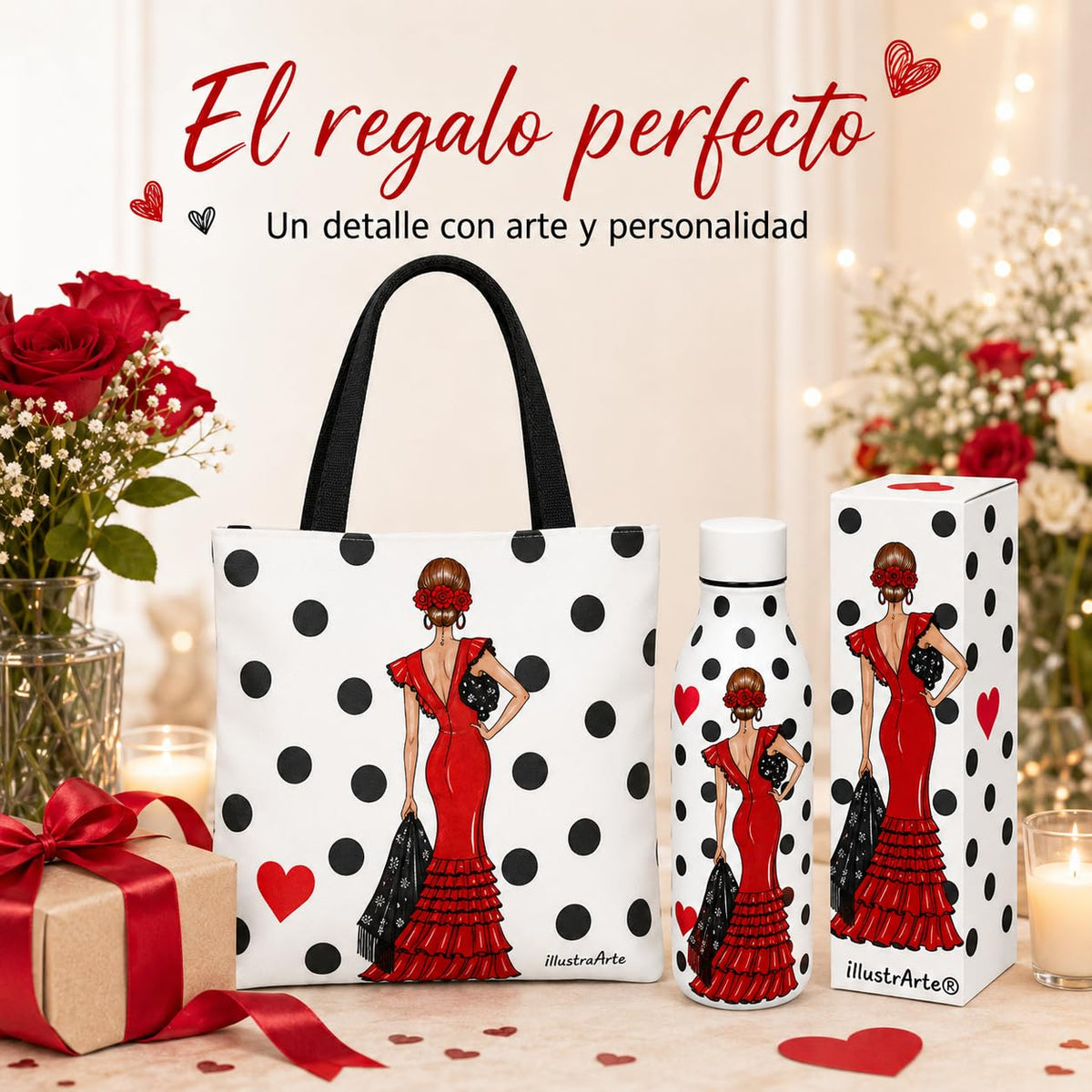
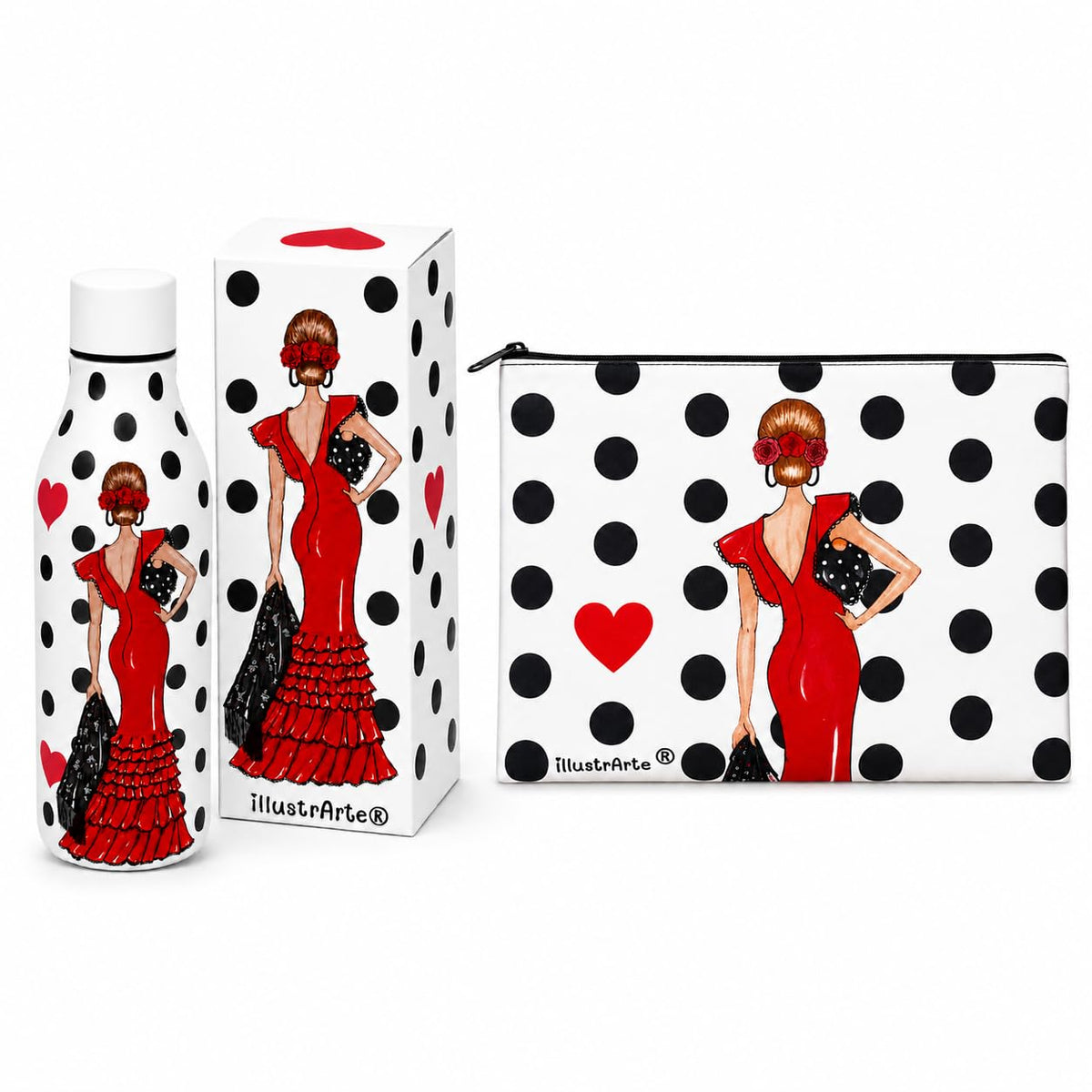
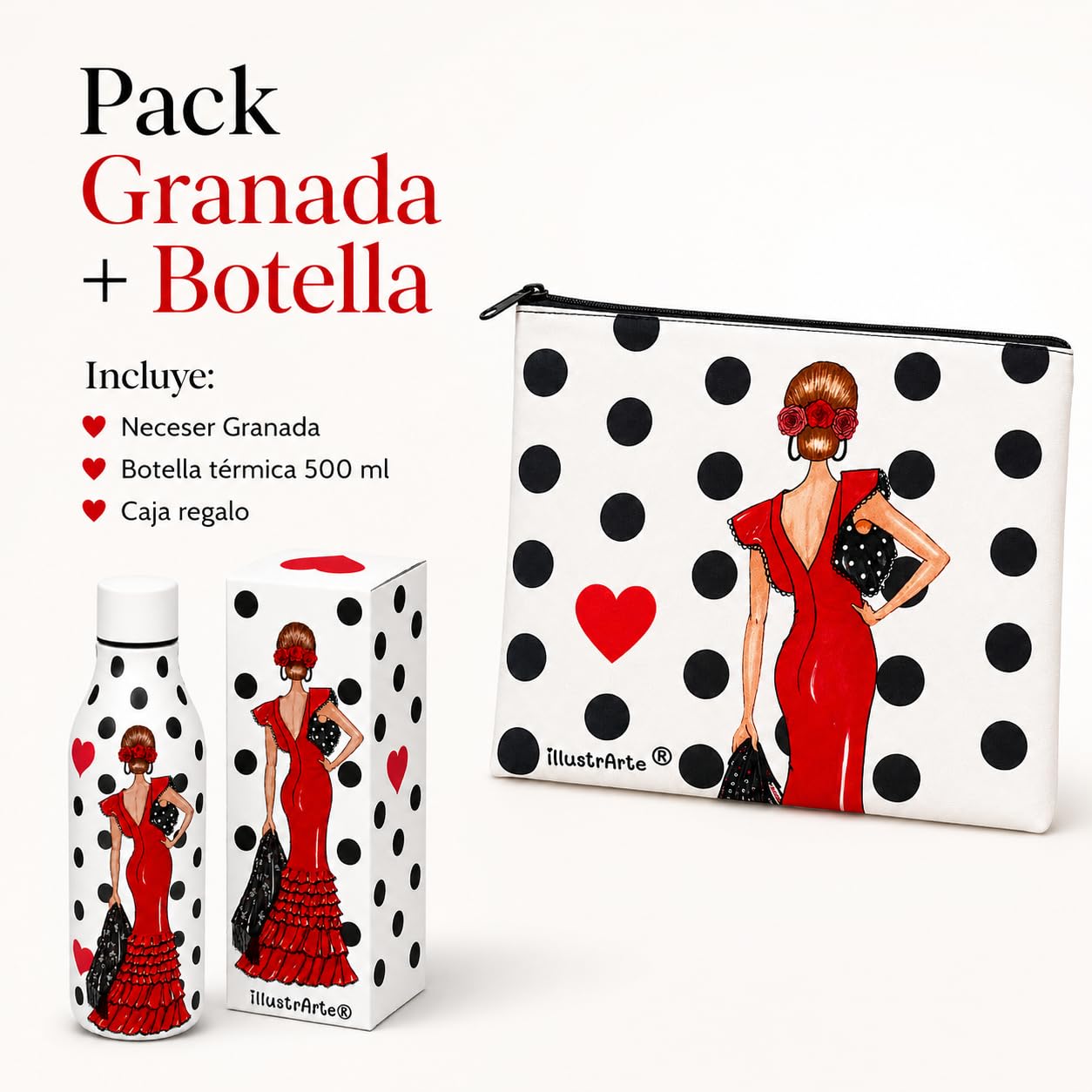
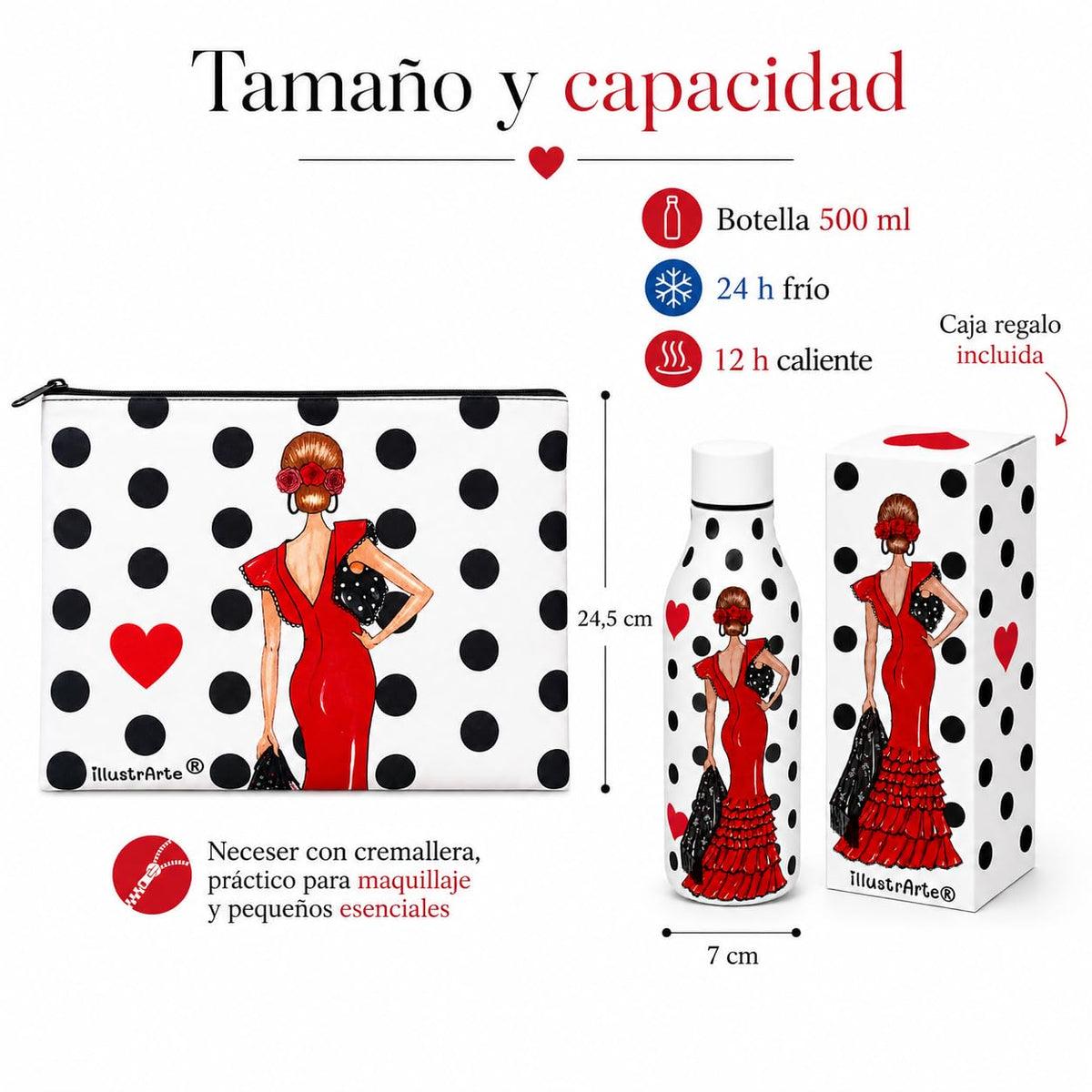
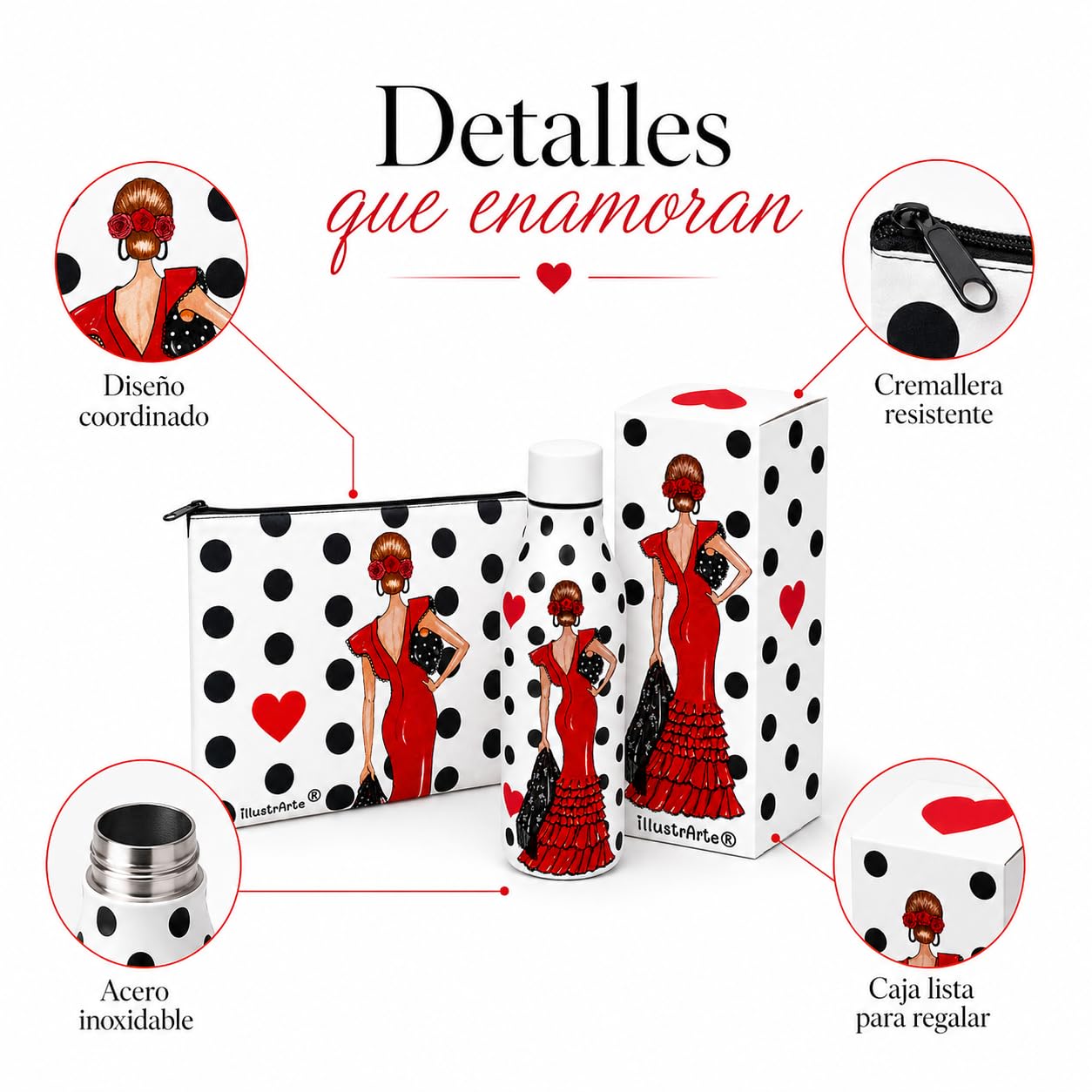
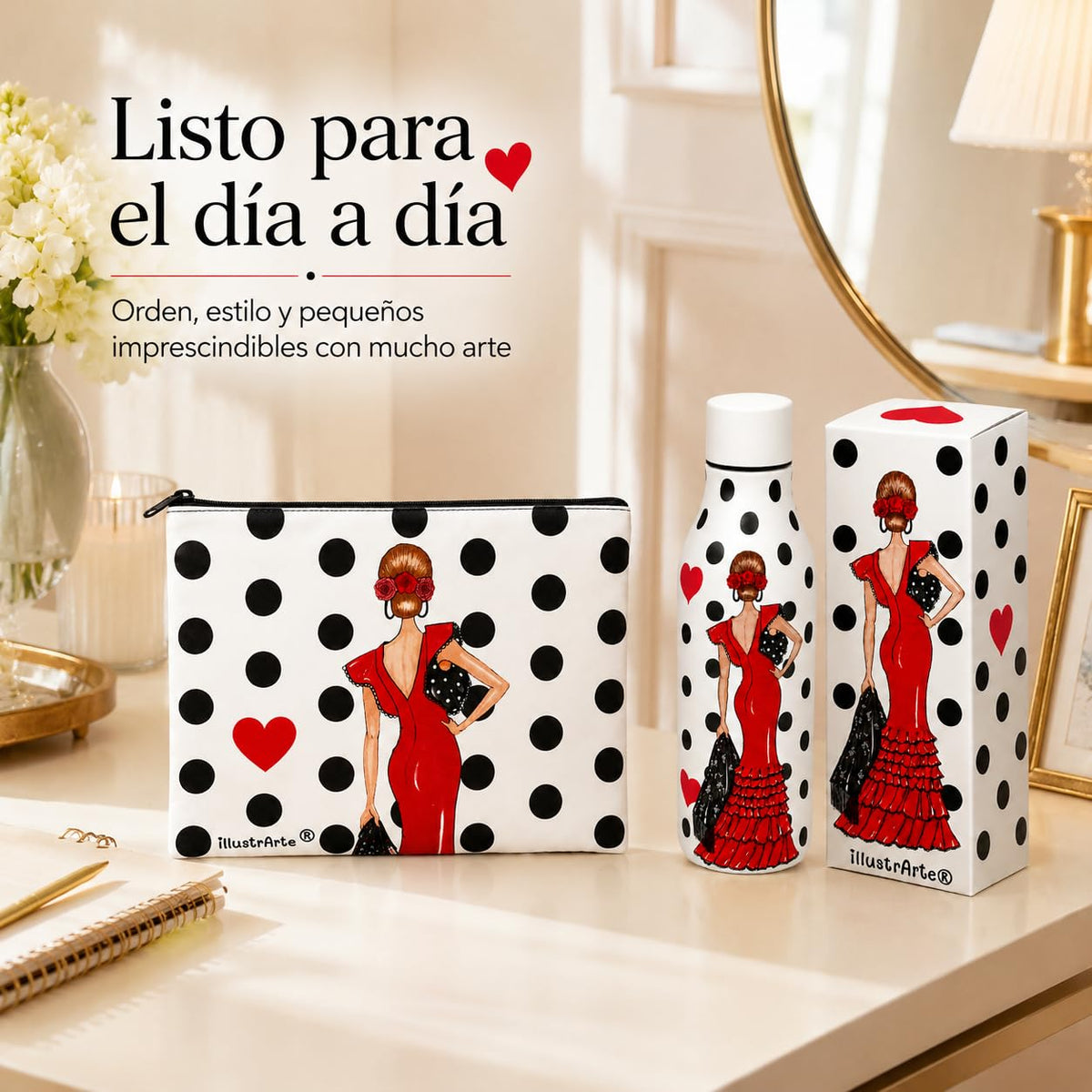
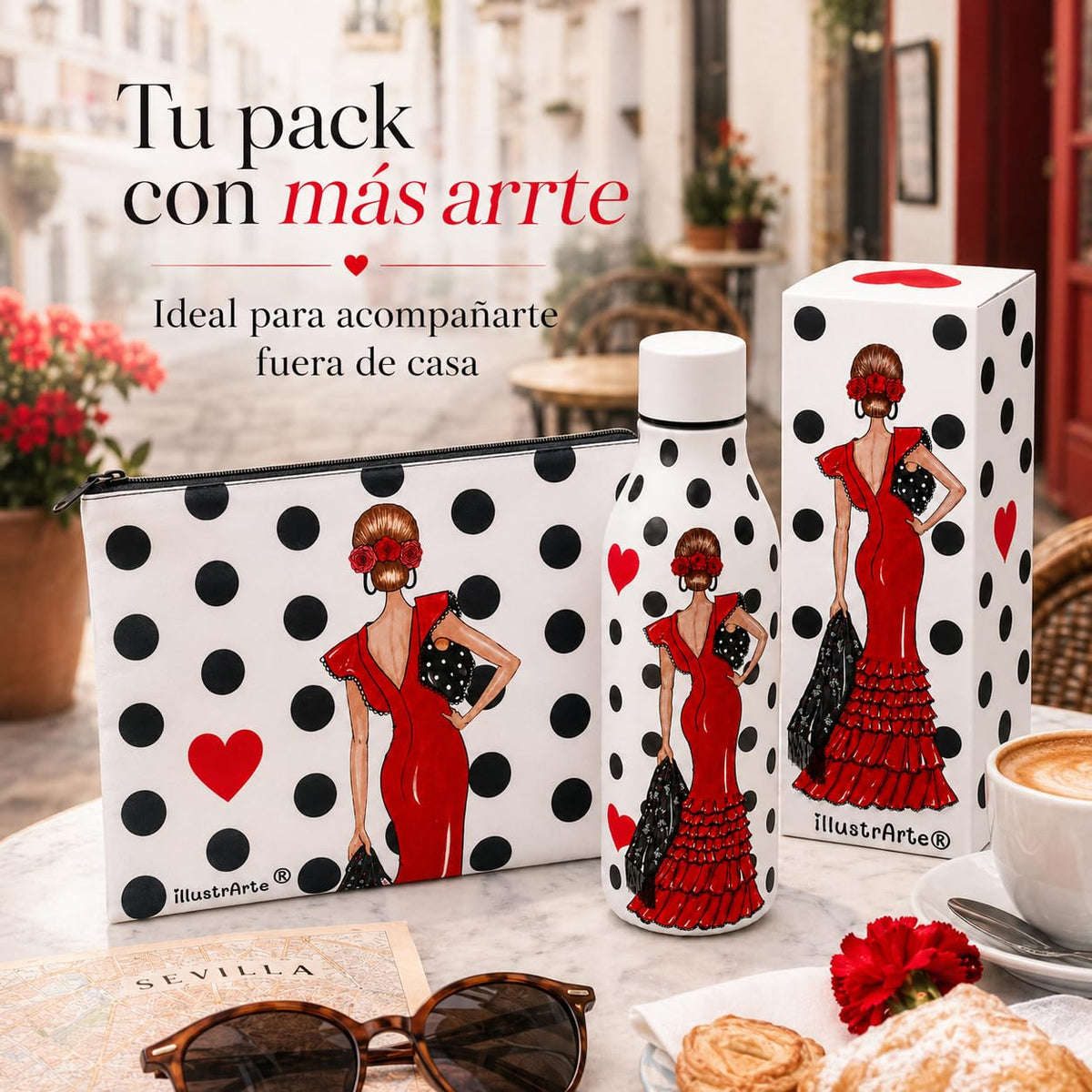
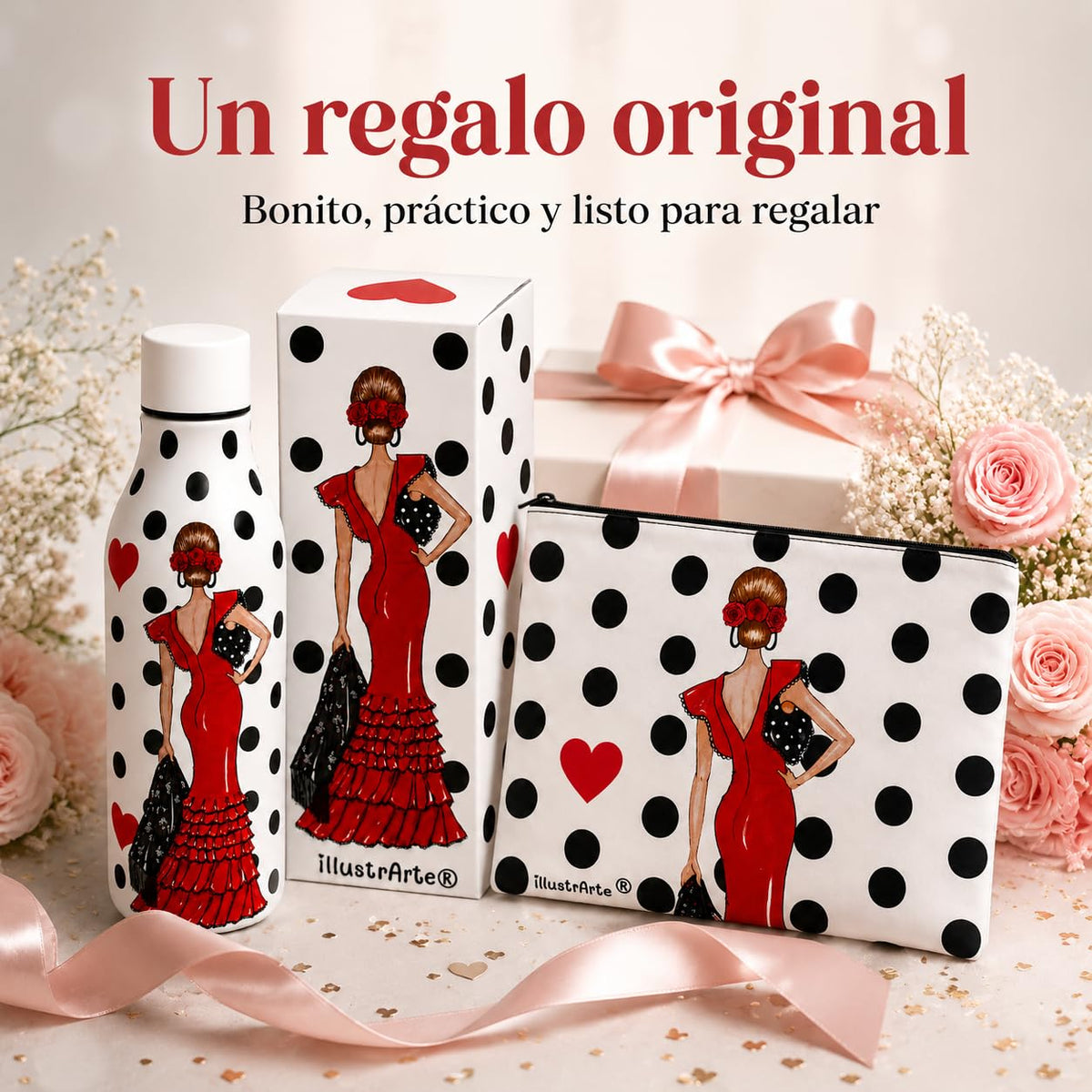
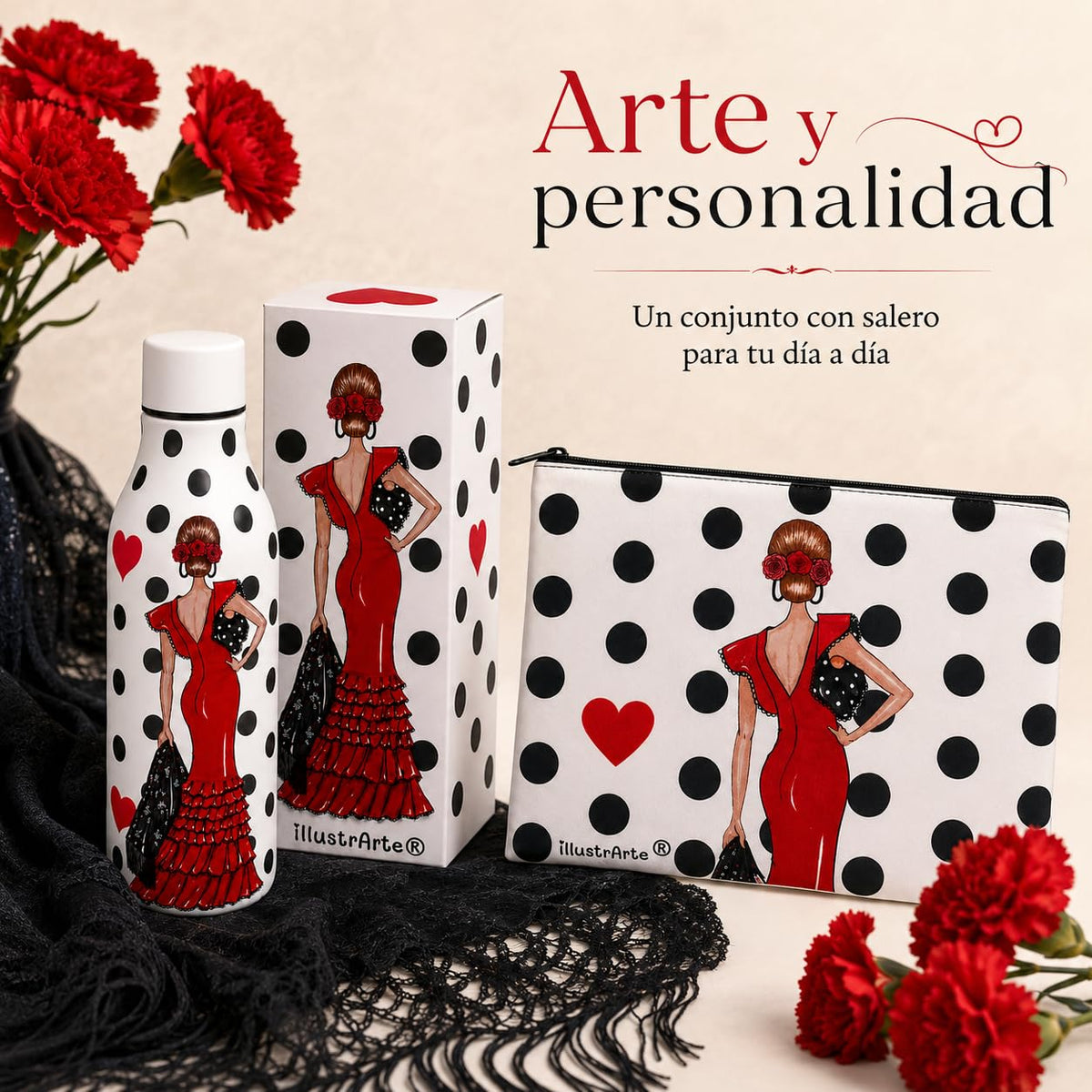
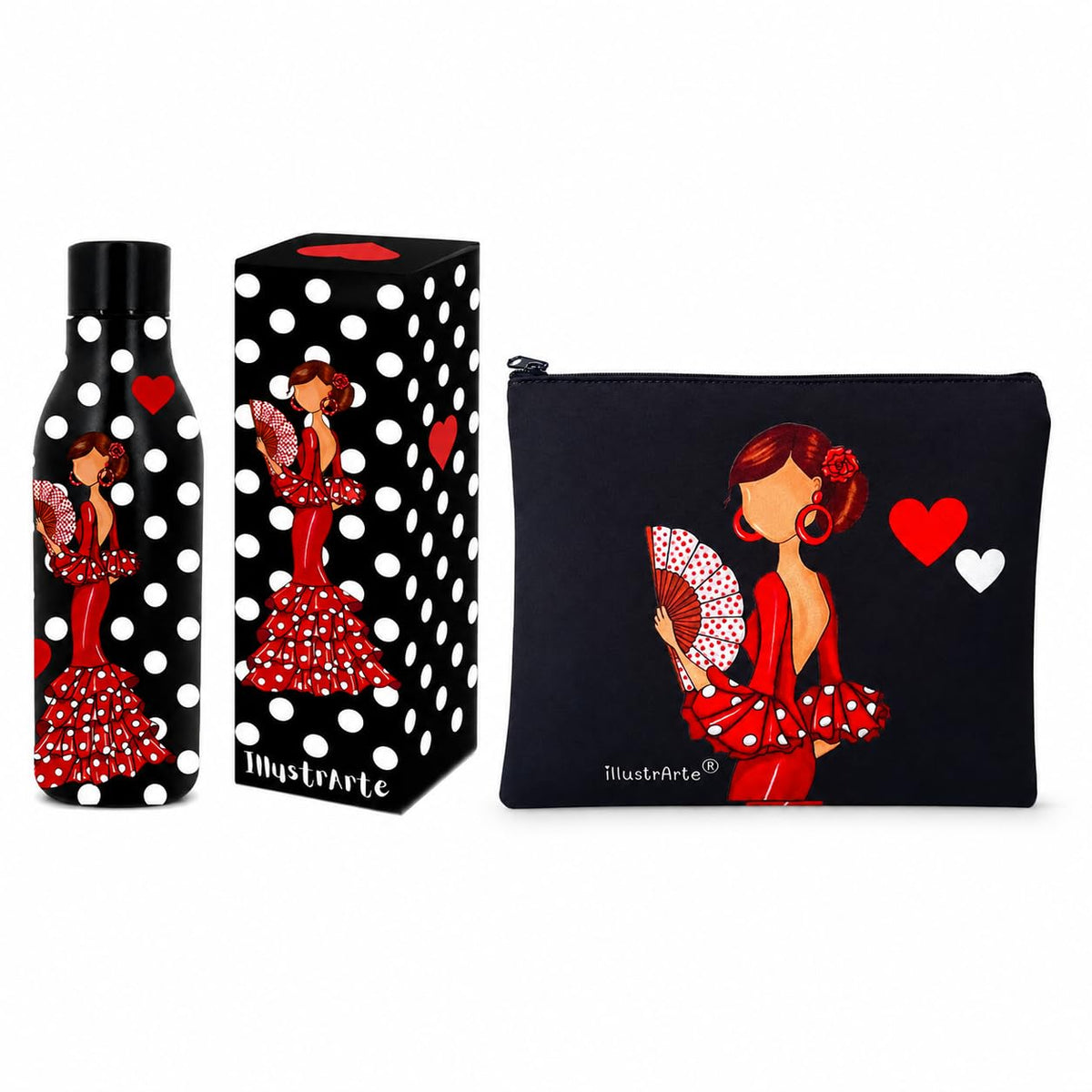
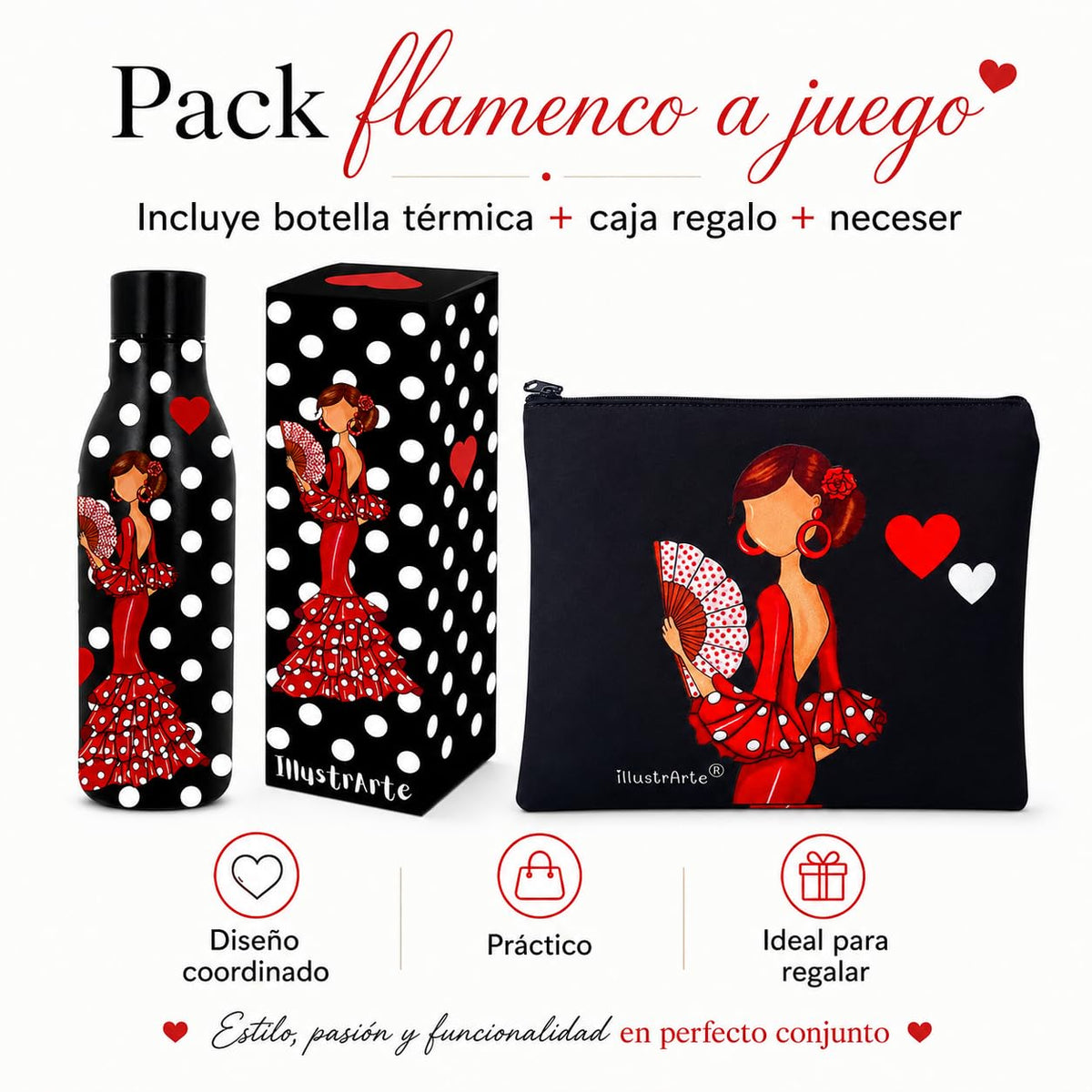
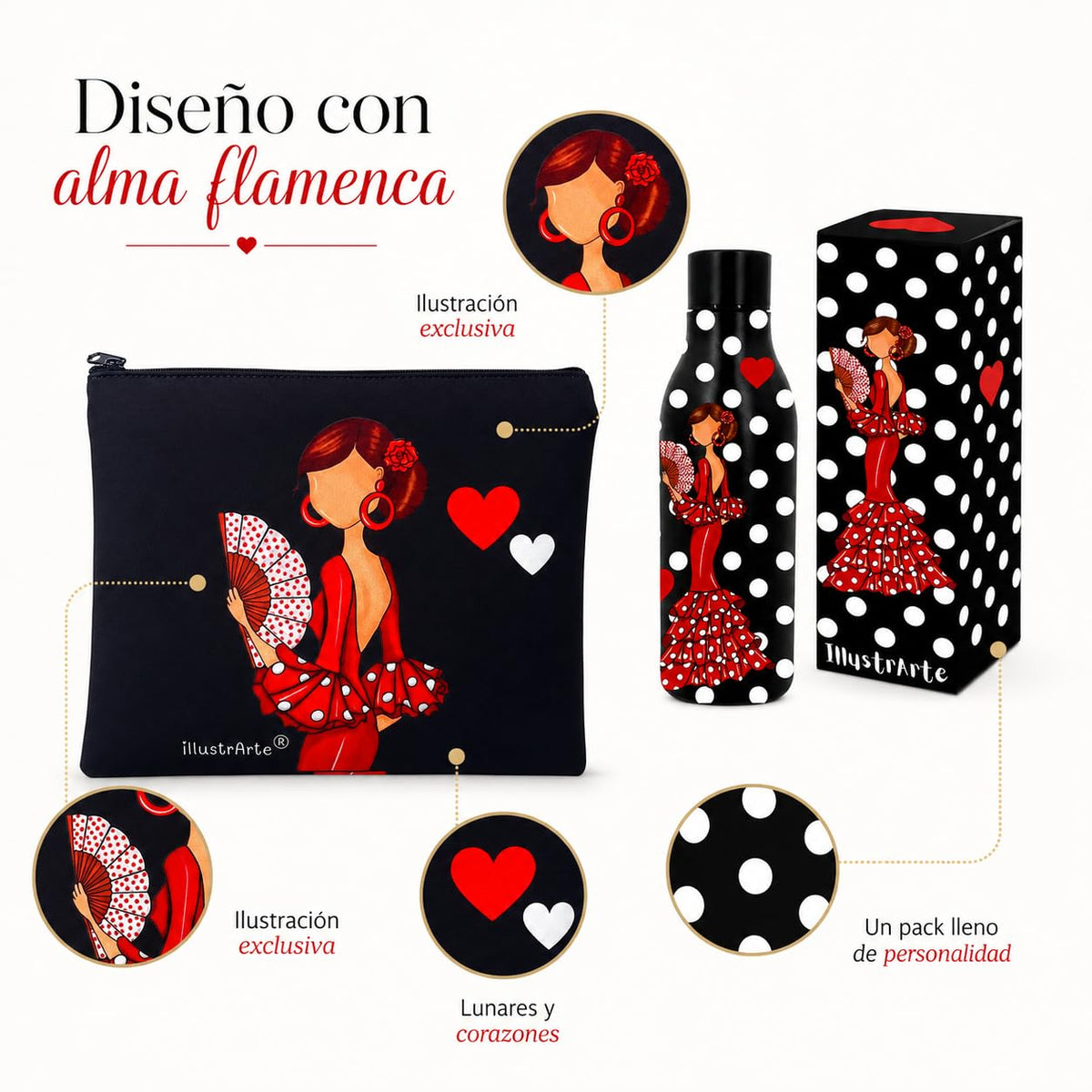
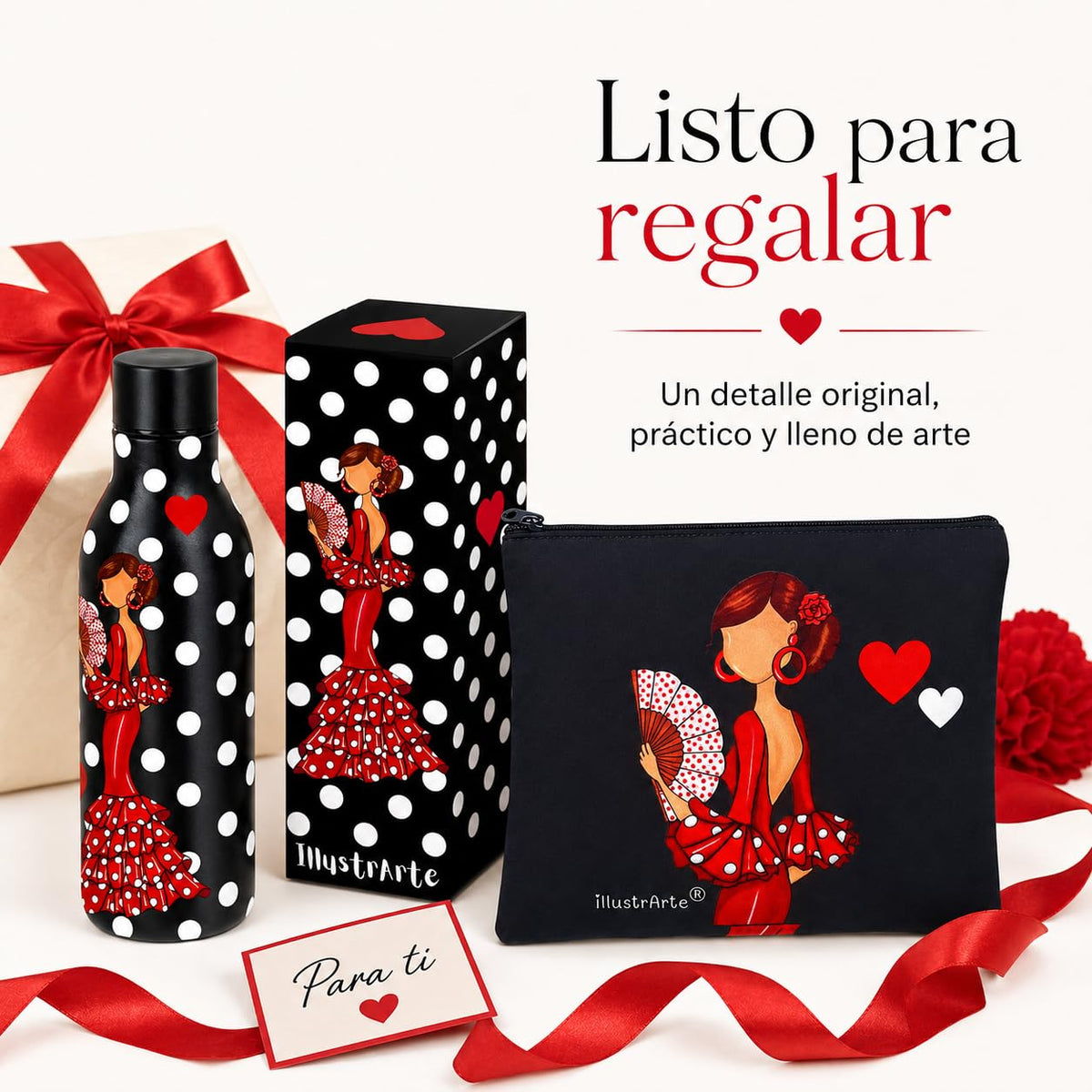
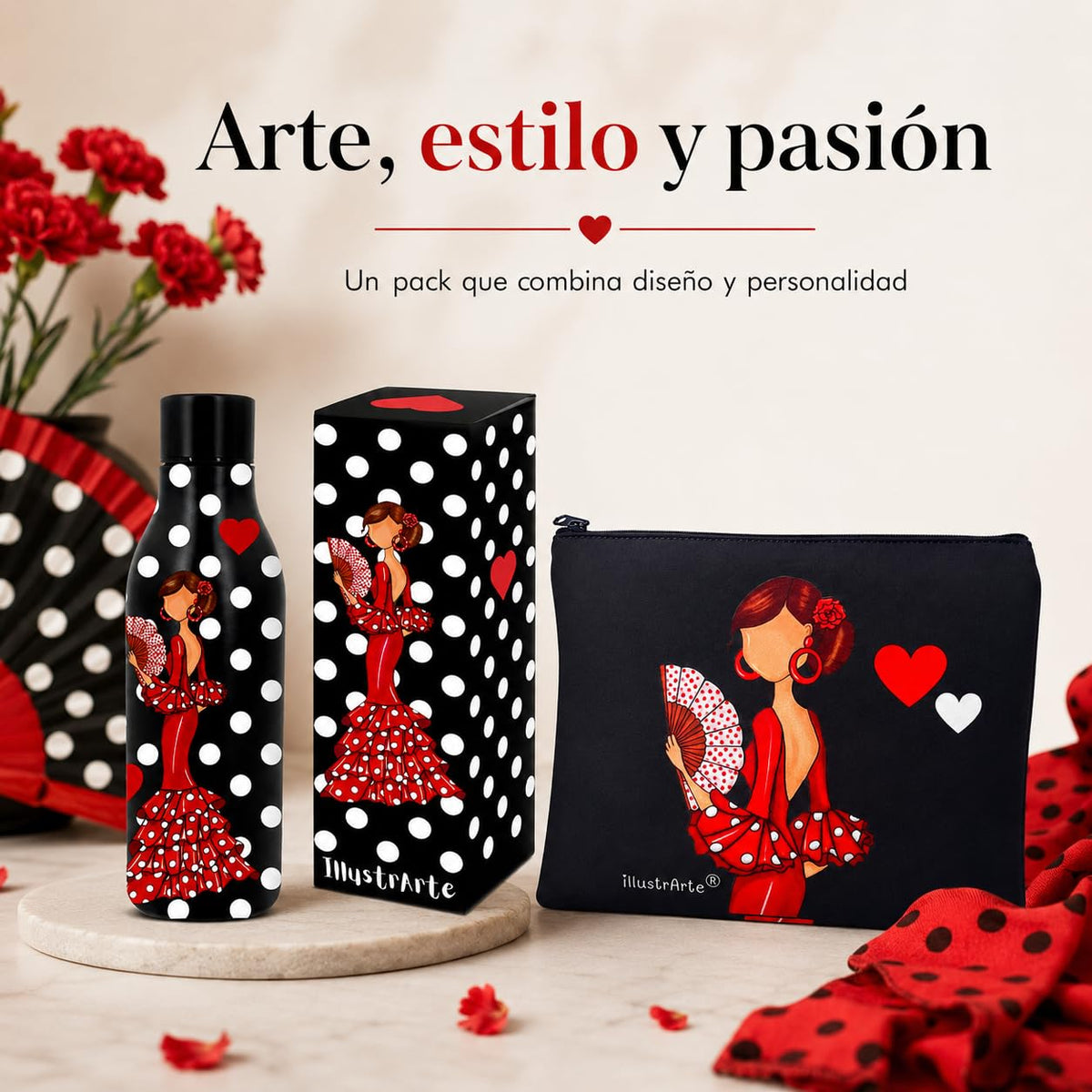
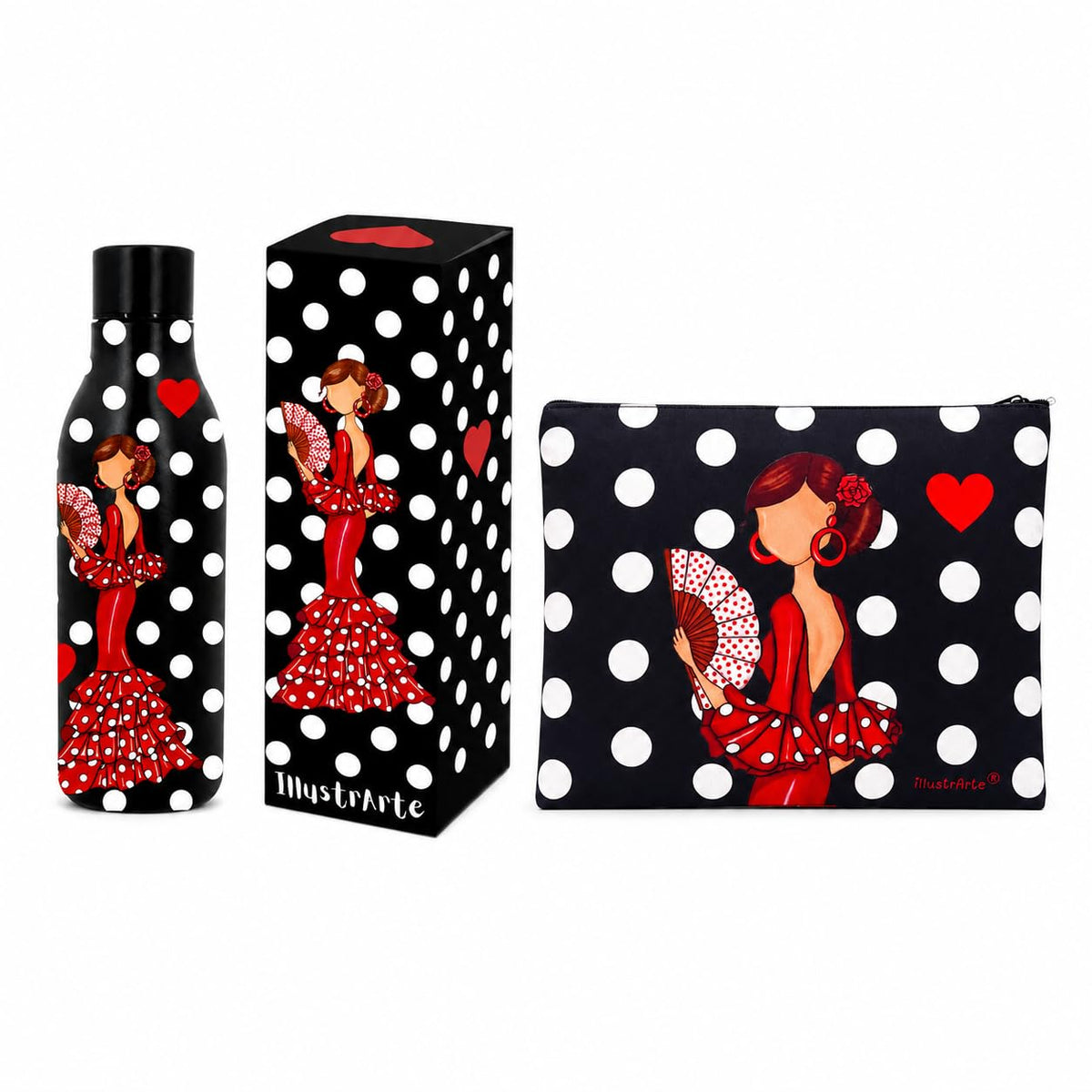
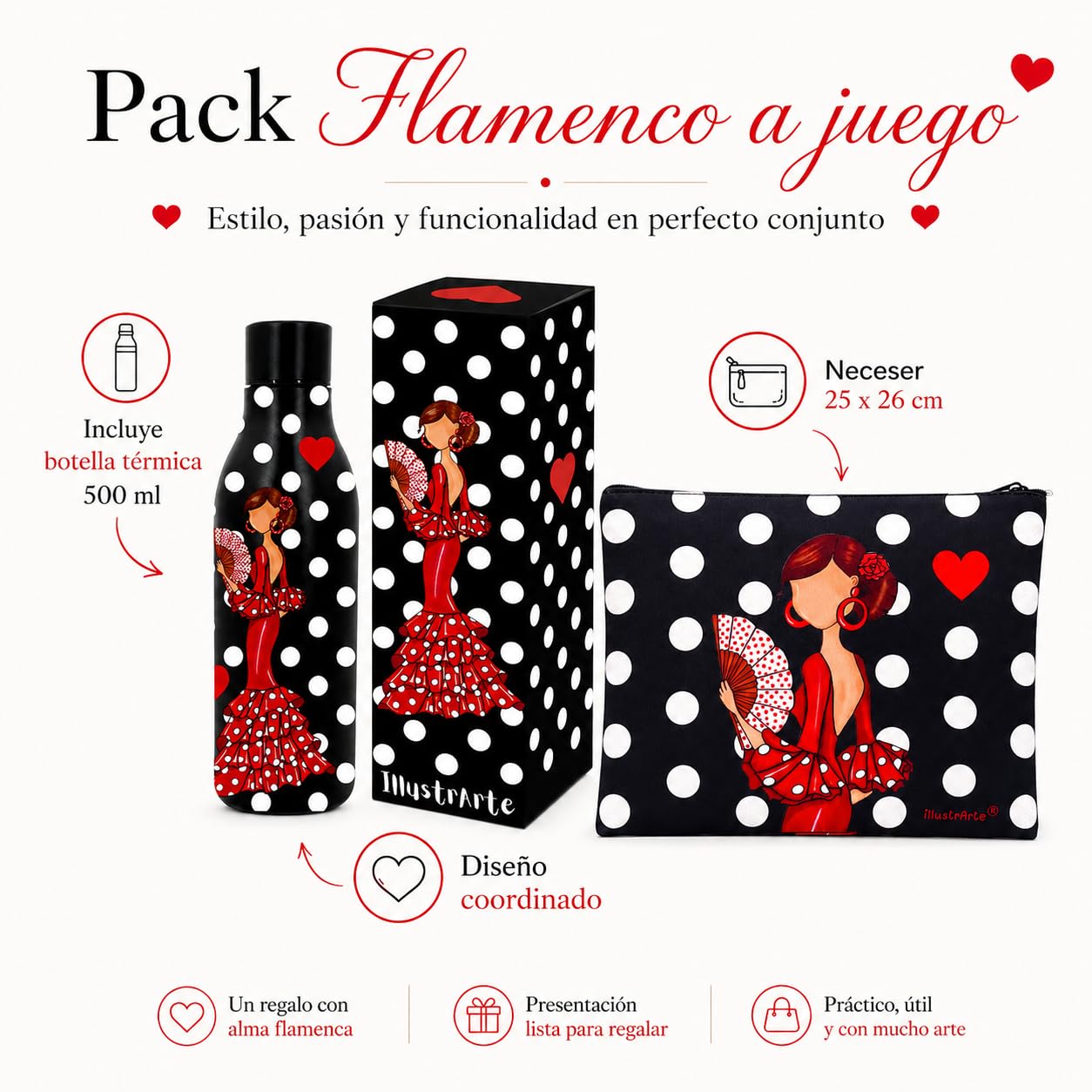
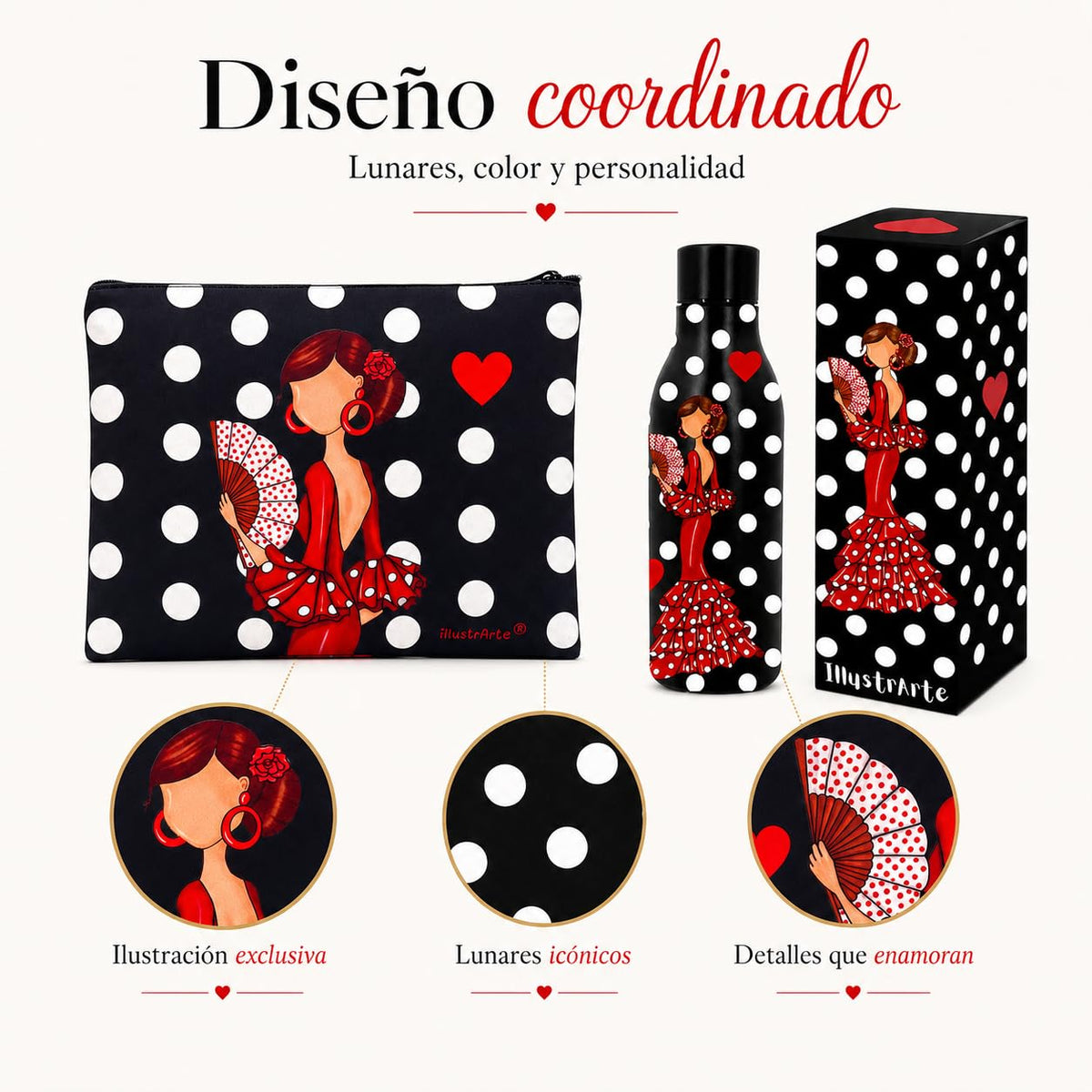
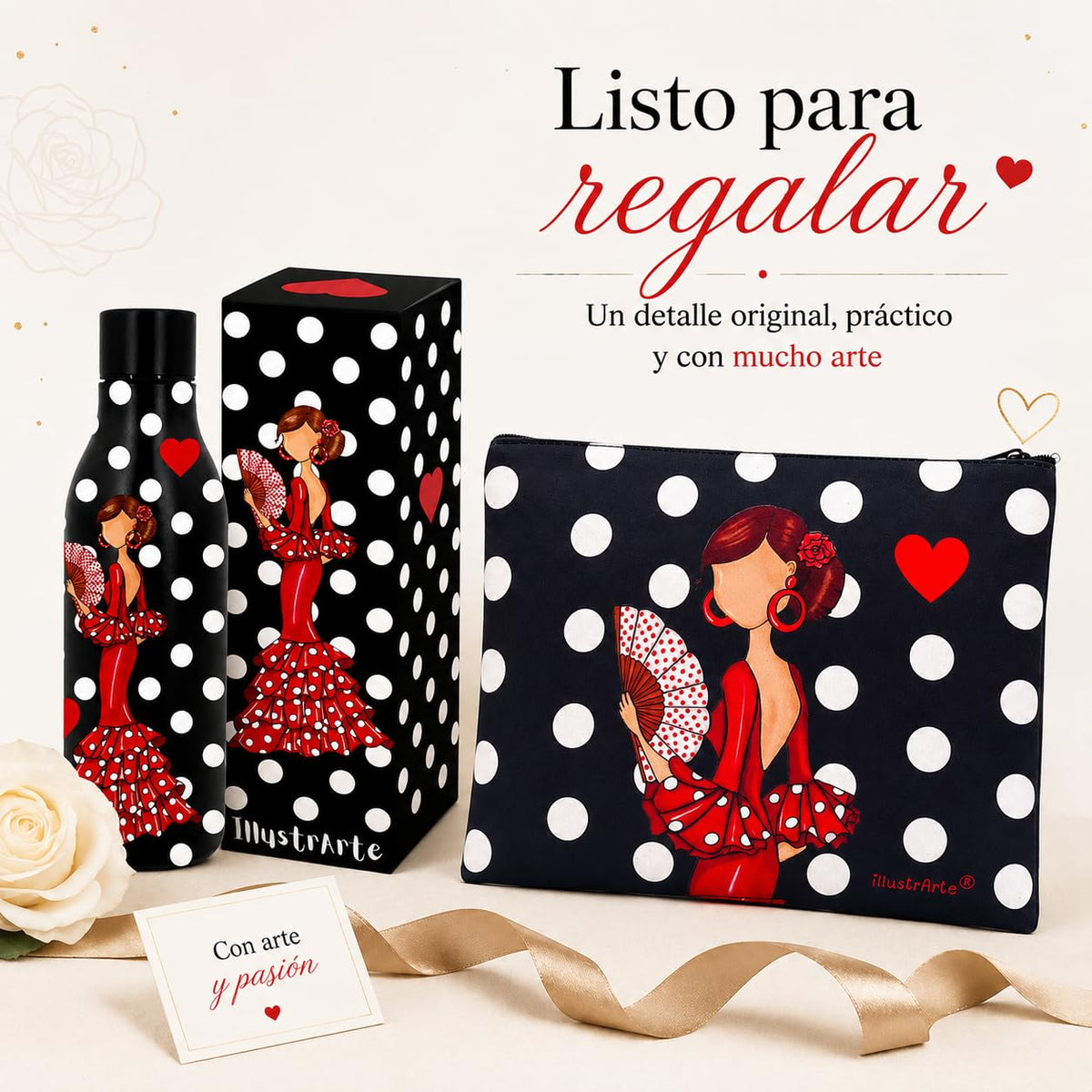
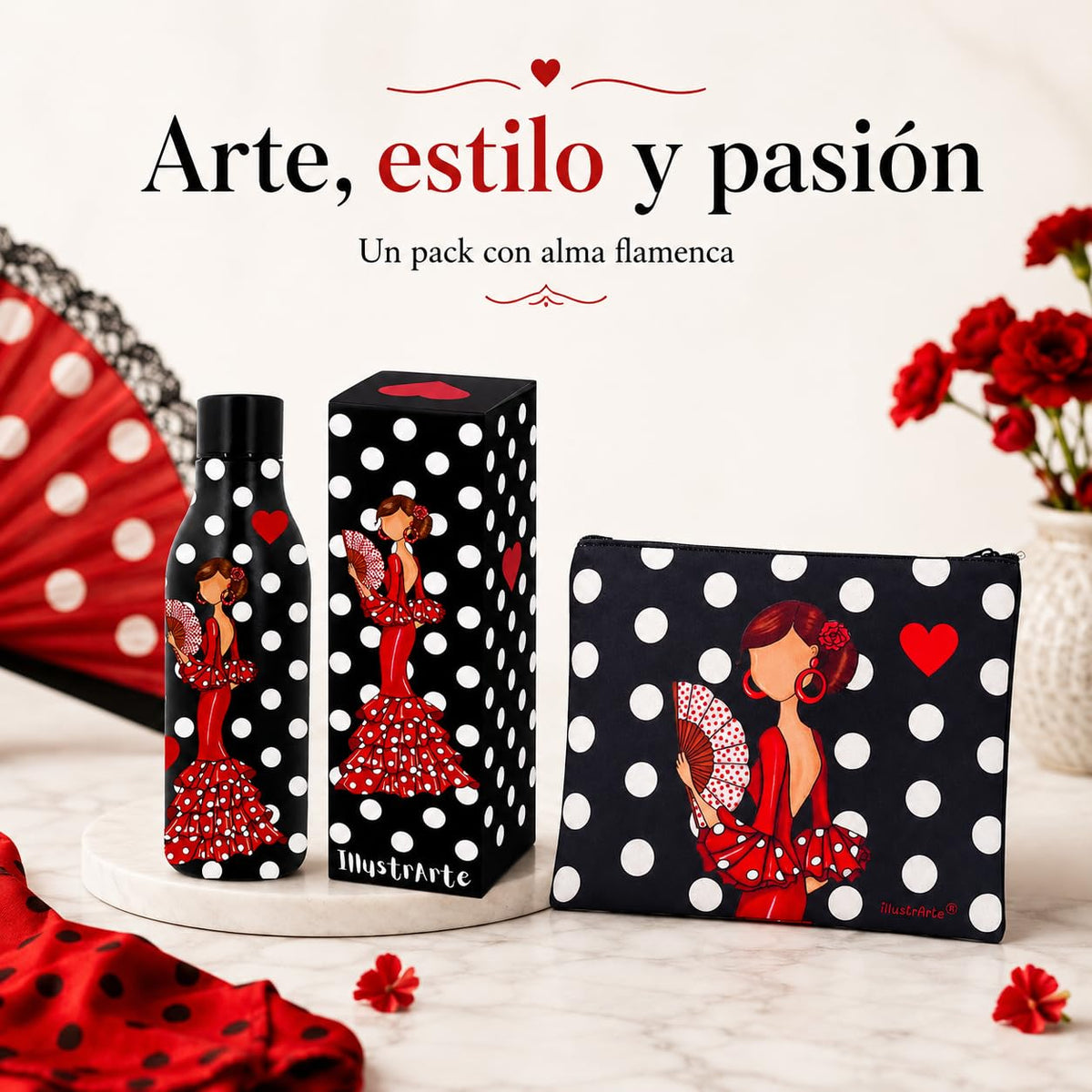
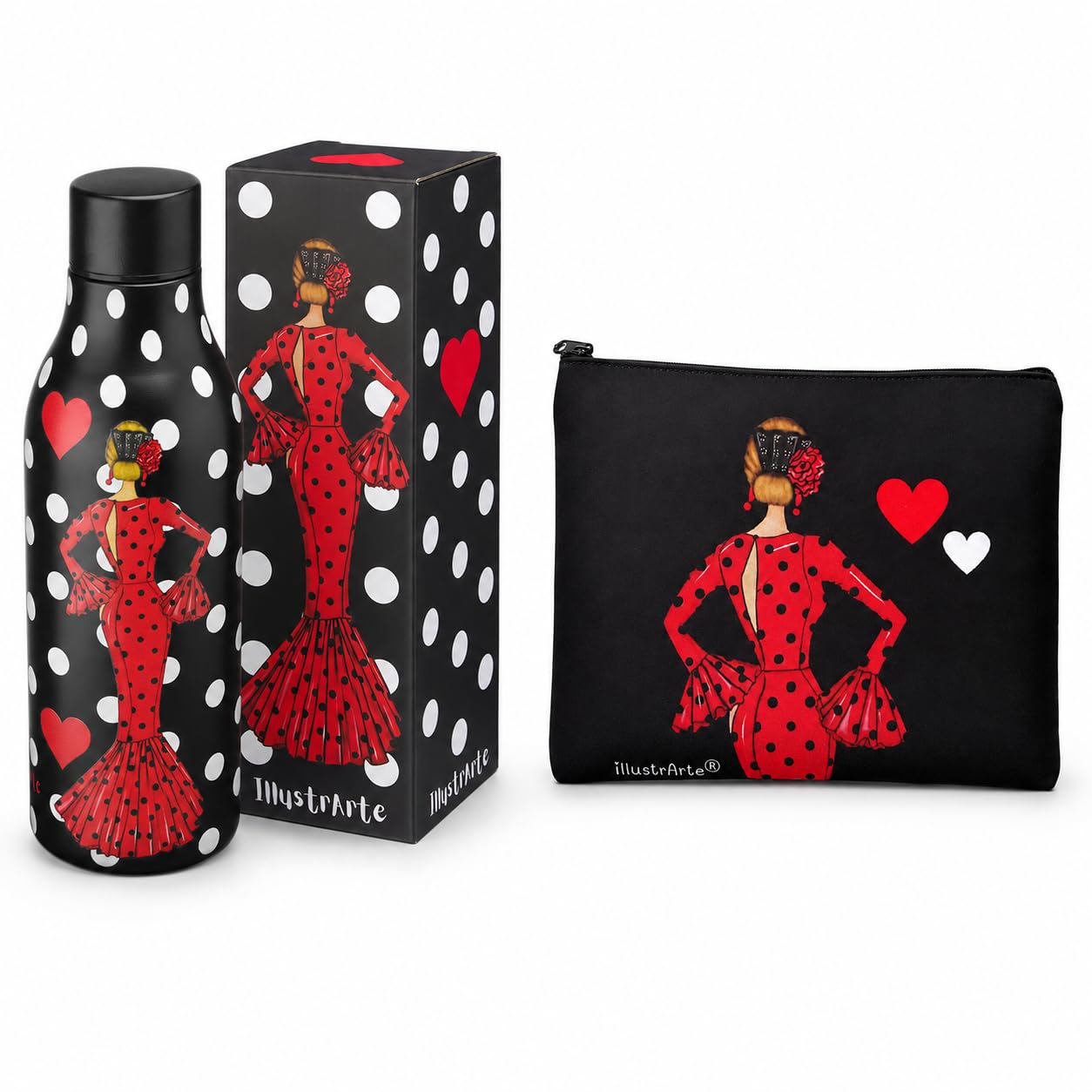
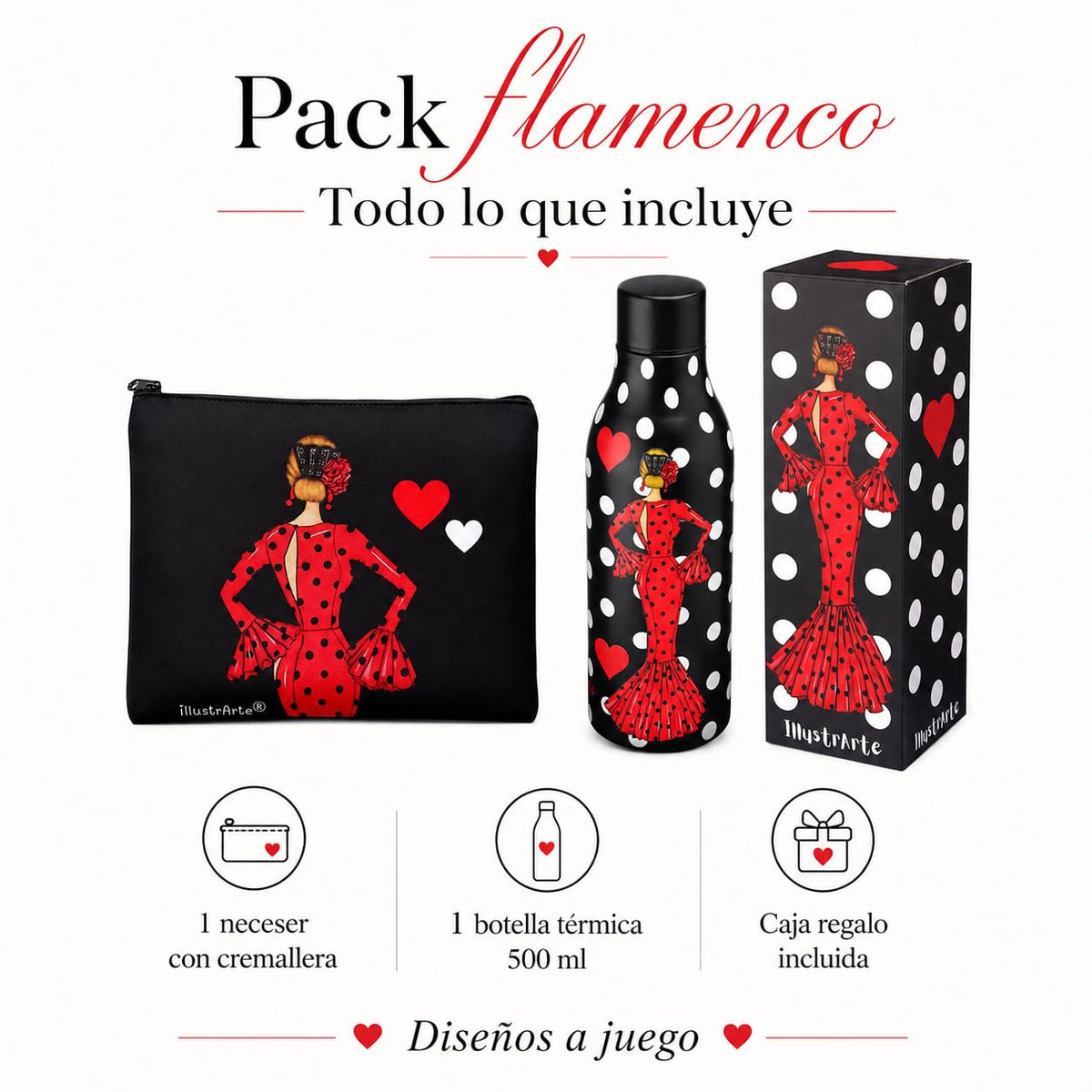
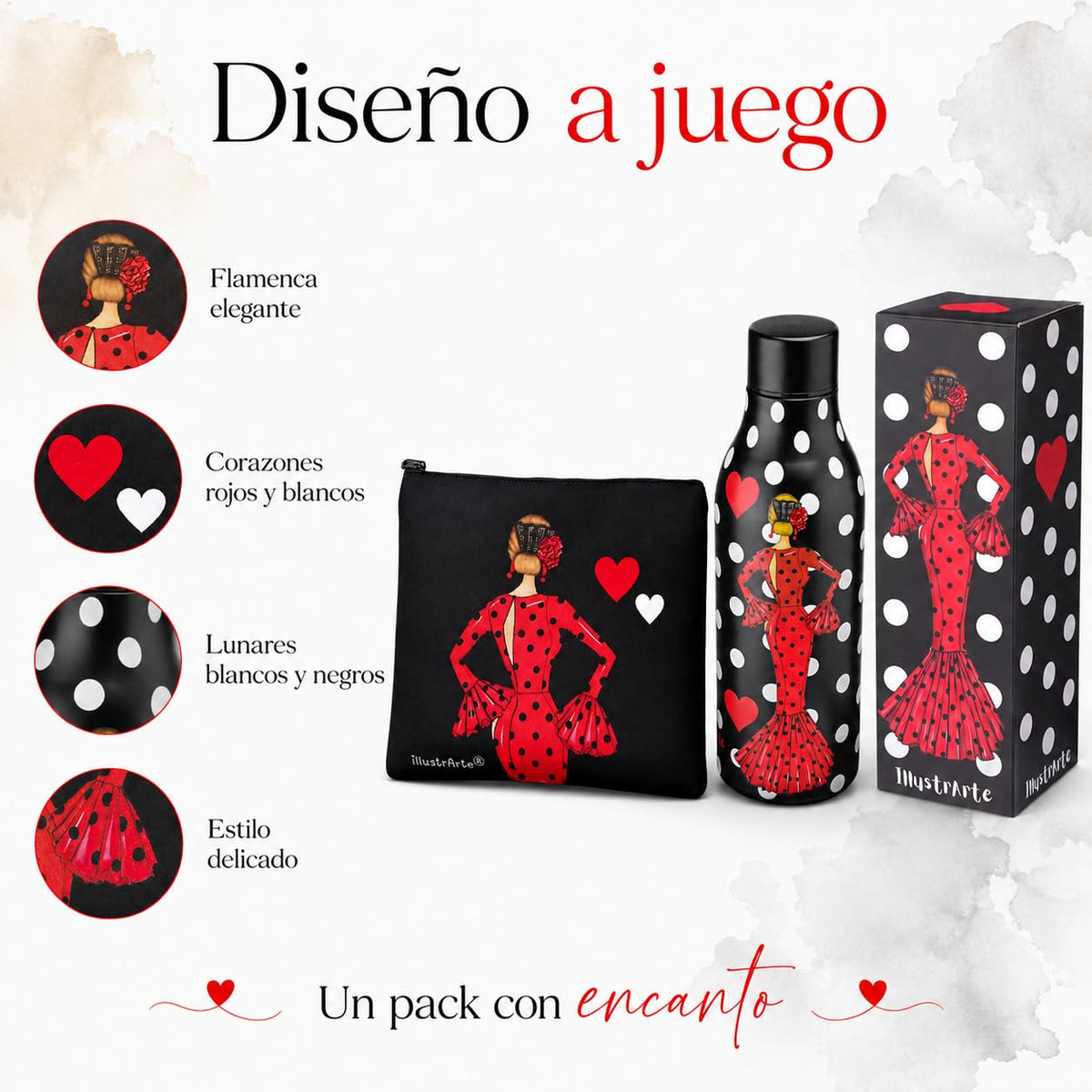
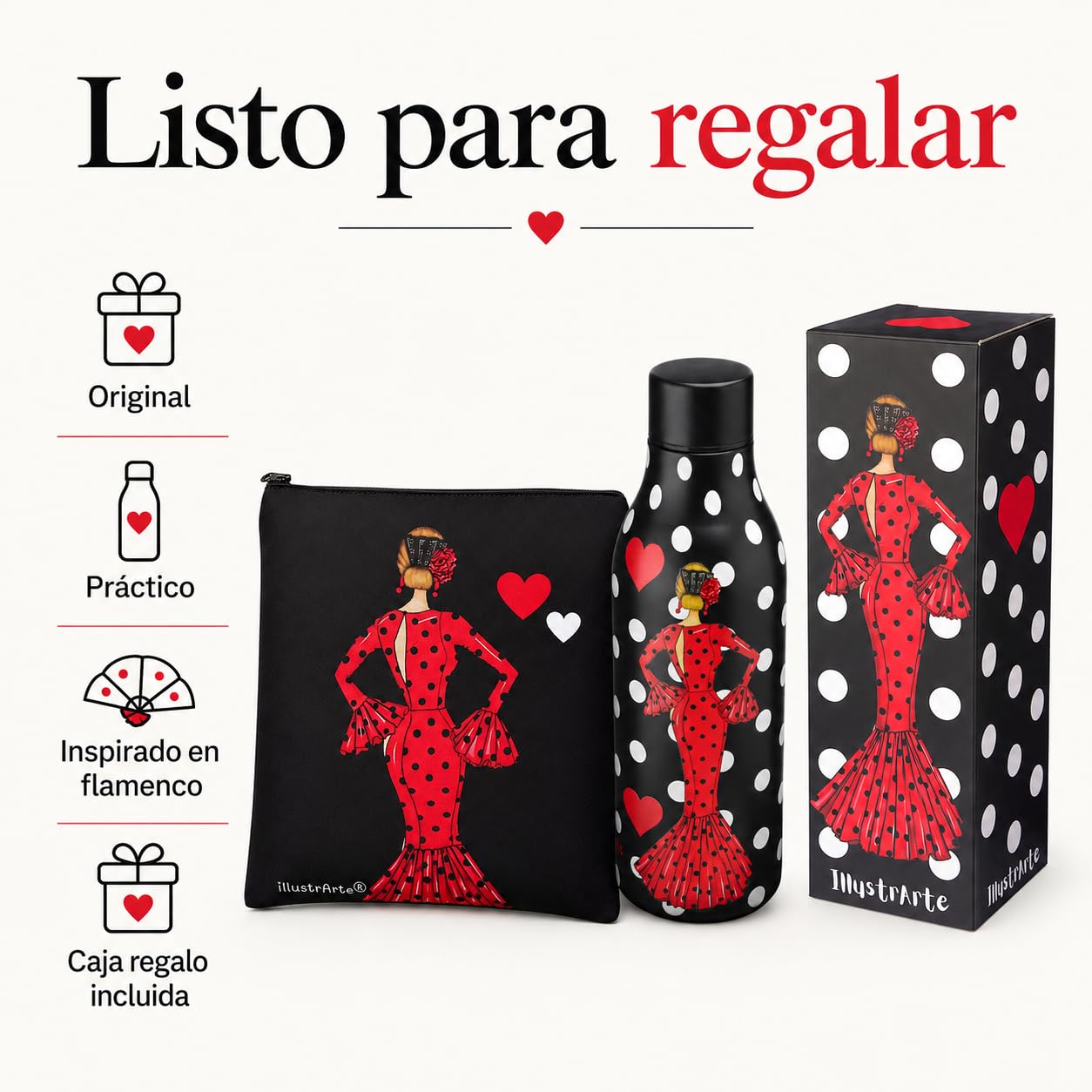
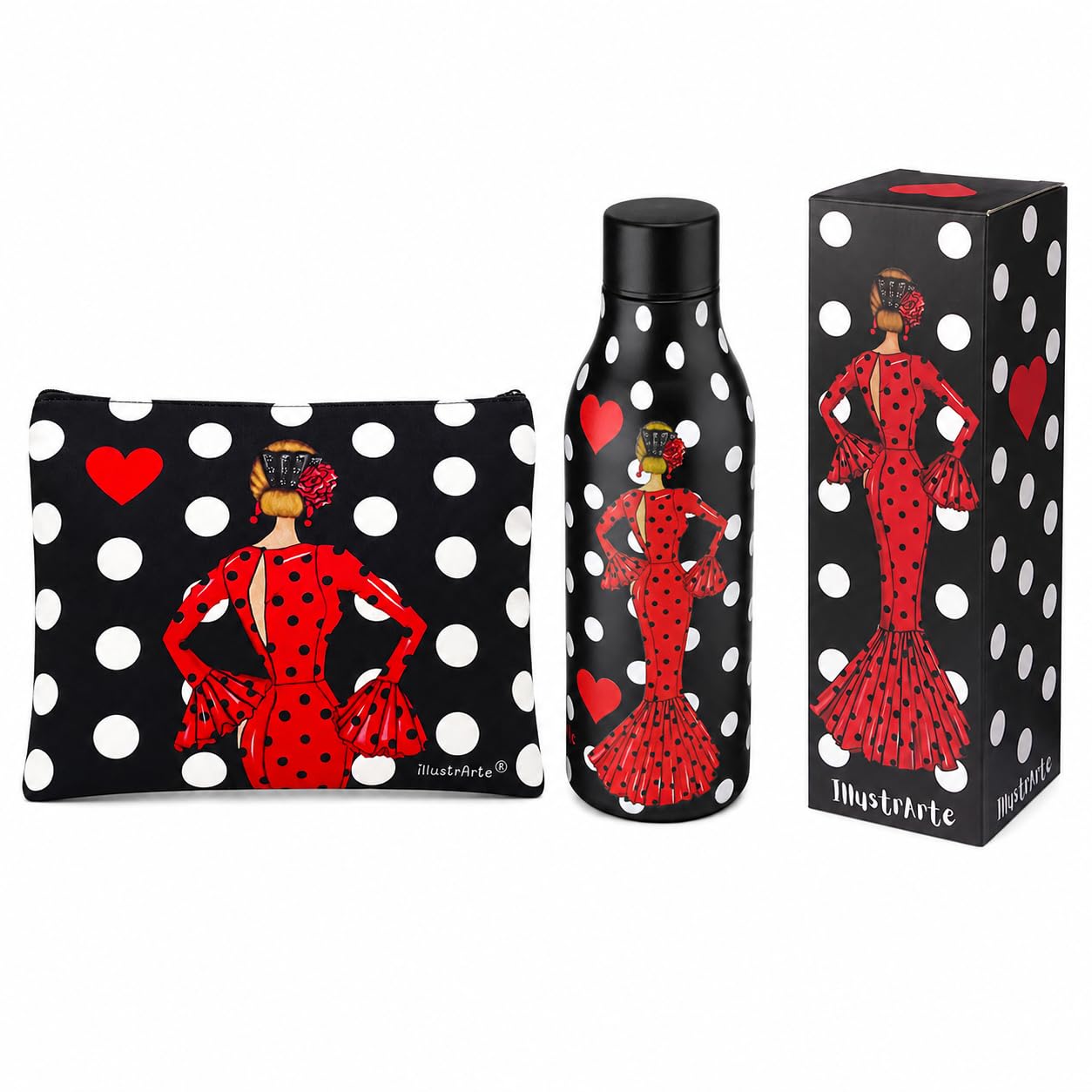
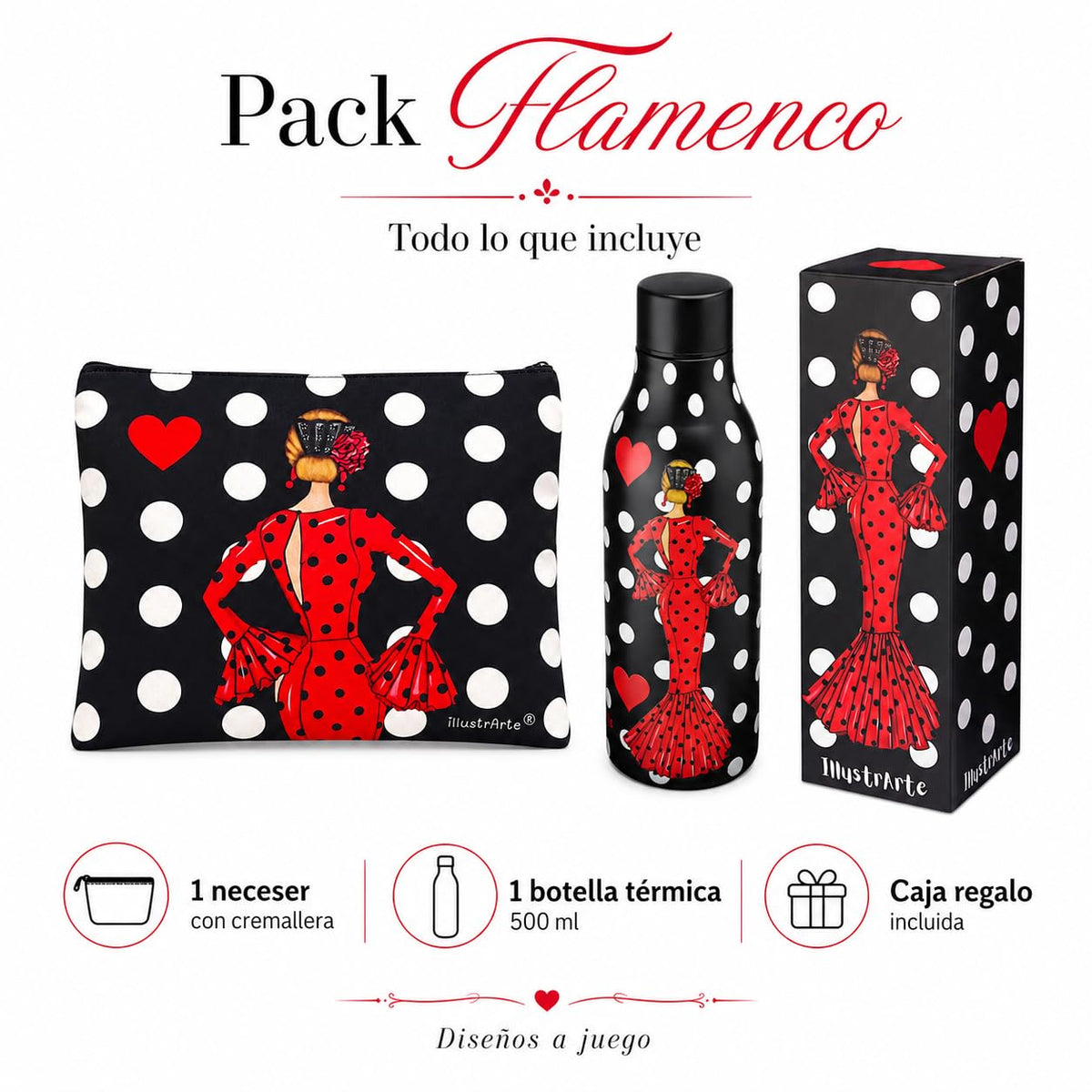
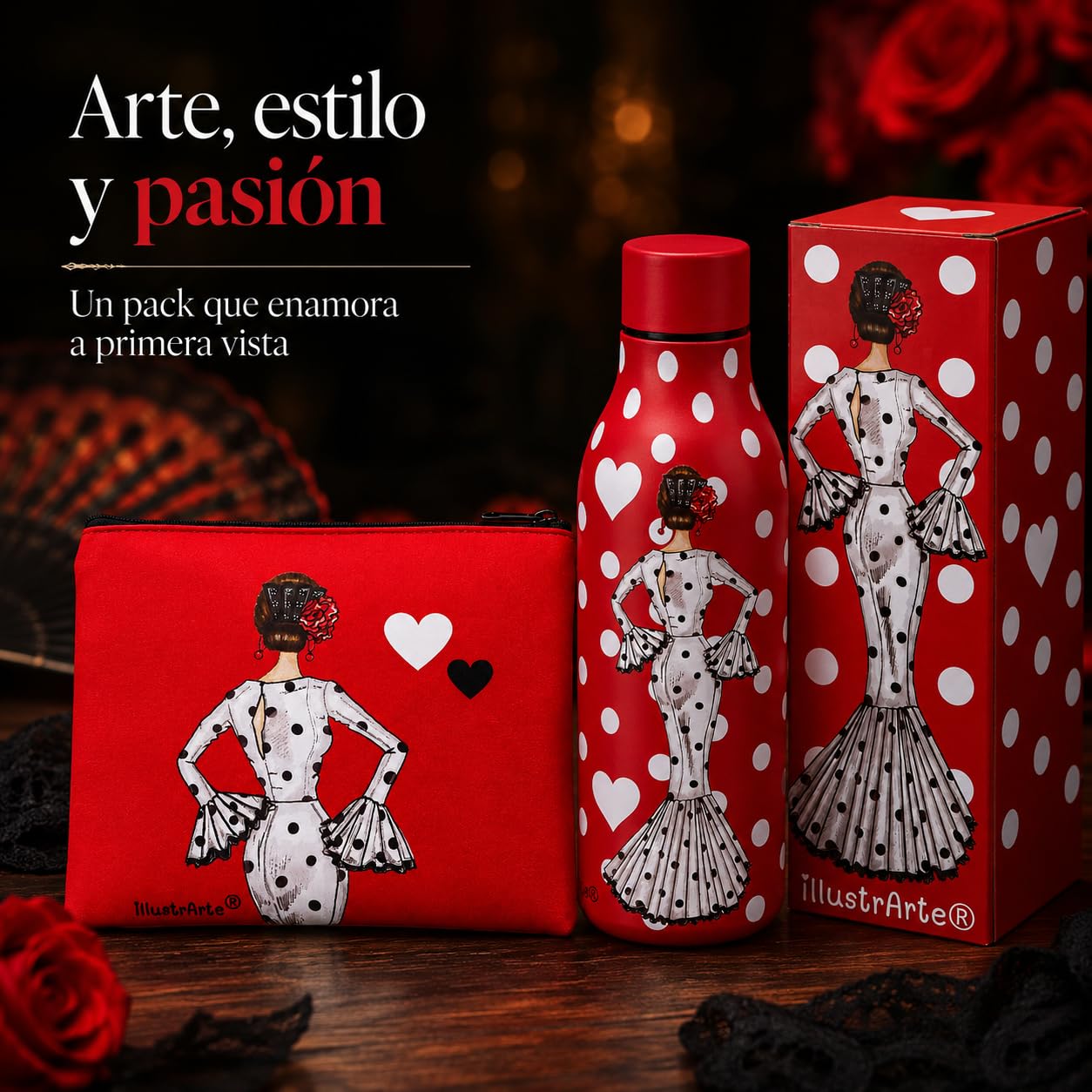
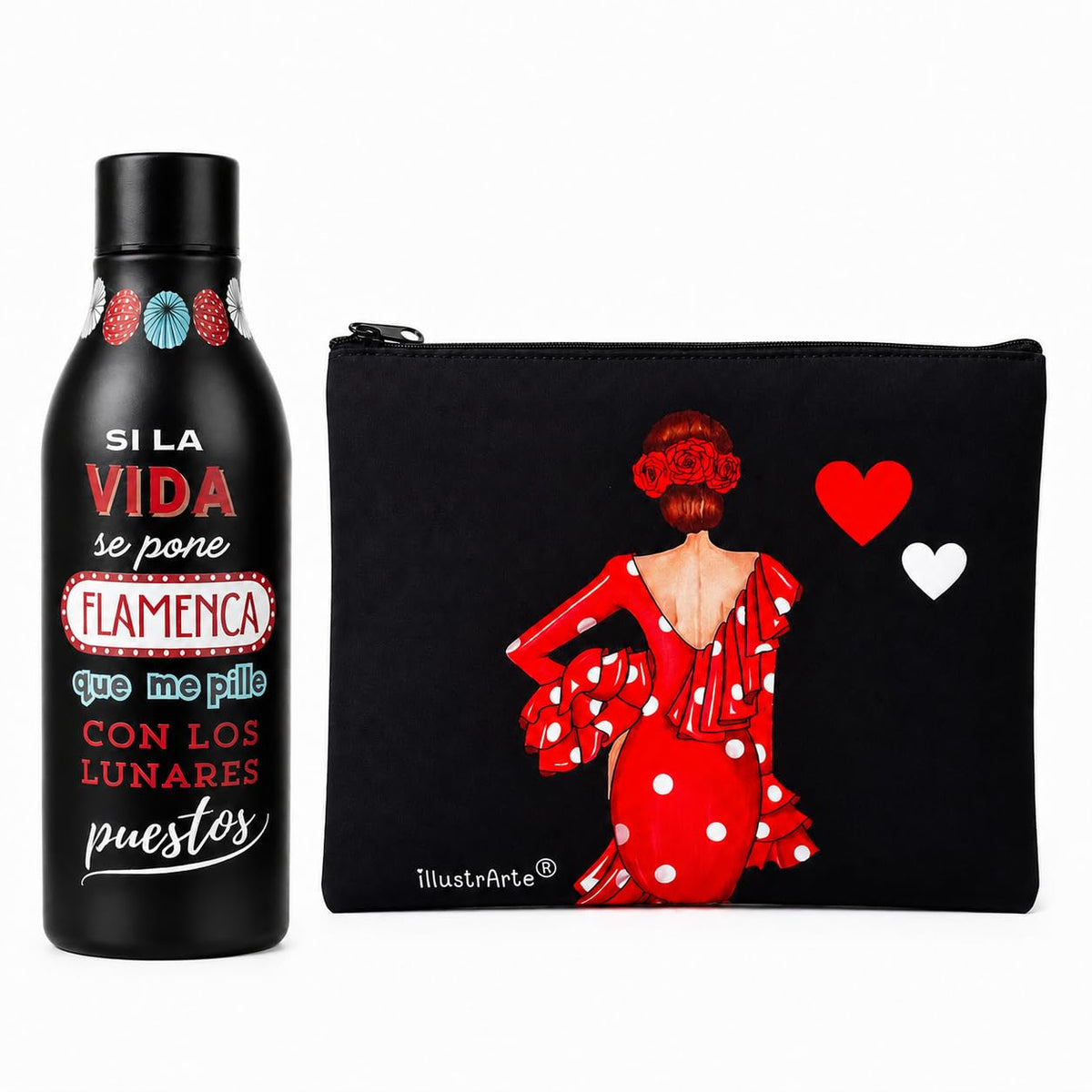
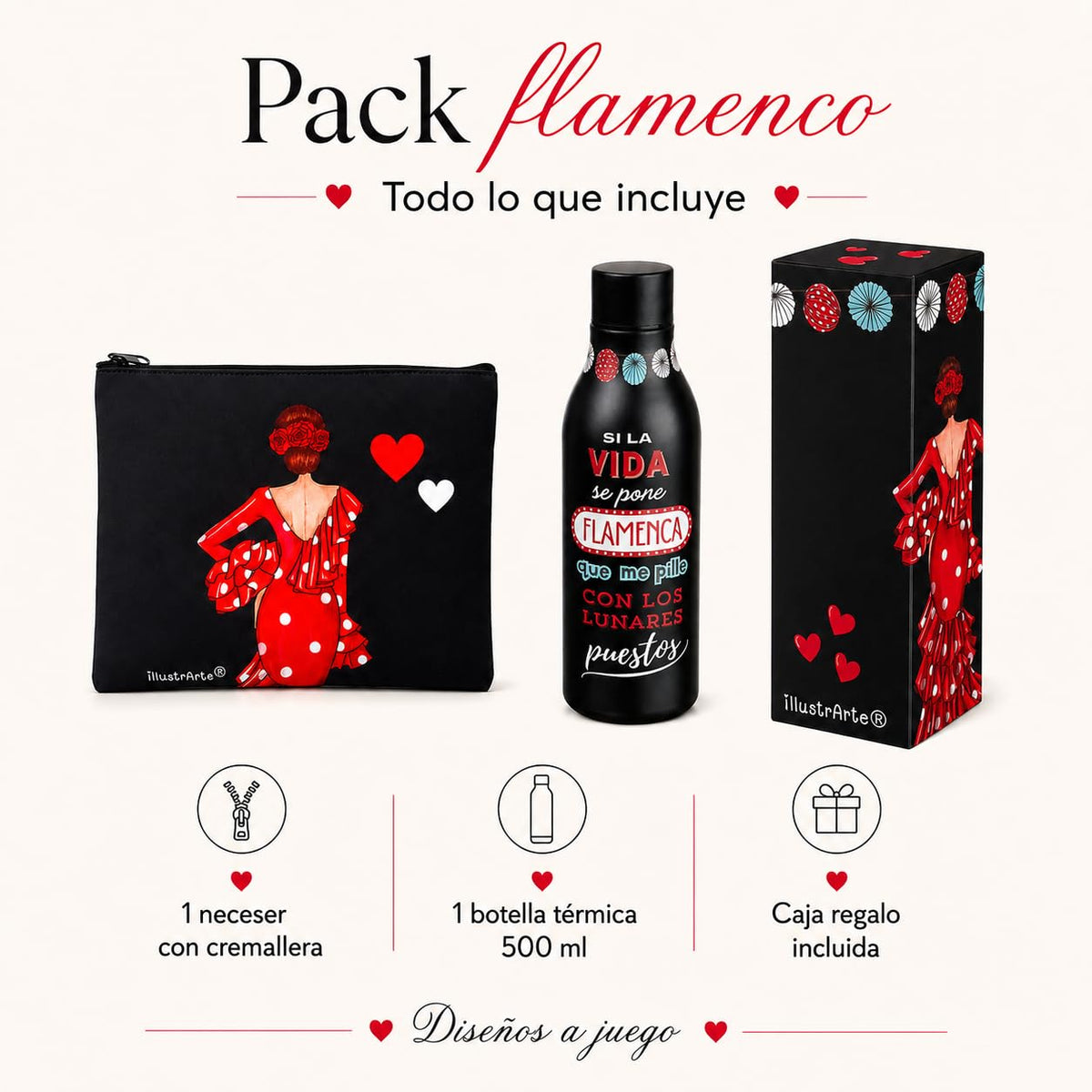
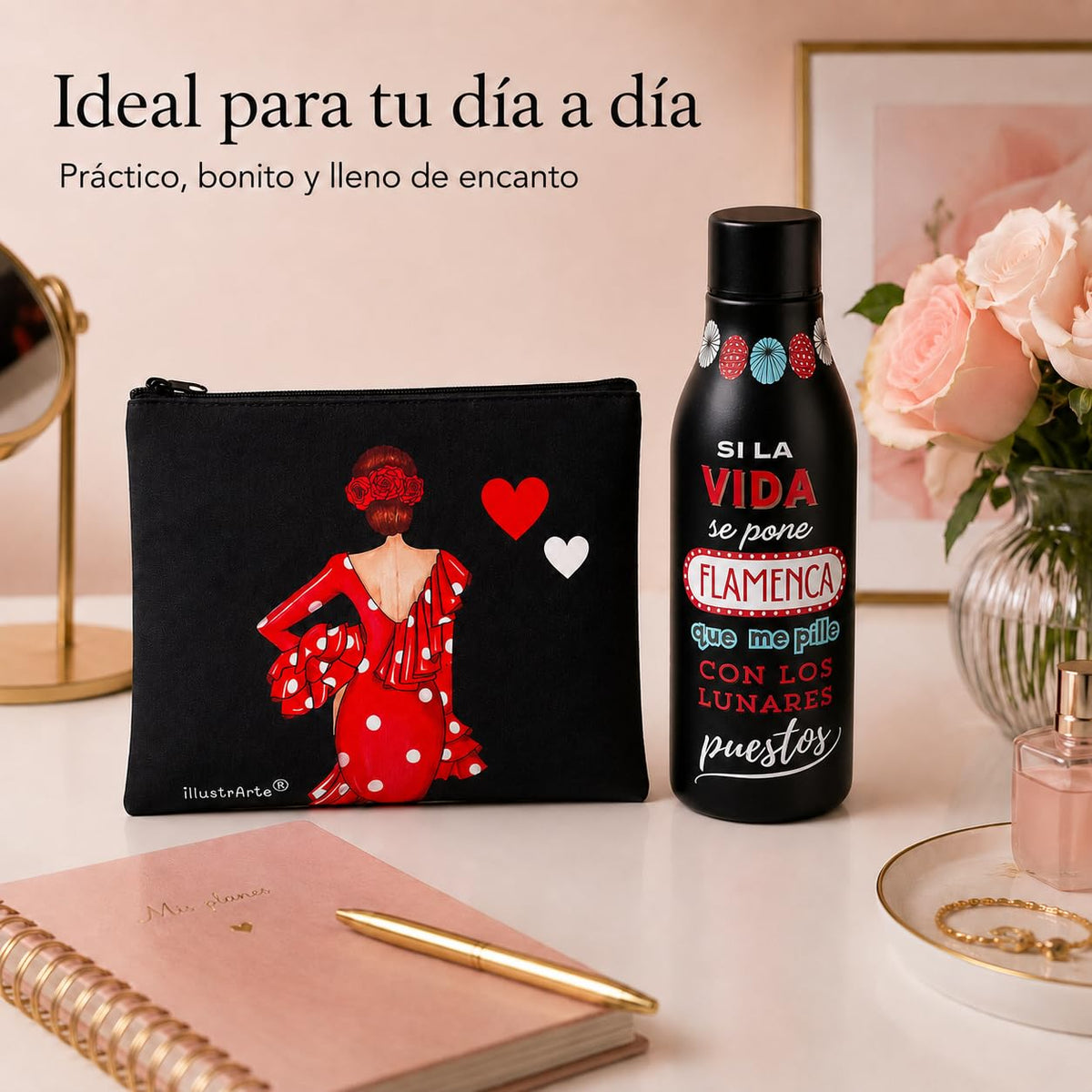
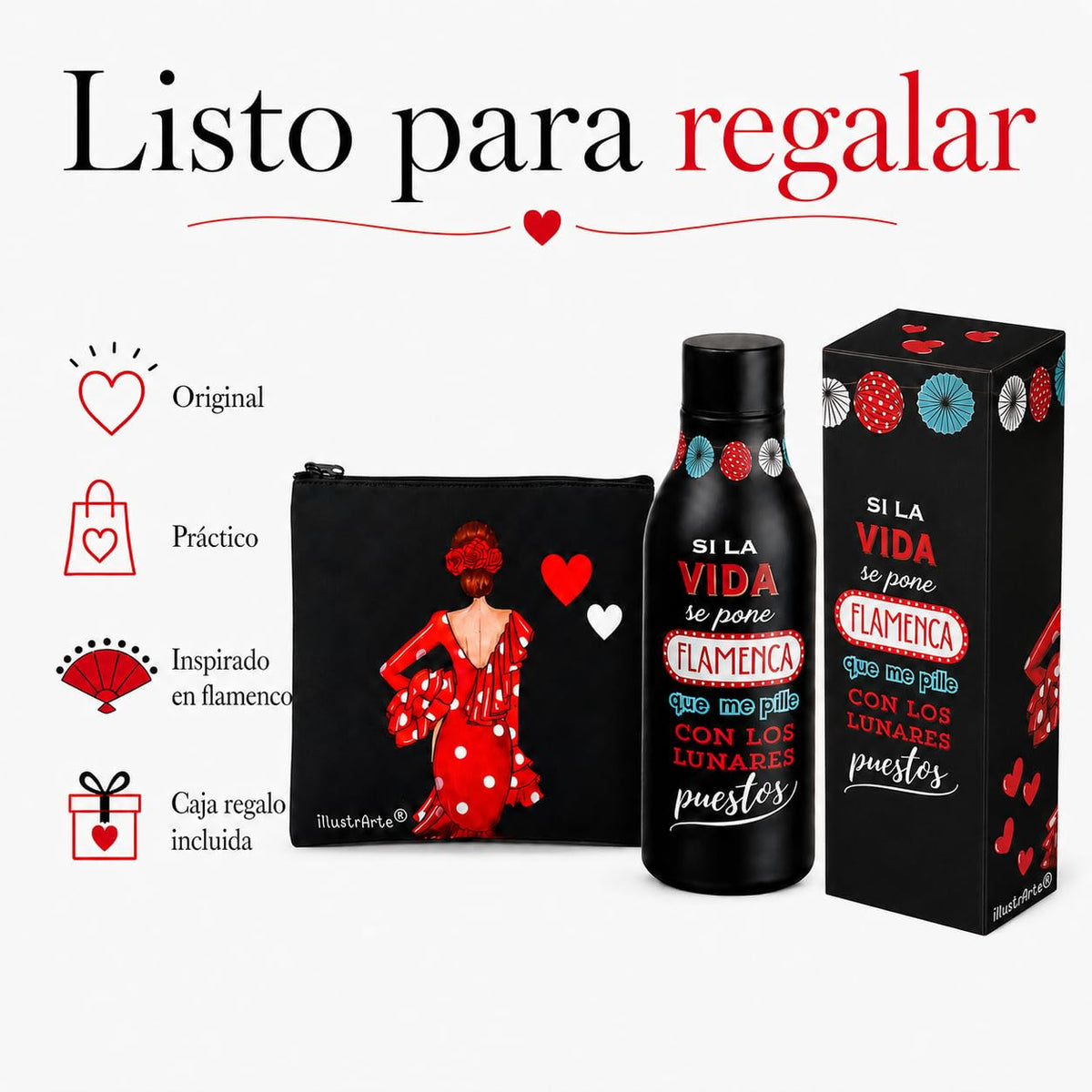
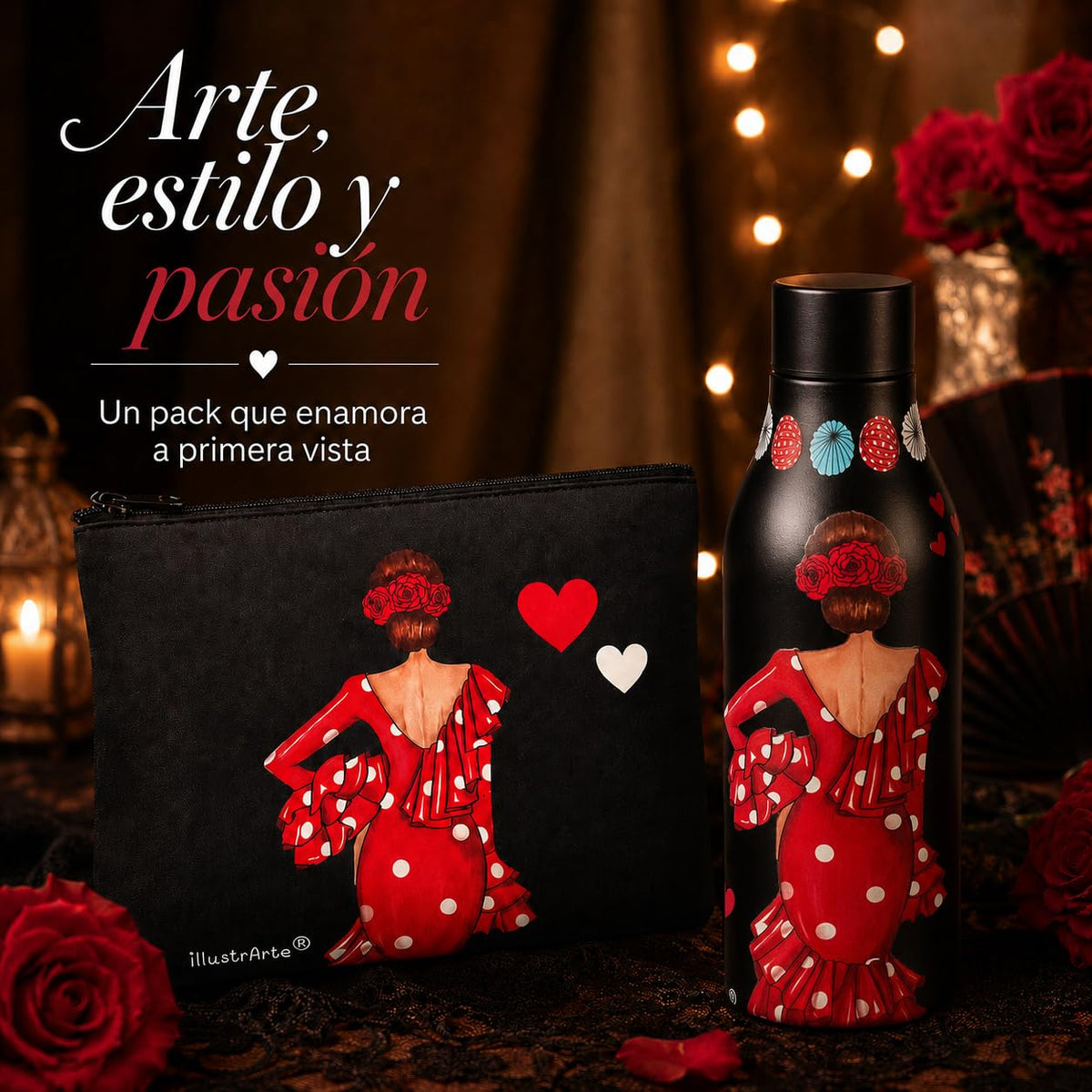
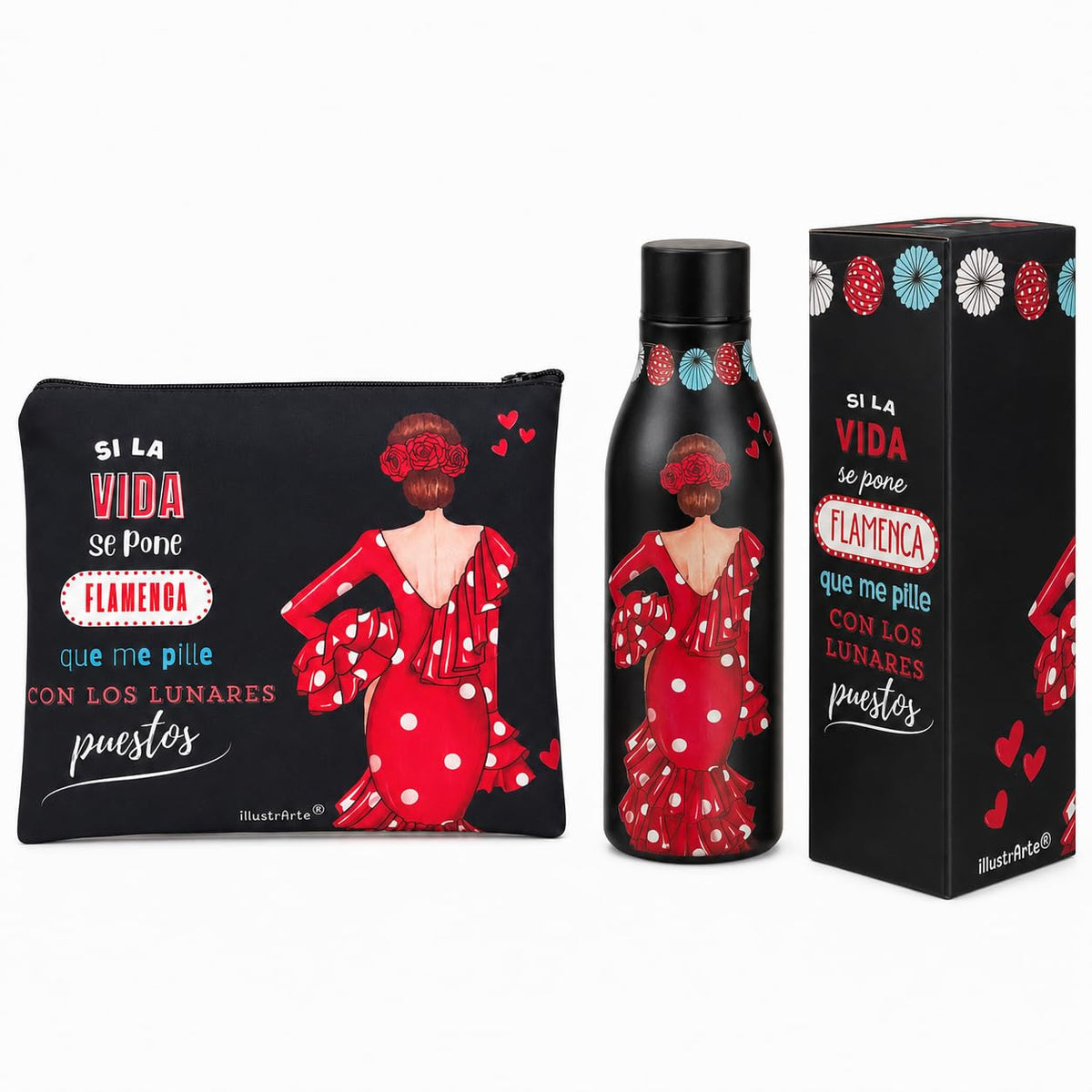
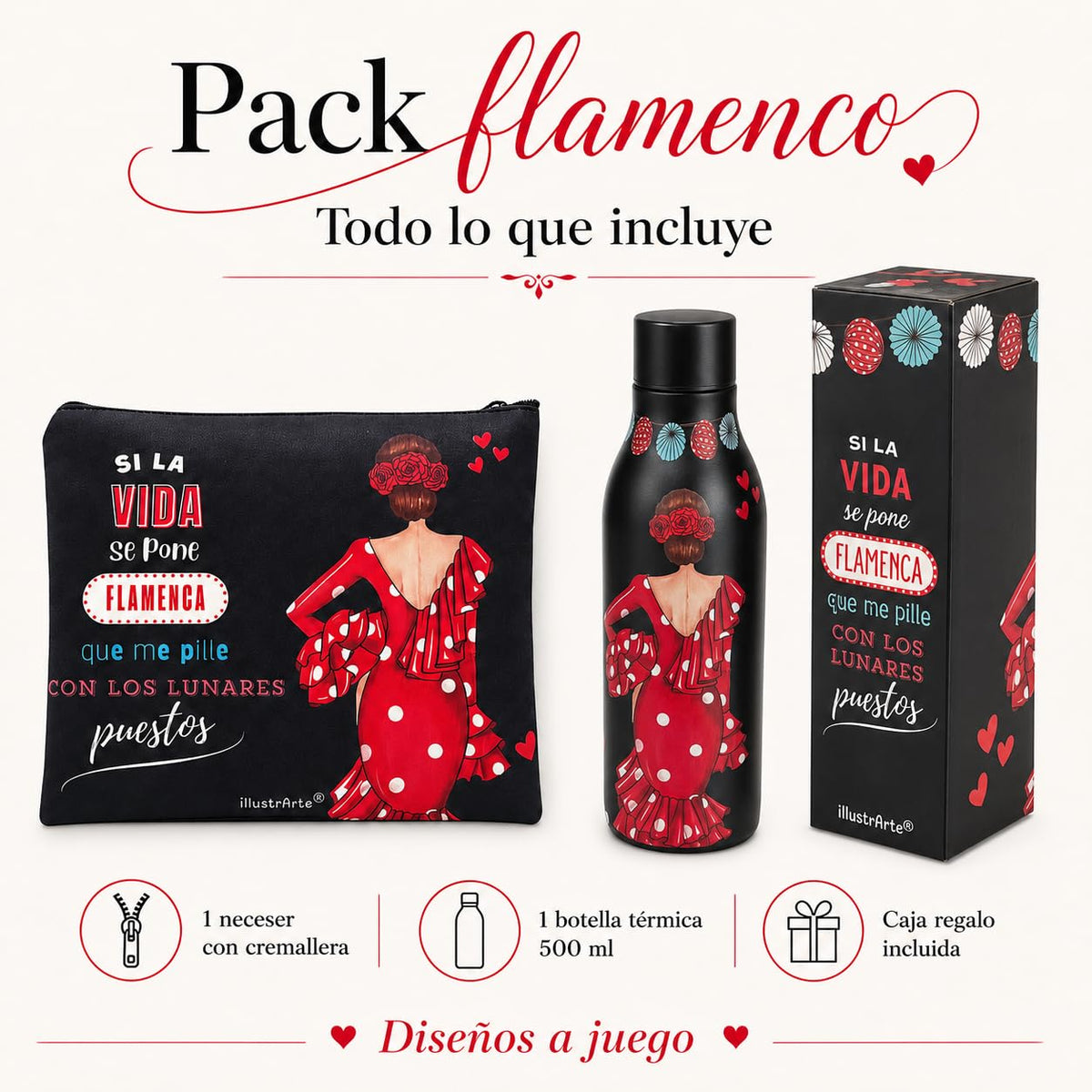
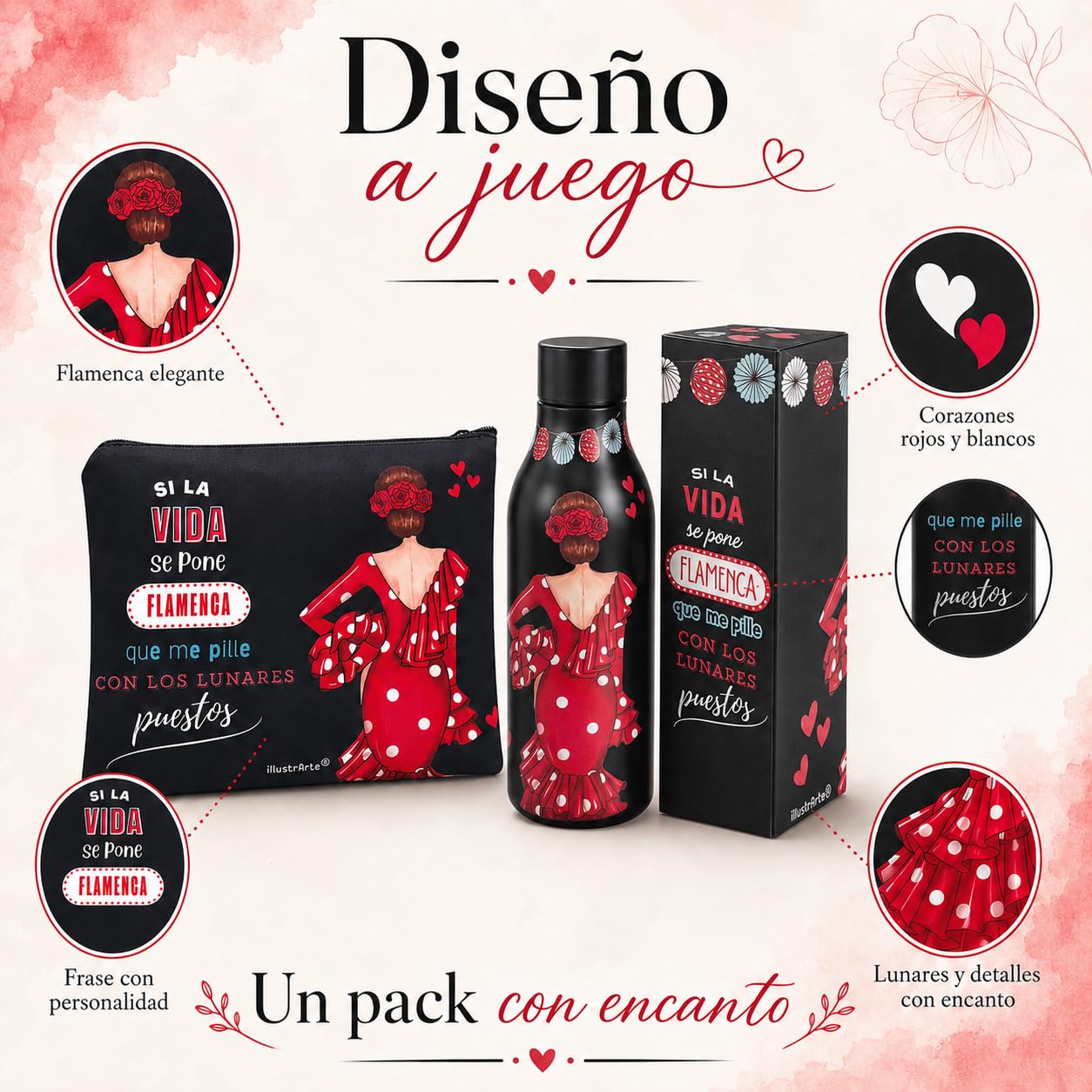
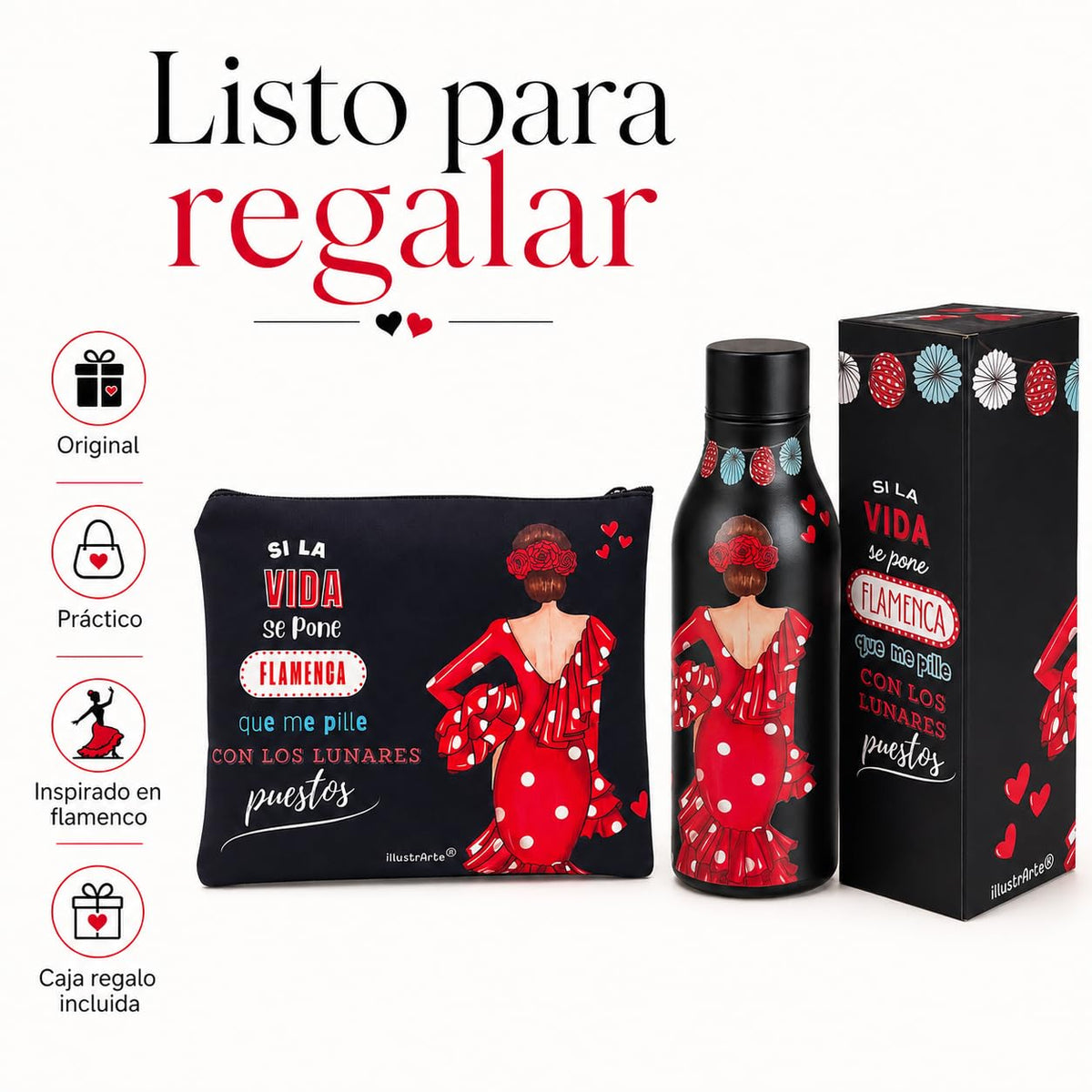
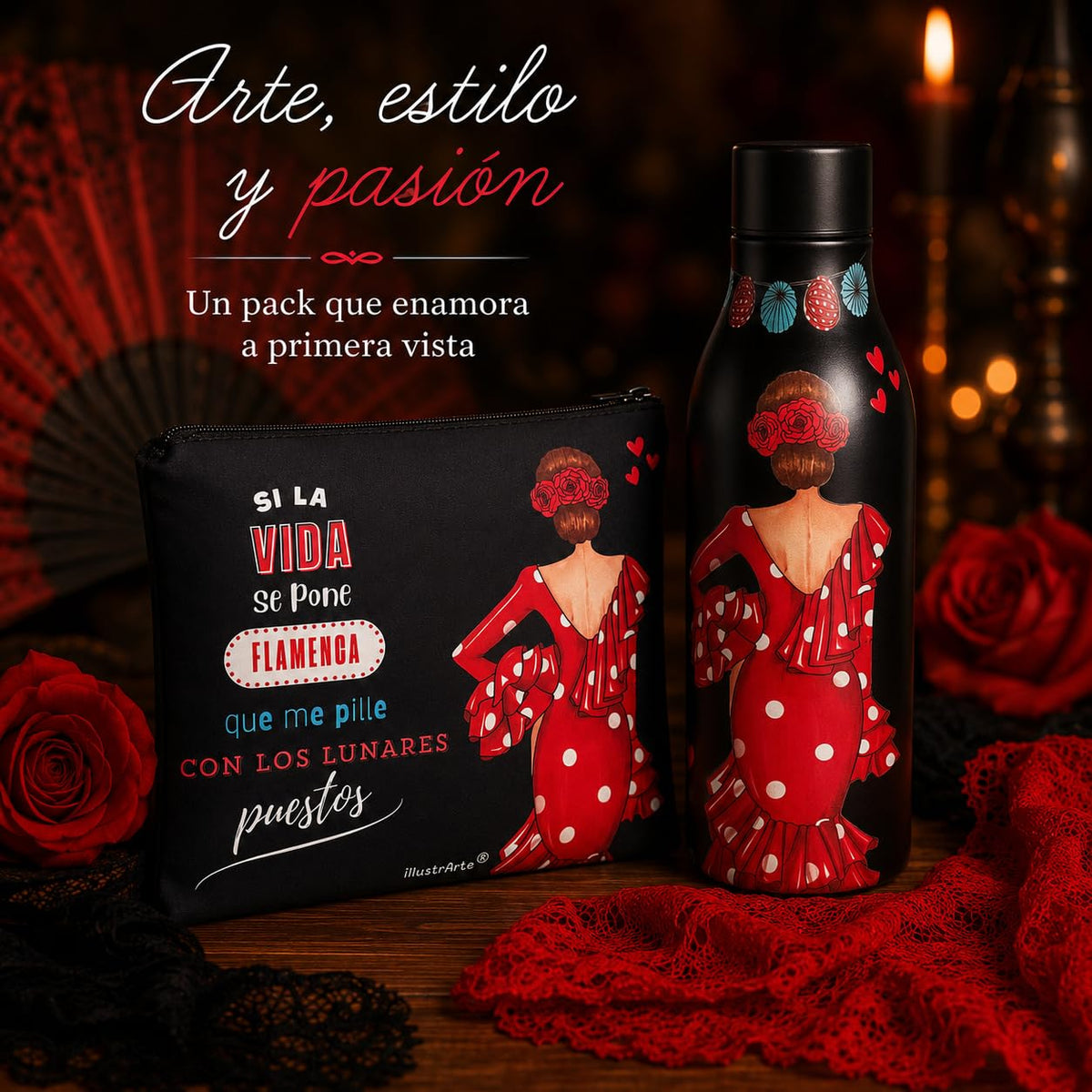
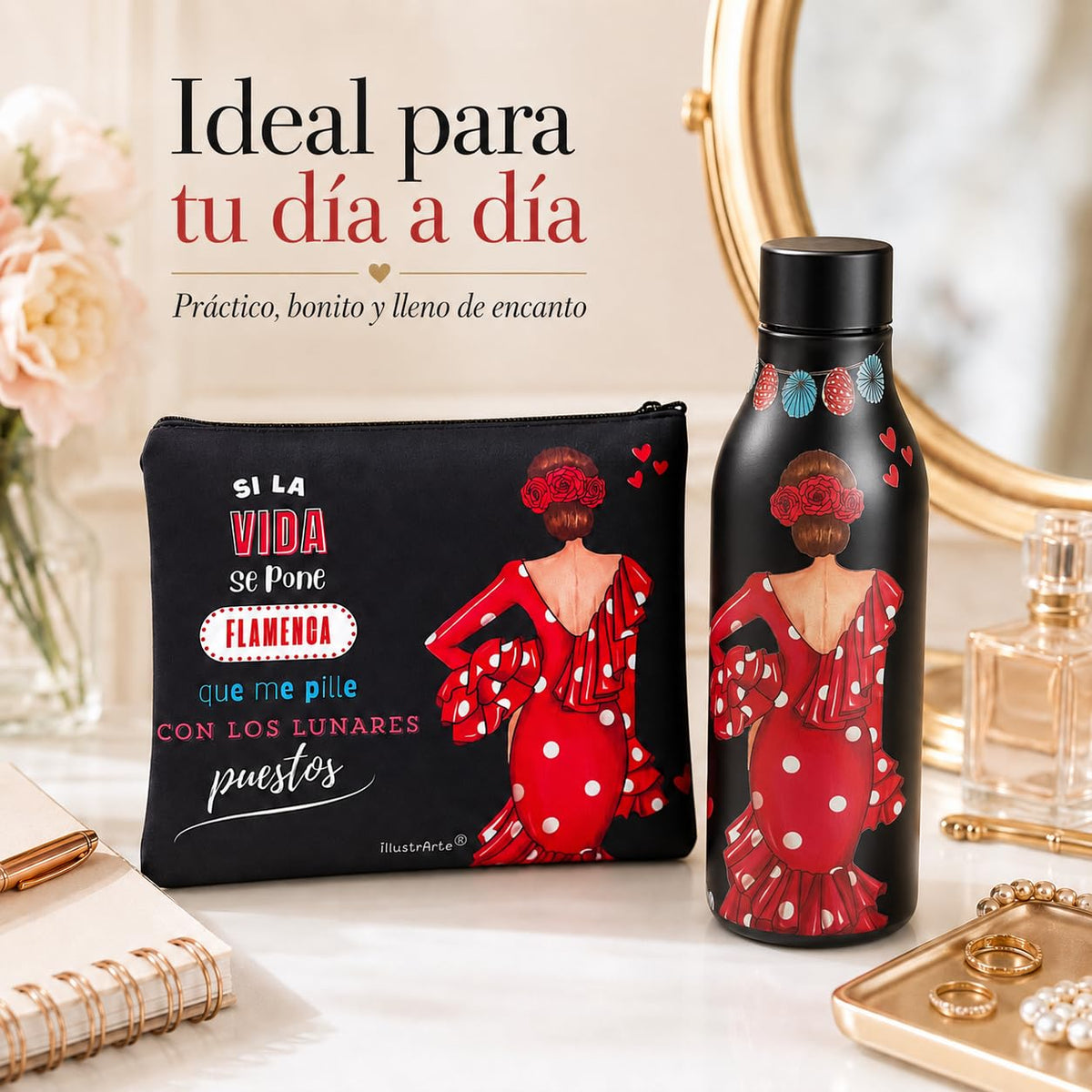
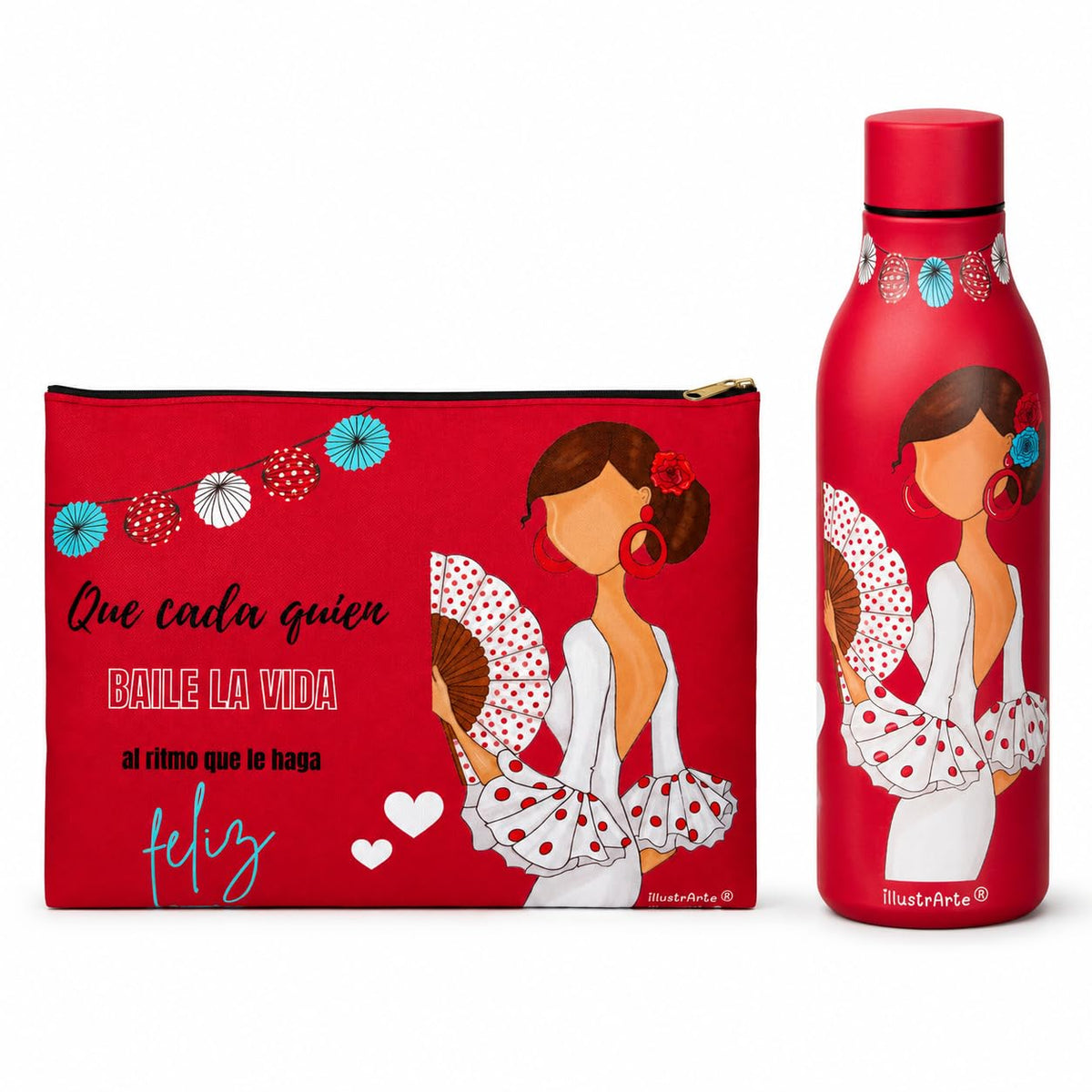
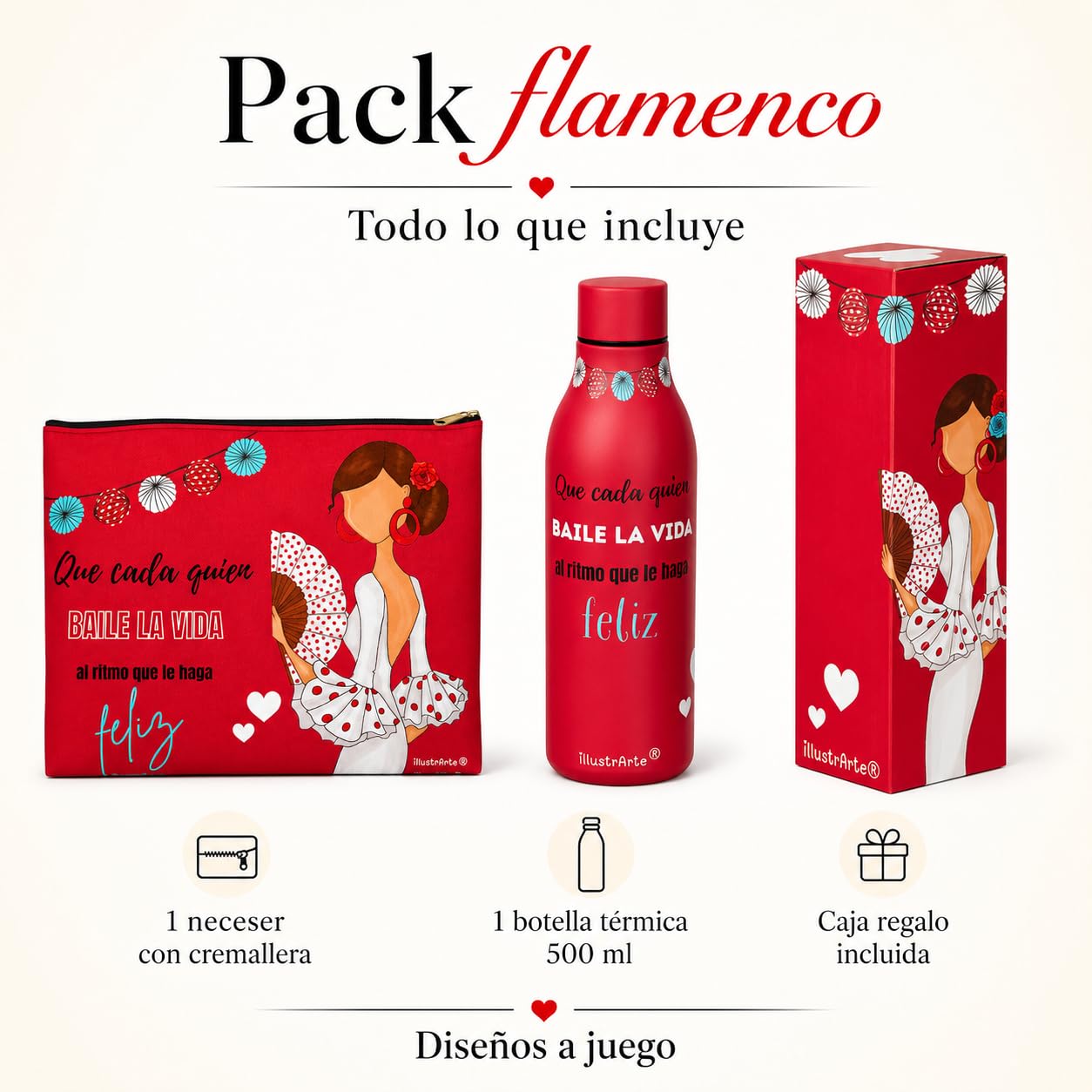
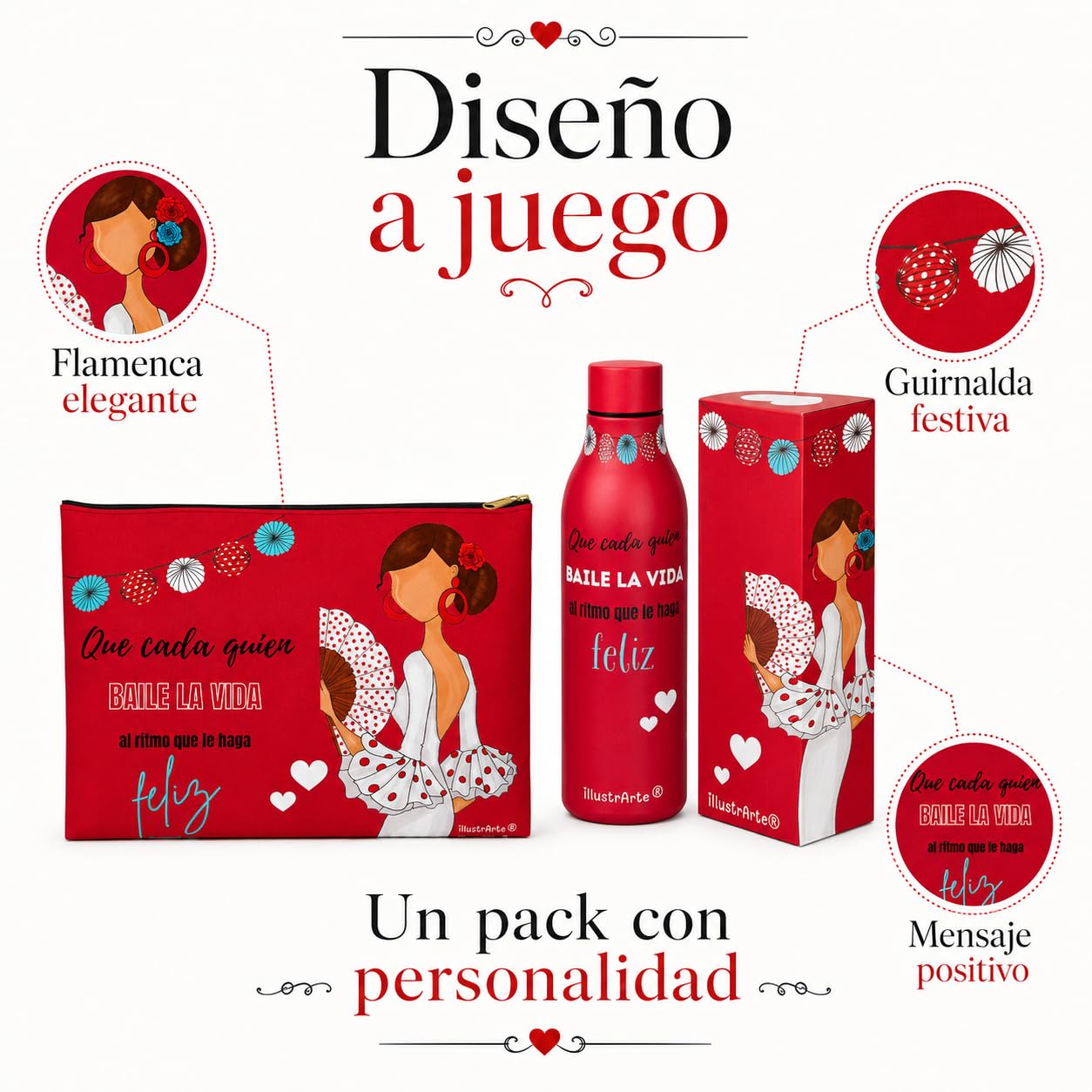
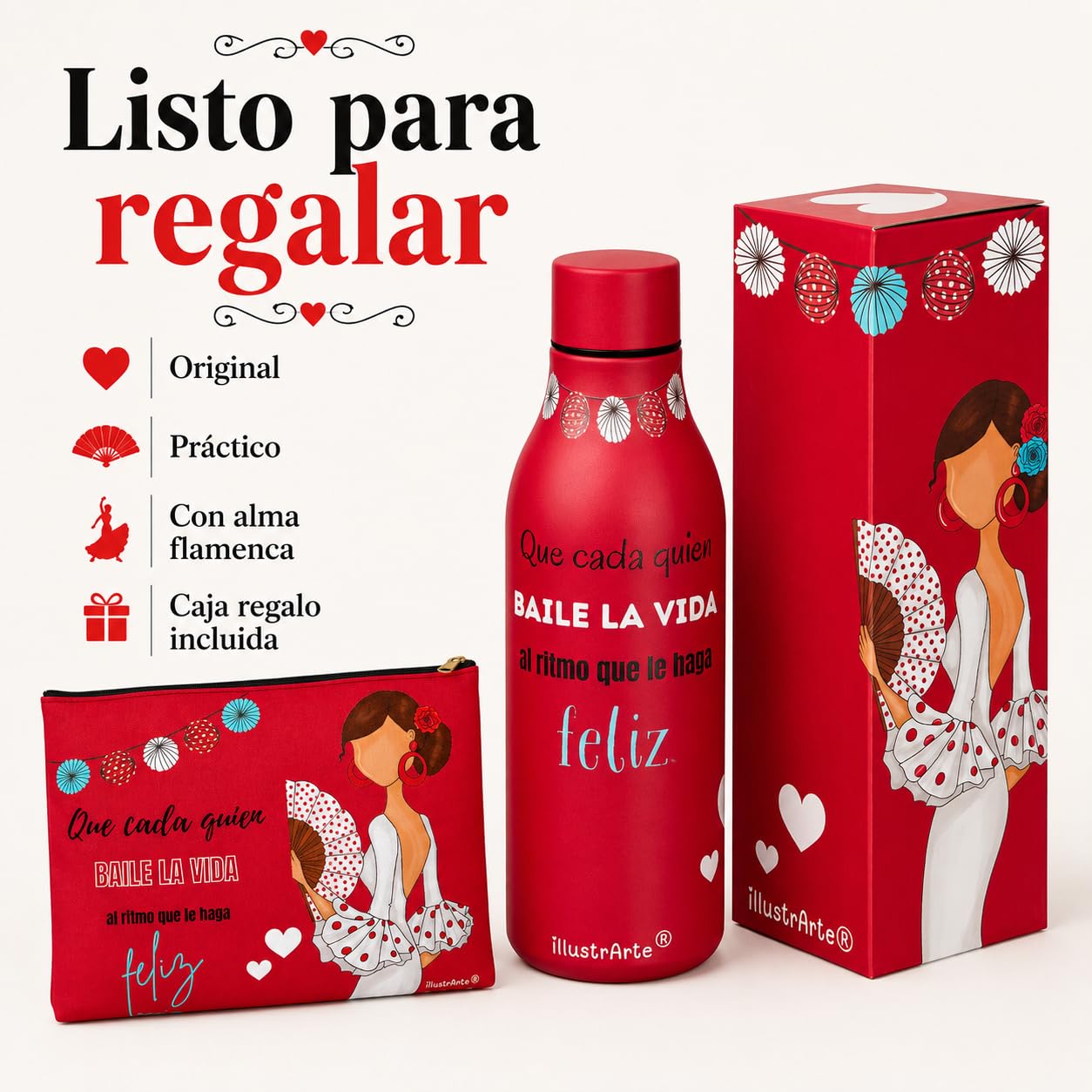
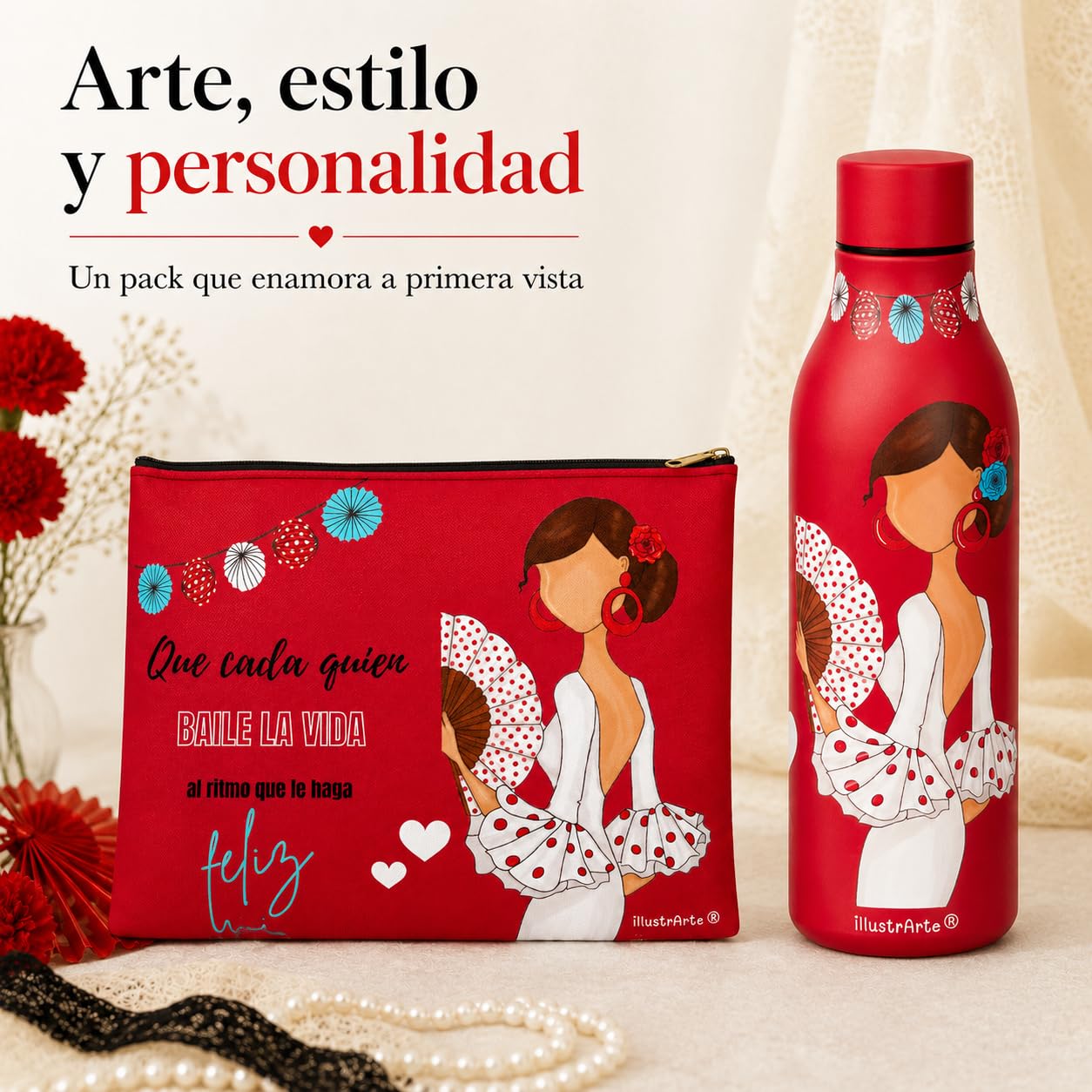
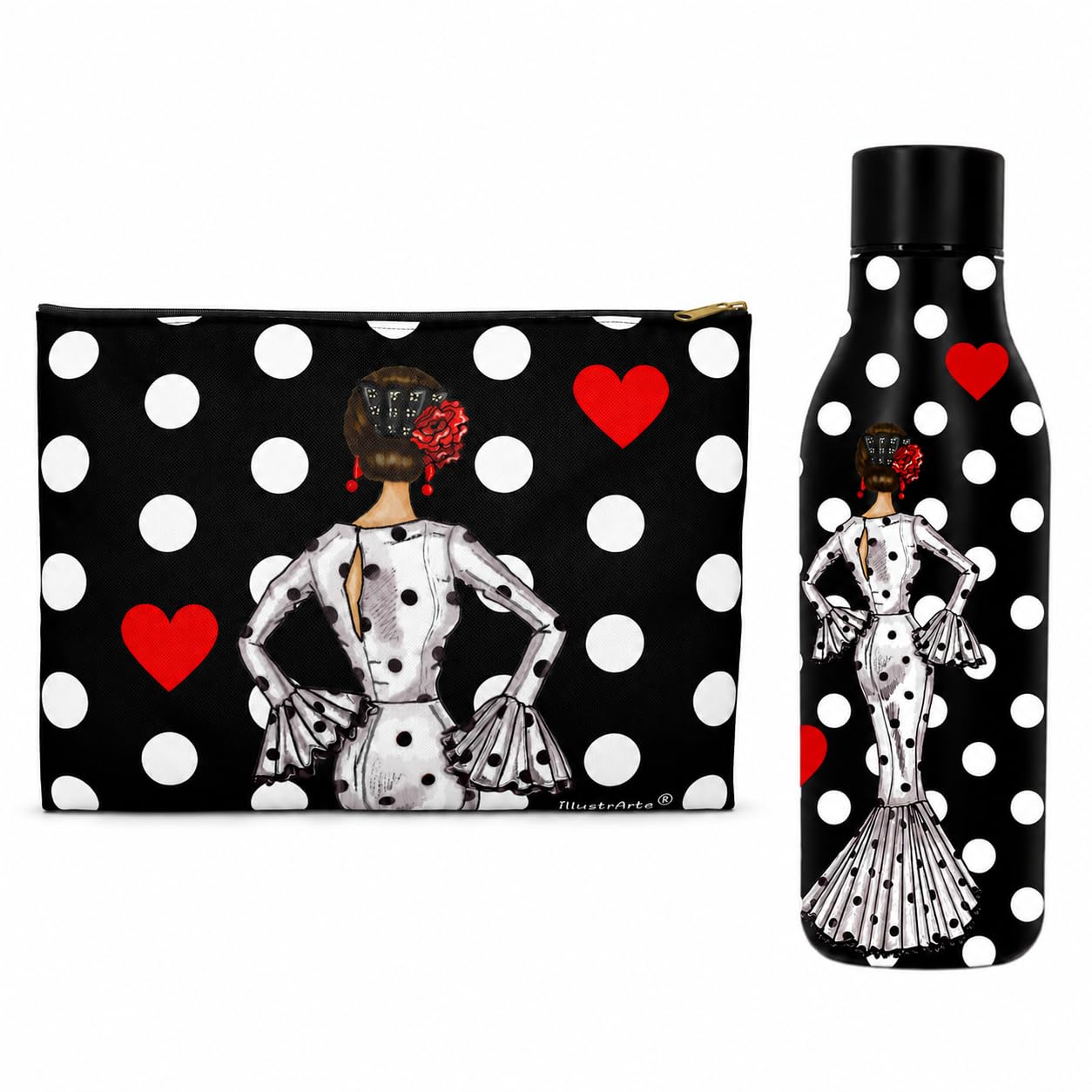
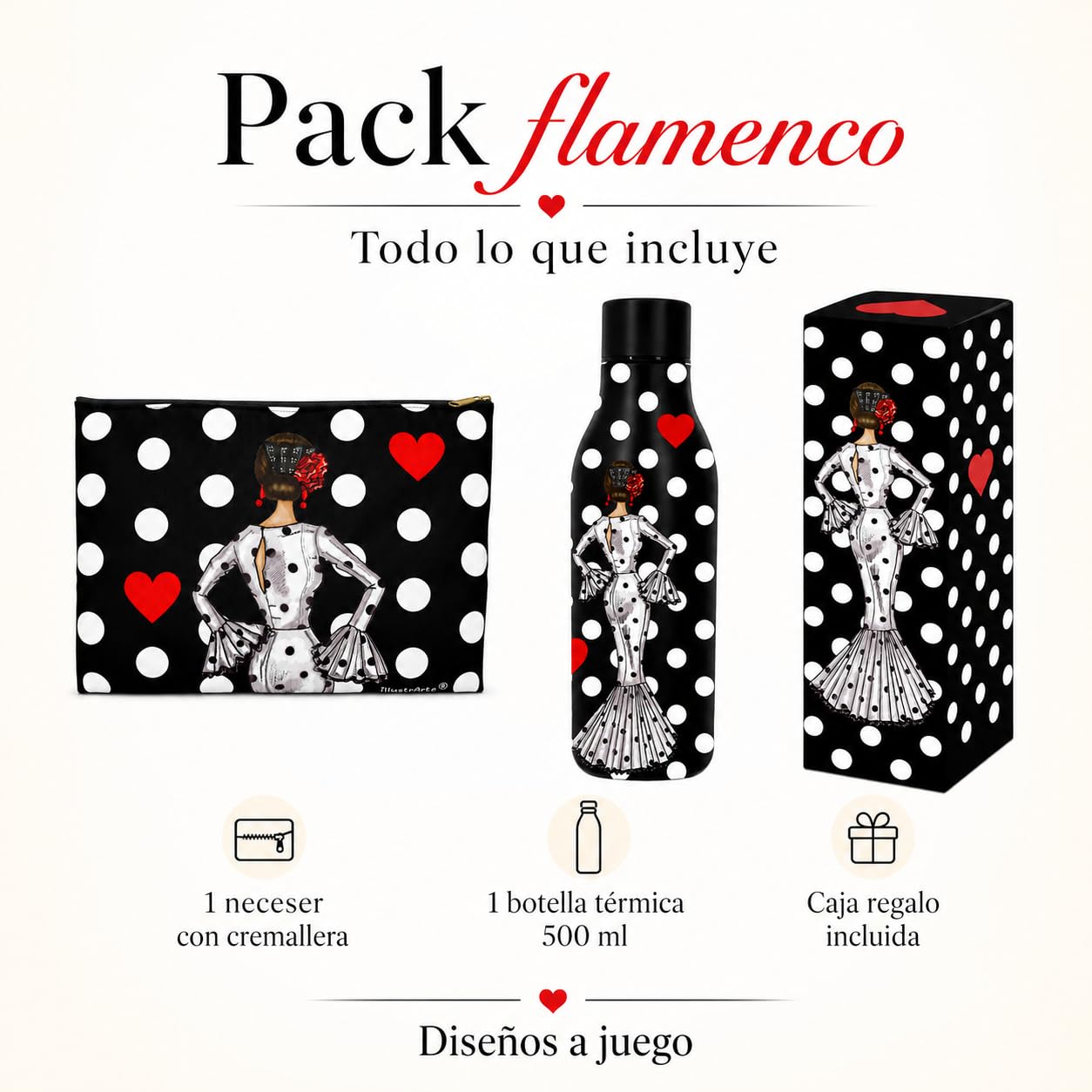
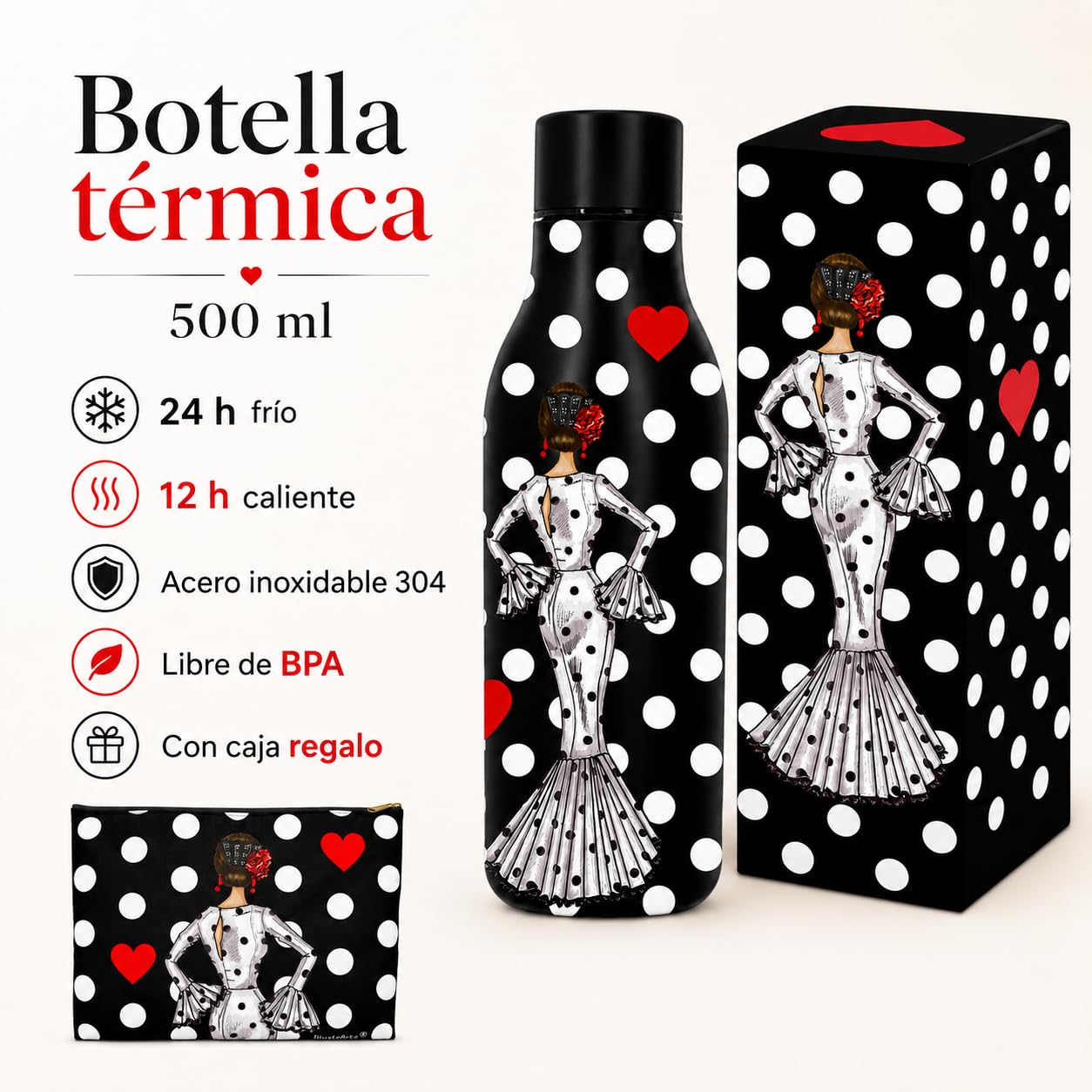
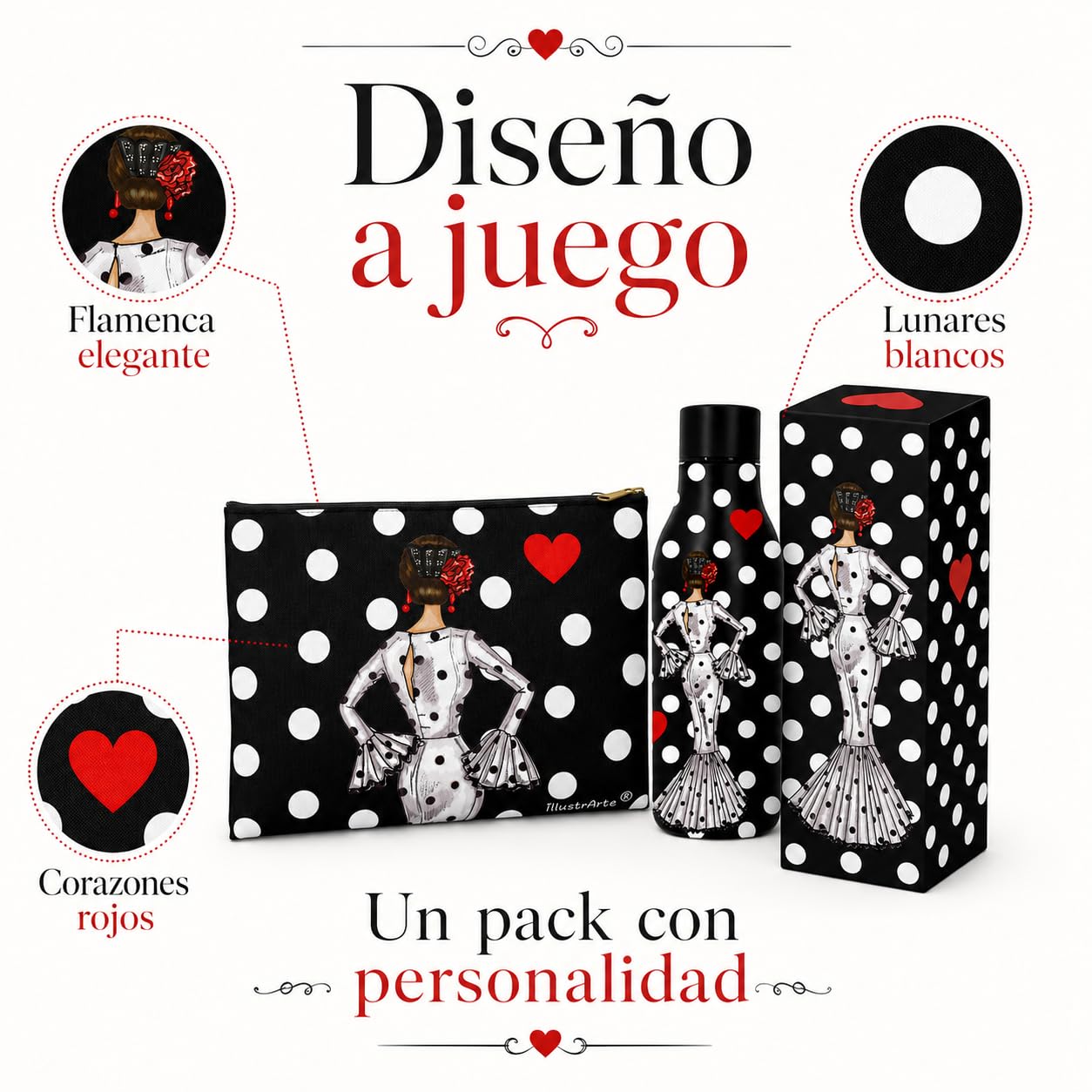
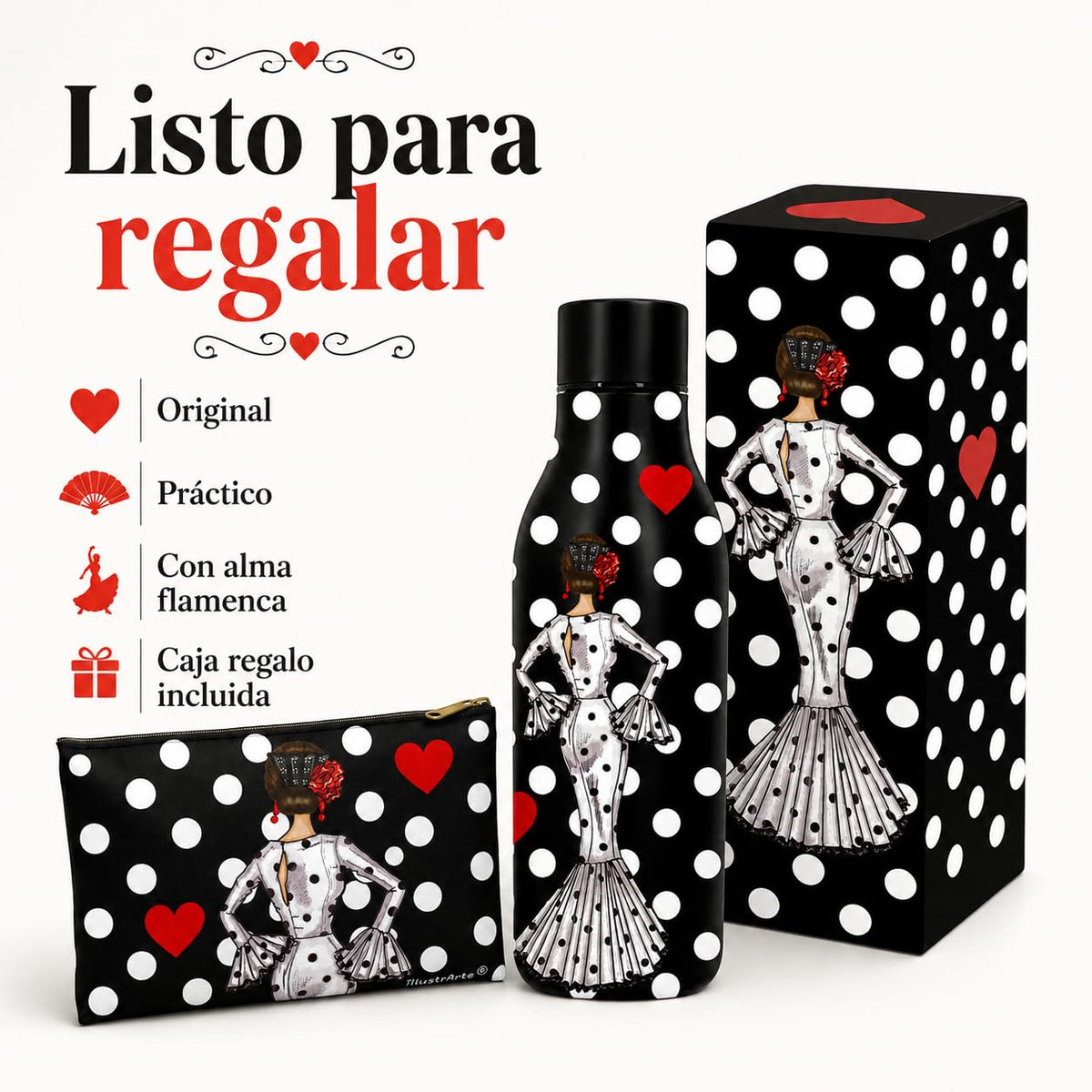
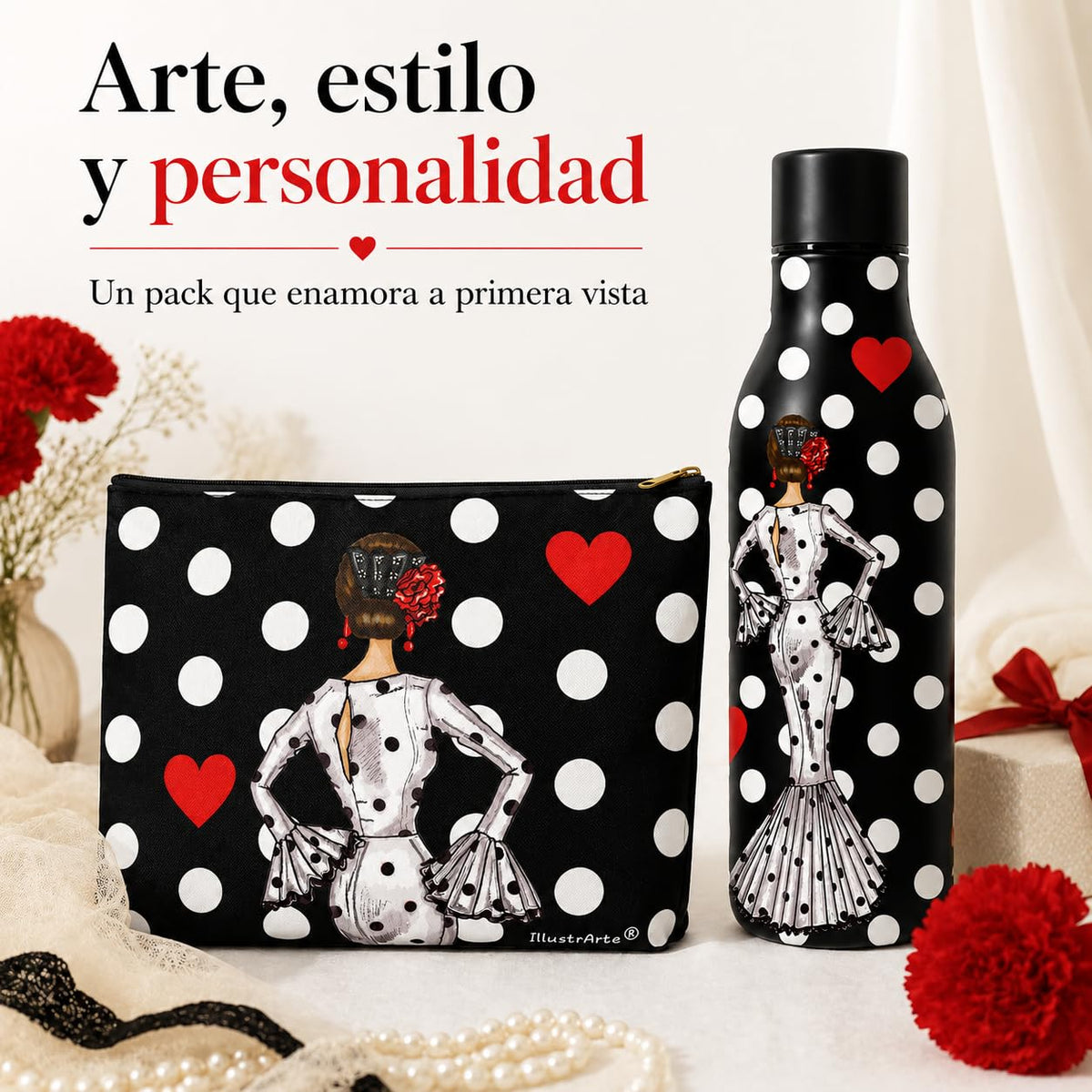
The illustrArte flamenca insulated bottles hold 500 ml and are made to keep drinks cold or hot for hours.
You can also find our flamenca bottles on Amazon.
2. A small towel
A light towel takes up little space and can be very welcome after the warm-up, footwork exercises or a particularly intense sequence.
Have a look at the illustrArte flamenca towels or browse our selection of towels on Amazon.
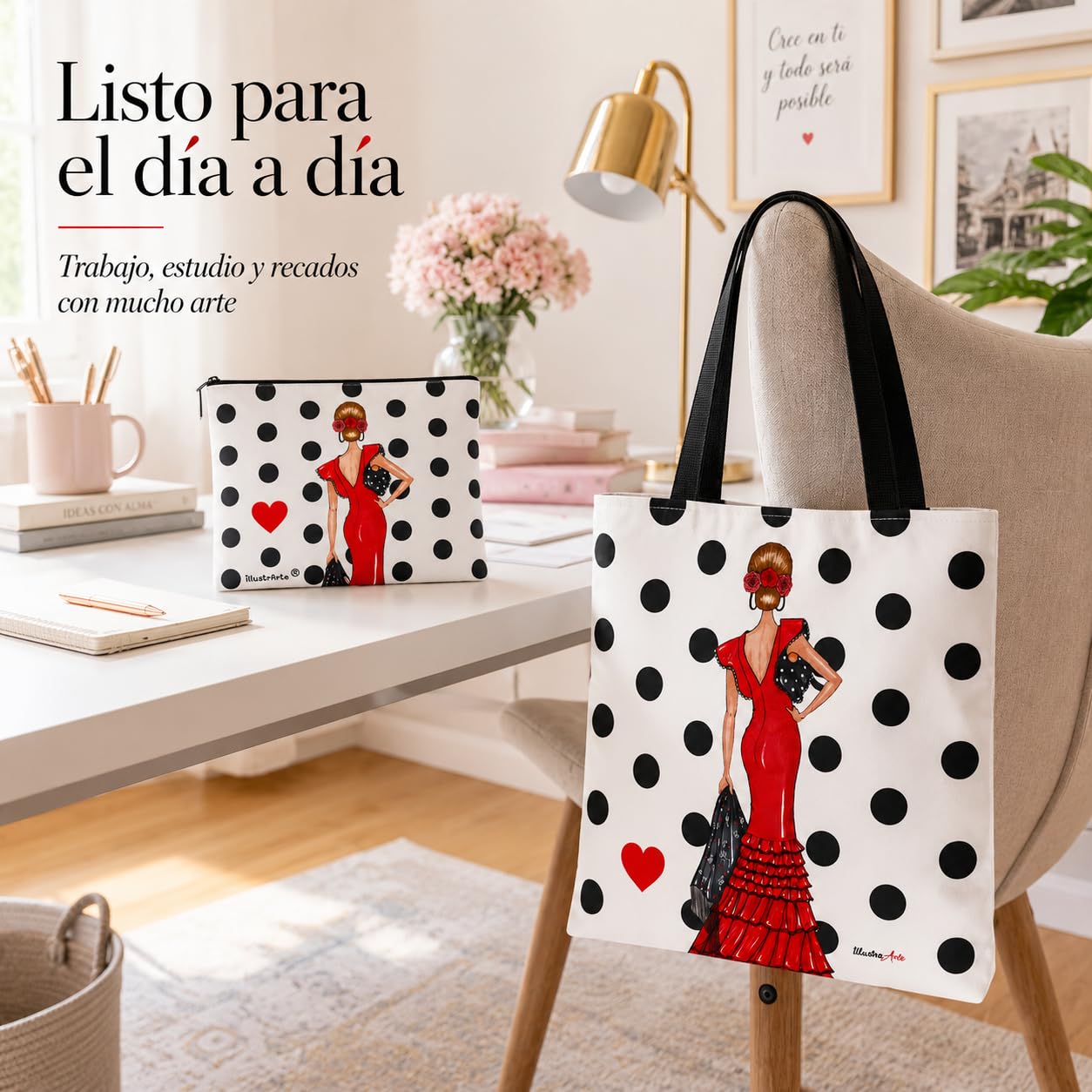
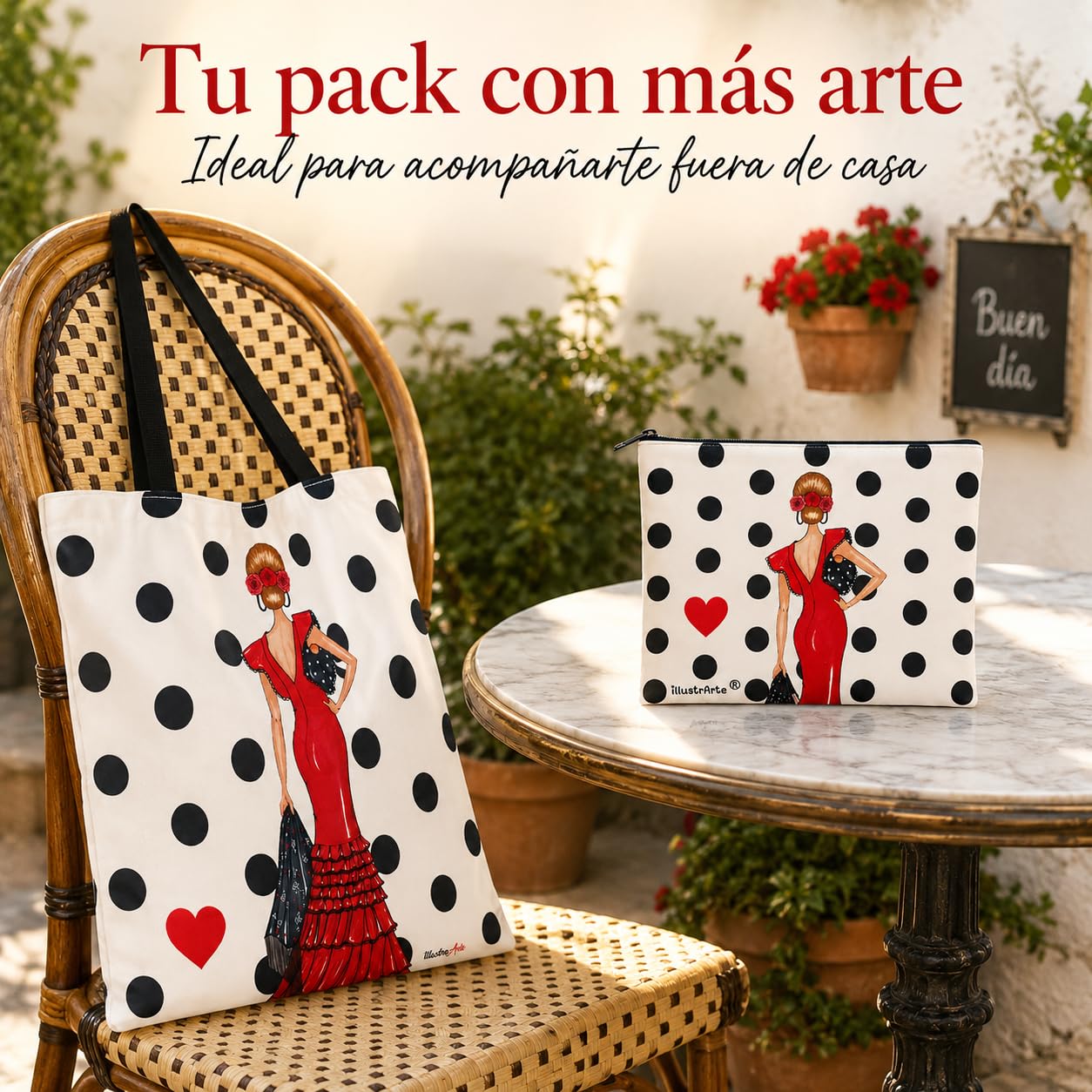
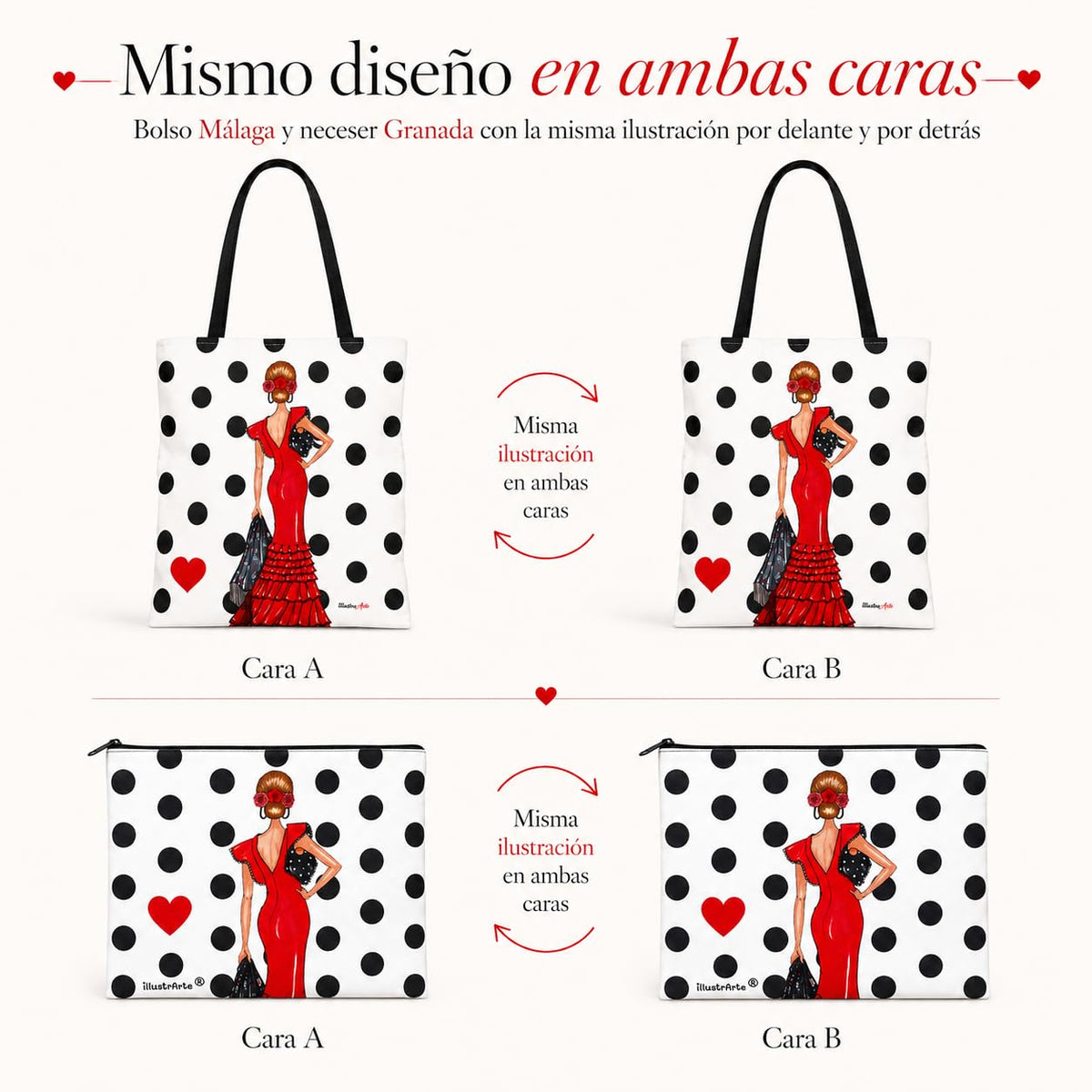
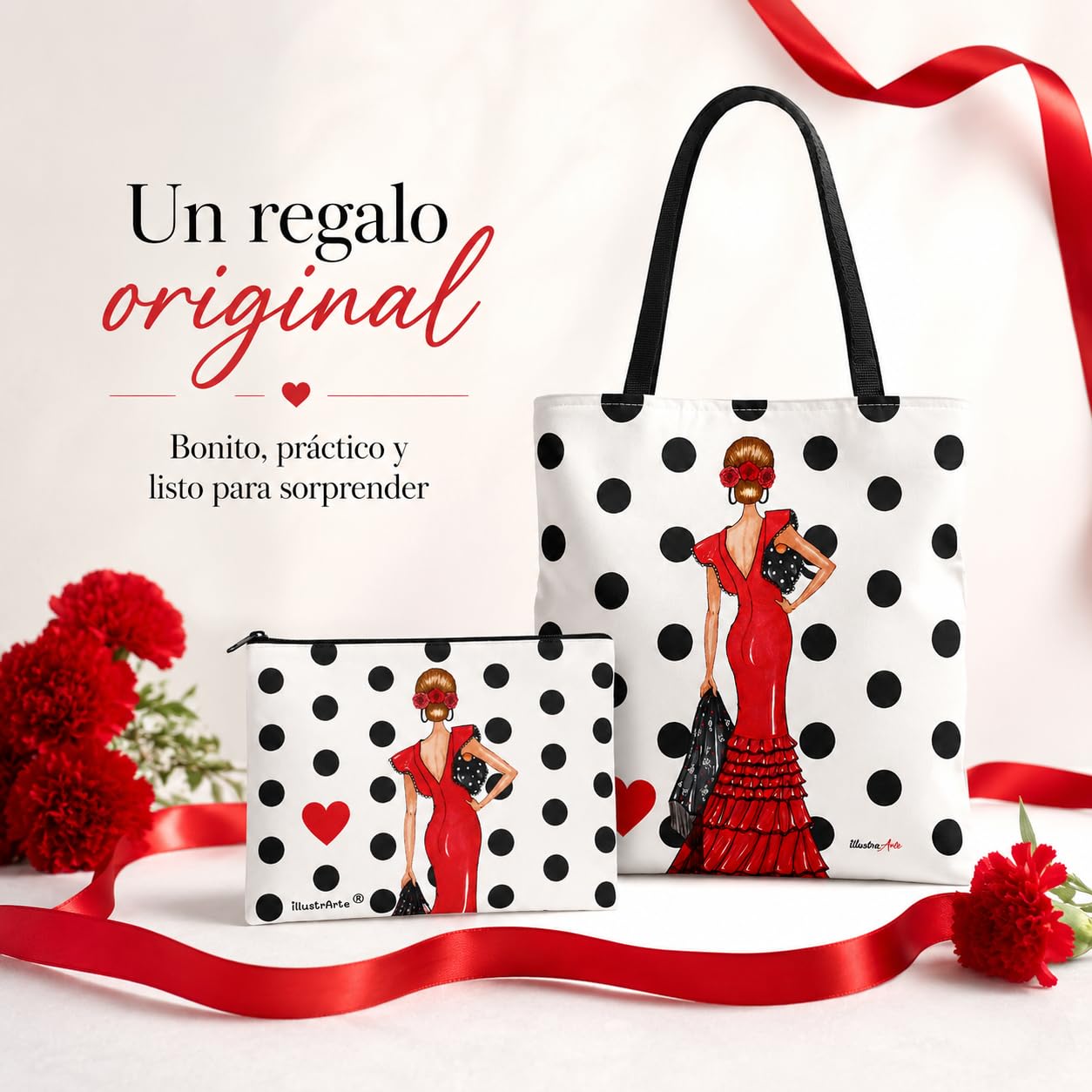
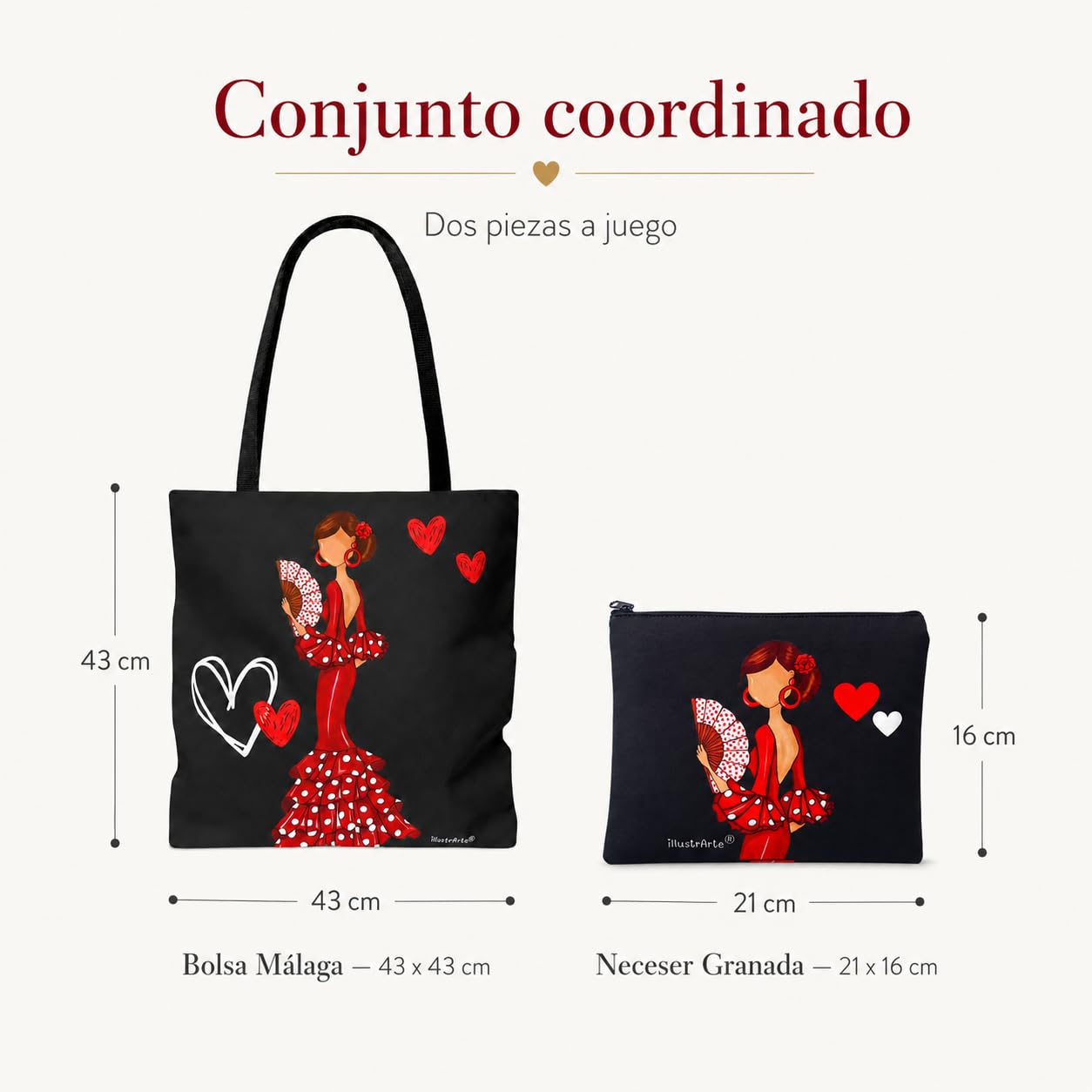
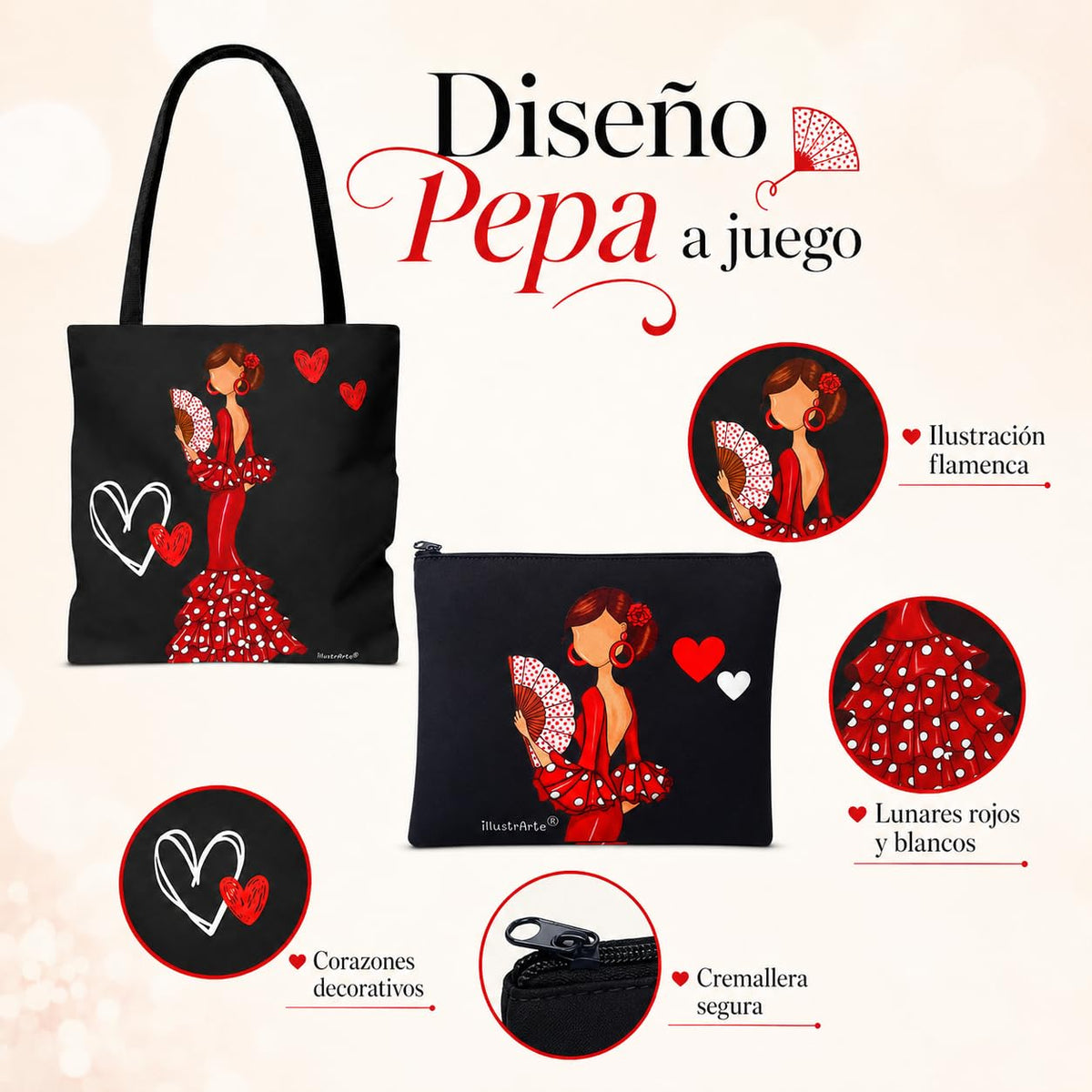
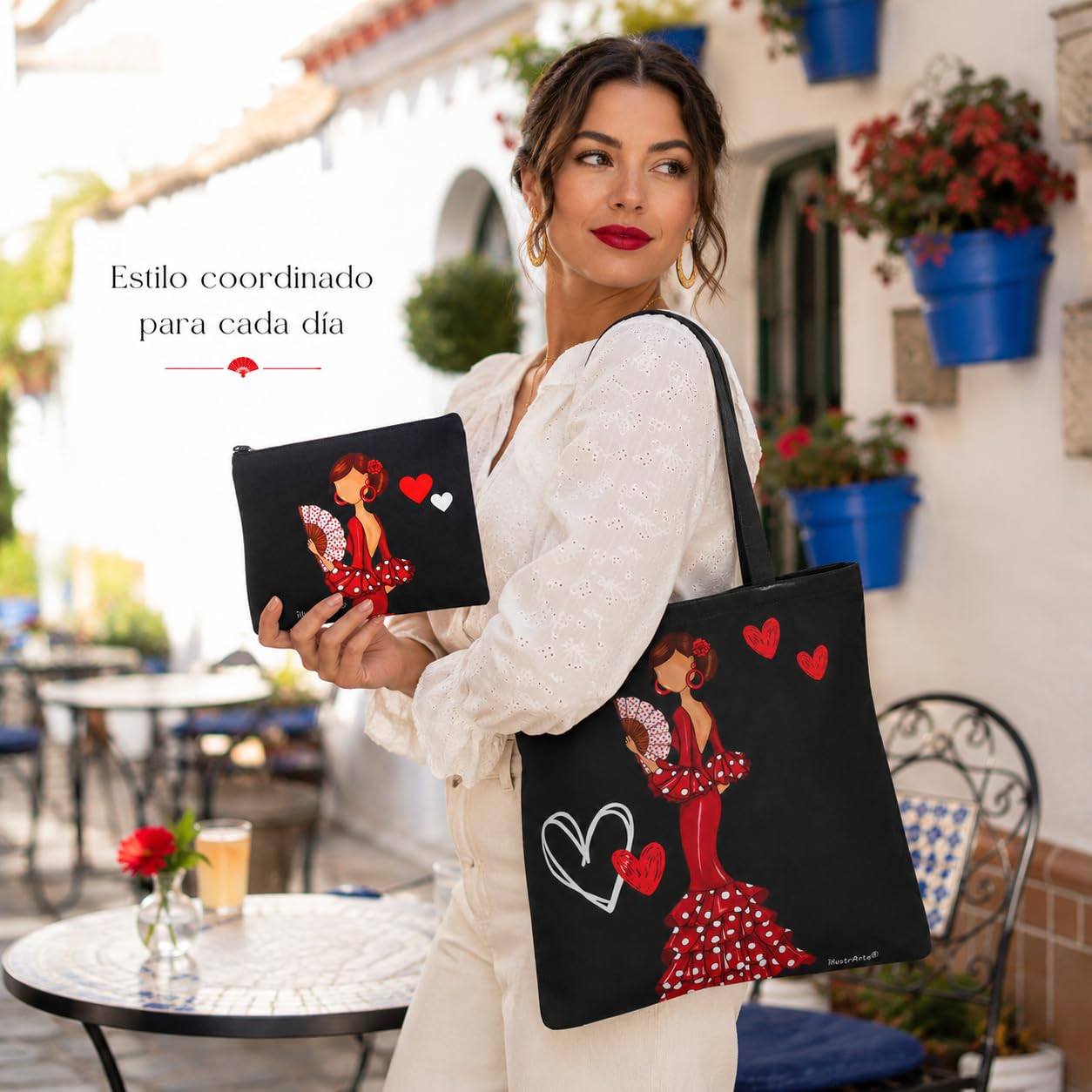
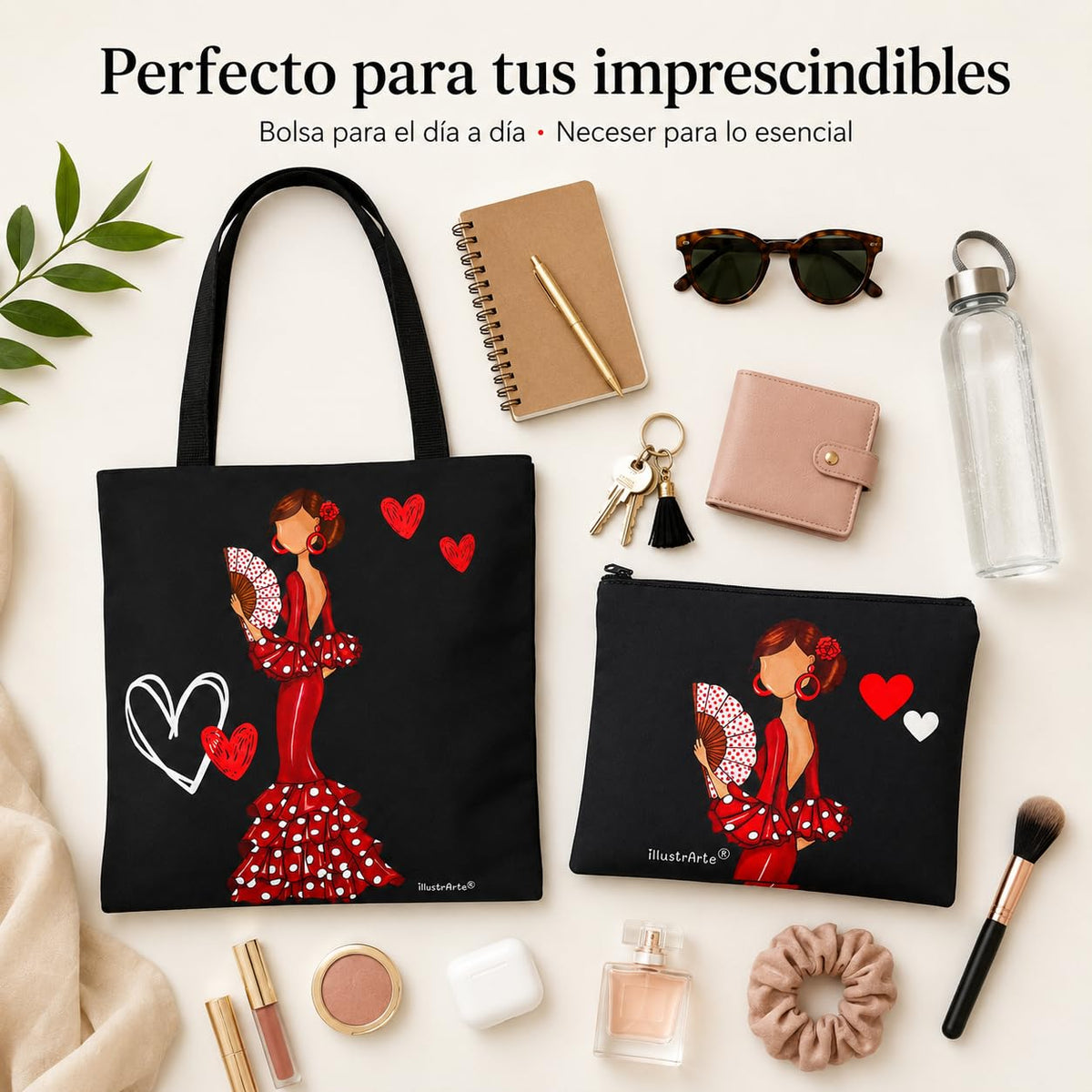
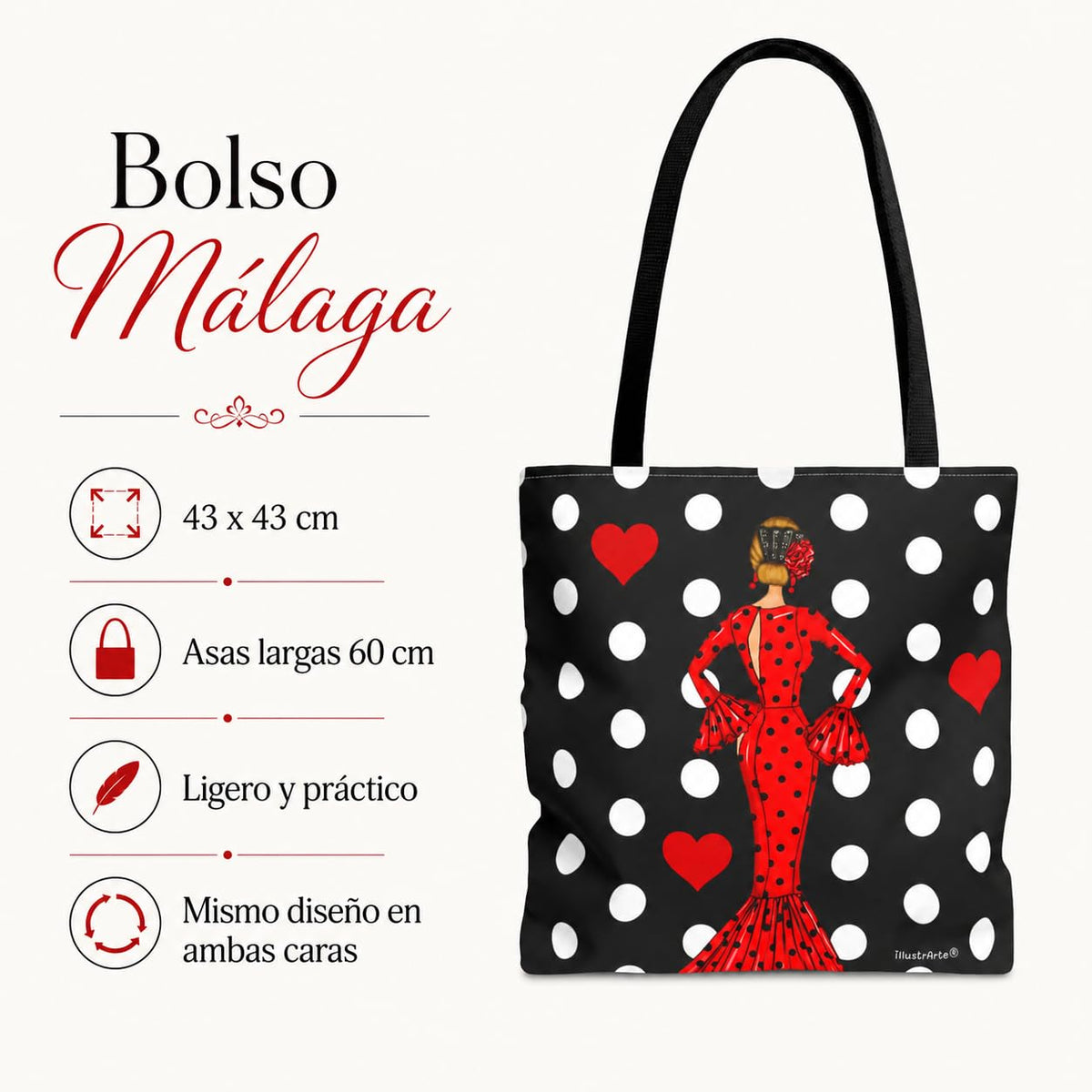
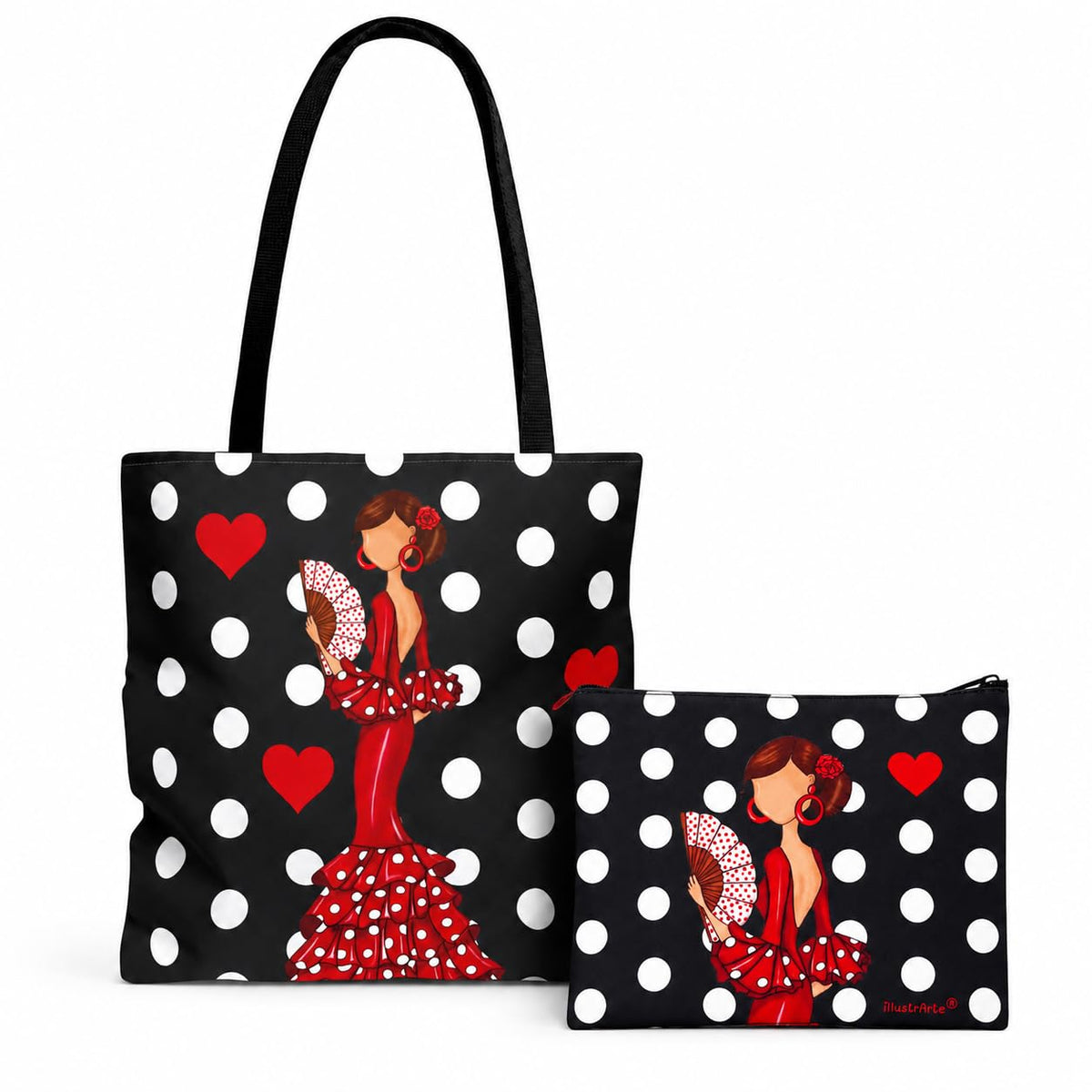
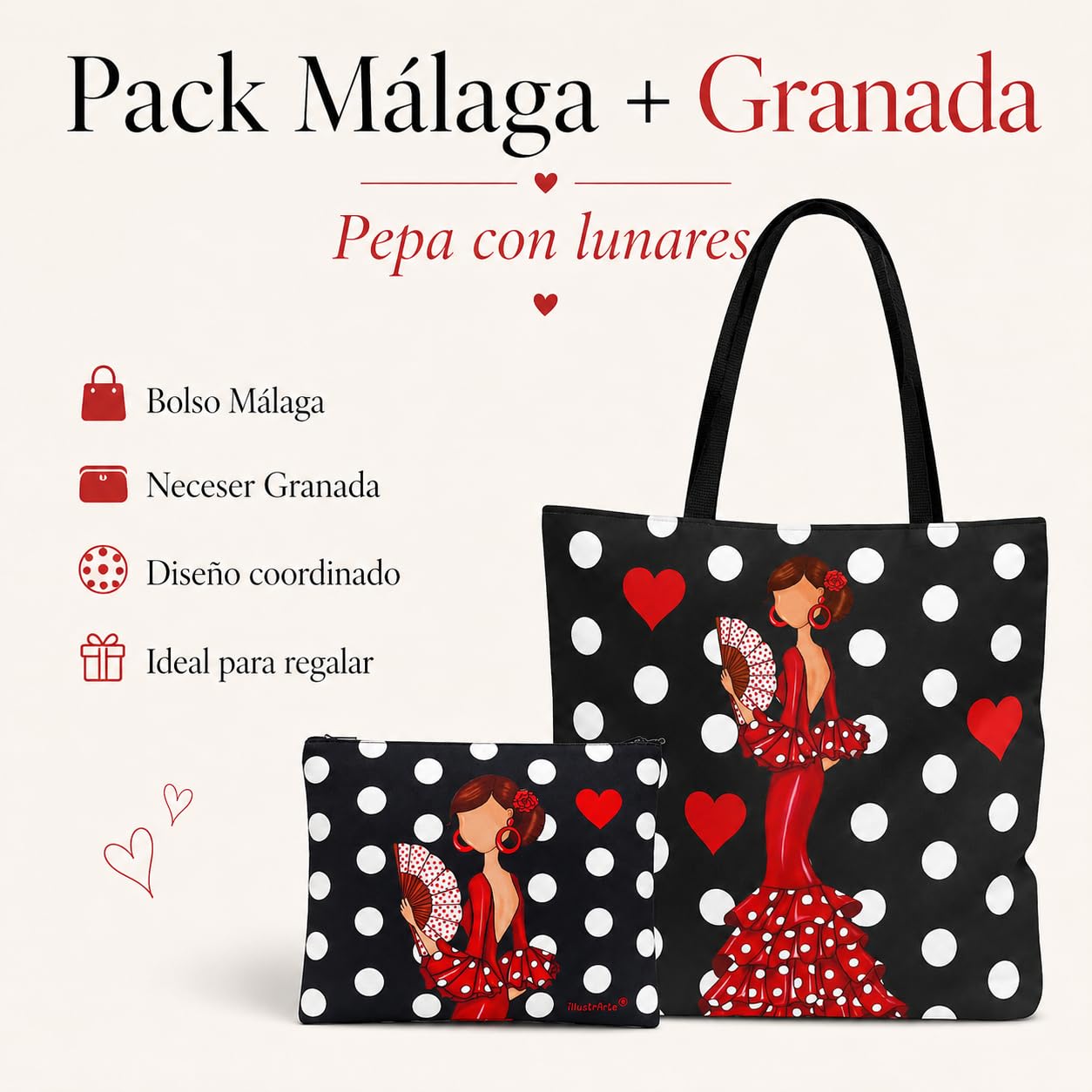
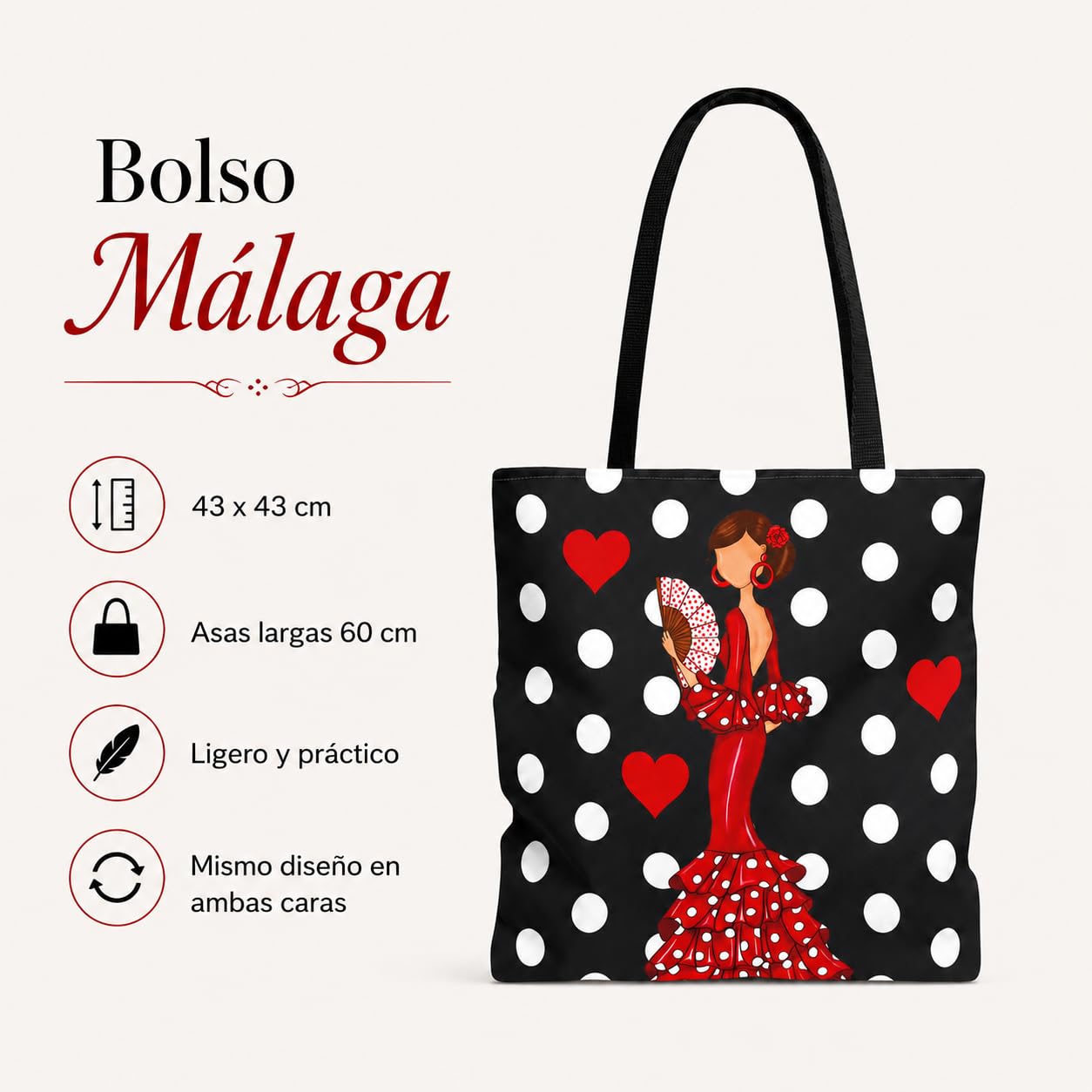
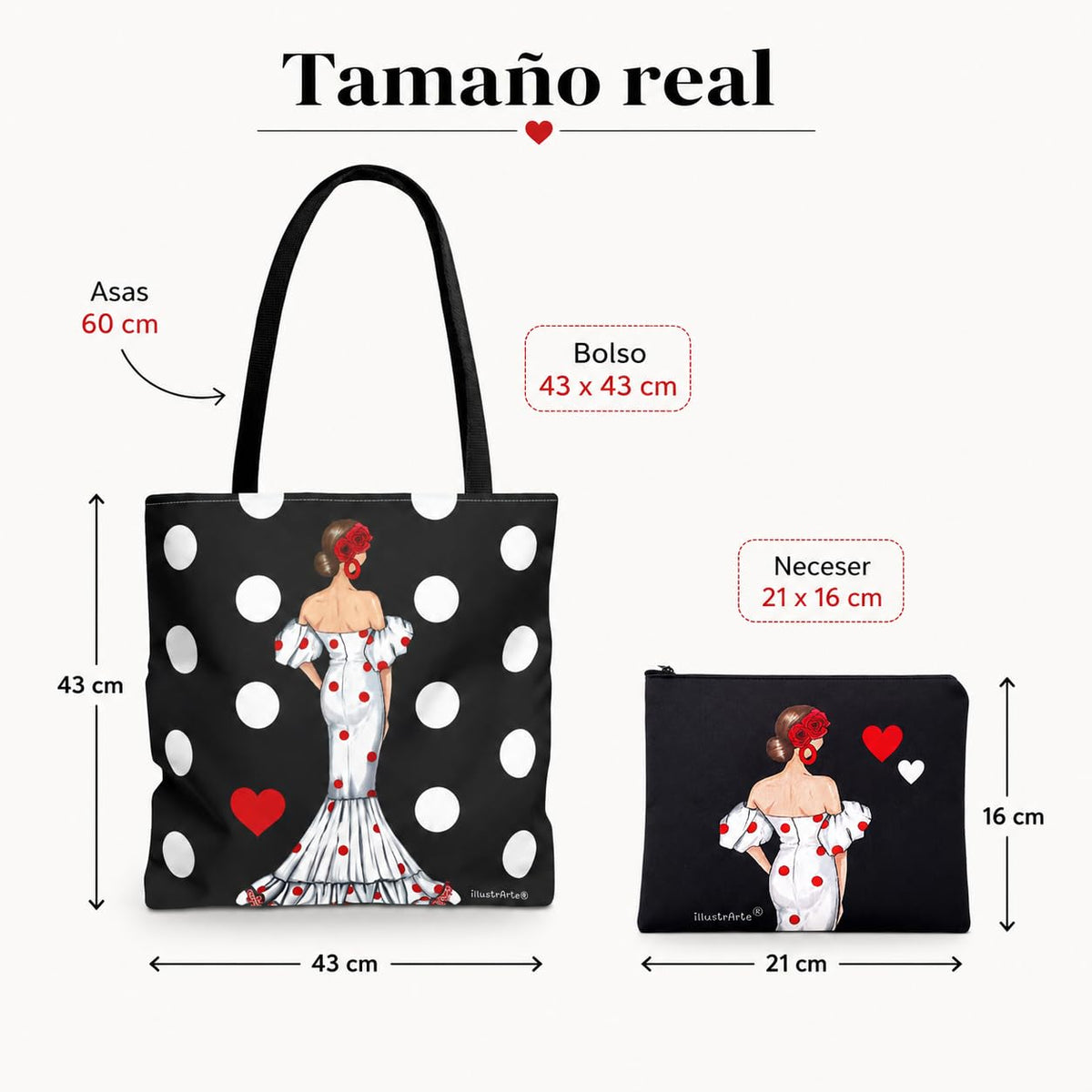
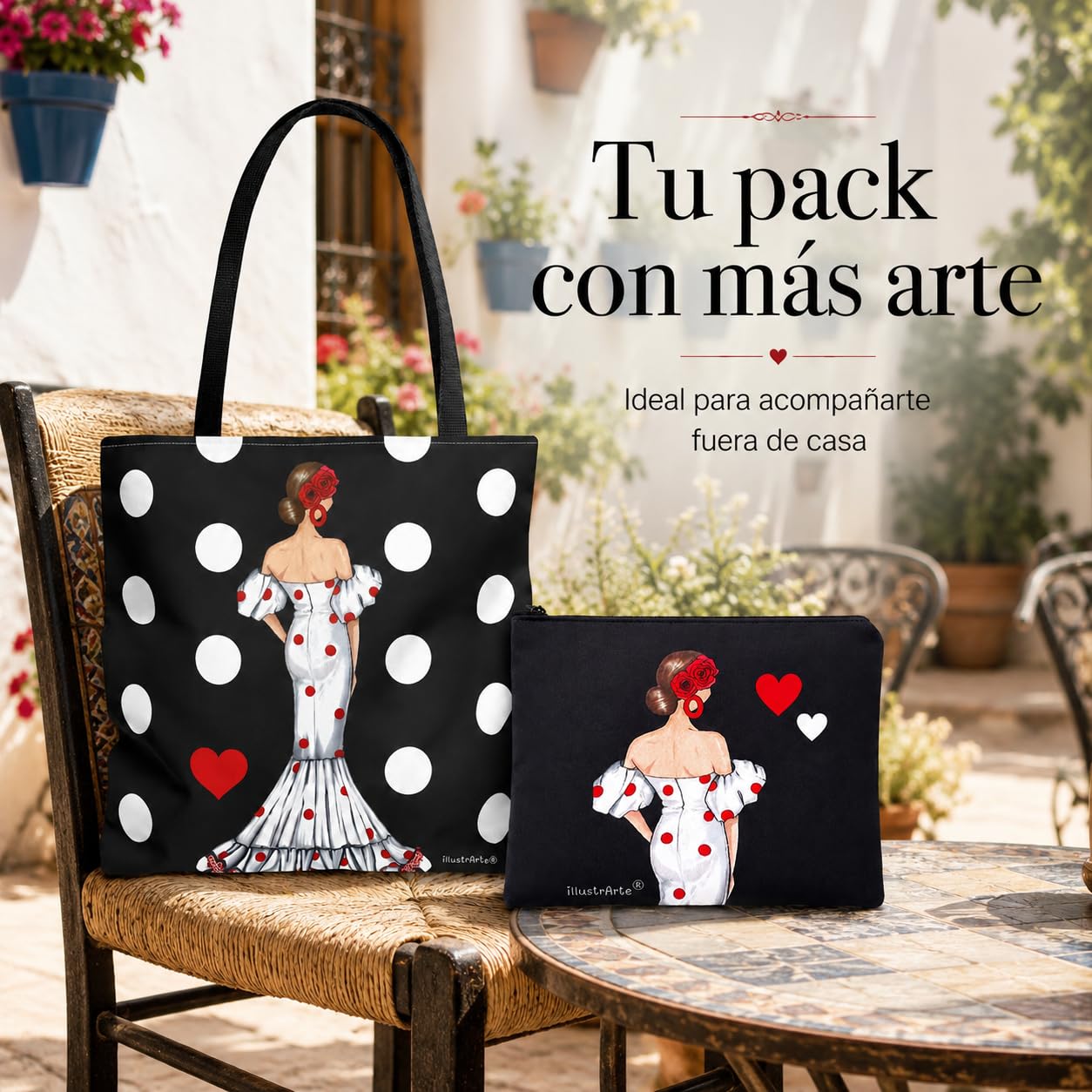
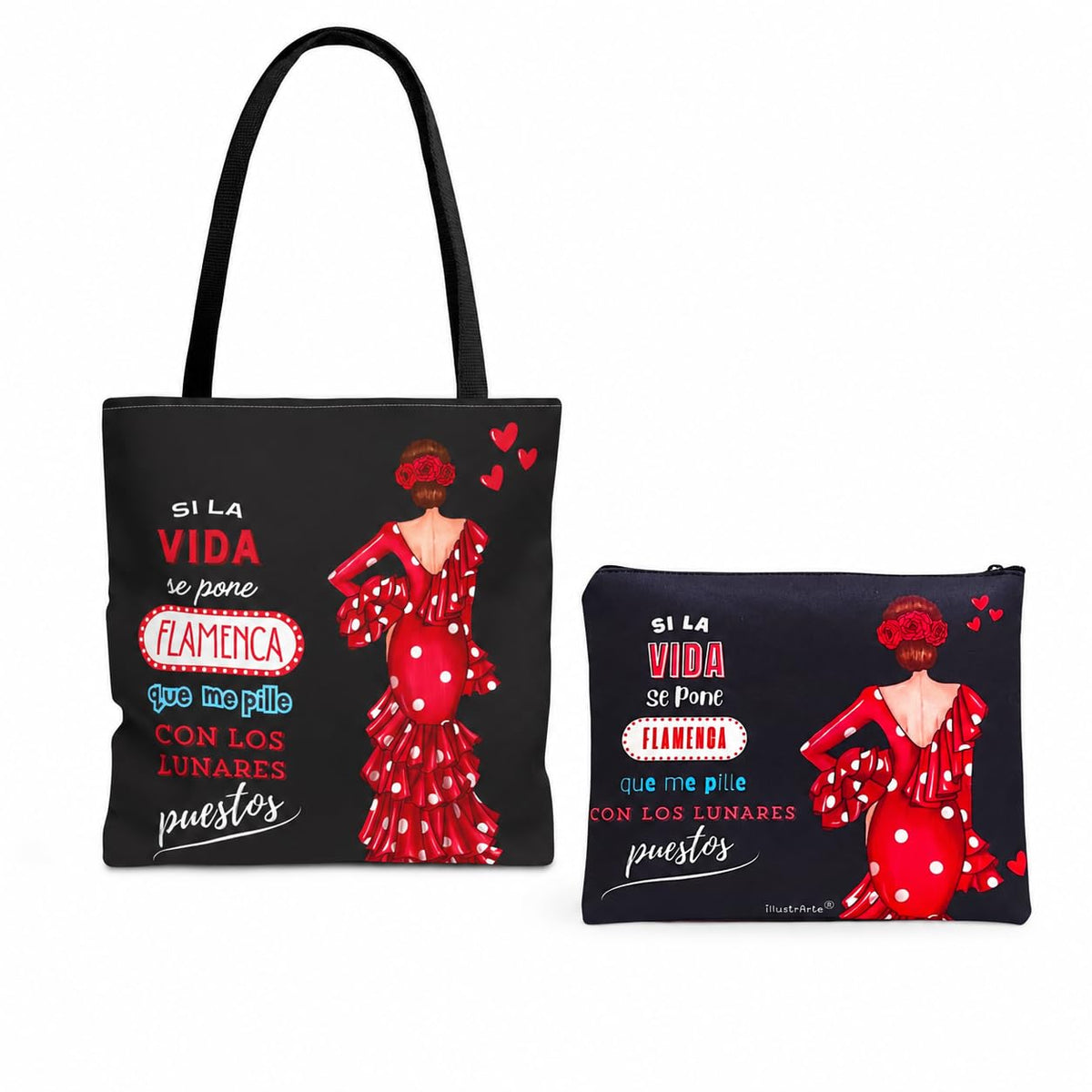
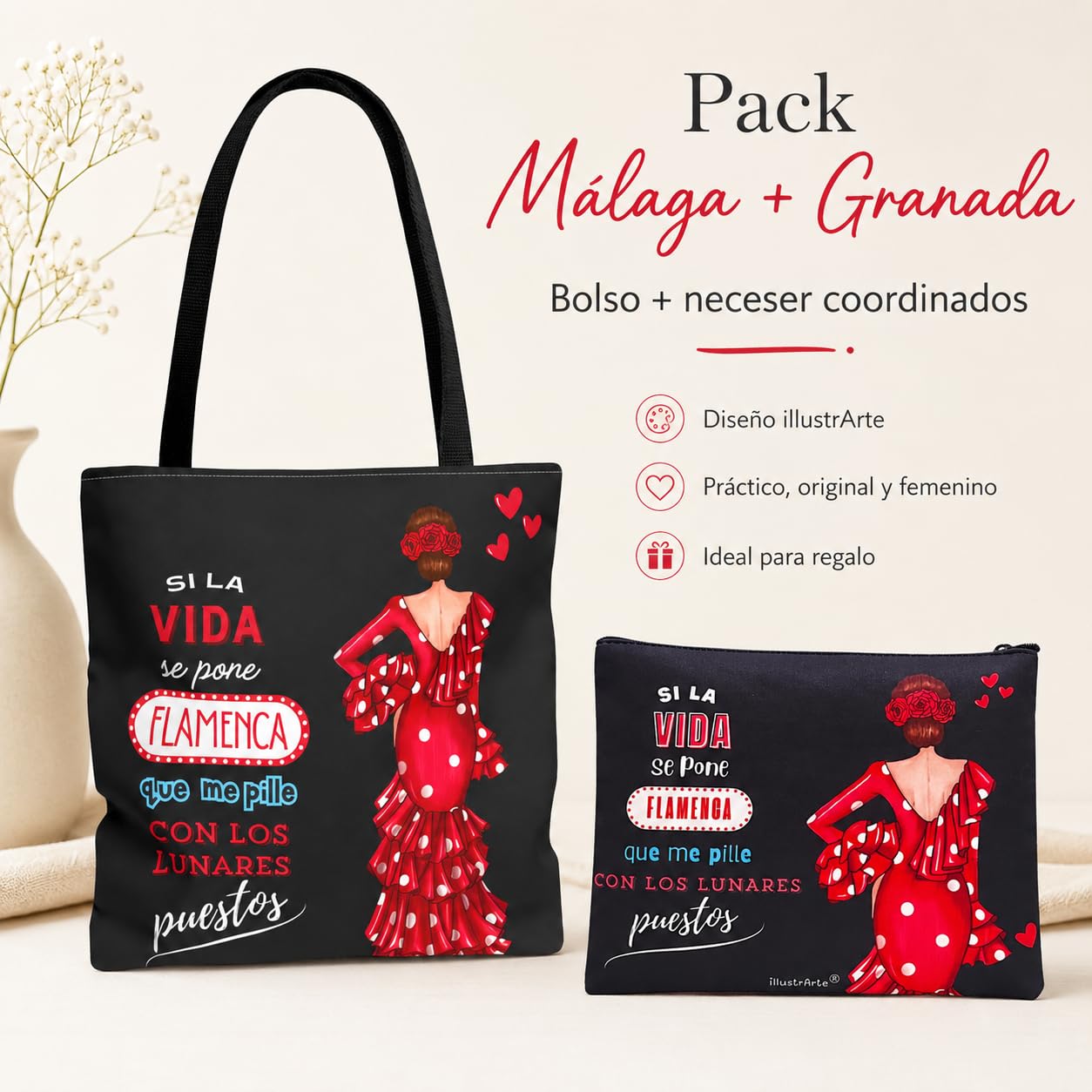
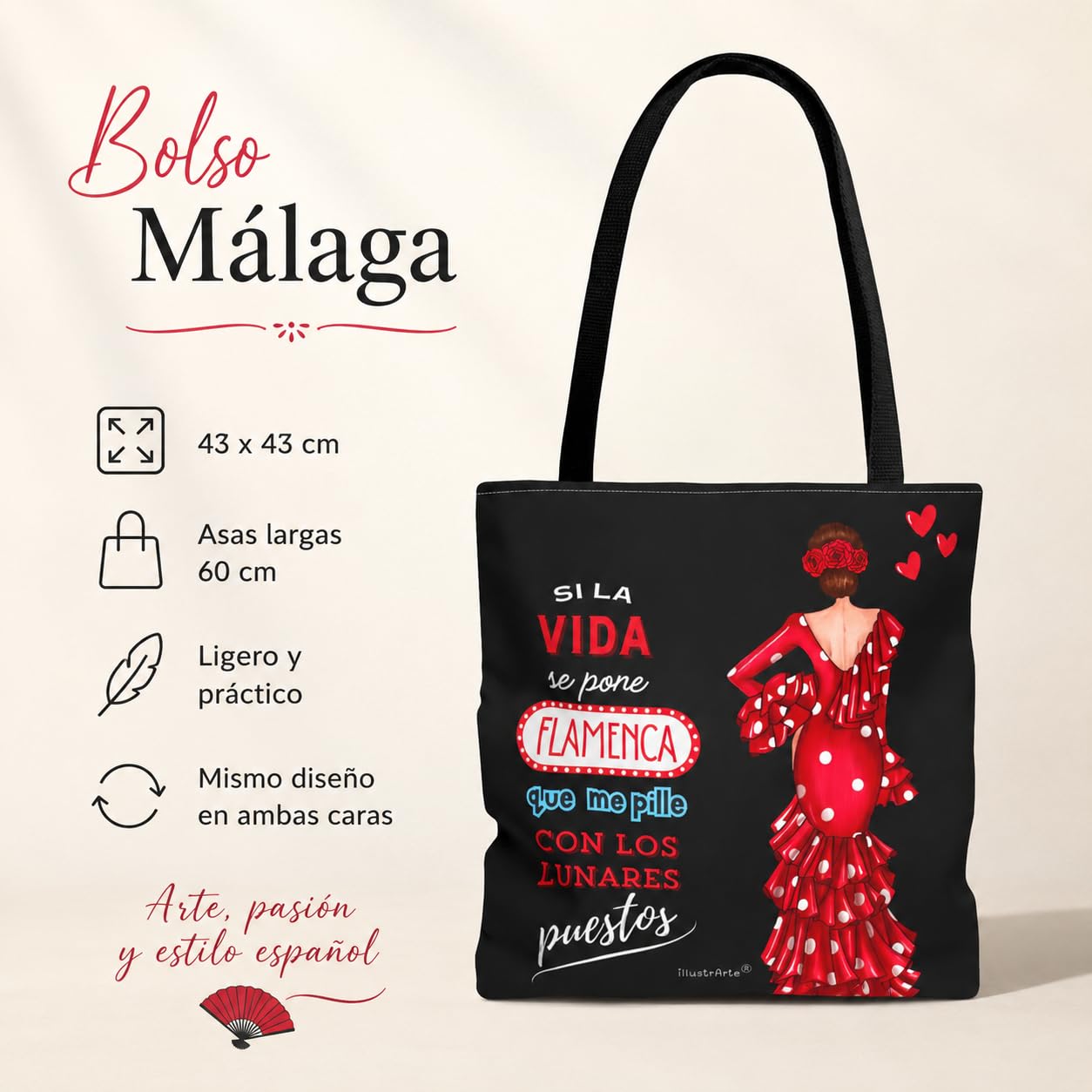
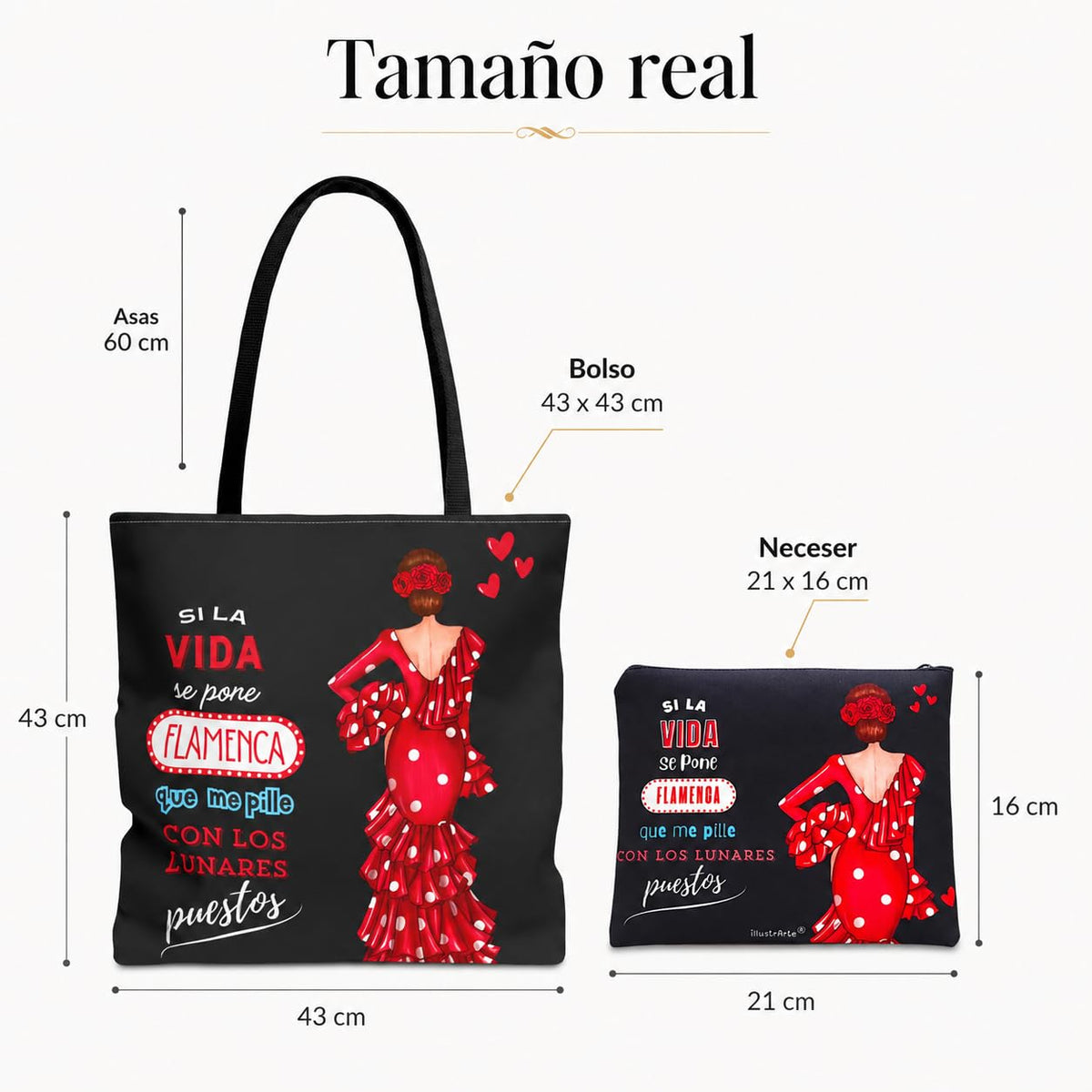
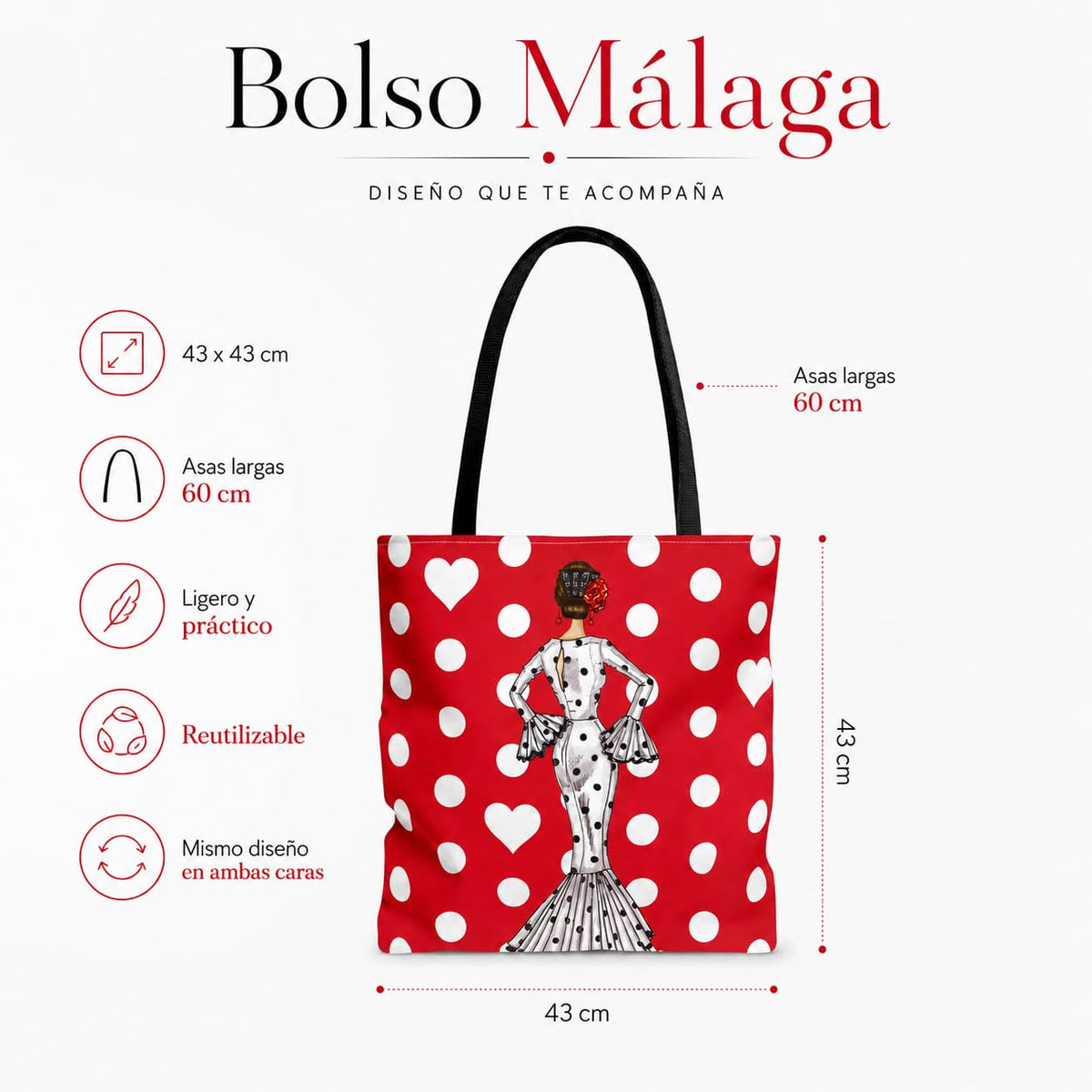
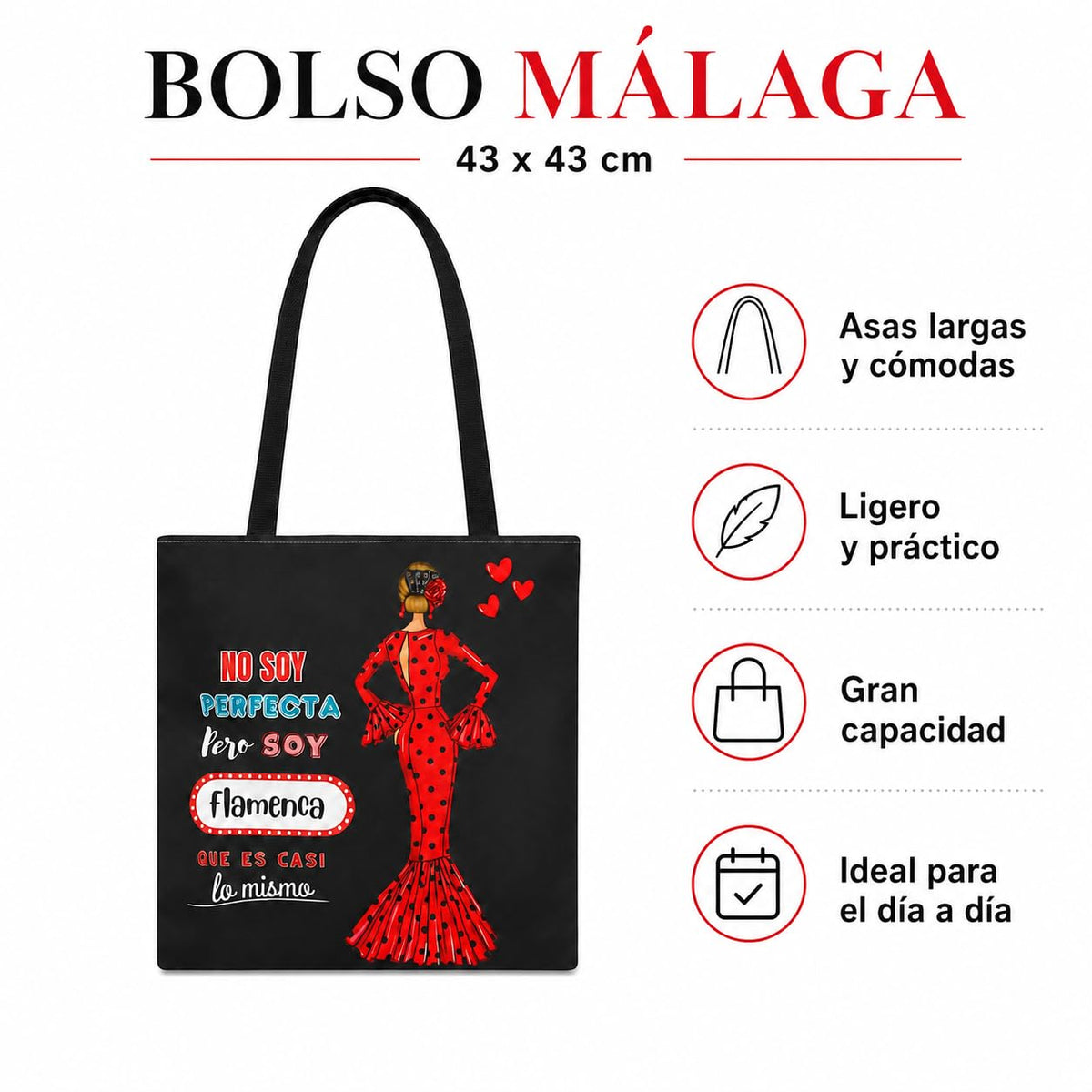
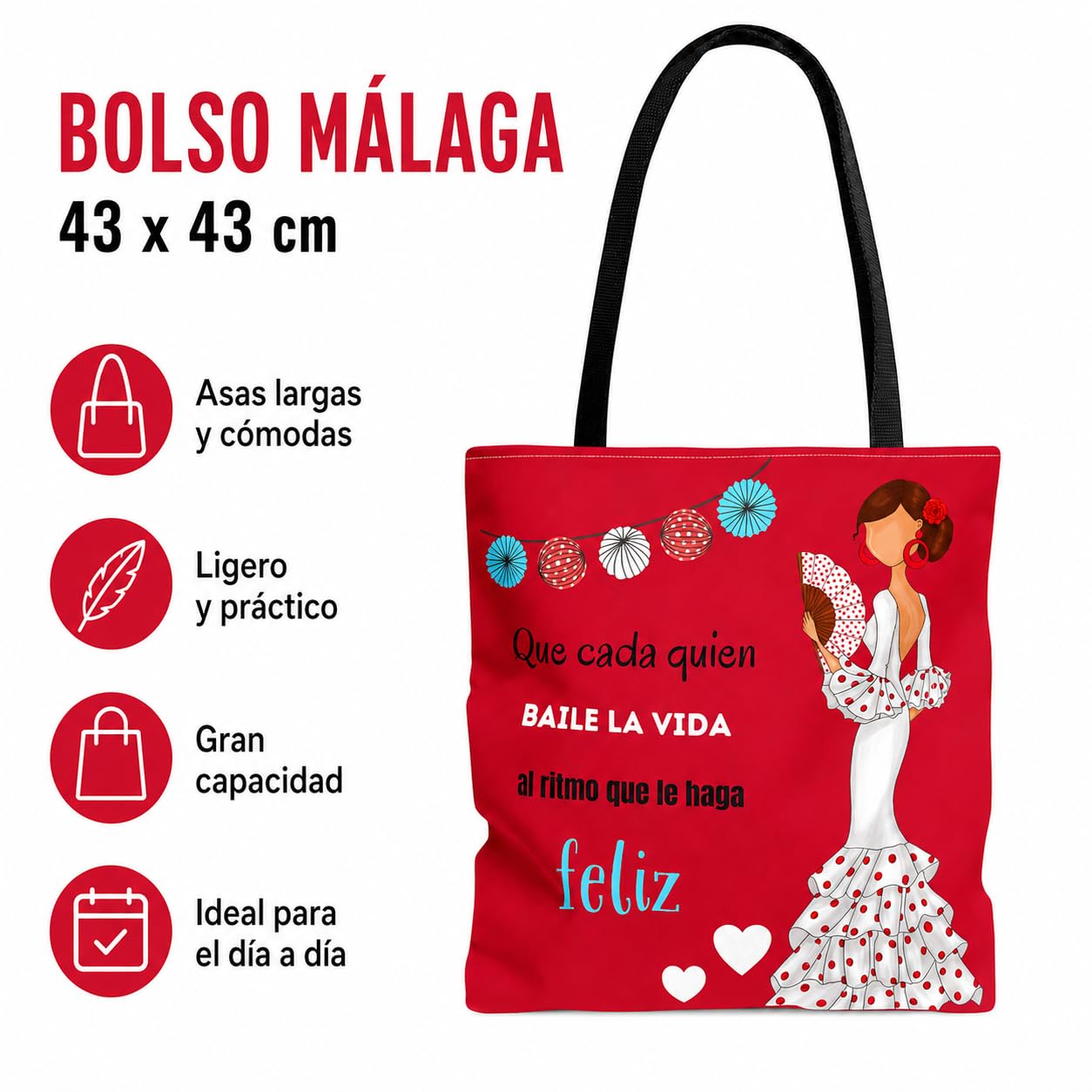
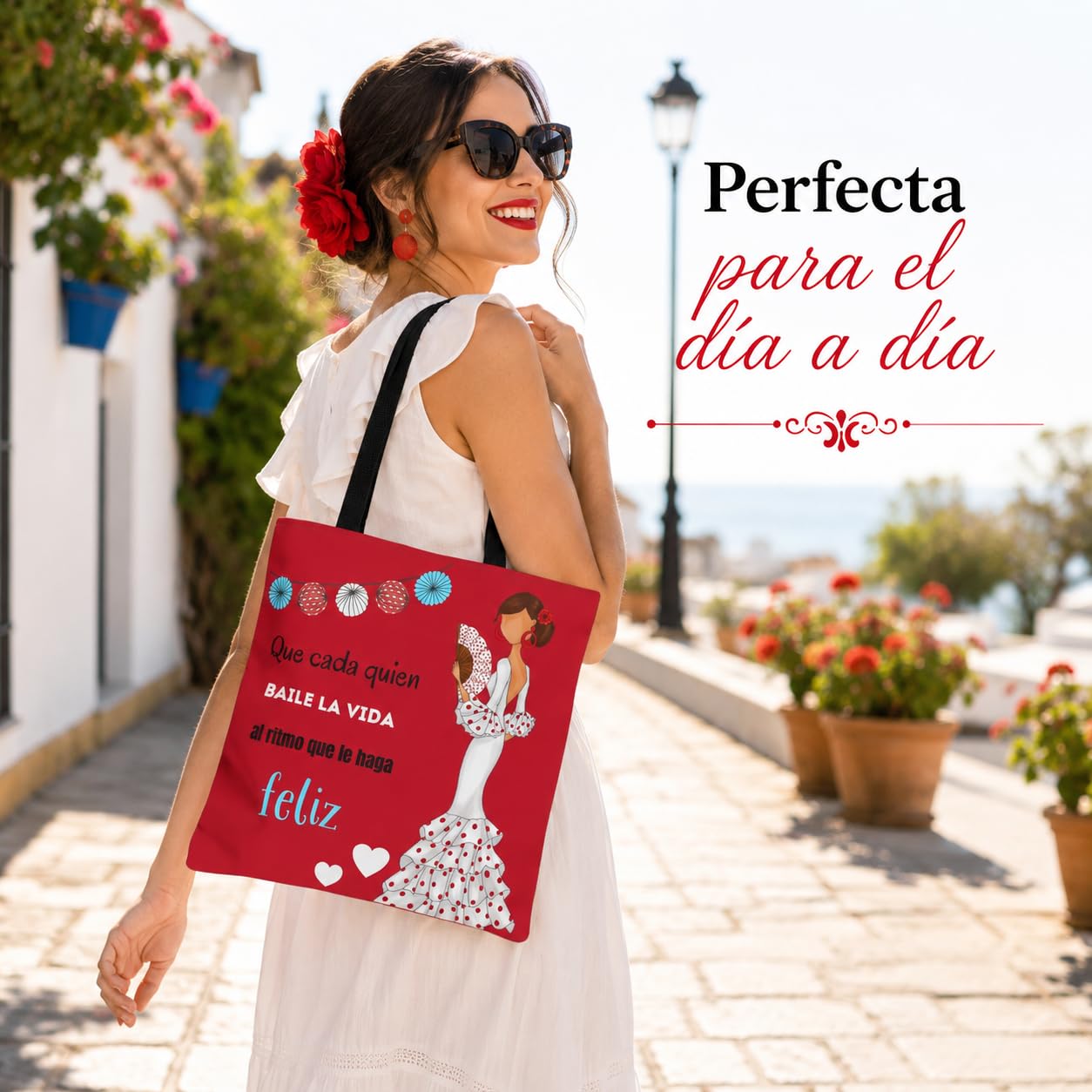
3. A comfortable, hard-wearing bag
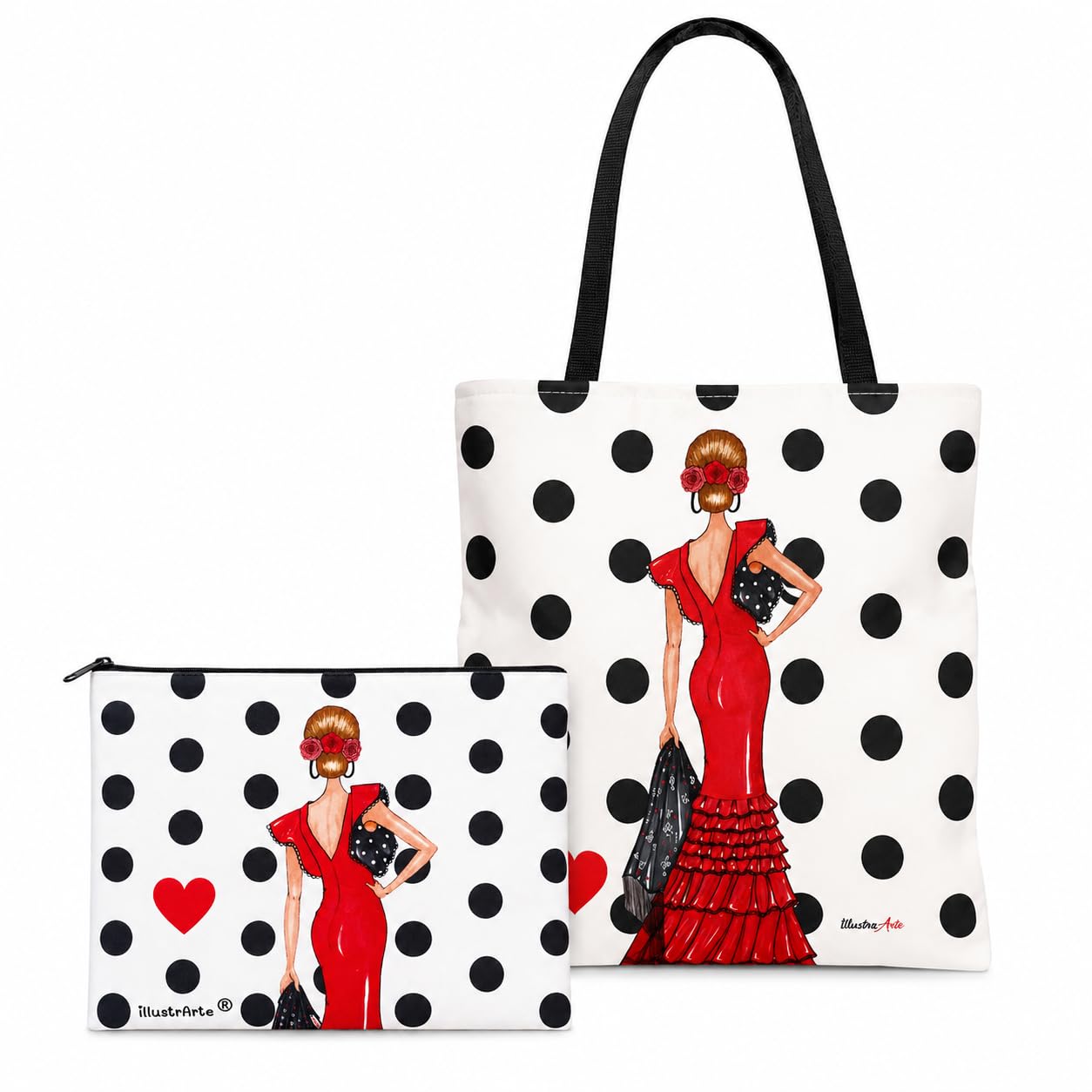
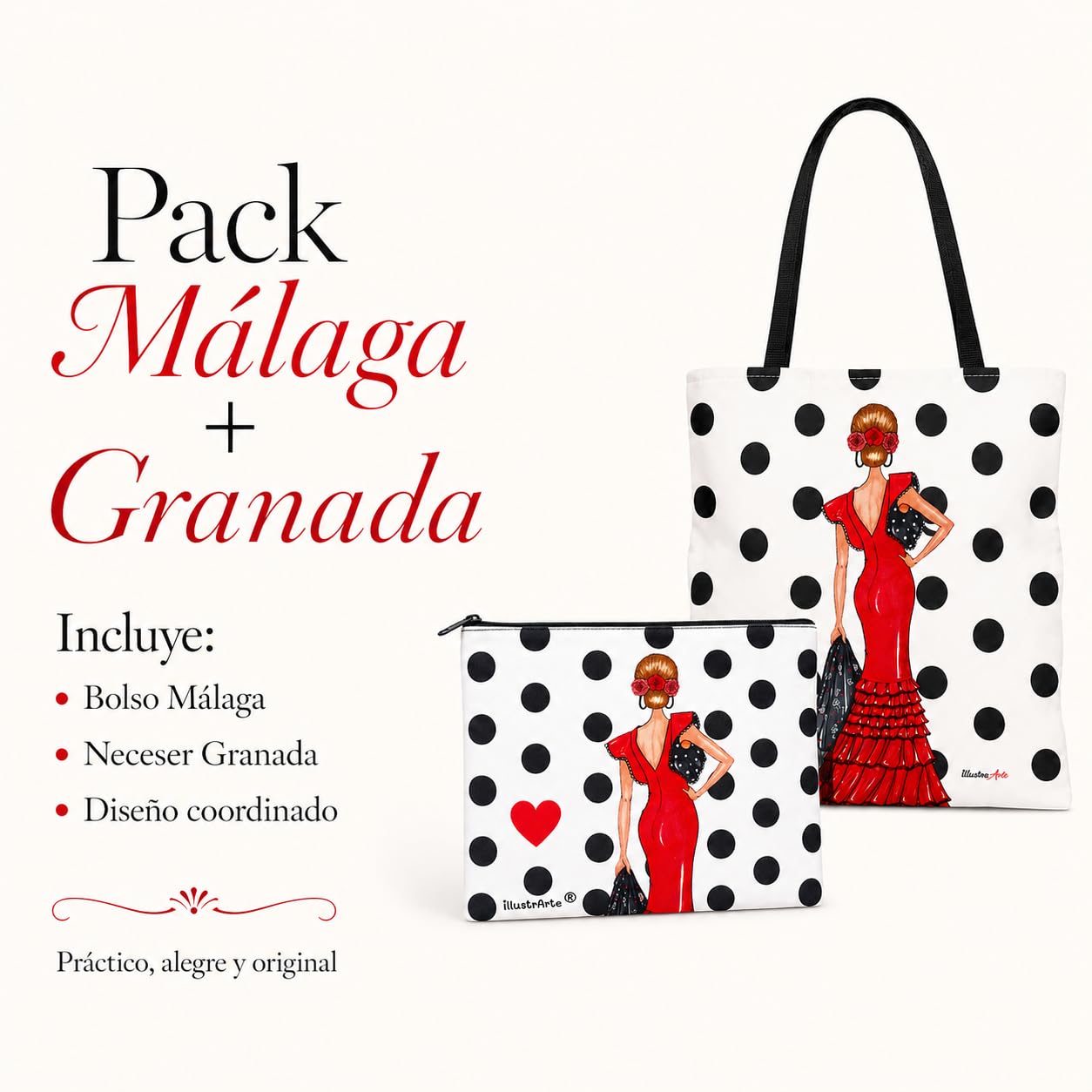
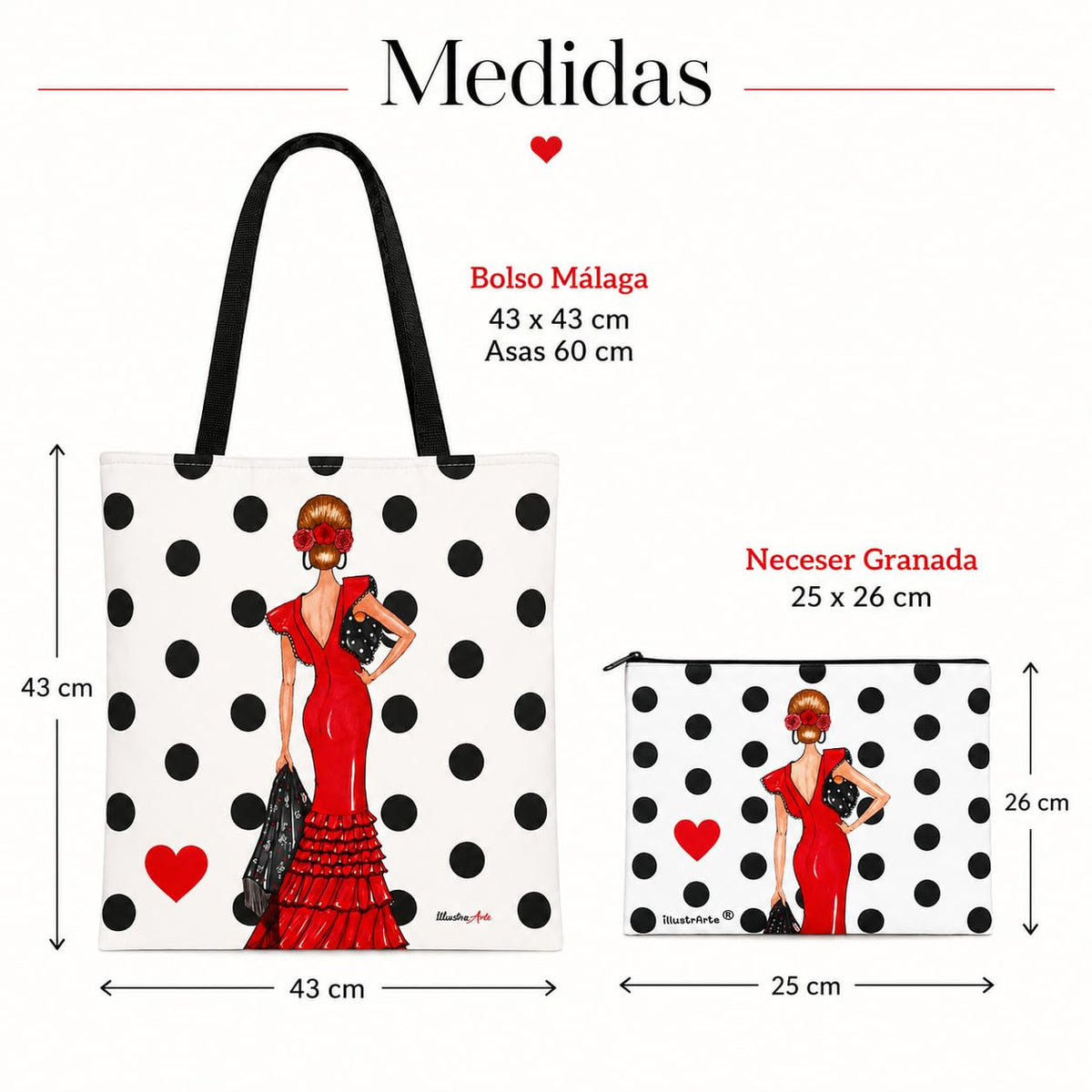
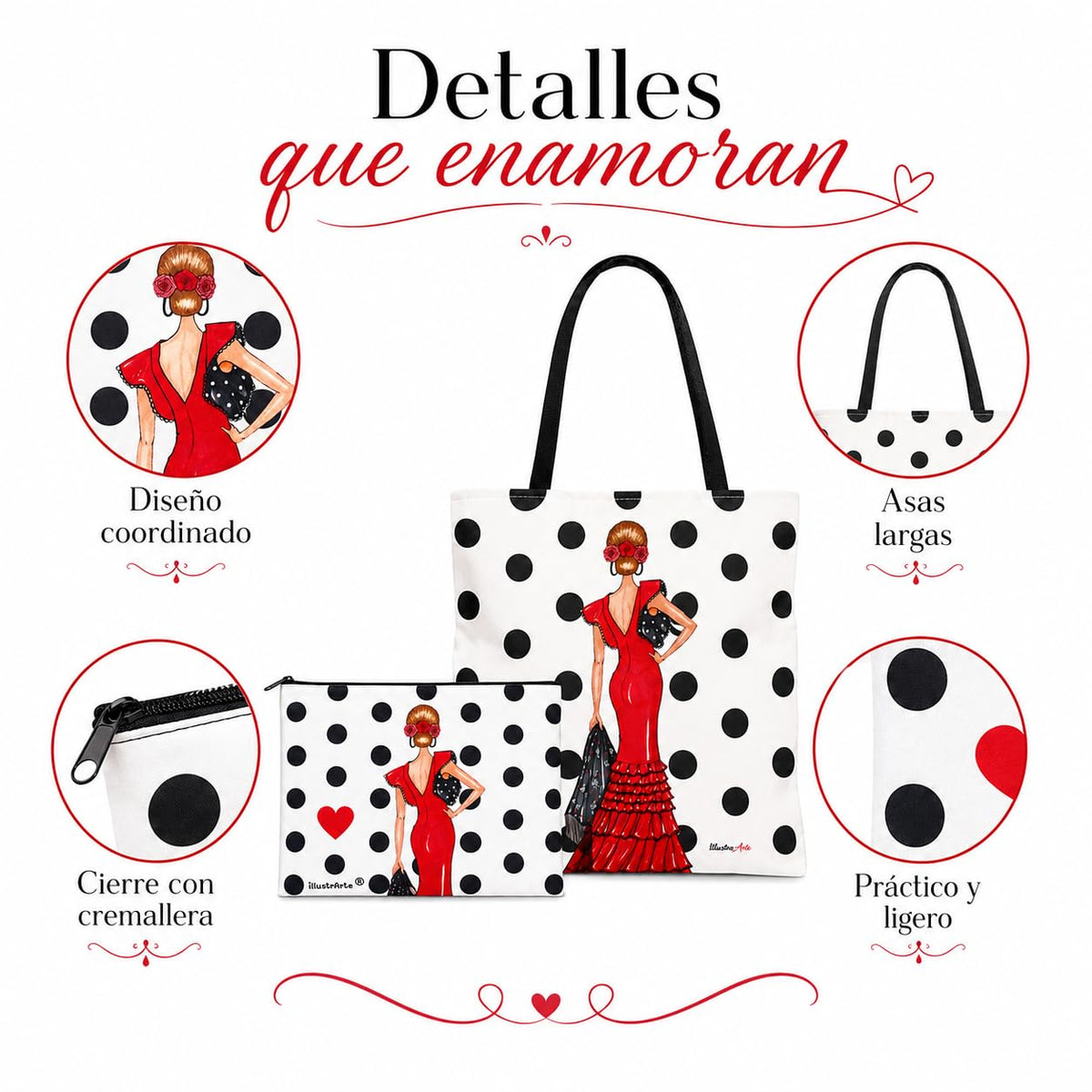
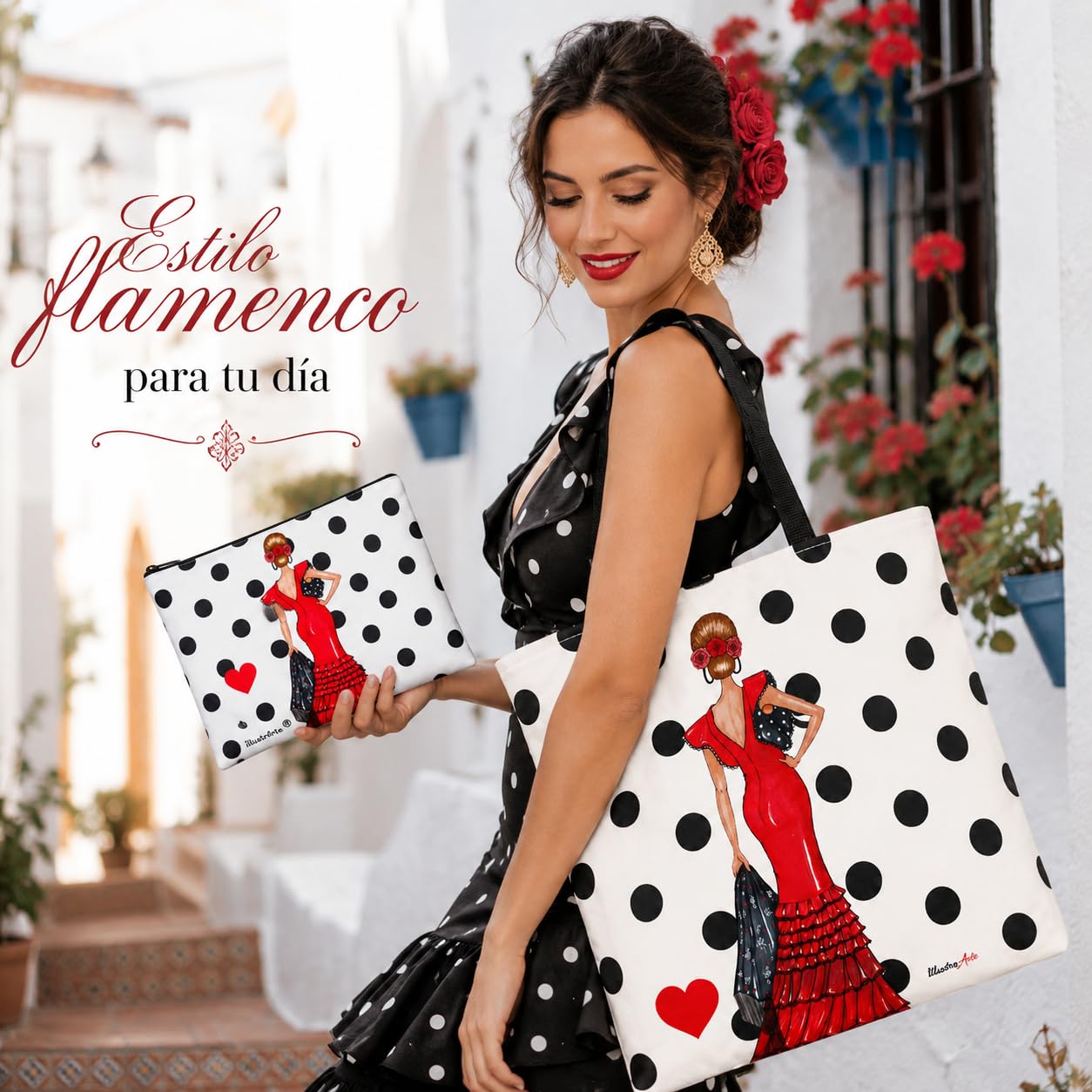
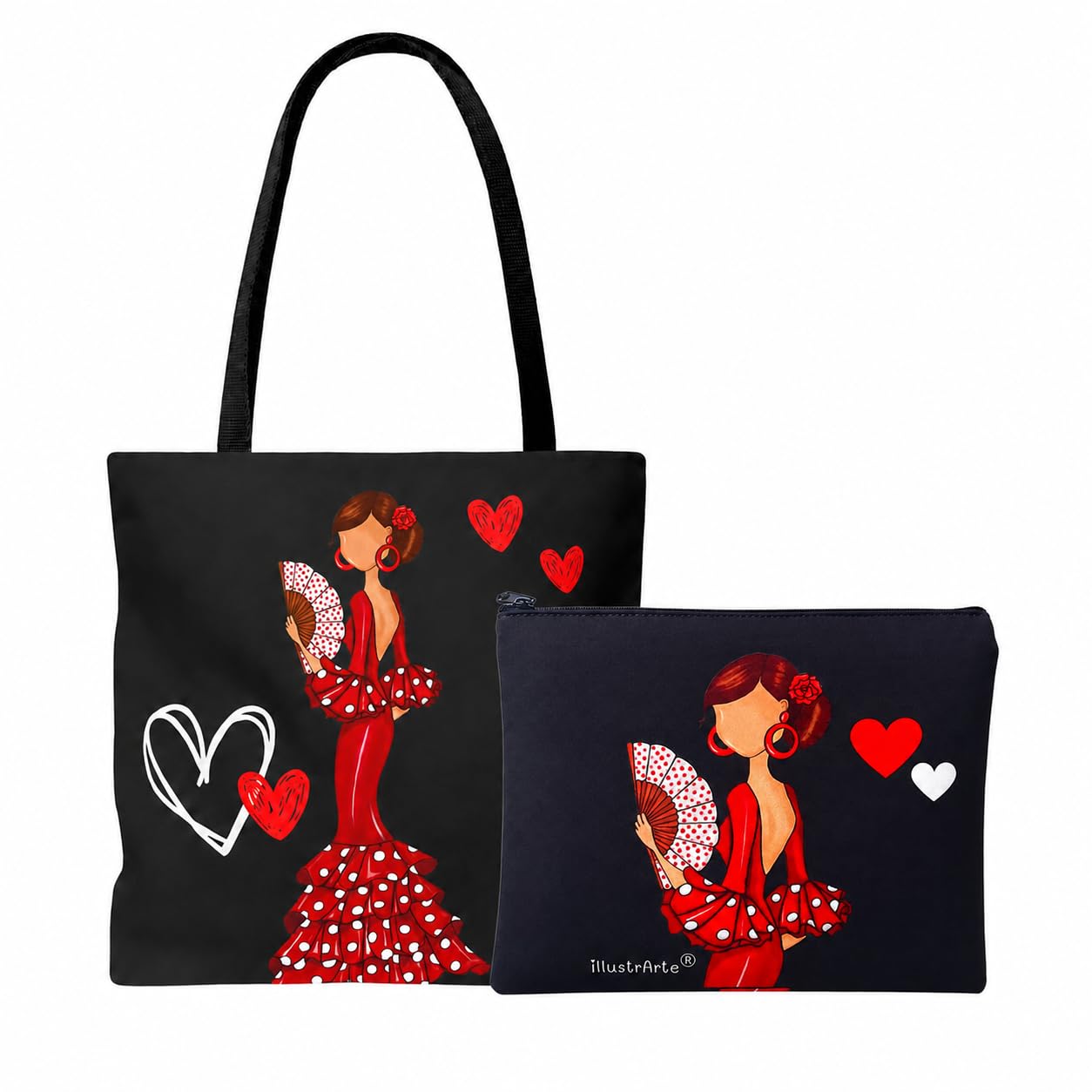
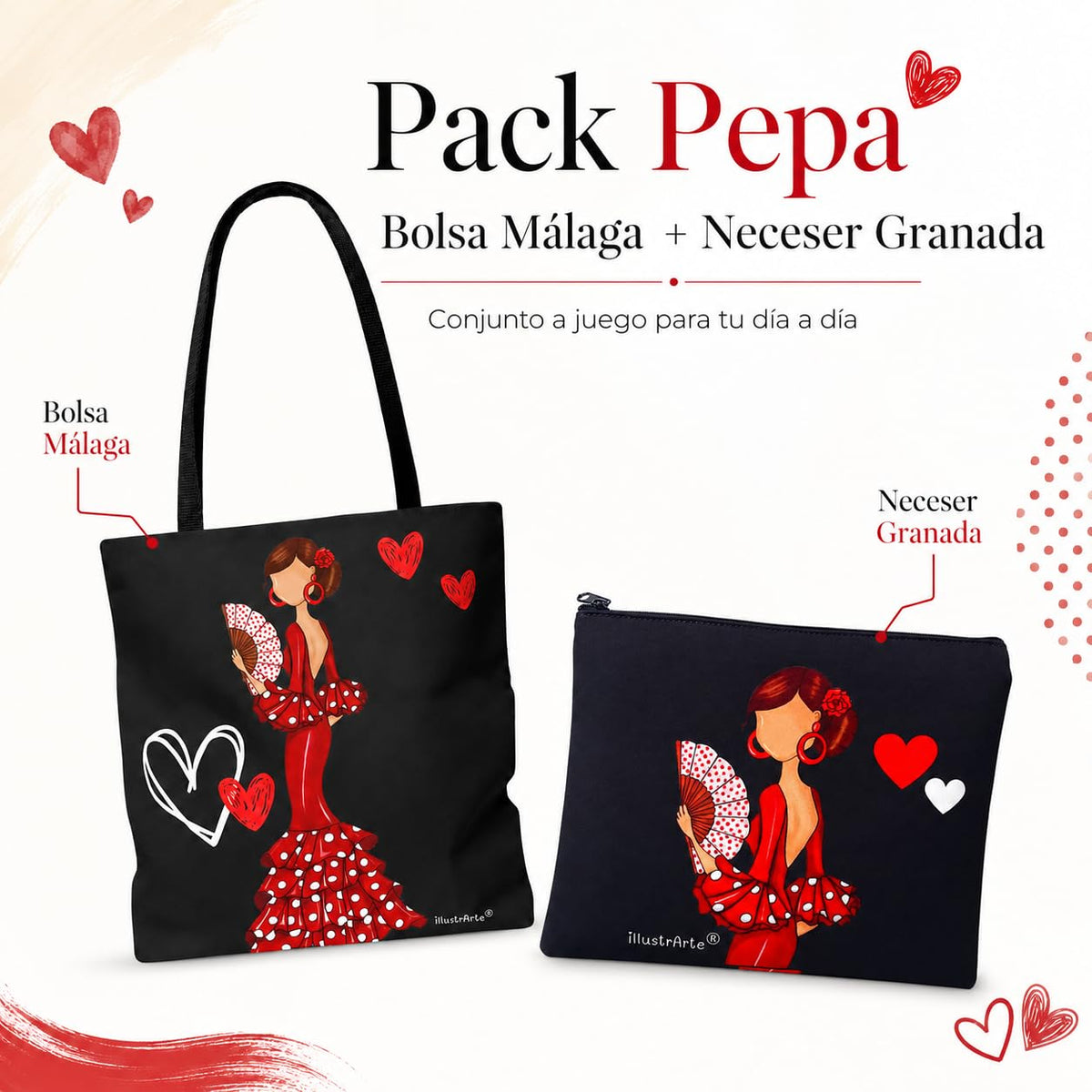
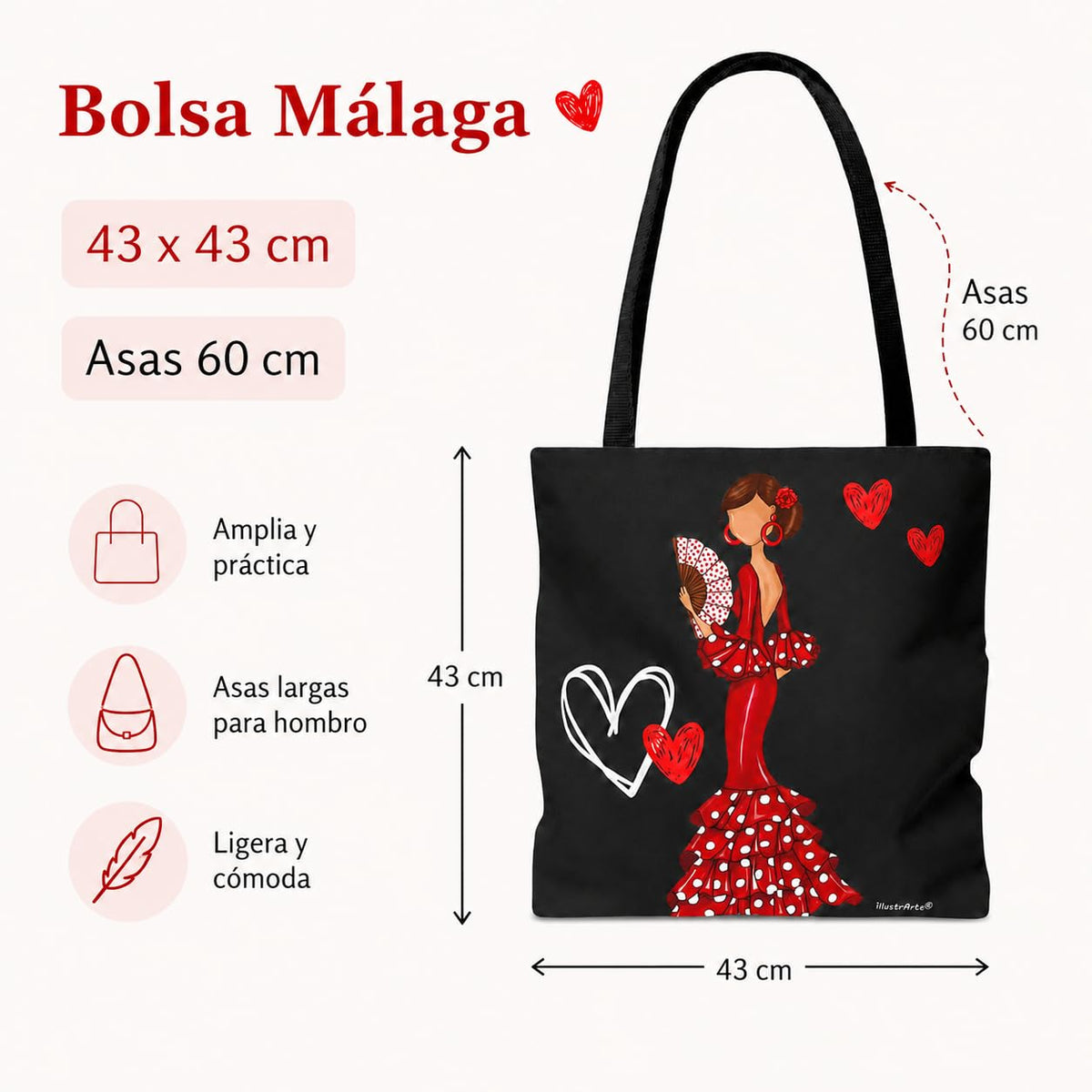
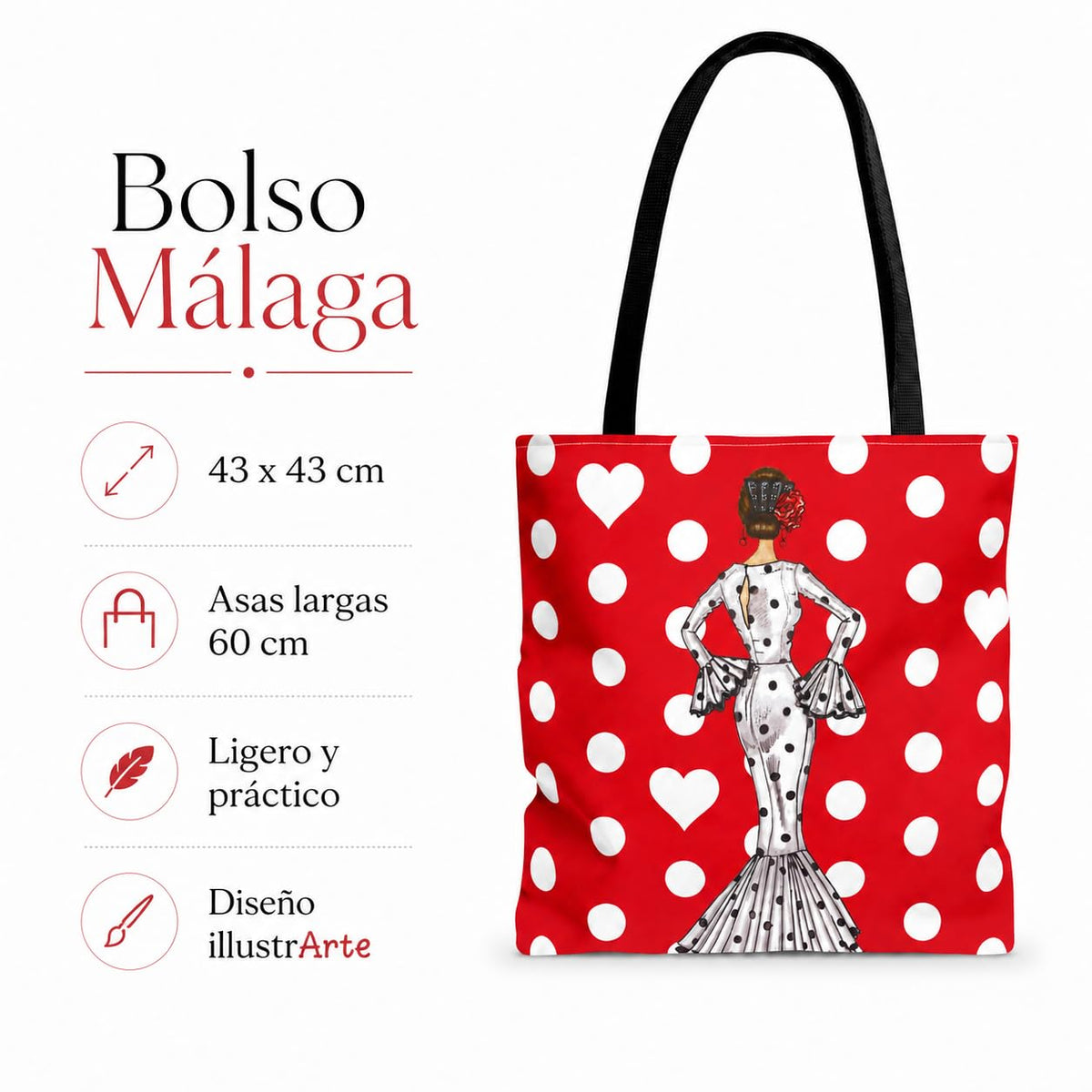
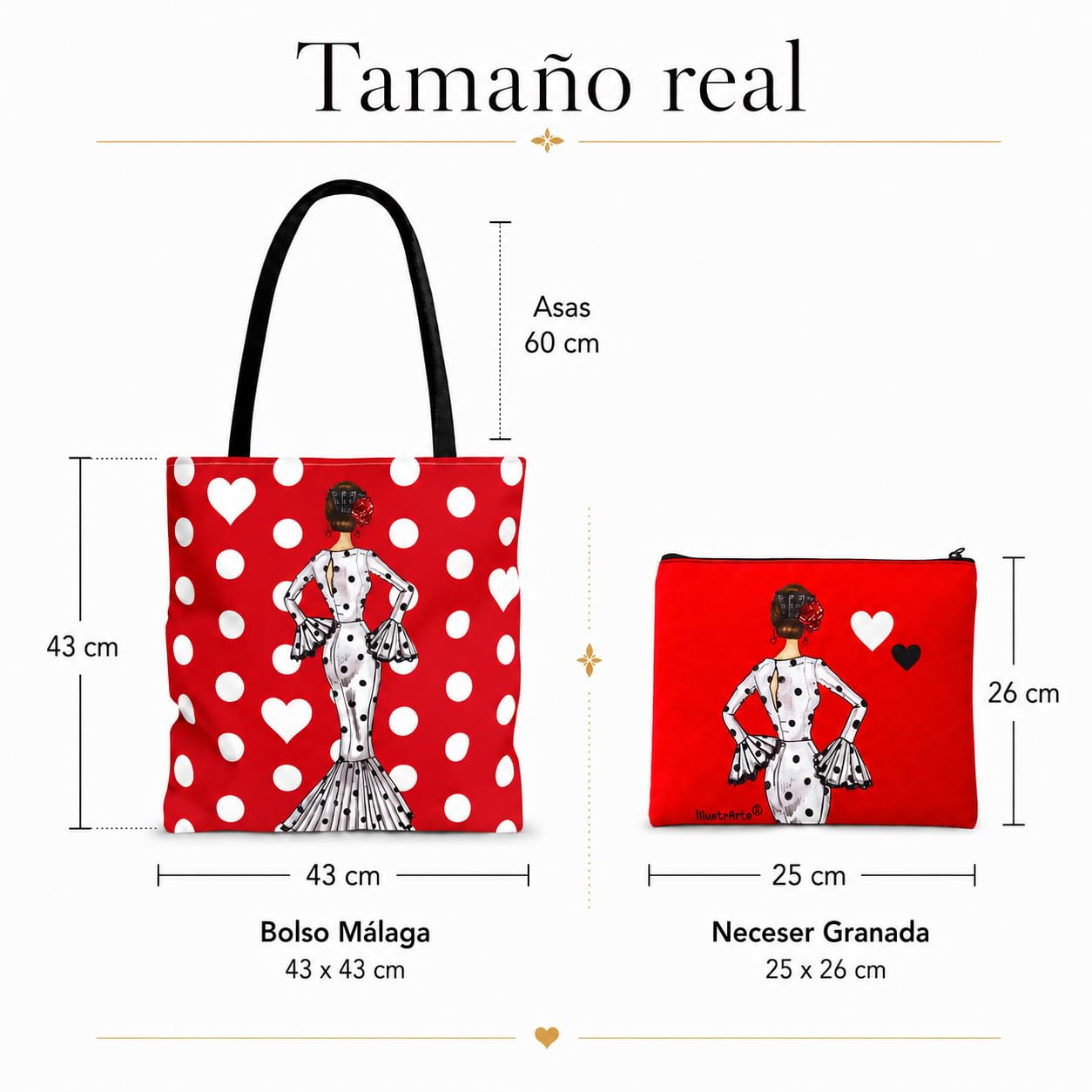
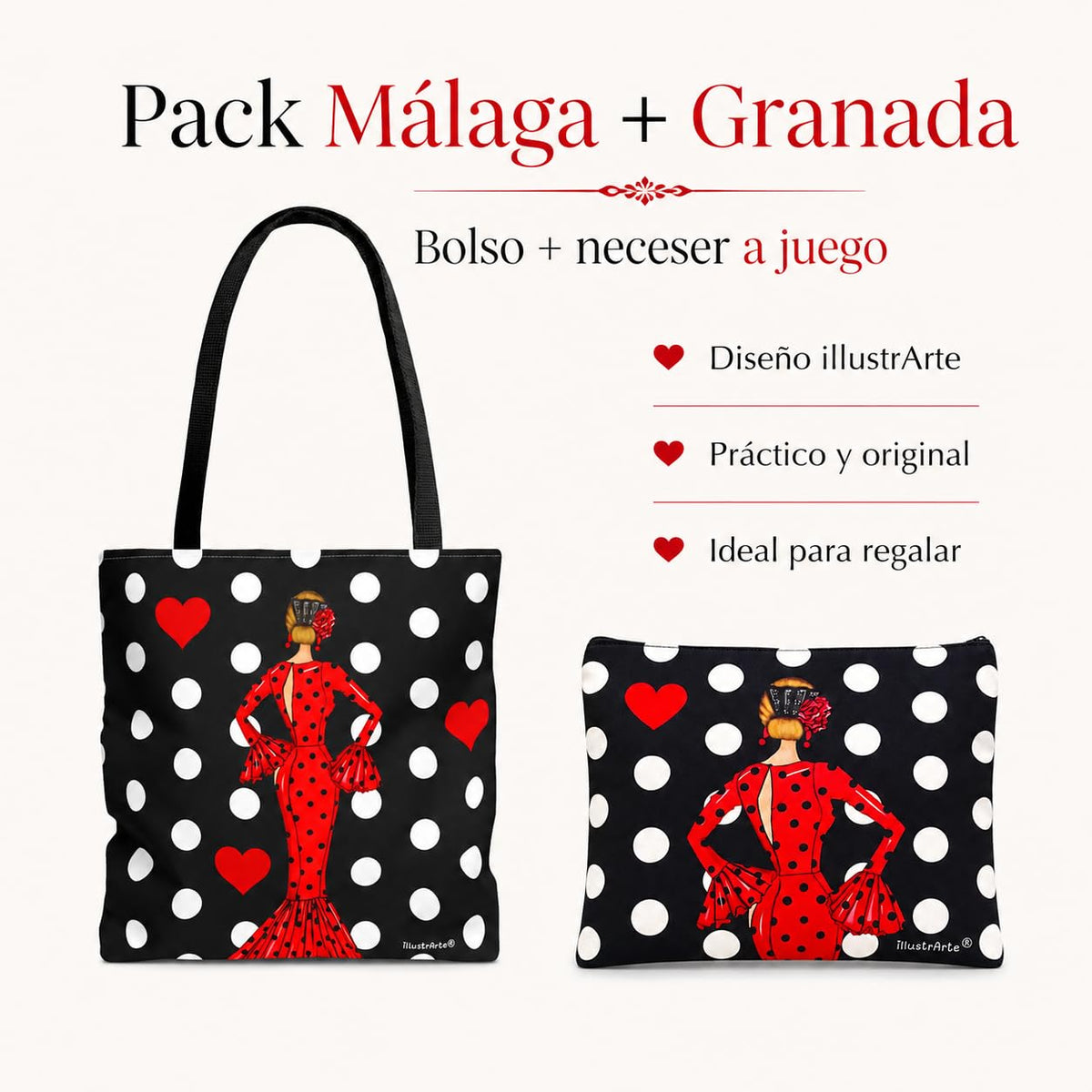
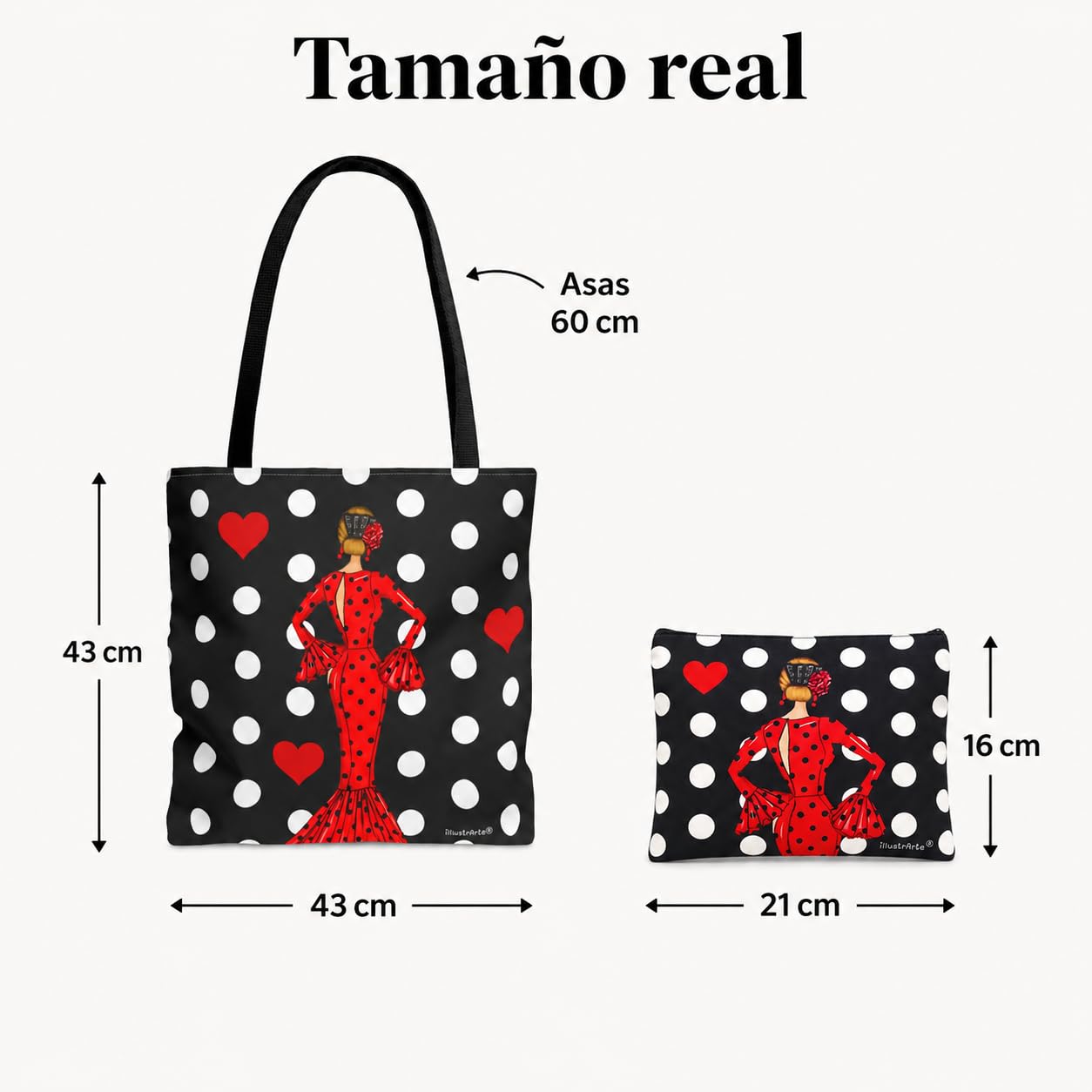
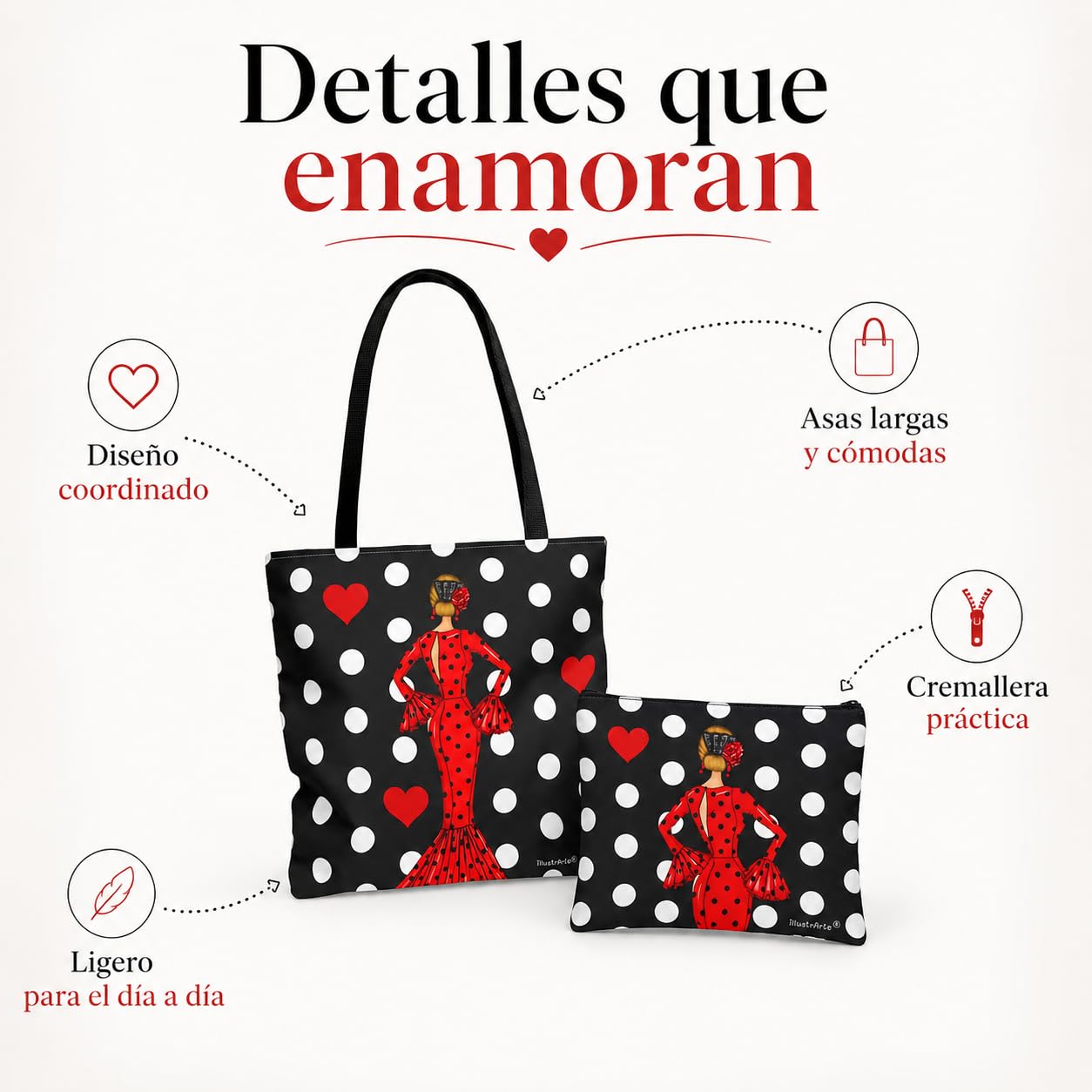
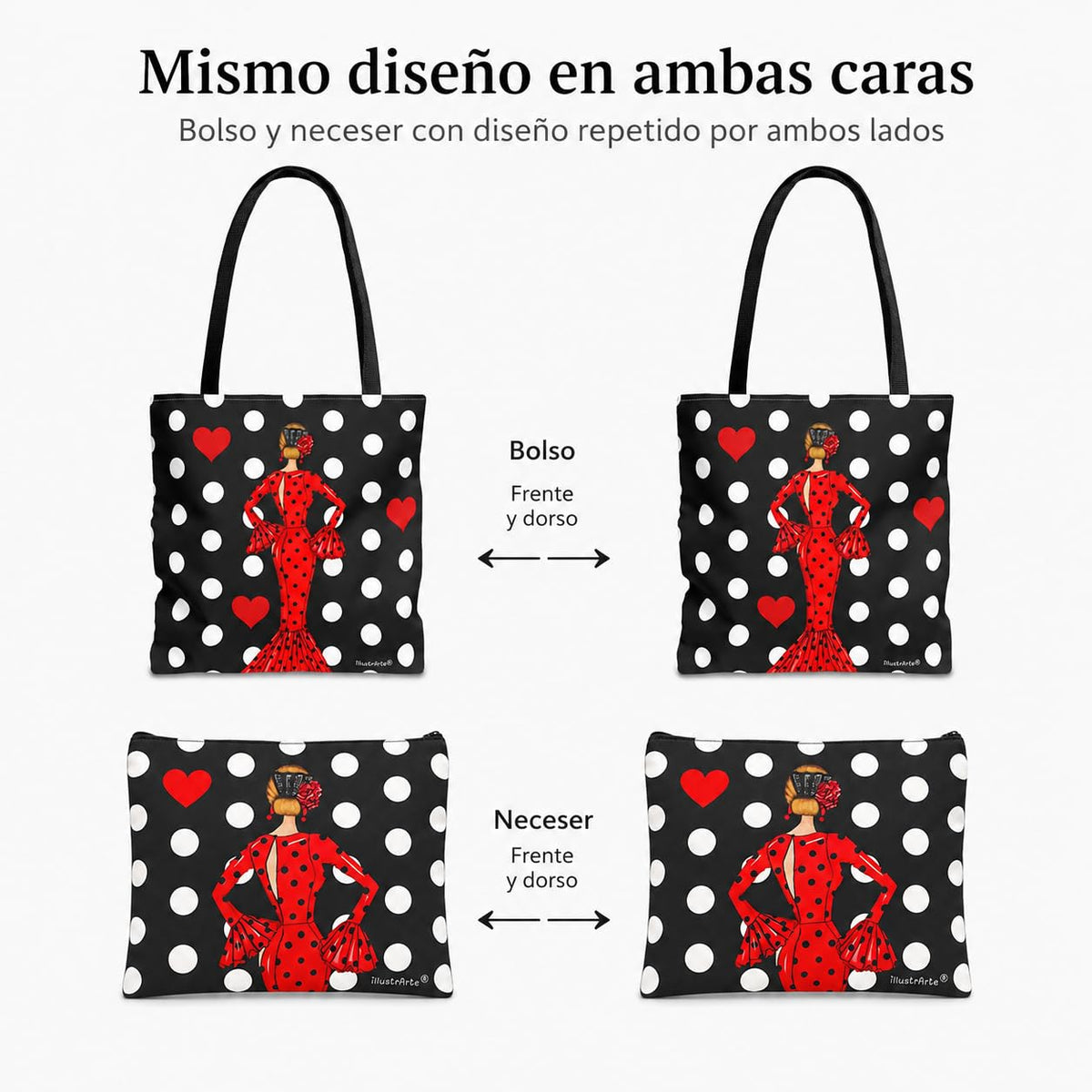
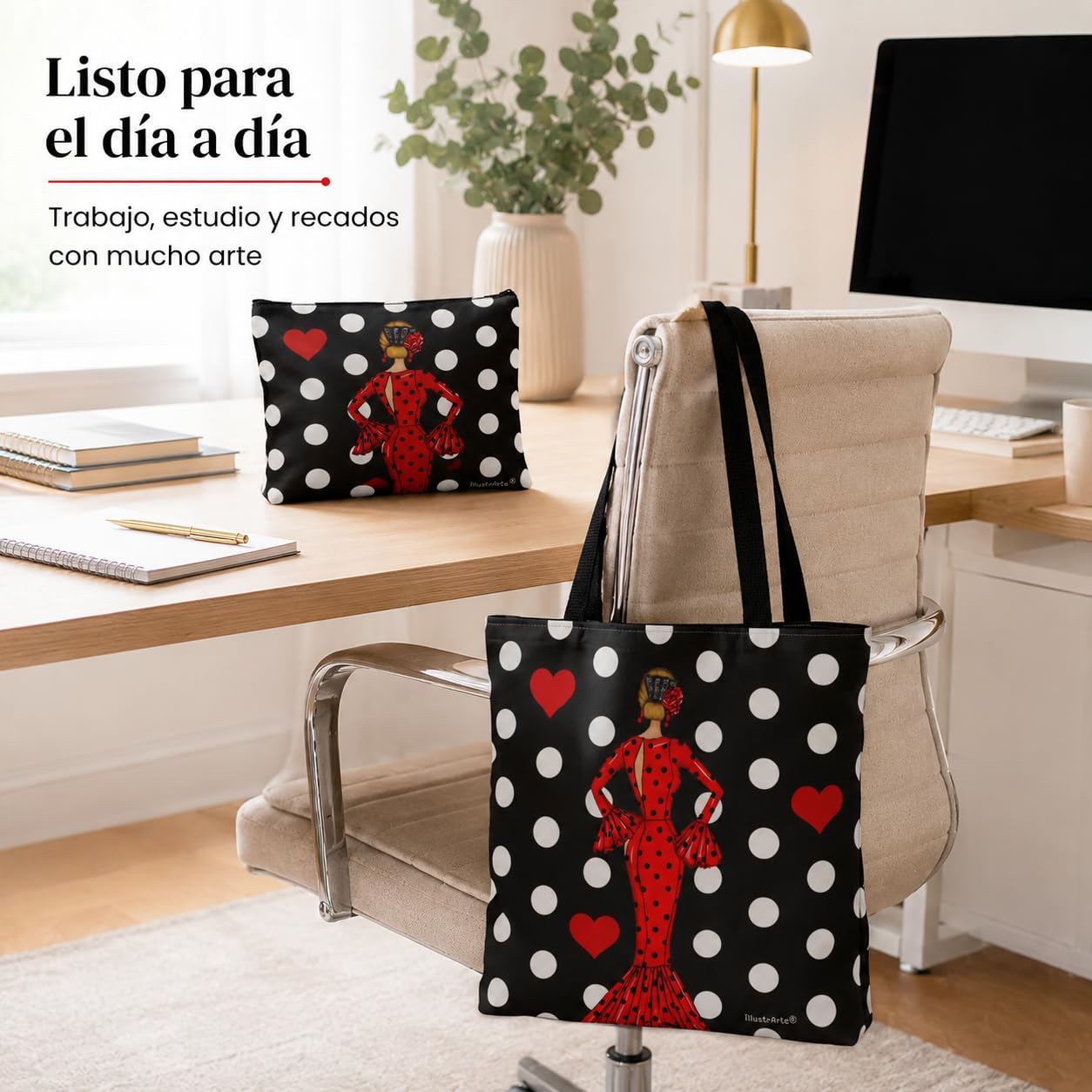
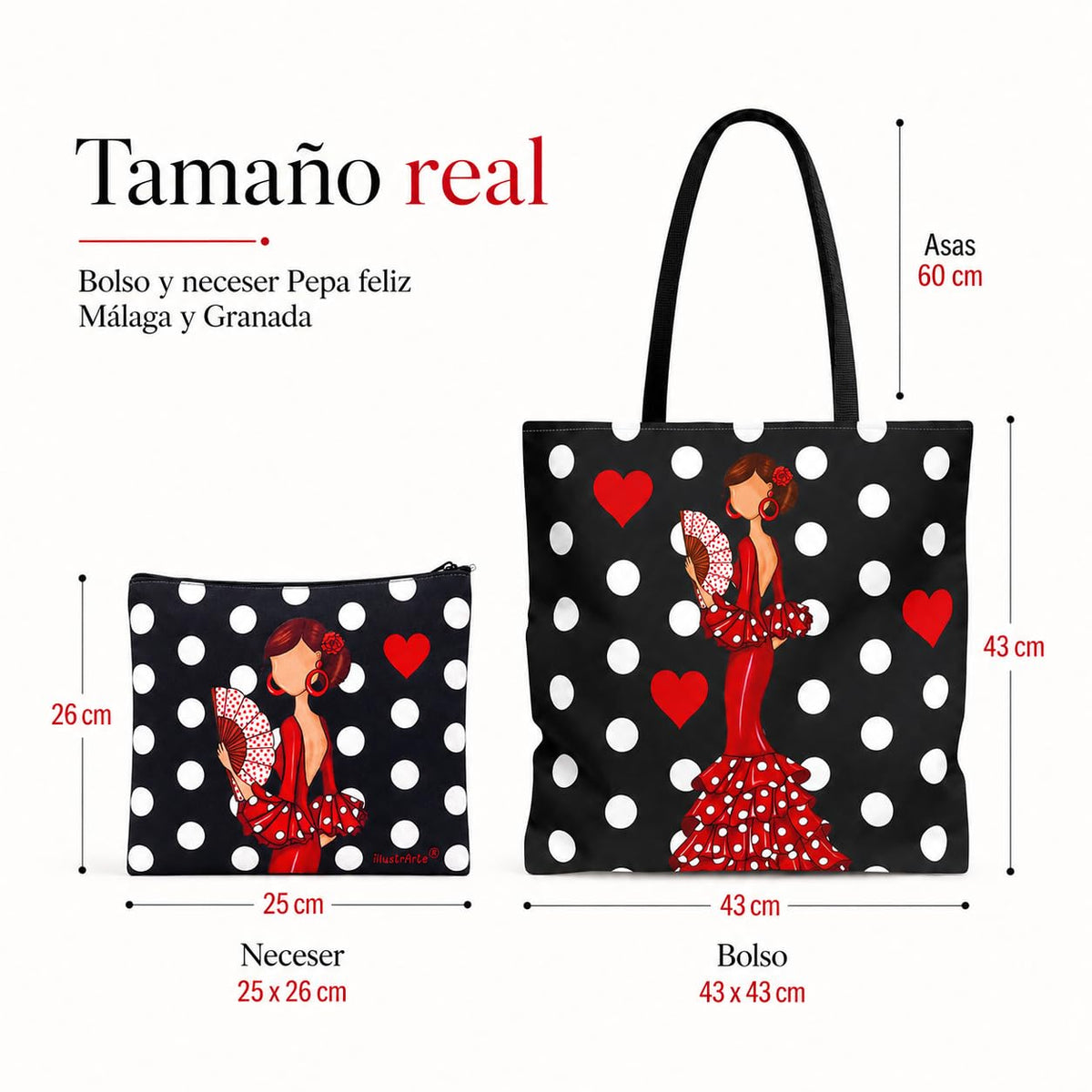
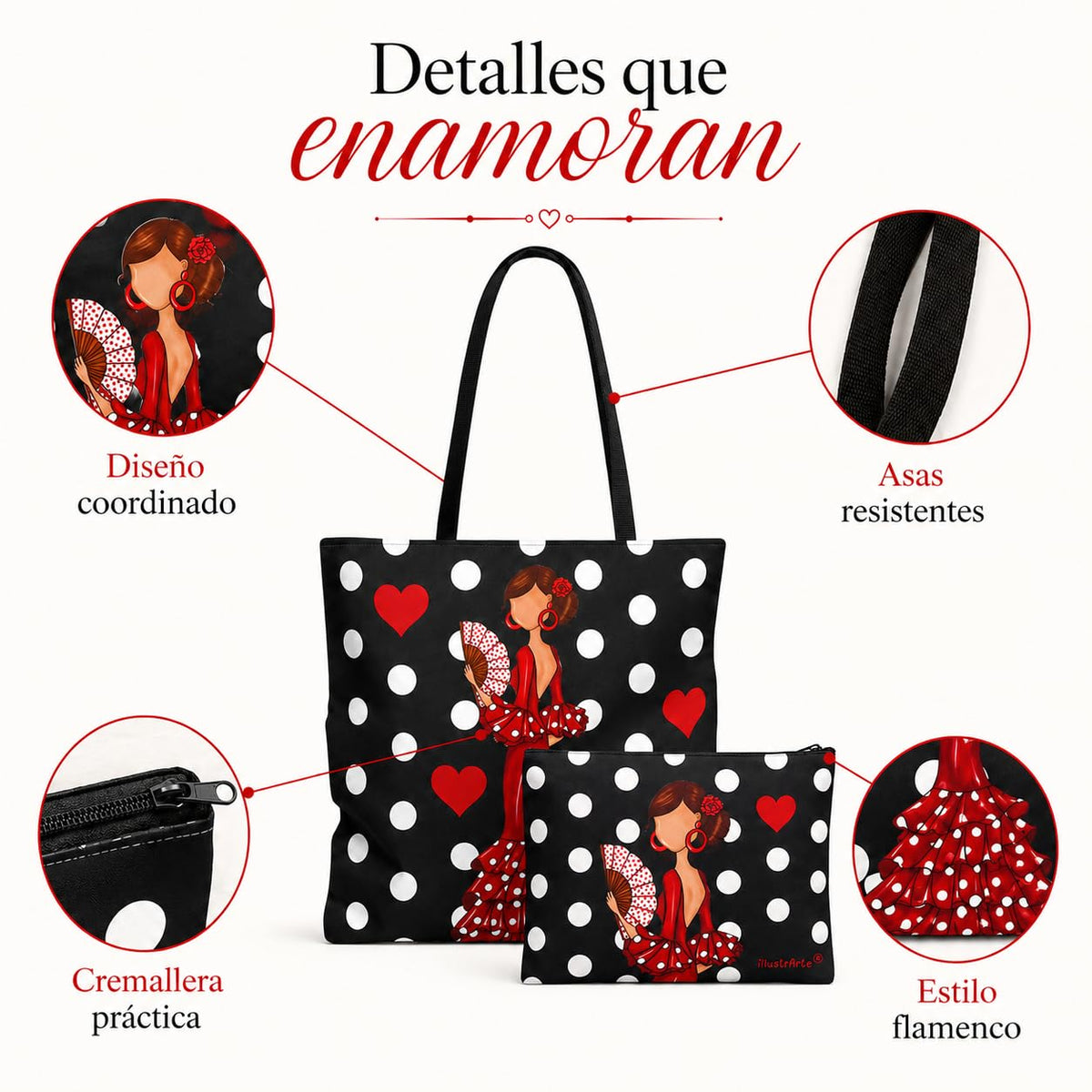
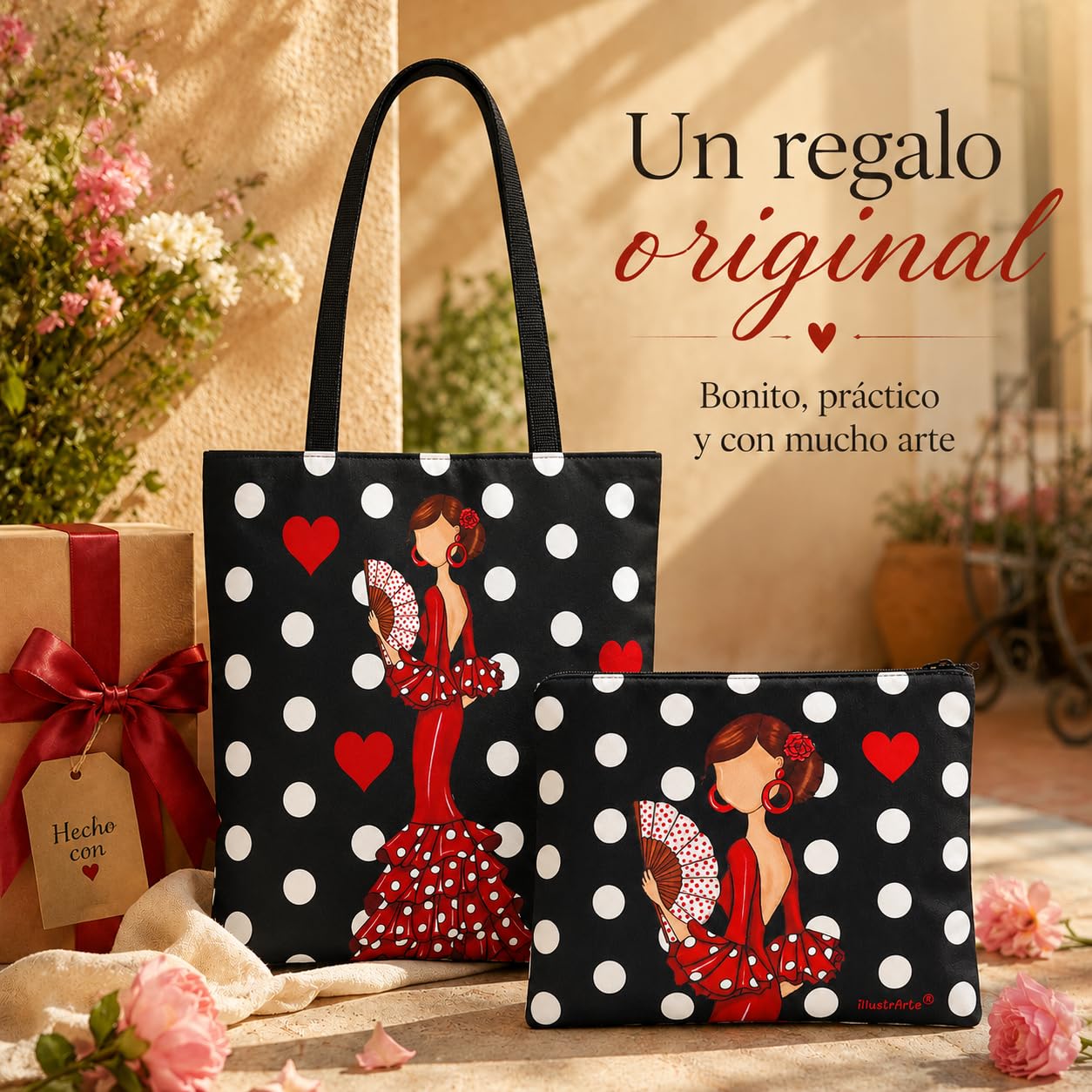
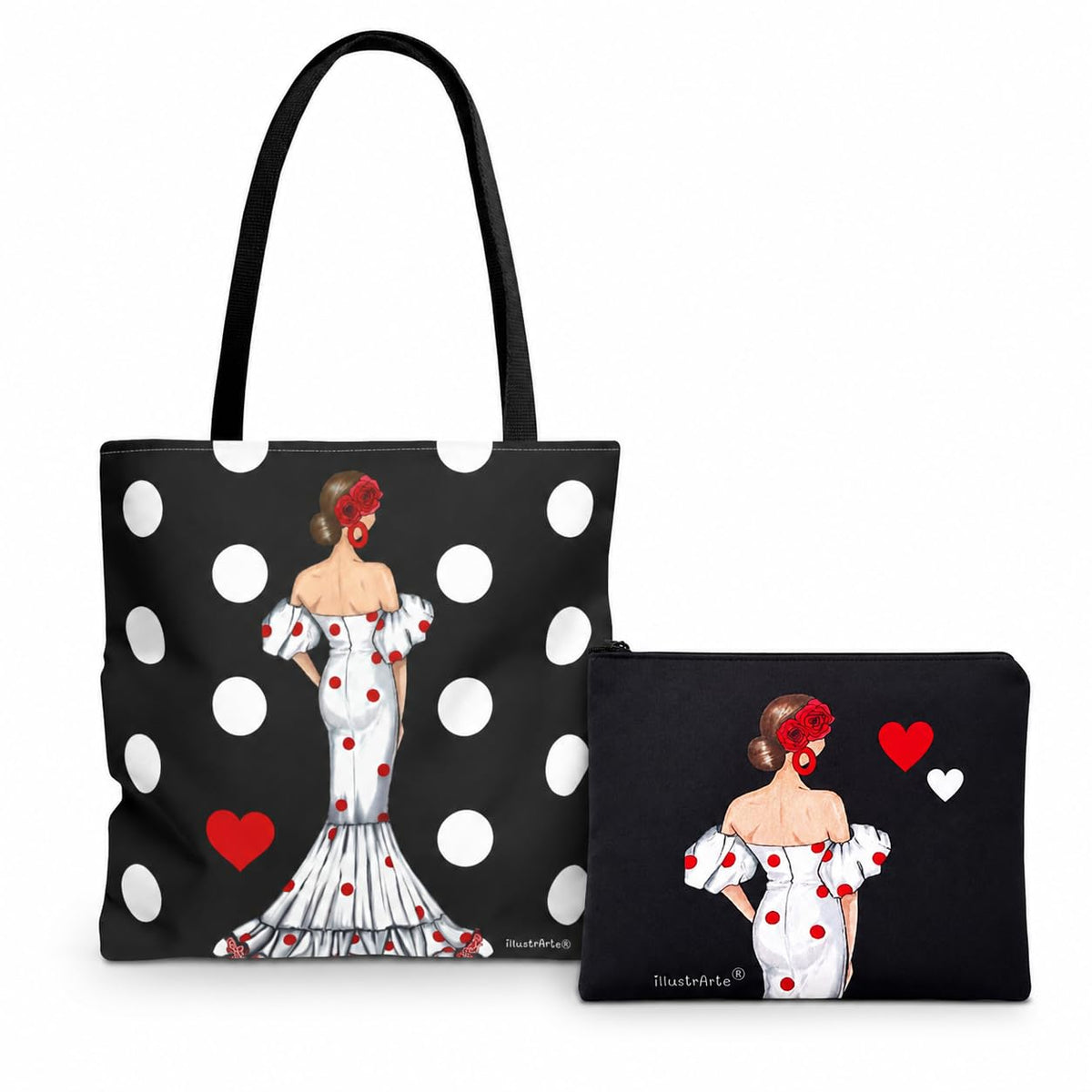
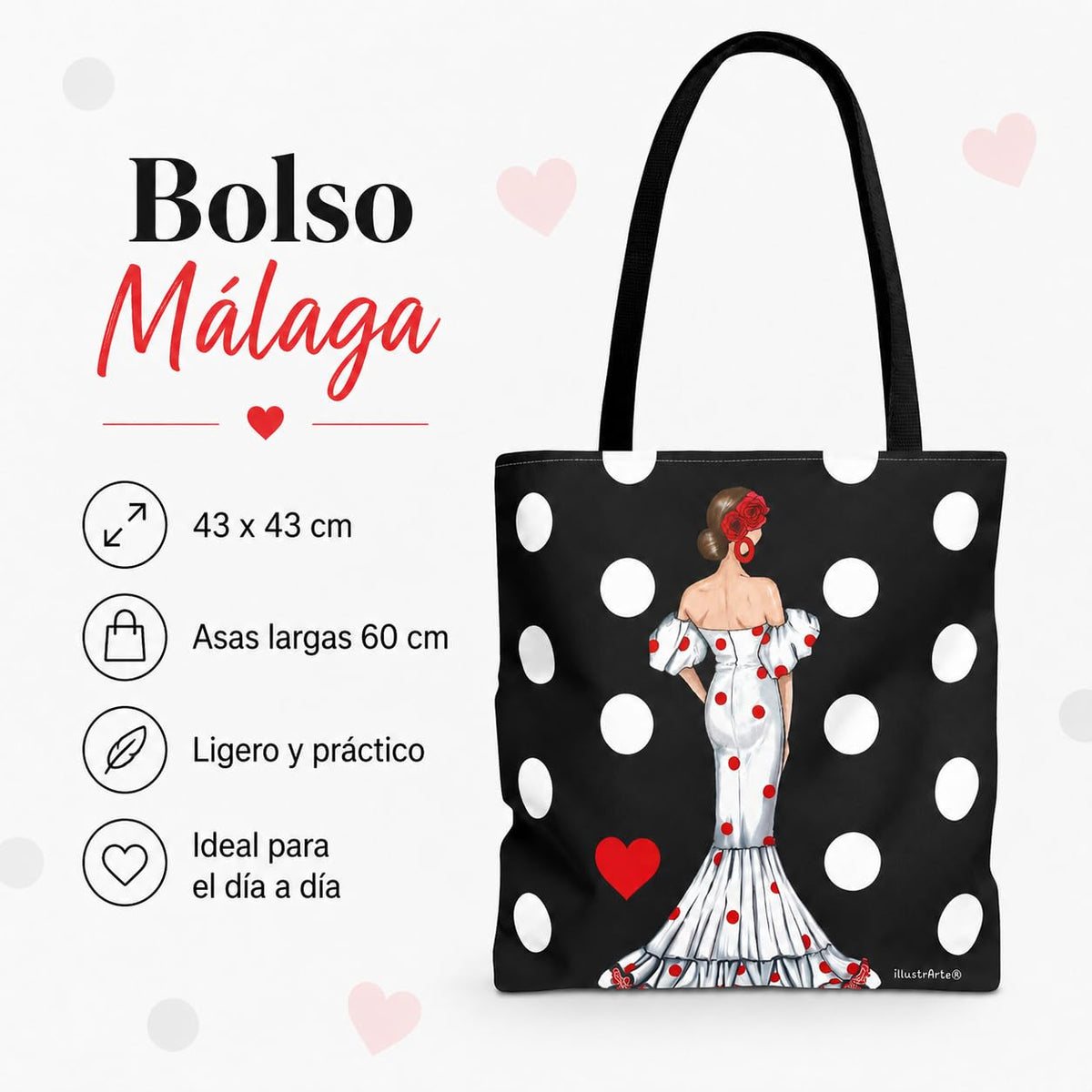
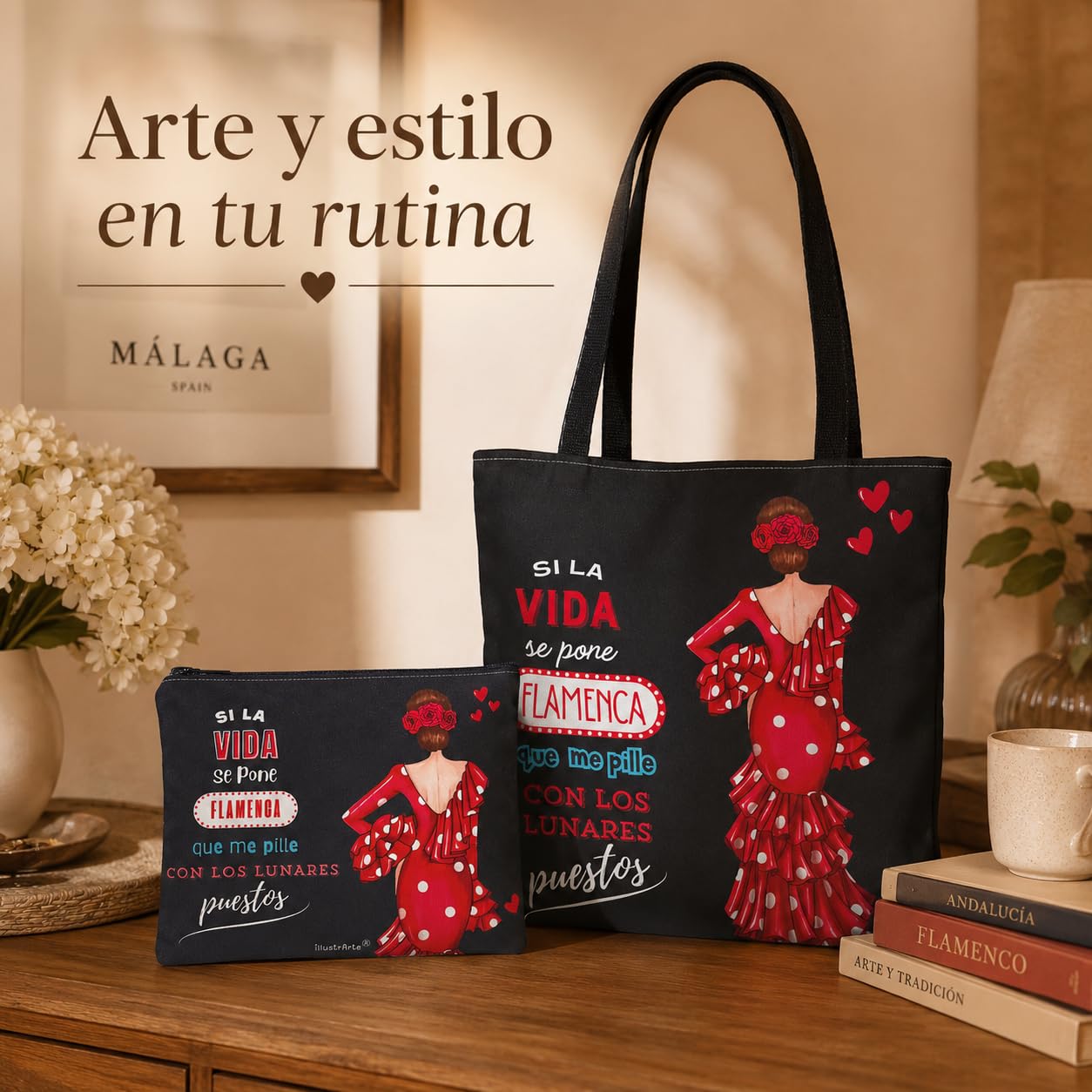
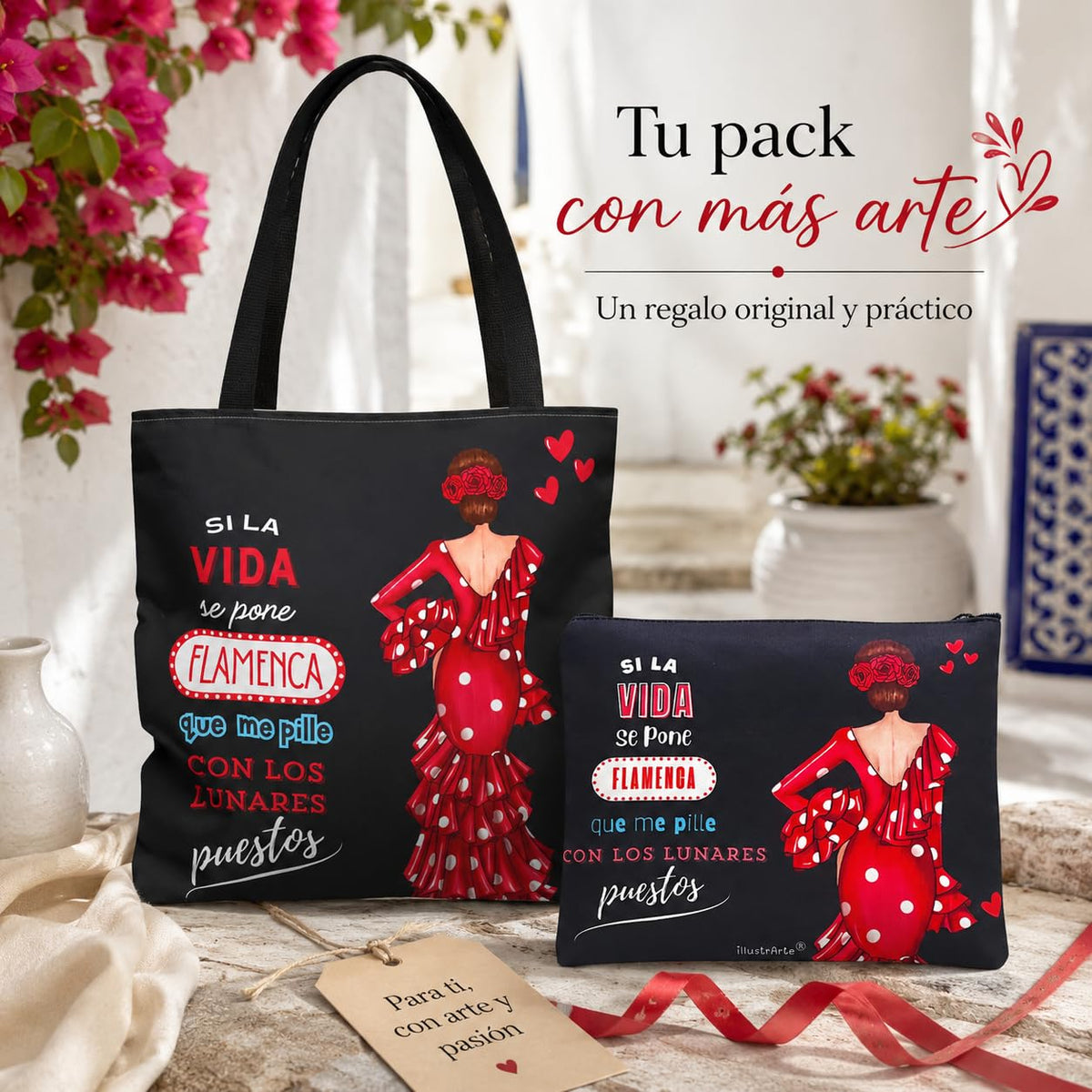
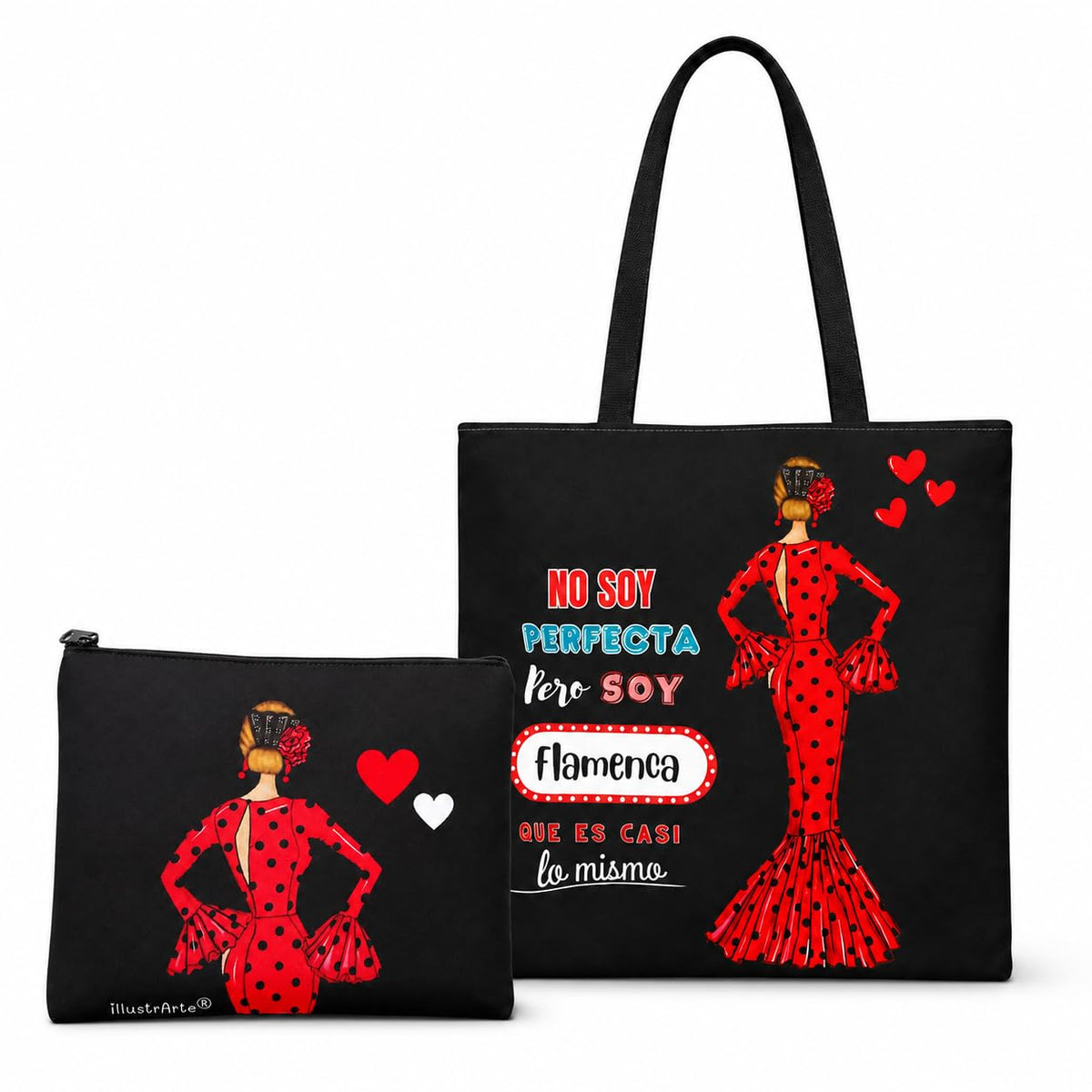
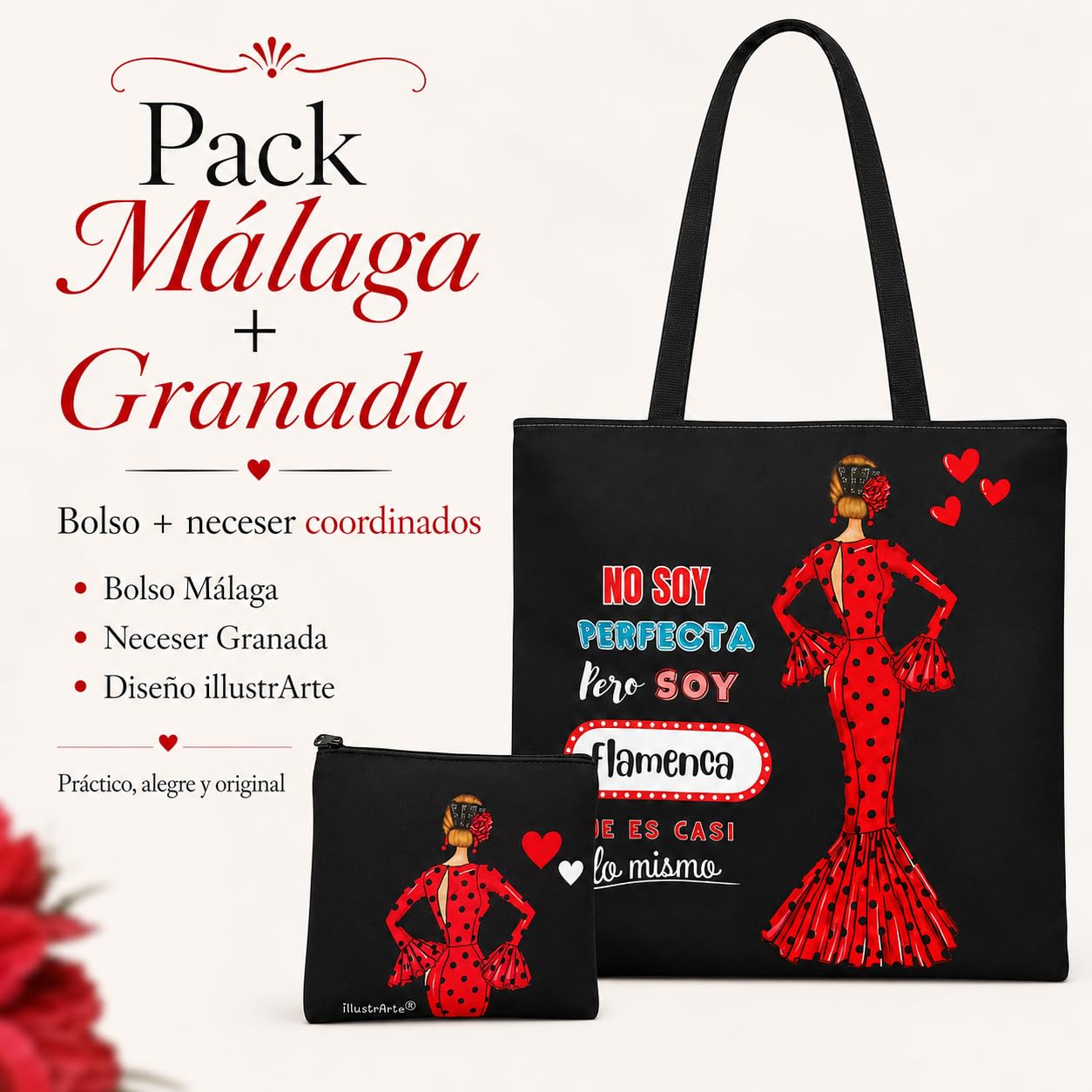
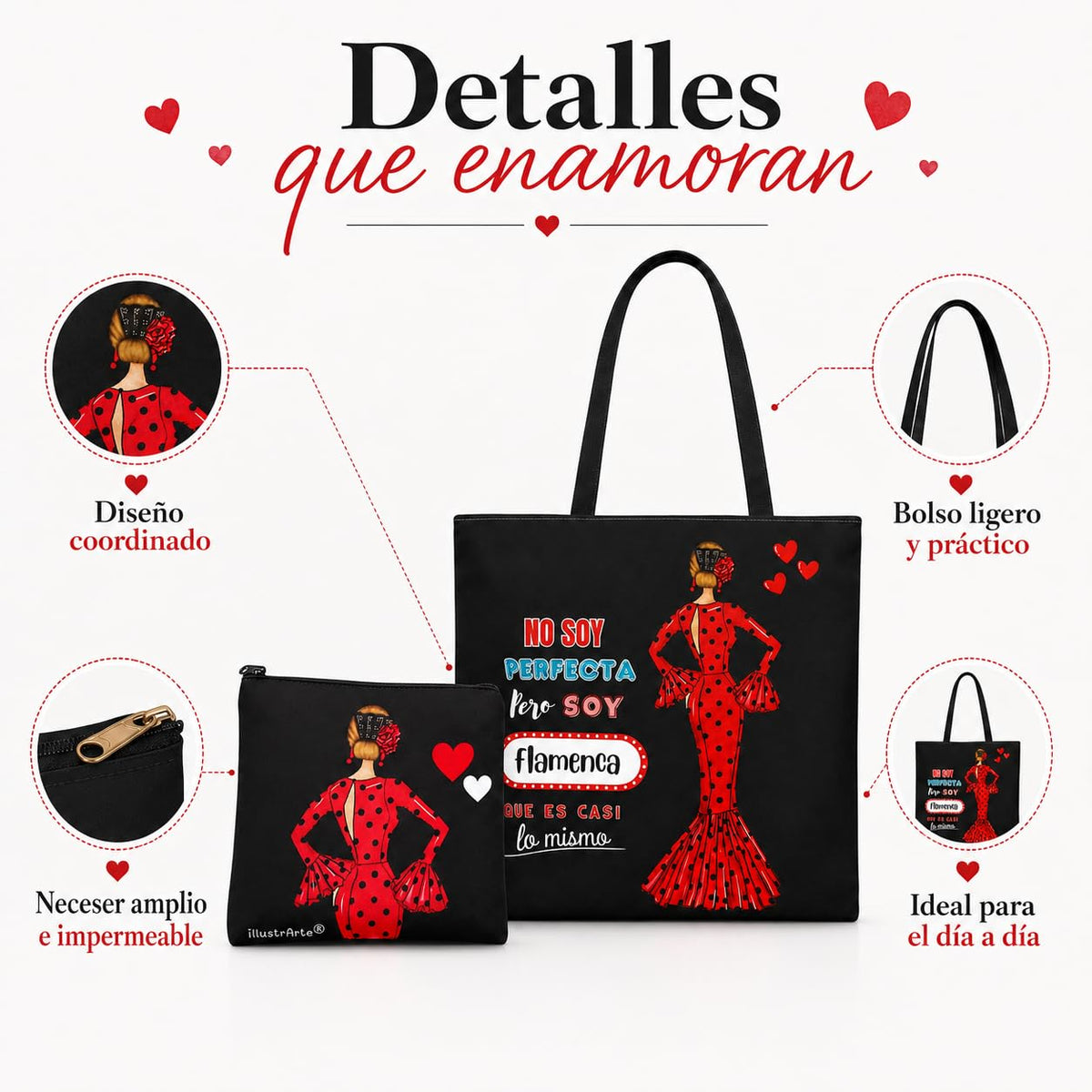
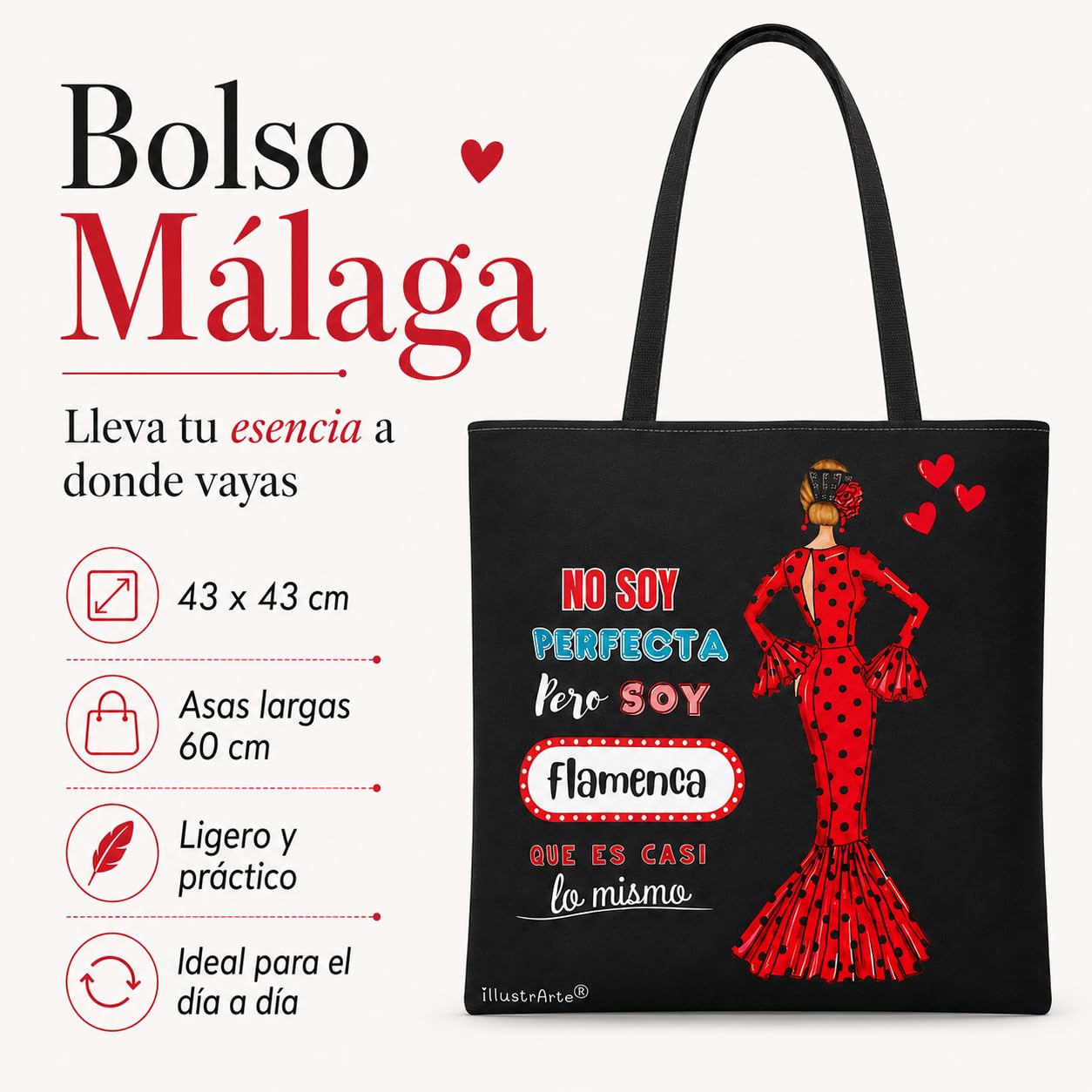
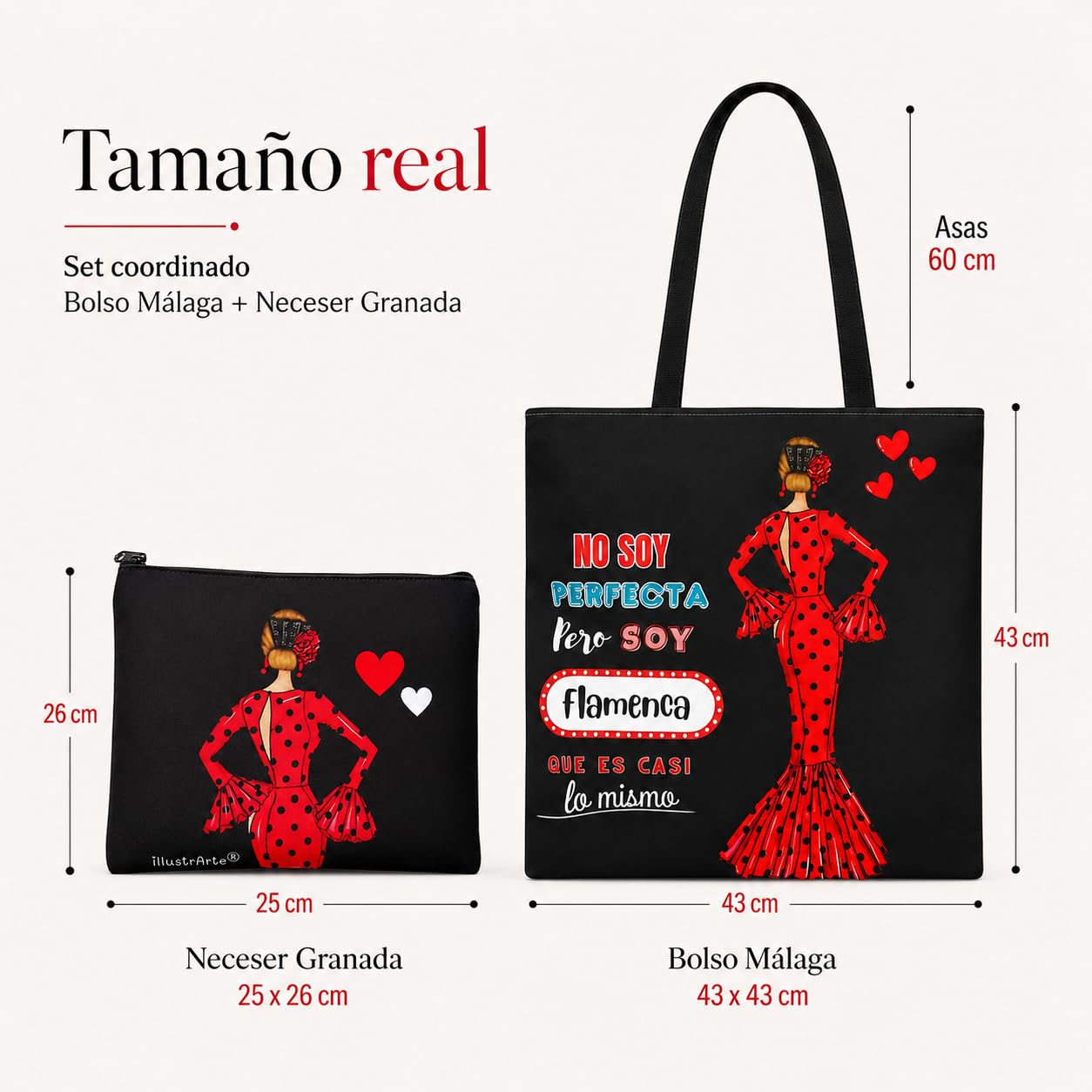
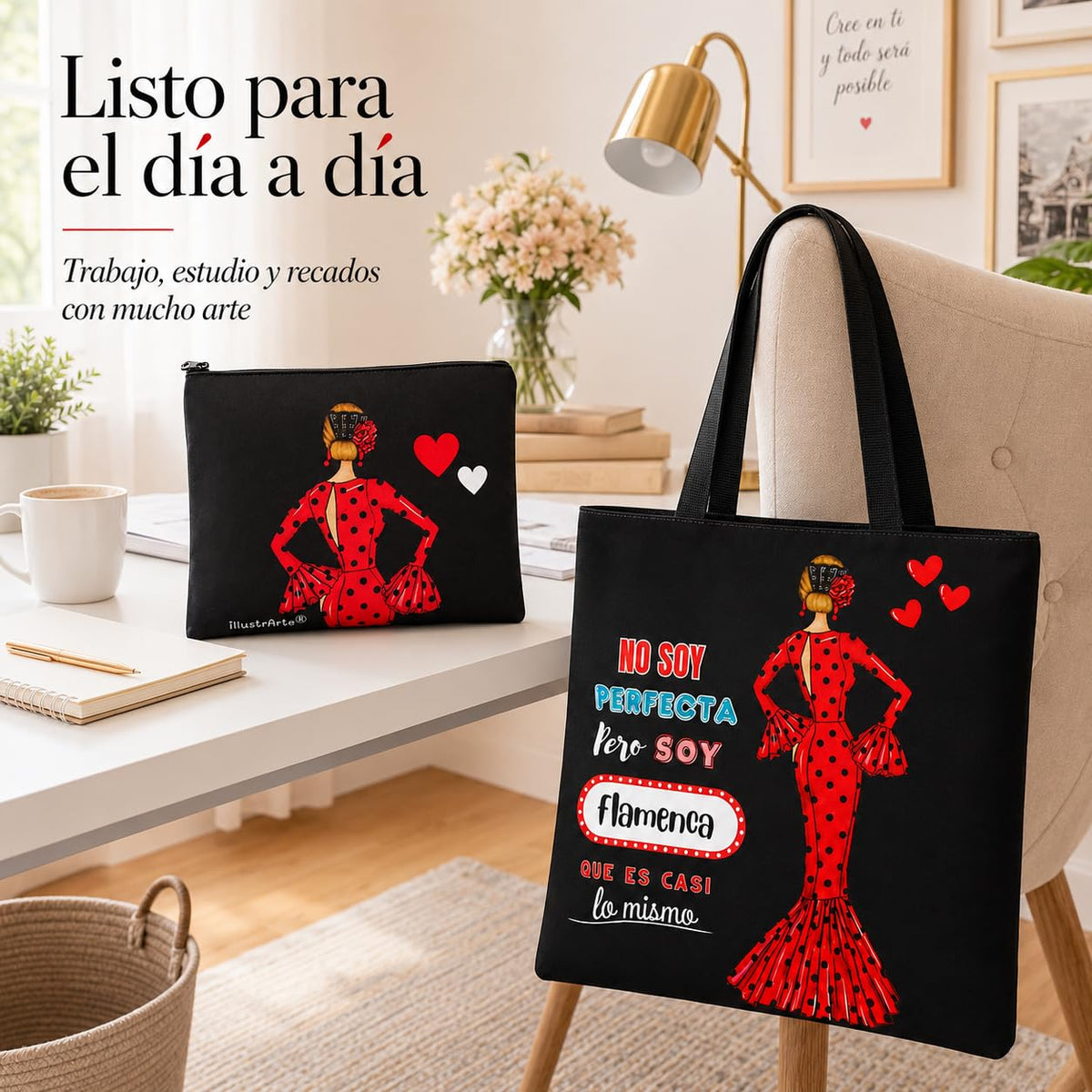
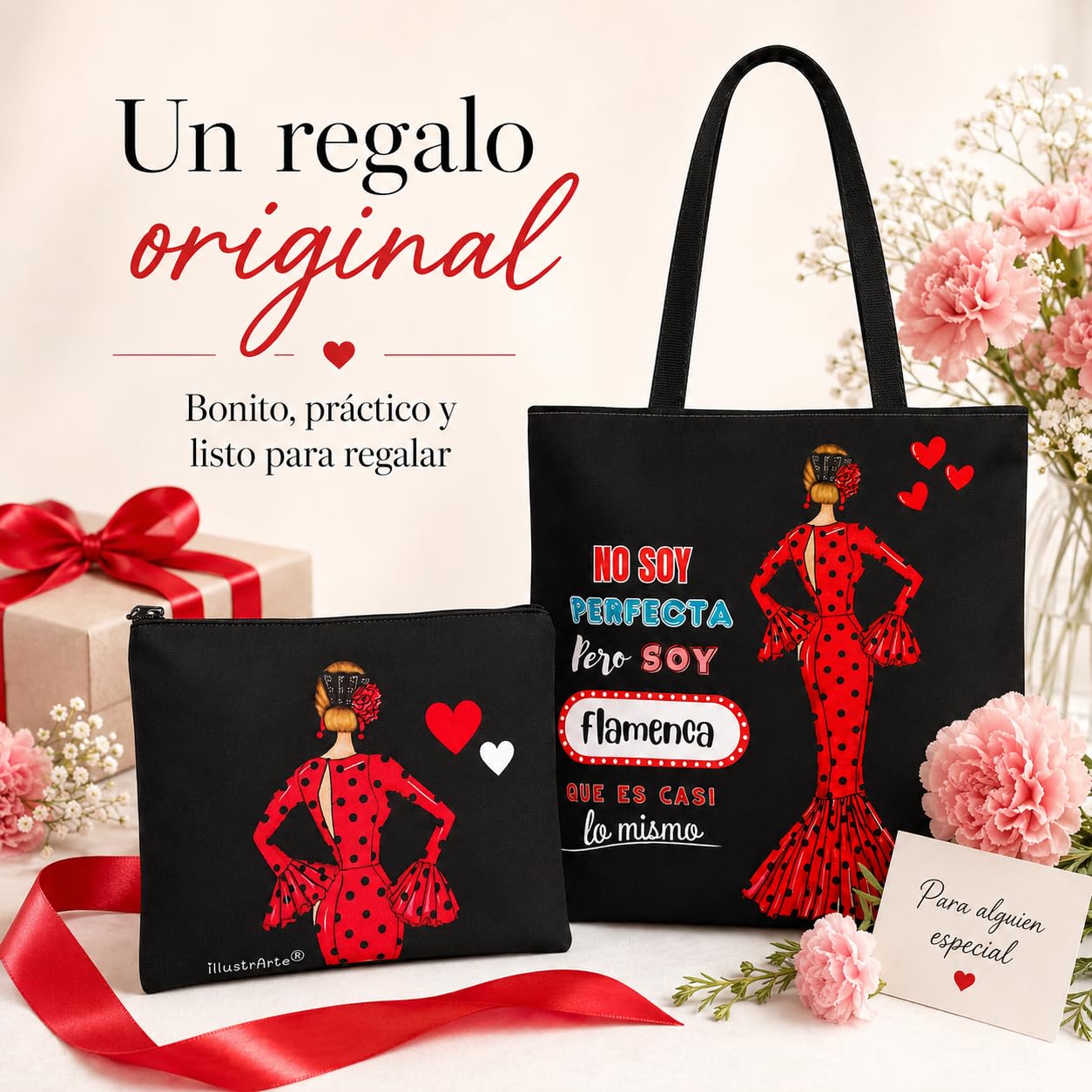
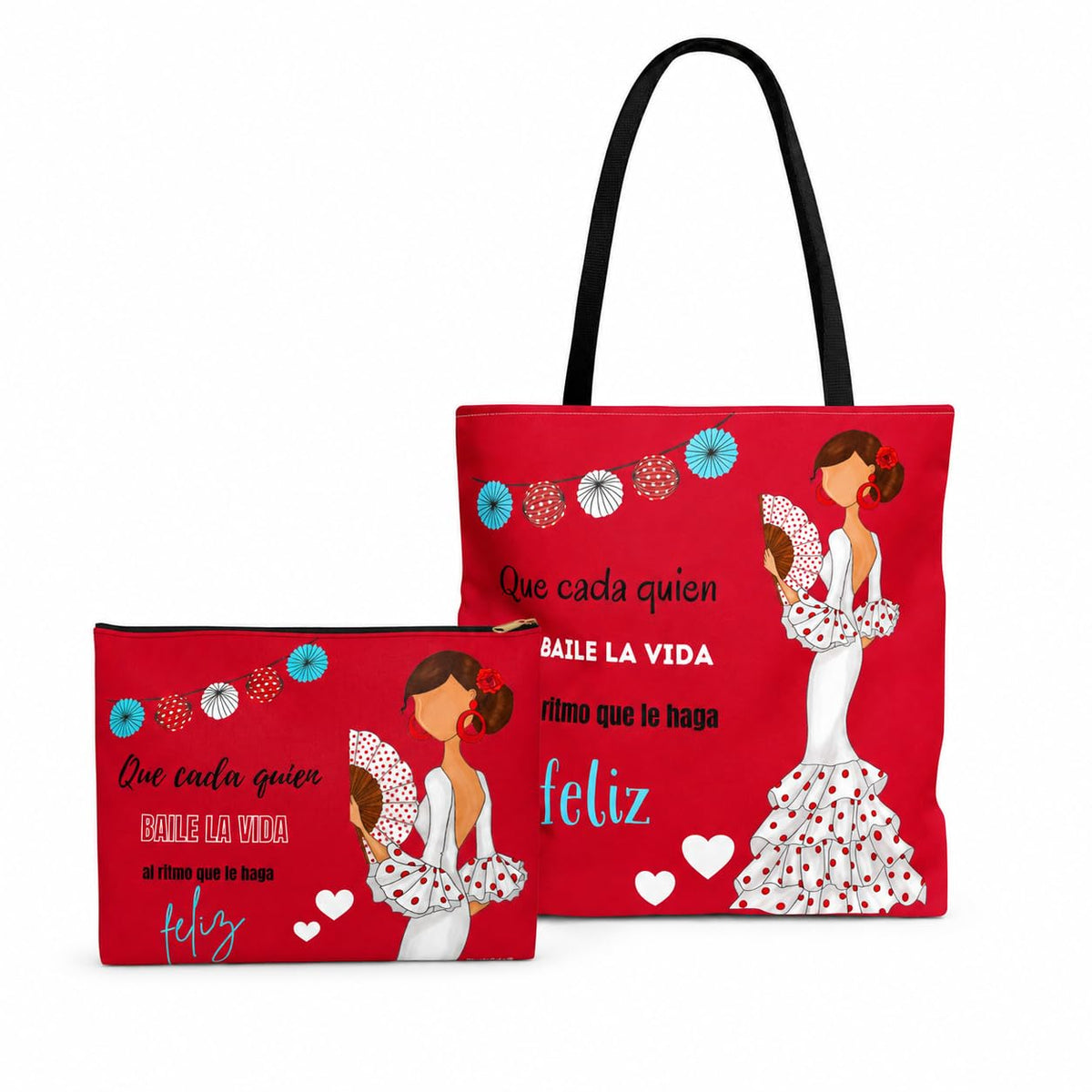
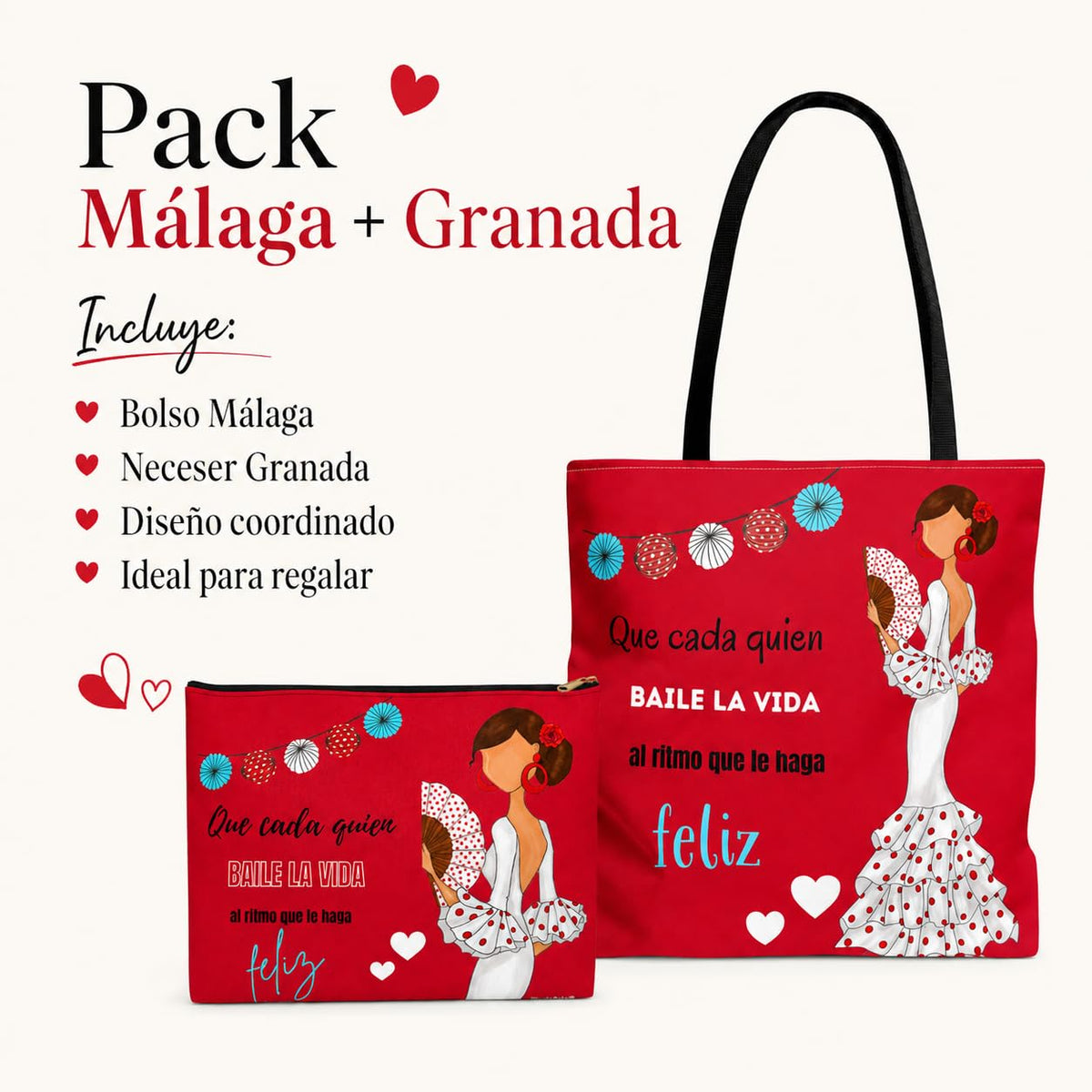
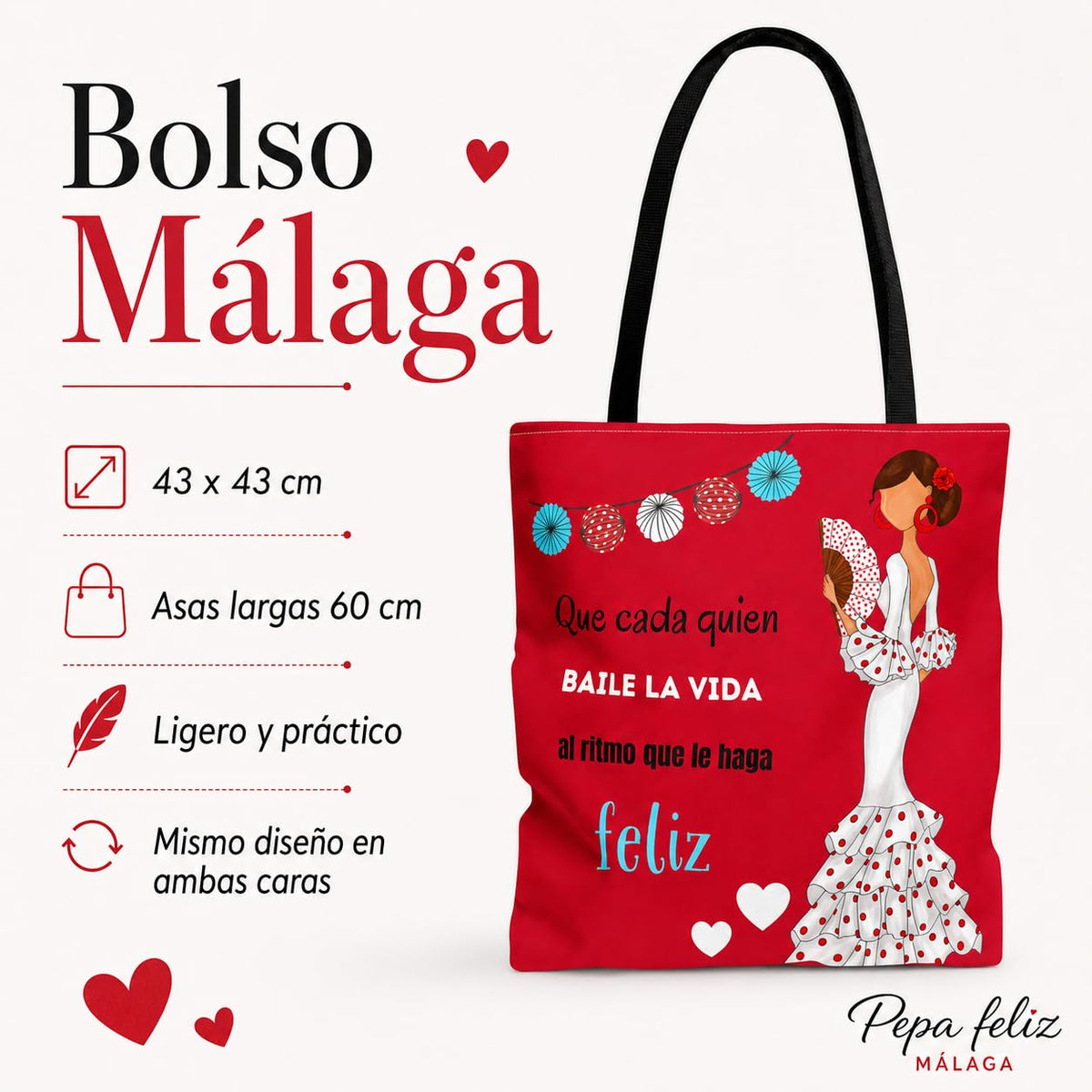
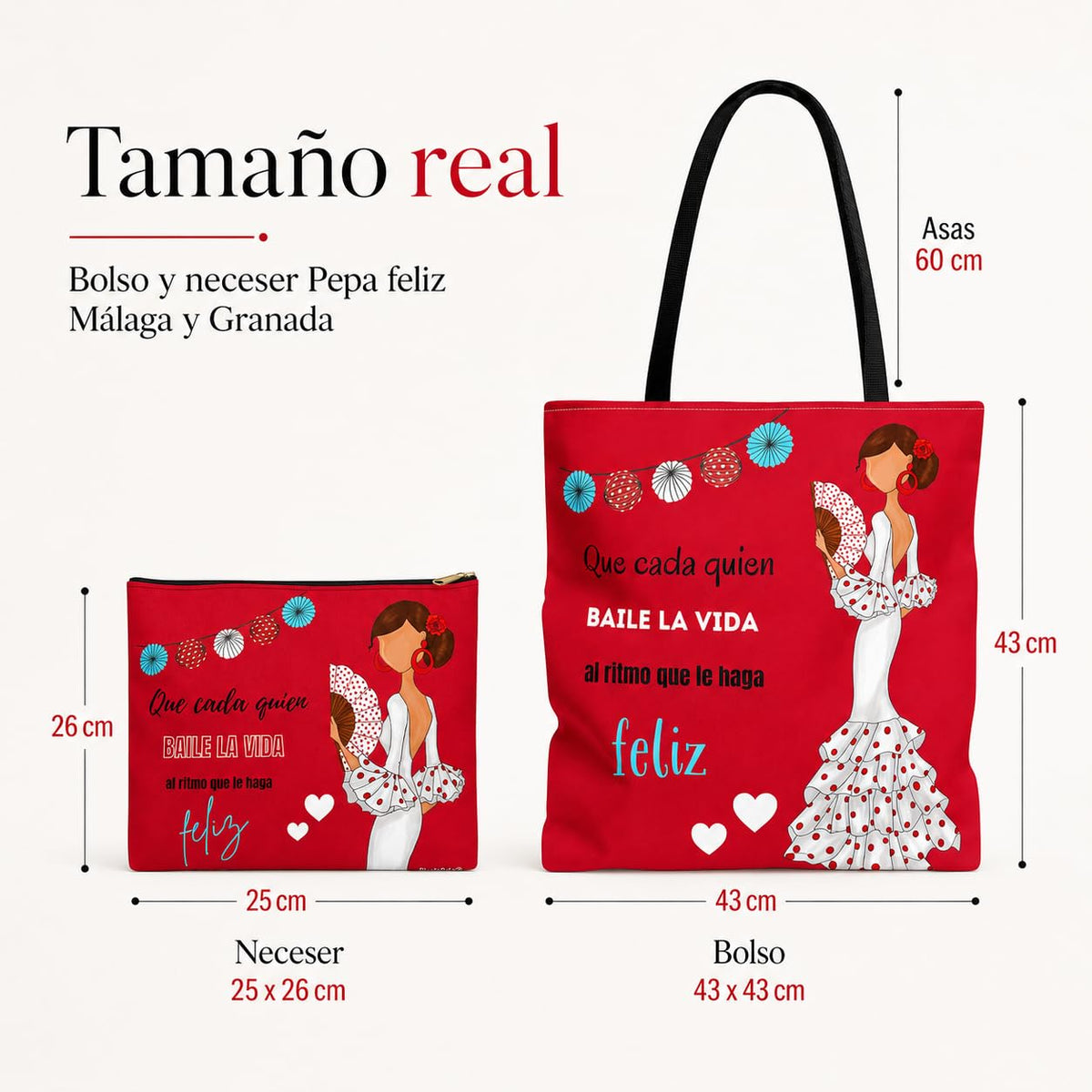
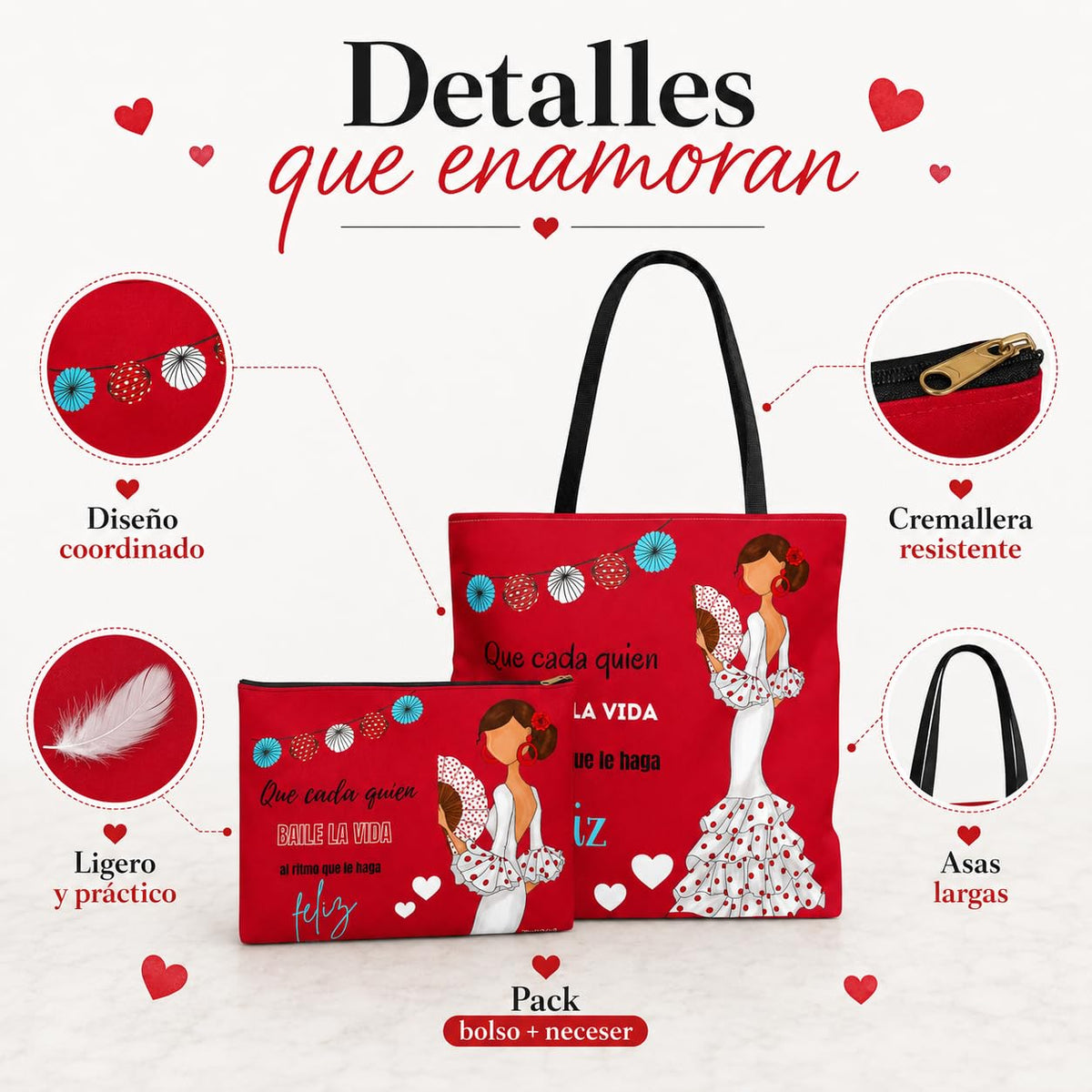
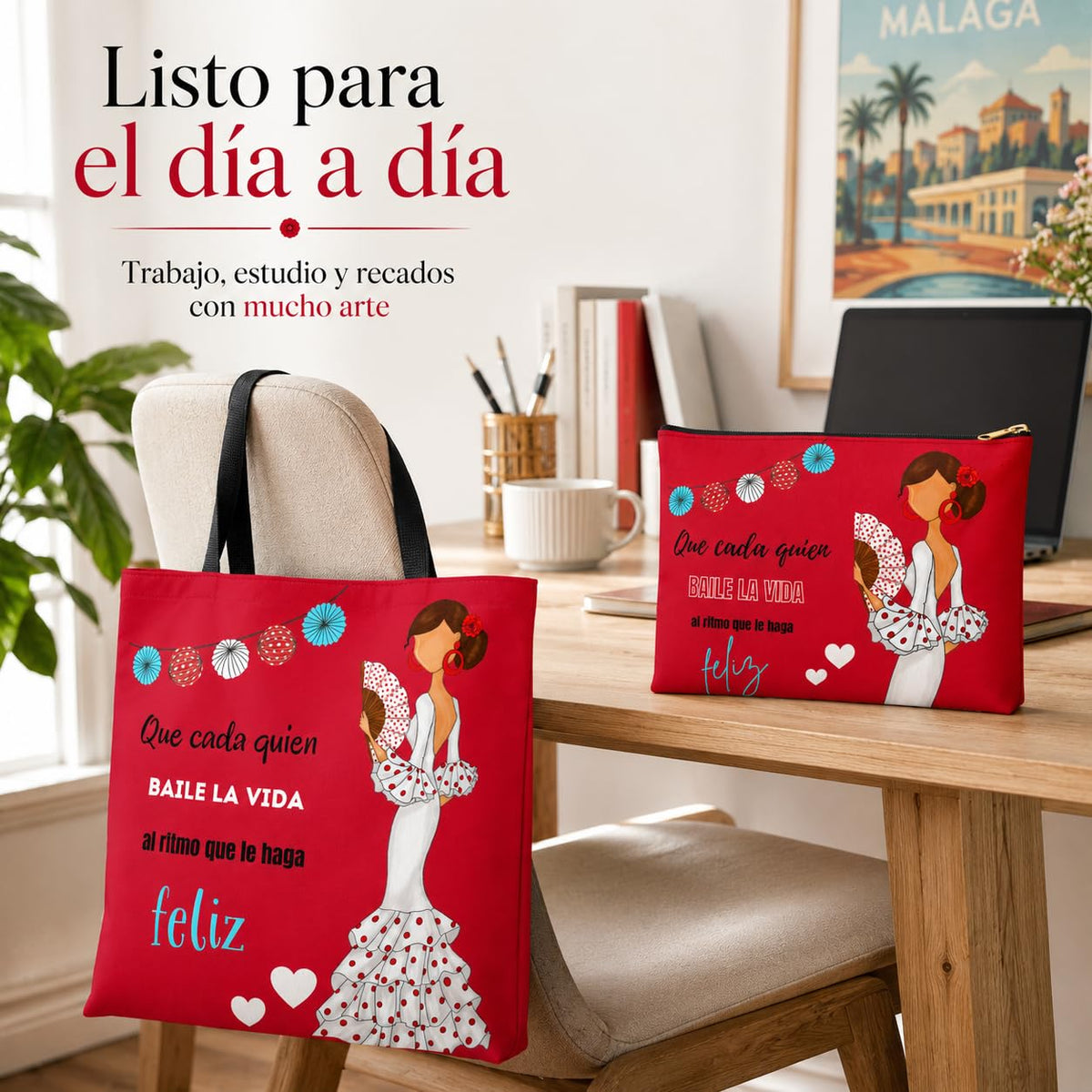
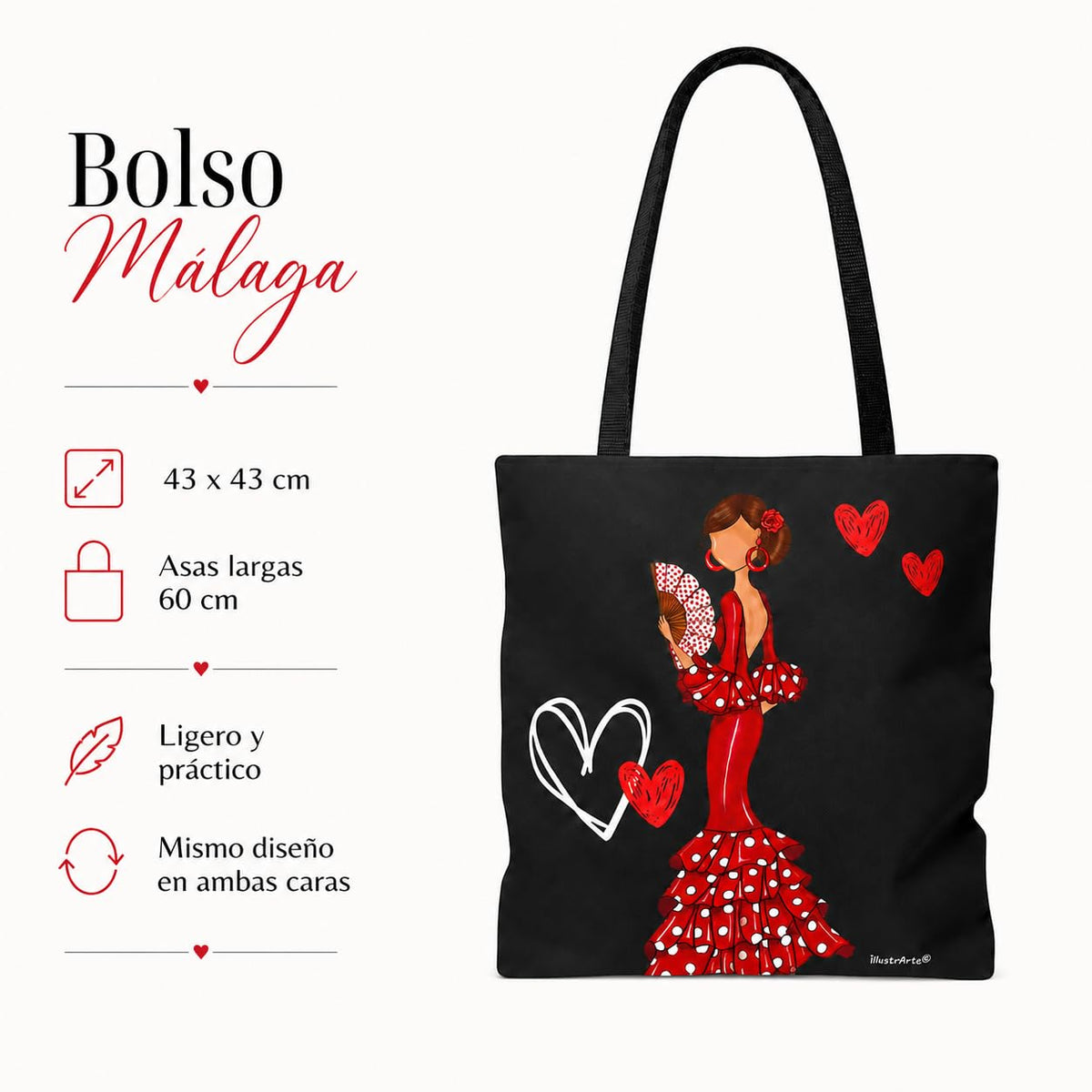
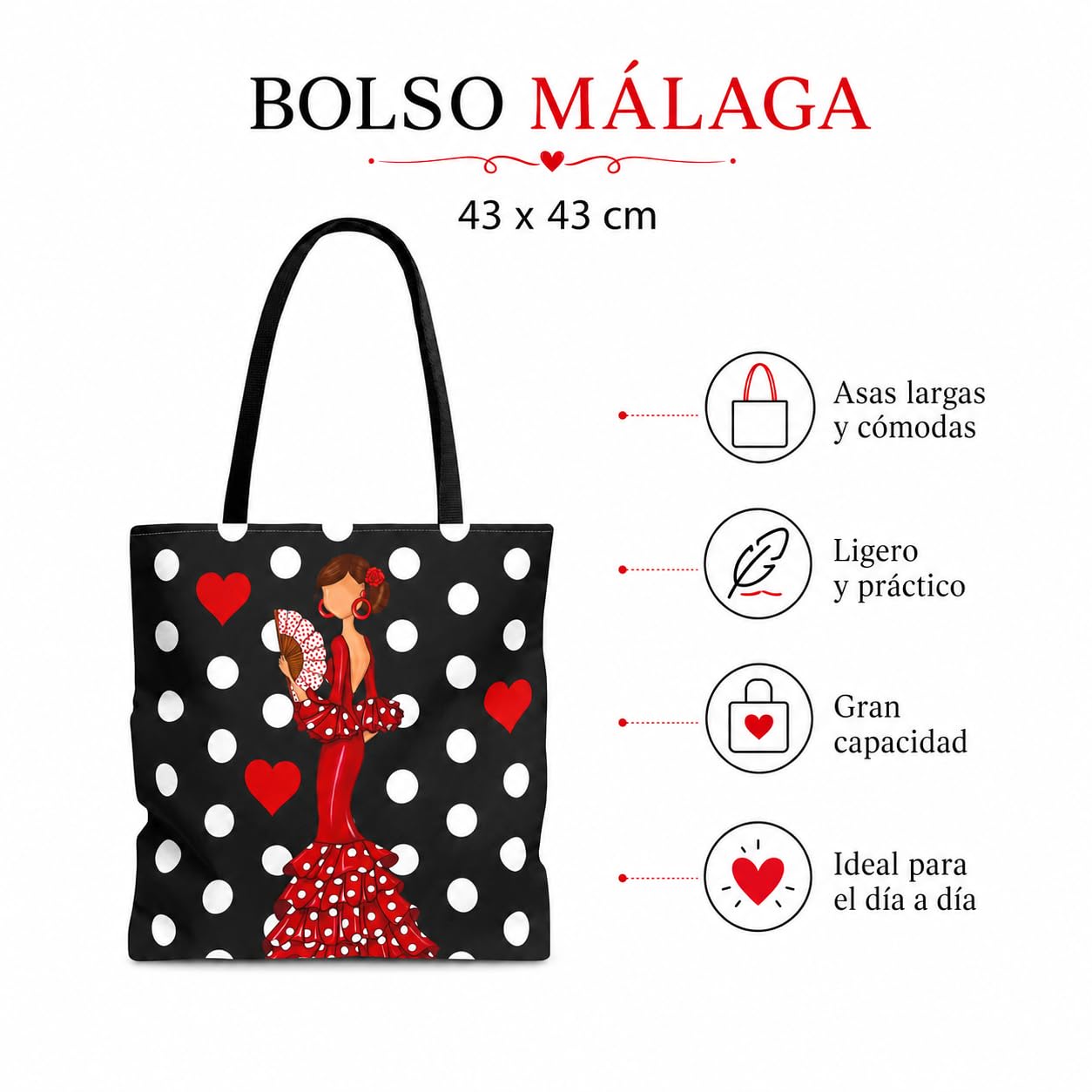
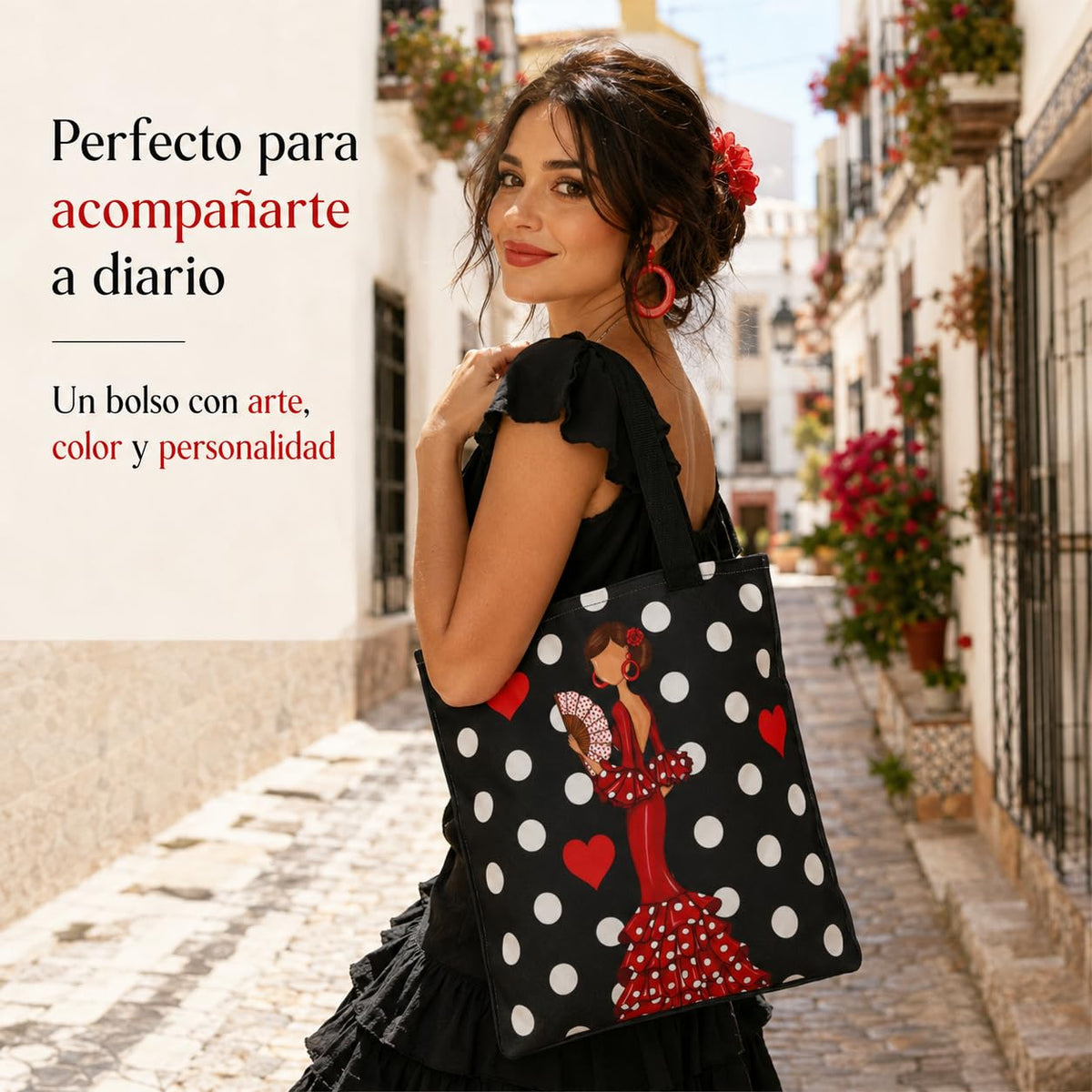
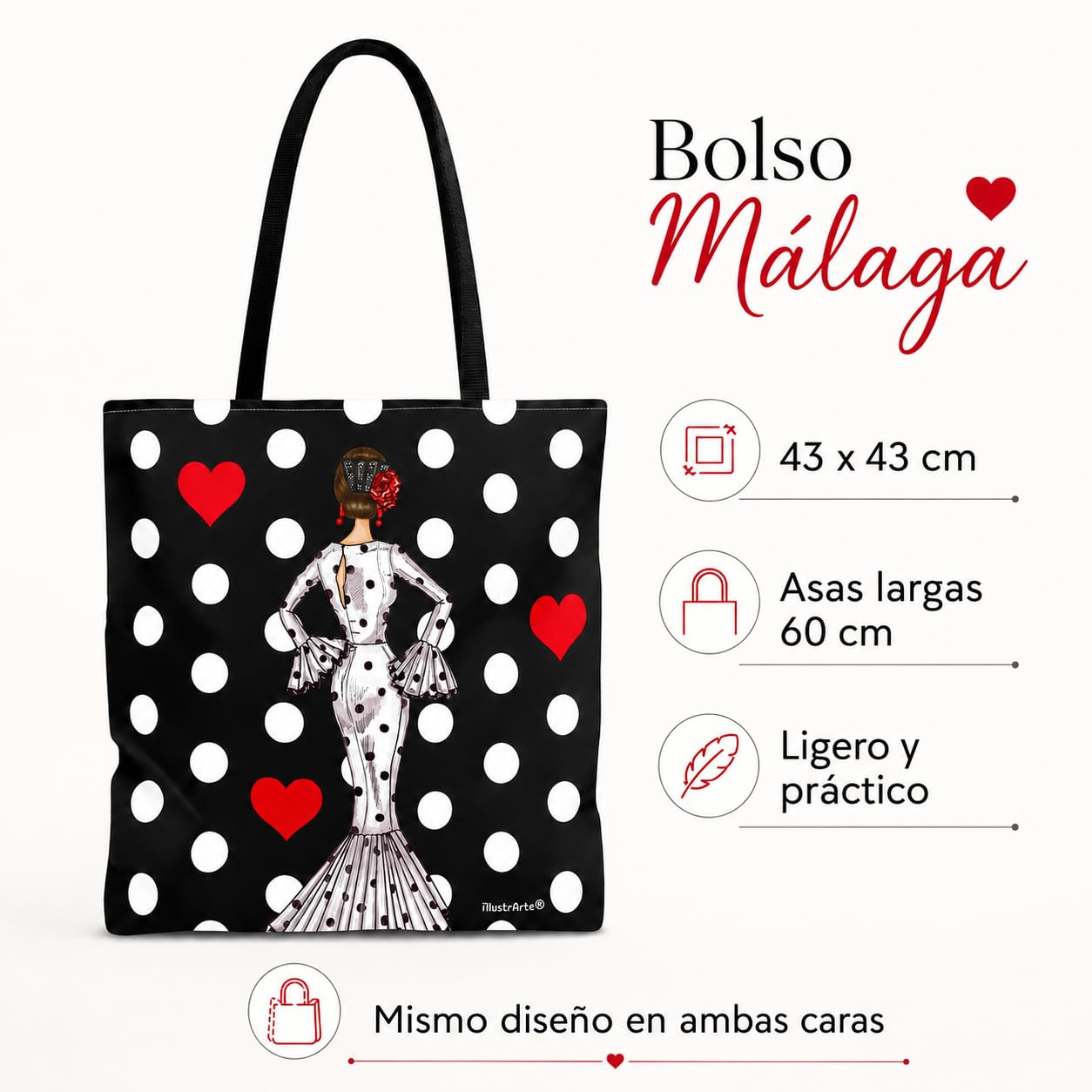
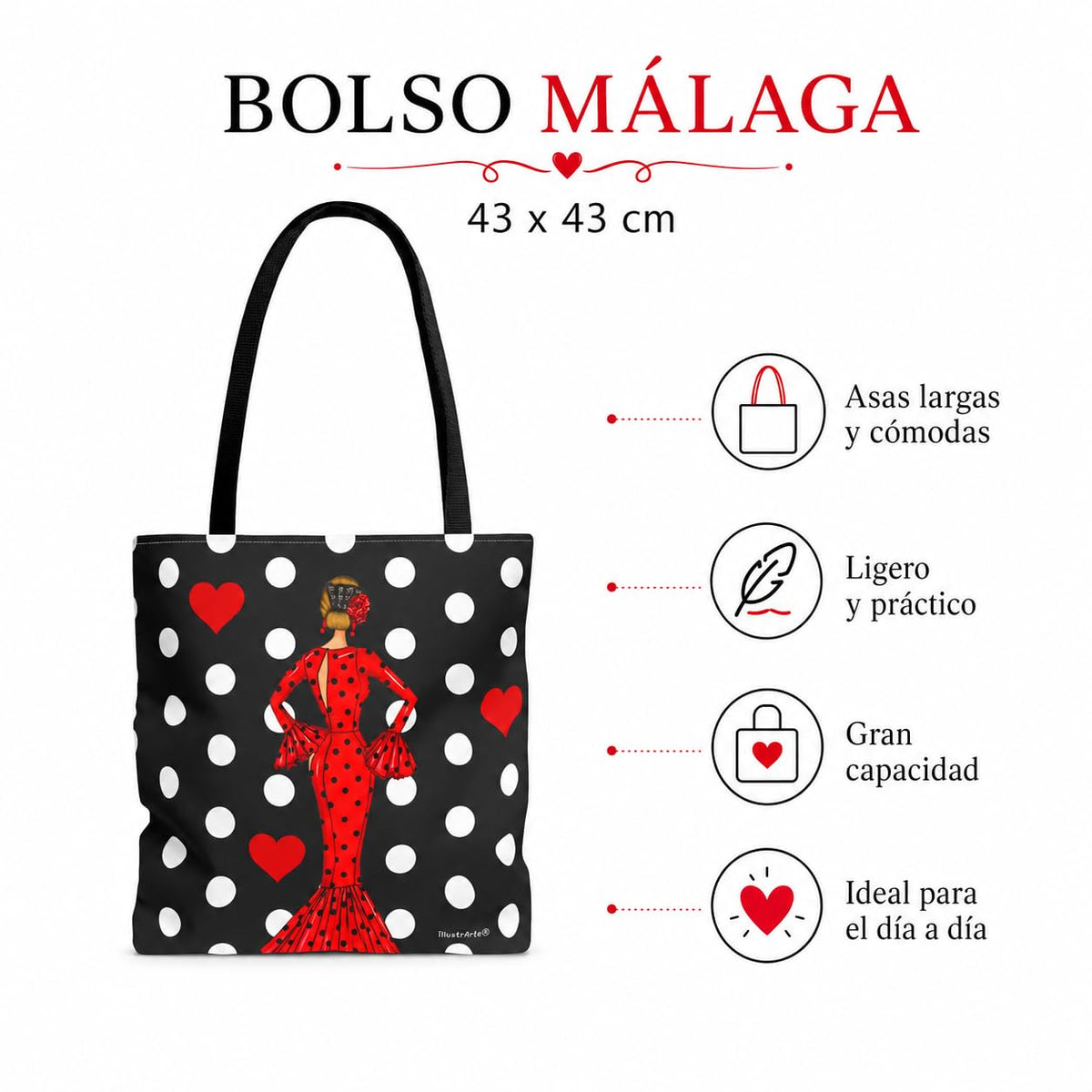
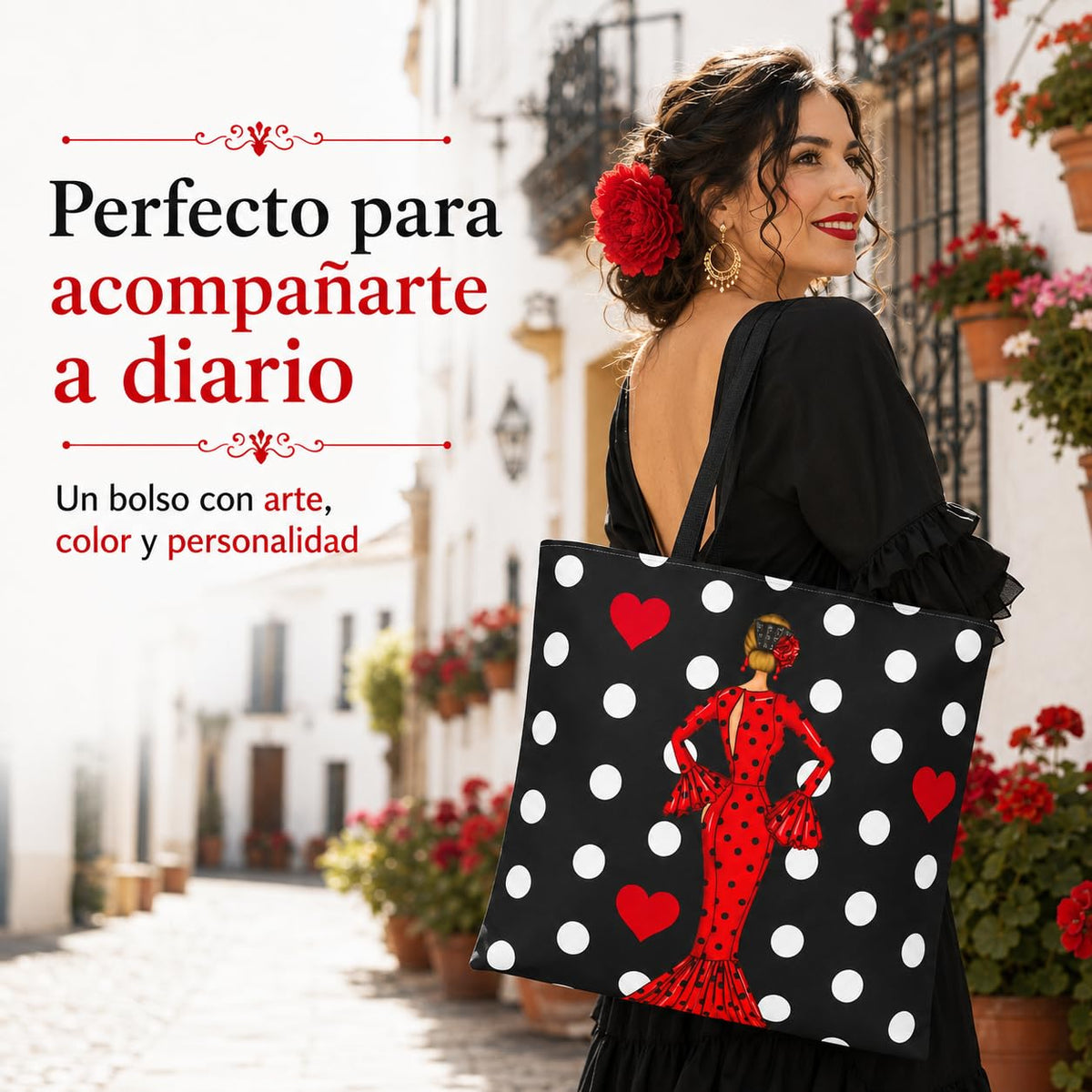
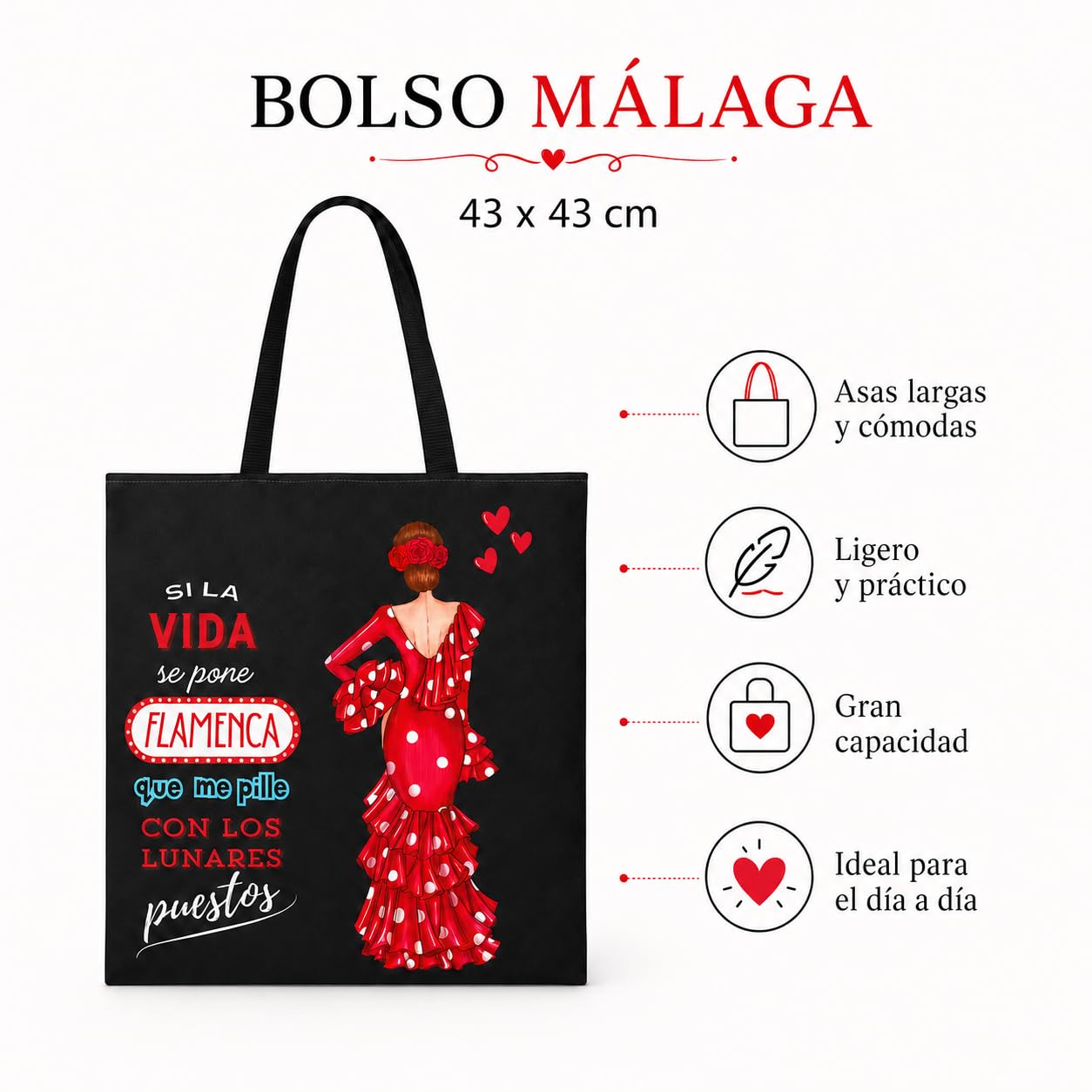
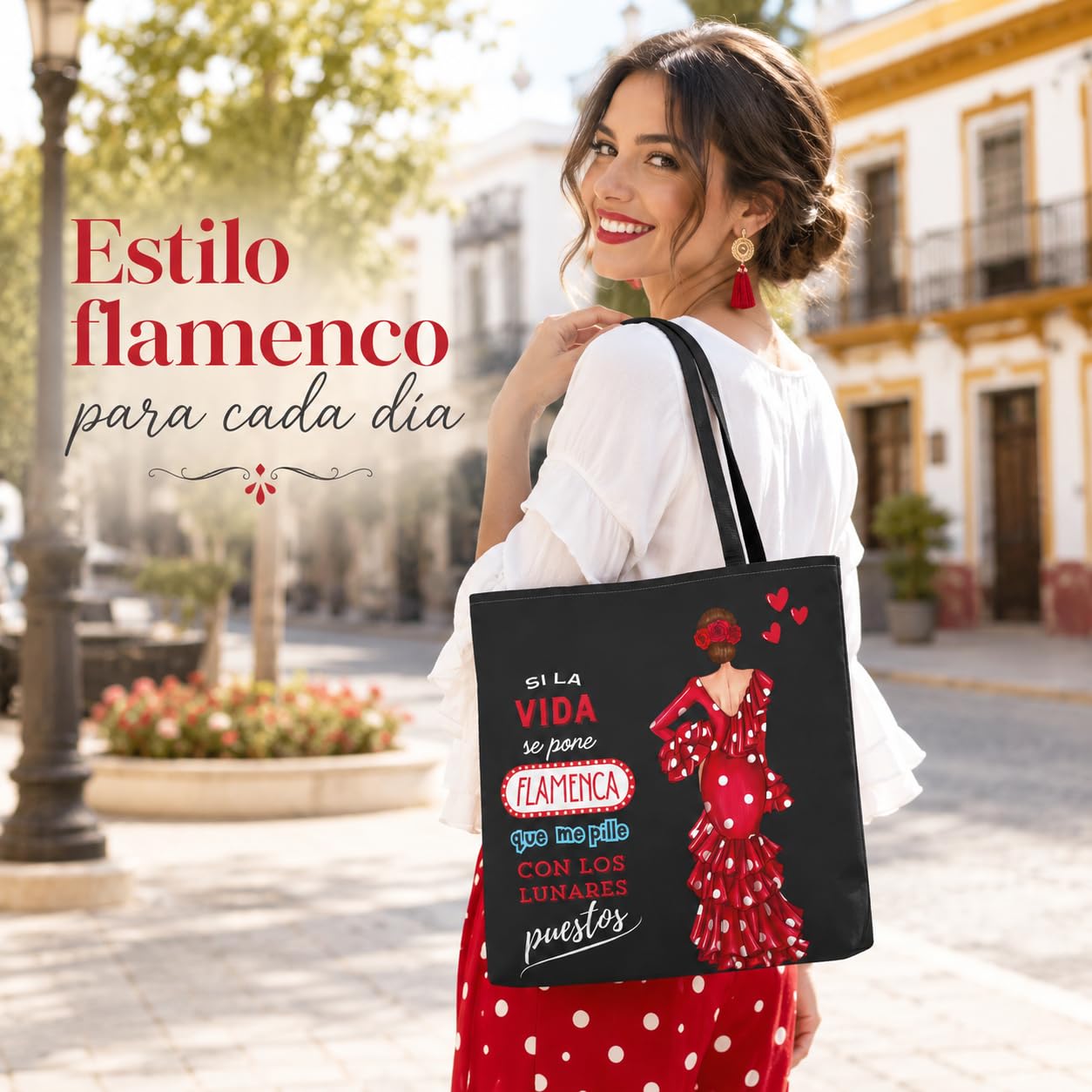
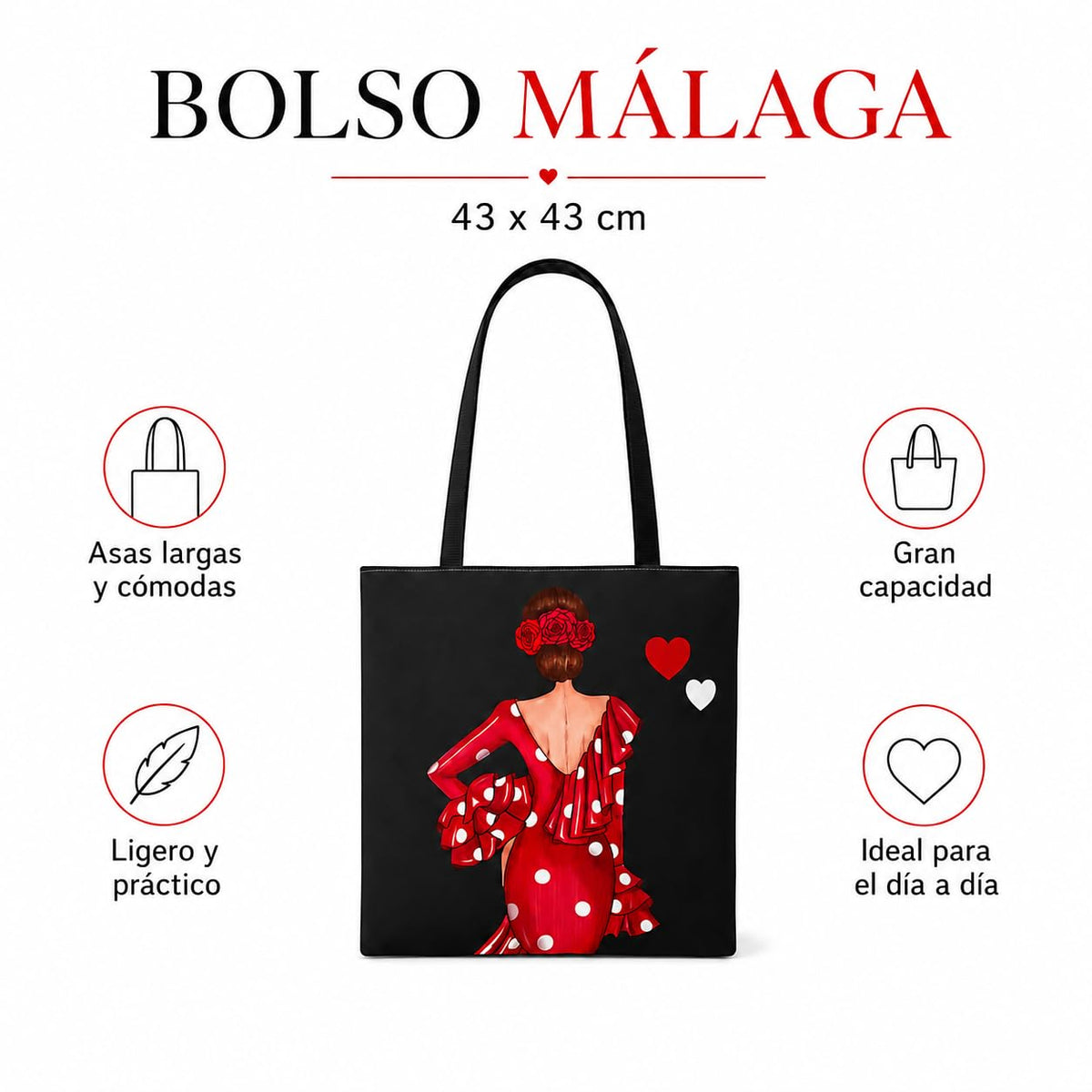
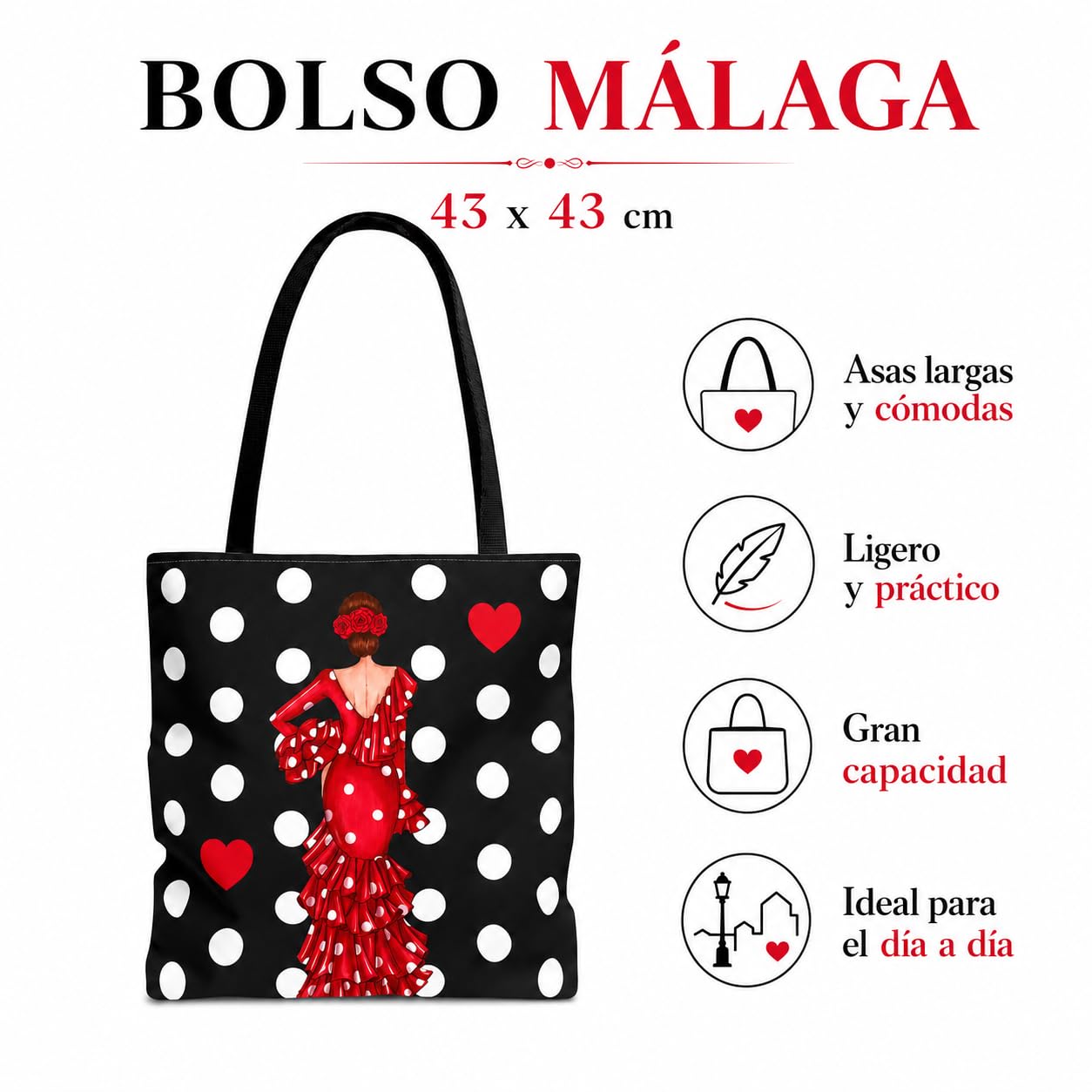
Your class bag needs enough room for the bottle, the towel, your shoes and a change of clothes. It's also worth choosing something easy to carry and easy to clean.
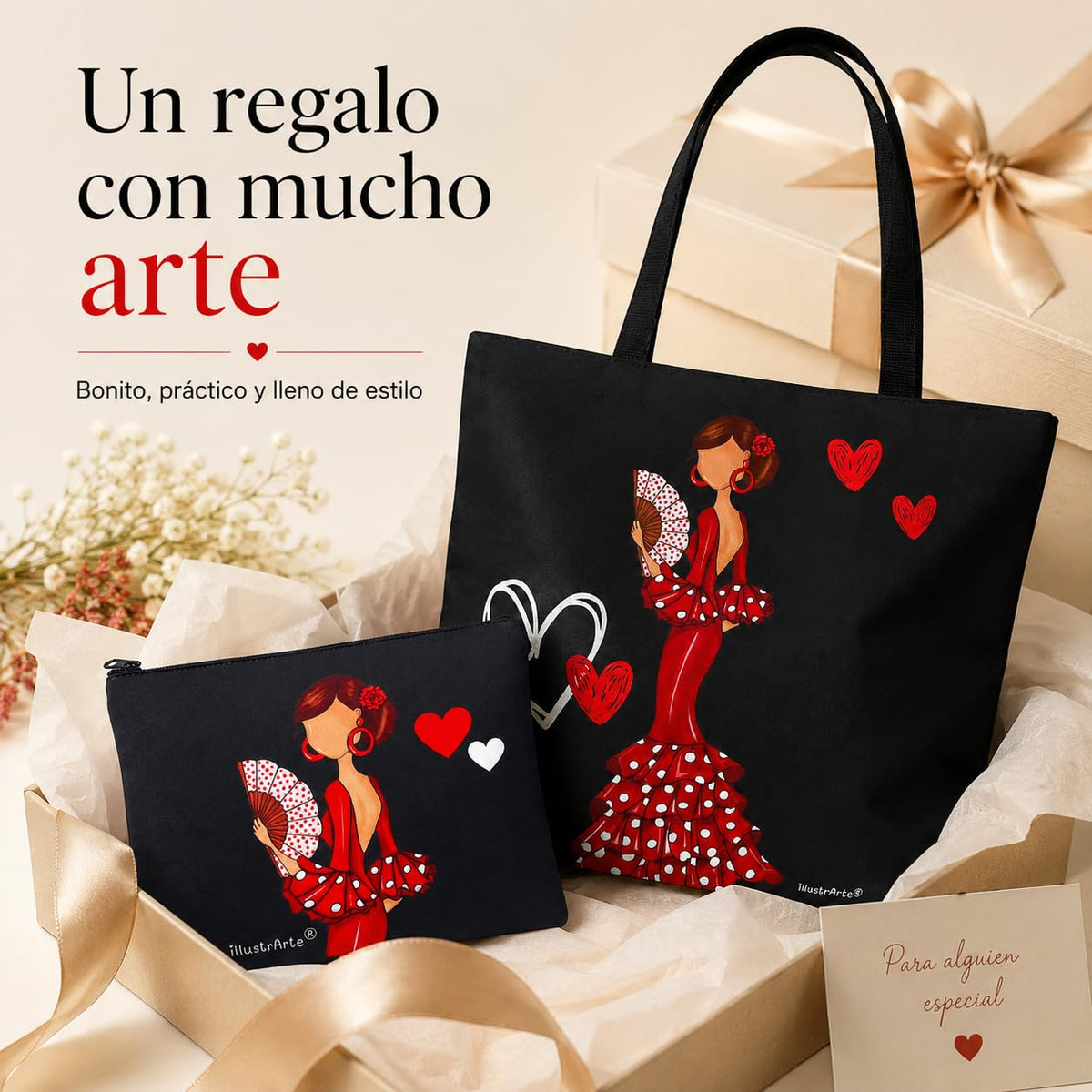
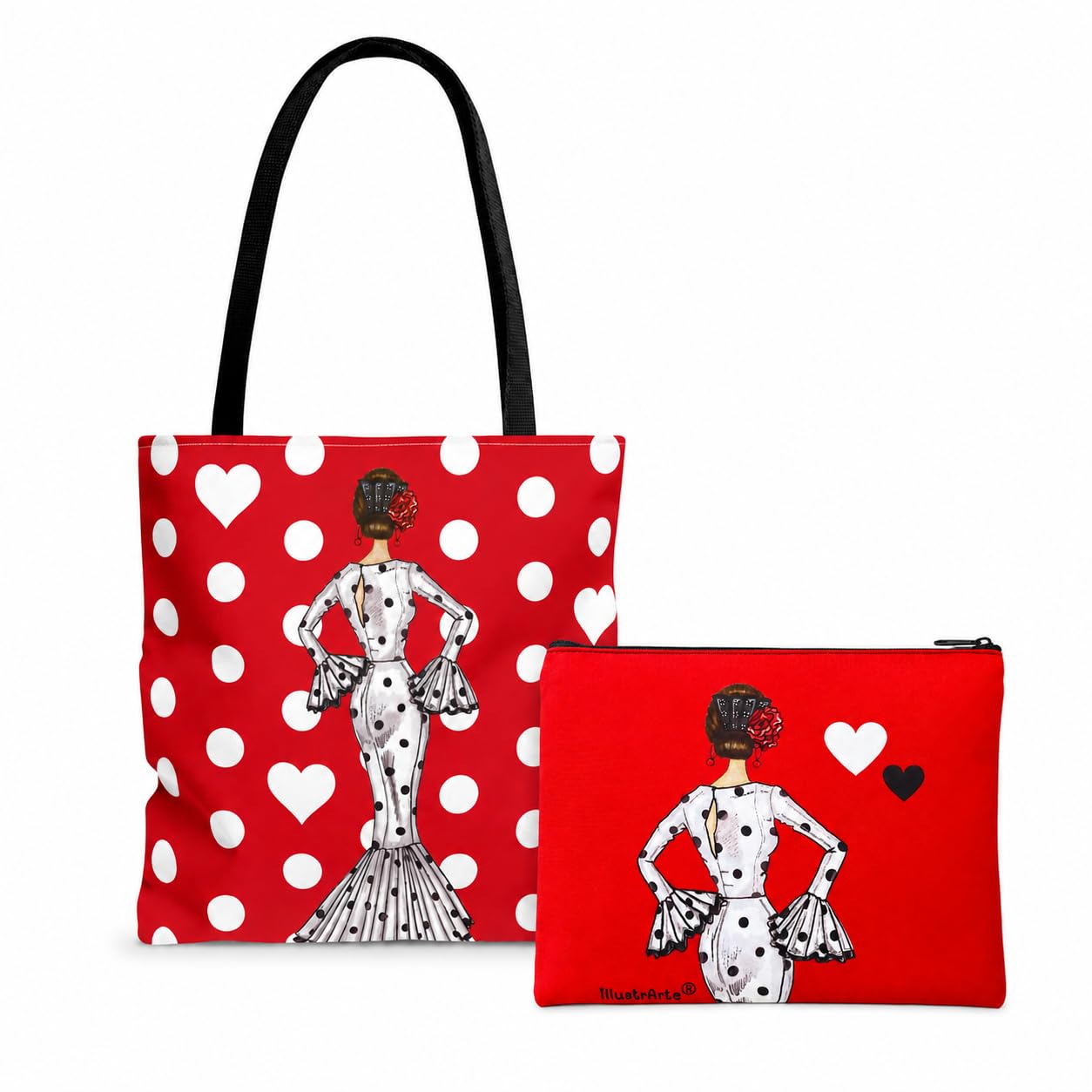
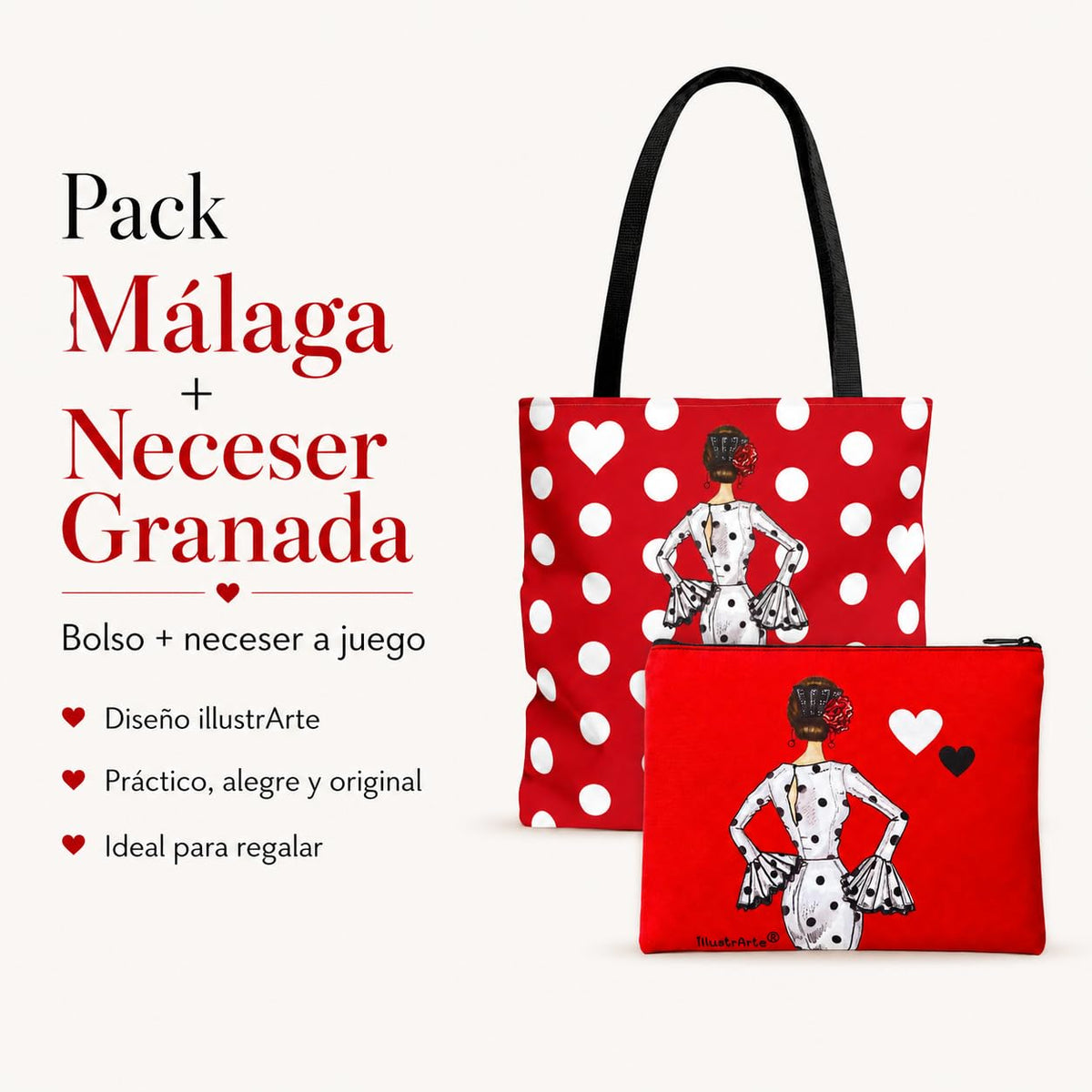
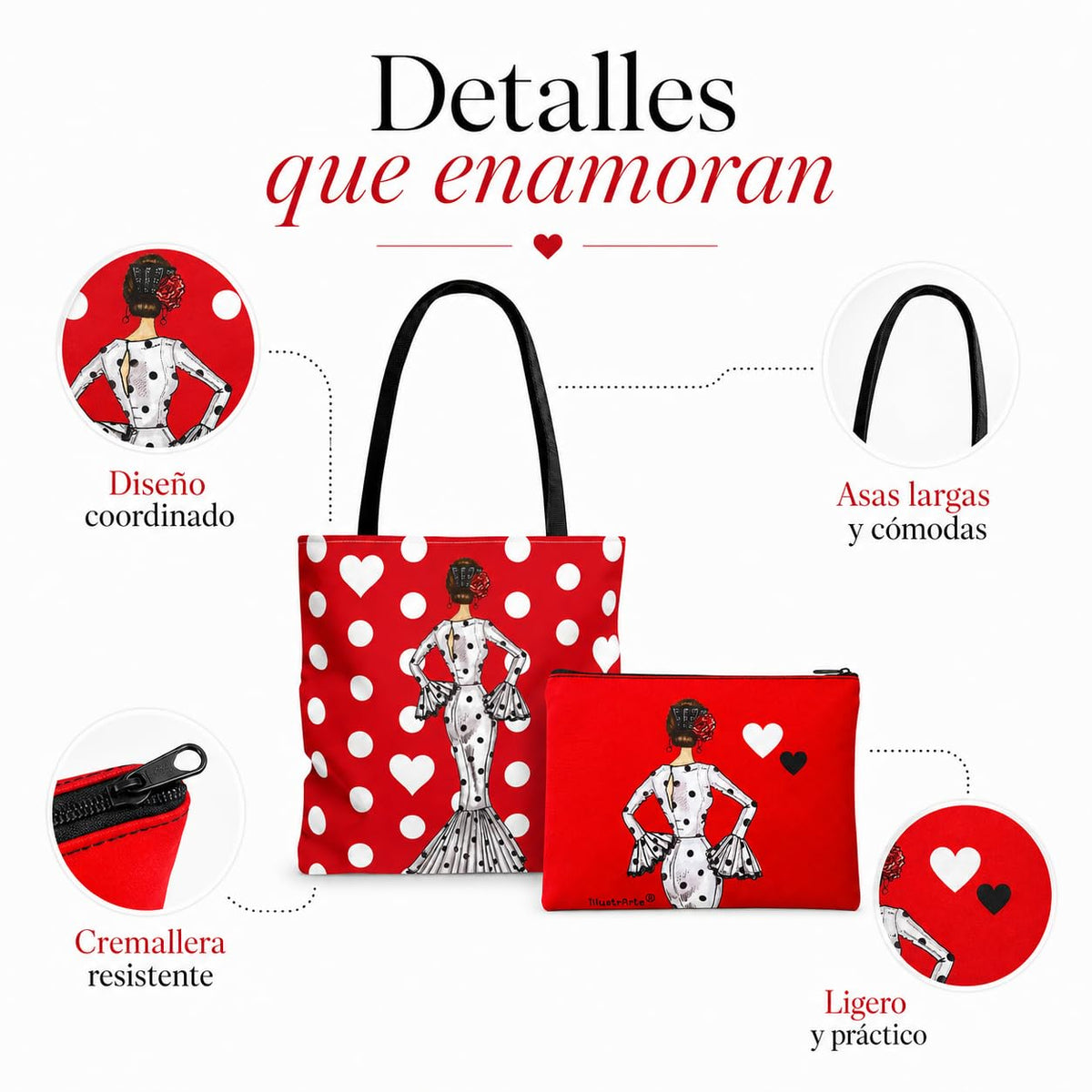
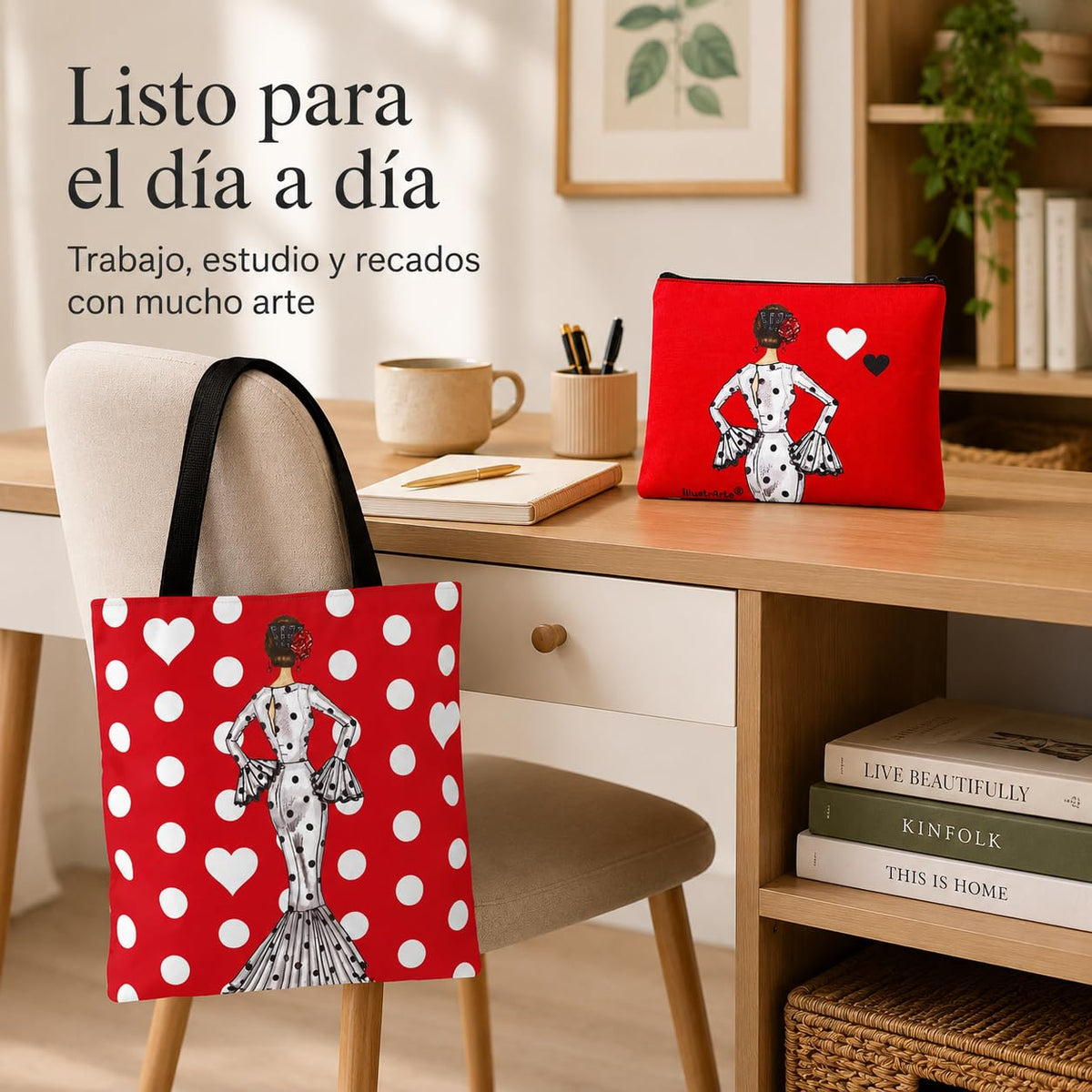
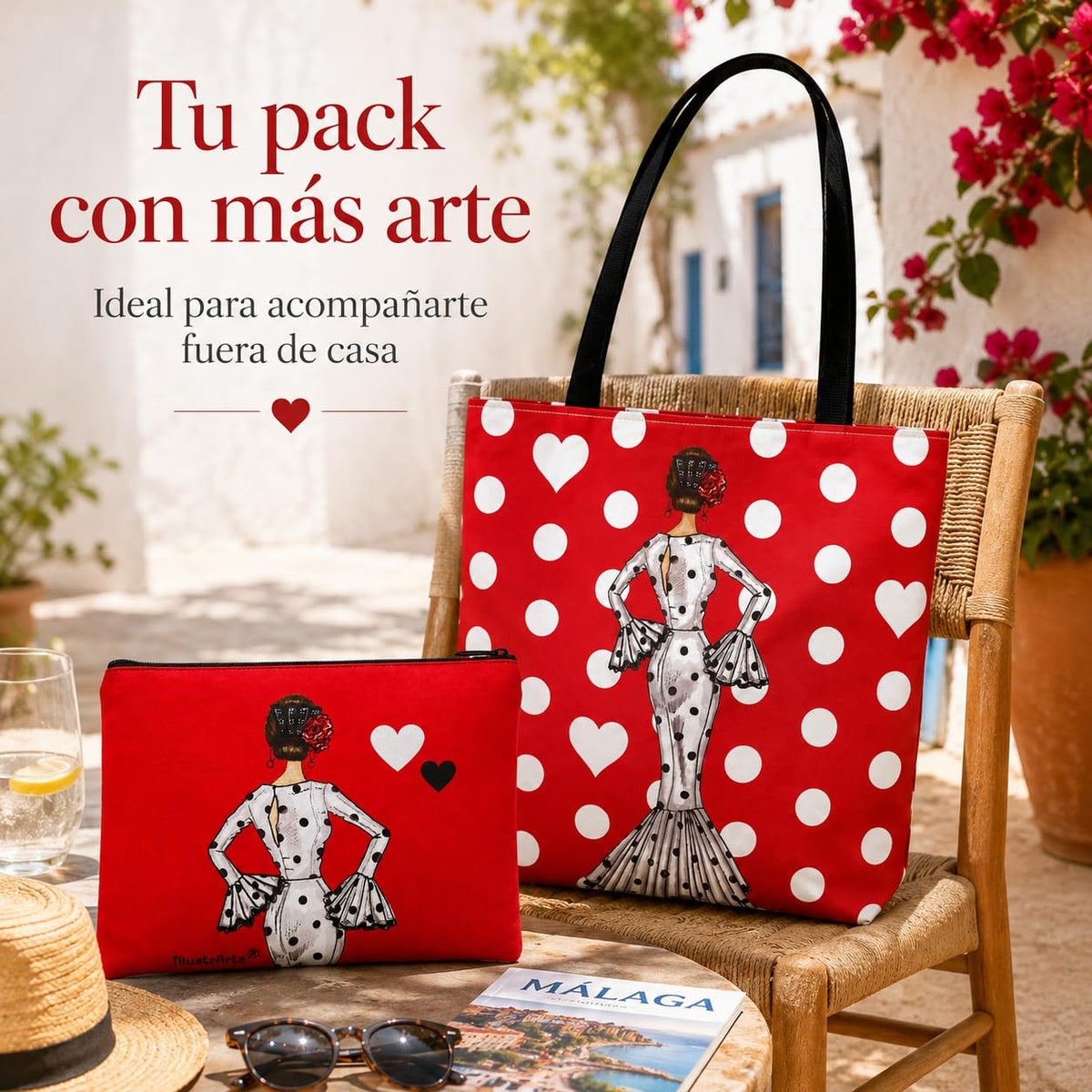
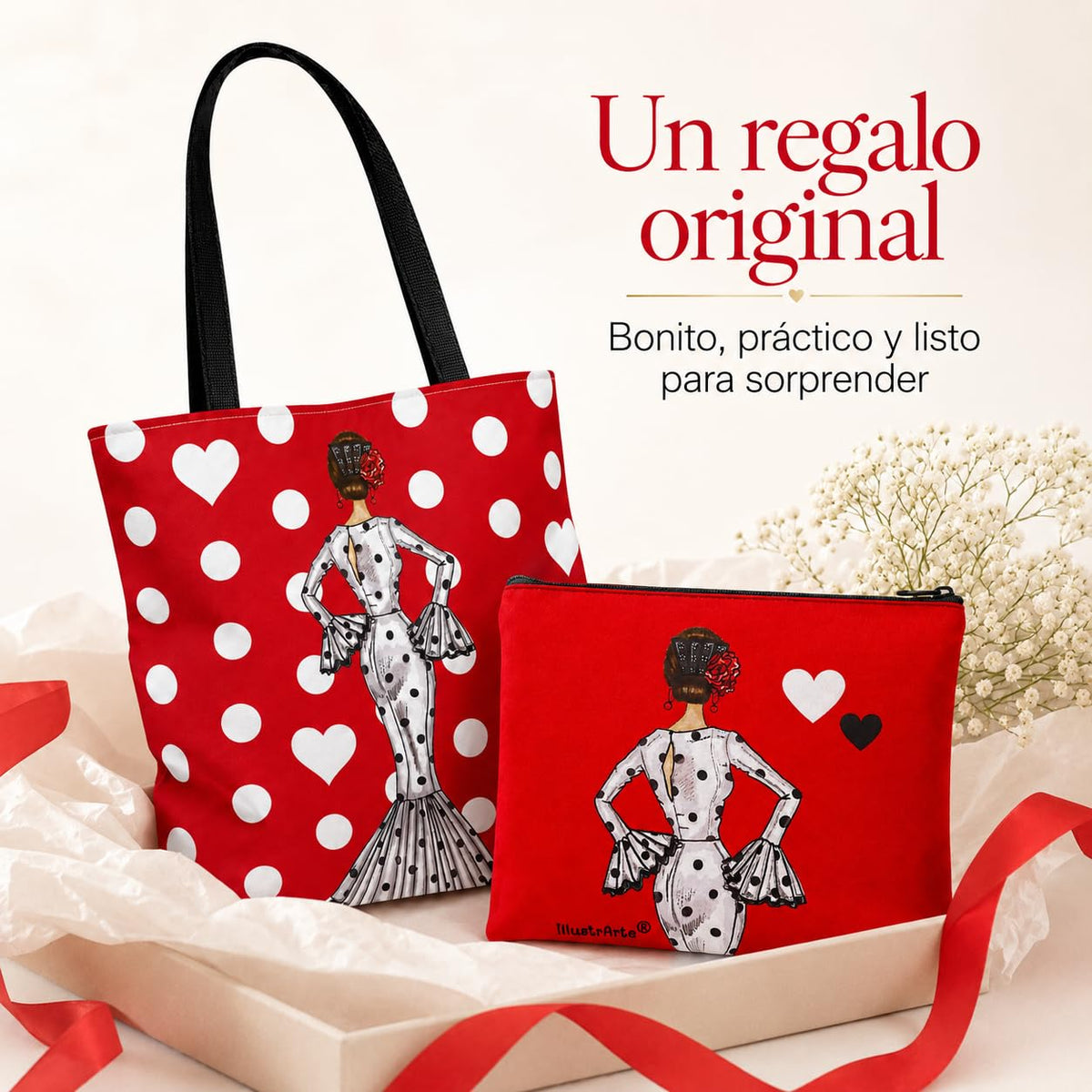
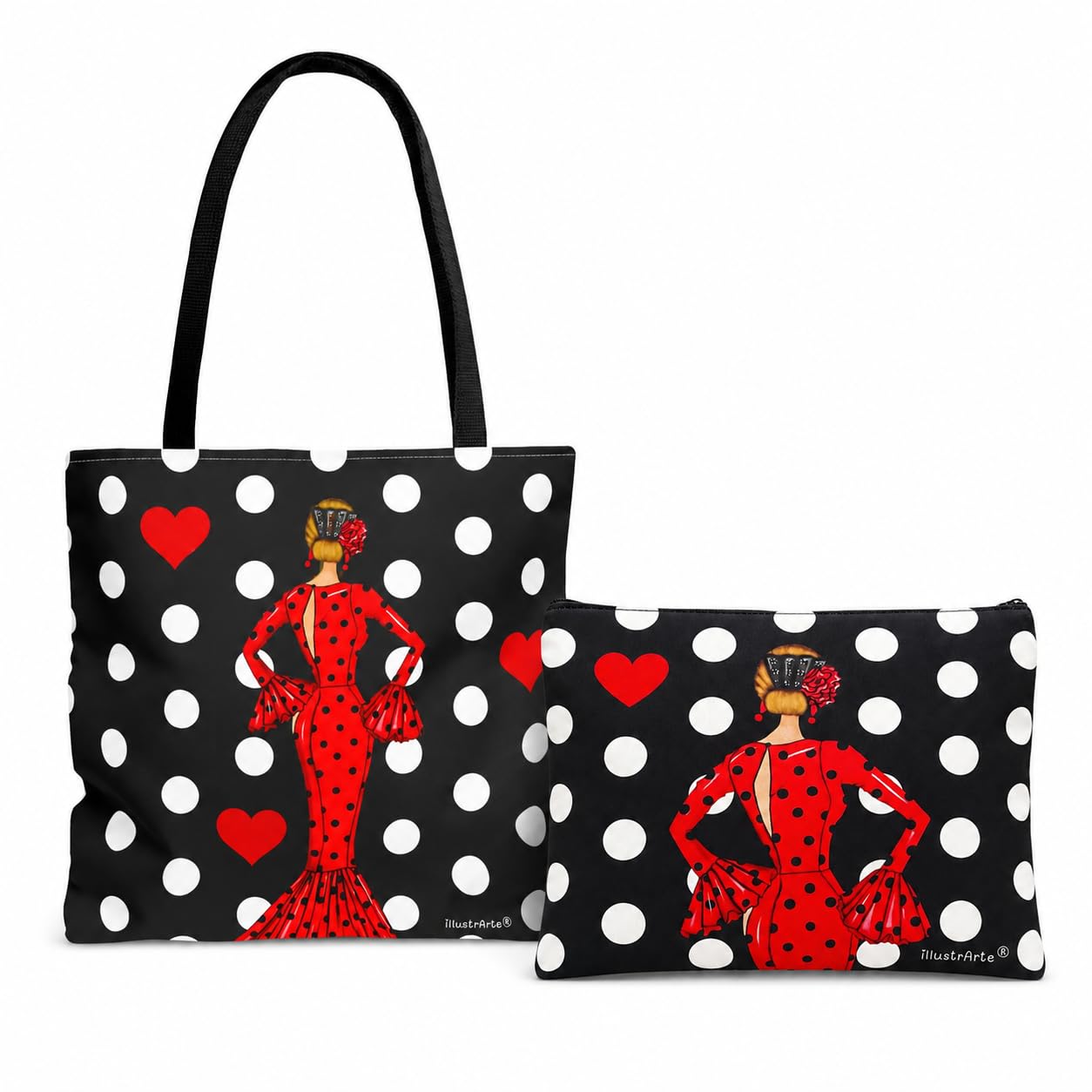
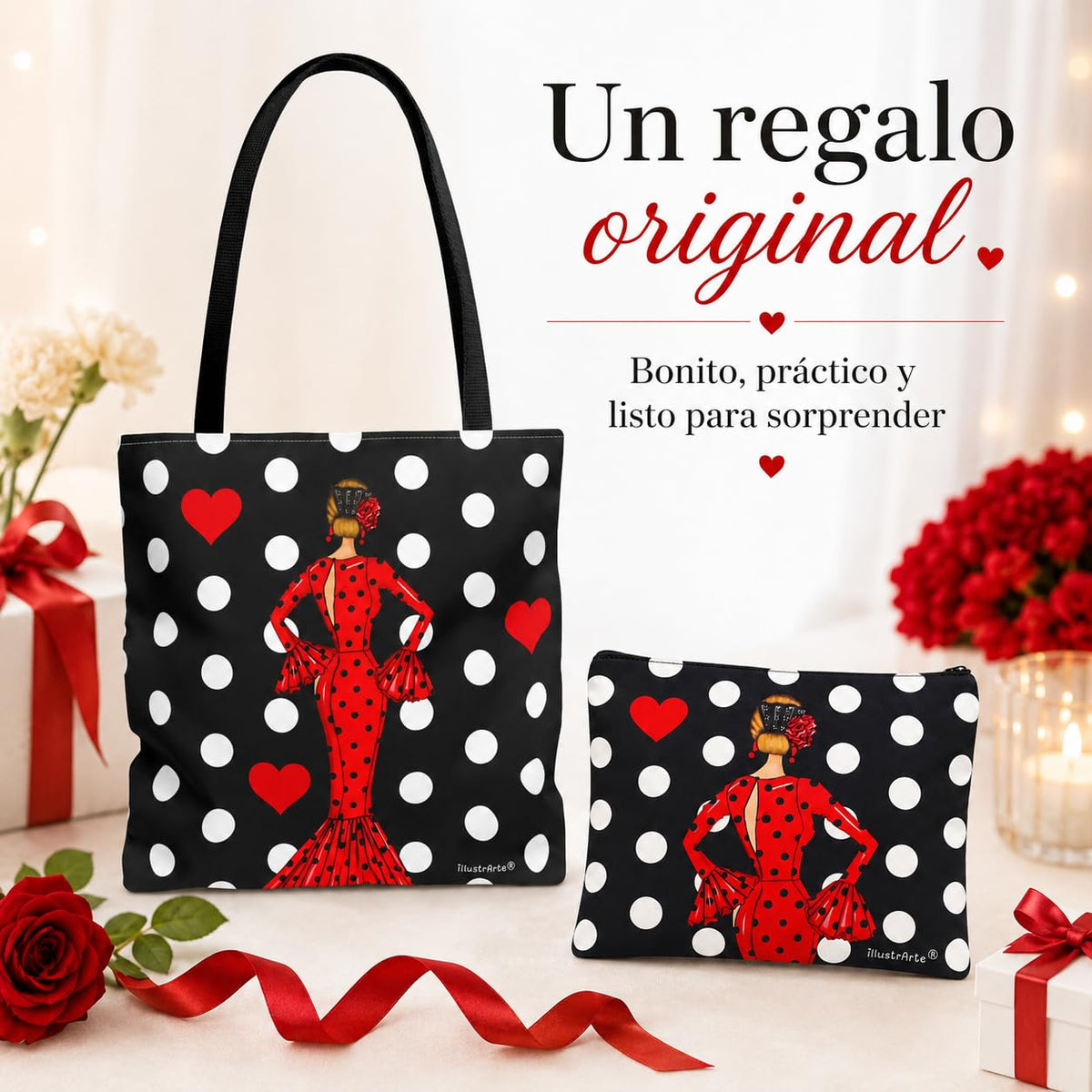
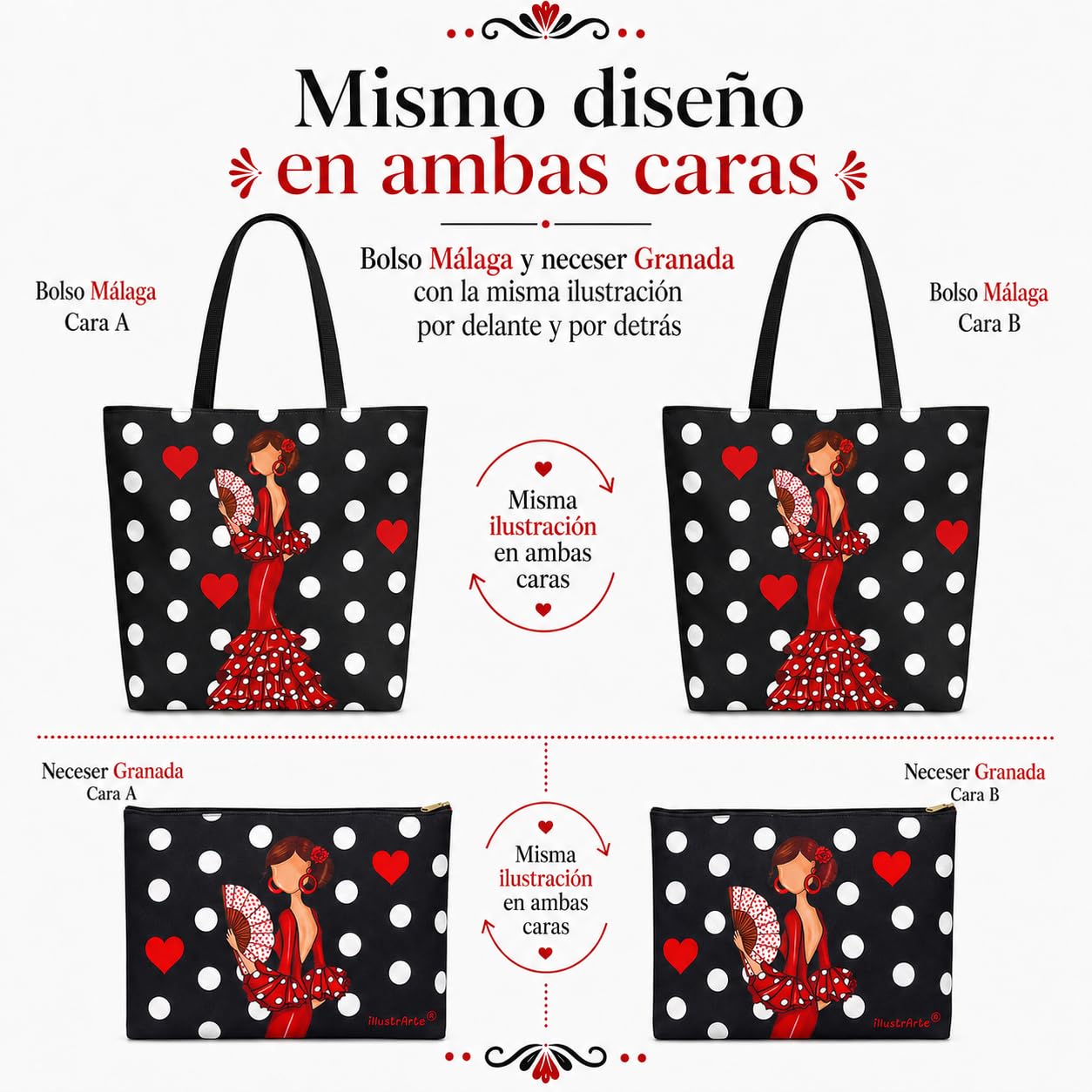
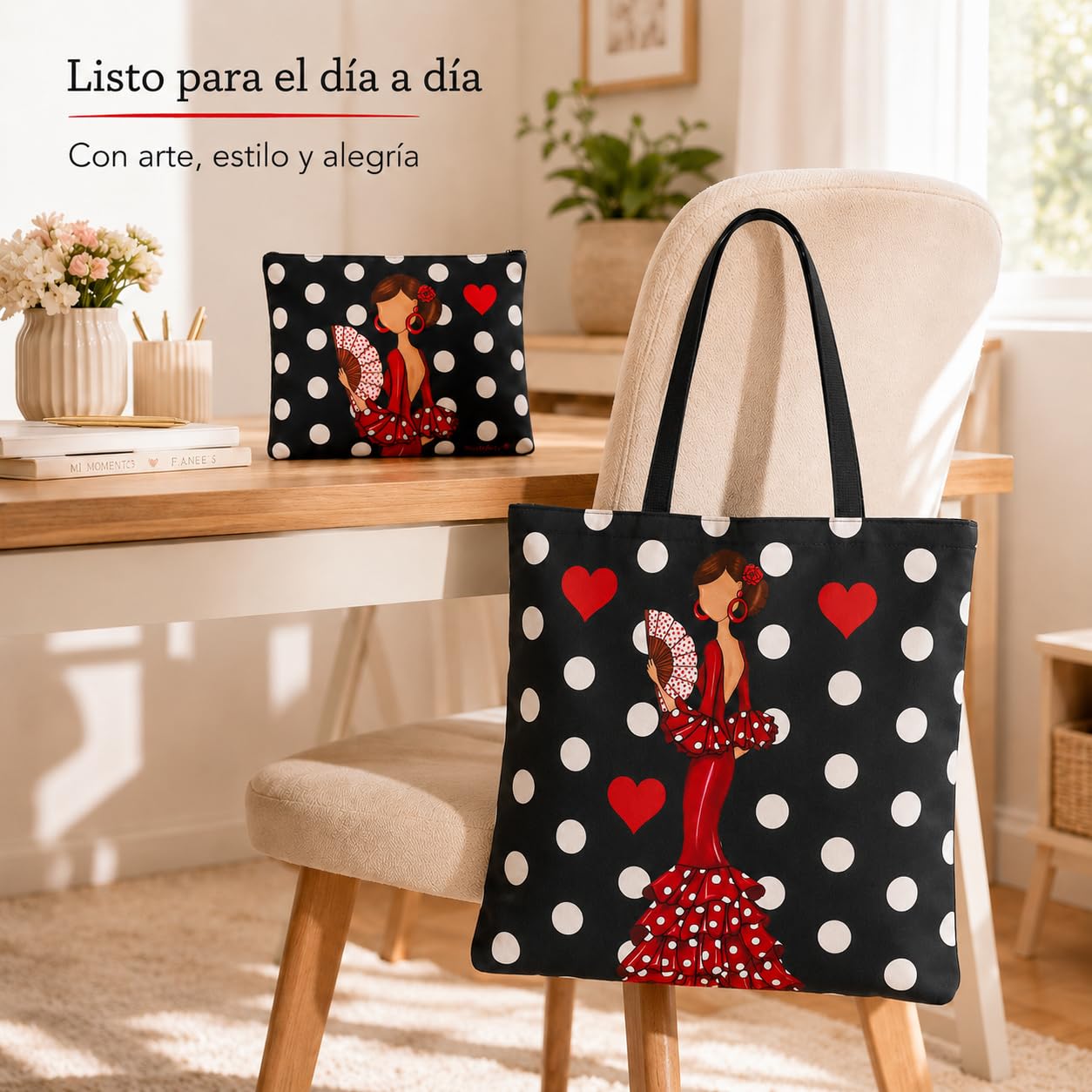
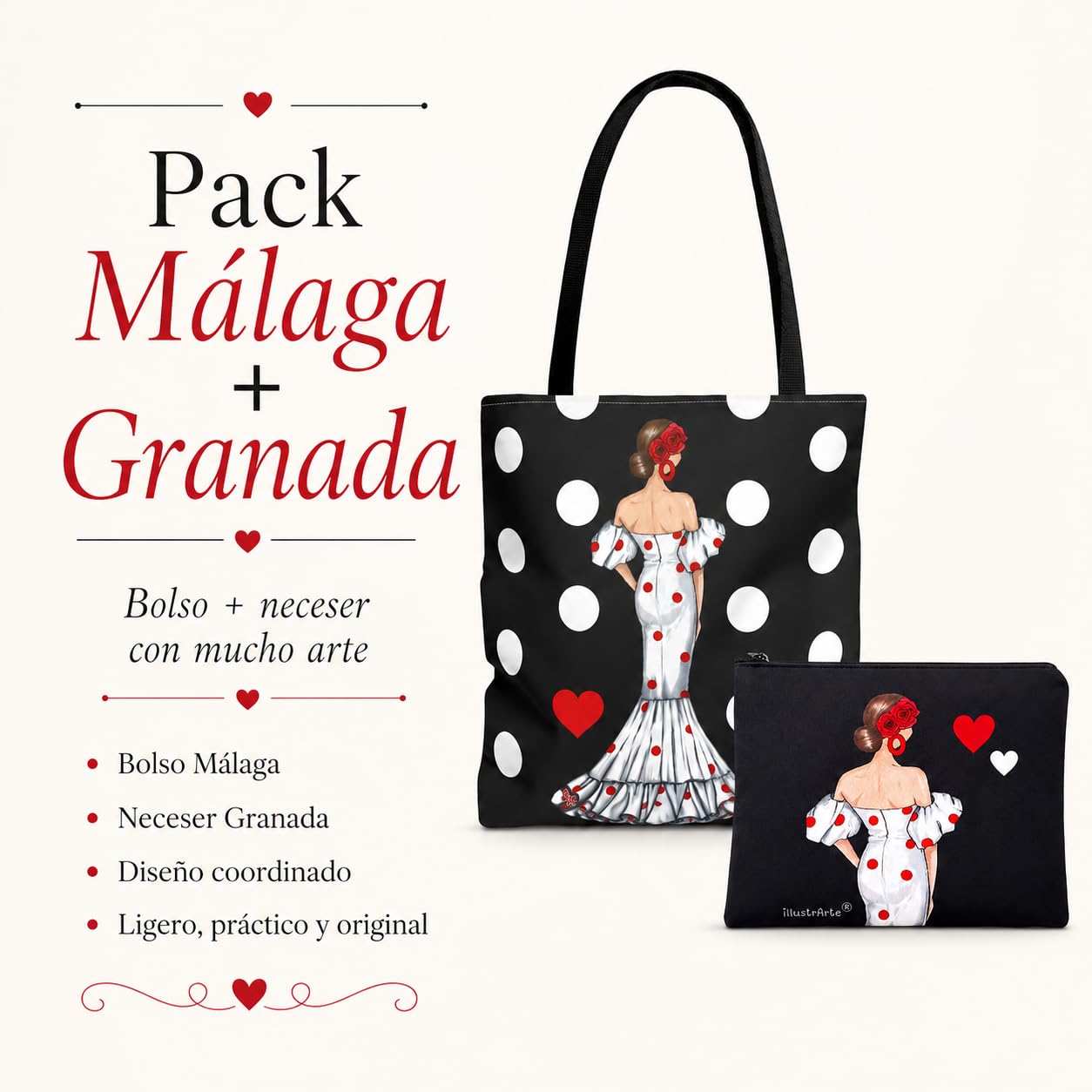
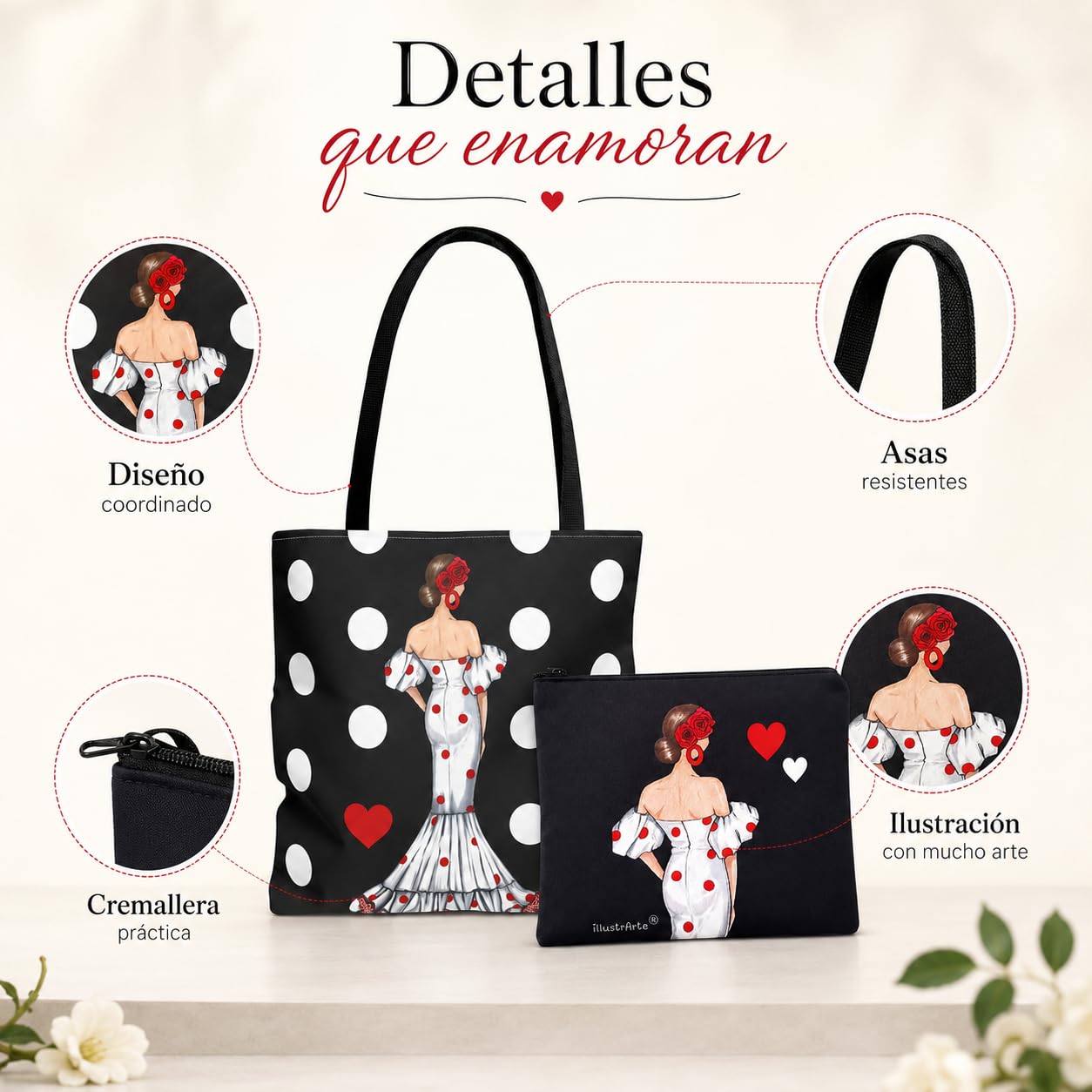
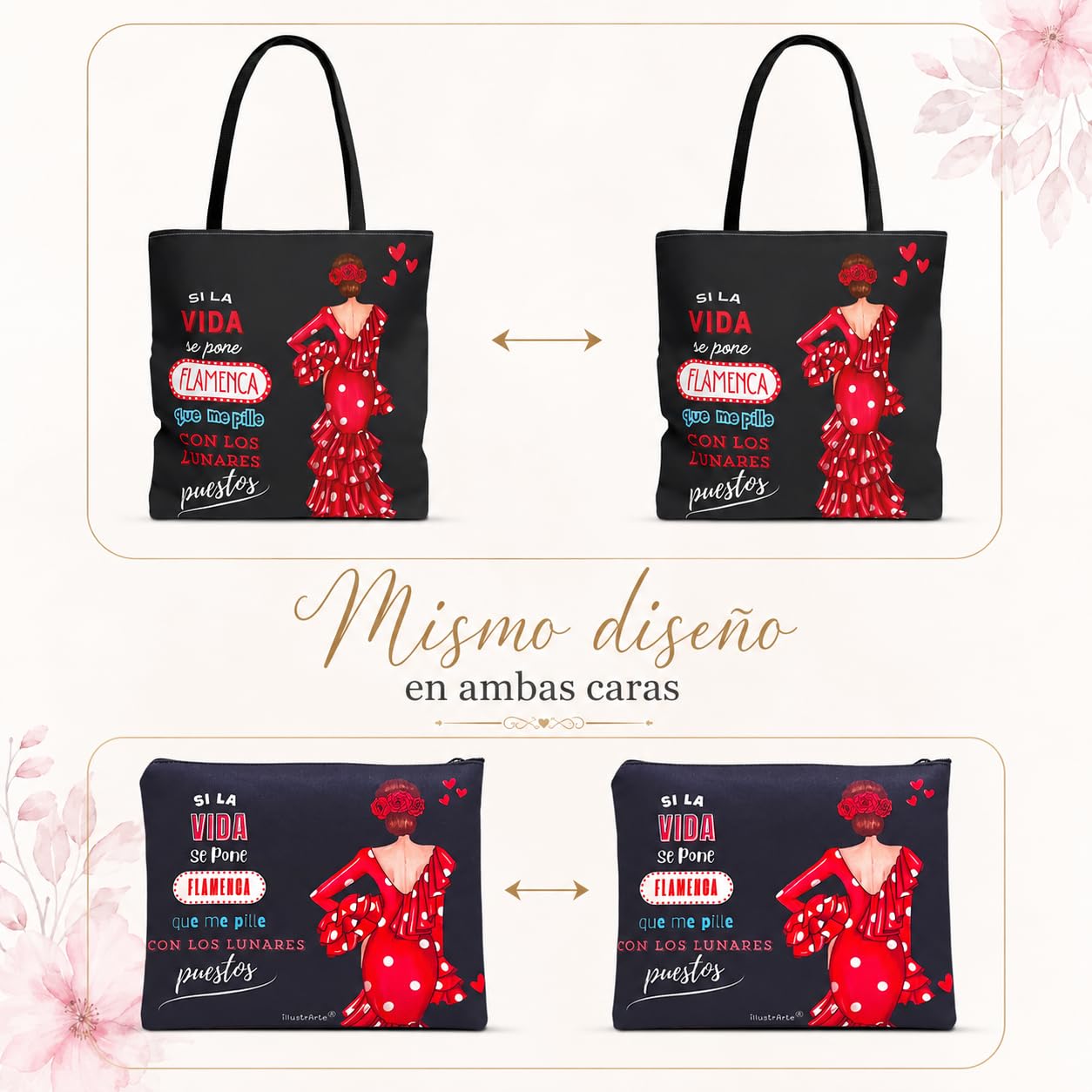
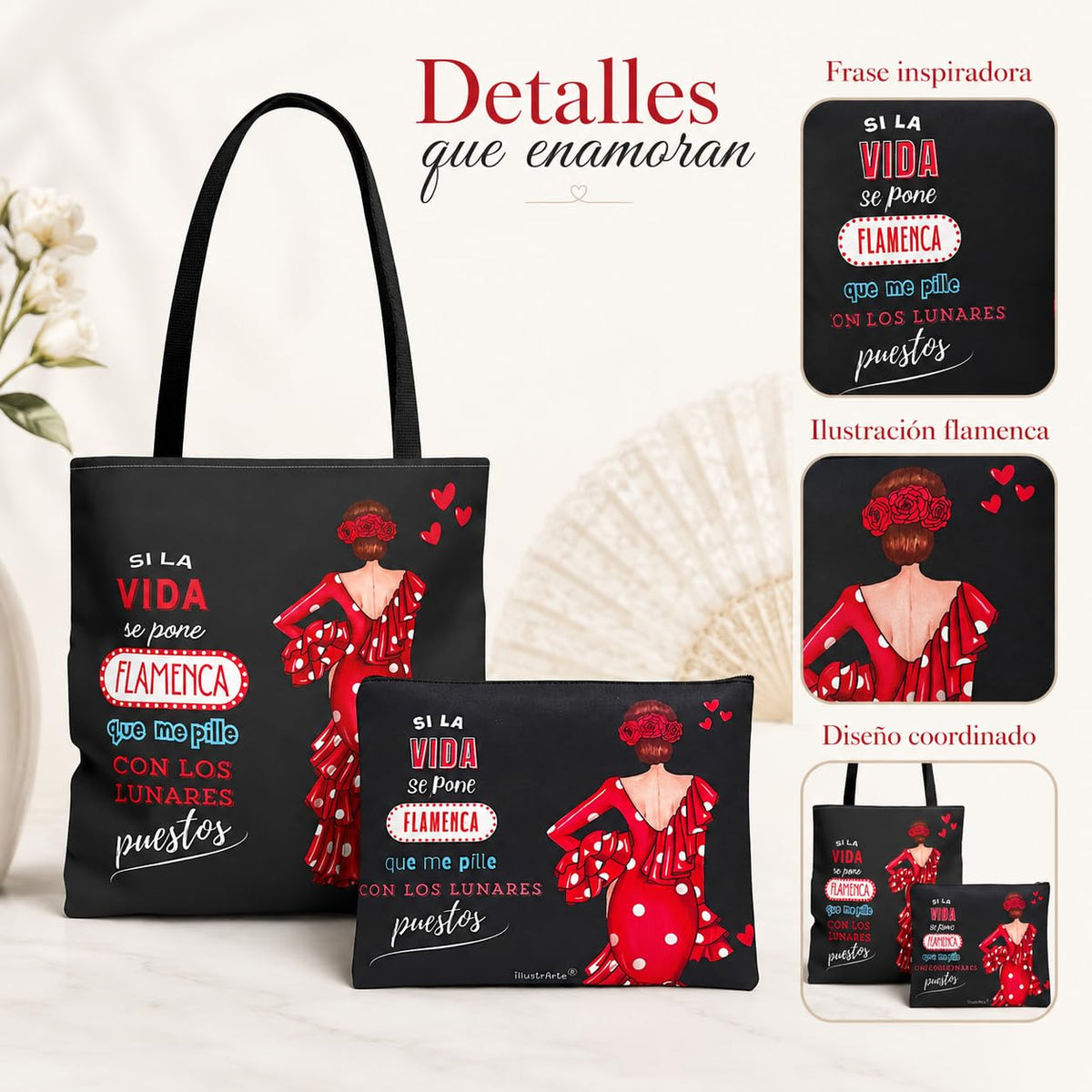
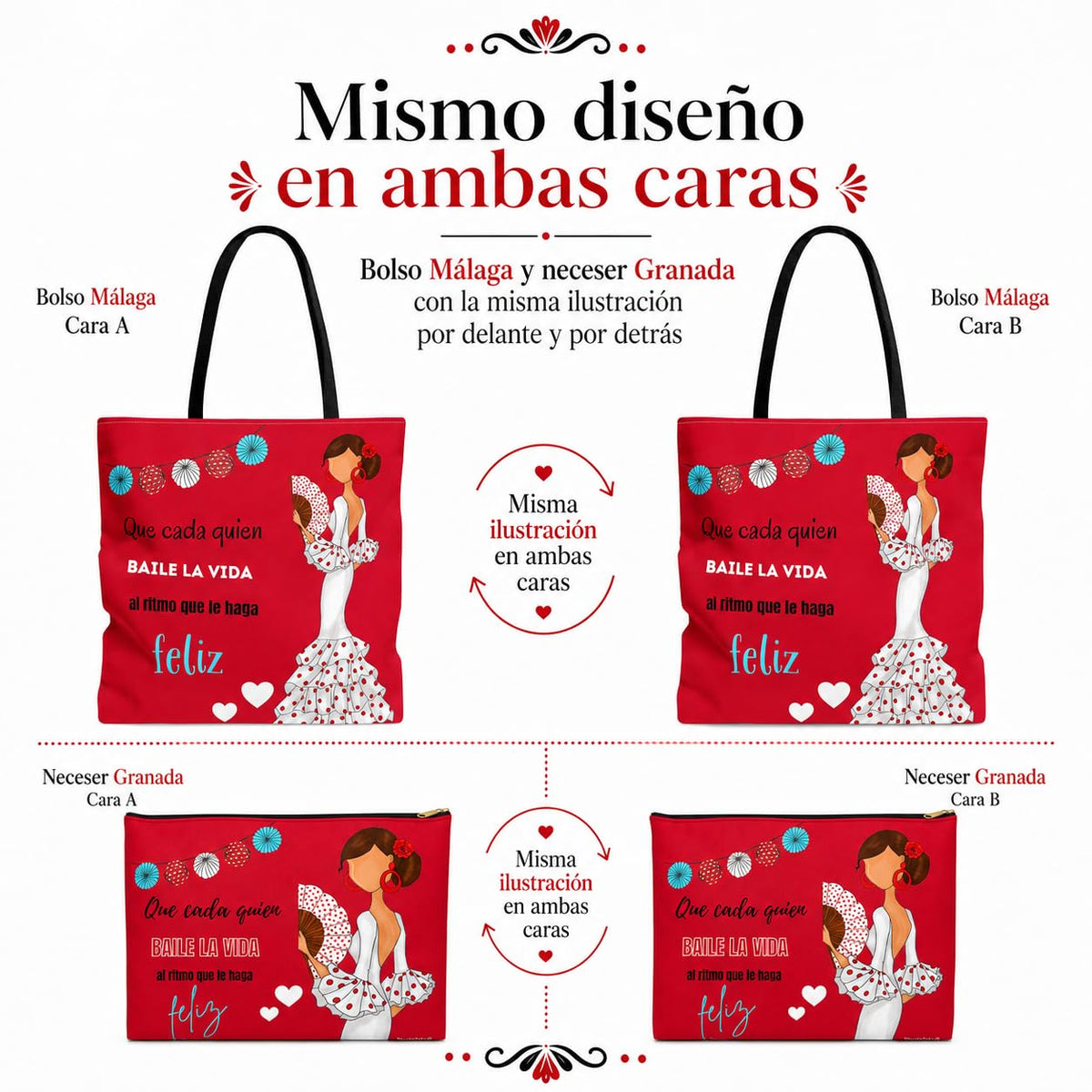
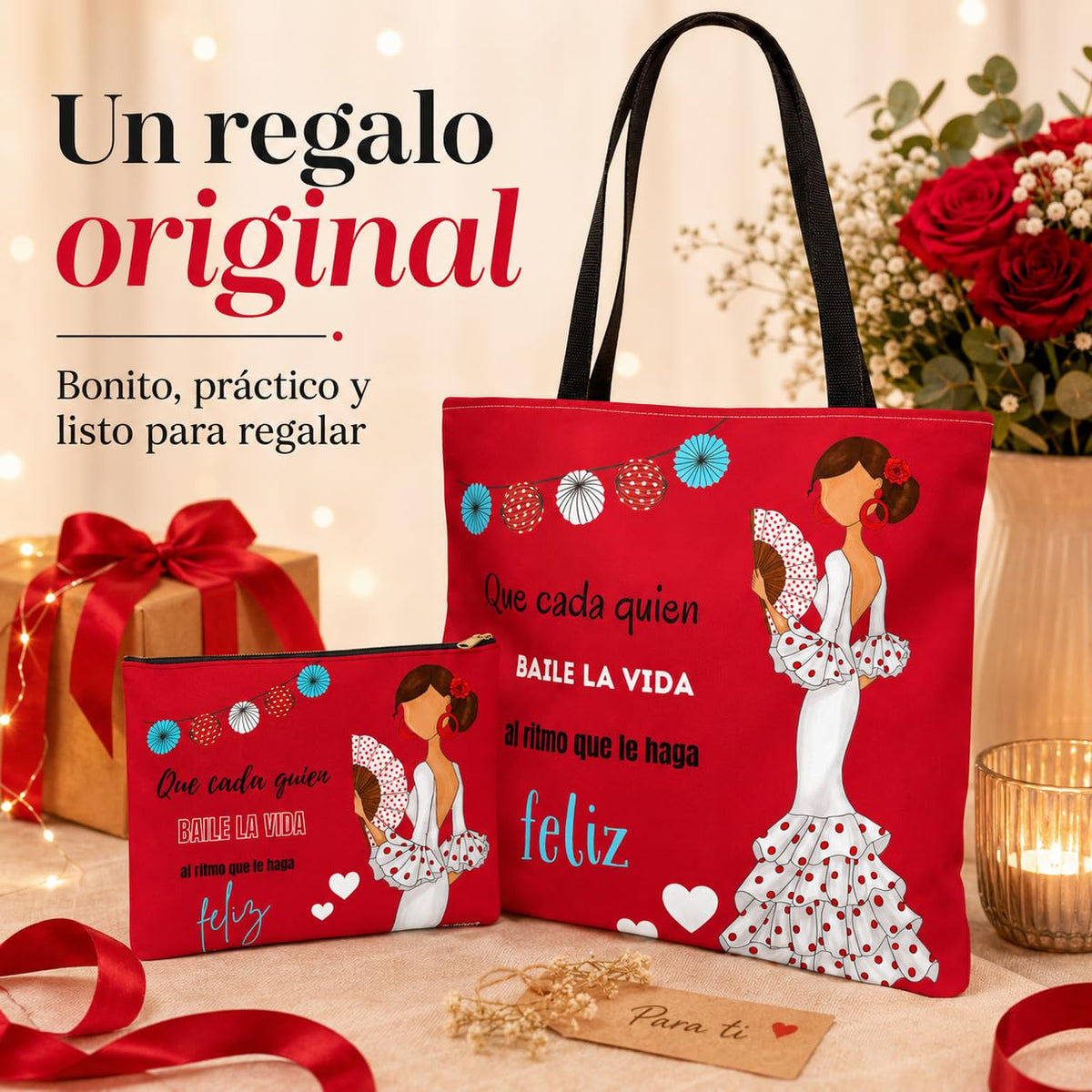
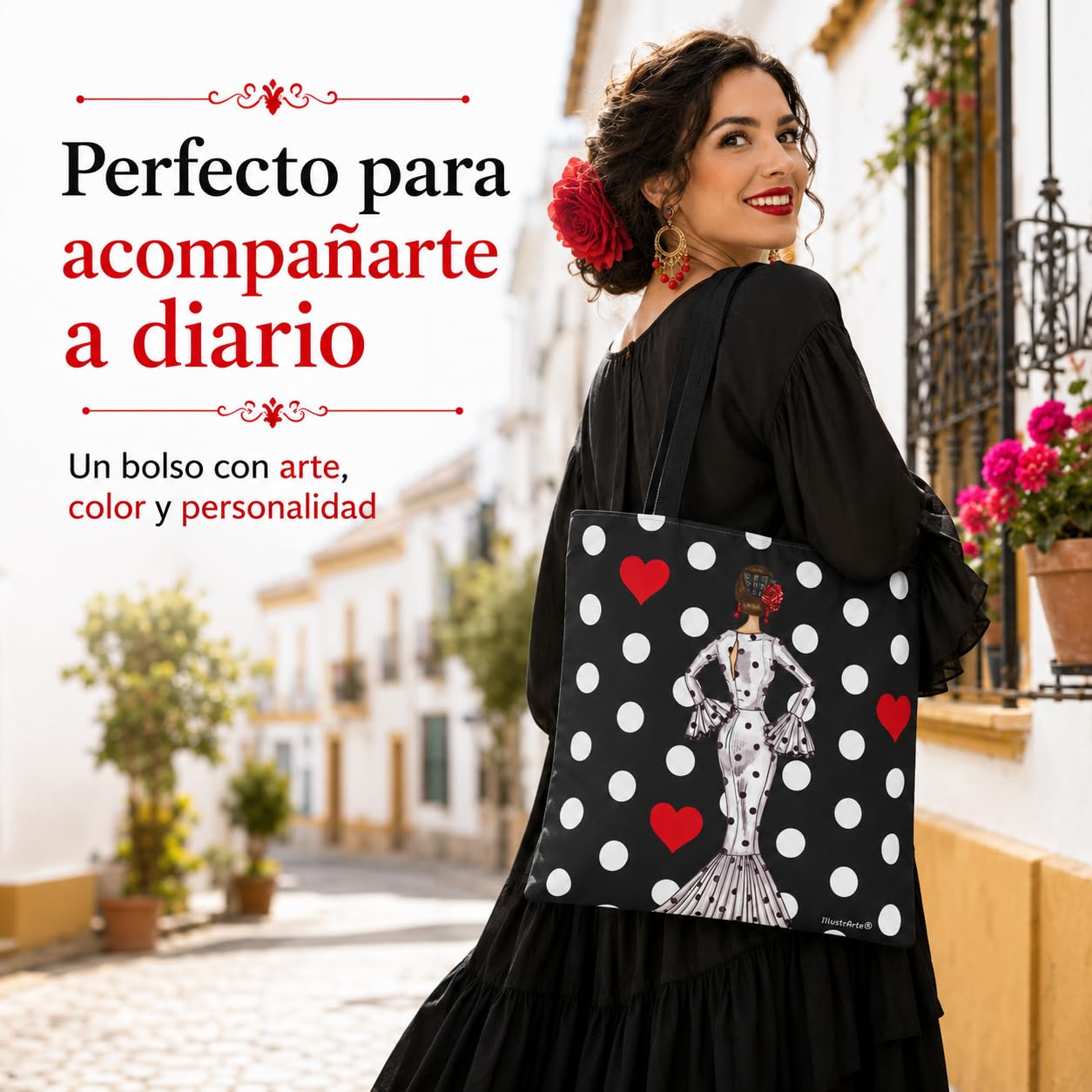
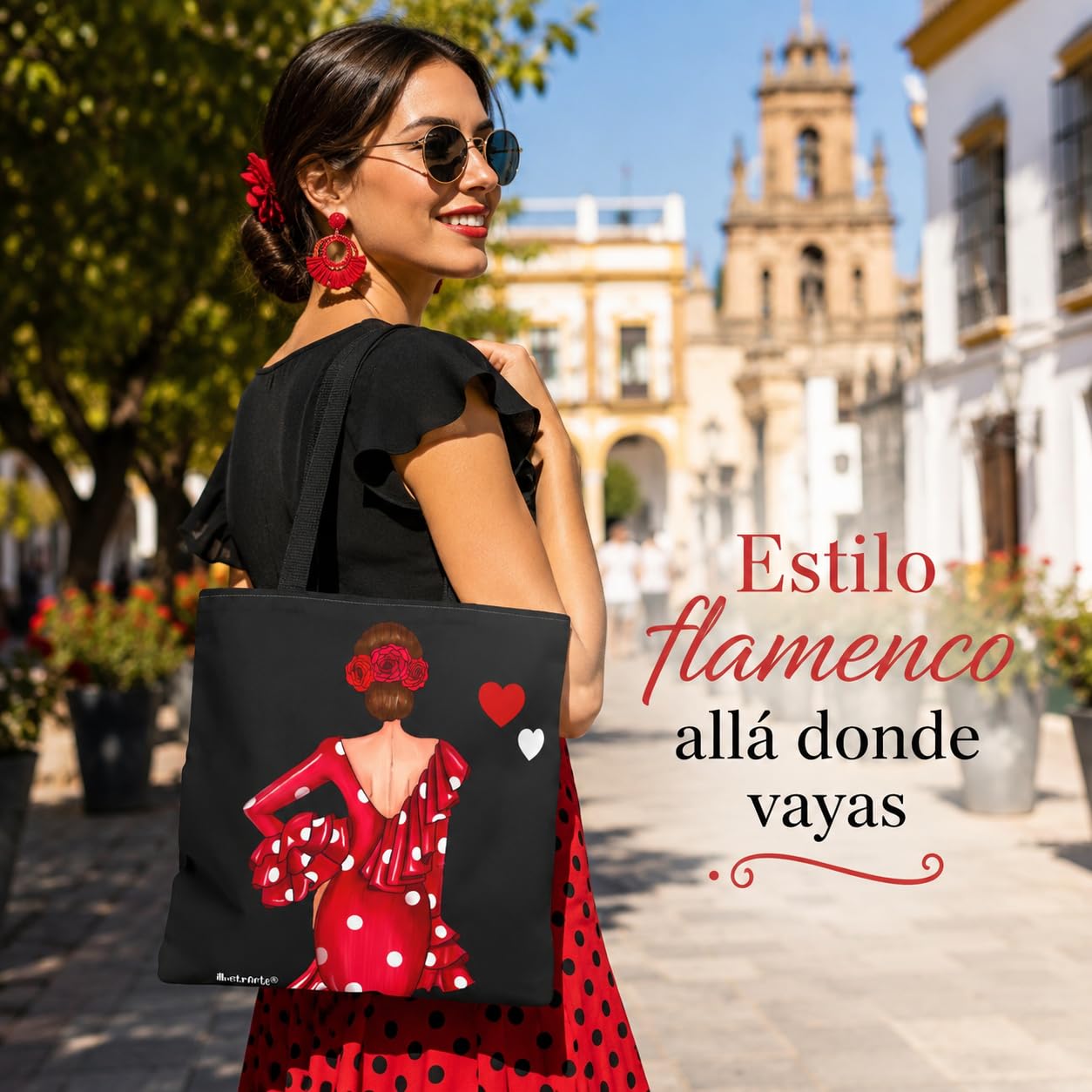
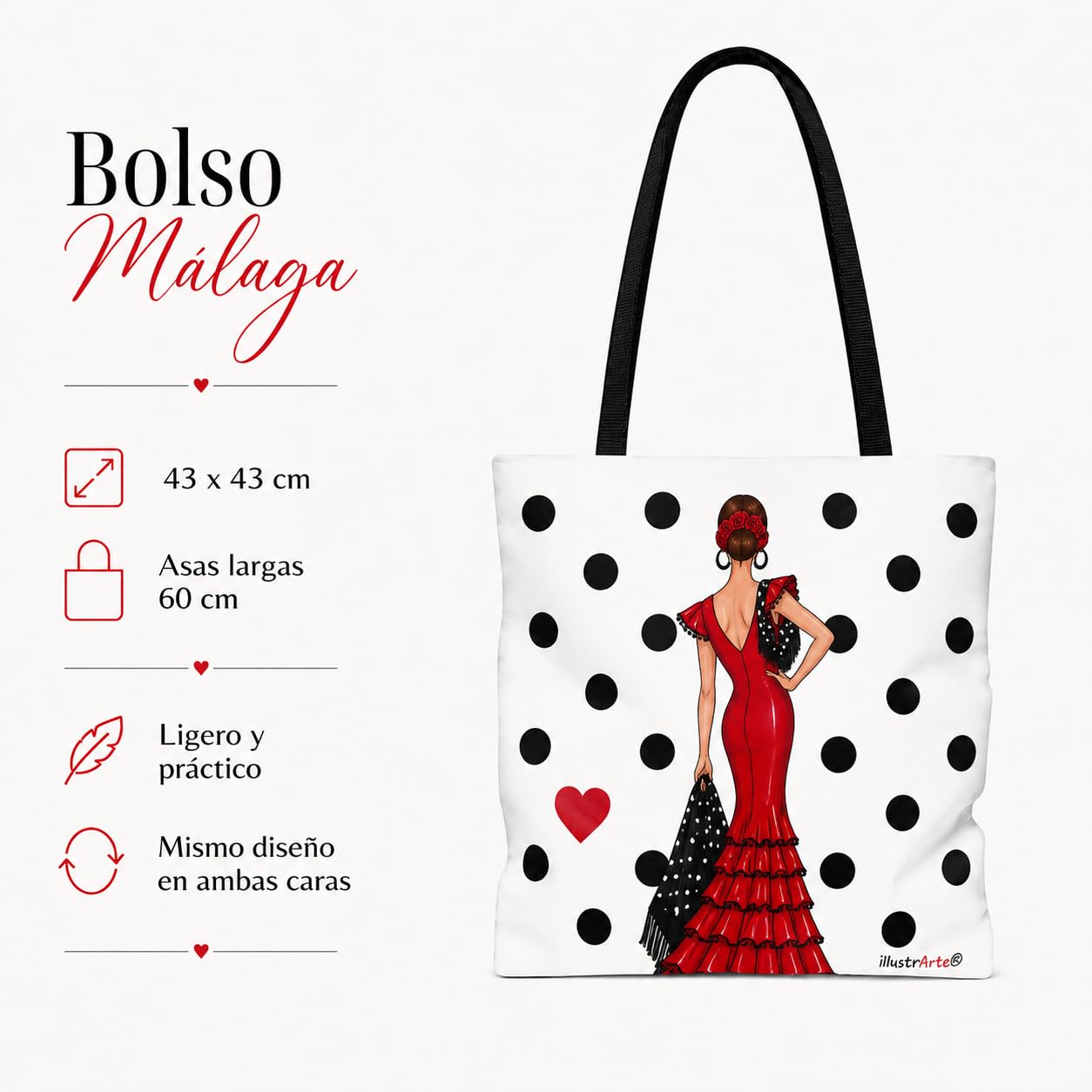
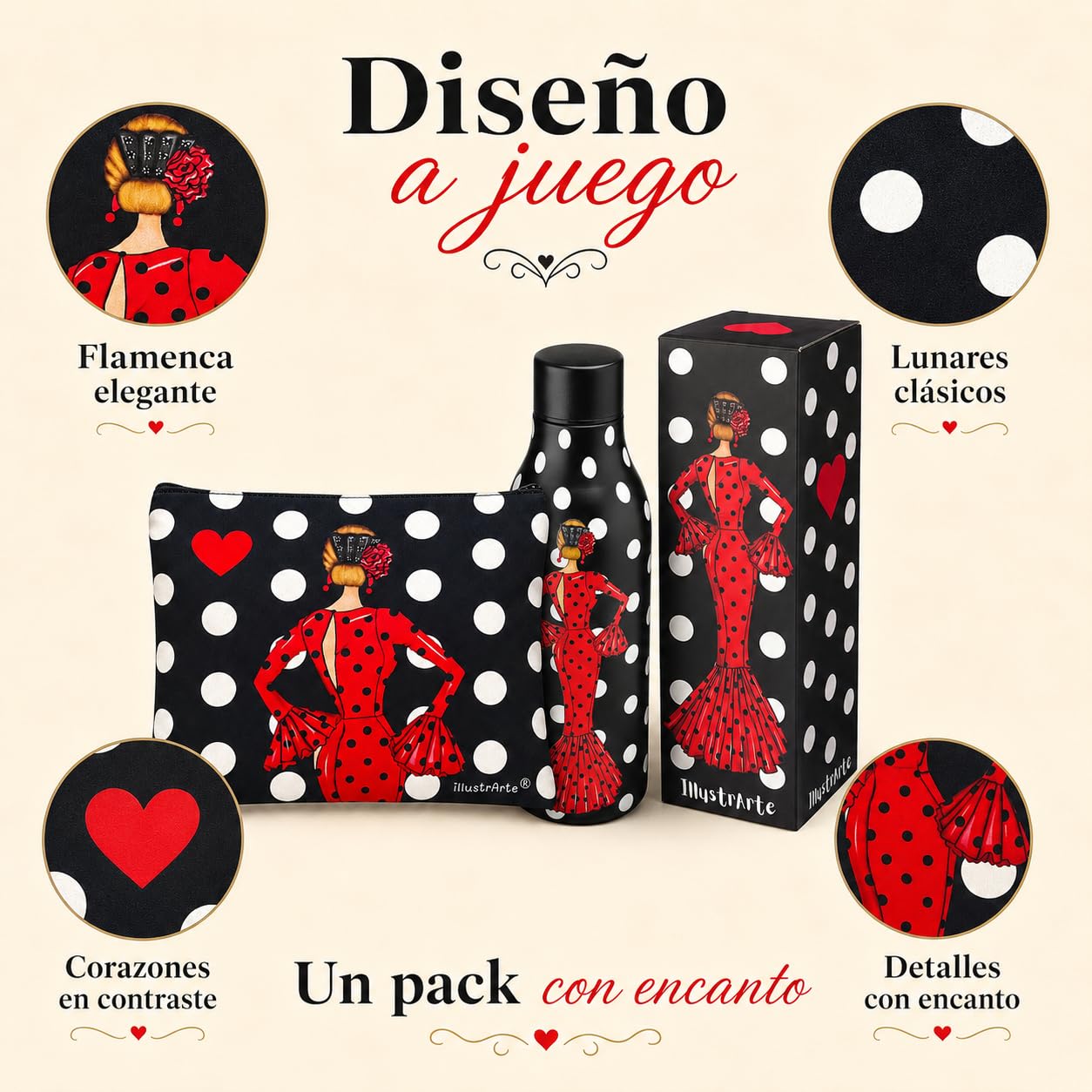
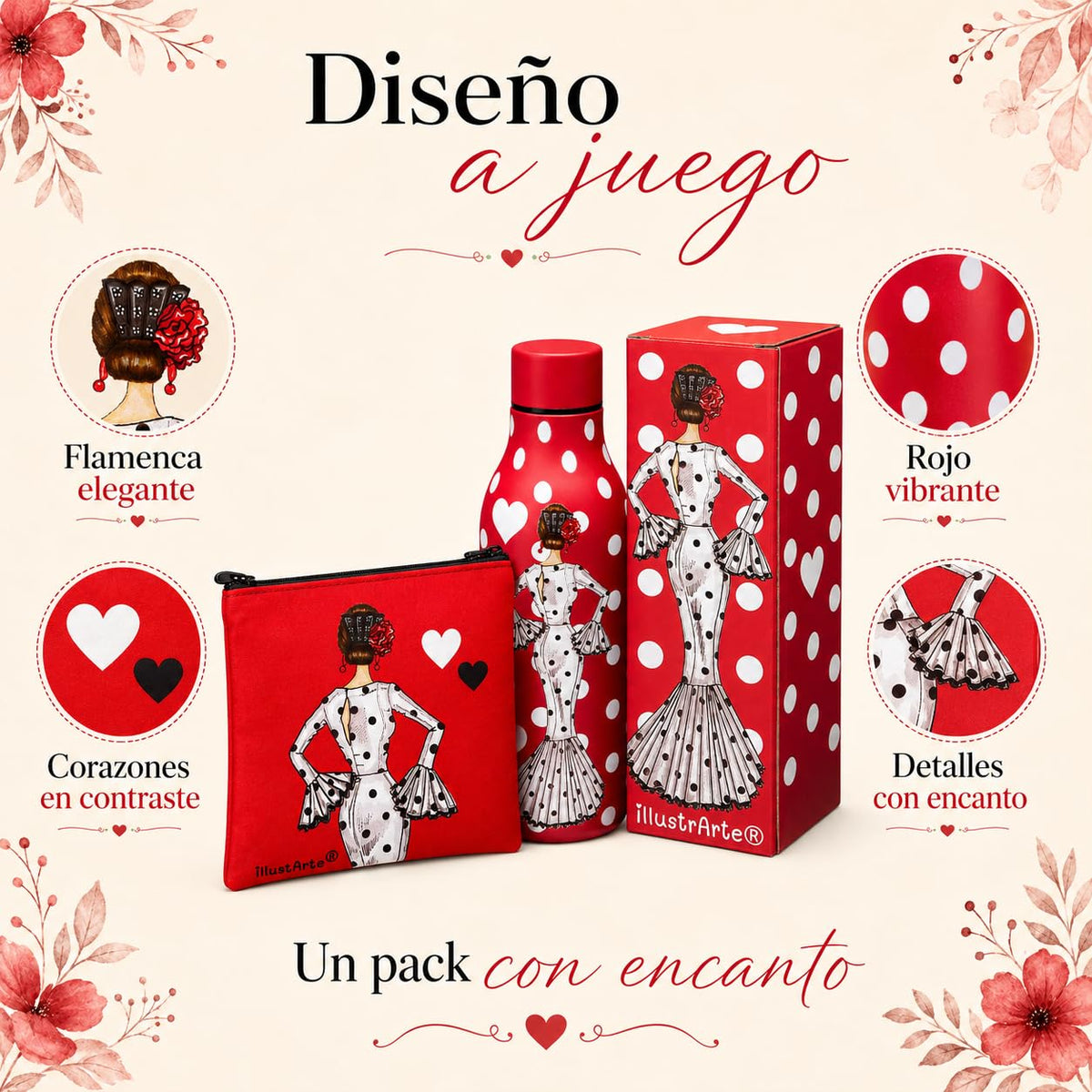
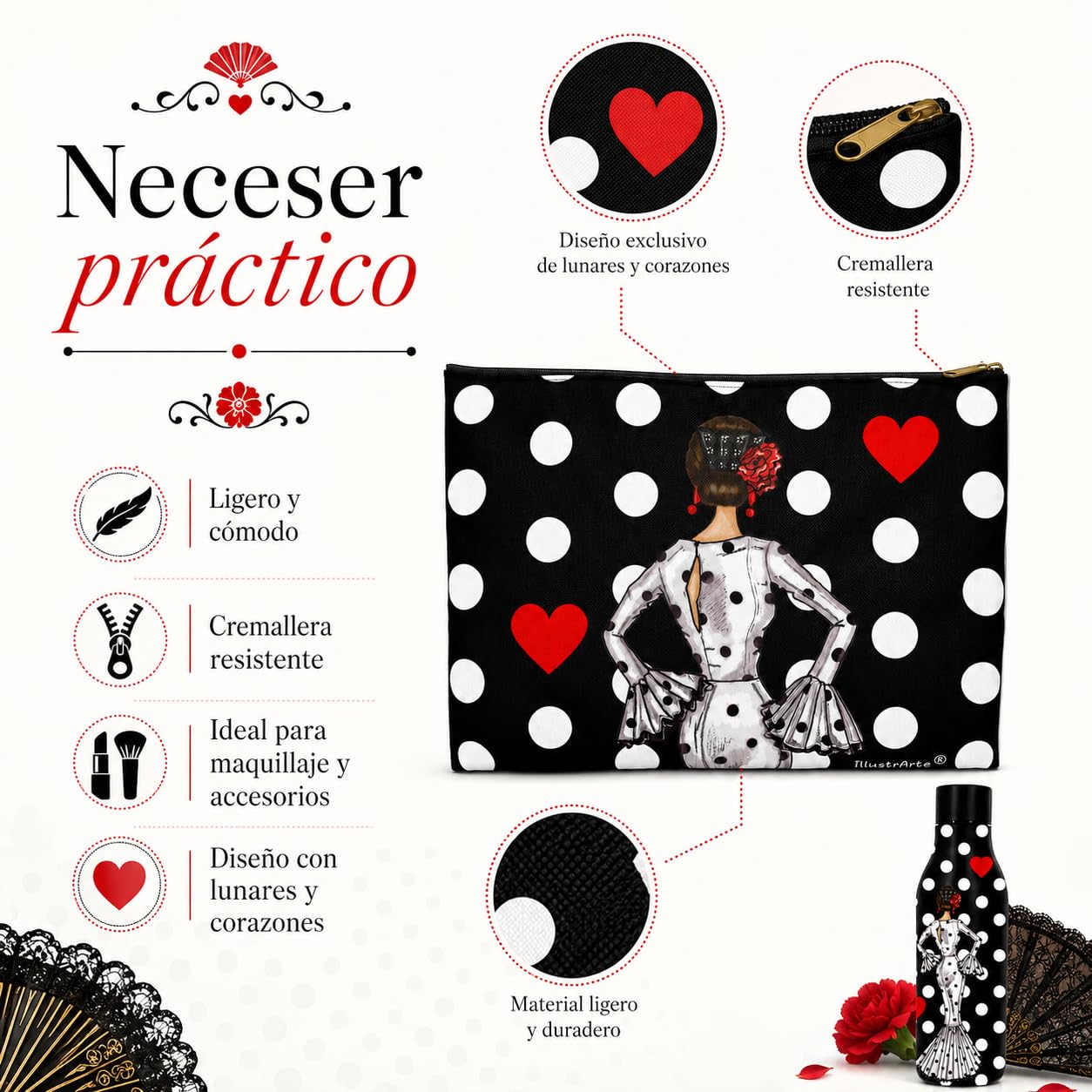
The illustrArte flamenca bags are made to come with you to classes, rehearsals and everyday activities.
You can also see our bags and pouches on Amazon.
4. A separate bag for your shoes
Keeping shoes in their own bag stops the soles touching your clothes, your towel or anything else in the bag.
It also means that at the end of class you can pack your shoes away quickly without dirtying the inside of your main bag.
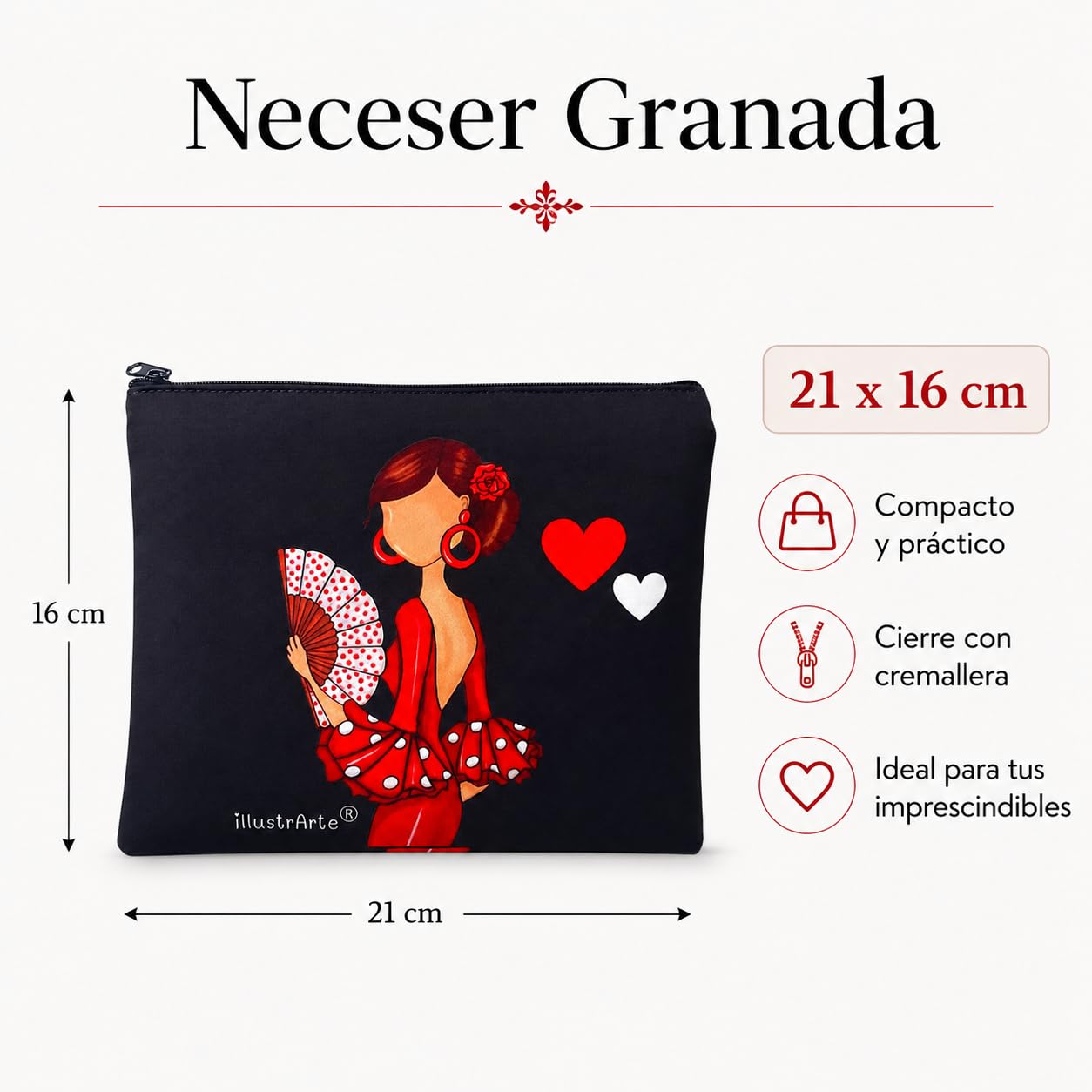
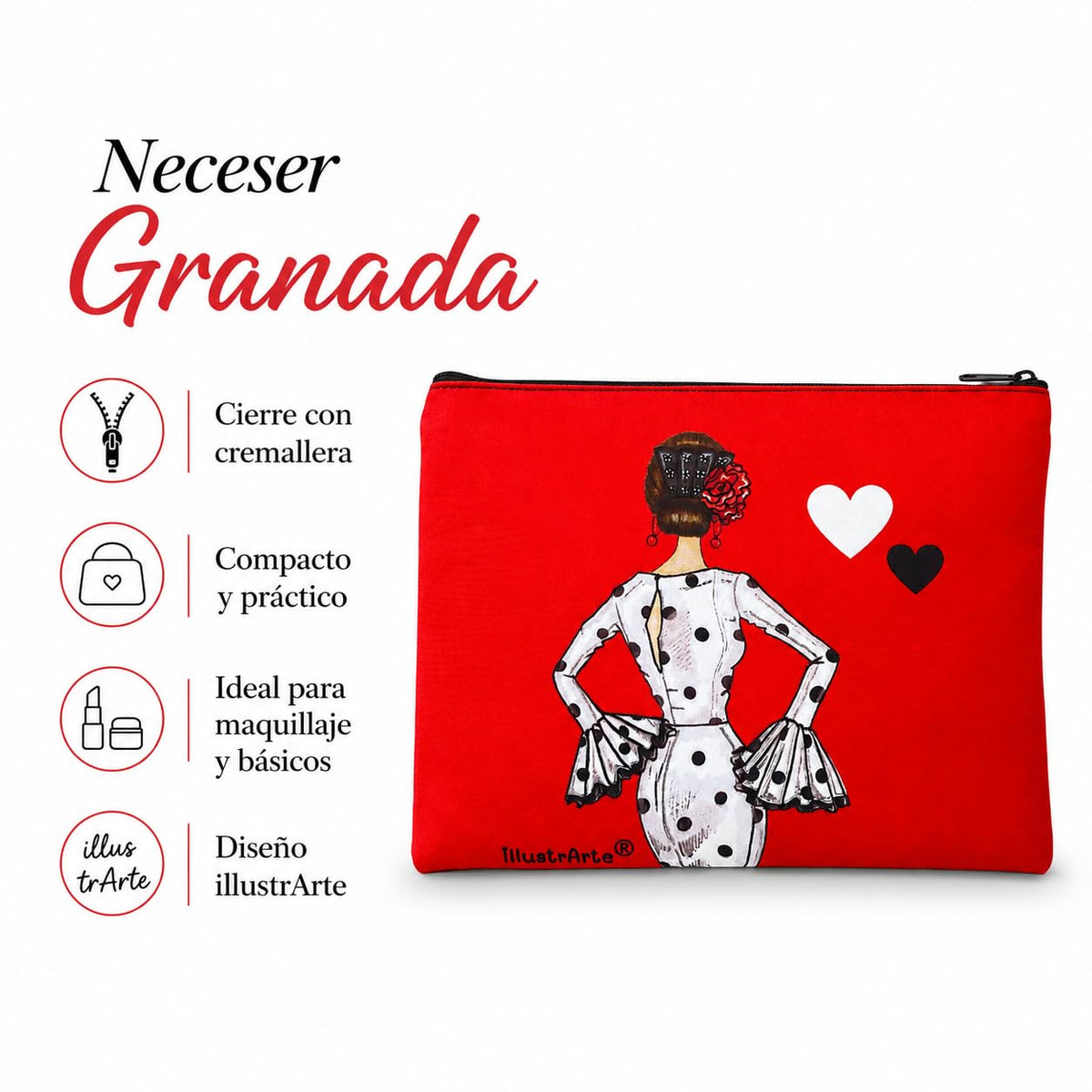
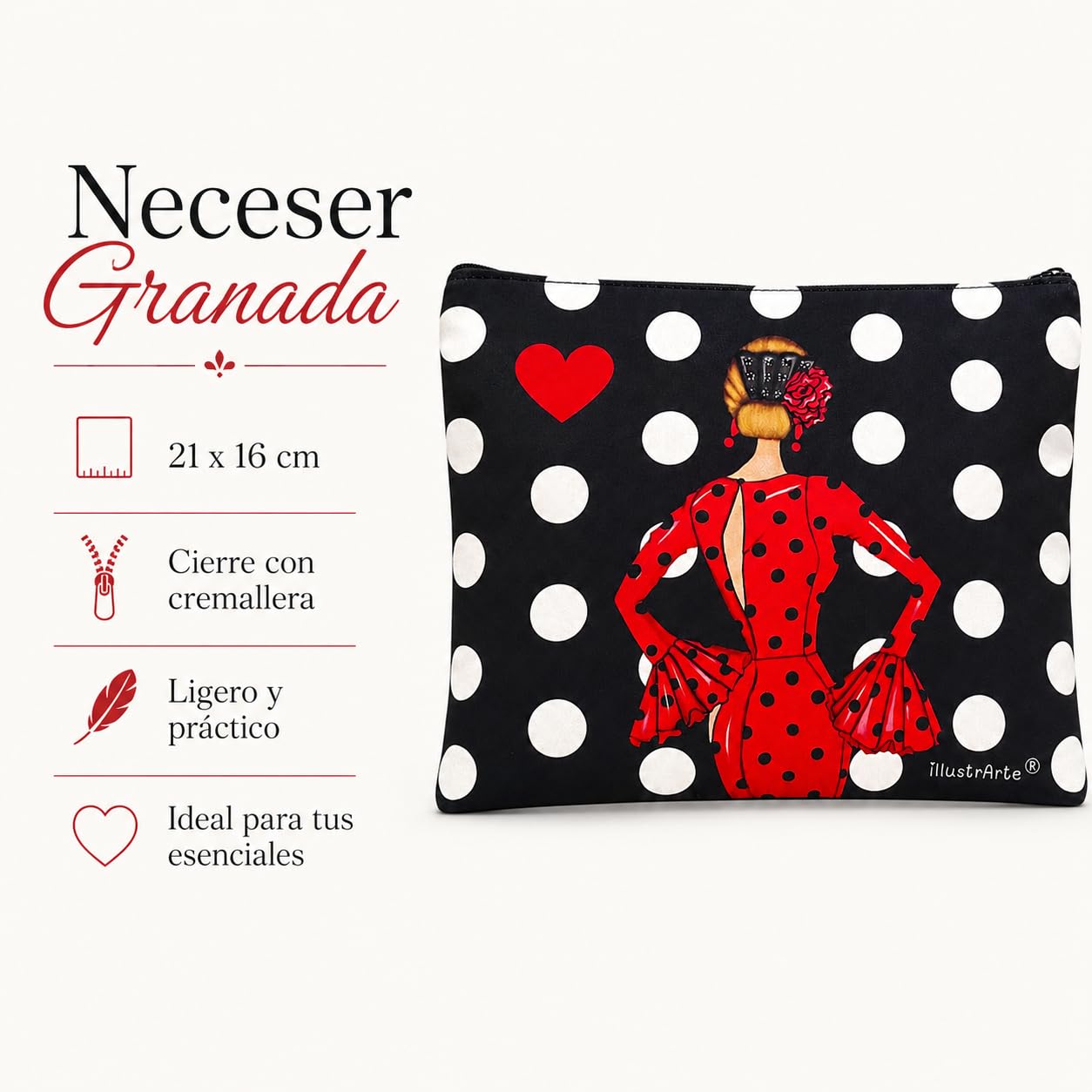
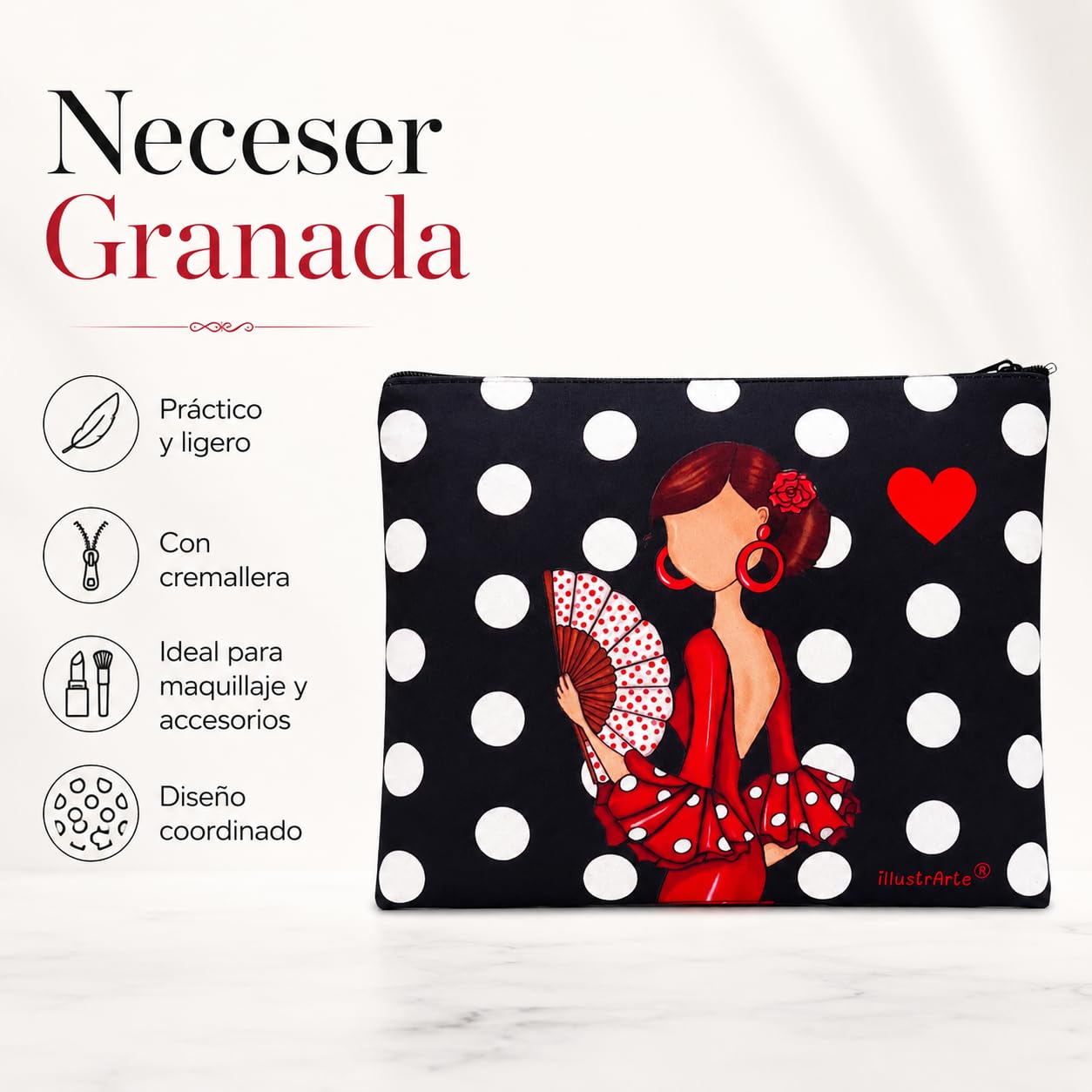
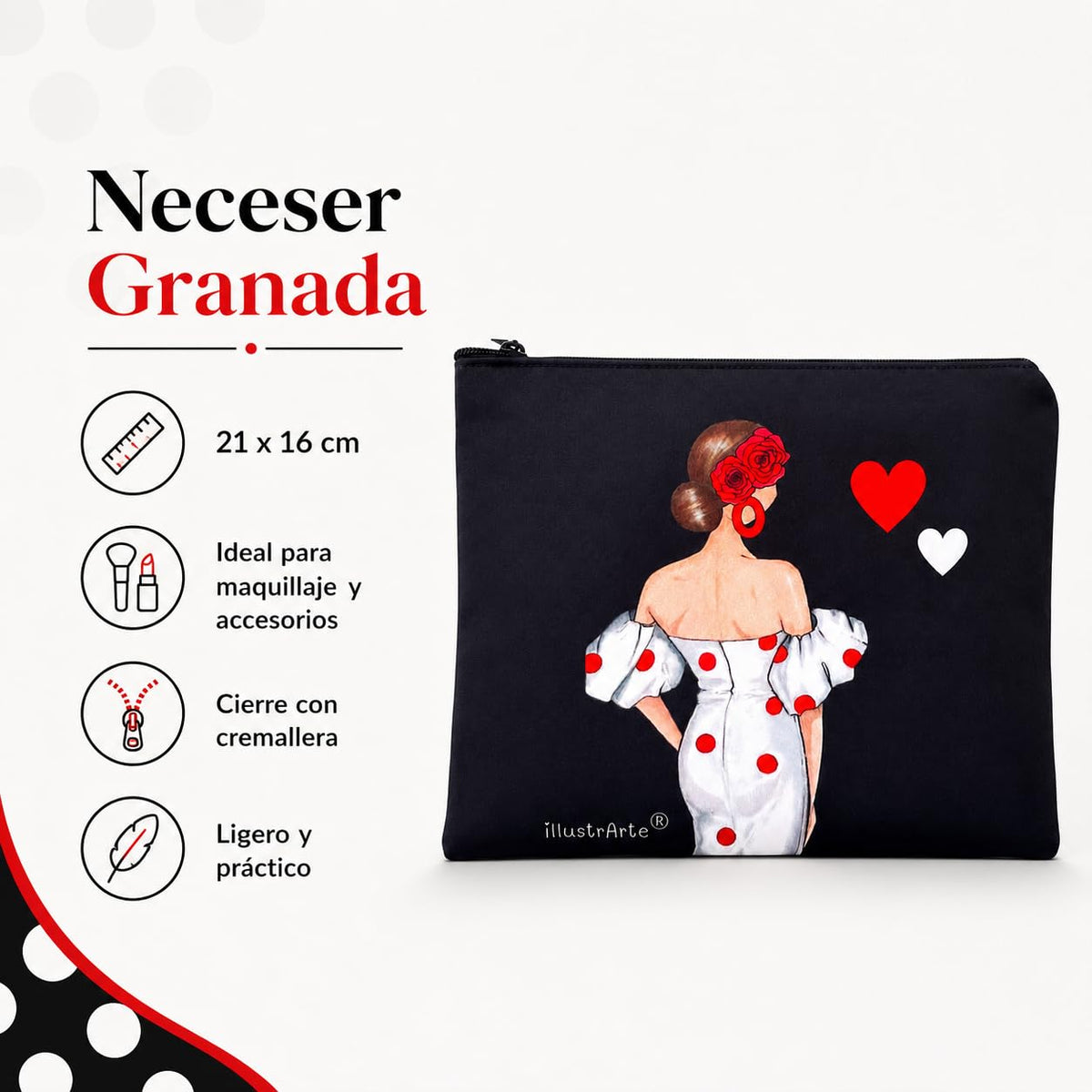
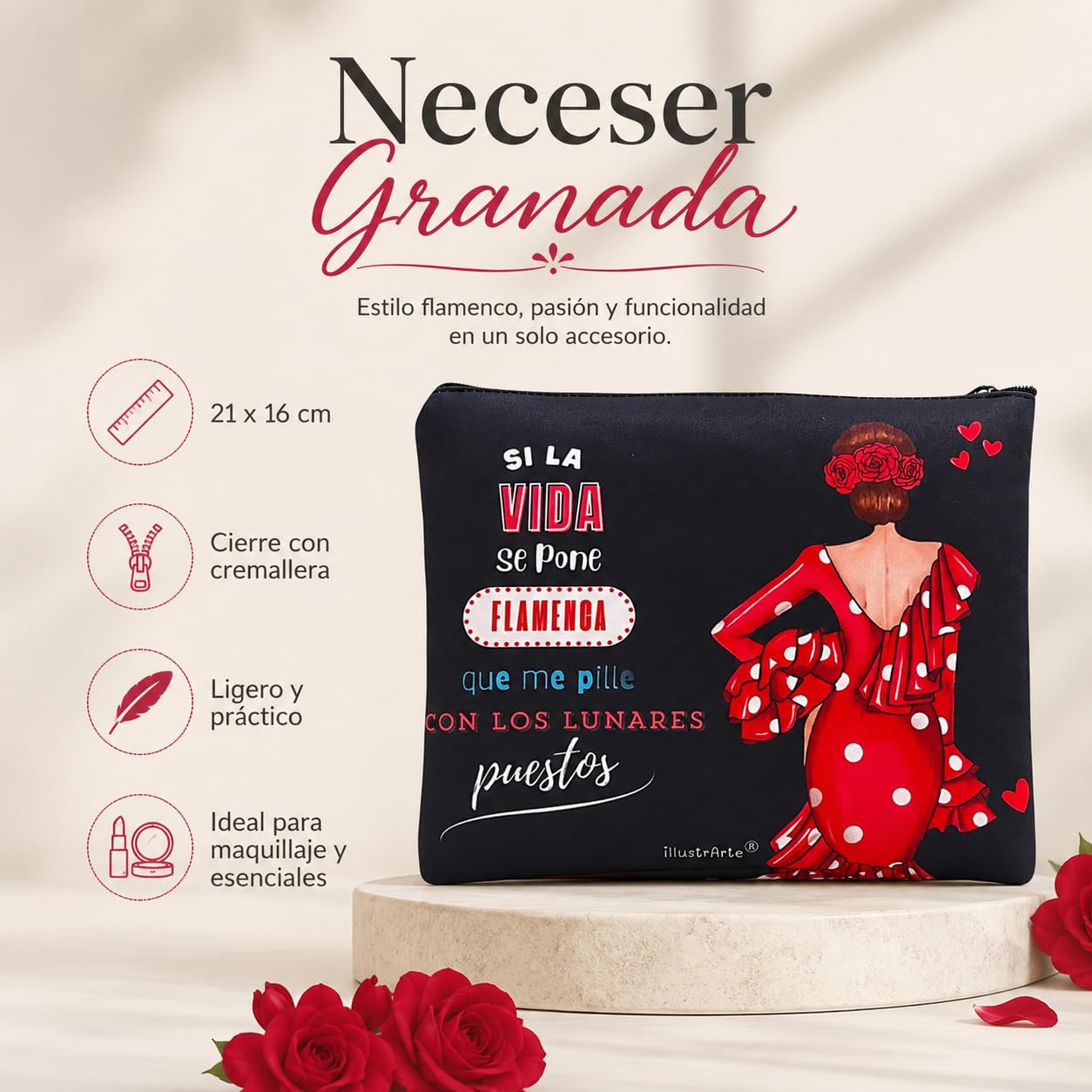
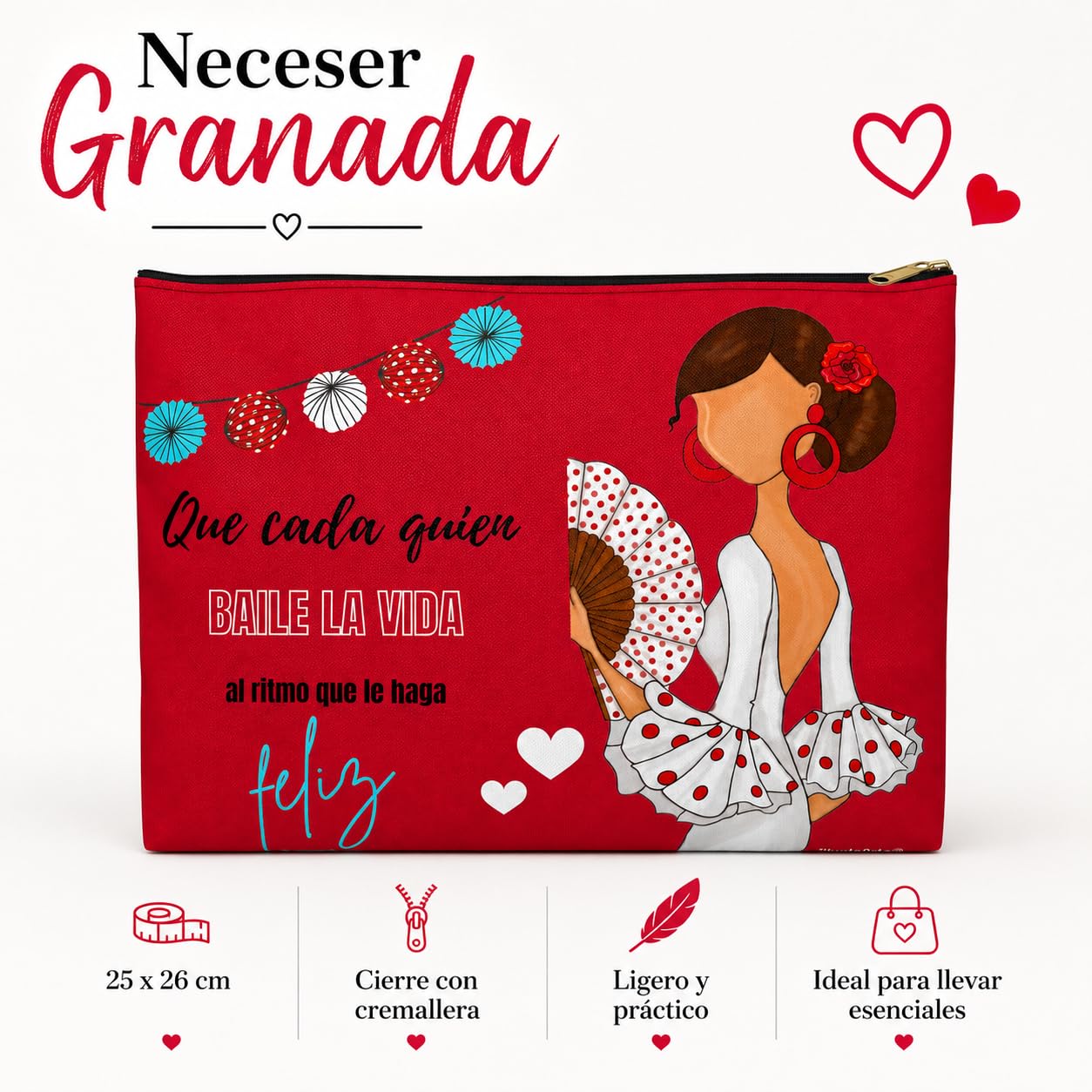
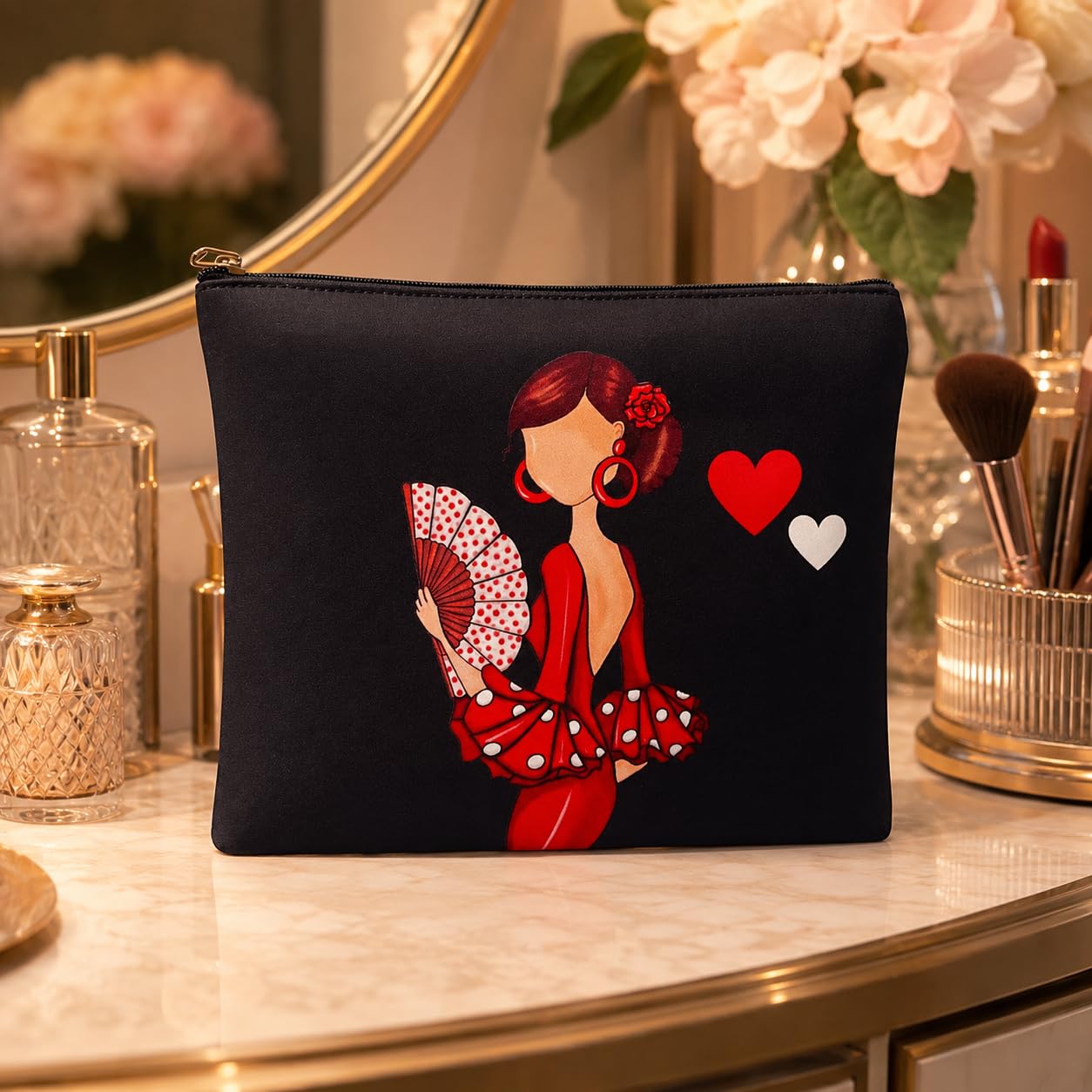
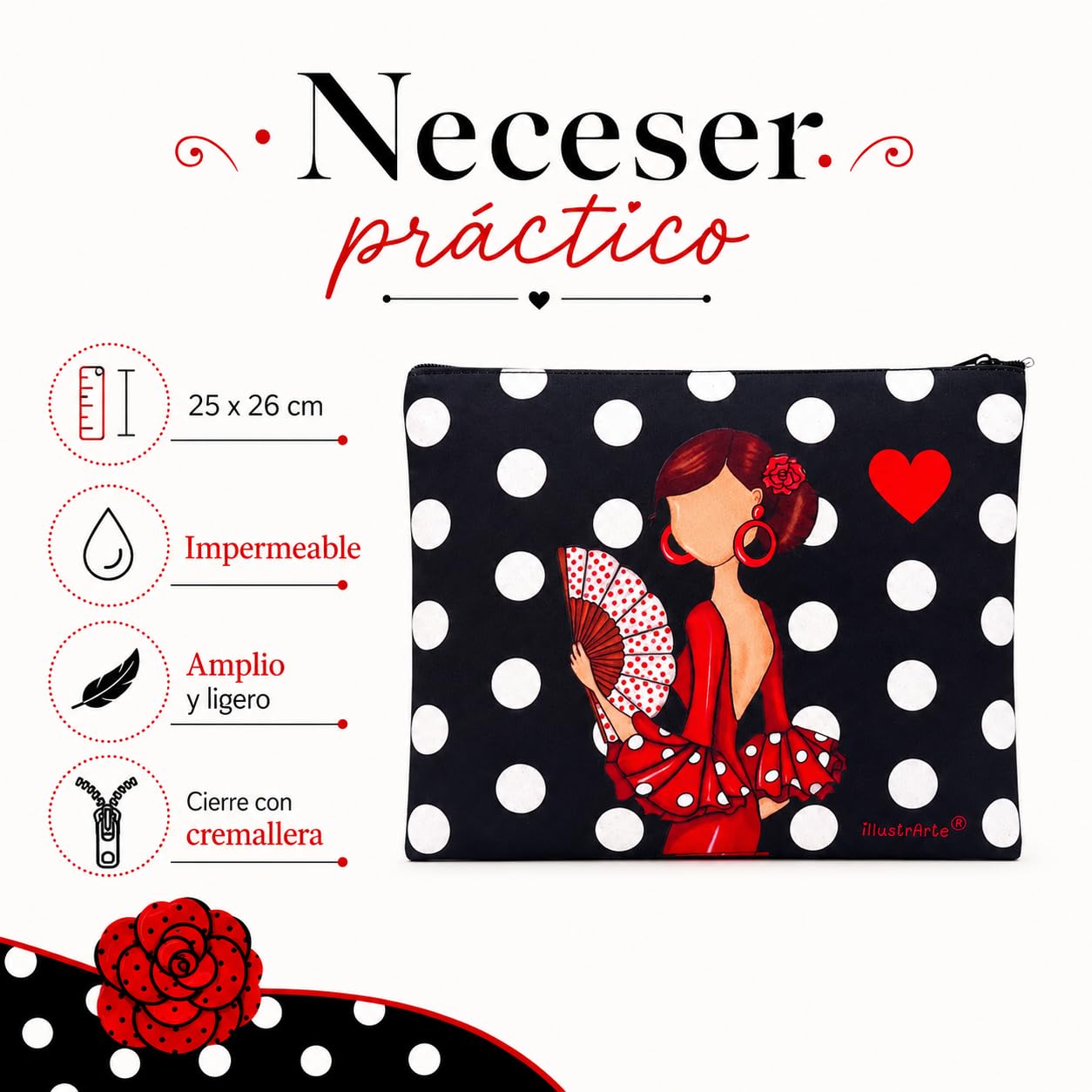
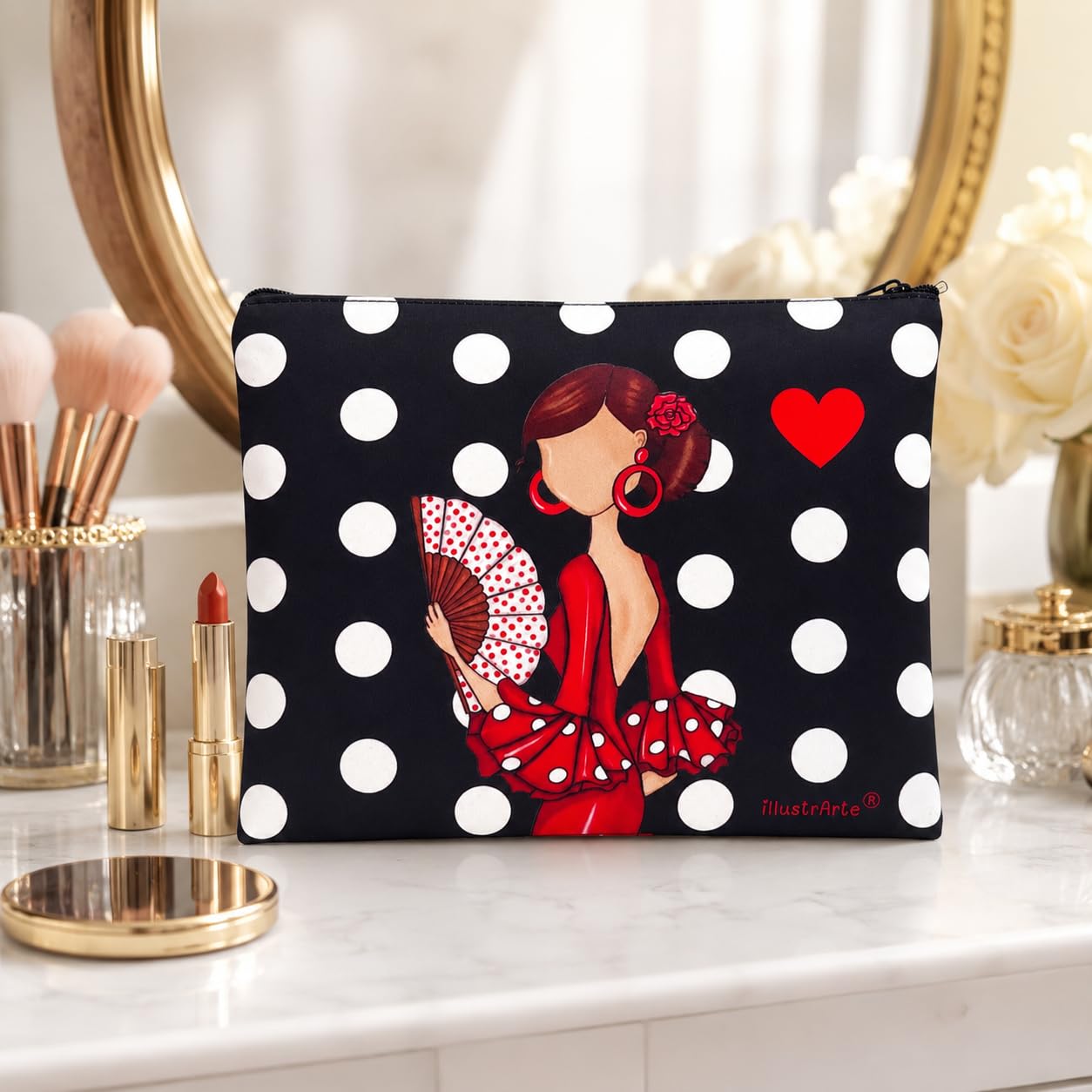
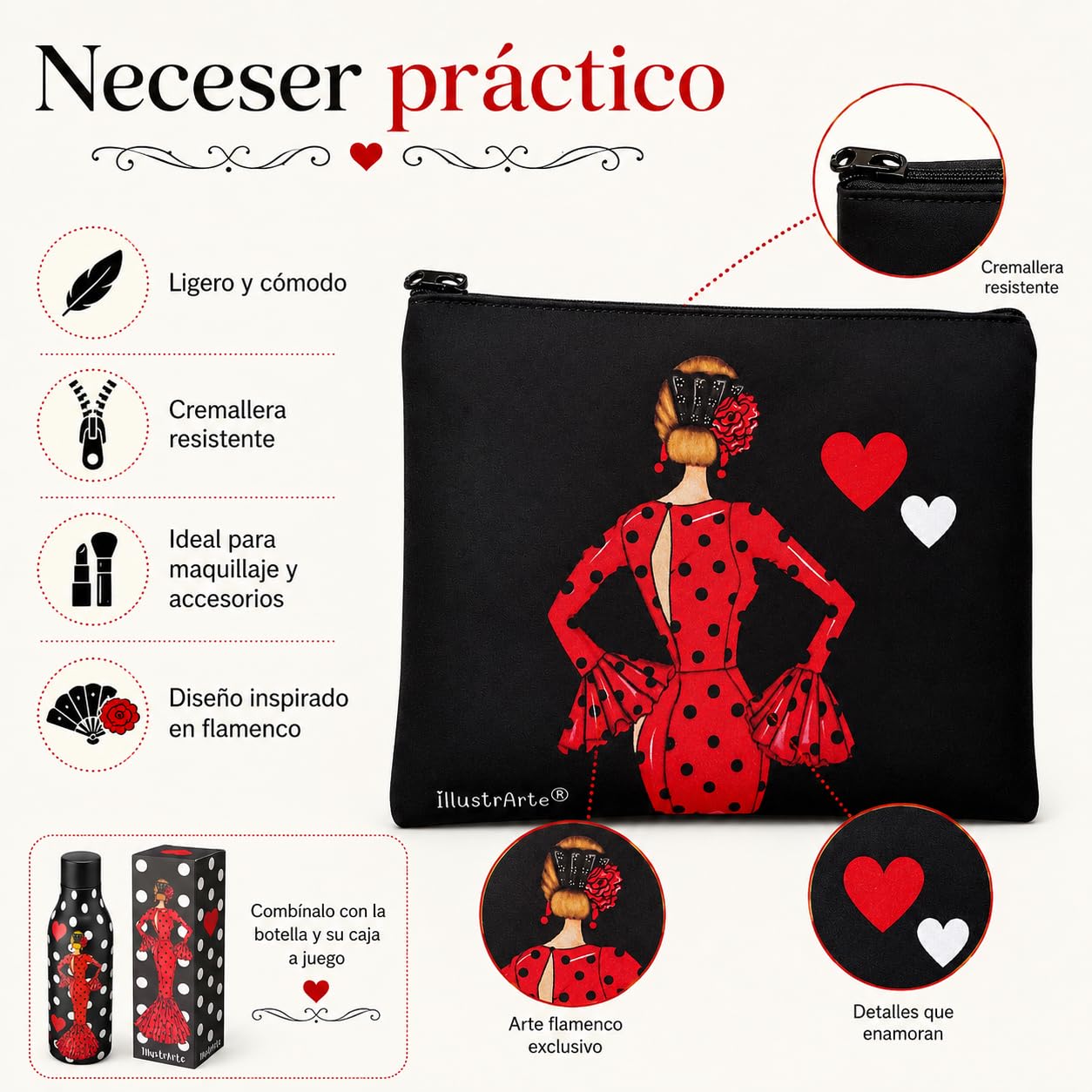
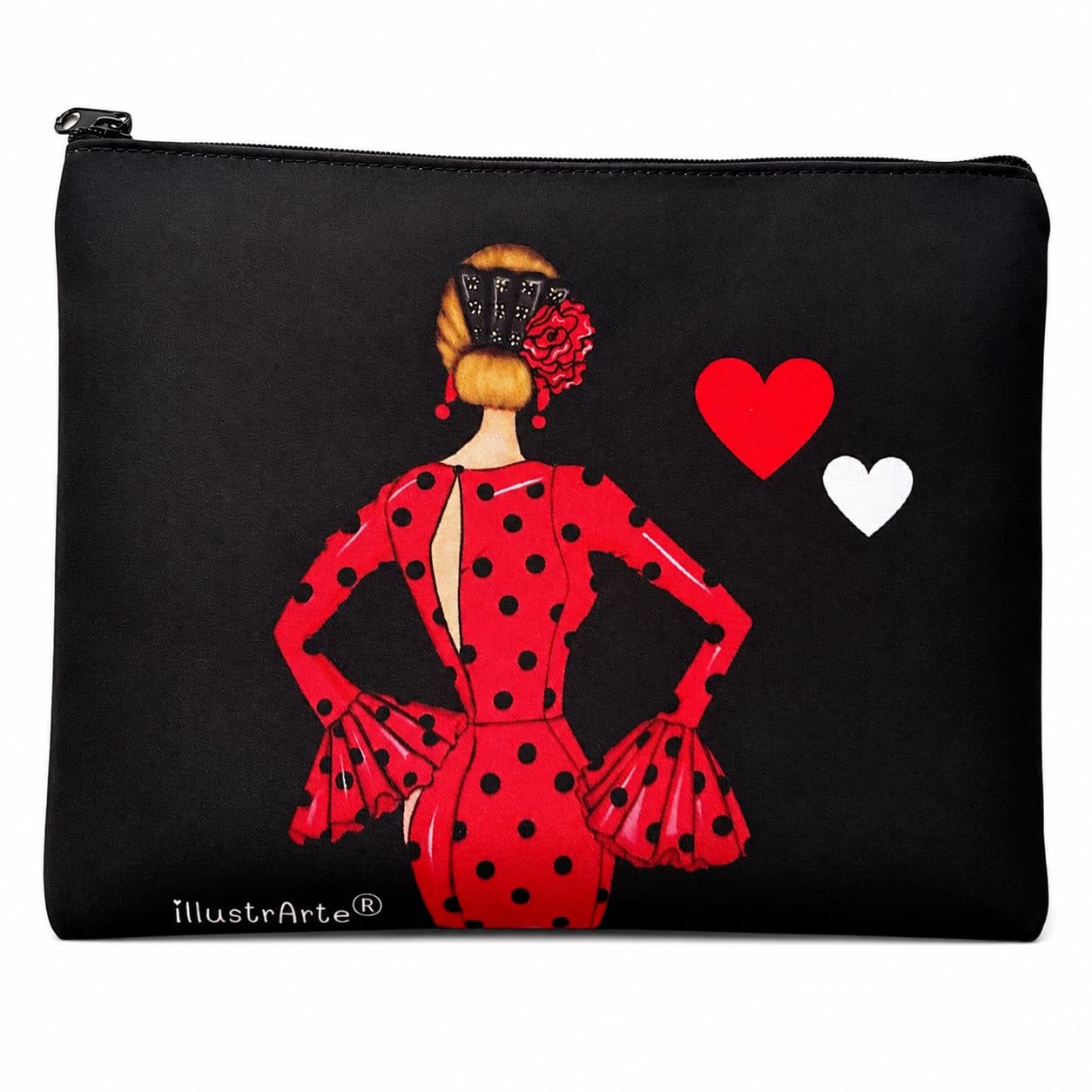
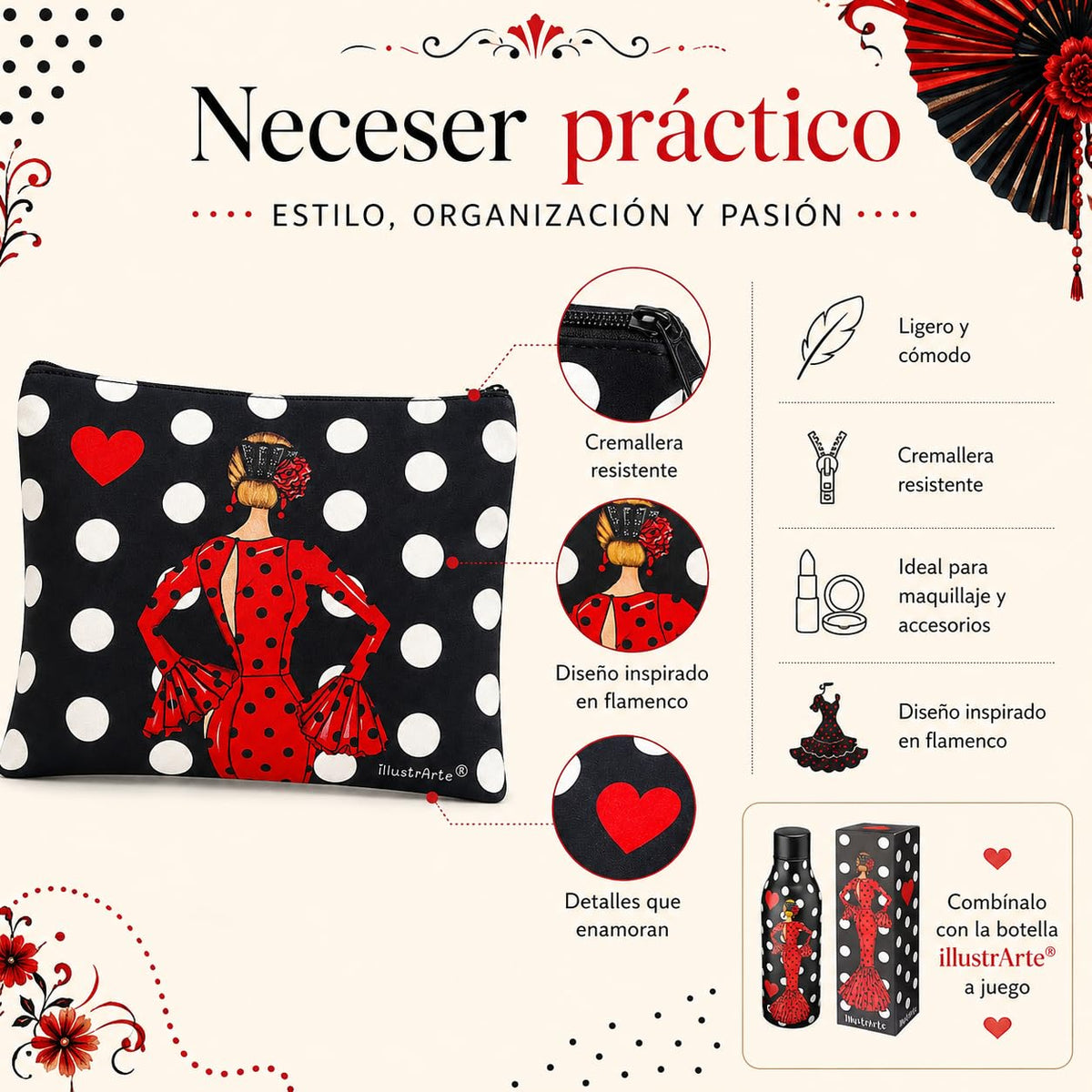
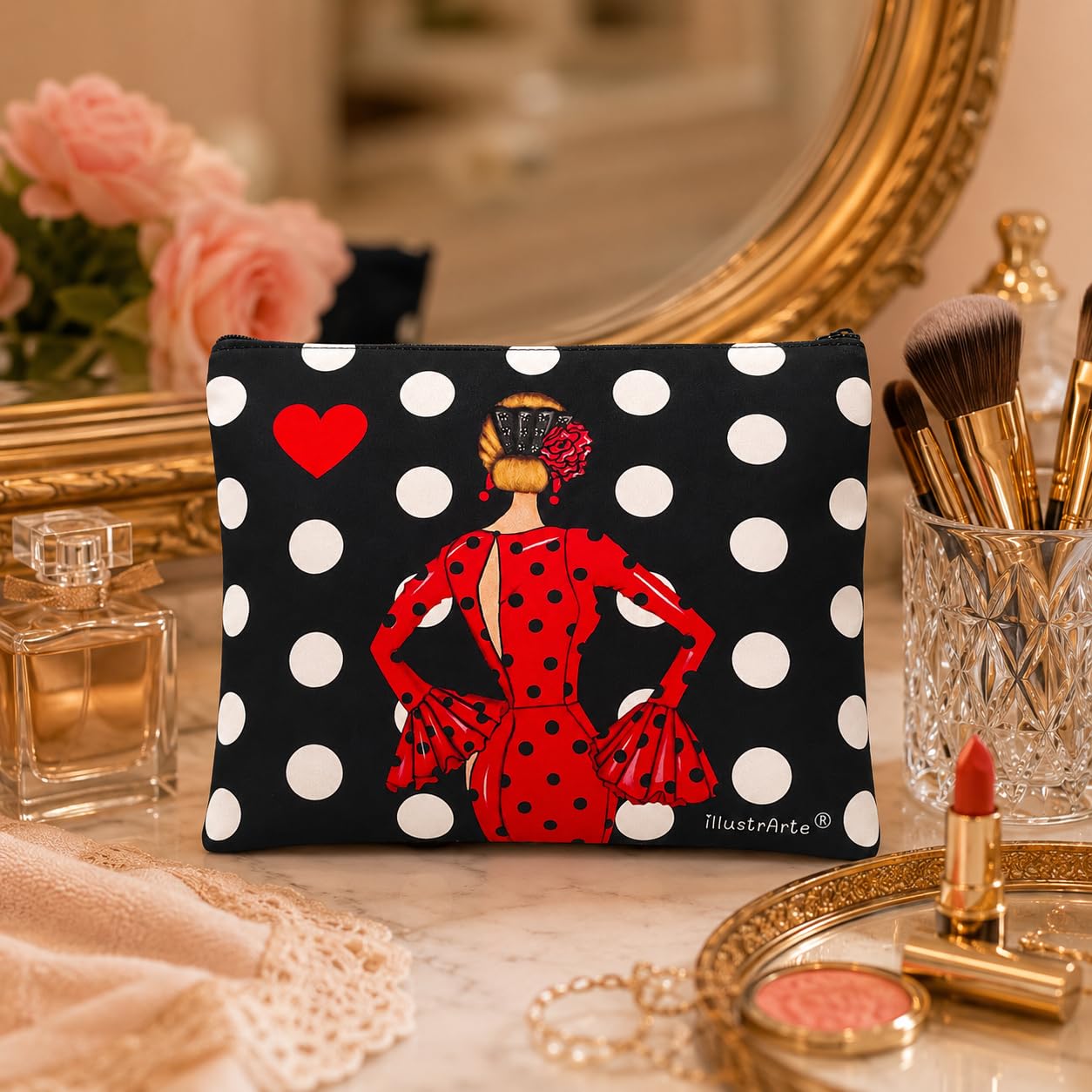
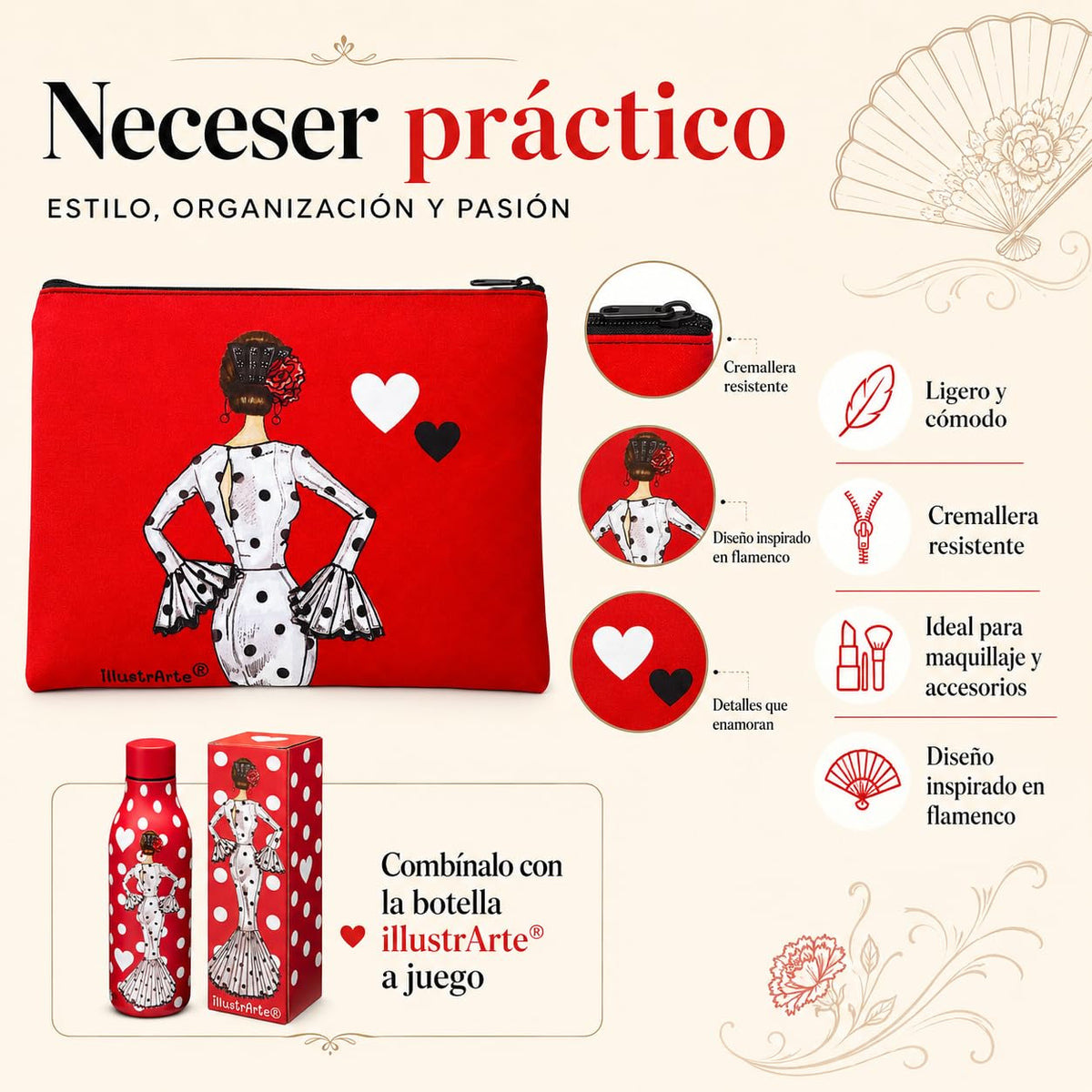
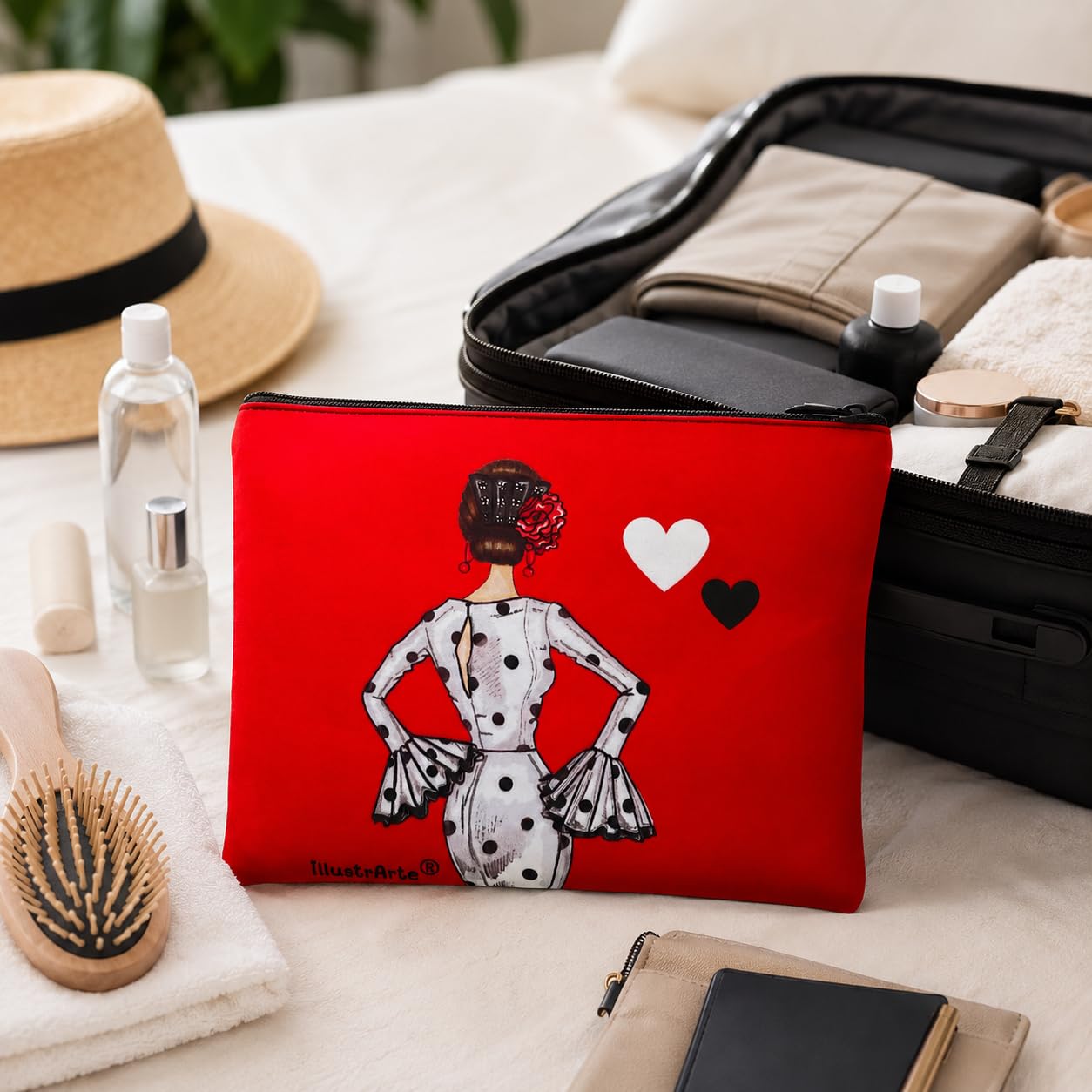
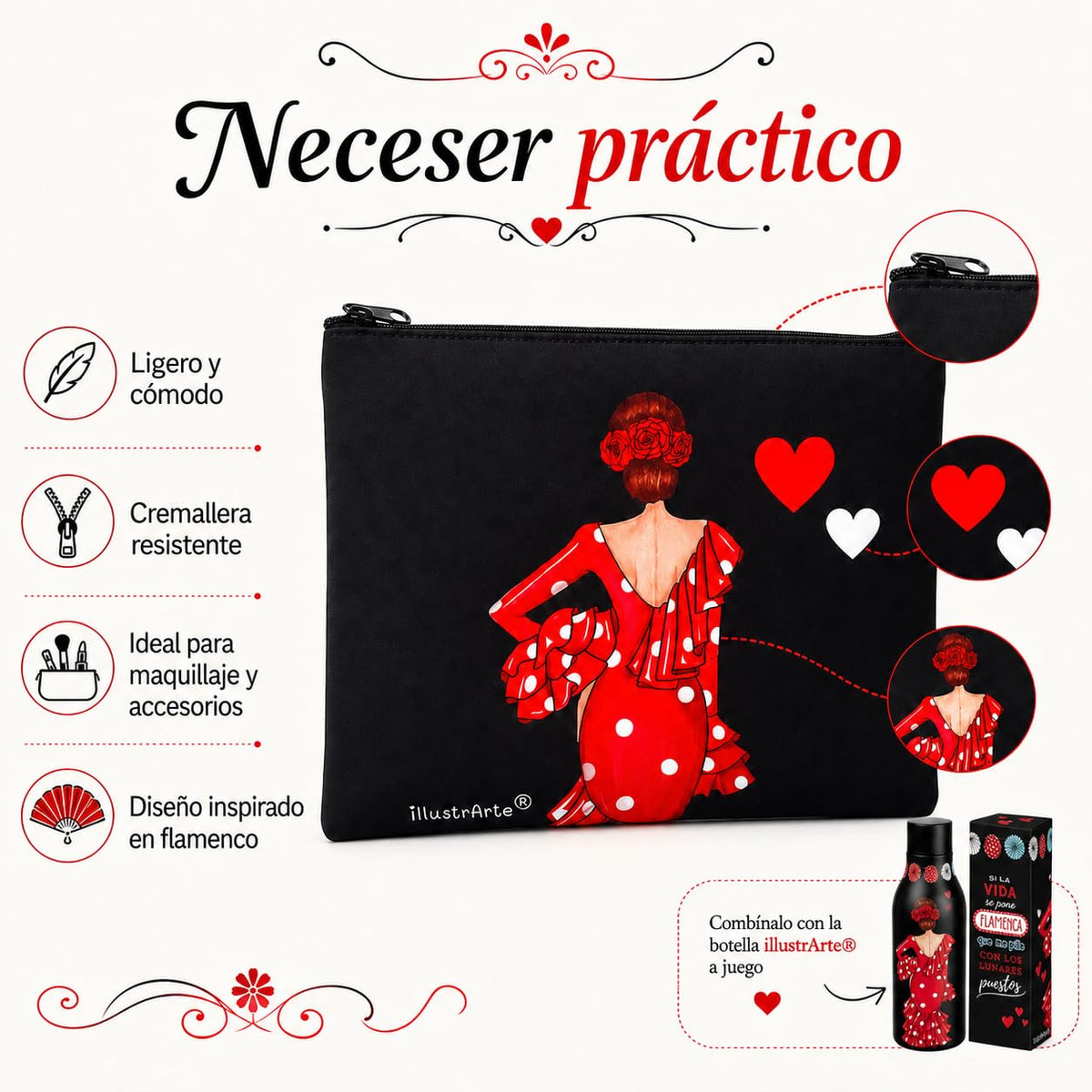
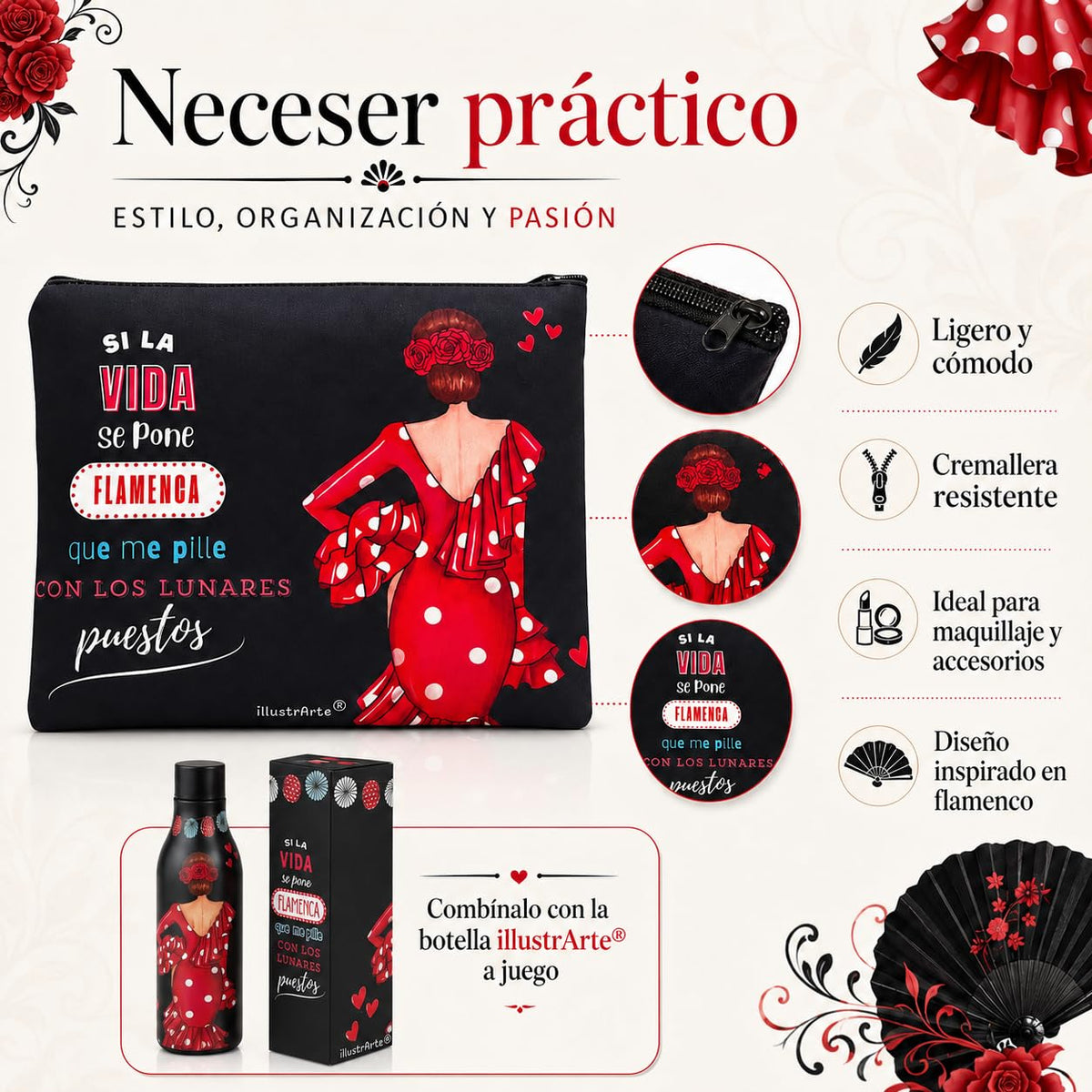
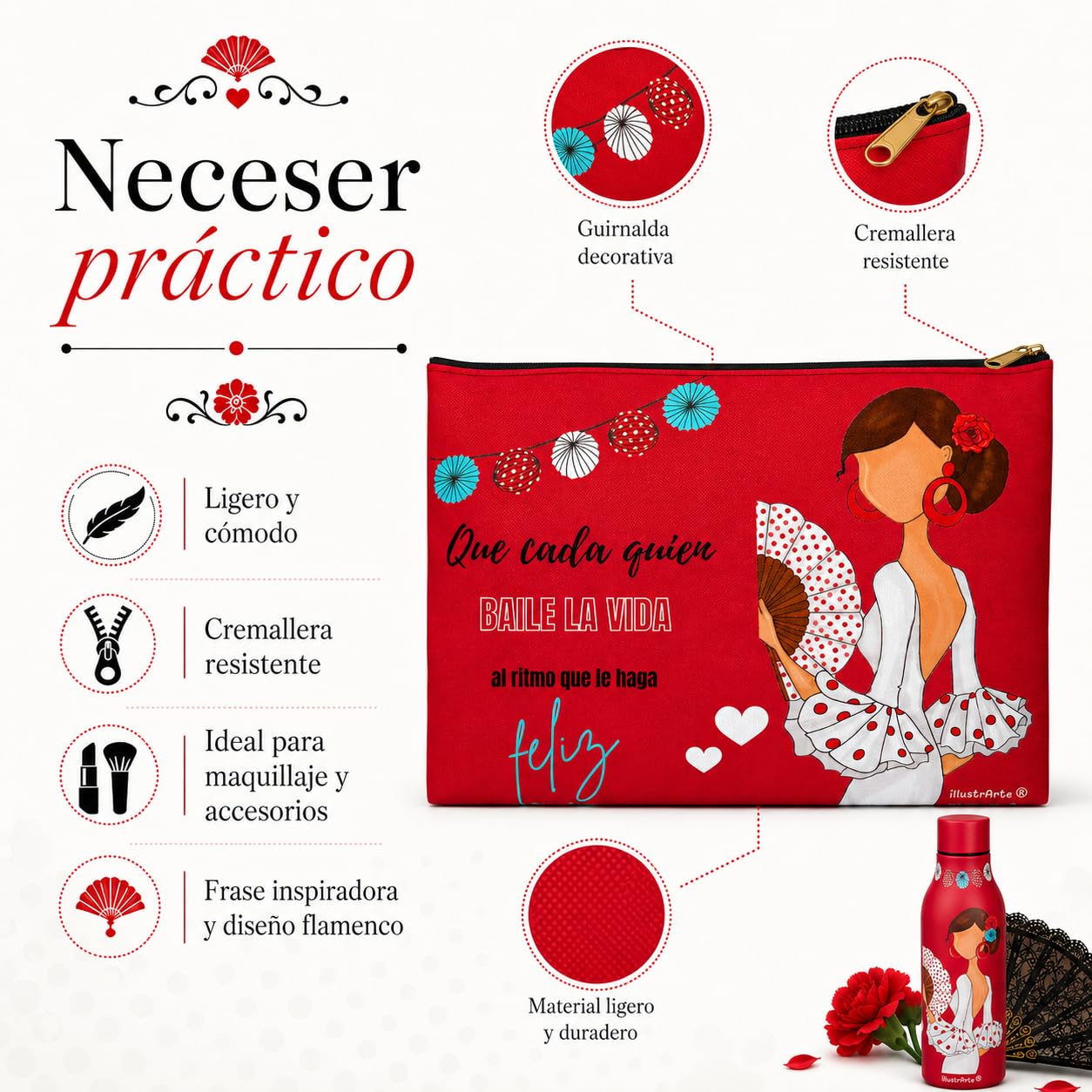
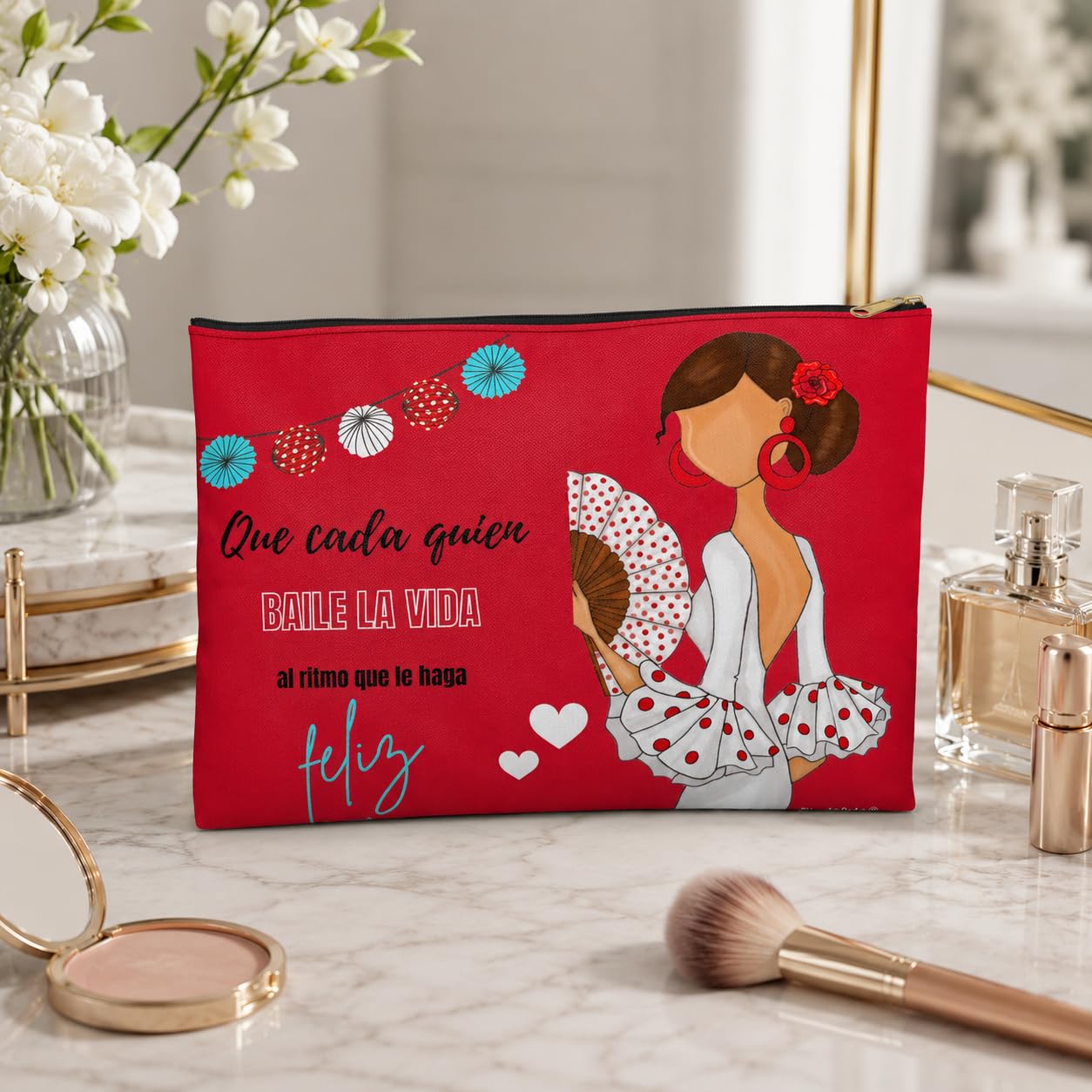
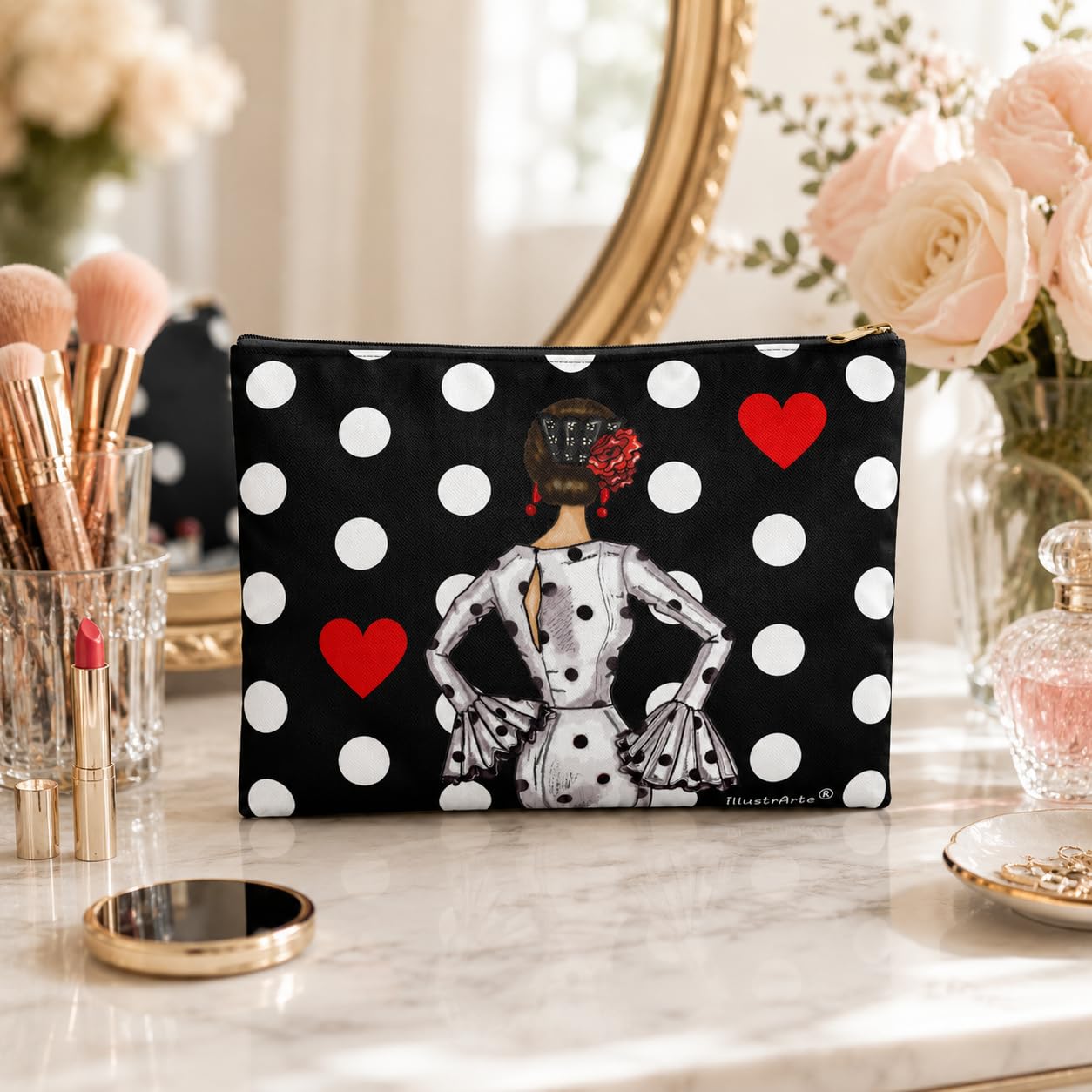
5. A small pouch
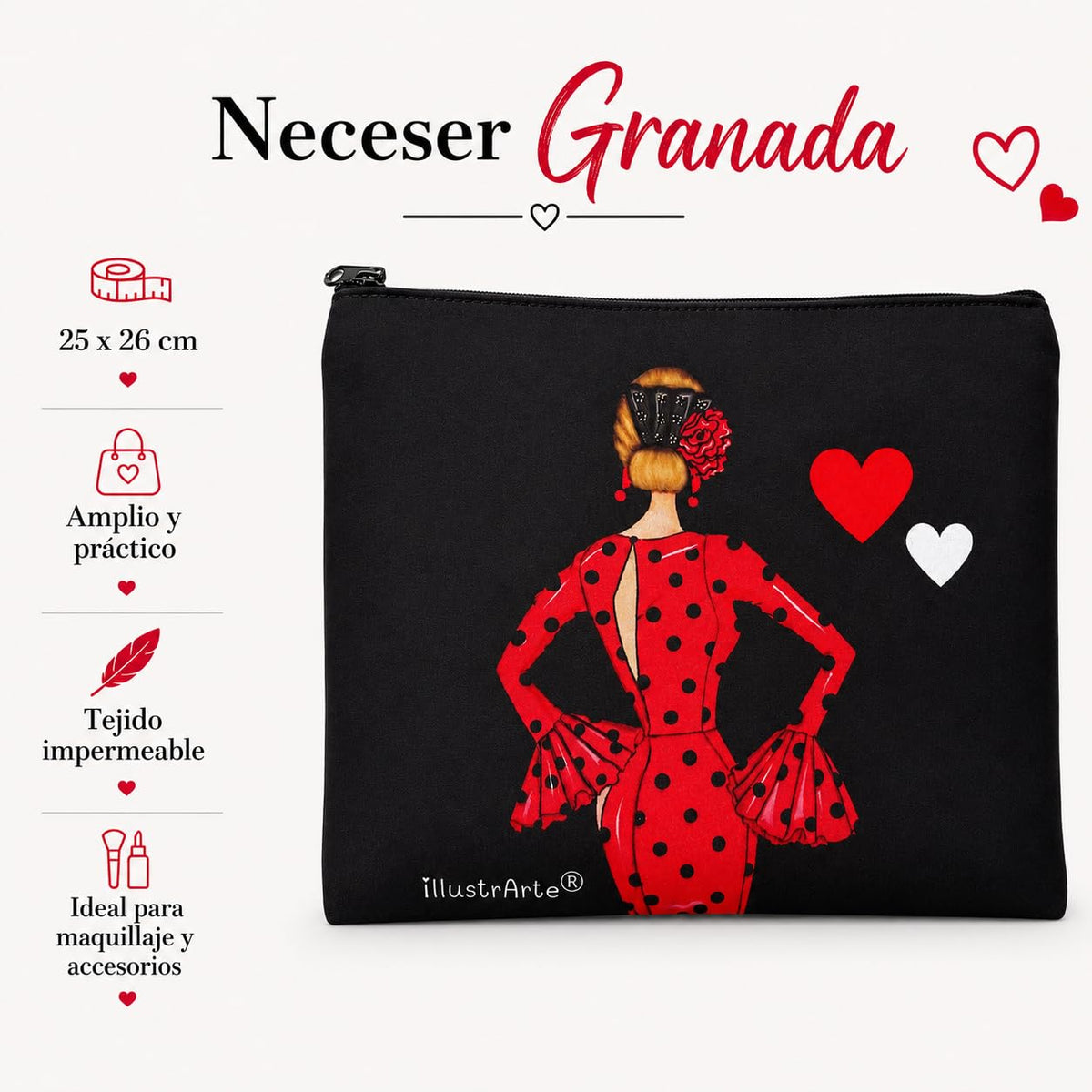
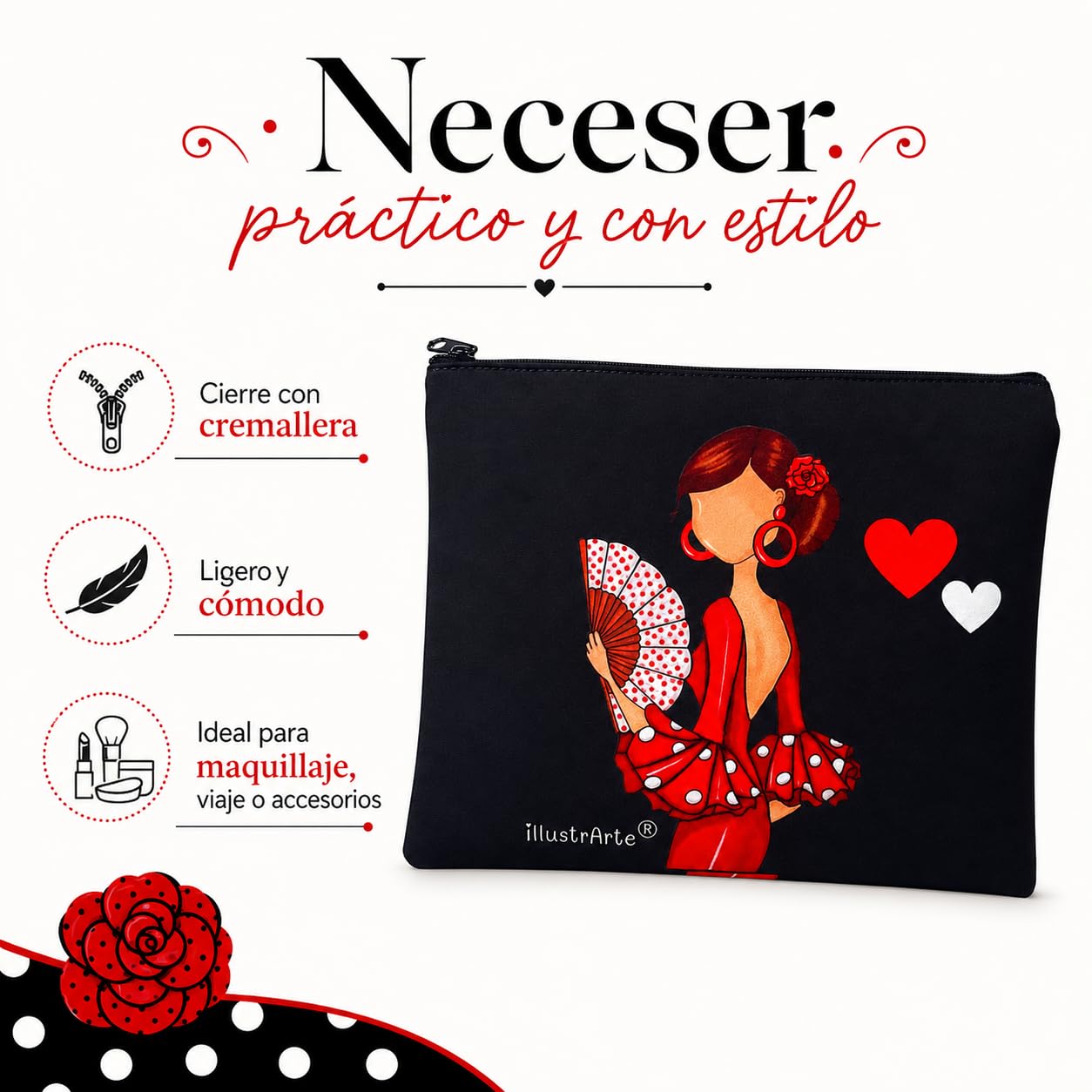
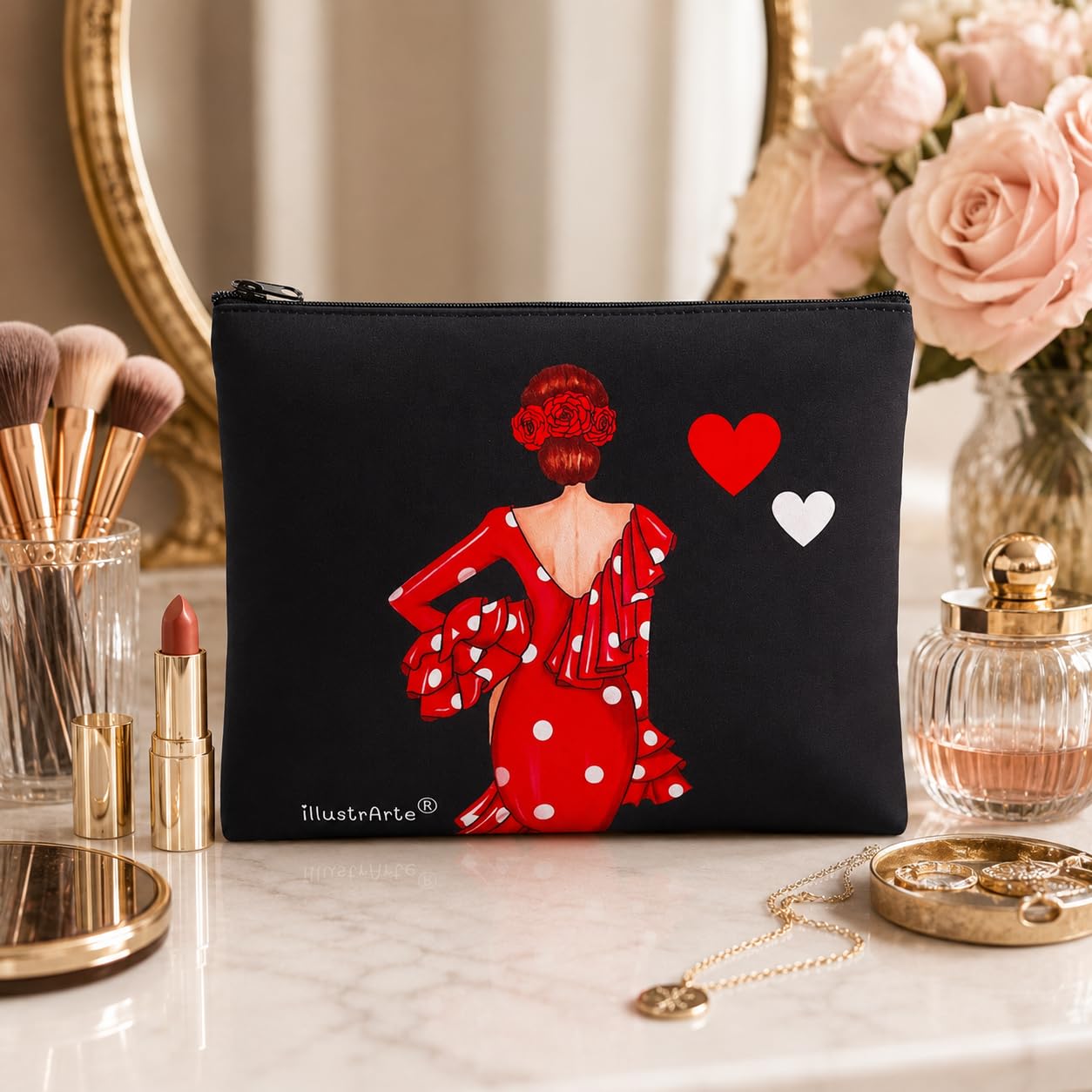
A pouch helps keep hold of things like hairpins, hair ties, tissues, deodorant, hand cream and other small personal items.
Have a look at the illustrArte flamenca pouches or our collection of bags and pouches on Amazon.
6. A notebook for what you learn
Not essential, but many students find it useful to note the names of steps, the structure of a sequence, the palo being worked on or the teacher's corrections.
Writing these details down after class can help you remember what you learned and see your progress over the weeks.
Discover our flamenco notebooks and gifts or visit the section for mugs, notebooks, aprons and other gifts on Amazon.
What you don't need to buy before you start
It's easy to assume you need a full kit to begin, but you don't. Before your first class, you normally don't need to buy:
- A professional skirt.
- A flamenca dress.
- Advanced-level shoes.
- Castanets.
- A mantón.
- Specific accessories for a choreography.
Every school works differently. Wait for your teacher's guidance before investing in technical items. That way you'll avoid buying things that turn out not to suit the class.
Tips for enjoying your first class
Arrive a few minutes early
Getting there early lets you change, put your things away and walk into the studio calmly. You'll also have time to introduce yourself to the teacher and mention any injury or physical limitation that matters.
Don't be afraid of getting it wrong
In a beginners' class nobody expects you to know the steps. Getting things wrong is part of the process and one of the main ways of learning.
Concentrate on listening to the rhythm, watching the teacher and repeating the movement. The coordination will come.
Listen to the corrections
Corrections about posture, arms or weight placement are essential to building a good technical base. Try to take them as a learning tool rather than criticism.
Ask when something isn't clear
The names of movements, the compás and flamenco terminology can all feel new at first. Asking will help you follow the class and stop you practising a movement incorrectly.
Enjoy the process
Flamenco isn't only about executing steps precisely. It's also a form of expression combining music, strength, personality and emotion.
Allow yourself to learn without rushing and to celebrate every small step forward.
Quick checklist for your first flamenco class
- Comfortable clothes.
- The footwear your school recommends.
- A water bottle.
- A small towel.
- A hair tie or clip.
- A bag for your shoes.
- A spare top, if you need one.
- A notebook and pen, optionally.
- Plenty of enthusiasm.
Pack your bag and enjoy the flamenco
Your first class doesn't have to be perfect. It's enough to turn up in comfortable clothes, bring the essentials and be willing to learn something new.
As you go on, you'll work out which accessories you use most, what kind of clothes feel most comfortable and what your school actually needs. Start with the basics and build up your kit gradually.
For more detail on the accessories that can come with you through the year, see our guide on what to take to a flamenco class.
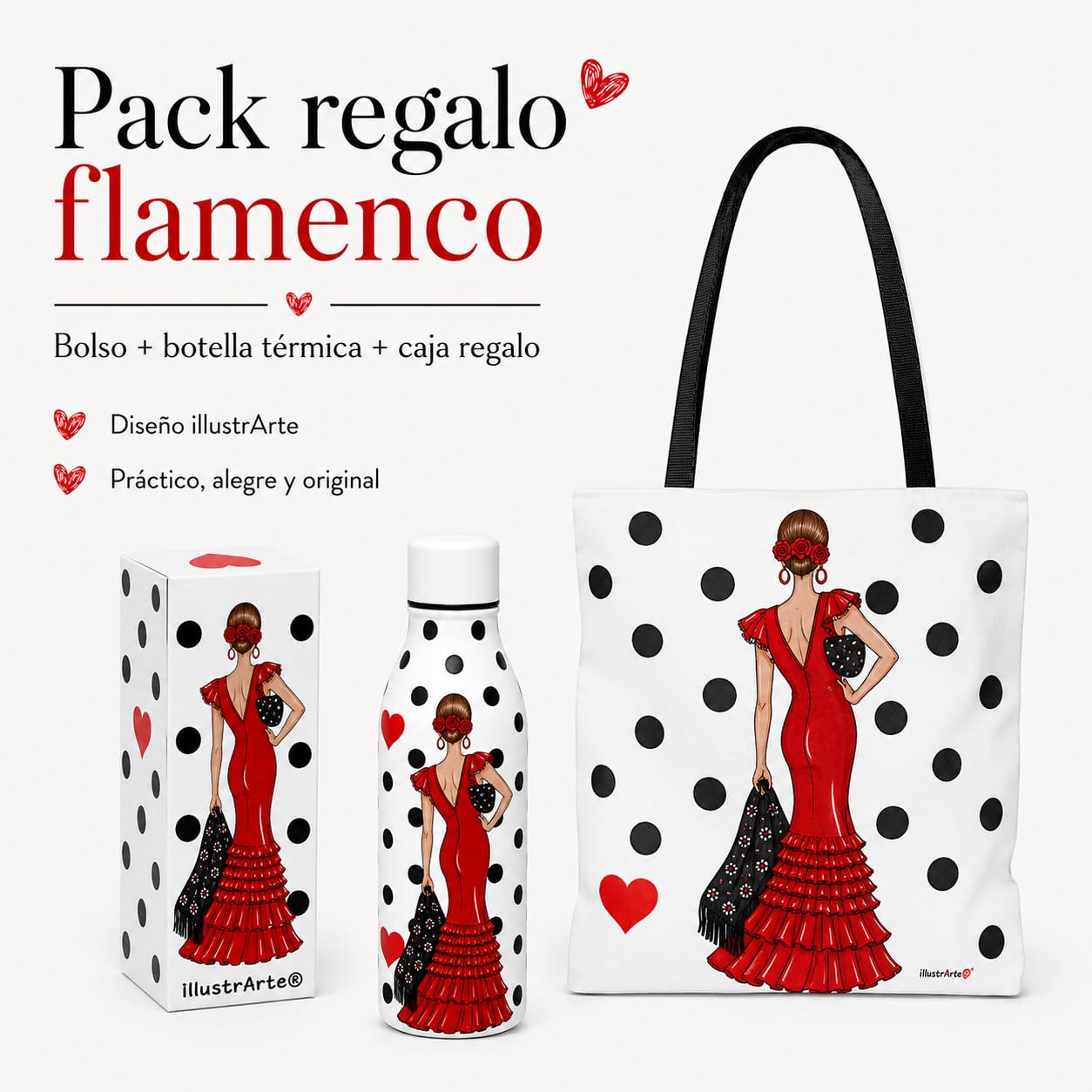
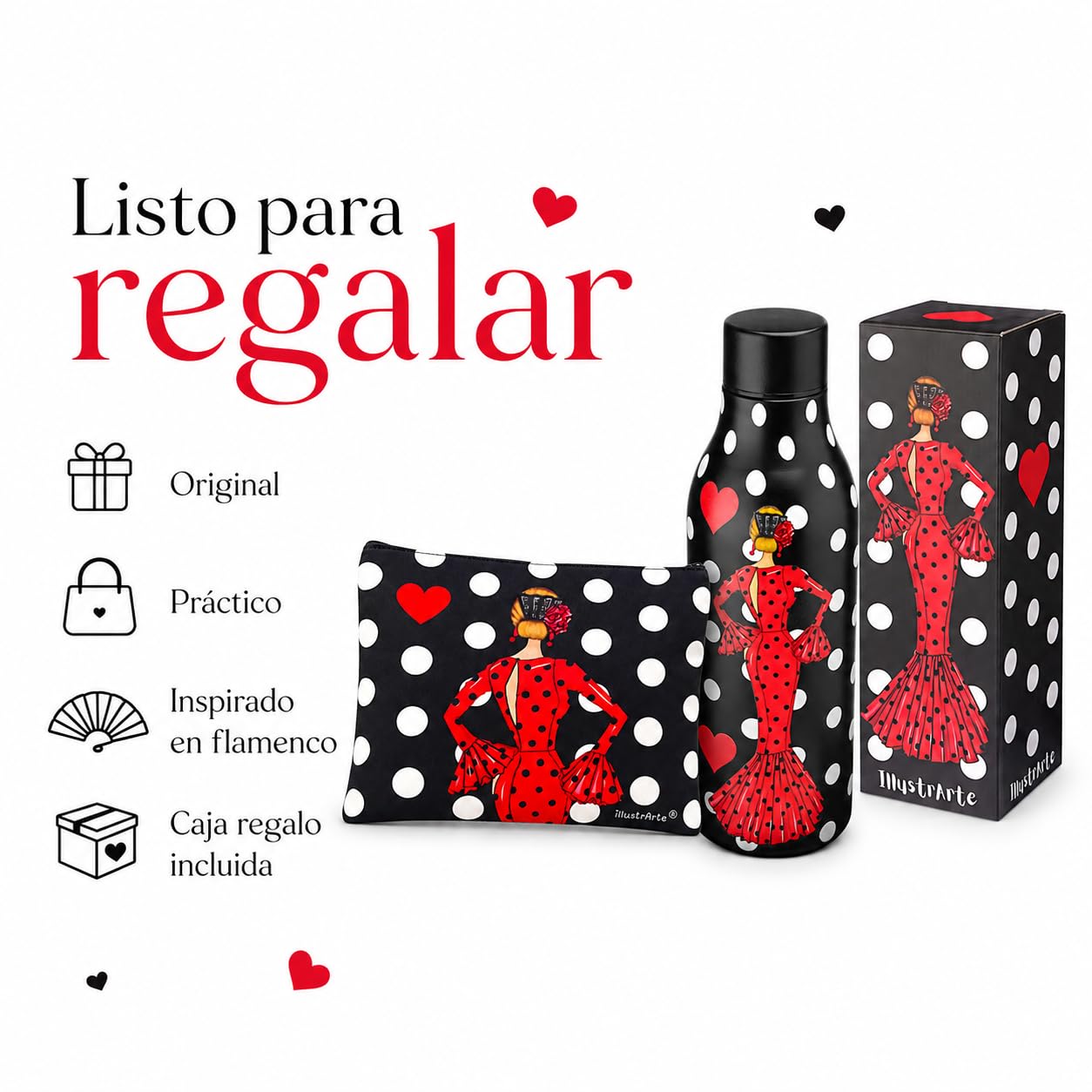
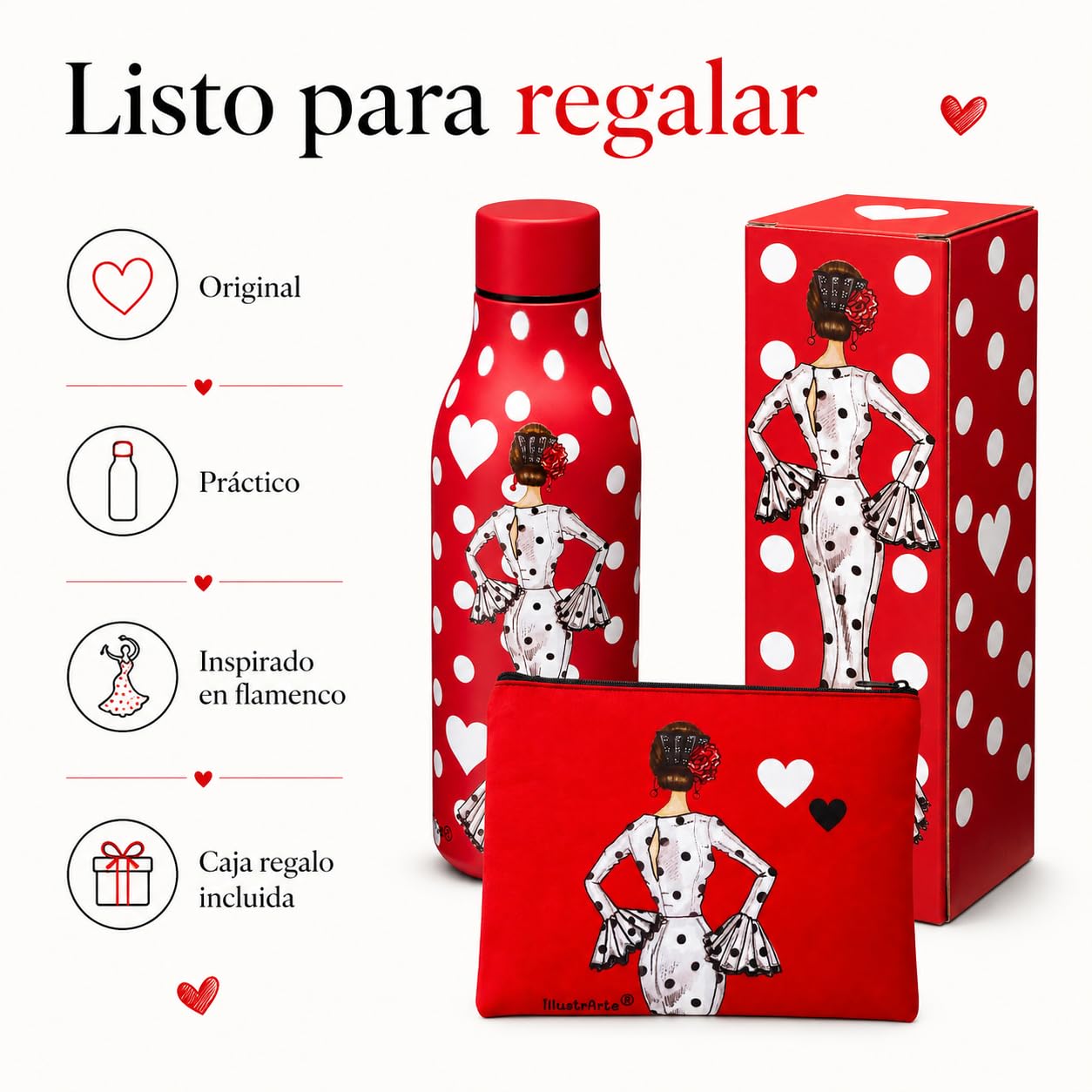
You can also discover all the original illustrArte flamenco products or visit our illustrArte shop on Amazon.
Breathe, listen to the compás and enjoy your first flamenco experience.
The illustrArte products featured in this article are our own designs, sold in our shop and on Amazon.
As an Amazon Associate I earn from qualifying purchases.